What is AI hotel marketing?
AI hotel marketing is the use of artificial intelligence, mostly machine learning and generative models, to plan, personalize and run a hotel's marketing with less manual effort. It powers the systems that decide which guest sees which offer, when an email or message is sent, what a campaign should cost, and how a rate or promotion should flex with demand.
For an independent hotel, the point is scale. AI lets a one- or two-person marketing team behave like a much larger one, because the segmenting, timing and testing that used to eat hours now happen automatically. It sits on top of your existing hotel marketing strategies rather than replacing them.
{{pms-five}}
How AI is changing hotel marketing
The old model was batch-and-blast: one newsletter to the whole list, one rate for the season, one landing page for everyone. AI replaces that with continuous, individual decisions. Instead of guessing which guests to target, the system learns from booking history and behavior and acts on each guest differently. The shift is from campaigns you run to systems that run themselves and report back.
AI for guest personalization and segmentation
Personalization is the use case with the clearest return. AI groups guests by real behavior, past stays, room preferences, booking lead time, spend, rather than crude lists, then tailors the offer to each group. A business guest who books midweek sees a different message than a family booking a summer weekend.
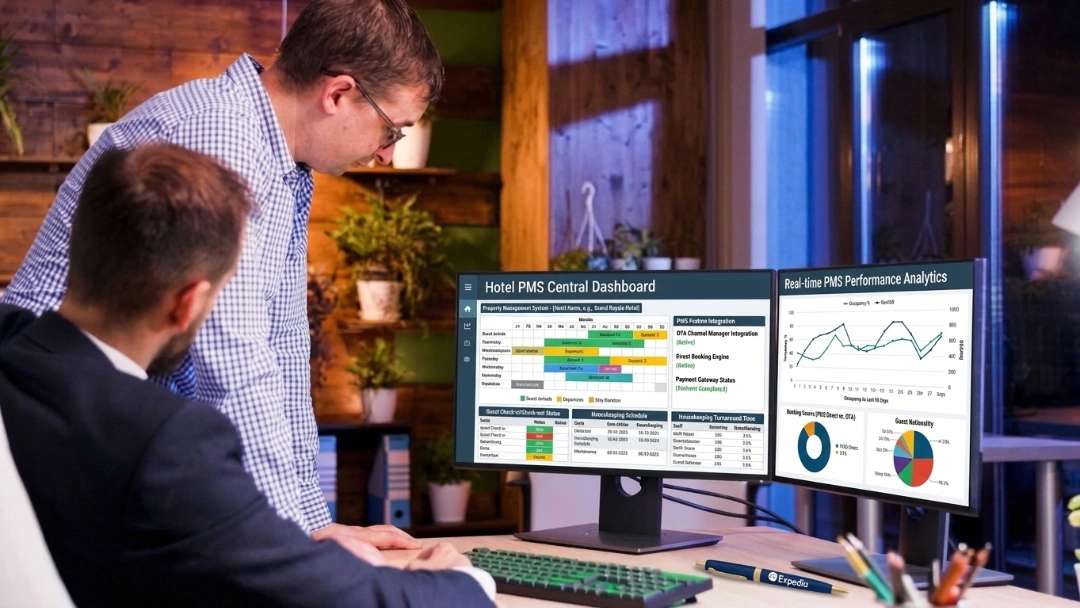
The data comes from your own systems. Connected guest management captures the profile and history that make personalization accurate, so the offer matches what the guest actually does, not a guess.
{{guest-app}}
AI for marketing automation
Automation is where a lean team gets its hours back. AI decides the best moment to send a pre-arrival upsell, a win-back offer to a lapsed guest, or a review request after checkout, and it does it per guest rather than on a fixed schedule. Email and messaging campaigns trigger off real events, a booking, a cancellation, a checkout, instead of a manual calendar. The result is more relevant contact with less work.
AI for predictive analytics and demand forecasting
AI reads booking pace, local events, seasonality and past patterns to forecast demand, then feeds that into pricing and spend. When it predicts a soft week, you market earlier and harder; when it predicts a surge, you protect rate. This is the same engine behind the dynamic pricing hotels use to match rate to demand, applied to marketing timing and budget. Live forecasting through hotel revenue management software keeps the marketing and the rate strategy pointed the same way.
AI for content creation
Generative AI drafts the first version of the work that used to stall a small team: property descriptions, offer emails, social captions, ad variations and metadata. It will not replace a human editor, and it should not, but it turns a blank page into a draft in seconds. Used well, it lets one marketer test five ad variations instead of writing one and hoping. A polished hotel website builder is where that content lands and converts.
AI for recovering direct bookings
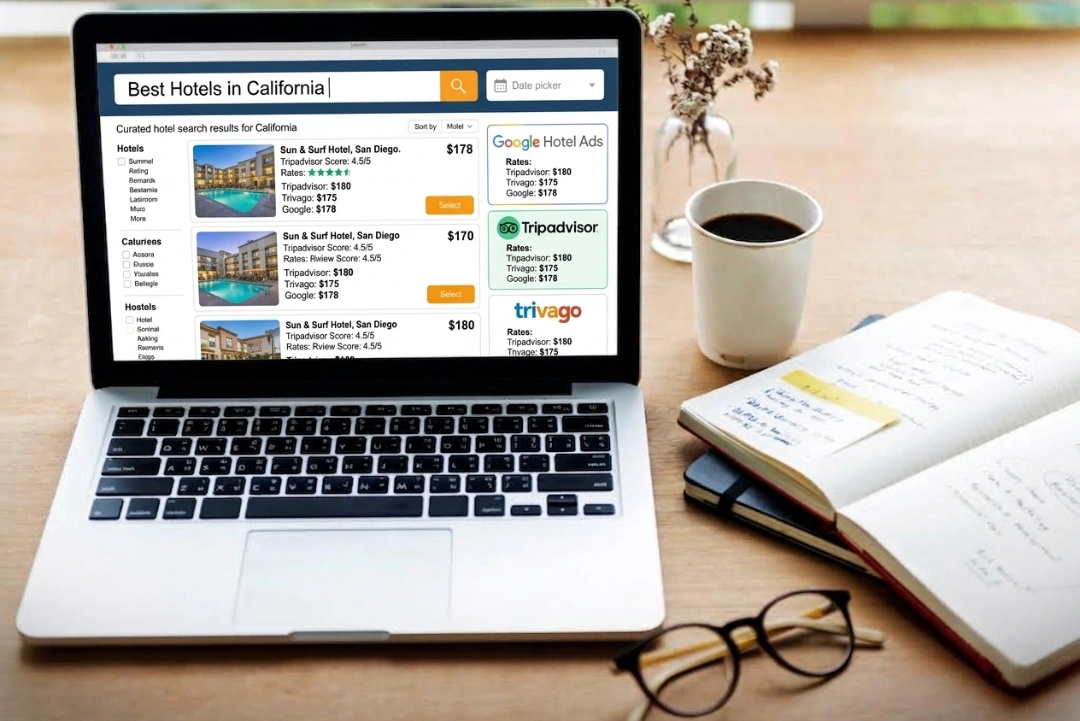
This is the use case that pays for the rest. Many would-be direct bookers abandon the site with a question, then complete the booking on an OTA instead, and you pay commission on a guest who was already yours. An AI concierge answers the question in the moment and carries the guest to your own hotel booking engine. roommaster's hotel ai agent handles those pre-booking questions around the clock, and metasearch exposure through hotel metasearch puts your direct rate in front of the guest at the comparison stage.
{{booking-engine-one}}
AI hotel marketing at a quick reference
| Use case |
What AI does |
Metric it moves |
| Personalization |
Segments guests and tailors offers |
Conversion rate, repeat rate |
| Automation |
Triggers messages per guest event |
Open and upsell rate, staff hours |
| Demand forecasting |
Predicts soft and peak periods |
Occupancy, marketing ROI |
| Content creation |
Drafts copy, ads, metadata |
Output volume, test velocity |
| Direct-booking recovery |
Answers questions, routes to your site |
Direct-booking share, OTA commission |
How to start with AI marketing at an independent hotel
- Pick one use case with a number attached. Direct-booking recovery or personalization are the usual first wins.
- Use the data you already have. Your PMS and guest profiles are the fuel; connect them before buying anything new.
- Run it against a control. Compare the AI-driven segment or campaign to your old method for a month.
- Keep a human in the loop. AI drafts and recommends; a person approves tone, rate and brand.
- Expand only after proof. Add the next use case once the first one shows a measurable lift.
Common AI marketing mistakes to avoid
- Buying tools before fixing data. AI trained on messy guest data produces confident, wrong targeting.
- Automating without oversight. An off-brand or mistimed AI send costs more trust than it saves in hours.
- Chasing every feature. Ten disconnected tools beat no strategy only in the vendor's pitch, not on your P&L.
- Ignoring the direct-booking angle. Marketing that fills OTA rooms grows revenue and commission at the same time.
The bottom line
AI hotel marketing gives a lean team scale: it personalizes, automates, forecasts, drafts and recovers bookings that would otherwise cost you commission. Start with one use case tied to a metric, feed it clean data from the systems you already run on independent hotel software, keep a human approving the output, and expand only once it proves out.
See how roommaster's AI concierge and connected guest data turn lookers into direct bookings.
{{cta-strip}}
Frequently asked questions
1. What is AI hotel marketing?
AI hotel marketing uses machine learning and generative AI to personalize offers, automate campaigns, forecast demand and recover direct bookings, so a small team markets like a much larger one.
2. How does AI improve hotel personalization?
It segments guests by real behavior and stay history, then tailors the offer, timing and channel to each group instead of sending one message to the whole list.
3. Does AI marketing replace hotel marketers?
No. It removes the manual segmenting, timing and drafting, while a person still owns strategy, brand tone and rate decisions. AI recommends; humans approve.
4. What is the fastest ROI from AI in hotel marketing?
Recovering direct bookings, because each booking won on your own site avoids OTA commission of roughly 15 to 25 percent, which drops straight to margin.
5. Can a small independent hotel afford AI marketing?
Yes. Most AI marketing capability now ships inside the PMS and marketing tools a hotel already pays for, so the starting cost is effort and data, not a large new spend.



.png)
.png)
.png)