Guests waste time standing at the front desk or calling repeatedly for simple questions, which ties up staff and slows service.
Staff answer hundreds of calls daily, many of which are repetitive, and up to 80% of routine questions could be handled automatically with AI.
roommaster Concierge handles these tasks 24/7, managing FAQs, routing calls, tracking bookings, and sending smart SMS responses so staff can focus on personalized service.
Hotels see measurable results with faster service, happier guests, up to 35% fewer repetitive inquiries, more bookings, and 4–6 hours of staff time saved each week.
How much time do your guests spend standing at the front desk or hunting for basic hotel information?
Today’s travelers expect fast, digital convenience. However, many properties still rely on printed directories and phone calls, which creates peak-hour traffic jams and slow service. This slowdown frustrates guests and burdens your front desk team with repetitive questions.
You can close that gap and deliver instant, 24/7 support by introducing hotel concierge software. These tools create a seamless, contactless journey from check-in to checkout while simplifying your internal operations.
In this guide, you’ll discover how leading hotels use a digital concierge solution such as roommaster Concierge to elevate guest satisfaction, why it often outperforms expensive mobile apps, and how you can launch it starting today.
The Hidden Cost of “Just Checking the Phone”
Front desk managers know that phones can steal focus and slow everything down. Every time staff members answer repetitive calls about Wi-Fi, checkout times, or towels, they lose precious time they could spend delighting guests.
As guest expectations rise and digital alternatives become more common, relying on phones feels increasingly outdated. Here’s how:
1. Too many repetitive calls waste hours
Hotels of all sizes still rely heavily on phones to interact with guests, which creates a significant workload. Most properties receive between 150 and 400 calls per day from guests with questions or requests. A large share of those calls are simple, repeat questions that your hotel concierge software could answer instantly through digital channels without tying up staff.
Industry research shows that up to 80% of routine guest questions can be answered automatically by AI‑driven systems, such as chatbots and digital messaging platforms, reducing the time staff spend on repetitive interactions.
2. Peak times reveal the problem
Front desk managers know that phones are busiest during check‑in and check‑out hours, when staff are already managing multiple priorities. During those busiest times, up to 40 % of incoming calls go unanswered because staff cannot keep up. While not all of these calls are reservation-related, even a conservative estimate reveals significant revenue exposure.
When calls go unanswered, guests feel ignored, and they move on. Many book elsewhere, turn to an OTA, or assume the hotel cannot respond efficiently.
So the real question becomes:
What are missed calls actually costing your property?
📊 Quick assessment: What missed calls could be costing you
Track for one week:
Total daily calls received
Missed vs. answered breakdown
Peak miss periods and staff availability
Below are two conservative examples based on real-world averages.
Imagine a 75-room boutique hotel receiving 35 calls per day. That equals 245 calls per week.
Even if we assume only 20% of those calls are missed booking-related inquiries (a conservative adjustment), and the hotel converts just 33% of phone inquiries, with an ADR of $165 and an average stay of 2.1 nights, the math looks like this:
245 calls/week × 20% × 33% × $165 × 2.1 nights
= $5,602 in weekly missed revenue
= Over $291,000 in potential annual revenue exposure
Now consider a slightly larger 120-room property receiving 50 calls per day:
And remember, this calculation only accounts for lost room revenue. It does not include upgrades, add-ons, repeat stays, or long-term guest value.
Even with conservative assumptions, missed calls represent six-figure revenue leakage for many independent hotels.
Want to Calculate Your Property’s Revenue Exposure?
Download the free ebook “How Independent Hotels Are Capturing Every Missed Booking: The 24/7 Revenue Recovery Guide” and run the quick assessment using your own numbers.
{{ebook-revenue-recovery}}
3. Response expectations are unforgiving
Guests have high expectations for response times. In fact, 84% expect their call to be answered within just a few rings, and nearly half of callers will hang up and take their business elsewhere if they wait more than two minutes without an answer.
Phones can easily fail to meet these expectations, especially when staff must handle multiple tasks at once.
4. Phones drive burnout and errors
When staff split their attention between phones and face‑to‑face guests, burnout follows. Front desk managers report that constant interruptions reduce job satisfaction and increase the risk of errors in service delivery. Traditional phone systems also do not help staff upsell services or tailor recommendations to each guest, because staff must repeat the same basic information rather than accessing a unified digital system.
At the same time, guest technology adoption continues to grow. Around 73 % of travelers say they are more likely to stay at a hotel that offers self‑service technology options, and 81% want more digital service options from hotels overall. When hoteliers implement hotel concierge software, staff can handle repetitive requests digitally. In turn, it reduces burnout and delivers a faster, more consistent experience that guests now expect.
{{concierge-one}}
5. Most questions aren’t complex
Up to 75% of guest inquiries are repetitive and simple, covering things like Wi‑Fi passwords, gym locations, or breakfast hours. AI‑powered systems can handle these routine requests instantly, freeing staff from repeating the same information over and over.
When common questions like “Where is the gym?” or “What are breakfast hours?” get answered instantly through digital channels, staff can focus on personalized interactions that create memorable experiences.
Integrating hotel concierge software lets you answer routine questions instantly and consistently without tying up front desk staff with repetitive calls.
7. Missed calls cost more than time
Missed calls don’t just waste time, they also cost money. Although around 40% of calls may go unanswered, not all are reservation-related.
The financial impact goes beyond the initial booking. Phone bookings typically have a 23% higher ADR than OTA bookings and offer better upselling opportunities, sometimes 3.2 times more than online channels. They also drive ancillary revenue from upgrades, breakfast, spa services, and late check-outs that hotels miss when calls go unanswered.
However, hotels cannot capture these benefits if they do not answer the phone. Answering phones consistently not only captures immediate bookings but also strengthens guest loyalty and reduces dependence on commission-based channels.
What Are Hotel Staff Actually Doing on Their Phones?
When you break down how hotel staff spend their time on phones and mobile devices, the numbers reveal how much of their workload comes from routine tasks rather than high‑value service.
For example:
The majority of staff phone use goes toward responding to the same basic guest inquiries, such as directions, Wi‑Fi details, and amenity requests that modern hotel concierge software could resolve instantly.
Internal communication in hotels often relies on fragmented tools like walkie‑talkies, radios, calls, and informal messaging, which forces staff to spend significant time relaying information between departments rather than focusing on service delivery. For example, inefficient communication systems cost teams more than 50+ hours of coordination time per month between housekeeping and the front office before they introduced unified digital communication tools.
Similarly, 60% of phone use goes toward resolving issues that could be automated, like handling simple room requests or check‑in questions that a guest could submit through a digital interface.
Automation can reduce repetitive communications by up to 65% and improve staff productivity. By freeing staff from routine phone tasks, hotels allow front desk teams to focus on high-value guest interactions, delivering personalized service that creates lasting impressions and increases satisfaction.
Why This Problem Is Getting Worse (Not Better)
Today’s travelers live in an instant‑gratification world. Many guests now prefer digital chat and messaging over phone calls for quick answers, reflecting broader trends in customer behavior. According to HotelTechReport’s 2025 State of Hotel Guest Tech Report, 39% of guests would use a chatbot just to ask for the Wi‑Fi password, and conversational messaging tools are rapidly becoming a standard expectation for basic information.
Meanwhile, 65% of hotels report ongoing staffing shortages, and 71% say they still have unfilled job openings despite actively recruiting, averaging 6–7 open positions per property. In fact, front desk, housekeeping, and other guest‑facing roles remain among the hardest to fill.
At the same time, guests expect 24/7 answers via apps, text, or chat, but hotel teams often cannot scale to meet those expectations with limited staff and existing communication tools. That gap becomes more apparent when technology fails to support modern communication patterns.
Traditional property management systems (PMS) do not function as guest communication tools. Many PMS platforms focus on reservations and operations, but they lack integrated messaging, AI chat, or real‑time guest engagement capabilities. Without dedicated guest communication channels, staff handle phone calls, walk‑ins, and slow systems all at once, rather than delivering fast, seamless service.
Hotels lose revenue when staff miss upsell opportunities or fail to deliver timely service. Properties that rely on outdated, fragmented systems cannot capture ancillary revenue or maximize guest spend.
Distracted staff slows service, which directly reduces guest satisfaction, decreases repeat bookings, and shrinks revenue potential.
Why Adding More Staff Doesn’t Solve It
Hotels carry some of the highest labor cost burdens in service industries. In full‑service properties, labor costs account for 30% to 35% of total revenue, reflecting rising wages and payroll pressures. Additionally, the hospitality industry faces very high staff turnover. The annual turnover rate in hospitality now runs at about 73.8%, far above the national average in other sectors.
Replacing front‑line positions costs operators thousands of dollars per hire, and training new staff still takes weeks before they reach full productivity. Because staff spend so much time on routine, repetitive tasks, adding more people without reducing workload does not solve the root problem hotels face.
How roommaster Concierge Gives Time Back to Hotel Teams
When hoteliers implement roommaster Concierge, part of the roommaster Guest Experience Suite, teams stop being buried in repetitive tasks and start focusing on high‑value guest interactions. Compared to a feature list, this solution acts as a shift‑wide operational partner that handles routine work day and night, freeing staff to focus on the in-person hospitality that makes your property stand out.
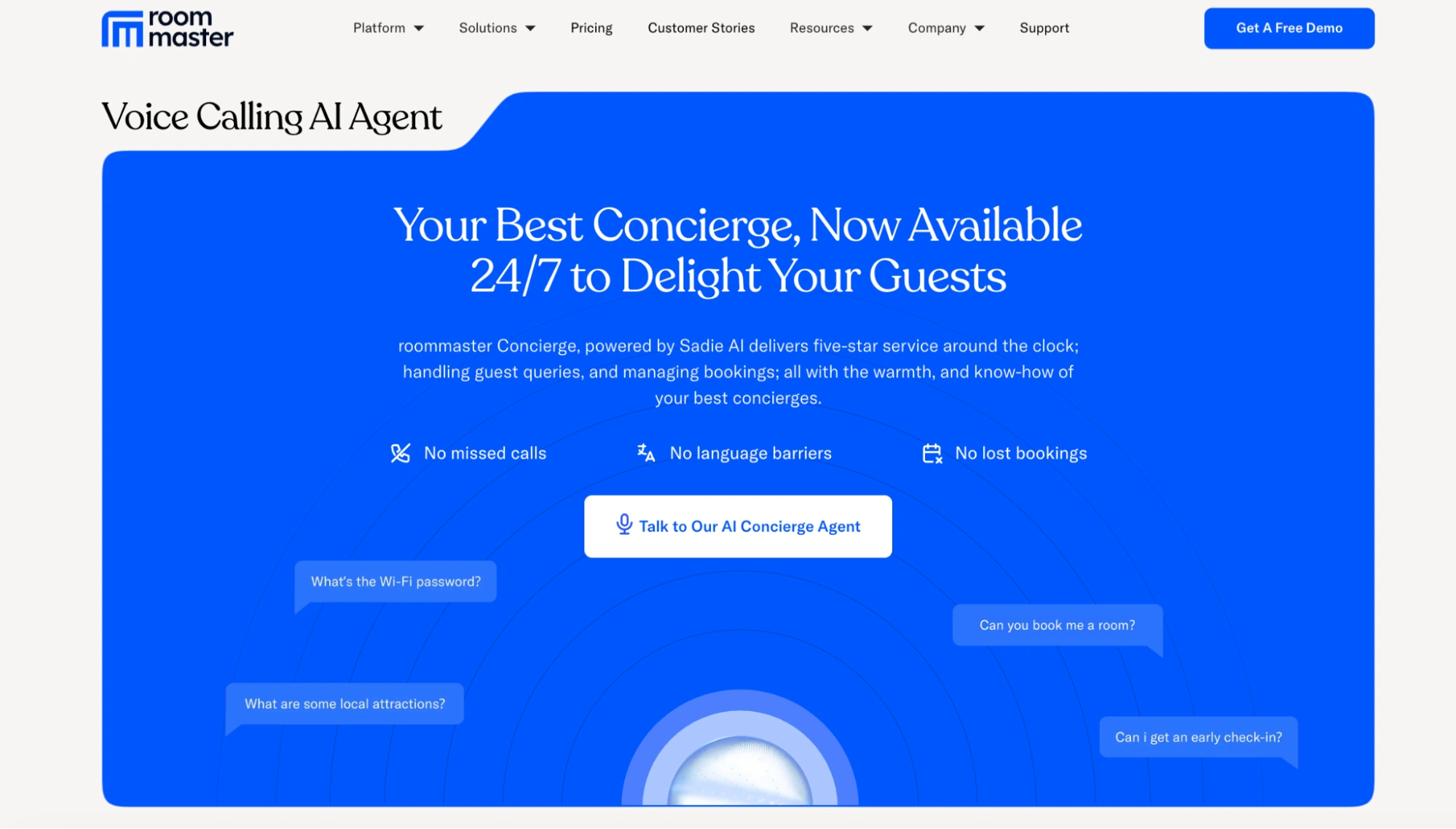
It delivers five-star service around the clock, handling guest queries, managing bookings, and speaking with the warmth and know-how of your best concierges. roommaster Concierge captures every call, confirms bookings instantly, and syncs guest data with your PMS so your property never loses revenue. Guests even compliment ‘our receptionist’ without realizing it is AI, allowing staff to focus on delivering personalized service.
Here’s how it works:
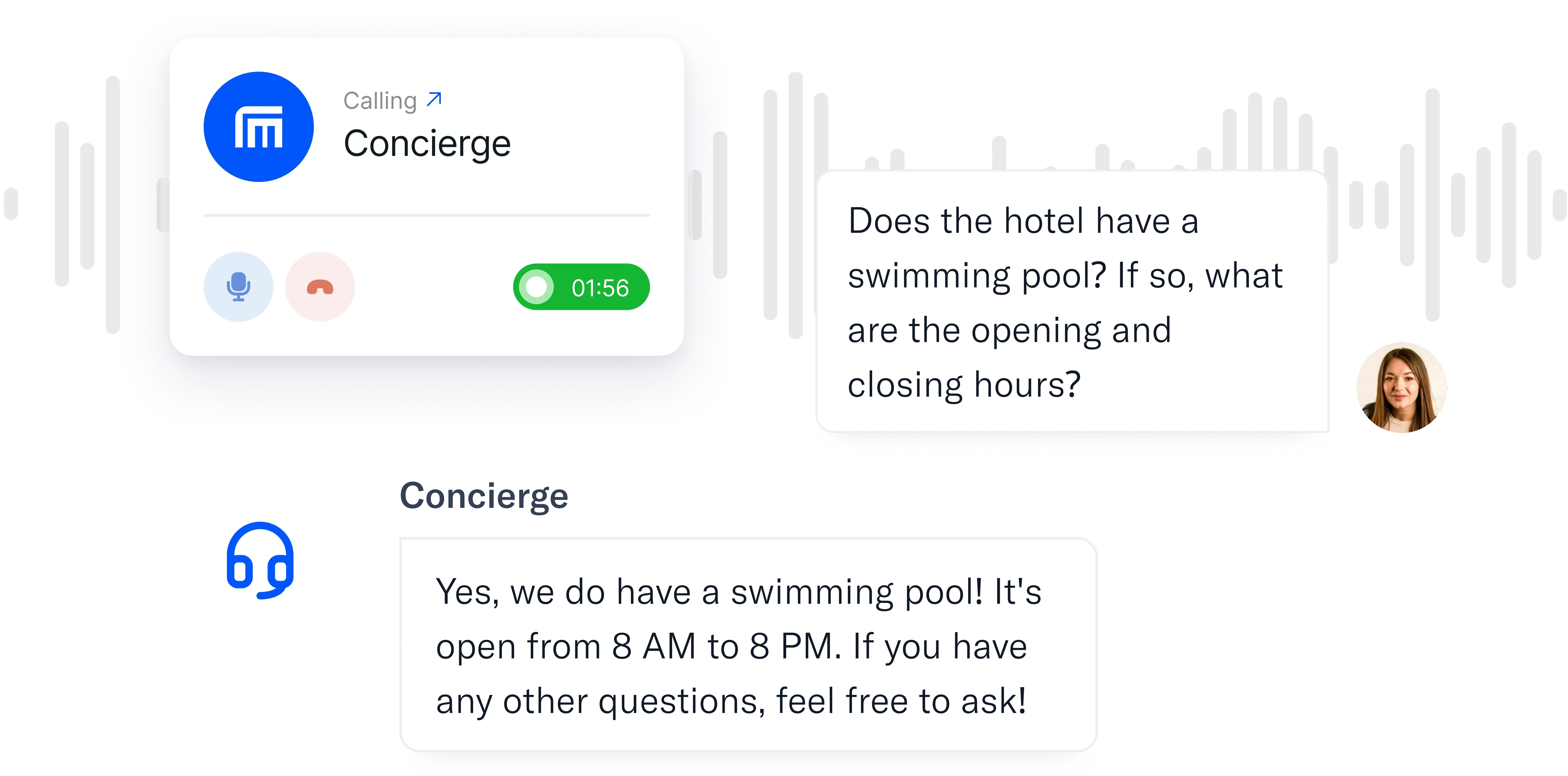
Automated responses to routine guest questions: Handle inquiries about amenities, rates, and availability instantly, 24/7, so staff no longer repeat the same information
Centralized guest communication: All conversations live in one unified platform, eliminating manual task switching and the need for personal phones
Smart routing to the right department: Complex requests reach the correct team member with full context, avoiding repeated explanations and saving time.
Consistent, brand-approved replies: Maintain a professional, on-brand voice across all languages and touchpoints, ensuring reliable service
24/7 availability: Your AI concierge is always on, supporting guests and capturing bookings even during off-hours or staff shortages
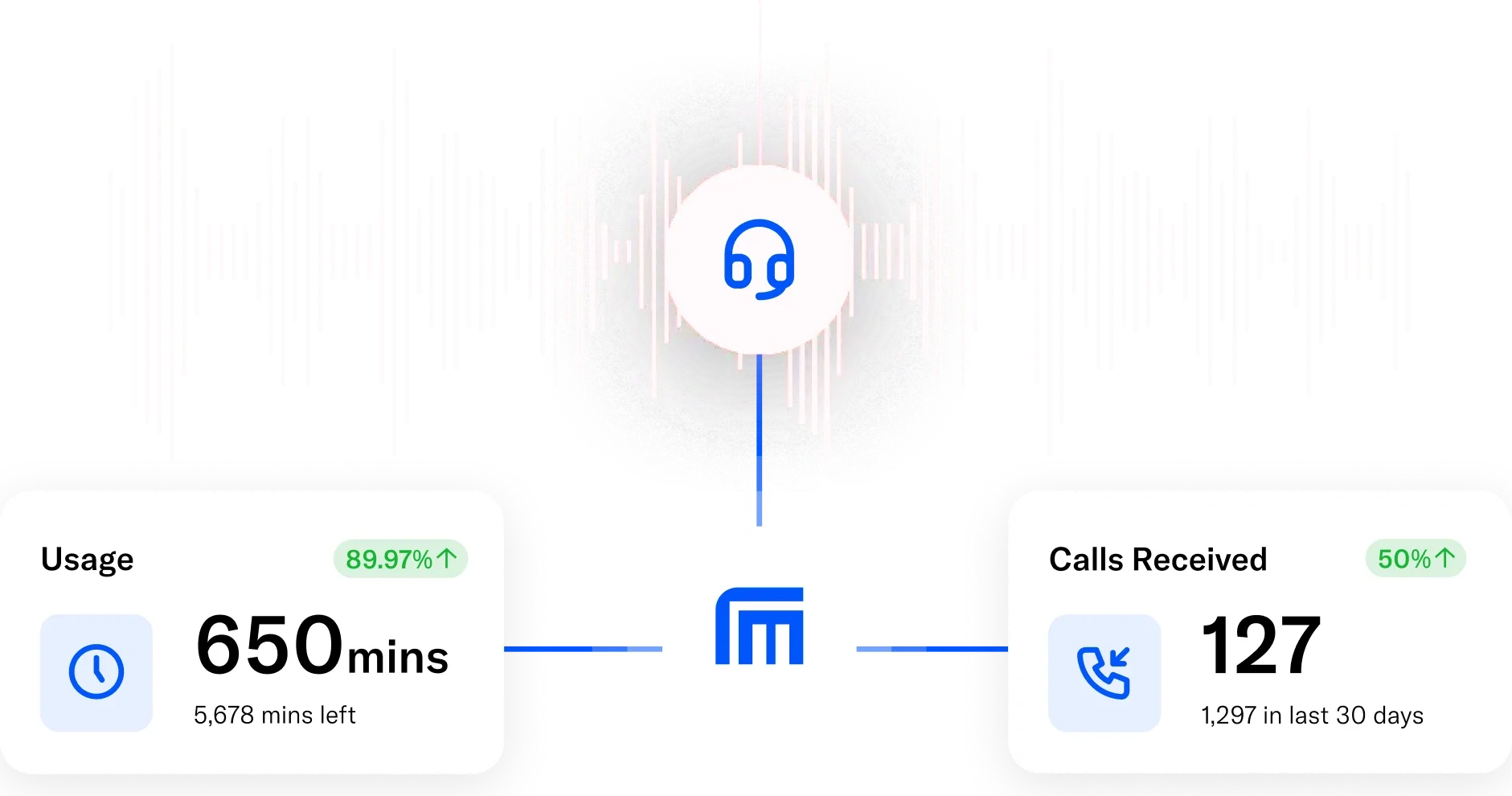
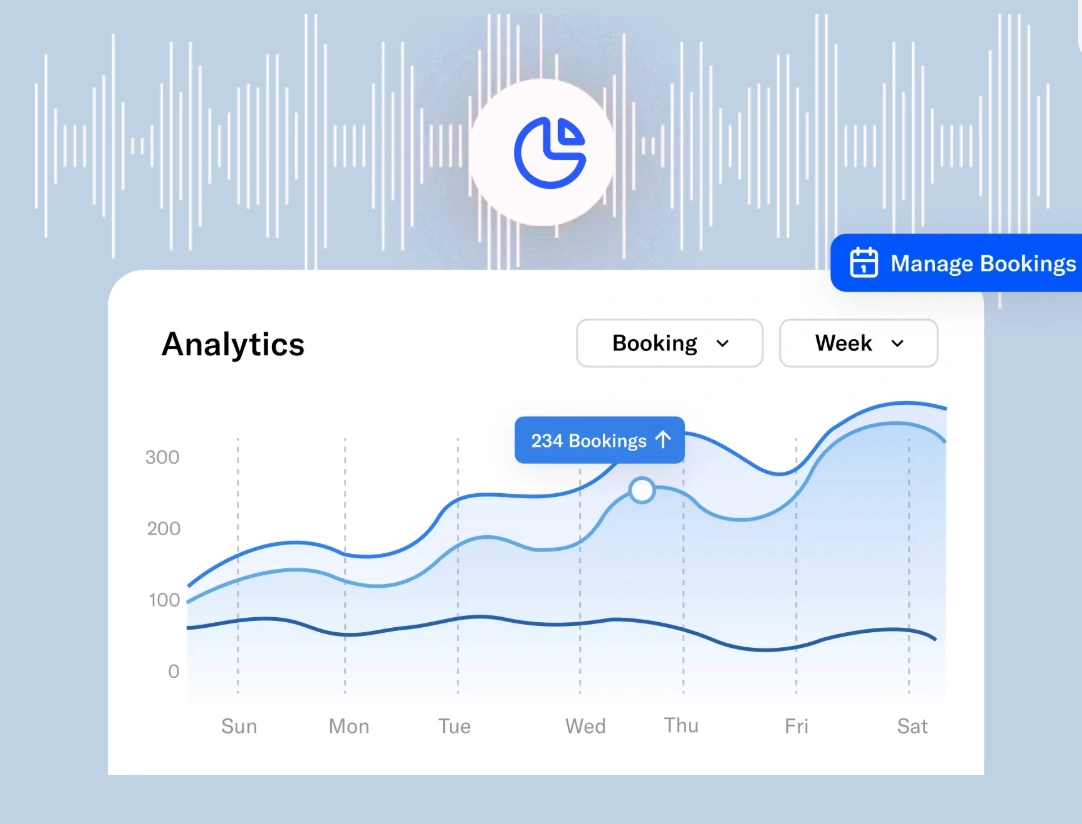
Beyond these metrics, roommaster Concierge enables your team to manage FAQs instantly by adding responses once to the Knowledge Base, which the system then uses automatically during calls. It also tracks calls and bookings in real time through the Analytics tab, breaking down call minutes, reasons, and booking conversion rates.
Plus, set up rules to transfer calls directly to the right staff member, ensuring inquiries about restaurant reservations, events, or other services go to the correct team with full context.
You can also send smart SMS responses instead of repeating information over the phone, giving guests direct links to services and booking pages for faster, more convenient support.
Moreover, by integrating roommaster Concierge with the broader roommaster Guest Experience Suite, your team benefits from a single, unified platform where data, communication, and operations work seamlessly together. This eliminates the “swivel chair problem,” giving staff 4–6 hours back weekly to focus on guest satisfaction and personalized service.
🎥Watch this video to see roommaster Concierge handle guest calls 24/7, answer questions, and capture bookings automatically:
In fact, hotels using roommaster Concierge see clear operational improvements:
Up to 35% fewer repetitive inquiries, freeing staff to focus on personalized service
Around 35% reduction in front desk operational costs
Approximately 35% increase in bookings through better handling of calls and inquiries
60% of guests report higher satisfaction due to faster and clearer service
Enterprise-level SOC 2 Type 1 security and GDPR compliance protect both hotel and guest data, allowing staff to operate confidently while serving international travelers.
With over 30 years in hospitality and 125+ years of combined hands-on hotel management experience, roommaster PMS helps your property handle routine guest needs intelligently while keeping your team focused on delivering exceptional in-person experiences.
💡Case in Point: How Flamingo Motel Captured $38,000 in Missed Revenue with roommaster Concierge
Flamingo Motel, a 108-room landmark in Ocean City, faced a common challenge for independent hotels: missed calls meant missed revenue. Late-night inquiries and high call volumes often went unanswered, and by morning, potential guests had already booked elsewhere.
To solve this, Flamingo Motel implemented roommaster Concierge, the AI-driven, 24/7 virtual assistant built specifically for modern hotels.
As Susie Conway, General Manager, explains:
“Many of our late-night calls went unanswered… By the time we arrived in the morning, guests had already booked elsewhere. With roommaster Concierge, we never miss a reservation.”
Here’s what roommaster Concierge delivered:
24/7 reservation handling, with no missed calls, ever
Instant guest responses and booking confirmations
Automated workflows that freed up valuable staff time
In just 60 days, roommaster Concierge secured 67 new bookings, generating over $38,000 in additional revenue, the revenue that would have otherwise been lost.
Beyond revenue gains, the biggest impact was operational. Staff were no longer tied up managing constant phone inquiries or worrying about after-hours coverage. Instead, they could focus on delivering exceptional in-person guest experiences.
Susie adds:
“The biggest win is that my time and my staff’s time can be spent with guests directly, while roommaster Concierge works in the background delivering excellent service.”
Flamingo Motel’s success shows how independent hotels can leverage AI-powered guest engagement tools to increase bookings, capture missed opportunities, and enhance service, without sacrificing the personal touch that defines their brand.
🎥 See how Flamingo Motel turned missed calls into $38,000 in additional revenue using roommaster Concierge
Why This Is a Competitive Advantage (Not Just Efficiency)
Hotels that streamline guest interactions build lasting value. By leveraging roommaster Concierge as part of a unified guest experience platform, teams can:
Respond to guest inquiries faster, improving satisfaction and creating a positive impression
Focus on personalized service that strengthens relationships and loyalty
Deliver consistent, brand-approved messaging across all interactions
Upsell amenities and services naturally, increasing revenue opportunities
Support staff wellbeing by reducing repetitive tasks and burnout
Ultimately, time saved becomes a strategic advantage. Efficient operations turn routine moments into opportunities for revenue, retention, and stronger brand trust, giving independent properties a competitive edge in any market.
Free Staff Time, Delight Guests, Boost Revenue
Phones aren’t the enemy, manual communication is. Hotels do not need extra hands, they need smarter workflows that let staff focus on guests instead of tasks.
roommaster Concierge transforms routine inquiries and repetitive tasks into seamless, automated interactions. By freeing staff from repetitive work, your team can deliver more personalized service, create memorable guest experiences, and make every moment count.
Time saved becomes more than efficiency and turns into an opportunity for happier guests, stronger loyalty, and increased revenue.
Book a demo today and see how roommaster Concierge can save 4–6 hours per week at your property!
{{cta-strip}}
concierge-one
Turn Missed Calls into Bookings with Hotel AI Agent
Mayela Lozano is a content strategist with a passion for hospitality and technology. She collaborates with roommaster on content creation, highlighting how technology can streamline hotel operations and enhance guest satisfaction. When she’s not creating content, Mayela loves to travel and spend time with her two little ones, discovering new adventures and making memories along the way.
Join Thousands of Hotels Thriving with roommaster
The transition to roommaster is straightforward and efficient. Our implementation team handles data migration including reservations, guest profiles, and historical information.
The transition to roommaster is straightforward and efficient. Our implementation team handles data migration including reservations, guest profiles, and historical information.
Best Hotel Management Software in 2026: 10 Top-Rated Tools Compared
October 15, 2026
Hospitality Technology
Hospitality Technology 2027
October 14, 2026
Hotel Management
Hospitality Trends
Hotel Check-In Kiosk: Enhance the Guest Experience
October 5, 2026
Hospitality Technology
Hotel Management
Hospitality Trends
Hotel Self Check-In: How It Works, Types, Benefits And Setup
October 1, 2026
Hotel Management
Hospitality Trends
Hotel Check-In & Check-Out Times Explained
October 1, 2026
Hospitality Trends
Hotel Management
Cloud-Based Property Management System: Hotel PMS
October 1, 2026
Hotel Management
Cloud PMS
Hotel Management System (HMS): A Complete Guide
September 23, 2026
Hospitality Trends
Hotel PMS
Cloud PMS
Hotel PMS Integration: How It Works for Hotels
September 23, 2026
Hospitality Trends
Hospitality Technology
Hotel PMS
Hotel Management
Cloud PMS
How Hotel PMS Software Transforms Hospitality Management
September 23, 2026
Hotel Management
Marketing
Pet-Friendly Hotel Amenities & Package Ideas That Drive Revenue
September 22, 2026
Join Thousands of Hotels Thriving with roommaster
See how roommaster's unified platform can work for your property. Our team will walk you through features tailored to your specific needs and operations.
.avif)
.png)
.png)
.png)