What Is Booking Pace?
This guide covers the formula, what each pace state means, and how to track it.
Booking pace refers to how fast reservations build for a future date, measured against a benchmark such as the same point last year.
Occupancy shows where a hotel stands today. Pace shows where it is heading. A date sitting at 40% occupancy 60 days out could be fine. It could also be in trouble.
The comparison to last year is what makes the difference. Owners who track pace catch a soft date weeks before it becomes an empty weekend.
Two things make this more valuable than an occupancy snapshot:
- It reflects demand trends early, often weeks ahead of occupancy changes.
- It doubles as a planning signal for staffing and pricing decisions.
How Do You Calculate Booking Pace?
Divide rooms or revenue on the books today by the same figure from last year, then multiply by 100 to get a pace percentage.
The Booking Pace Formula
The most common formula is simple. Divide rooms or revenue on the books today by the same figure from last year. Multiply the result by 100.
Booking Pace Formula: (Rooms or Revenue on the Books Today ÷ Rooms or Revenue on the Books Last Year) × 100 = Booking Pace %
A result over 100% means bookings are ahead of last year. A result under 100% means they are behind.
Some hotels use revenue instead of room count. This accounts for rate changes, not just volume. Either version works if it stays consistent week to week.
Hotel teams often call this number OTB, short for on the books. A pace report is really just OTB pulled at two different points in time.
Pick one version of the formula and stick with it. Switching between rooms and revenue partway through the season makes the trend impossible to read.
A Worked Example With Real Numbers
Picture a 100 room hotel checking pace for a Saturday 60 days out. Today, 35 rooms are on the books for that date.
Last year, at the same point, 28 rooms were on the books for that Saturday. The formula looks like this: 35 divided by 28, times 100, equals 125%.
That 125% means the hotel is running 25% ahead of last year at this point. If nothing changes, that Saturday should finish stronger than it did a year ago.
Now flip the numbers. If only 20 rooms were on the books today, the pace would read 71%. That signals a date falling behind schedule. It likely needs a rate or marketing response soon. A pace this far behind is worth flagging right away.
What Do Ahead, Behind, and On Track Actually Mean?
Ahead of pace means bookings are outrunning last year, behind means they are trailing, and on track means the gap sits inside a range you set for your own property.
Ahead of Pace: What It Signals and What to Do
Ahead of pace means the current number is higher than the benchmark. Demand for that date is stronger than it was last year.
This is the moment to consider raising rates. If two dates pace ahead by a similar margin, it is not a coincidence. It reflects real demand building over time.
Staffing should scale with it too. A date pacing well ahead often needs more front desk coverage. Housekeeping may need the same adjustment.
Reviewing pace weekly catches this early. There is still time to adjust rates or staffing. A single strong day rarely means much on its own. A consistent trend across several dates is the real signal. Pace works best when read as a repeating pattern.
Behind Pace: What It Signals and What to Do
Behind pace means the current number trails the benchmark. Fewer rooms are booked than at the same point last year.
This does not always mean a crisis. A single soft week can pull the number down without changing the season.
It does mean the date needs attention. A short term promotion can help. So can a rate adjustment or a push through direct channels. Either can close the gap before it becomes fixed.
Watching the trend over several weeks matters more than reacting to one report:
- A date behind pace for three weeks straight needs real attention.
- A single dip that recovers on its own does not.
Behind pace calls for action. It usually still has time to turn around. Most behind pace dates recover once a small adjustment is made.
On Track: The State Every Other Guide Skips
On track has no fixed industry number. It means the gap between years sits inside a range. That range is one the property considers normal.
Most owners set that range by looking at their own booking history. A swing of a few points might be routine for one hotel. The same swing could be a red flag for another.
The property with steady group business might treat a five point swing as noise. A property built on last minute leisure demand might see the same swing as meaningful.
Setting the range once turns on track into a real category:
- Base the range on a full year of pace data.
- Without a range, every report reads as good news or bad news, with nothing in between.
Reading pace this way works alongside broader hotel demand forecasting. Both rely on comparing today's numbers to a historical pattern.
How Does Booking Pace Differ for Group and Transient Business?
Group bookings are placed in blocks and do not build gradually, so they need separate pace tracking from transient reservations that pick up day by day.
Why Group Blocks Break the Standard Pace Formula
Group business does not accumulate the way transient bookings do. A single contract can add 50 rooms to the books in one day.
That kind of jump makes the standard pace formula misleading. A hotel could show a huge pace spike from one signed contract. That spike reflects a single deal, not steady demand.
The fix is tracking group and transient pace separately. Group pace should be measured against the contract pipeline. It should not be measured against a daily pickup curve.
Transient pace fits the day by day formula better. Individual travelers book in a pattern closer to a steady curve.
Keep them on separate lines in every pace report you build. This keeps each signal clean and easy to read.
Tracking Transient Pace Day by Day
Transient pace is easier to track since it follows the classic formula without changes.
Pull the number for each date at the same interval every week. Every Monday for the next 90 days works well. Consistency in timing matters more than the exact day chosen.
Watch for dates where transient pace diverges sharply from the pattern around it. A single weekday showing weak pace next to strong days is worth a look. It often points to a specific event or a competitor issue.
Reviewing this weekly, rather than daily, filters out normal booking noise. It keeps the focus on real trends. Small day to day swings rarely need a response.
This kind of segmentation connects directly to a hotel's broader revenue management strategy.
How Do You Track Booking Pace Without Extra Software?
Most property management systems already hold the reservation data needed for a pace report, and a connected revenue tool can extend that view further.
Pulling a Pace Report From Your PMS
A PMS already stores everything a pace report needs. That includes reservation dates, room types, and booking dates. The raw data is not the hard part.
Most systems can export bookings on the books for any future date. Comparing that export to the same export from last year gives the pace number directly.
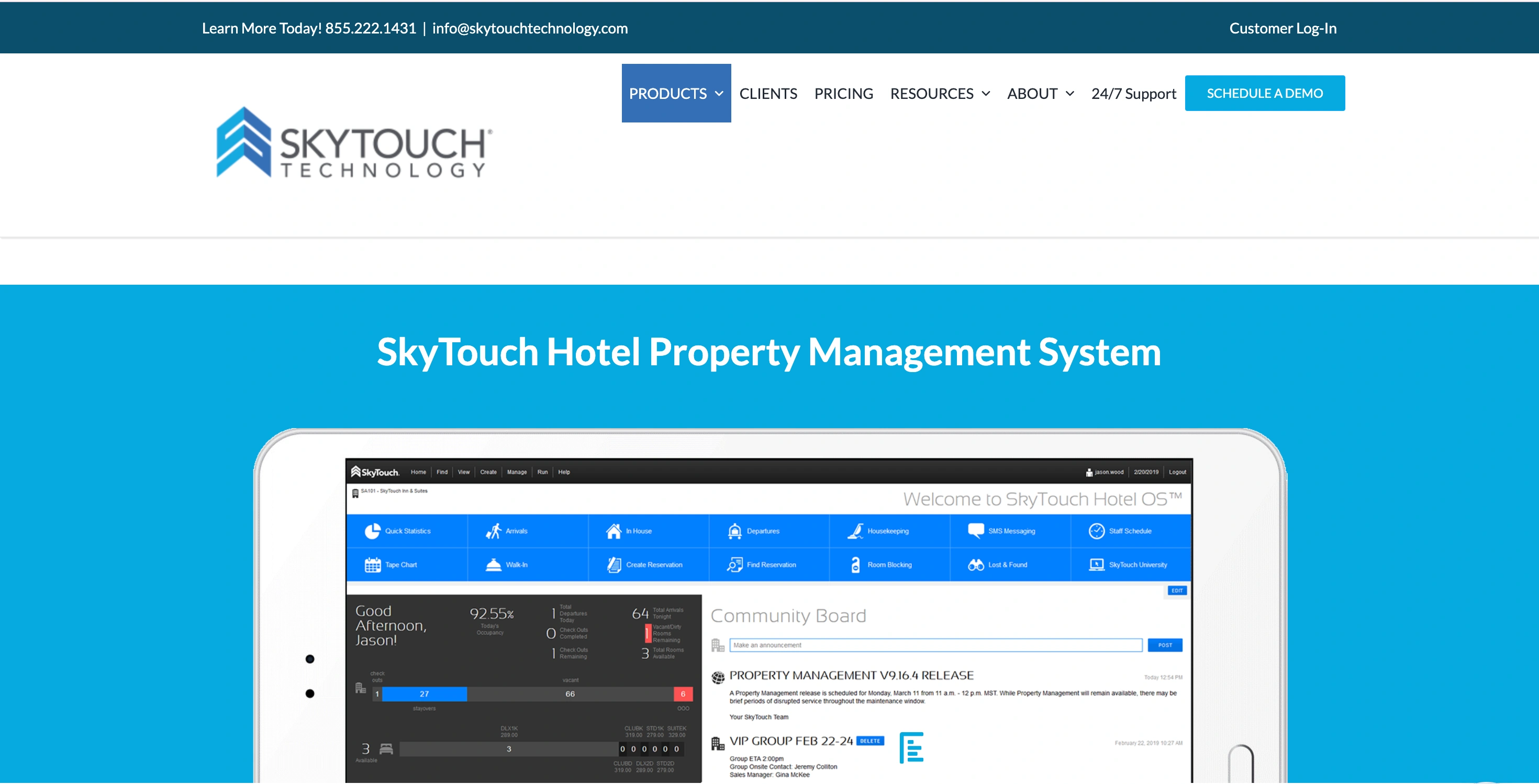
Many PMS platforms include built in reporting that pulls this comparison automatically. An owner can check the next 90 days of pace from one screen.
Setting a recurring weekly export turns this into a habit. Even a simple spreadsheet version beats checking pace only when something feels off. The format matters far less than doing it on a fixed schedule. A weekly habit catches problems a monthly check would miss.
When a Connected Revenue Tool Adds More Value
A PMS report answers the basic question: is this date ahead, behind, or on track. A connected revenue management tool goes a step further.
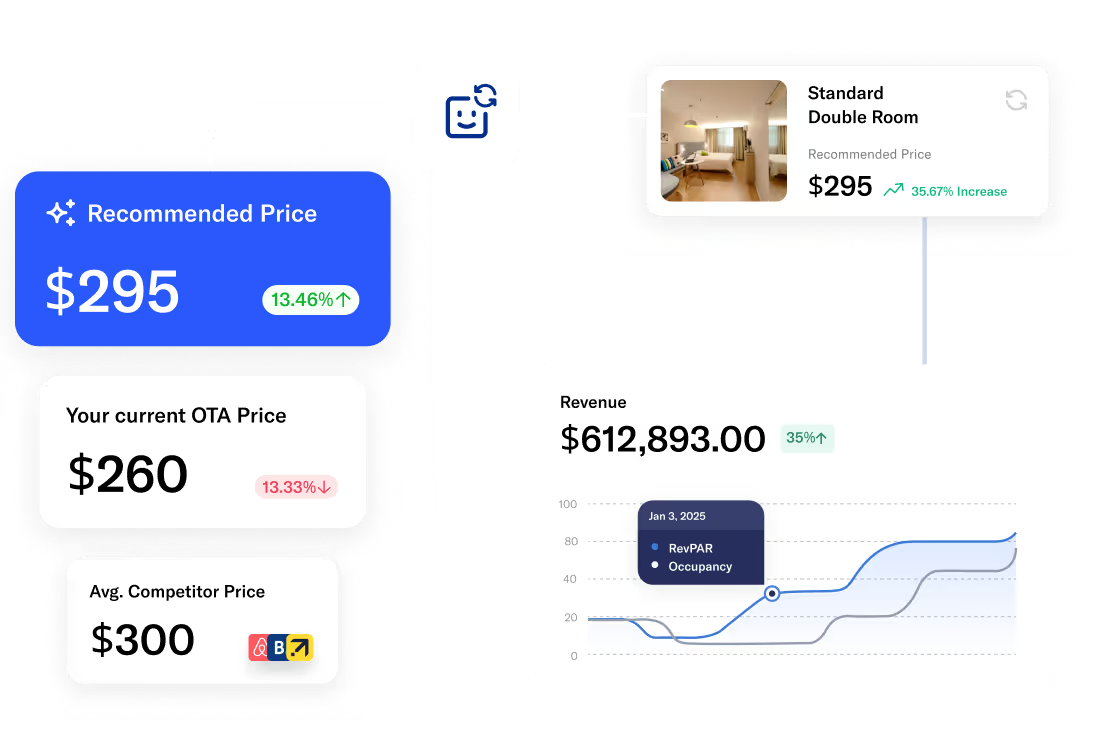
These tools apply pace data automatically to pricing. Rates adjust as the pattern shifts, instead of waiting for a manual review.
Flamingo Motel saw a 35% increase in RevPAR after adopting AI powered revenue management. The system worked alongside its existing PMS. General Manager Susie Conway described the shift plainly. Her team stopped doing spreadsheets and started focusing on guests.
That result came from acting on pace signals faster than a weekly manual check allows. A connected revenue management tool adds this automation on top. It builds on a PMS foundation that already works.
{{revenue-management-one}}
What Mistakes Throw Off a Booking Pace Reading?
The most common pace mistakes are comparing against a distorted prior year, ignoring segment differences, and reacting to a single day of data.
Comparing Pace to a Distorted Prior Year
Last year is not always a fair benchmark. A renovation, a major event, or a temporary closure can distort the comparison year.
Using a distorted year as the baseline makes every reading meaningless. This holds whether the number looks strong or weak. The number reflects a broken comparison, not real demand.
When the comparison year is unusual, some hotels use a two year average instead. Others build a fresh target based on current booking patterns instead.
Either fix works. The key is recognizing the distortion before trusting the number it produces. A clean comparison year matters more than a complicated formula. Get that right first, before adjusting anything else. Most PMS platforms let an owner swap in a different comparison period when needed.
Ignoring Pace by Room Type or Channel
A single overall pace number can hide real problems underneath it. A hotel could look on track overall while one room type quietly falls behind.
Standard rooms might be pacing well while suites lag far behind schedule. Direct bookings might be strong while OTA pace drops. The blended number would still look fine.
Breaking pace down by room type and by channel catches these gaps early. A hotel can then address the specific weak spot. Guessing at a vague overall softness wastes time.
This takes only slightly more effort than tracking one blended number. Most PMS platforms can filter a pace report by room type or channel already. The extra filter is worth turning on from day one. It rarely adds more than a few minutes to the process.
Reacting to One Day of Pace Data
A single day of pace data is noise more often than it is signal. A group inquiry, a weather event, or a system glitch can swing the number sharply.
Reacting to one unusual day usually creates more problems than it solves. This is true whether the reaction is raising rates or panicking about a slow start.
The fix is simple. Look at pace as a trend across several weeks, not one reading. Three consecutive weeks moving the same direction tells a real story. One outlier day rarely does.
Building this habit takes discipline more than any tool. A weekly review, done consistently, filters out noise on its own. This habit matters more than reacting quickly to any single number. It keeps decisions grounded in a real trend.
Booking pace works best as part of a complete revenue management approach. See how roommaster Revenue Management brings pace, pricing, and reporting into one place.
{{cta-strip}}
Frequently Asked Questions
1. What is the booking pace?
Booking pace is a comparison of reservations on the books today against the same point last year for a future date.
2. How do you calculate booking pace?
Divide rooms or revenue booked today by the same figure from last year, then multiply by 100.
3. What does it mean when a hotel is behind pace?
Behind pace means fewer bookings than last year at this point, often signaling a need for rate or promotion changes.
4. What counts as on track for booking pace?
On track means the gap versus last year sits inside a range the property has set as normal for itself.
5. How is group pace different from transient pace?
Group pace reflects contracts signed in blocks, while transient pace builds gradually from individual daily bookings.
6. Can a PMS track booking pace without extra software?
Most property management systems already store the data needed to build a booking pace report directly.


.png)
.png)
.png)