Revenue managers spend most of their week buried in spreadsheets, pulling reports, and manually updating rates, which slows decisions and limits revenue opportunities.
Manual processes fail to keep up with real-time demand, causing hotels to miss up to 5% of annual revenue, while AI-driven software such as ampliphi RMS boosts forecasting accuracy by up to 20%.
Plus, when you integrate ampliphi RMS with roommaster PMS, teams automate pricing, forecasting, and reporting, freeing roughly 4–6 hours per week per property for strategic work.
With time back, revenue managers optimize channel mix, plan scenarios, collaborate with sales and marketing, and focus on profitability, turning speed and insight into measurable revenue growth.
Revenue managers carry some of the heaviest operational loads in a hotel. They manage rates, pull reports, adjust prices, forecast demand, and chase data across disconnected systems. It’s no surprise that even mid- and large-scale hotels still ask their revenue teams to manually cross-check competitor pricing, track local events, and adjust rates accordingly. Too much of this work consumes valuable time and drains energy from high-impact strategy.
In fact, hotels using legacy tools or manual spreadsheets struggle to react to demand shifts quickly enough to capture revenue opportunities. Modern automation changes this by allowing revenue teams to focus on outcomes instead of repetitive tasks.
In this article, we explore where revenue managers lose valuable time and why manual pricing no longer keeps pace with demand. We’ll also discover how the AI-powered Revenue Management System (RMS) and roommaster hotel PMS software work together to save hours each week while driving stronger revenue and competitive performance.
The Revenue Manager’s Time Trap
If you ask most revenue managers what how they spend their days, it is not strategy. They update rates across multiple online travel agencies (OTAs), check hotel channel manager exports, run reports from the PMS, and reconcile spreadsheets.
Even today, many hotels require revenue teams to track competitor pricing and local events by hand, leaving little time for higher-value decisions.
In fact, the stakes are quite high. OTAs typically charge 15–30% commission, while direct bookings cost only 3.5–4.5%. This means that for a $200 room, a 20% OTA commission results in $40 in lost revenue per night. Over 1,000 OTA bookings annually, that’s $40,000 in potential profit. Same guest. Same room. Same stay, but dramatically different profitability.
Teams relying on traditional methods spend most of their time gathering and cleaning data rather than acting on it. The result is slower decisions, missed opportunities, and less time for high-impact revenue strategy.
AI-enabled systems like ampliphi RMS solve this problem by automating competitor monitoring, forecasting, and pricing updates. Hotels using AI forecasting achieve up to 20% better accuracy than those relying on spreadsheets. AI-powered pricing automation also drives up to 35% revenue uplift compared to manual pricing alone.
However, teams that rely on traditional methods still spend most of their time gathering and cleaning data rather than acting on it. The result is slower decisions, missed opportunities, and less time for high-impact revenue strategy.
Where Revenue Managers Lose the Most Time
Let’s break down the typical weekly workload for a revenue manager still on legacy or manual processes:
Daily reporting and spreadsheet work: Without automation, revenue managers often spend nearly 3 hours per day compiling and reconciling data into reports from the PMS and OTAs. That adds up to roughly 15 hours per week just pulling and preparing reports manually.
Manual rate adjustments: On top of that, teams spend additional hours each week manually updating pricing across channels and adjusting hundreds of rates without automation. Revenue managers often adjust rates across multiple systems and spreadsheets each morning before strategic work begins.
Validating forecasts and reconciling data: A significant share of time is spent double-checking manual forecasts and cross-referencing data across different systems to ensure accuracy before pricing decisions. This work can take several hours per week when done without AI forecasting automation.
These manual tasks delay decisions and limit responsiveness to shifting demand, often resulting in missed key revenue windows and slower strategic pricing execution. Automation substantially reduces the time spent on these operational duties and lets revenue teams act faster and more strategically.
It’s no surprise that even mid- and large-scale hotels still ask revenue teams to manually track competitor pricing, monitor local events, and adjust rates accordingly.
These manual tasks delay decisions and limit responsiveness to shifting demand, often resulting in missed key revenue windows and slower strategic pricing execution. AI-powered automation and RMS like ampliphi substantially reduce the time spent on these operational duties and let revenue teams act faster and more strategically.
{{revenue-management-one}}
Why Manual Revenue Management No Longer Works
Manual revenue management was built for a slower, simpler market. Today’s demand patterns shift by the hour, competitors update rates automatically, and guests compare prices across dozens of channels in seconds.
Here’s why traditional addproaches doesn’t work:
1. Demand moves faster than humans can react
Events, weather, flight disruptions, competitor promotions, and booking pace all influence demand in real time. When revenue managers rely on manual reports and periodic rate reviews, pricing decisions lag behind market changes.
By the time rates are updated, the revenue window may already be closing.
2. Data lives in too many places
Manual revenue management depends on exporting data from the hotel PMS system, hotel channel manager, OTAs, and market intelligence tools into spreadsheets.
This fragmentation increases the risk of errors, slows decision-making, and forces teams to spend more time consolidating data than acting on it. In fact, 79% of mid‑sized hotel chains report difficulty tracking demand shifts effectively using manual methods. This forces them to spend days each week just pulling and reconciling reports.
3. Forecasting accuracy suffers
Spreadsheets rely heavily on historical averages and human assumptions. Modern AI-driven systems, by contrast, analyze far more variables simultaneously and adapt continuously.
It improves demand prediction by factoring in real‑time booking pace, weather patterns, local events, and competitor moves, leading to more reliable, adaptive pricing decisions.
4. Manual pricing misses revenue opportunities
Without automation, rate changes occur in batches rather than dynamically. That means:
Underpricing during high-demand spikes
Overpricing during soft demand periods
Slower reactions to competitor moves
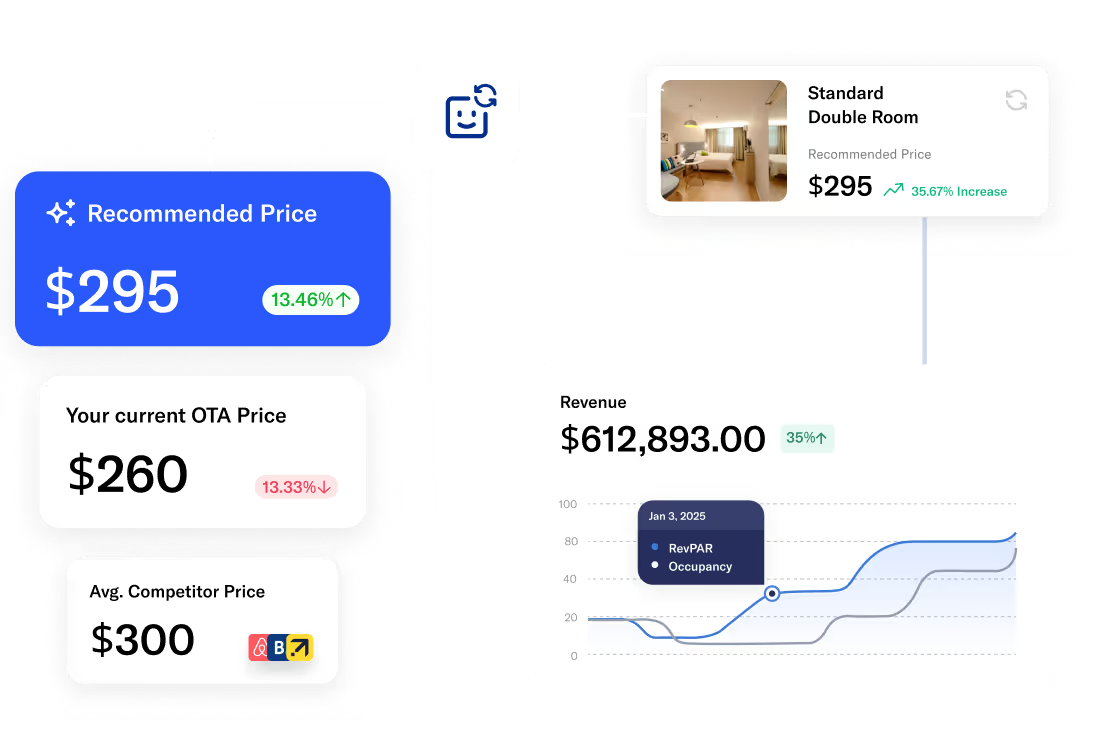
AI-powered pricing systems commonly generate up to 35% increase in revenue per available room (RevPAR) compared to static pricing alone. Plus, it enables average daily rate (ADR) and occupancy boosts exceeding 15% in real‑world cases.
5. It drains strategic focus
Perhaps most importantly, manual revenue management traps skilled revenue leaders in operational work.
Instead of analyzing trends, identifying new segments, or building a long-term strategy, they spend hours doing mundane tasks.
The Real Cost of Slow Revenue Decisions
When revenue managers make pricing decisions too slowly, the consequences hit the bottom line. For example:
Nearly 73% of leaders estimate that organizations lose up to 5% of annual revenue due to delayed decisions and execution. These “slowness tax” losses come from missed market opportunities, stalled initiatives, and slower reactions to competitive shifts.
Roughly half of leaders say slow decision‑making cuts at least 4% off their topline revenue, while less than 10% believe it costs less than 1%. The biggest cause cited wasn’t a lack of data, but a desire for more certainty before acting, which delays decisions until they feel “perfectly informed.” In volatile markets, that delay often comes after the optimal revenue window has closed.
Manual processes update once or twice a day at best. This means slow adopters lose the ability to capitalize on small demand windows and optimizations. In the hospitality sector, that speed gap translates directly into revenue, with advanced pricing strategies delivering 15–30% higher revenue performance than static or slow pricing methods.
Beyond immediate pricing decisions, slow revenue decisions often reflect broader structural issues, such as misaligned sales, marketing, and analytics functions. According to a recent study, fragmented go‑to‑market processes create significant revenue risk, with misalignment itself representing a costly drag on growth unless revenue enablement execution improves.
Organizations that speed up pricing and execution cycles see measurable gains in revenue, market share, and strategic flexibility.
Enter AI-Powered ampliphi Revenue Management (Built for Automation)
Hotels no longer have to react to demand. Instead, they can anticipate it with AI. ampliphi RMS and the roommaster Hotel Revenue Management Software work together seamlessly to automate pricing, forecasting, and performance tracking, giving revenue teams more time to focus on strategy and guest experience.
By integrating both engines, independent hotels gain AI-driven intelligence without the complexity of traditional systems. This combination delivers dynamic, rule-based pricing, AI-powered forecasting, and actionable insights from a single unified platform, eliminating the need for manual spreadsheets and multiple logins.
Here’s how it supports modern revenue management in practice:
1. Anticipate demand fluctuations
ampliphi RMS continuously analyzes booking pace, market trends, and competitor activity to detect early signals of rising or soft demand. roommaster Revenue Optimization adds rule-based dynamic pricing, adjusting rates automatically based on occupancy thresholds, lead times, length of stay, and seasonal or event-based trends.
Together, they ensure hotels act proactively rather than reactively.
2. AI-powered rate recommendations
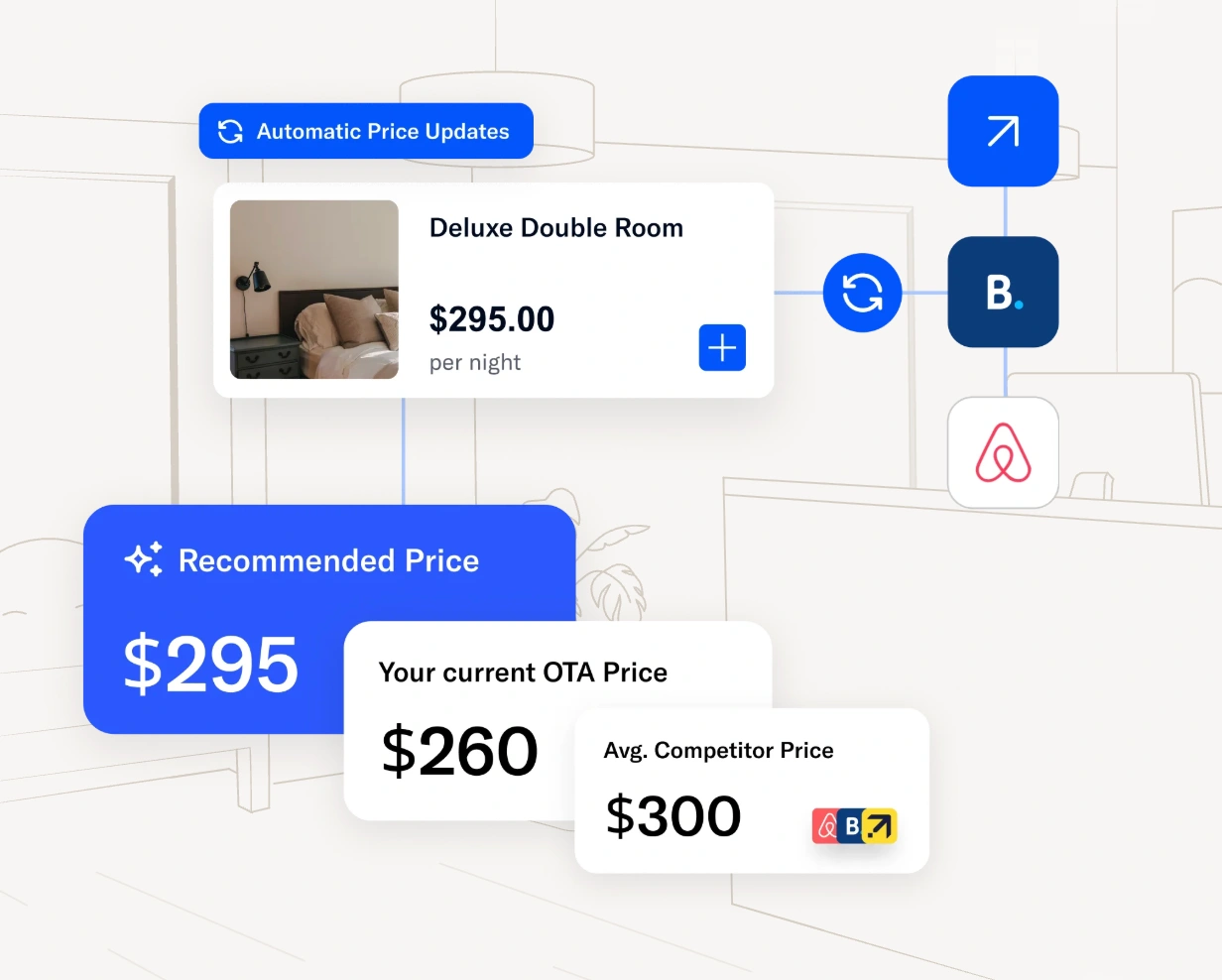
ampliphi RMS generates data-driven rate suggestions for all room types and channels.
When paired with roommaster’s dynamic pricing engine, rates automatically update across OTAs, direct channels, and multiple properties, factoring in competition, booking pace, and forecasted demand.
3. Real-time market response
Hotel demand shifts quickly, and pricing needs to move just as fast. When market conditions change, ampliphi RMS analyzes live data and sends optimized pricing decisions directly to roommaster. roommaster then automatically updates those rates across your connected channels.
Here’s what that means in practice:
Faster reaction to market changes
Consistent pricing across all booking channels
No manual rate uploads or spreadsheet reconciliation
Revenue managers stay competitive without bouncing between systems. Instead of chasing updates, they focus on strategy while the system keeps rates accurate and aligned in real time.
4. Transparent analytics and reporting
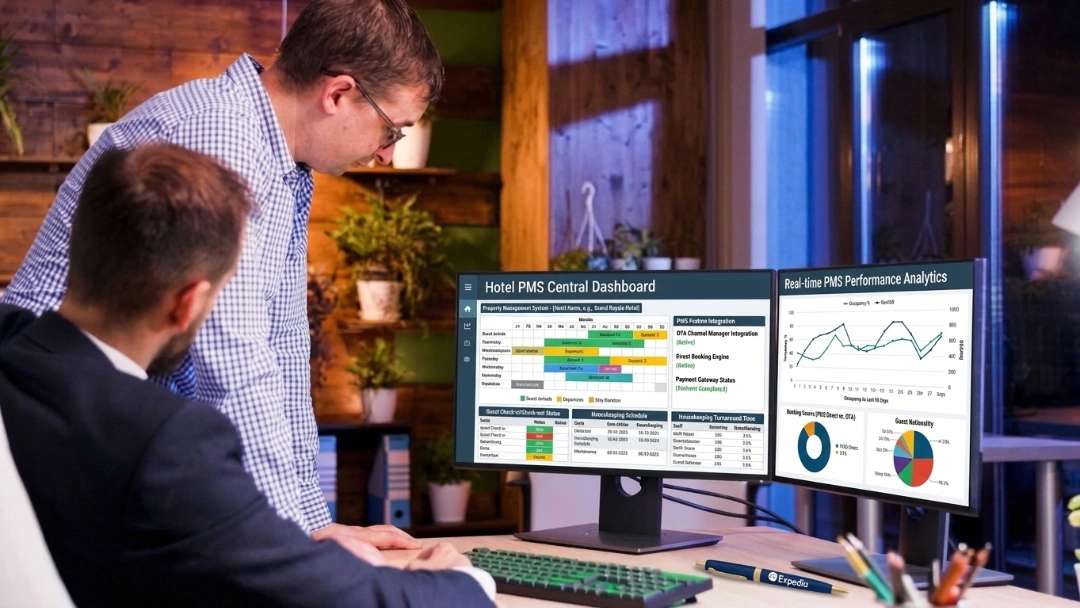
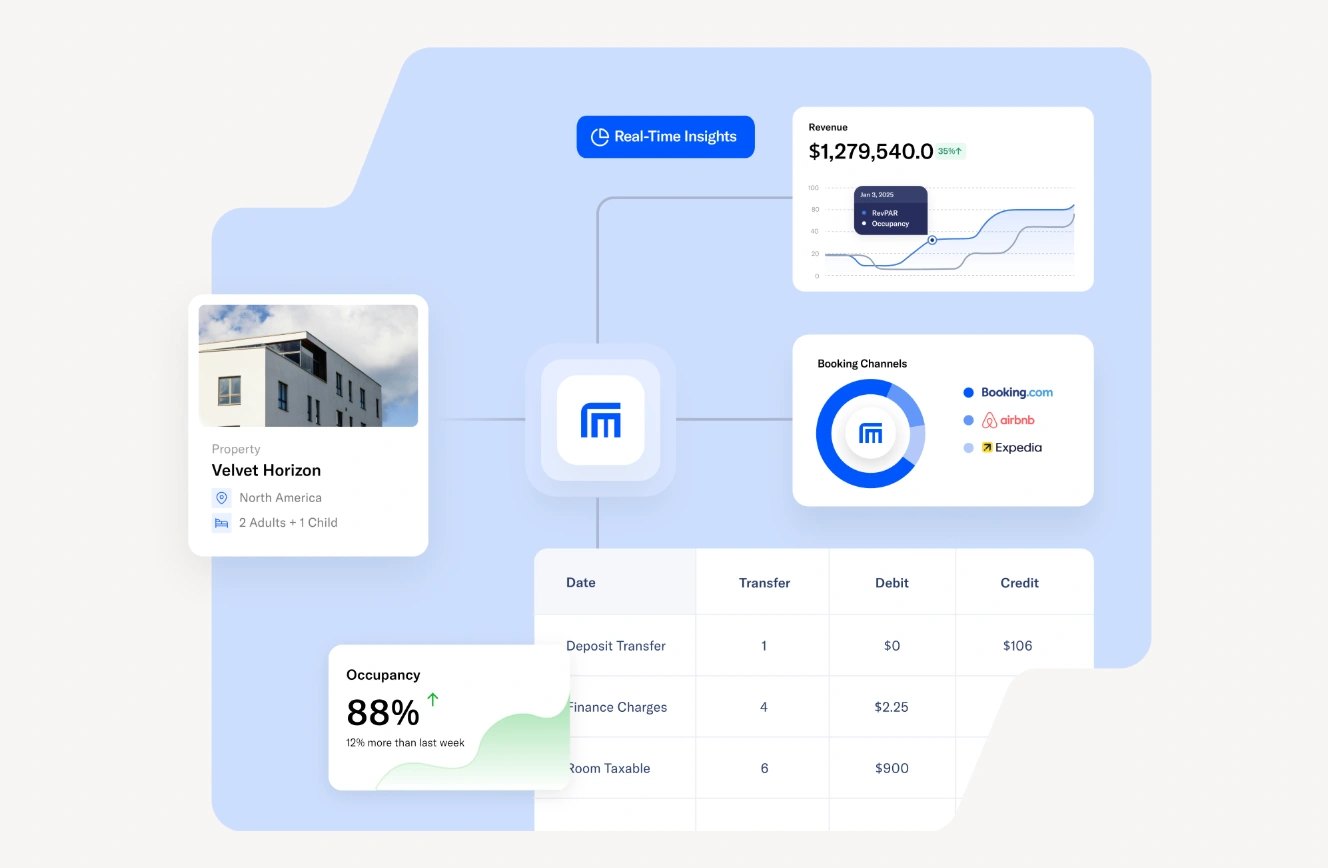
roommaster Hotel Reporting Software consolidates data from ampliphi RMS and your PMS, providing 270+ built-in reports and customizable dashboards. Revenue managers can track RevPAR, ADR, occupancy, booking pace, and profitability by room type, channel, or segment in real time.
This transparency empowers teams to see exactly how rate changes impact revenue and strategy outcomes.
{{revenue-management-two}}
5. Competitor comparison
Know exactly where you stand in your market without manual parity checks. ampliphi tracks competitor pricing in real time and delivers AI-powered alerts when competitors change rates or impact your strategy.
roommaster and ampliphi together automatically surface this data so revenue managers can act confidently, maintain rate premiums, and protect visibility. Some of the key benefits of real-time competitor monitoring for hotels include:
Live competitor insights built into your dashboard
AI alerts for rate changes across dates, segments, and room types
Confident pricing decisions without overreacting
6. Events & market intelligence
Stay ahead of demand before it hits. ampliphi’s AI-driven market intelligence tracks local events, pickup velocity, OTA behavior, and forward-looking signals that affect your hotel. Revenue managers get early insight into high-demand periods, so pricing, restrictions, and promotions can be prepared proactively.
Here’s what it offers:
AI-powered event and calendar-driven demand tracking
Early alerts to optimize occupancy and pricing
Proactive management of promotions and restrictions
Protect revenue during peak periods and drive strategic pricing decisions
7. Portfolio-level visibility and control
For multi-property operators, including hotel groups, the integration offers a single view of rates, occupancy, and revenue across all hotels. Each property can maintain local flexibility while corporate teams monitor portfolio-wide patterns and enforce a consistent strategy.
Here’s what it looks like:
Balance centralized oversight with property-level decision-making
Streamline multi-property rate management
Reduce operational complexity while maximizing revenue
8. Operational outcomes
Hotels that adopt ampliphi RMS integrated with roommaster Revenue Management Suite see measurable improvements:
Up to 35% increase in RevPAR with dynamic, automated pricing
Up to 40% higher ADR while boosting occupancy
29 hours saved every month per Revenue Manager
9. Auto pilot vs co-pilot
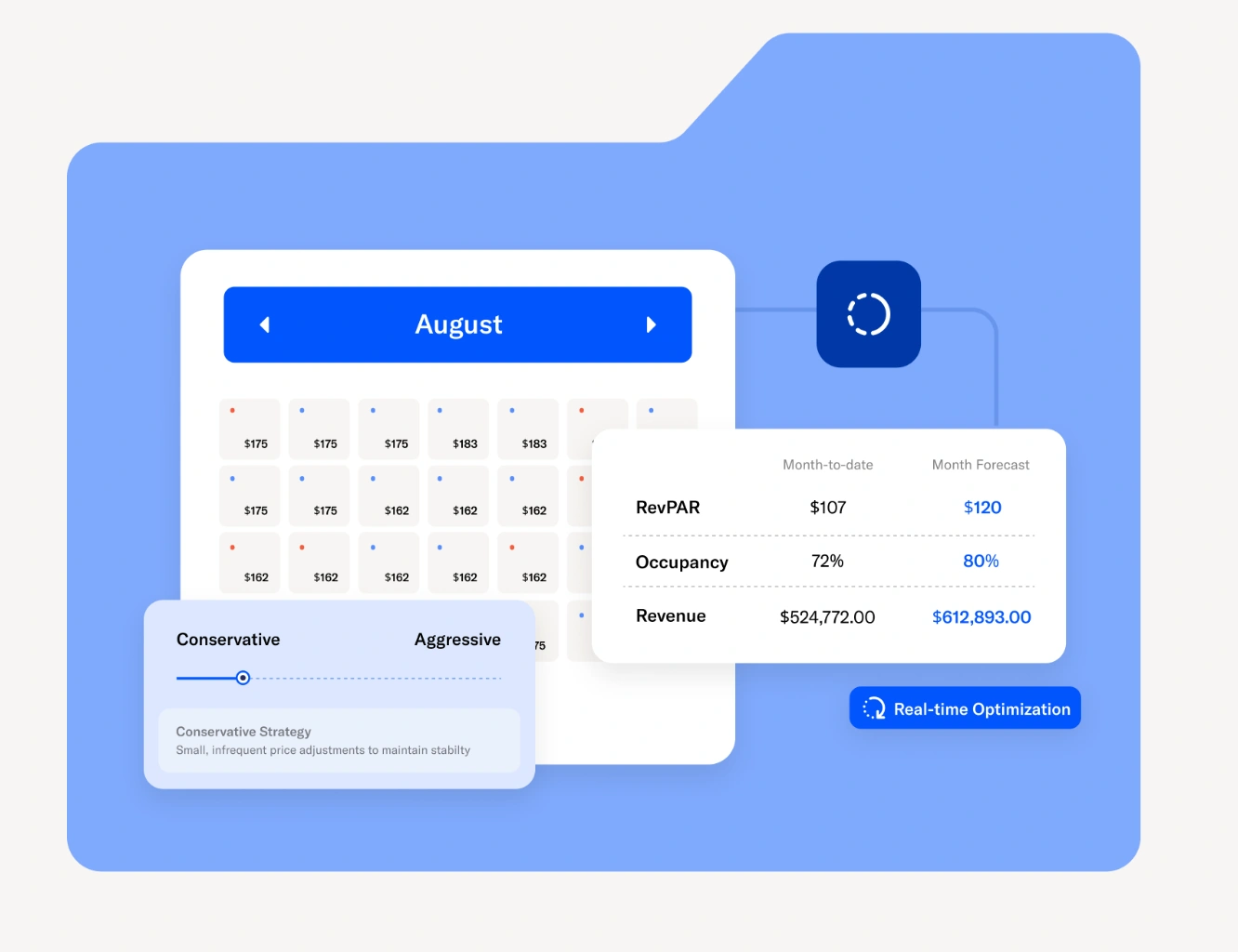
When deciding how AI applies pricing, you can choose full automation or guided control. Auto Pilot publishes recommended pricing automatically, while Co-Pilot lets revenue managers review and approve before going live.
Both options leverage AI forecasting and competitor data, giving teams flexibility, control, and confidence in every decision. Here’s how:
Full automation or guided decision-making
Reduce manual rate updates while staying in control
Minimize missed revenue opportunities and pricing errors
Why ampliphi RMS Works Better with roommaster PMS
AI-powered ampliphi RMS is powerful on its own, but when paired with roommaster PMS, it becomes a unified revenue management system designed for ambitious hoteliers. This integration ensures AI-driven pricing, forecasting, and insights flow seamlessly across your property, eliminating manual work and outdated processes.
Here’s why this integration matters:
Unified data, one login: Rates, occupancy, and booking trends sync automatically between ampliphi RMS and roommaster hotel PMS software, removing the “swivel-chair problem” and reducing errors.
Dynamic pricing across channels: AI-powered rate recommendations from ampliphi are applied instantly through roommaster’s hotel revenue management software, keeping direct and OTA channels consistent.
Smarter forecasting and reporting: AI forecasts feed directly into roommaster’s reporting suite, giving teams real-time insights on RevPAR, ADR, and occupancy without extra work.
Operational efficiency: Staff no longer spend hours updating spreadsheets or cross-checking channels. The integration frees up 4–6 hours per week per property to focus on strategy and guest experience.
Scalable for any property: From a single hotel to large portfolios, the AI-driven integration adapts to property-level needs while providing portfolio-level visibility.
💡Case in Point: How Flamingo Motel Used AI Pricing to Drive a 35% Revenue Jump
Flamingo Motel, an Ocean City, Maryland landmark, has welcomed generations of travelers with its 108 ocean-view rooms and family suites. Guests love its friendly service and unbeatable location just steps from the beach. The motel has relied on roommaster for nearly 30 years, evolving alongside the property to stay efficient and guest-focused.
Before using roommaster’s revenue intelligence powered by ampliphi RMS, Susie, the General Manager, shared:
"We were constantly having to manually update our rates two to three times a day… spikes in demand went missed with lost revenue."
After integrating ampliphi AI with roommaster hotel PMS system, the motel’s pricing process transformed. The AI continuously monitors demand, local events, and competitor rates, then automatically recommends updates so the team never misses a chance to maximize revenue.
Susie says:"Now with roommaster and ampliphi AI, the process is much smarter and faster… we have seen a 35% increase in our revenue per available room this holiday season!"
The system handles rate optimization, tracks demand and competitor pricing in real time, and integrates seamlessly with roommaster PMS, giving staff more time to focus on guests.
➤ 🎥 Watch this video to see how Flamingo Motel boosted revenue, saved hours of manual work, and let AI take charge of pricing.
What Revenue Managers Do With the Time They Get Back
When revenue managers stop doing repetitive work, they start doing real revenue work, including:
Scenario planning: Teams can run more what-if analyses and test rate strategies before committing.
Channel mix optimization: Revenue managers can fine-tune the distribution strategy for direct versus OTA bookings.
Collaboration with sales & marketing: Instead of chasing data for internal meetings, revenue teams can work cross-functionally to drive campaigns and packages.
This shift unlocks strategic capacity and drives better business outcomes.
From Tactical Work to Strategic Impact
If you think automation replaces revenue managers, you’re mistaken. AI and analytics give teams the tools to make faster, smarter decisions, freeing them from manual reporting and repetitive tasks. They can act as true business partners for general managers and owners, forecast with confidence, price with precision, and optimize channel mix and promotions in real time.
roommaster hotel PMS system break down data silos, streamline operations, and turn strategy into action. When your systems talk, your team makes better decisions faster, improves profitability, and drives measurable results.
If you’re earlier in your evaluation, start by understanding what actually drives revenue impact in the first 90 days. Download The 90-Day Hotel Revenue Acceleration Playbook for practical, step-by-step strategies used by modern revenue teams.
When you’re ready to see how this translates into your own property’s workflows and data,book a demo to see how ampliphi and roommaster support smarter revenue decisions for your property.
{{cta-strip}}
revenue-management-one
Put Your Hotel Pricing Optimization on Autopilot with AI
Mayela Lozano is a content strategist with a passion for hospitality and technology. She collaborates with roommaster on content creation, highlighting how technology can streamline hotel operations and enhance guest satisfaction. When she’s not creating content, Mayela loves to travel and spend time with her two little ones, discovering new adventures and making memories along the way.
Join Thousands of Hotels Thriving with roommaster
The transition to roommaster is straightforward and efficient. Our implementation team handles data migration including reservations, guest profiles, and historical information.
The transition to roommaster is straightforward and efficient. Our implementation team handles data migration including reservations, guest profiles, and historical information.
Hotel Check-In Kiosk: Enhance the Guest Experience
October 5, 2026
Hospitality Technology
Hotel Management
Hospitality Trends
Hotel Self Check-In: How It Works, Types, Benefits And Setup
October 1, 2026
Hotel Management
Hospitality Trends
Hotel Check-In & Check-Out Times Explained
October 1, 2026
Hospitality Trends
Hotel Management
Cloud-Based Property Management System: Hotel PMS
October 1, 2026
Hospitality Trends
Hotel PMS
Cloud PMS
Hotel PMS Integration: How It Works for Hotels
September 23, 2026
Hospitality Trends
Hospitality Technology
Hotel PMS
Hotel Management
Cloud PMS
How Hotel PMS Software Transforms Hospitality Management
September 23, 2026
Hospitality Technology
Best Hotel Metasearch Management Software In 2026
September 22, 2026
Hospitality Trends
Best Hotels in New Orleans: A Complete Guide 2026
September 10, 2026
Hospitality Trends
Best Hotels in Philadelphia: A Complete Guide 2026
September 10, 2026
Hospitality Trends
Best Hotels in San Francisco: A Complete Guide 2026
September 10, 2026
Join Thousands of Hotels Thriving with roommaster
See how roommaster's unified platform can work for your property. Our team will walk you through features tailored to your specific needs and operations.





.png)
.png)
.png)