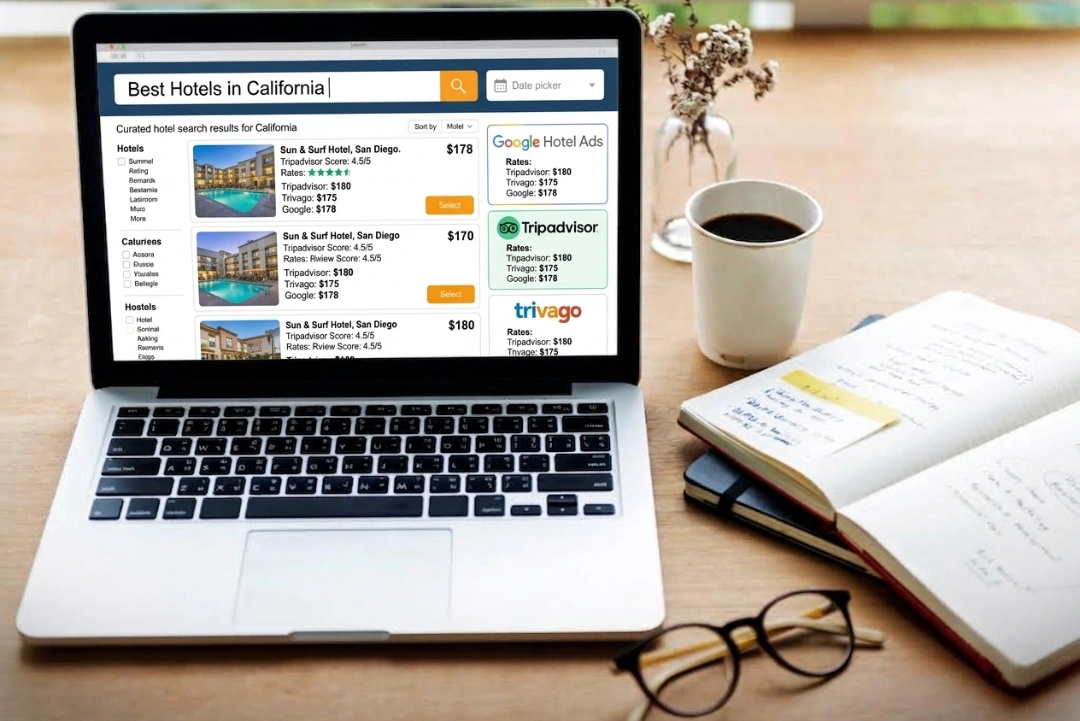
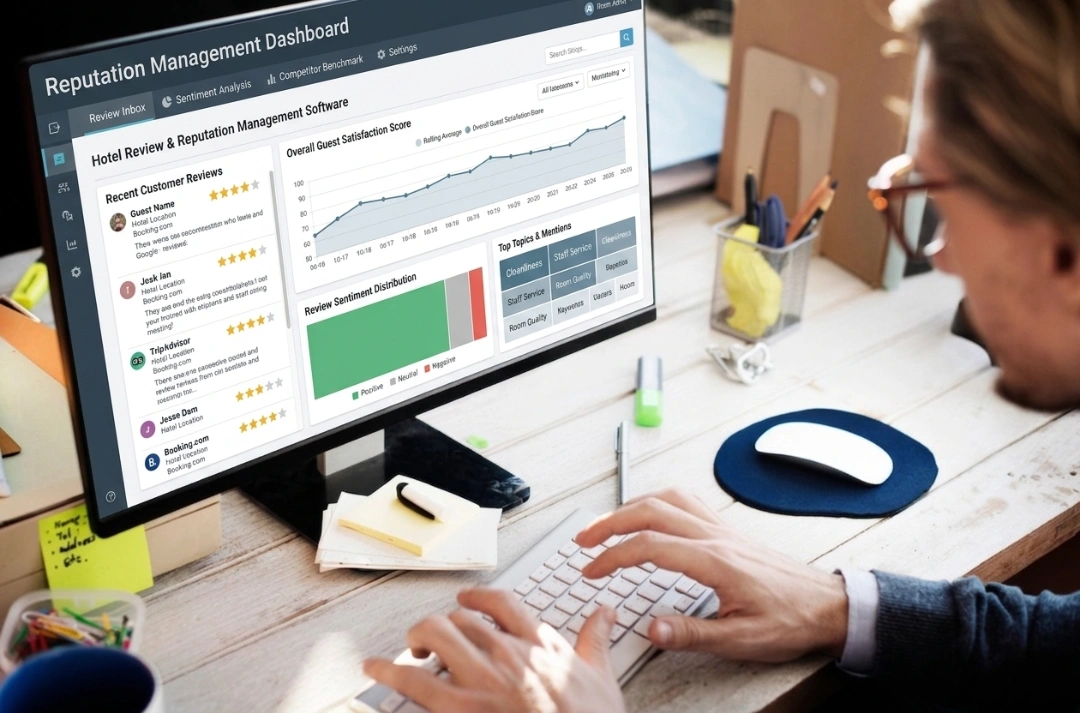
Instant Answer
A hotel pricing strategy is a documented method for setting and adjusting room rates based on demand, cost, competition, and guest segment, built to maximize total revenue while balancing occupancy. Rather than reacting in a panic, you use a repeatable framework, and increasingly a dynamic or AI-driven system, to raise rates when demand is high and protect occupancy when it is low. The goal is always the same: find the balance of average rate and occupancy that grows revenue while keeping guests happy.
What Is a Hotel Pricing Strategy?
A hotel pricing strategy is a documented system for setting and adjusting room rates based on demand, cost, competition, and guest segment, built to protect profit rather than react in a panic. In short, it is the way a hotel decides what to charge, and when to change it, to maximize total revenue while balancing occupancy.
The best strategies are not static. A modern pricing strategy is a dynamic revenue management approach that adjusts rates in response to real-time demand, operating costs, and market competition. It uses your own performance data, guest behavior, market demand, and competitor activity to set the optimal rate for each date. The aim is to find the balance of average rate and occupancy that maximizes revenue while keeping guests satisfied.
How Does Hotel Pricing Work?
Hotel pricing works by finding the right number between two limits for every date: a floor you should never sell below, and a ceiling the market will not pay above. Your floor is set by cost, specifically your cost per occupied room, and your ceiling is set by demand, or what travelers are willing to pay on that date. Everything in between is a pricing decision.
Within that range, four inputs shape the rate:
- Cost: what it takes to service the room, which protects you from selling at a loss.
- Demand: how much travelers will pay, driven by seasonality, day of week, booking pace, and local events.
- Competition: what comparable hotels in your market are charging for the same dates.
- Guest and channel: the segment booking (corporate, leisure, group) and the channel they use, since an OTA booking nets you less after commission than a direct one.
From there, most hotels build a rate ladder. You set a Best Available Rate (BAR) as the reference point for a date, then price other rate plans, room types, and segments up or down from it. As the date approaches and conditions change, the rate moves: it rises as a date fills or demand spikes, and eases if bookings lag. Finally, that rate has to reach the guest consistently. Whatever price you set flows out to your website, booking engine, and every OTA through a channel manager, so the rate stays in parity across channels. Because demand shifts constantly, most hotels now let a revenue management system adjust these rates automatically rather than editing them by hand.
Importance of a Hotel Room Pricing Strategy in the Hotel Industry
A room is a perishable product. If a night goes unsold, that revenue is gone forever, there is no way to sell yesterday's empty room. That single fact is why a deliberate pricing strategy matters more in hotels than in almost any other business, and why pricing well is one of the highest-return things a hotel can do.
Here is what a strong room pricing strategy delivers:
- More revenue from the same rooms: the right rate on the right date captures demand you would otherwise leave on the table, lifting RevPAR without adding a single room.
- The right balance of rate and occupancy: chasing occupancy with low rates can earn less than a well-priced hotel with a few empty rooms. A strategy keeps you optimizing for profit, not just a full house.
- Protection from reactive discounting: without a plan, hotels panic-drop rates when bookings slow, which trains guests to expect low prices and erodes ADR. A documented strategy replaces panic with process.
- A stronger competitive position: pricing intelligently against your comp set keeps you from underpricing when the market is high or overpricing when it has dropped.
- Better guest perception and trust: transparent, consistent pricing across channels builds confidence, while erratic or mismatched rates push guests to book elsewhere, often on a commissioned OTA.
- Healthier profit, not just revenue: by factoring in cost per occupied room and total guest spend, a good strategy protects margin and grows total revenue, not only the room rate.
In an industry where demand changes by the season, the day, and even the hour, pricing is not a set-and-forget task. It is an ongoing discipline, and the hotels that treat it that way consistently outperform those that price on instinct.
Core Hotel Pricing Strategies
There is no single right strategy. Strong hotels combine several of the following and lean on different ones depending on the date, demand, and guest.
- Dynamic pricing: rates change in real time based on supply, demand, booking velocity, and local events, rising when demand is high and easing in slow periods. It is the foundation of modern hotel pricing because it captures revenue that fixed rates leave on the table. Done well, it needs live data and automation rather than manual daily edits.
- Cost-based pricing: you calculate the fixed and variable cost to service a room, then add a markup so you never sell below cost. It is simple and guarantees a floor, but on its own it ignores what the market will actually pay. Use it to set your minimum, not your everyday rate.
- Competitor-based pricing: you monitor comparable hotels nearby and set your rates above, below, or level with theirs depending on your value. It keeps you in touch with the market, but it should be one input among several, since blindly matching rivals can drag your rates down. The aim is to price intelligently against the set, not to always be cheapest.
- Value-based pricing: rates reflect the perceived luxury, unique experience, or emotional worth to the guest rather than your operating costs. This suits boutique, lifestyle, and differentiated properties that can command a premium for what only they offer. It works best when your brand, reviews, and photos back up the price.
- Segment-based pricing: you charge different rates for the same room based on the guest, such as corporate travelers, leisure guests, or tour groups, and by booking channel or timing. It lets you capture the maximum each segment will pay while protecting availability for higher-value bookings. Managing the mix well is one of the biggest levers in revenue management.
- Length-of-stay (LOS) pricing: you apply rules like minimum-stay requirements during festivals or peak weekends to block low-value single-night gaps. It protects high-demand dates from being fragmented and helps you fill shoulder nights around a peak. Restrictions like closed-to-arrival can be layered in for finer control.
- Forecasting and demand-based pricing: you use your own historical data and current bookings to predict future demand, then price ahead of it. This turns pricing from a late reaction into a planned decision, adjusting for seasonality, booking patterns, and local events before they hit. It is the discipline that makes every other strategy sharper.
- Seasonal pricing: you set higher rates for peak seasons and lower ones for off-peak periods, based on predictable annual demand patterns. It is a baseline layer most hotels start with, then refine with dynamic and event-based adjustments. The risk is treating seasons too broadly and missing shorter demand spikes.
- Occupancy-based pricing: rates rise automatically as a date fills up, so the last rooms sell for more than the first. It rewards early bookers and captures urgency from late ones, and it is a simple rule many revenue systems apply. It works best when paired with demand data so you do not raise rates on a date that is actually soft.
- Open pricing: rather than closing rates or channels, you price every rate plan, segment, and channel independently based on its value. It gives you finer control than blunt open or closed decisions and avoids turning away business unnecessarily. It is more advanced and generally needs a revenue management system to run well.
- Penetration and skimming (for new properties): penetration pricing enters the market with low introductory rates to win bookings and reviews fast, while skimming launches high to signal premium positioning. New hotels choose based on their brand and how much they need volume versus rate early on. Both are entry tactics you move on from once you have data and a reputation.
- Package and value-add pricing: instead of discounting the room, you bundle it with perks like breakfast, parking, or experiences, or sell packages at a combined rate. This protects your headline ADR while still giving guests a reason to book, especially in slower periods. It also lifts total revenue by moving more than just the room.
Core Metrics Driving Hotel Pricing
You cannot price well without measuring well. These are the metrics every pricing decision runs on, from the average rate you hold to the profit you actually keep and the floor you must never drop below. Track them together, because any one on its own can mislead: high occupancy can hide weak rates, and a strong ADR can hide poor demand capture. You can calculate several of them instantly with our hotel KPI calculators.
- ADR (average daily rate): the average price paid per sold room, total room revenue divided by rooms sold. It shows how well you hold the rate.
- Occupancy: the percentage of available rooms actually occupied, calculated as rooms sold divided by rooms available. It shows how much demand you captured.
- RevPAR (revenue per available room): combines ADR and occupancy to measure revenue against your total inventory, the single best gauge of pricing success.
- GOPPAR (gross operating profit per available room): gross operating profit divided by rooms available. It goes a step beyond RevPAR to show the profit you actually keep after costs, not just top-line revenue.
- TRevPAR (total revenue per available room): total revenue per room including food, beverage, spa, and other spend, so you optimize the whole guest, not just the room.
- CPOR (cost per occupied room): the baseline cost to sell and service a room, which sets your absolute pricing floor.
- BAR (best available rate): the lowest public, unrestricted rate you offer for a date. It is the reference point your whole rate ladder builds on.
- ALOS (average length of stay): total room nights divided by the number of bookings. It guides your length-of-stay rules and lowers the operating cost spread across each stay.
- Booking pace (pickup): how fast reservations build for a future date compared with the same point last year. It signals when to raise or lower rates ahead of demand rather than after it.
- Comp-set index (RGI): your RevPAR compared with your competitive set's, calculated as your RevPAR divided by comp-set RevPAR times 100. It shows whether you are winning or losing your fair share of the market.
| Metric | What it means | Formula | Why it matters |
|---|
| ADR (average daily rate) | The average price of the rooms you actually sold | Room revenue ÷ rooms sold | Shows how well you hold rate |
| Occupancy | The share of available rooms that sold | Rooms sold ÷ rooms available × 100 | Shows how much demand you captured |
| RevPAR (revenue per available room) | Room revenue earned per room, whether sold or not | Room revenue ÷ rooms available (or ADR × occupancy) | Balances rate and occupancy in one number |
| GOPPAR (gross operating profit per available room) | Profit, not just revenue, per available room | Gross operating profit ÷ rooms available | Shows what the property actually keeps after costs |
| TRevPAR (total revenue per available room) | Total revenue per room, including food, beverage, spa, and extras | Total revenue ÷ rooms available | Captures the whole guest, not just the room |
| CPOR (cost per occupied room) | What it costs to sell and service one occupied room | Total occupied-room costs ÷ rooms sold | Sets your absolute pricing floor |
| BAR (best available rate) | The lowest public, unrestricted rate you offer for a date | Set by the property | The reference point your whole rate ladder builds on |
| ALOS (average length of stay) | The average number of nights per booking | Total room nights ÷ number of bookings | Guides length-of-stay rules and lowers cost per stay |
| Booking pace (pickup) | How fast bookings build for a future date versus the same point last year | Bookings on hand vs the prior period | Signals when to raise or lower rates ahead of demand |
| Comp-set index (RGI) | Your RevPAR compared with your competitive set's | Your RevPAR ÷ comp-set RevPAR × 100 | Shows whether you win or lose your fair share of the market |
Read together, these tell the full story: ADR and occupancy show how you are trading rate against demand, RevPAR and GOPPAR show whether that trade is actually profitable, CPOR and BAR set your floor and reference point, and pace and the comp-set index tell you where the market is heading so you can price ahead of it rather than behind.
How to Choose the Right Pricing Strategy for Your Hotel
There is no universal best strategy, only the best fit for your property, market, and goals. The right approach comes from a few honest questions about your hotel.
- Your property type and positioning: a boutique hotel with a strong brand can lean on value-based pricing, while a budget or extended-stay property competes more on competitive and occupancy-based rates.
- How much demand swings: markets with big seasonal peaks, events, or weekend spikes benefit most from dynamic and forecasting-based pricing, while steadier markets can run simpler seasonal rules.
- Your guest mix: if you rely on corporate, group, and leisure guests in different proportions, segment-based pricing becomes essential to capture each one's willingness to pay.
- Your team and tools: manual pricing caps how sophisticated you can be, so if you want dynamic or open pricing, you need a system that can execute it.
- Your goals right now: a new hotel building occupancy prices differently from an established one protecting rate and profit.
In practice, most successful hotels do not pick one strategy, they build a layered approach: a seasonal baseline, refined by demand forecasting, adjusted dynamically against the comp set, and segmented by guest and channel. Start with the fundamentals, measure with RevPAR, and add sophistication as your data and tools grow.
How Revenue Management Systems Power Modern Pricing
Even the best strategy fails if you cannot act on it fast enough, and demand now changes faster than any team can track by hand. That is why most hotels run their pricing through a revenue management system (RMS).
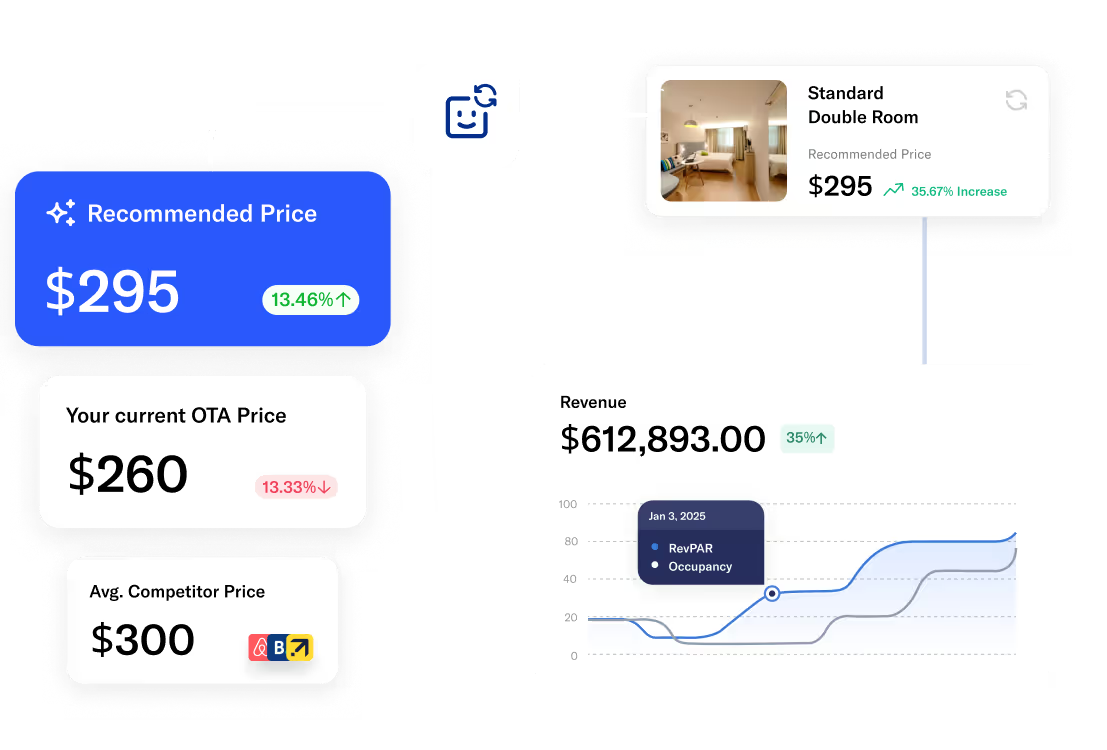
An RMS continuously pulls together demand signals, booking pace, competitor rates, seasonality, and your own historical data, then recommends or automatically sets the optimal rate for each date within the rules you define. Instead of updating rates manually and reacting late, you price ahead of demand and capture ADR that manual pricing consistently misses. The impact is well documented: dynamic, system-driven pricing lifts revenue meaningfully over static rates, largely by eliminating underpricing during moderate and high-demand periods, with RevPAR gains of 15% to 20% common in the first six months for hotels new to a system.
The other advantage is connection. When your RMS is part of one platform, the rate it sets flows straight to your booking engine, your channel manager, and every OTA, so pricing and availability stay in parity everywhere without extra work. roommaster's revenue management brings this pricing intelligence to independent and mid-size hotels in an accessible, rule-based format, so you get enterprise-grade pricing without an enterprise team.
Common Hotel Pricing Mistakes to Avoid
- Chasing occupancy over profit: a full hotel at low rates can earn less than a well-priced one with empty rooms. Optimize for RevPAR, not occupancy alone.
- Racing to the bottom: cutting rates to undercut competitors trains guests to expect low prices and erodes your ADR.
- Pricing by hand: static or manually updated rates miss the demand swings that automated pricing captures.
- Ignoring the comp set: pricing without market context leads to underpricing peaks and overpricing troughs.
- Letting parity slip: inconsistent rates across channels push guests to commissioned OTAs.
- Slashing rates in slow periods: discounting the room devalues it. Add value instead, with perks like breakfast or late checkout.
Best Practices to Optimize Your Pricing
- Use automation tools: a modern revenue management system updates rates automatically on real-time market data, so you capture demand you would otherwise miss.
- Adjust by segment: keep business rates steady midweek with small 5% to 15% tweaks and length-of-stay incentives, while leisure rates can swing 20% to 40% around events and weekends.
- Promote direct bookings: offset OTA commissions with perks for guests who book directly on your website, protecting your net rate.
- Add value instead of discounting: in slow periods, offer breakfast, parking, or late checkout rather than cutting the base rate, which preserves your ADR.
- Focus on total revenue: measure success with TRevPAR so you account for food, beverage, and spa spend, not just room revenue, and grow your ancillary revenue.
Keeping Your Hotel Pricing Compliant
Smart pricing still has to stay within the rules, and the requirements vary by market. Getting this wrong risks fines and guest complaints, so build compliance into your strategy from the start.
- Show all-in, transparent prices: many regions require displayed rates to include taxes and mandatory fees, and increasingly ban drip pricing where charges appear only at checkout. Make sure the price a guest sees is the price they pay.
- Apply taxes correctly: hotel, occupancy, and tourism taxes differ by country, state, and city, so your system needs to calculate and display them accurately for each property.
- Avoid unfair or discriminatory pricing: segment-based pricing is fine, but pricing must not discriminate on protected grounds, and consumer-protection laws limit misleading discounts or fake "was" prices.
- Handle data and payments securely: pricing tied to guest profiles and payments must respect data-protection rules like GDPR and PCI-DSS for card handling.
- Honor rate accuracy and cancellations: clearly state cancellation and deposit terms alongside the rate, and honor the price shown, since displaying a rate you will not honor invites disputes.
When in doubt, confirm the specific rules for your market with local counsel. This is general guidance, not legal advice, but a platform that handles taxes, transparent display, and secure payments correctly makes staying compliant far easier.
Price Smarter With roommaster
A pricing strategy is only as good as your ability to act on it every day, across every date and channel. roommaster brings revenue management, the booking engine, and the channel manager into one platform, so your rates update automatically on live demand, stay in parity everywhere, and convert into direct, commission-free bookings. That turns a smart strategy into higher RevPAR without the manual work.
{{cta-strip}}
Frequently Asked Questions
1. What is a hotel pricing strategy?
A hotel pricing strategy is a documented method for setting and adjusting room rates based on demand, cost, competition, and guest segment, built to maximize total revenue while balancing occupancy. Modern strategies are dynamic, adjusting rates in real time rather than keeping them static.
2. What are the main hotel pricing strategies?
The main strategies are dynamic pricing, cost-based pricing, competitor-based pricing, value-based pricing, segment-based pricing, length-of-stay pricing, and forecasting or demand-based pricing. Most hotels combine several of them rather than relying on one.
3. What is dynamic pricing in hotels?
Dynamic pricing is a method that changes room rates automatically in real time based on supply, demand, booking pace, competitor rates, and local events. Prices rise during high demand and fall during slow periods, which captures more revenue than fixed rates.
4. Which metric best measures hotel pricing success?
RevPAR (revenue per available room) is the best single measure, because it combines ADR and occupancy to show how well your pricing balances rate and demand. Many hotels also track TRevPAR to capture total guest spend, not just room revenue.
5. How often should hotels change room rates?
As often as demand changes, which can be daily or even more frequently for high-demand dates. Manual updates cannot keep pace, which is why most hotels now use automated or AI-driven revenue management to adjust rates continuously within set rules.
6. Does AI pricing really increase revenue?
Yes. Industry data shows dynamic and AI-driven pricing lifts revenue by 10% to 25% over static rates, with RevPAR gains of 15% to 20% common in the first six months for hotels new to a revenue management system, mostly by capturing ADR that manual pricing missed.


.png)
.png)
.png)