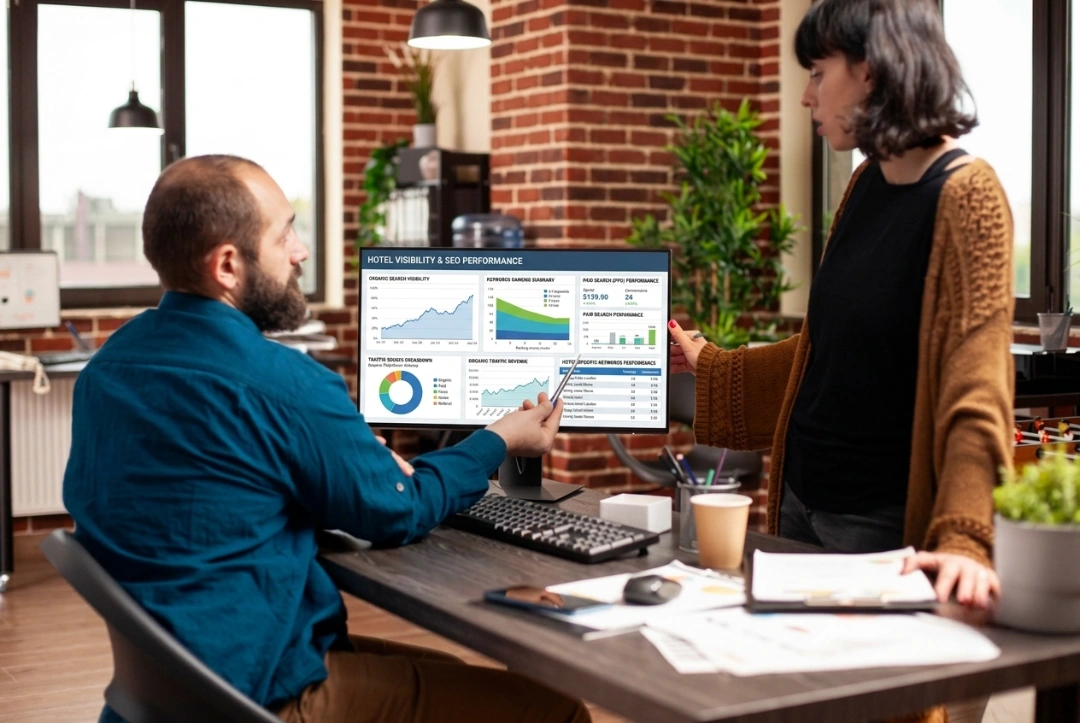
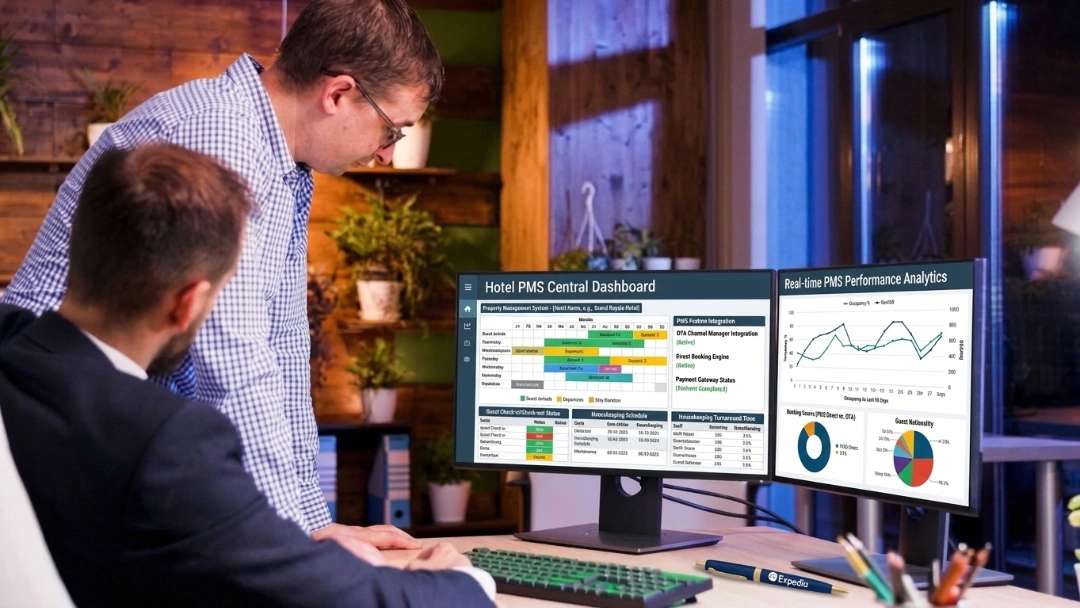
Independent hotels often struggle to keep up with fluctuating demand, complex pricing decisions, and time-consuming manual updates.
AI-driven dynamic pricing tools solve these problems by analyzing demand patterns, competitor rates, and booking behaviors in real time.
Systems like roommaster RMS automate pricing decisions across channels, helping hotels save hours each week and improve RevPAR by up to 35%.
Hotels that adopt dynamic pricing strategies early are already seeing better occupancy, smarter rate control, and higher profitability with minimal effort.
As the hotel industry continues to evolve, hoteliers face increasing pressure to stay competitive and boost their revenue. Artificial intelligence (AI) offers a powerful solution, particularly when it comes to pricing. For independent hoteliers, AI dynamic pricing tools provide a powerful competitive advantage, dramatically boosting overall revenues and optimizing current hotel pricing strategies.
This massive technological trend highlights the market's direction, where independent hoteliers have boosted their revenue per available room (RevPAR) by up to 35% simply by using the right hotel revenue management software (RMS).
In this article, we’ll explore how dynamic pricing for hotels works and how you can start using it to boost your revenue. You’ll also learn how to automatically adjust your pricing using an effective revenue optimization software like the roommaster PMS, helping you remain competitive, attract more bookings, and significantly improve profit margins.
What is Dynamic Pricing in Hotels?
Dynamic pricing is a strategy where the price of hotel rooms adjusts based on demand. When demand is high, prices rise. When demand drops, prices decrease. The goal is to maximize hotel revenue by adjusting room rates to match real-time market conditions.
Hotels face fluctuating demand due to several factors like seasonality, events, and local activities. As the supply of hotel rooms is fixed, dynamic pricing allows you to adjust rates to make the most of these changes. During busy periods, you can charge higher rates, while in low-demand times, you can lower prices to boost occupancy.
AI has become a key tool in implementing dynamic pricing for hotels. With AI-driven systems, hotel managers can use historical and real-time data to predict demand and adjust rates automatically. These systems can change prices multiple times throughout the day, ensuring that rates are always aligned with current market trends.
However, while frequent price changes may maximize revenue, it’s important to balance this with customer loyalty. Some studies suggest that too many changes can lead to customer frustration, so striking the right balance between flexibility and stability is key.
AI Dynamic Pricing: How Does It Work?
AI-driven dynamic pricing helps hotels make smarter, faster decisions about their room rates without relying on manual updates. It adjusts prices based on market trends, occupancy levels, and traveler behavior to maximize every booking opportunity.
Using the right revenue management platform powered by AI, hotels can evaluate thousands of data points in real time to identify the best pricing for each day, room type, and booking channel. These systems study not just what guests paid in the past but also how demand fluctuates under specific conditions.
To make accurate pricing recommendations, smart systems such as roommaster Revenue Optimization, integrated with ampliphi RMS, analyze:
Historical demand data such as past reservations, cancellations, and competitor pricing
Current demand data, including booking pace, occupancy levels, and price sensitivity
Future demand signals, such as flight schedules, holidays, and local event calendars
Managing room inventory alongside AI-based pricing further improves profitability by balancing occupancy and rate performance effectively.
Why Independent Hotels Rely on AI-Powered Dynamic Pricing
Independent hotels are turning to AI-powered dynamic pricing because it acts like an extra set of eyes. When no one is watching market trends at midnight, the system is already doing the work, analyzing shifts and updating strategies before the first staff member walks in.
The value of these systems can be hard to measure in simple ROI terms, but many hoteliers highlight the time saved as one of the biggest benefits.
1. Keeping rates competitive every day
Independent hoteliers often spend hours comparing competitor rates, checking pickup reports, and monitoring market demand tools. Even with multiple dashboards in one place, the process takes time and concentration. By contrast, AI pricing systems evaluate all this data in minutes and recommend adjustments that maintain competitiveness throughout the day.
For instance, during the lead-up to the Summer Olympics in Paris, hotels faced a sharp increase in demand. The highest ADR was seen on the opening night at $1018, followed by several nights above $929. Room rates stayed above $813 for the remainder of the event period.
However, many hoteliers were caught off guard by unexpected shifts in demand during the final weeks before the event. Those using predictive analytics were able to adjust rates early, avoiding drastic last-minute price drops. AI-driven pricing solutions could have helped hotels better anticipate demand fluctuations, ensuring more stable pricing through the event.
2. Saving time on repetitive pricing decisions
Even the most experienced revenue managers spend hours analyzing data and making decisions. For independent hoteliers, this task can be overwhelming.
An AI-driven dynamic pricing system automates much of the work, leaving hoteliers to focus on strategic adjustments rather than constantly recalculating prices. The system collects and analyzes multiple data sources, so revenue managers can make fewer manual decisions and avoid overworking themselves.
3. Making smarter, data-backed decisions
It’s easy for hoteliers to make hasty decisions when under pressure. AI-powered pricing tools reduce that risk by constantly assessing multiple variables before recommending a change.
Imagine checking your reports and seeing two nearby hotels fully booked for a weekend. It might seem wise to raise your rates immediately, but your AI pricing tool spots that regional demand remains soft and that those hotels blocked rooms for a private event. Instead of following a false signal, it maintains optimal pricing, protecting both occupancy and profitability.
This approach helps hoteliers:
Maintain consistent pricing accuracy across unpredictable market conditions
Prevent overreactions to temporary competitor behavior
Drive stronger revenue performance with less manual intervention
How Revenue Management Systems Can Work in Your Favor
For years, hotels have used dynamic pricing to stay competitive, but technology has completely transformed how rates are managed. Independent hotels once struggled to keep up due to a lack of dedicated revenue managers and advanced systems.
Today, with roommaster Revenue Optimization, that gap has closed. The platform converts independent hotels into strong revenue performers with enterprise-grade yield management that works automatically without complex inputs or manual oversight.
Let’s see how hotels can leverage our capabilities fully:
1. Increasing revenue with smart pricing intelligence
Hotels thrive when their rates match demand, and roommaster makes that possible automatically. roommaster’s rule-based engine adjusts prices based on occupancy thresholds, lead time, and booking trends.
During peak periods, it strategically raises rates, and during low-demand phases, it optimizes occupancy without underpricing. This constant adjustment helps maximize average daily rate and overall profitability without requiring full-time monitoring.
2. Saving time through complete automation
Hotel owners and managers often spend hours manually reviewing spreadsheets, analyzing competitor rates, and forecasting demand. roommaster simplifies that work by running automated reports, updating rates across channels, and generating live insights through its integration with ampliphi RMS.
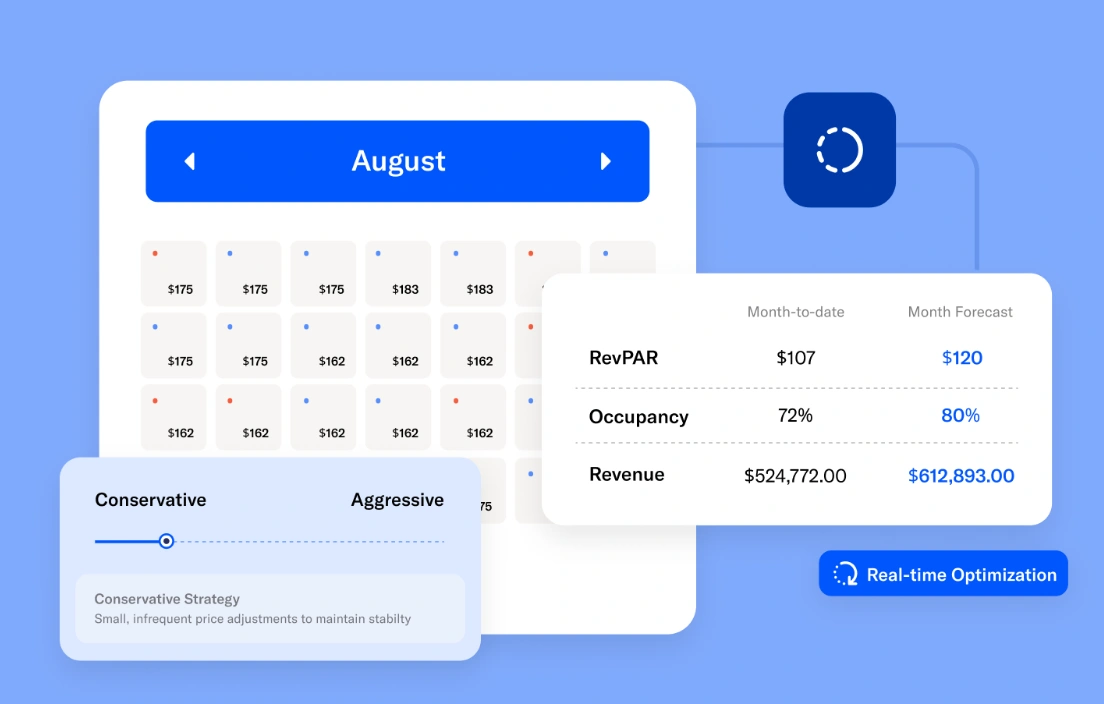
The ampliphi Auto Pilot feature continuously modifies rates using real-time demand data so you can focus on operations while the system handles pricing. In fact, hotels using roommaster RMS report up to 35% higher RevPAR, 40% higher ADR, and nearly 29 hours saved per month for each revenue manager.
3. Managing demand more accurately
Dynamic pricing works best when it adapts to market fluctuations.
roommaster’s forecasting tools identify patterns from previous years and upcoming events to anticipate shifts before they occur. The system tracks future booking pace and demand surges caused by holidays, local festivals, or conferences.
4. Strengthening analysis and insight
roommaster provides clear visibility into revenue performance with analytics that track RevPAR, ADR, and occupancy trends. It helps identify which distribution channels deliver the highest profit and which guest segments contribute the most revenue.
With data from dining, shopping, and amenities, hoteliers can design promotions that attract the right guests while maintaining profitability.
Unnecessary expenses can drain profits, especially during low-demand seasons. roommaster’s automation helps hotels predict staffing needs, adjust resources efficiently, and avoid overbooking or underutilization.
By combining real-time rate management with market intelligence, hotels control costs while maintaining high occupancy levels.
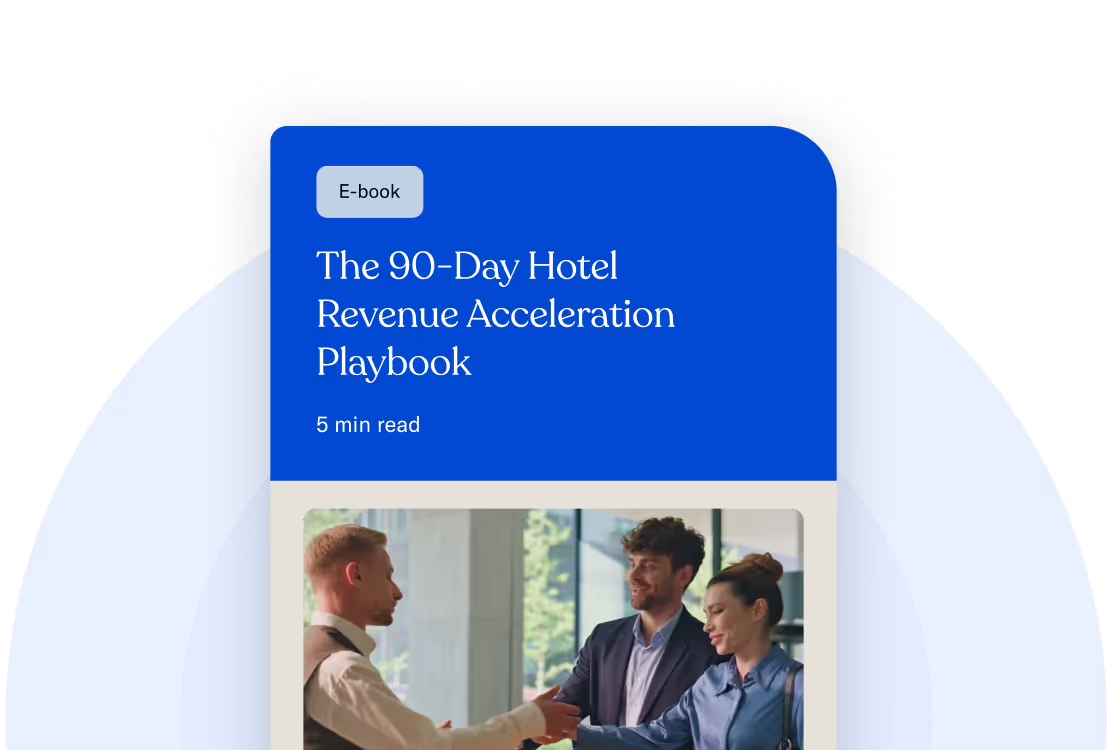
💡Pro Tip: Master your hotel’s operational efficiency and revenue potential with “The 90-Day Hotel Revenue Acceleration Playbook.” This step-by-step guide shows independent properties how to use roommaster’s hospitality management platform alongside ampliphi’s AI-driven revenue optimization.
Together, they eliminate manual tracking, cut training time, and improve RevPAR by 15–25%. Trusted by over 5,500 clients worldwide, this playbook helps hoteliers strengthen guest satisfaction and achieve steady revenue growth through data-driven decision-making.
{{ebook-90-day-playbook-cta}}
What are the Benefits of Dynamic Pricing in Hotels?
Dynamic pricing helps hotels increase sales, capture higher profits, and understand guest behavior better. By adjusting room rates in real time, hotels can attract more guests, fill empty rooms faster, and make smarter revenue decisions throughout the year.
Here’s how:
A. Boost sales and maximize profits
Smart pricing decisions help hotels sell rooms at the best possible rates while keeping occupancy high. When demand drops, slightly lower rates attract more guests without hurting revenue.
Even a small increase in profit margin can have a significant impact. For example, raising the margin from 10% to 12% on $1 million in revenue adds $20,000 in profit.
Real-time pricing keeps rates competitive and trustworthy. Guests expect higher rates during busy seasons, and matching market behavior strengthens confidence.
With the right pricing system, hotels can predict demand based on seasonality, booking trends, and guest loyalty, helping them stay competitive and drive higher occupancy.
💡Pro Tip: The roommaster Booking Engine helps hotels convert more direct bookings by offering guests a seamless, mobile-friendly experience right on their website. Its interactive rate calendar, real-time availability, and personalized upsell options encourage guests to book directly instead of through third-party sites.
With full PMS and channel manager integration, pricing and availability stay consistent everywhere, reducing errors and increasing trust. Hotels using this system often see a 15–30% shift from OTAs to direct bookings.
{{booking-engine-one}}
C. Understand customer behavior
Dynamic pricing software tracks booking patterns, preferred stay durations, and popular room types. This insight helps hotels identify their most profitable customer segments and fine-tune pricing for each.
It also reveals when guests are more likely to book, making future promotions and pricing more precise and profitable.
Different Ways to Use Dynamic Hotel Pricing
There isn’t one single way to apply AI dynamic pricing for hotels, which makes it flexible for different types of properties. Depending on your goals, you can use a few proven tactics that work across various booking windows and demand periods.
Some practical approaches include:
Hotels offer temporary discounts on OTA platforms when they notice lower occupancy on specific nights.
Rates shift during off-peak periods when local events or conferences bring unexpected demand into the area.
Many hotels drop prices slightly when forecasts show a storm or travel disruption coming soon.
Properties also raise rates when long weekends drive more demand, even during slower seasons.
Adjusting prices based on guest segment behavior lets you attract early bookers, last-minute travelers, and deal-hunters at different price points.
When powered by roommaster RMS, each of these tactics helps turn pricing into a daily revenue opportunity, not just a seasonal plan.
How Can Dynamic Pricing Improve Your Hotel Revenue?
Once you start using dynamic pricing for hotels with the right approach, you begin to capture more revenue from the same number of rooms. The changes don’t feel complex or overwhelming either.
Some practical tactics that help increase revenue with dynamic pricing in hotels include:
Using a “U”-shaped pricing pattern where rates start high, drop during a small window of lower demand, and then rise again closer to check-in. This helps you catch both early bookers and last-minute guests without giving up revenue.
Setting rates based on live competitor pricing helps your hotel stay competitive in real time. When hotel pricing strategies are powered by automation, you don’t need to constantly monitor rates manually.
Spotting gaps in demand through booking patterns allows you to price unsold rooms just right, rather than slashing rates at the last minute.
Smart dynamic pricing for hotels works best when supported by the right tools that update in real time.
Make Dynamic Pricing Work for Your Hotel
Hotels that use dynamic pricing the right way tend to find more profit in places they often overlook. Once you start applying smarter tactics, you do it in a way that makes every rate count.
Wood River Inn, a 57-room independent property, made this shift without losing its identity. When owner Ryan Allison started using roommaster RMS, the system instantly helped cut back time wasted on admin. With one platform connecting all channels, his team could finally focus on selling rooms instead of switching between systems all day.
What made the biggest difference was the ability to adjust rates remotely and react to demand on the fly. That flexibility allowed Ryan to maintain complete control, regardless of his location.
When you’re done manually adjusting rates and hoping for the best, you know where to find us. Schedule a demo today and let us do the rest!
FAQs
What is hotel AI dynamic pricing?
Hotel AI dynamic pricing uses machine learning to automatically adjust room rates based on real-time demand, competitor pricing, booking patterns, and market conditions. It helps hotels price rooms more accurately without constant manual input.
What is an example of dynamic pricing?
A hotel may offer lower rates early in the booking window, raise them as demand rises closer to the stay date, and adjust again based on local events or competitor changes. This helps fill rooms at the best possible rates.
What kind of data is used by hotel pricing intelligence tools?
Tools like roommaster RMS use live data from booking trends, competitor rates, occupancy levels, seasonal patterns, and market demand to suggest rates that help maximize revenue while staying competitive in any market condition.
{{cta-strip}}
booking-engine-one
Capture more direct bookings with a fast, reliable booking engine.
Mayela Lozano is a content strategist with a passion for hospitality and technology. She collaborates with roommaster on content creation, highlighting how technology can streamline hotel operations and enhance guest satisfaction. When she’s not creating content, Mayela loves to travel and spend time with her two little ones, discovering new adventures and making memories along the way.
Join Thousands of Hotels Thriving with roommaster
The transition to roommaster is straightforward and efficient. Our implementation team handles data migration including reservations, guest profiles, and historical information.
The transition to roommaster is straightforward and efficient. Our implementation team handles data migration including reservations, guest profiles, and historical information.
How Hotels Can Use AI Assistants In Daily Operations
October 19, 2026
Hotel Management
Connect Your Hotel PMS To AI platforms: ChatGPT, Claude, Copilot & Google Gemini
October 19, 2026
Hotel Management
Best Hotel Management Software in 2027: 10 Top-Rated Tools Compared
October 15, 2026
Hotel Management
Hospitality Trends
Hotel Check-In Kiosk: Enhance the Guest Experience
October 5, 2026
Hospitality Technology
Hotel Management
Hospitality Trends
Hotel Self Check-In: How It Works, Types, Benefits And Setup
October 1, 2026
Hotel Management
Hospitality Trends
Hotel Check-In & Check-Out Times Explained
October 1, 2026
Hospitality Trends
Hotel Management
Cloud-Based Property Management System: Hotel PMS
October 1, 2026
General
Cloud PMS
AI
Cloud Computing In The Hospitality Industry: A Complete Guide For Hotels
October 1, 2026
Hotel Management
Cloud PMS
Hotel Management System (HMS): A Complete Guide
September 23, 2026
Hospitality Trends
Hotel PMS
Cloud PMS
Hotel PMS Integration: How It Works for Hotels
September 23, 2026
Join Thousands of Hotels Thriving with roommaster
See how roommaster's unified platform can work for your property. Our team will walk you through features tailored to your specific needs and operations.




.png)
.png)
.png)