Value-Added Pricing In Hotels: Strategy & Examples
“We’re no longer stuck behind our computers doing spreadsheets. With AI doing the heavy lifting, we can focus on our guests" - Susie Conway, General Manager, Flamingo Motel
Hotels once relied heavily on cost-plus pricing, but modern revenue leaders now lean into value-added pricing in hotels to protect ADR while driving conversion.
Guests compare more than room prices, so a strong value-based pricing strategy shifts the focus from discounting to added experiences that increase perceived value.
In fact, personalization generates significantly more revenue from those activities than average performers.
Hotels that apply value-based pricing correctly improve TRevPAR because bundled add-ons increase total spend without lowering core rates.
Smart operators combine dynamic pricing, demand signals, and targeted value-adds from roommaster to create sustainable pricing power in the US market.
In the U.S., hotels face rising market demand, sharper price sensitivity, and travelers who compare every option online. A rate alone rarely convinces a guest to book. To stay competitive, operators must rethink pricing by focusing on perceived value instead of just discounts or room revenue.
Say, a guest is searching for a hotel in Chicago. They see two properties with similar rates. One charges a little less. The other includes breakfast, late checkout, and airport transfer. Most guests pick the second hotel because the extra perks make the stay feel worth it.
This article explores what value-added pricing really means for hotels. It shows how it differs from simple discounting and guides operators on creating a clear value-added pricing strategy. You’ll also find examples that boost revenue, build customer loyalty, and increase RevPAR by matching pricing to the features and experiences guests truly care about.
What Pricing Strategy Do Hotels Use?
Most hotels mix several common strategies. They rely on dynamic pricing, demand-based pricing, occupancy-based pricing, and sometimes traditional cost-based pricing.
In the past, many operators implemented cost-plus pricing. They added a margin on top of their production costs to set a rate. While the approach keeps minimum profits safe, it ignores what customers actually value, current market trends, and how much guests are willing to pay.
Value-added pricing is a pricing method where a business determines its price based on the value that the product or service provides to the customer, rather than the cost of the product. In this pricing method, a hotel may maintain its base room rate but add some value that would make the entire package more appealing to the customer.
The value that is added may be in the form of tangible products such as breakfast, spa credits, or airport transfers. The value may also be in the form of intangible benefits, such as a sense of personalization, flexibility, or local experiences that the customer may not get anywhere else.
What is Value-Added Pricing in Hotels?
In hotels, value-based pricing means you set rates based on the value guests perceive in your product or service.
In this approach, you look closely at your target market, specific customer segments, guest feedback, satisfaction levels, brand loyalty, and the unique value your property offers. For example, a boutique hotel in the downtown area with excellent reviews can charge higher than a generic hotel in the same zip code because customers perceive more value in the experience.
An analysis conducted in 2025 revealed that organizations employing personalization can increase revenue growth by 10 to 15% and decrease cost-to-serve by 15 to 20%. This is evidence that personalization can increase perceived value without reducing prices.
When hotels employ value-based pricing, they take into consideration market conditions, demand, and real-time booking trends. The strategy works with the value stick framework, which focuses on increasing what guests are willing to pay while managing costs to capture more total value.
Why Should Hotels Implement a Value-Added Pricing Strategy?
Your hotel can earn more with value-added pricing than with almost any other approach. When you focus on creating a truly memorable guest experience, people are willing to pay extra to enjoy it.
So, making this strategy work starts with designing an experience that stands out. It could be anything from thoughtful amenities to personalized touches that make guests feel special. When guests notice and appreciate those details, they talk about it, and demand grows.
As demand rises, you can confidently raise your prices across your distribution channels without increasing costs much. This approach not only boosts revenue but also strengthens your overall pricing strategy. You end up filling more rooms while increasing the average rate guests are willing to pay.
How Does Value-Added Pricing Work in Hotels?
Value-added pricing works by shaping how guests see the value of their stay. When guests perceive your hotel as offering more, you can confidently charge higher rates for rooms and services.
You can boost perceived value in two main ways. For example:
First, through marketing and branding. Here, you can highlight the quality of your guest experience and the features that set your hotel apart. Then, use high-quality photos, videos, and stories that show your property in the best possible light.
Second, through ratings and reviews. As we all know, guests trust feedback from other travelers, so positive reviews become proof of your value. You can encourage happy guests to leave reviews by asking at check-out, sending friendly follow-up emails, or offering small incentives.
When you combine strong marketing with reviews, guests feel the value, and your pricing strategy works naturally. In fact, 95% of customers read online reviews before booking. Additionally, 49% of them trust those reviews as much as personal recommendations from a friend or fellow traveler. The hospitality industry is no different, and reviews play a huge role in how guests perceive value and decide where to stay.
Value Added Vs Package Pricing in Hotels
Many hotels often mix these two ideas up. So, let’s clear things up, for once and for all.
Package pricing simply bundles services together, but it does not always reflect the real value guests see.
True value-added pricing focuses on what guests truly care about and are willing to pay for, not just what the hotel can throw in cheaply.
For example, offering free parking might not impress guests in a busy city where parking is easy to find. On the other hand, bundling local experiences can also support a higher price point in lifestyle-driven segments.
The main point of difference is strategy. Value-added pricing is more aligned with your offerings and the preferences of your guests, rather than just creating a bundle.
How to Implement Value-Added Pricing: Step-by-Step
If you want to charge based on what guests believe your experience is worth, you need a clear plan.
Here’s how to build a value-added pricing strategy that actually drives revenue and feels fair to your guests.
1. Get clear on your market
You cannot price for value if you do not know who you are serving.
Start by defining your ideal guest. Then look at your real data. Check Google Analytics. Review your social media demographics. Look at booking patterns in your PMS.
Ask yourself, who stays most often?
Couples on weekend getaways?
Corporate travelers during the week?
Families during school holidays?
When you understand who your average guest is, you can start pricing around what matters to them.
2. Pinpoint what guests truly value
Why do guests choose your hotel over the one down the street?
Look at your most booked room types. Identify your most popular services.
Read your reviews carefully and notice what guests praise again and again. Maybe they love your ocean views. Maybe they rave about your spa. Maybe they mention your friendly staff in every review. Double down on what people already value. That is where your pricing power lives.
3. Set prices based on perceived value
Value-added pricing does not follow a simple formula. You start with your break-even point or your average daily rate, then adjust based on what guests are willing to pay for specific features.
Ask your guests directly. Send a quick survey, asking questions like:
What would they pay for an ocean view?
What would they pay for a private hot tub?
What feels fair for a one-hour massage?
Guests might say an ocean view feels worth $50 more per night. A hot tub might feel like an $80 upgrade. A massage might feel like a $100 add-on.
Use that input to shape your room and package pricing. Then, check what your competitors charge for similar offerings to make sure you stay competitive while still protecting your value.
4. Actively promote your high-value offerings
You might apply value-added pricing to only certain rooms or packages. If so, make sure you spotlight them.
Post about them on social media, or even feature them on your website. Train your front desk team to mention them during check-in. If these are your most profitable offers, treat them like it.
5. Use the right pricing tools
Many independent hotels lose revenue because they rely on static rates in a market that changes every day. Larger brands use sophisticated systems and full-time revenue managers. Most independents do not have that luxury.
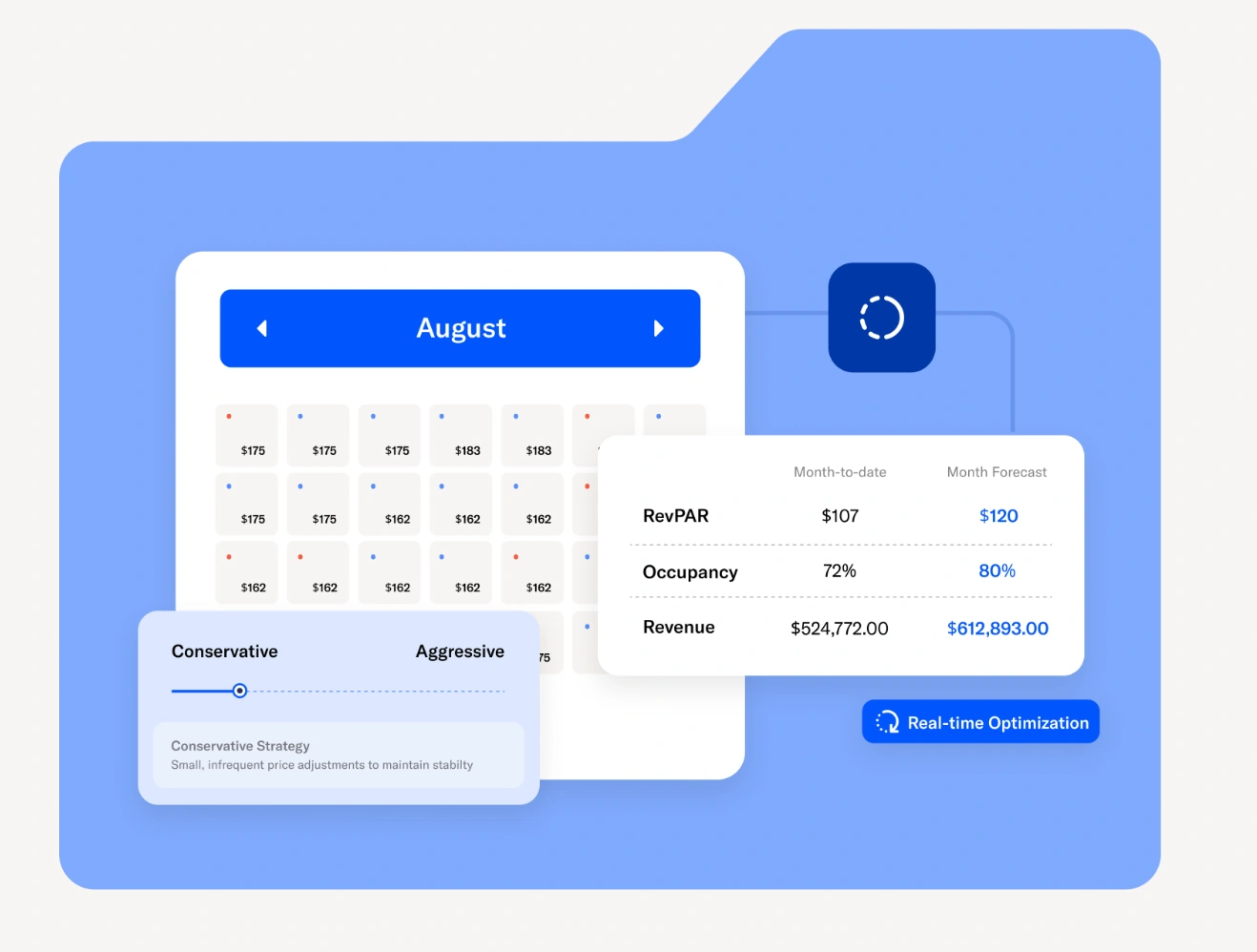
roommaster Revenue Optimization gives hotels automated, rule-based dynamic pricing without the need for a full-time revenue manager. You set your strategy once, and the system adjusts rates based on occupancy, lead time, seasonality, and demand trends.
{{revenue-management-two}}
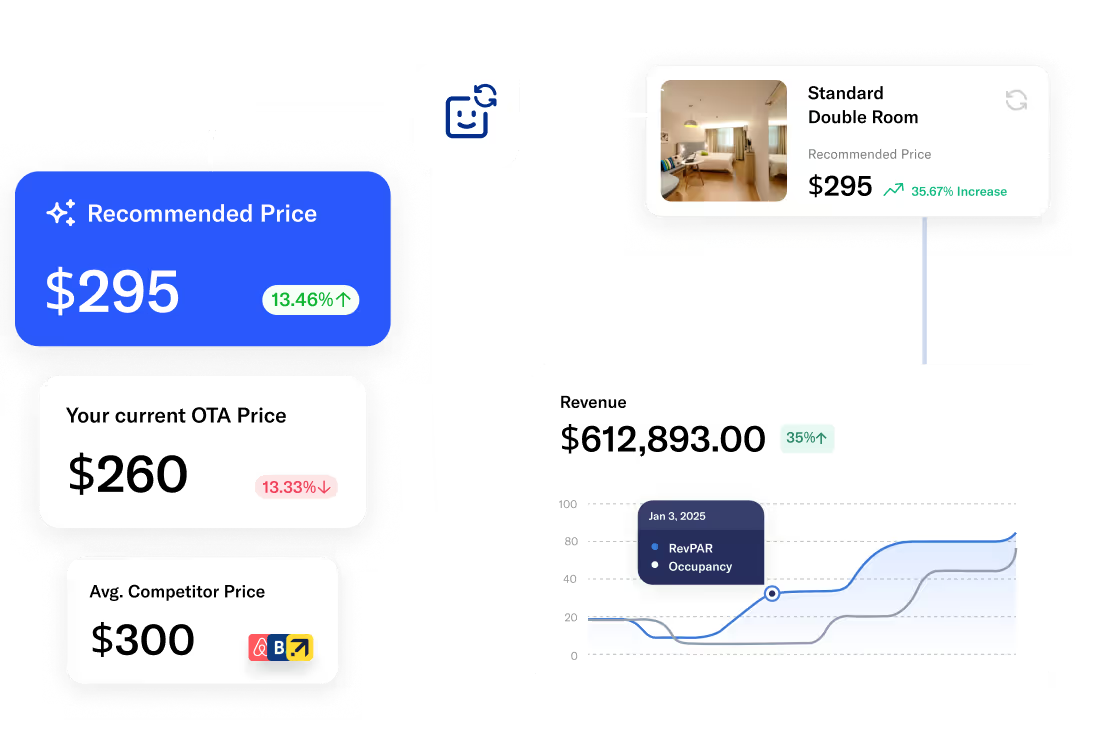
It also helps you monitor competitor pricing, build profitable packages, and track key metrics like revenue per available room (RevPAR), average daily rate (ADR), and occupancy, so you can see what works. In fact, hotels that adopt dynamic pricing often see up to a 35% increase in RevPAR within the first year. With the right tools in place, you stop guessing and start pricing with purpose.
As part of roommaster, ampliphi supports value-added pricing by identifying demand patterns, price sensitivity, and booking behavior across segments. Instead of reacting to competitors or discounting, revenue teams can use these insights to decide when to hold rates, where to layer value adds, and which guest segments are willing to pay more for specific experiences. This helps hotels protect ADR while using value (not discounts) to drive conversion.
6. Track your revenue closely
Once you put your value-added pricing in place, stay involved. Do not treat it like a one-time task you can walk away from. Review your revenue performance regularly and look for patterns in your data.
You will start to see when demand naturally spikes and guests accept higher rates without hesitation. You will also notice softer periods when a well-positioned package or added perk can help drive occupancy.
7. Keep a close eye on competitors
Your pricing always sits within a broader market, so you need to understand what surrounds you. Make it a habit to compare your rates with your direct competitors and look carefully at what they include at each price point.
If you charge more, you must clearly deliver and communicate more. If you charge less, make sure you are not undervaluing what you offer.
Value-Added Pricing Examples
Let’s say Hotel A and Hotel B sit side by side, with similar layouts and nearly identical rooms, and both offer a comfortable place to sleep. At first glance, most guests would assume they are equal.
But they operate very differently.
Hotel A continues operating as it always has, keeping its positioning and pricing largely unchanged. However, Hotel B makes a deliberate choice. It defines a clear target market, shapes its brand around a more exclusive experience, adds services that its ideal guests genuinely care about, and actively builds a strong online reputation.
As reviews build and guest expectations shift, Hotel B becomes known for delivering a more elevated stay. Eventually, Hotel B charges $100 more per room than its neighbor.
The buildings still look the same. The shift happens in the guest’s mind. Hotel B understands what its audience values and prices around that perception.
Tools for Value-Added Hotel Pricing
Value-added pricing works best when you support it with the right technology. If you rely on static rates in a market that shifts daily, you limit your ability to charge based on real demand and perceived value.
roommaster Revenue Optimization helps independent hotels compete with larger brands by automating dynamic pricing. You set your strategy, and the system adjusts rates in real time based on occupancy levels, booking pace, seasonality, events, and market trends.
The platform also tracks competitor pricing, monitors demand signals, and benchmarks your performance against similar properties. That visibility gives you the confidence to price higher during peak periods and stay competitive when demand softens.
Because revenue management and channel management work together within roommaster, every optimized rate syncs immediately across your GDS platforms, OTAs, and direct booking channels. That consistency protects your positioning and prevents gaps between channels when you raise or refine prices.
Through the roommaster Revenue and Finance Suite, you also gain unified reporting, real-time analytics across properties, and integrated payments, all within one system. Your team sees exactly how RevPAR, ADR, occupancy, and profitability move together, which makes pricing decisions faster and far more strategic.
Value-Added Pricing Impact on RevPAR and TRevPAR
Value-added pricing can lift RevPAR by up to 35% because rooms and packages feel worth the extra cost. TRevPAR rises even more as guests spend on experiences like spa treatments, meals, or special amenities included in premium packages.
When compared to discounting, this approach makes guests feel they are getting more, not just paying more. Over time, it strengthens loyalty, encourages repeat bookings, and boosts the hotel’s reputation as a place worth the price.
Common Mistakes to Avoid
Even with a value-added pricing strategy, hotels can make avoidable mistakes. Here are some of the common mistakes to watch out for:
Setting rates based on competitors instead of what your guests truly value
Ignoring guest feedback on rooms, packages, or services
Including extras that guests do not care about
Packing too many features into one package, making it confusing
Overlooking price sensitivity during slower periods
Value-based pricing works when you actively watch demand and understand guest perception. Adjust your prices and packages continuously to make sure every charge reflects the experience your guests actually want.
Transform Perceived Value into Profit
The foundation of a successful value-based pricing approach is technology. It helps you give guests an exceptional experience while making sure every room and service earns its full value.
Being a modern, all-in-one PMS, roommaster provides the tools you need to automate pricing, track demand, and manage all your channels from a single platform. Here’s how:
Smart revenue management: Use roommaster Revenue Optimization to adjust rates automatically based on real-time demand, booking pace, and market trends
All channels, one screen: Connect to hundreds of OTAs and GDS platforms and update prices across all your listings at once with the roommaster Channel Manager
Gain actionable insights: Monitor performance, track guest behavior, and see exactly which rooms, packages, and channels drive the most revenue, so you can make smarter pricing decisions every day
See how roommaster can boost your revenue and streamline operations. Schedule your demo now!
{{cta-strip}}
FAQs
Is value-added pricing better than discounting?
Yes, the value-based pricing model focuses on what guests perceive as worth, letting hotels increase revenue without lowering rates. Discounting can lower the value and brand perception, while thoughtful packages make guests feel they are getting more for what they pay.
When should hotels use value-added offers?
Use value-added offers whenever you want to boost revenue, highlight premium services, or stand out from competitors. They work best during peak periods, special events, or slower times when tailored packages can encourage upgrades and higher spending.
What value adds work best for business travelers vs leisure?
Business travelers respond to convenience, fast check-in, workspace access, and loyalty perks. Leisure guests are drawn to experiences like spa treatments, dining, or room upgrades. Knowing what each group values allows hotels to create offers that feel worth every dollar.
How do I calculate if a value add is profitable?
To see if a value add works, compare the cost to what guests will pay and track its impact on occupancy, RevPAR, and TRevPAR. Adjust the offer based on performance, ensuring every package drives real revenue and perceived value.
revenue-management-one
Put Your Hotel Pricing Optimization on Autopilot with AI
Mayela Lozano is a content strategist with a passion for hospitality and technology. She collaborates with roommaster on content creation, highlighting how technology can streamline hotel operations and enhance guest satisfaction. When she’s not creating content, Mayela loves to travel and spend time with her two little ones, discovering new adventures and making memories along the way.
Join Thousands of Hotels Thriving with roommaster
The transition to roommaster is straightforward and efficient. Our implementation team handles data migration including reservations, guest profiles, and historical information.
The transition to roommaster is straightforward and efficient. Our implementation team handles data migration including reservations, guest profiles, and historical information.
How Hotels Can Use AI Assistants In Daily Operations
October 19, 2026
Hotel Management
Connect Your Hotel PMS To AI platforms: ChatGPT, Claude, Copilot & Google Gemini
October 19, 2026
Hotel Management
Best Hotel Management Software in 2027: 10 Top-Rated Tools Compared
October 15, 2026
Hotel Management
Hospitality Trends
Hotel Check-In Kiosk: Enhance the Guest Experience
October 5, 2026
Hospitality Technology
Hotel Management
Hospitality Trends
Hotel Self Check-In: How It Works, Types, Benefits And Setup
October 1, 2026
Hotel Management
Hospitality Trends
Hotel Check-In & Check-Out Times Explained
October 1, 2026
Hospitality Trends
Hotel Management
Cloud-Based Property Management System: Hotel PMS
October 1, 2026
Hotel Management
Cloud PMS
Hotel Management System (HMS): A Complete Guide
September 23, 2026
Hospitality Trends
Hotel PMS
Cloud PMS
Hotel PMS Integration: How It Works for Hotels
September 23, 2026
Hospitality Trends
Hospitality Technology
Hotel PMS
Hotel Management
Cloud PMS
How Hotel PMS Software Transforms Hospitality Management
September 23, 2026
Join Thousands of Hotels Thriving with roommaster
See how roommaster's unified platform can work for your property. Our team will walk you through features tailored to your specific needs and operations.



.png)
.png)
.png)