Hotel Guest Satisfaction Survey: Questions, Templates & Tips
"We’ve trusted roommaster for over 25 years. It keeps our entire hotel group running smoothly with everything we need in one easy-to-use system" - Jorge Venegas, General Manager, NUVO Suites
Without intentional feedback, it’s easy to miss what guests truly value, and surveys help you capture insights before they disappear.
Overall, guests still value quality experiences, with the Global Review Index at 87%, indicating that satisfaction remains strong across regions and hotel types.
Personalization matters most, as most travelers report that tailored service strongly influences loyalty and repeat bookings.
Hotels that implement powerful survey platforms and real-time analytics capture deeper guest feedback and achieve measurable improvements in customer satisfaction.
Tools like roommaster PMS make it easy to automate surveys, centralize feedback, and act on insights in real time, turning data into improved guest experiences.
By analyzing patterns, sharing results with teams, and closing the loop with guests, hotels can build loyalty, drive repeat visits, and create memorable stays guests want to share.
Guest preferences change constantly, and it’s not always easy to keep up with these trends. By the end of 2025, the hotel industry had already been shaped by rapid advances in technology, most notably the rise of agentic AI and digital nomads. Travelers now expect smarter, more responsive service, whether that’s AI booking assistance, faster issue resolution, or hyper-personalization.
With all these trends coming into play, it’s easy to wonder, has your property kept up?
You might feel confident in your systems, your staff, and your tech, but if guests don’t confirm it, can you really know?
While some travelers will confidently share their questions, comments, or concerns, others? Not so much. The guests interact with digital touchpoints, check in and out seamlessly, and leave without ever voicing their opinions, especially when technology does most of the talking for them. Without intentional feedback collection, you can easily lose sight of valuable insights.
To see the true value of guest feedback, we’ll explore how hotel guest satisfaction surveys play a crucial role in hotel management. In this post, you’ll learn how to craft effective hotel satisfaction survey questions, understand why these surveys matter, and discover ways to create engaging surveys that drive real improvements for your venue.
What is a Hotel Guest Satisfaction Survey?
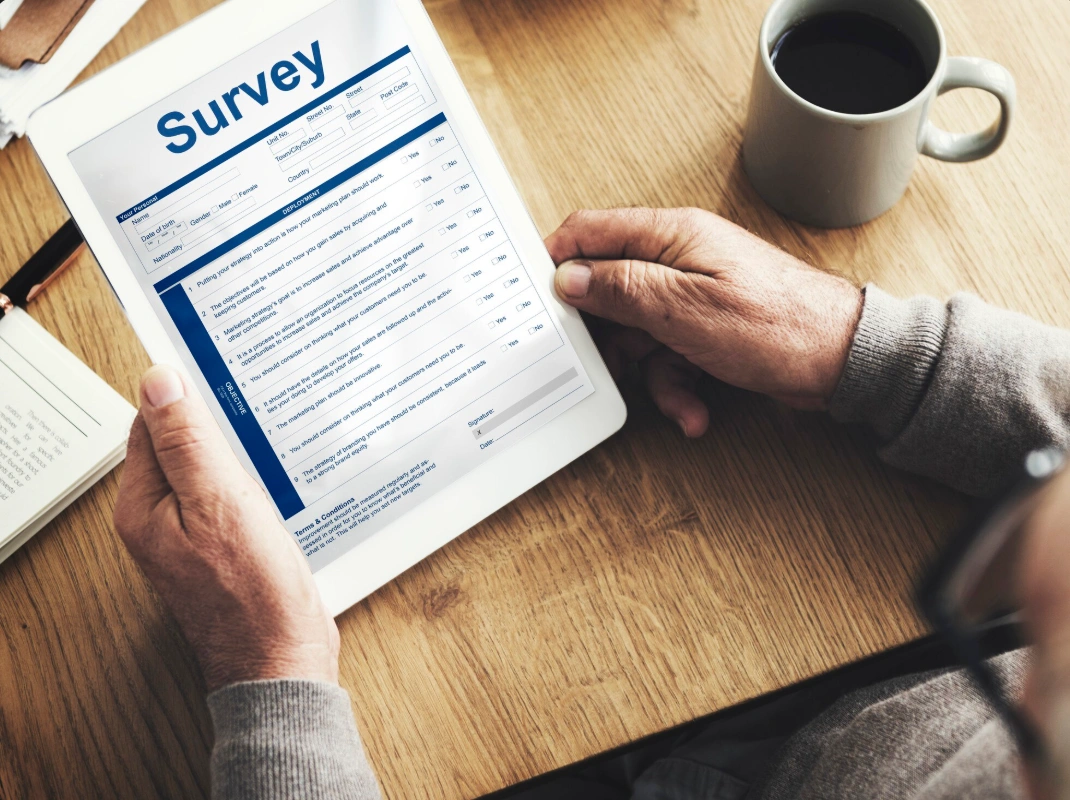
A hotel guest satisfaction survey is a practical, guest-first tool hotels use to understand how travelers actually feel about their stay. Hotels send these surveys to capture guest feedback across the entire guest journey, from booking to the check-in process, room comfort, services used, and the final check-out process.
To improve the guest experience, most hotels send surveys to guests after checkout, and many also collect feedback during the stay or even before arrival. Some properties survey loyalty members, while others reach out to event attendees or long-stay guests.
{{guest-app}}
In any case, the goal remains the same: To understand what worked, what didn’t, and how guests experienced each moment of their visit.
A well-designed hotel customer satisfaction survey helps hotels evaluate specific touchpoints, including:
Restaurant services, dining options, and room service
Overall stay satisfaction and value for money
Surveys also help hotels understand why guests felt a certain way. For example, a low score highlights a problem, and a written comment explains the reason. That clarity allows hotel teams to respond quickly, fix issues before they escalate, and create meaningful improvements that guests notice on their next visit.
You might already scan online reviews or ask guests verbally how their stay was. That gives you some insight, but it only shows part of the picture. Many guests never share what shaped their experience, especially when most interactions happen through screens rather than in person.
But here’s what data tells you:
Passenger satisfaction with travel experiences, including service, convenience, and digital tools, remains high. In 2025, 50% of travelers used biometric identification at airports, up from 46% in 2024, and 86% reported positive experiences. This trend shows travelers value every step of their journey, emphasizing the importance of measuring guest sentiment. As expectations evolve, hotels must understand what truly drives guest satisfaction.
Technology and personalization now sit at the center of that experience. 79% of guests believe personalized experiences make them feel more valued and increase retention. Without structured feedback, it becomes difficult to know which touches resonate and which fall flat.
Digital convenience raises the stakes even higher. Today, 94% of guests prefer mobile check-in and check-out to traditional front-desk interactions. Properties that adopt digital key systems deliver 31% faster check-ins and achieve 22% higher satisfaction scores. Even dining experiences reflect this shift, as 87% of full-service restaurants use QR code menus to cut service times by an average of 14 minutes.
These changes explain why hotel satisfaction surveys matter more than ever. When experiences become faster, quieter, and more digital, feedback does not always surface on its own. A well-timed survey captures what guests feel, what they expect next, and where your property needs to adapt before those insights disappear.
When to Send a Hotel Guest Satisfaction Survey
Timing can make or break your response rates. You want guests while their journey is fresh in their minds, but you also do not want to overwhelm them during a busy moment.
Here are effective timings:
Post-check-out (Immediately): Right after check-out, guests are fresh in their impressions. Response rates tend to be highest if the survey arrives within a few hours of departure.
24 hours after their stay: Some guests need a bit of time to decompress. A second email or SMS reminder 24 hours later can boost completion.
One week after stay: This is ideal for capturing reflections on the overall experience, including follow-up thoughts such as positive online reviews or additional feedback.
Choose a strategy that matches your audience. Business travelers might prefer immediate follow-ups, while leisure guests might respond better later in the day or the next morning.
Hotel Guest Satisfaction Survey Template
Once you’ve chosen how to send your hotel guest satisfaction survey, whether via email, SMS, WhatsApp, QR code, or a pop-up after billing, it’s time to pick the right questions. However, the questions you ask should align with where your guest is in their journey. Asking the wrong questions at the wrong time can lead to incomplete or irrelevant feedback.
Here’s a guide to the most essential hotel survey questions at each stage of the guest journey:
1. Before their stay
The pre-arrival period is your first opportunity to understand guest preferences and expectations. By asking the right questions, you can personalize the guest experience from the moment they arrive.
These pre-stay questions will give you an idea of what to ask:
What brings you to our hotel?
Have you stayed with us before? If yes, how would you rate your previous stay?
What type of room do you prefer?
Are there any special requests or occasions we should know about?
Which hotel facilities or services do you plan to use during your stay?
Is there anything else we should know to make your stay better?
Collecting this information helps you anticipate guest needs and tailor services to create a seamless, personalized experience.
2. On arrival
Check-in sets the tone for the rest of the stay. Targeted questions at this stage help you address issues immediately and ensure a strong first impression.
Below are some examples of arrival questions:
How would you rate your check-in experience?
Was the reception staff welcoming and helpful?
Did you receive all the information you needed about our facilities and services?
Were your room preferences fully satisfied?
How would you rate the cleanliness of public areas and your room?
Did you encounter any issues during check-in?
Would you like to share any additional feedback about your arrival?
This actionable feedback allows your team to correct small issues early, improving satisfaction before problems escalate.
3. During their stay
Ongoing feedback during the stay allows you to resolve issues in real time and continuously improve the guest experience.
Here’s what your in-stay questions should include:
How would you rate the cleanliness of your room so far?
Did all facilities and services meet your expectations?
Have you experienced any problems during your stay? If yes, please describe.
How would you rate room service, dining, or housekeeping?
Did any hotel staff provide exceptional service during your stay?
How would you describe your overall experience so far?
Is there anything we could improve while you are still here?
Collecting feedback at this stage ensures guests feel heard and valued, and it gives your team the chance to fix issues before they affect the overall experience.
4. After their stay
Post-stay surveys give you a full view of the guest experience and highlight areas for improvement. This stage also helps encourage loyalty and repeat visits.
Here are some examples of post-stay questions:
How would you rate your overall experience at our hotel?
How would you rate the hotel's cleanliness?
Did the facilities and services meet your expectations?
Did you experience any problems during your stay? If yes, please describe.
How would you rate the quality of catering, housekeeping, and reception services?
Would you recommend our hotel to others? Why or why not?
Is there anything we could have done differently to improve your stay?
Would you like to share any additional comments?
Follow up with guests who respond to resolve issues, thank them for feedback, and consider prompting reviews on platforms like Google or TripAdvisor.
Hotel Guest Satisfaction Survey Questions (By Category)
Below are deeper question banks to help you explore various aspects of the stay and gain detailed insights.
Sending a hotel guest satisfaction survey template only works if guests respond. A carefully designed survey that reaches the right guest at the right time encourages meaningful feedback and helps your team take action.
Here’s how to do it right.
1. Define a clear objective
Before sending a survey, decide exactly what you want to learn:
Do you want to understand how guests feel about room service or restaurant services?
Are you measuring satisfaction with check-in or housekeeping?
When you set a clear goal, every question serves a purpose, and your survey platform collects actionable insights.
2. Keep questions short and clear
Guests are much more likely to complete a survey (83%) when it takes less than five minutes. Additionally, surveys in the 7–12 minute range achieve far higher completion rates, while surveys that run longer see response rates fall sharply, sometimes 2x to 3x lower than shorter ones.
That drop shows that long surveys frustrate guests, disrupt their day, and lead them to abandon the process before sharing their thoughts.
To design surveys that capture meaningful feedback:
Use simple, direct language
Ask questions that guests can answer without confusion
Include one or two open‑ended questions at the end so guests can describe their experience in their own words
Respect the guest’s time
This approach increases the odds of capturing both clear ratings and meaningful feedback that your team can act on.
3. Personalize every invitation
Guests respond better when they feel seen. Address them by name and reference specific details about their stay, whether it’s the room they booked or the event they attended.
When your invitation shows that your team noticed their visit and cares about their opinions, guests feel valued rather than like just another number. This personal touch encourages more responses and helps you capture insights that reflect their true experience.
4. Offer optional rewards
As we all know, a little recognition goes a long way. And what better way to show it than by offering thoughtful incentives?
For example, you might offer a discount for a future stay or a chance to win a small reward. When the reward feels relevant to the guest, they feel appreciated. This strategy can encourage higher participation without compromising the authenticity of the responses.
5. Optimize for mobile
Most guests open surveys on their smartphones or tablets, and this trend only continues to grow. In fact, more than six out of ten (61.1%) survey responses worldwide now come from mobile devices, showing that guests increasingly use phones to share feedback rather than desktops.
So, if your survey doesn’t work smoothly on mobile, you risk losing the majority of responses before guests even begin. When guests can answer quickly and without frustration, you collect more responses and more accurate insights.
6. Reach guests through multiple channels
Finally, don’t rely on a single method to collect feedback. Use email, SMS, WhatsApp, QR codes, or in-app prompts to reach guests wherever they prefer.
Multiple touchpoints increase accessibility and ensure you capture feedback from every type of traveler.
Guest surveys come in all shapes and sizes, just like hotels themselves. Your property might lean minimalistic and chic, while another embraces a quirky, playful vibe. Whatever your style, there’s a survey that fits. Thanks to hotel survey templates from hotel property management software (PMS) like roommaster PMS, it’s easier than ever to get started.
{{pms-one}}
If this is your first time creating a survey, don’t worry. You can break the process down into three simple steps that guide you from goal to insight:
1. Identify your objective
Start by asking yourself what you truly want to learn. Are you trying to gather general feedback about the overall stay, or are you focusing on a specific aspect, like dining experiences or check-in efficiency? Pinpoint a clear objective to give your survey purpose.
Some examples of objectives include:
Understand the main reasons behind late cancellations
Discover what percentage of guests dine in the hotel restaurant and why
Once you have your objective, you can explore deeper insights.
For instance, if only 40% of guests report dining onsite, a follow-up survey can uncover whether pricing, menu options, or timing affects their choice. Clear objectives make your survey actionable rather than just informative.
2. Choose questions that serve your goal
The questions you ask determine the value of the responses. Open-ended questions invite rich, detailed feedback, while closed-ended questions give you measurable, comparable data. Focus on what matters most to your guests and your property.
Renovations coming up? Ask about amenity and guestroom technology preferences to allocate resources wisely.
Looking to improve the lobby vibe? Invite guests to describe the most welcoming hotel they’ve ever visited through a short social media contest.
Want insights on dining experiences? Ask what guests enjoy most and what would make them visit more often.
Every question should feel intentional and relevant. When guests see that their opinion matters, they’re more likely to respond honestly and thoughtfully.
3. Send the survey
With your goal clear and your questions selected, it’s time to share the survey. However, timing and delivery also matter.
Choose channels your guests actually use, such as:
Email surveys for direct, personal outreach
Comment cards for quick in-person feedback
Mobile polling for responses on smartphones and tablets
Social media or website prompts to engage guests in platforms they already frequent
Branded questionnaires that feel like a natural extension of your hotel’s personality
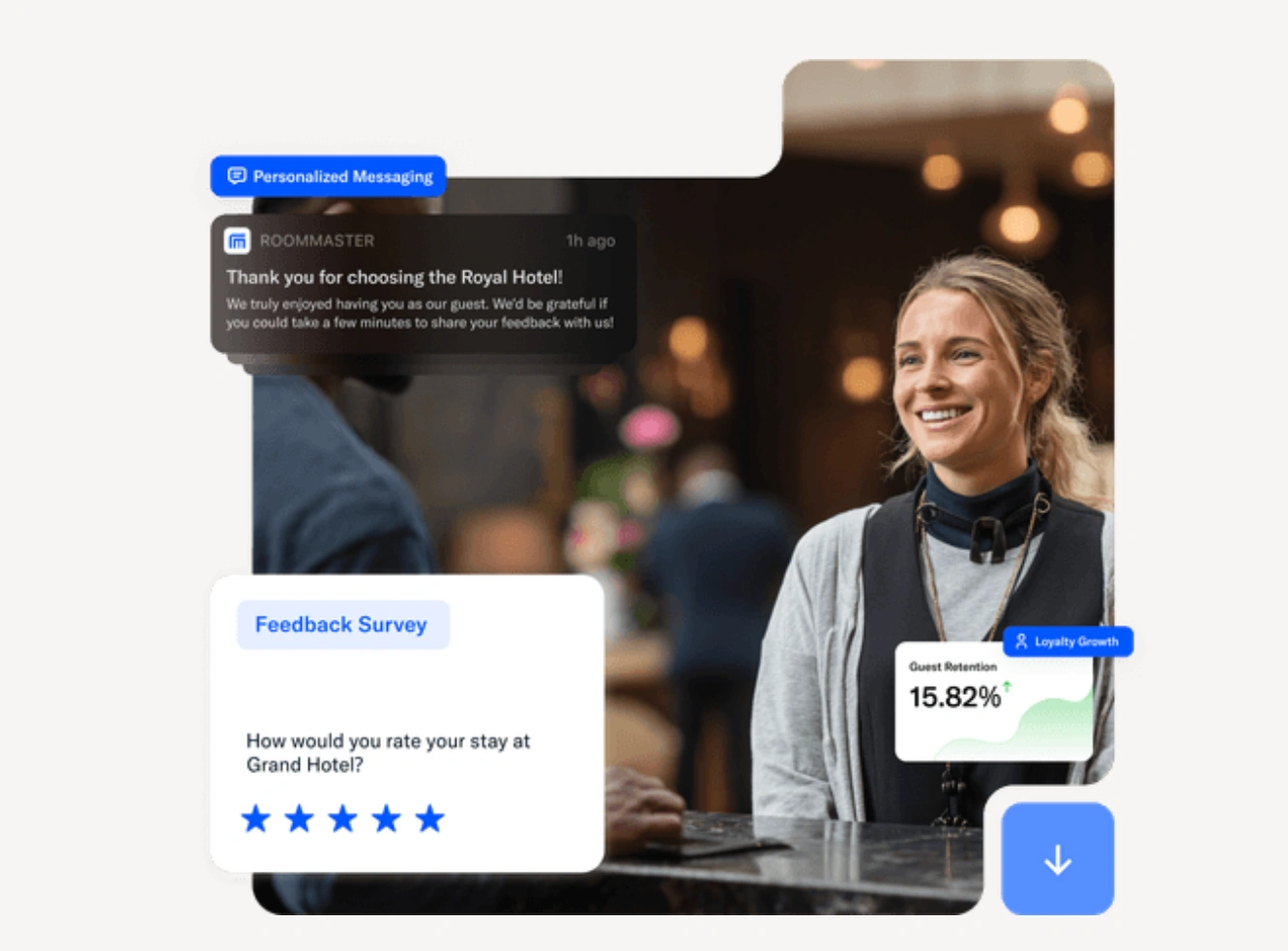
Using the roommaster Guest Engagement Software, you can automate these surveys across multiple touchpoints, personalize invitations with guest names and stay details, and even trigger follow-ups based on survey responses. This approach ensures every guest interaction, from check-in to post-stay feedback, feels personal, thoughtful, and valuable.
As Russell Clove, General Manager, says:
“From check-in to post-stay feedback, every interaction feels more personal now. Guests really appreciate the attention to detail.”
By connecting your surveys to a platform like roommaster PMS, you turn feedback into actionable insights while making every guest feel recognized and heard.
How to Use Results
Guest feedback is only valuable if you know what to do with it. Otherwise, why collect it at all?
When you take the insights guests provide and turn them into concrete improvements, you show that their voice matters, which strengthens guest loyalty and builds trust.
Here’s what you can do:
A. Identify patterns in your data
Are multiple guests mentioning slow check-ins, unclear directions to the spa, or limited dining options?
Identifying recurring themes helps your team prioritize the changes that will have the biggest impact.
B. Share the results with the right teams
Front-desk staff, housekeeping, hotel managers, and operations leaders all benefit from understanding guest sentiments.
When every department sees the same feedback, they can work together to address issues before they escalate and celebrate areas where they’re already excelling.
C. Leverage technology for real-time action
With roommaster’s integrated CRM and GuestTouch reputation management, you can centralize insights, monitor online reviews, and automate follow-ups. The platform handles messages across SMS, WhatsApp, and email, making it easy to act on feedback immediately.
For example, if a guest reports a slow response from room service, the team can receive an alert and address the issue in real time, turning potential dissatisfaction into a positive experience.
D. Use both quantitative and qualitative feedback
Numbers tell you where your property stands, but comments reveal why guests feel the way they do.
For example, if room service scores are low, open-ended responses can clarify whether the issue stems from speed, food quality, or menu variety. This combination ensures you understand both the “what” and the “why” behind guest opinions.
E. Close the loop with guests
Finally, show your guests that you’ve heard them. Let them know you’ve heard them and, where possible, explain the changes you’ve made in response to their feedback.
A simple follow-up email or message after implementing improvements shows that their opinions directly shape the guest experience.
Turn Feedback Into Exceptional Stays
Guest feedback is the roadmap to creating memorable experiences. The best way to act on it is with a clear, repeatable process for collecting, analyzing, and responding to insights. A well-designed hotel guest satisfaction survey helps your team fix weak points faster, deliver personalized service, and keep happy guests coming back.
Plus, with the modern, upgraded, all-in-one hotel management solutions like roommaster PMS, you can centralize feedback, automate follow-ups, and send personalized messages that make every guest feel valued.
Book a demo today to see how your hotel can turn every stay into a story worth sharing.
{{cta-strip}}
FAQs
How do I measure guest satisfaction in a hotel?
You can measure guest satisfaction by combining quantitative scores, qualitative feedback, and real-time data from hotel surveys. Tracking multiple touchpoints, from check-in to room service, gives a complete view of what guests think about their stay.
What are the five basic questions for hotel surveys?
The five essential questions ask about overall satisfaction, front desk service, room comfort, staff friendliness, and likelihood to recommend. These provide quick, actionable insights that help your team prioritize improvements.
How many questions should a hotel guest satisfaction survey have?
Keep your survey concise. Ten to fifteen questions strike a balance between depth and ease of completion, which increases response rates and ensures guests don’t feel overwhelmed.
How often should I send out guest satisfaction surveys?
Send a survey immediately after check-out and, if needed, follow up once. Avoid sending multiple invitations, as this can annoy guests and reduce participation.
What is the difference between post-stay surveys and in-stay surveys?
Post-stay surveys collect guests’ overall impressions after they leave. On the other hand, in-stay surveys gather feedback during the stay, allowing your team to address issues immediately and improve the experience in real time.
What’s the best channel for sending hotel surveys: email, SMS/WhatsApp, or QR code?
Use multiple channels. Send emails for general reach, SMS or WhatsApp for a personal touch, and place QR codes at checkout counters. Reaching guests on their preferred platform ensures you capture customer feedback from everyone.
What types of hotel survey questions work best on mobile or kiosk devices?
Short multiple-choice questions and rating scales perform best on mobile and kiosk platforms. They load quickly, are easy to tap, and keep the survey experience smooth for guests.
How do I increase hotel survey response rates?
Increase response rates by keeping surveys short, personalizing invitations, offering optional incentives, and ensuring they work flawlessly on mobile devices. Modern, upgraded, all-in-one hotel management tools like roommaster PMS can automate invitations and reminders, making it easier to reach guests at the right time.
Should I ask for a review (Google/Tripadvisor) in the survey?
Yes. Ask at the end of the survey, especially when a guest provides a high score. This approach converts positive feedback into online reviews, helping to strengthen your property’s reputation.
guest-app
Put Your Front Desk in Guests’ Pockets with roommaster App
Mayela Lozano is a content strategist with a passion for hospitality and technology. She collaborates with roommaster on content creation, highlighting how technology can streamline hotel operations and enhance guest satisfaction. When she’s not creating content, Mayela loves to travel and spend time with her two little ones, discovering new adventures and making memories along the way.
Join Thousands of Hotels Thriving with roommaster
The transition to roommaster is straightforward and efficient. Our implementation team handles data migration including reservations, guest profiles, and historical information.
The transition to roommaster is straightforward and efficient. Our implementation team handles data migration including reservations, guest profiles, and historical information.
Hotel Check-In Kiosk: Enhance the Guest Experience
October 5, 2026
Hospitality Technology
Hotel Management
Hospitality Trends
Hotel Self Check-In: How It Works, Types, Benefits And Setup
October 1, 2026
Hotel Management
Hospitality Trends
Hotel Check-In & Check-Out Times Explained
October 1, 2026
Hospitality Trends
Hotel Management
Cloud-Based Property Management System: Hotel PMS
October 1, 2026
Hotel Management
Cloud PMS
Hotel Management System (HMS): A Complete Guide
September 23, 2026
Hospitality Trends
Hospitality Technology
Hotel PMS
Hotel Management
Cloud PMS
How Hotel PMS Software Transforms Hospitality Management
September 23, 2026
Hotel Management
Marketing
Pet-Friendly Hotel Amenities & Package Ideas That Drive Revenue
September 22, 2026
Hotel Management
Hotel PMS
Hotel Food And Beverage (F&B): The Complete Guide
September 22, 2026
Hotel Management
Marketing
Hotel Pet Fees: How Much Should You Charge?
September 22, 2026
Hotel Management
Hotel PMS
Best Hotel Food and Beverage (F&B) Management Software In 2026
September 22, 2026
Join Thousands of Hotels Thriving with roommaster
See how roommaster's unified platform can work for your property. Our team will walk you through features tailored to your specific needs and operations.



.png)
.png)
.png)