Hotels succeed when they clearly see their strengths, weaknesses, opportunities, and threats, turning insight into actionable strategy.
Using real operational and guest data, like occupancy, RevPAR, and guest satisfaction, gives teams a reliable view of performance and competitive position. The 2026 Guest Experience Benchmark from the Shiji Group shows global guest satisfaction at 86.7%, highlighting the importance of tracking service quality.
roommaster PMS makes this process seamless by combining operational, financial, and guest metrics on a single platform, offering 270+ built-in reports to guide smarter decisions.
When hotels review their SWOT regularly and act on the findings, they can prioritize improvements, seize growth opportunities, and defend their market position, ensuring every insight drives real results.
That idea rings especially true for hoteliers who want to run smarter, more efficient operations. The hospitality industry continues to grow, giving travelers more choices than ever before. As competition increases, hotels must operate with the intention to stand out and succeed.
Hoteliers gain a clear advantage when they understand what works in their business and what needs attention. That clarity allows leaders to make informed decisions and build strategies that drive results. A hotel SWOT analysis supports that process by offering a structured way to evaluate performance and position. Most importantly, it turns insight into action when teams use it correctly.
This guide walks through the hotel SWOT analysis examples, how to conduct one step by step, and how leading hotels turn insights into results.
What is a Hotel SWOT Analysis?
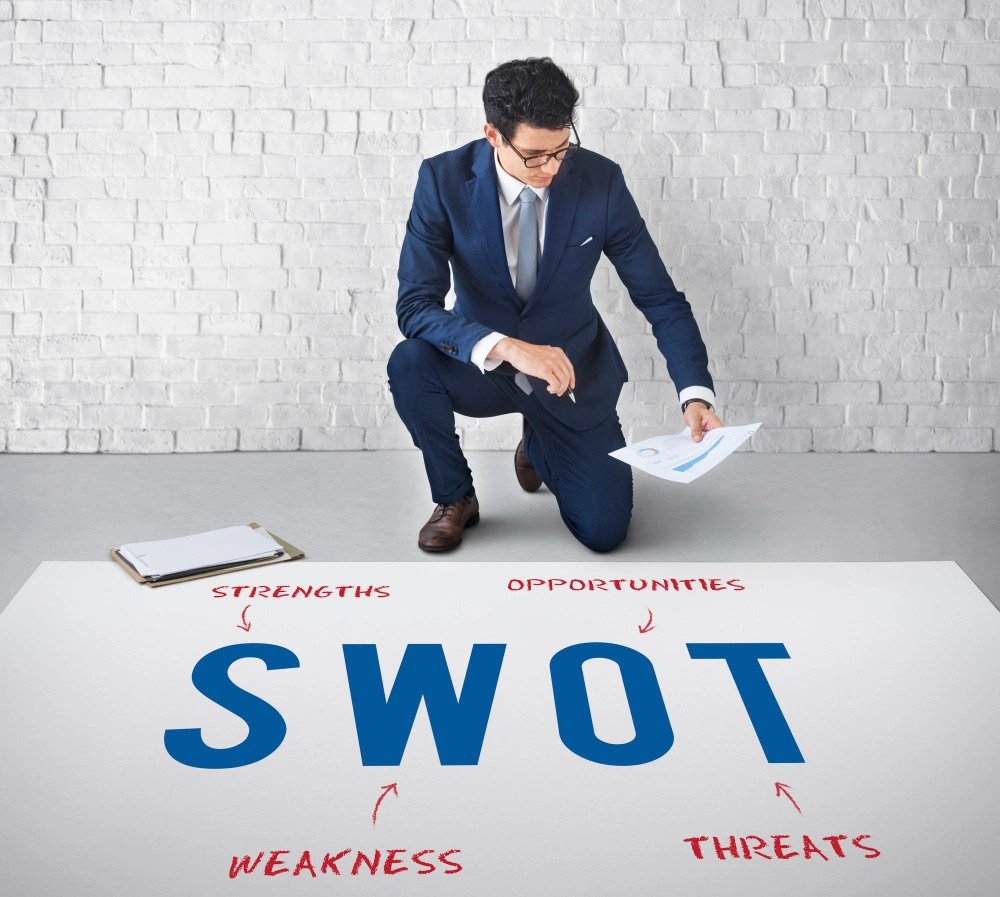
A hotel SWOT analysis is a strategic assessment process that looks at an organization through four lenses:
Strengths
Weaknesses
Opportunities
Threats
When done well, this process gives hoteliers a bird’s-eye view of the hotel’s current state while sharpening their focus on next steps. Rather than just listing items in a spreadsheet, effective analysis tells a story about how your property competes, where it leads, where it lags, and what lies ahead. It becomes the foundation for smarter strategic planning tool exercises, revenue strategies, staffing decisions, marketing efforts, and capital investments.
At its core, SWOT analysis turns observation into an actionable strategy. It forces teams to separate internal factors they can influence from external factors they must respond to.
Before we move on to examples, here is a high-level overview of the four core pillars that form the backbone of this method.
The 4 Components of Hotel SWOT Analysis
Each part of a hotel SWOT serves a distinct purpose, and understanding them is essential to building an analysis that truly drives results.
1. Strengths
Strengths are the positive qualities and capabilities within your organization. This includes everything the hotel does particularly well, as well as resources it possesses that competitors cannot easily replicate.
Examples might include efficient operations, a strong brand, or high guest satisfaction scores. Identifying a hotel's strengths gives you a foundation for building competitive advantages and justifying investments.
2. Weaknesses
Weaknesses are the areas where the property struggles internally. These may not be fatal flaws, but they can erode efficiency, guest experience, or profitability if left unattended.
Hotel weaknesses might include staffing gaps, outdated infrastructure, or limited adoption of technology. Highlighting these is essential to avoiding complacency.
3. Opportunities
Opportunities in the external environment point to possible growth or improvement. These may originate from emerging markets, shifting traveler behaviors, or new technologies on the horizon.
For example, as demand for digital and sustainable experiences grows, more hotels see potential in tailored digital offerings and wellness tourism. Recognizing external opportunities helps hotels expand or diversify successfully.
4. Threats
Threats also come from outside the hotel but represent challenges or risks. These include economic downturns, rising competition, or negative online reviews that damage reputation.
When hotels clearly outline potential threats, they can anticipate disruptions and defend their market position.
Together, these four pillars create a holistic view that connects day-to-day performance with long-term direction.
Step-by-Step Guide to Conducting a Hotel SWOT Analysis
A SWOT is only as good as the process behind it. Here is a step-by-step guide designed for practical hotel use.
Step 1: Gather internal data
Begin with data from inside the property. Review operational reports, guest feedback, and financial performance. Look closely at hotel operations, service delivery, staffing levels, and cost structures.
The 2026 Guest Experienroce Benchmark shows that hotels continue to improve satisfaction even under higher demand. In 2025, the global Guest Review Index reached 86.7%, up 0.5 points YOY, while review volume increased by 2.1%. These results show that many hotels maintain service quality despite operational pressure, making guest sentiment a critical internal signal to assess at this stage.
Step 2: Analyze the external environment
Next, gather data about external shifts. Look at competitor performance, changing guest expectations, and macroeconomic conditions. Tools like market reports and industry forecasts allow you to map out opportunities and threats grounded in evidence rather than assumptions.
Recent performance data highlights why this step matters. The global hospitality sector continues to grow, but at a restrained pace. A PwC study shows that the hotel sector performance has remained largely flat over the past year, with only a slight increase in revenue per available room. STR data from August 2025 supports this trend. Year-to-date RevPAR increased by just 0.2%, driven by a 1.0% rise in average daily rate, while occupancy declined by 0.8%.
Step 3: Structure the SWOT framework
Once data collection is complete, map the insights into a structured SWOT grid. This process supports critical self-evaluation rather than optimism or fear-driven assumptions.
Teams should ensure each insight stays specific, actionable, and evidence-based.
Step 4: Validate with cross-functional teams
A SWOT is most effective when you involve people from different corners of the hotel. Involving multiple departments improves accuracy. Front desk teams, housekeeping management, revenue managers, marketing managers, and sometimes even owners often identify the blind spots that leadership misses.
Hotel managers with frontline experience often uncover realities that metrics alone cannot reveal. This collaborative process strengthens alignment and accountability among hotel management.
Step 5: Review and update regularly
Remember that a SWOT is not a one-time exercise. Review your analysis at least annually or when conditions shift, such as introducing new competitive brands or economic impacts.
Hotel SWOT Analysis Examples
Now that you understand how to conduct a SWOT analysis, it helps to see how it works in practice. The following hotel SWOT analysis examples show how different hospitality concepts can apply the framework to real-world business scenarios.
Example 1: Urban business hotel
You operate a business-focused hotel in a city center and want to strengthen its competitive position. A SWOT analysis helps clarify where to invest and what to protect.
Start by identifying your strengths:
A prime downtown location
Strong relationships with corporate clients
High guest satisfaction driven by responsive service
Next, define your weaknesses:
Outdated meeting and conference spaces
No mobile check-in functionality
Limited wellness or leisure amenities
Then, assess your opportunities:
Increasing demand for business travel
Growing interest in hybrid work and stay packages
Technology that supports contactless and digital guest experiences
Finally, recognize your threats:
Economic uncertainty that pressures corporate travel budgets
Competition from boutique hotels with newer facilities
Negative online feedback linked to recent renovation disruptions
Based on this analysis, the hotel can focus on upgrading meeting spaces and introducing mobile check-in to close competitive gaps.
Example 2: A new glampsite
You have just launched a glamping business and want to attract new guests. A SWOT analysis helps you define your position and shape your strategy.
Start by identifying your strengths:
A clear and differentiated value proposition
A distinctive and scenic location
High-quality amenities
Attentive and personalized service
Next, identify your weaknesses:
Early negative or mixed guest reviews
Pricing that may feel high for first-time visitors
Then, assess market trends to uncover opportunities:
Glamping continues to grow as a popular niche travel segment
No comparable property operates nearby
Strong appeal to travelers seeking unique and personalized experiences
Finally, evaluate potential threats:
Many travelers view glamping as a seasonal option
A nearby campsite offers upscale bungalows at a lower price point
The segment remains new and still faces limited mainstream adoption
These examples show how a hotel can transform raw observations into structured priorities that drive real operational decisions.
Common Strengths in the Hotel Industry
Across many properties, certain strengths repeatedly emerge as key performance drivers in the hospitality industry:
Prime location: Being near airports, city centers, or attractions strengthens visibility and convenience.
Brand recognition and loyalty: Well-known brands attract repeat business and bolster direct sales.
Personalized guest experiences: Hotels focusing on tailored stays see higher loyalty and repeat rates.
Operational excellence: Efficient execution in guest services, check-in, check-out, and housekeeping leads to positive guest reviews.
{{pms-four}}
For example, leading global brands like Marriott operate 556 luxury properties (including The Ritz-Carlton, St. Regis, and JW Marriott), while Hilton runs around 400, giving Marriott greater scale in marketing, distribution, and loyalty programs. RevPAR in the luxury segment rose 4%, fueled by strong demand and effective rate management.
Common Hotel Weaknesses to Address
Despite strengths, most properties also face persistent internal challenges. These often appear in SWOT analyses as:
Outdated facilities that lag behind guest expectations
Limited technology adoption in operations or guest engagement
Budget limitations that delay upgrades
Poor response to guest complaints or slow service
Technology can directly address many of these issues. According to the Auguste Escoffier School of Culinary Arts, 96% of hoteliers are investing in contactless technology this year, and 77% of guests prefer using automated messaging or chatbots for quick communication. One-third of restaurant owners report that automation saves significant time on ordering, and over 90% of cruise lines use data analytics to personalize the guest experience.
This shows how integrating modern technology not only improves operational efficiency but also improves guest satisfaction, making it a key area for hotels to address.
Hotel Industry Threats & Challenges
Every market has external risks that hotels must anticipate and mitigate. Some of the common potential threats include:
Data breaches and privacy concerns as digital tools proliferate
Economic downturns reducing travel budgets
Rising competition from alternative stays and digital platforms
Rapid shifts in guest expectations that outpace operational change
Hotels that fail to address these threats risk losing market share and brand reputation.
Hotel SWOT Analysis Tools & Templates
Conducting a SWOT analysis helps independent hoteliers identify strengths, address weaknesses, seize opportunities, and manage threats. The challenge is often turning insights into actionable strategies without getting lost in spreadsheets or disconnected systems.
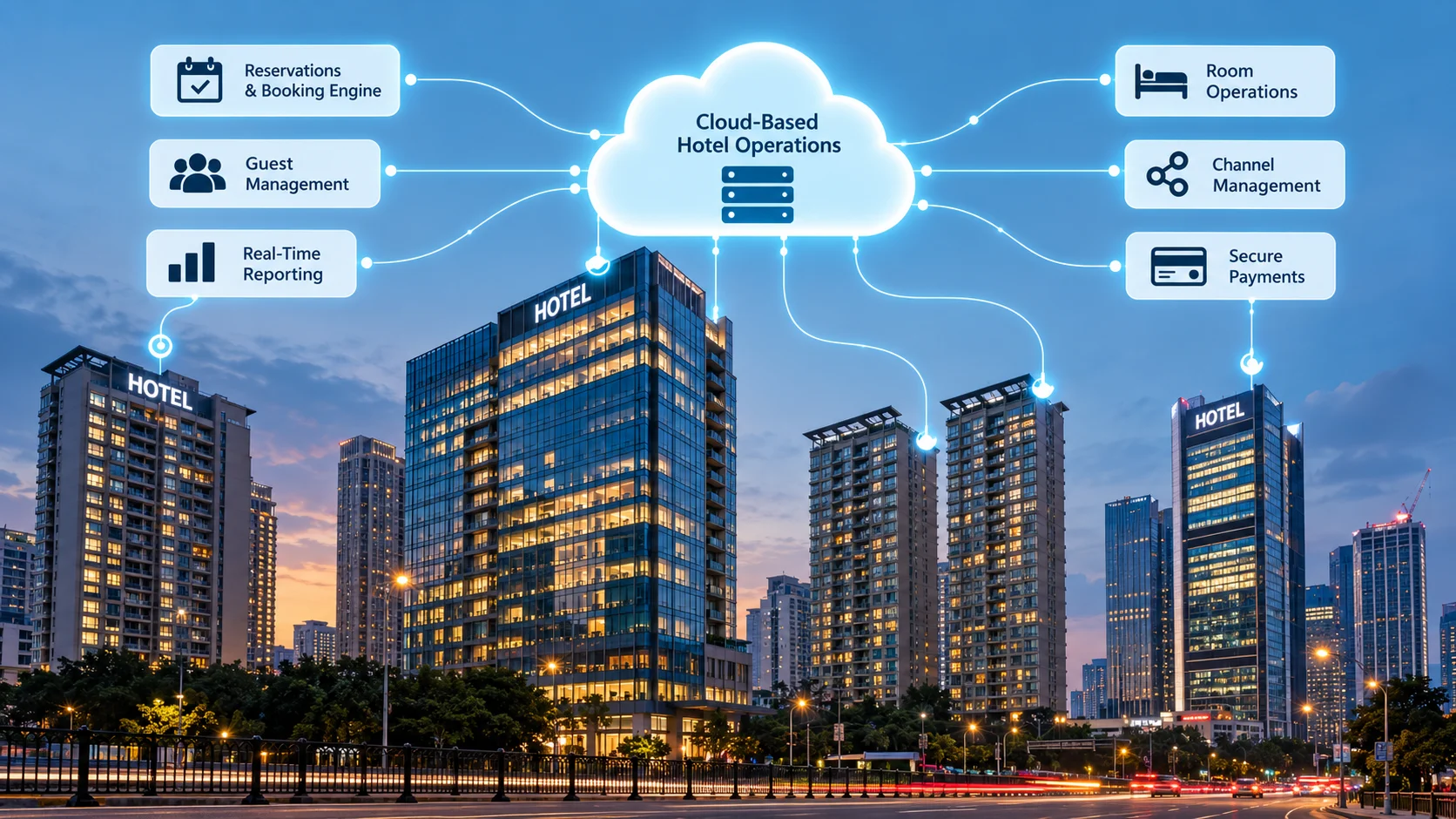
With an all-in-one, cloud-based property management system (PMS) like roommaster, you can streamline this process by leveraging operational data, guest intelligence, and financial performance metrics, all backed by over 30 years of hospitality expertise. Our built-in reporting and analytics tools provide the clarity you need to make informed decisions quickly.
Strengths: Identify what sets you apart
With roommaster PMS, uncovering your property’s strengths becomes simple and data-driven. Our Operations Suite helps you track guest satisfaction scores, housekeeping efficiency, and service quality metrics.
Similarly, our Hotel Reporting Software lets you highlight top-performing room types, rate plans, and packages, while 270+ built-in reports allow you to track revenue trends, occupancy, and room performance. By analyzing this data, you can clearly see which amenities, packages, or operational practices drive profitability, giving you insight into what truly sets your hotel apart.
Weaknesses: Pinpoint areas for improvement
Identifying weaknesses is no longer guesswork. With roommaster, you can monitor operational bottlenecks, track guest complaints, and analyze service patterns across your property.
Insights from Guest Communication & Engagement and housekeeping reports show where delays, inconsistencies, or outdated facilities may impact the guest experience. When you turn these data points into actionable steps, you can prioritize upgrades, streamline workflows, and close gaps that might otherwise limit revenue or satisfaction.
Opportunities: Spot growth potential
roommaster helps you see where your property can grow. By leveraging guest profiles, booking patterns, and financial metrics across the platform, you can uncover cross-selling, upselling, and loyalty opportunities.
Revenue & Finance Suite tools let you test dynamic pricing, optimize packages, and explore new distribution channels, while reports provide clear insights into seasonal trends, market demand, and guest preferences. This approach transforms opportunities from abstract ideas into concrete strategies that increase bookings and revenue.
Threats: Stay ahead of market challenges
Understanding threats means considering both internal and external factors. With the roommaster Channel Manager and Market Intelligence tools, you can monitor competitor pricing, OTA performance, and seasonal demand patterns while staying informed about guest expectations and review trends.
{{channel-manager-one}}
These threats often include new competitors, economic uncertainty, or shifting guest expectations.
Templates to simplify your analysis
Finally, roommaster provides pre-built templates that let you analyze a single property or multiple locations, and you can customize them to reflect your operational priorities. The system pulls metrics like occupancy, RevPAR, ADR, and guest satisfaction directly from your PMS, so your analysis always uses real-time data.
You can combine these insights with external market trends to understand opportunities, threats, and competitive positioning. By connecting operational, financial, and guest data on a single platform, roommaster turns SWOT analysis into a living tool that drives smarter decisions, improves efficiency, and increases revenue across your property or portfolio.
Turning SWOT Insights into Action
A robust hotel SWOT analysis gives your team a clear picture of today’s performance and the steps needed to grow tomorrow. As guest expectations evolve and digital engagement becomes essential, SWOT connects operational clarity with strategic foresight.
roommaster PMS helps you turn this analysis into action by feeding real-time data on occupancy, RevPAR, ADR, and guest satisfaction directly into your reports, giving your team the insights needed to make confident, data-driven decisions.
Take control of your hotel’s future today. Book a demo with roommaster and start turning insights into results.
{{cta-strip}}
FAQs
How often should hotels conduct a SWOT analysis?
Hotels should conduct a SWOT analysis at least once a year, or whenever major shifts occur in performance, guest preferences, or competitive dynamics. Using roommaster PMS, you can quickly track changes in occupancy, RevPAR, and guest satisfaction to inform timely updates.
How is hotel SWOT analysis different from a generic SWOT?
Unlike a generic SWOT, a hospitality-focused analysis zeroes in on guest service expectations, online reviews, brand reputation, and location-based competition. roommaster PMS captures all these operational and guest metrics in one place, providing accurate insights.
Who should participate in a hotel SWOT analysis?
Cross-functional teams from operations, revenue, marketing, and customer service provide the most valuable perspectives, ensuring the analysis drives actionable decisions across the property.
Can small or independent hotels use SWOT analysis effectively?
Yes. SWOT works for any hotel because it focuses on resources and risks that the property can control.
What data sources matter most for hotel SWOT analysis?
Guest feedback, competitor metrics, revenue data, occupancy, and online reviews from major platforms are key. roommaster PMS centralizes these metrics, so you can combine them with market insights in a single, actionable view.
How should hotels prioritize SWOT findings?
Focus first on items with the biggest impact on revenue, guest satisfaction, and competitive positioning. Using roommaster PMS reporting tools, you can identify trends, opportunities, and areas requiring immediate attention.
What are common mistakes in hotel SWOT analysis?
Some of the common mistakes in hotel SWOT analysis include making lists without actionable steps, ignoring data, and failing to revisit findings over time. With roommaster PMS, you can continuously monitor performance, making SWOT a living tool rather than a one-time exercise.
Does SWOT analysis differ by hotel type?
Yes. Luxury hotels, business hotels, and resorts attract different guests and must tailor their SWOT accordingly. roommaster PMS allows hotels of all types to track the specific metrics that matter most to their segment.
Can SWOT analysis guide hotel renovations?
Absolutely. SWOT helps identify where investments, such as updated amenities or in-room technologies, will create the most value.
How do online reviews influence SWOT analysis?
Online reviews reveal guest perceptions, pain points, and competitive strengths that directly affect reputation and loyalty.
Mayela Lozano is a content strategist with a passion for hospitality and technology. She collaborates with roommaster on content creation, highlighting how technology can streamline hotel operations and enhance guest satisfaction. When she’s not creating content, Mayela loves to travel and spend time with her two little ones, discovering new adventures and making memories along the way.
Join Thousands of Hotels Thriving with roommaster
The transition to roommaster is straightforward and efficient. Our implementation team handles data migration including reservations, guest profiles, and historical information.
The transition to roommaster is straightforward and efficient. Our implementation team handles data migration including reservations, guest profiles, and historical information.
Hotel Self Check-In: How It Works, Types, Benefits And Setup
October 1, 2026
Hotel Management
Hospitality Trends
Hotel Check-In & Check-Out Times Explained
October 1, 2026
Hospitality Trends
Hotel Management
Cloud-Based Property Management System: Hotel PMS
October 1, 2026
General
Cloud PMS
AI
Cloud Computing In The Hospitality Industry: A Complete Guide For Hotels
October 1, 2026
General
Best Hotels in Montreal: A Complete Guide
September 25, 2026
General
Best Hotels in Edmonton: A Complete Guide
September 25, 2026
General
Best Hotels in Banff: A Complete Guide
September 25, 2026
General
Best Hotels in Calgary: A Complete Guide
September 25, 2026
General
Best Hotels in Whistler: A Complete Guide
September 25, 2026
General
Best Hotels in Victoria BC: A Complete Guide
September 25, 2026
Join Thousands of Hotels Thriving with roommaster
See how roommaster's unified platform can work for your property. Our team will walk you through features tailored to your specific needs and operations.






.png)
.png)
.png)