What Is SkyTouch?
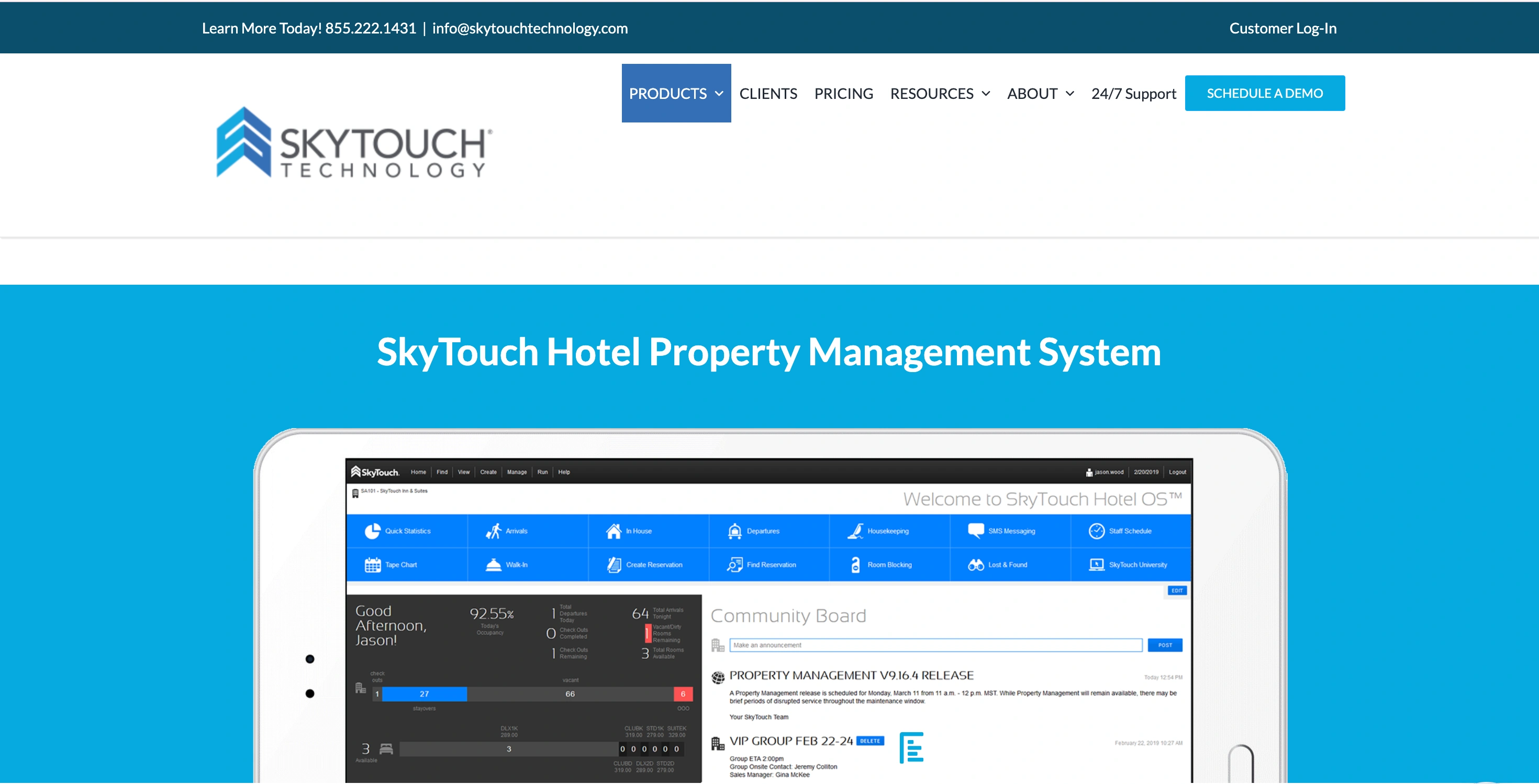
SkyTouch is a cloud-based hotel property management system that handles reservations, group bookings, housekeeping, guest preferences, rate management, and night audits. It connects to OTAs and payment systems, and serves independent hotels, franchised properties, and multi-property groups of varying sizes.
This guide sorts six alternatives, led by roommaster's all-in-one hotel property management system, by all-in-one depth, pricing model, property-type fit, and support, then walks through exactly what changes operationally once you switch.
{{pms-one}}
6 Reasons Hotels Outgrow SkyTouch And Start Looking Elsewhere
SkyTouch is a straightforward, easy-to-learn PMS, and hoteliers consistently praise it for getting new front desk staff up to speed fast. The frustrations that push growing properties to look elsewhere tend to cluster around six areas.
Rigid customization. Properties can't easily reshape reporting layouts, adjust reservation workflow paths, or tailor the front desk interface to fit a boutique or resort's specific operation, a common complaint once a hotel's needs get more particular than SkyTouch's standard setup allows.
Recurring software glitches. Intermittent crashes, login errors, and frozen screens show up most during peak check-in windows, with the visual tape chart and housekeeping updates prone to sync lag that slows the front desk down.
Maintenance timing. Scheduled updates sometimes land during active night audits or early checkout, pushing desk agents into manual paper workarounds until the system stabilizes.
Thin guest engagement tools. SkyTouch ships with a lean set of native guest-facing features out of the box, so hotels wanting automated marketing, a built-in guest CRM, or mobile self-service check-in often need to add third-party tools on top.
Integration and accounting friction. Bridging SkyTouch to specific payment processors or accounting platforms can introduce sync issues, and it's not always clear which vendor owns the fix when a connection breaks.
Surface-level reporting. Daily operational numbers are covered fine, but properties chasing tighter revenue optimization run into a reporting dashboard short on advanced filters, historical tracking, and customizable metrics.
If any of those sound familiar, the six alternatives below map to the switch reasons hoteliers cite most, and roommaster addresses the largest number of them in a single platform.
How To Choose Between SkyTouch And These Alternatives
Use the switch reason, not the feature list, to narrow the field.
- Channel manager and booking engine. Included or an add-on? All-in-one billing favors roommaster and WebRezPro; Cloudbeds includes them too but meters revenue tools separately.
- Group and multi-property tools. That points to roommaster, documented across groups managing as many as 17 properties in the case studies; single-property boutiques are well served by WebRezPro or Stayntouch.
- Modern, automation-first interface. Mews leads there; roommaster and Cloudbeds balance modernity with all-in-one depth.
- Transparent, published pricing. WebRezPro and Stayntouch publish or report starting rates; check what add-ons a quote assumes before comparing against roommaster, Cloudbeds, or Mews.
- Support hours, migration fees, and data export terms. roommaster staffs 24/7 phone support; confirm SLAs, fees, and export terms in writing before you sign, since implementation is where switches fail.
Match against property size too: under 20 rooms with simple operations may not need this level of depth at all; 30 to 150 rooms, including a SkyTouch resort with a restaurant or event space, suits roommaster, Cloudbeds, WebRezPro, or Mews; large enterprise chains lean toward Oracle OPERA Cloud.
Best SkyTouch Alternatives 2026: At A Glance
Pricing models below reflect each vendor's published or commonly cited entry point; ratings reflect current published scores on each review platform.
| Software | Key features | Best for (property type) | Rating (G2 / Capterra / Software Advice) |
|---|
| roommaster | Group and block bookings, commission-free booking engine, channel manager, built-in revenue management, AI phone concierge, guest app, 24/7 phone support | Independent hotels and small groups, up to 150-room portfolios | G2 4.5, Capterra 4.3, Software Advice 4.3 |
| Cloudbeds | All-in-one PMS, channel manager, booking engine, payments, large integration marketplace | Multi-property groups, hostels, vacation rental portfolios | G2 4.3 (38 reviews), Capterra 4.5 (6,000+ reviews), Software Advice 4.5 |
| WebRezPro | No-fee booking engine, two-way OTA sync, strong back-office accounting, discounts for hostels and campgrounds | Boutique inns, campgrounds, specialty lodging | G2 4.3 (32 reviews), Capterra 4.6 (169 reviews), Software Advice 4.6 |
| Mews | Open API automation, mobile-first check-in, built-in revenue management and analytics, large integration marketplace | Tech-forward, mid-size hotels and hotel groups | G2 4.8, Capterra 4.6 (59 reviews), Software Advice 4.6 |
| Stayntouch | Tablet-based, staff-anywhere front desk, guest self-service check-in | Boutique and lifestyle hotels | G2 4.4 (67 reviews), Capterra 4.6 (85 reviews), Software Advice 4.6 |
| Oracle OPERA Cloud | Enterprise-scale reservations, housekeeping, F&B, and revenue management | Large, full-service hotel chains and enterprise portfolios | G2 4.5, Capterra 4.3, Software Advice 4.3 |
Top 6 SkyTouch Alternatives
1. roommaster
roommaster is a cloud property management system built for independent and boutique hotels that also handle group blocks and want front desk, distribution, and guest tools in one platform with a real phone line. It pairs core front-desk and reservation workflows with a commission-free booking engine, a channel manager syncing rates across hundreds of OTAs, built-in revenue management, an AI phone concierge, and a guest app. roommaster has run hotel software for more than 30 years.
Key features: front desk, reservations, housekeeping, and night audit; a channel manager with real-time OTA sync; a commission-free booking engine; built-in revenue management; an AI phone concierge and guest app with mobile check-in; group and block-booking tools with multi-property reporting; and 270-plus built-in reports with an SQL report builder, all in one cloud platform.
What it solves: the response-time and single-vendor gap independents cite most when leaving select-service systems like SkyTouch, since PMS, distribution, revenue, and guest tools sit on one platform backed by 24/7 human phone support.
Best for: independent hotels and small groups, from single properties to 150-room portfolios, that also handle group blocks.
Pricing: custom quote after a short sales conversation, since pricing isn't published.
Reviews: G2 4.5, Capterra 4.3, Software Advice 4.3, with case studies documenting groups managing as many as 17 properties on the platform.
{{pms-four}}
2. Cloudbeds
Cloudbeds is one of the most recognized all-in-one platforms, bundling a PMS, channel manager, booking engine, and payments on a single bill for multi-property hotel groups, hostels, and vacation rental portfolios.
Key features: an all-in-one PMS, channel manager, booking engine, and payments, plus a large third-party integration marketplace, all in one cloud platform.
What it solves: the need for a single distribution stack with wide OTA and marketplace reach, instead of stitching together several disconnected tools for a multi-property or hostel portfolio.
Best for: multi-property hotel groups, hostels, and vacation rental portfolios wanting broad integration reach.
Pricing: custom quote, with Core and Enterprise tiers.
Reviews: G2 4.3 (38 reviews), Capterra 4.5 (6,000-plus reviews), Software Advice 4.5. Hoteliers praise the intuitive interface and OTA reach, though some note pricing can climb as revenue tools and premium modules load onto the invoice.
3. WebRezPro
WebRezPro is a long-established cloud PMS built for boutique inns, campgrounds, and specialty lodging that want published pricing and strong back-office accounting, with a no-fee booking engine and two-way OTA channel sync.
Key features: a cloud PMS with front desk, housekeeping, reporting, and night audit; a no-fee website booking engine with a complimentary payment gateway integration; and discounts for hostels, campgrounds, and boat slips, all in one cloud platform.
What it solves: the need for comparatively transparent, predictable pricing and deep back-office accounting for a unique or multi-property portfolio, without an enterprise price tag.
Best for: boutique inns, campgrounds, and specialty lodging.
Pricing: a reported entry rate near $5 per room a month, with a roughly $60 to $150 monthly minimum depending on room count, and no long-term commitment.
Reviews: G2 4.3 (32 reviews), Capterra 4.6 (169 reviews), Software Advice 4.6. Reviewers cite the comparatively transparent pricing and strong accounting depth, though the interface leans less modern than newer cloud-native systems, detailed further in roommaster's own WebRezPro pricing guide.
4. Mews
Mews is an API-first, mobile-first PMS built for tech-forward, mid-size hotels and hotel groups that want open API automation across their stack, known for a clean interface and an extensive integration marketplace.
Key features: a mobile-first PMS that automates check-in, housekeeping updates, and night audit; an open API and one of the larger third-party marketplaces in hotel tech; built-in revenue management and analytics tooling; and multi-property support, all in one cloud platform.
What it solves: the manual workload of routine front-desk tasks for a lean team, freeing staff to spend time on guests instead of data entry.
Best for: tech-forward, mid-size hotels and hotel groups that want to assemble a best-of-breed stack.
Pricing: custom quote, with total cost depending on how many marketplace apps get added.
Reviews: G2 4.8, Capterra 4.6 (59 reviews), Software Advice 4.6. The open marketplace draws praise, though managing several marketplace vendors and invoices can offset the single-bill simplicity some SkyTouch switchers want.
5. Stayntouch
Stayntouch is a cloud-native, guest-centric PMS built around tablet-operated operations for boutique and lifestyle hotels that want staff-anywhere front desk work and guest self-service check-in, with pricing starting around $550 a month.
Key features: mobile and tablet-first operations that let staff manage tasks from anywhere on the floor, plus guest self-service check-in tools, all in one cloud platform.
What it solves: slow staff onboarding and a front-desk-bound guest experience, by putting check-in and daily tasks on a tablet instead of a fixed desk.
Best for: boutique and lifestyle hotels prioritizing mobile guest experience over deep financial reporting.
Pricing: starting around $550 a month on a monthly subscription.
Reviews: G2 4.4 (67 reviews), Capterra 4.6 (85 reviews), Software Advice 4.6. Reviewers praise user-friendliness and fast staff training, though finance-grade reporting and group billing workflows lag behind platforms built around back-office depth.
6. Oracle OPERA Cloud
Oracle OPERA Cloud is the enterprise standard, built for large, full-service hotel chains and enterprise portfolios with dedicated IT support and deep operational needs across reservations, housekeeping, F&B, and revenue management.
Key features: enterprise-scale property management for large, complex chains, with deep, scalable features across reservations, housekeeping, F&B, and revenue management, all in one cloud platform.
What it solves: the operational complexity of large, full-service chains and branded portfolios that outgrow platforms built for independents.
Best for: large, full-service hotel chains and enterprise portfolios with dedicated IT support.
Pricing: custom quote, priced at category average once room count and modules are factored in.
Reviews: G2 4.5, Capterra 4.3, Software Advice 4.3. Reviewers note a strong track record among luxury and branded properties, alongside a steeper learning curve and enterprise-level cost.
{{pms-two}}
Key Features To Look For In A SkyTouch Alternative
- Flexible customization. Reporting layouts, reservation workflows, and the front desk interface should adapt to a boutique or resort's specific operation instead of a fixed standard setup.
- Stable, glitch-resistant performance. Look for dependable uptime during peak check-in windows, without a visual tape chart or housekeeping sync lag.
- Maintenance that doesn't interrupt night audits. Updates should roll out without forcing desk agents into manual paper workarounds.
- Native guest engagement tools. Automated marketing, a built-in guest CRM, and mobile self-service check-in should come standard, not as bolted-on third-party add-ons.
- Clean integration and accounting connections. Payment processor and accounting platform links should stay in sync, with a clear owner for fixes when a connection breaks.
- Deep, customizable reporting. Advanced filters, historical tracking, and custom metrics matter once a property starts chasing tighter revenue optimization.
What Changes When You Switch From SkyTouch
Switching off SkyTouch changes more than the login screen. It shifts daily operations across front desk workflow, reporting depth, integrations, and guest-facing technology.
1. Front desk reliability improves: SkyTouch users sometimes work around glitches manually, like re-authorizing a card after a duplicate hold or waiting out a frozen tape chart sync. Moving to a modern cloud platform like roommaster removes that manual patchwork, and rolling updates replace SkyTouch's scheduled maintenance windows, so night audits and early checkouts don't get pushed onto paper backups.
2. Reporting opens up: SkyTouch's dashboards stay largely fixed, covering daily occupancy and room revenue without much room to dig deeper. roommaster replaces that with a customizable report builder and hundreds of built-in reports, so a finance team can track channel-specific costs or multi-department revenue, including F&B or spa, without exporting everything to a spreadsheet first.
3. The integration ecosystem gets bigger: SkyTouch connects to a moderate set of verified partners. API-first alternatives open up a much larger marketplace, so linking a new smart lock, guest messaging tool, or accounting platform becomes a standard setup step rather than a drawn-out IT project.
4. Guest-facing technology expands: Where SkyTouch leans on a traditional front desk check-in flow, several alternatives add mobile self-service check-in, digital room keys, and automated guest messaging as native or near-native features, without needing to bolt on a separate software layer for each one.
5. Staff training stays manageable: SkyTouch's biggest strength is how fast a new hire learns it. Feature-richer alternatives ask for a bit more ramp-up time, but platforms built around clear, visual interfaces, roommaster included, keep that gap smaller than the added depth might suggest.
6. Migration itself follows a clear path: A structured switch generally moves through three stages: cleaning and auditing existing guest and folio data, mapping inventory and integrations into the new system, and a single go-live cutover rather than running both systems side by side. For a straightforward independent property with a prepared data export, this can wrap up in three to five business days. Larger portfolios with more legacy data, outstanding accounts receivable balances to map, or multiple integrations to reconnect should plan for a longer runway, and scheduling go-live during a low-occupancy period keeps the transition safer for both staff and guests.
roommaster Fits Most Growing Independents Switching From SkyTouch
SkyTouch is a capable, easy-to-learn platform, but if fixed reporting, software stability, or missing group and revenue tools are pushing you to compare, the six alternatives here cover every switch reason. For a single boutique property, WebRezPro and Stayntouch compete hardest on comparatively transparent pricing and mobile experience. For a large enterprise chain, Oracle OPERA Cloud is the standard.
For an independent SkyTouch hotel or resort that wants one platform with a real phone line to carry it from front desk to group bookings and multi-property reporting, roommaster is the most complete fit. Shortlist two, run demos with your own occupancy and OTA numbers, and let total cost, not the sticker price, decide.
{{cta-strip}}
Frequently Asked Questions
1. What is the best SkyTouch alternative for independent hotels?
For a single small or boutique property, WebRezPro and Stayntouch compete on comparatively transparent pricing and mobile experience. For an independent that expects to grow into group bookings and wants 24/7 phone support, roommaster offers more room to scale in one platform.
2. How does roommaster compare to SkyTouch?
Both are cloud PMS platforms, but roommaster adds native group bookings, built-in revenue management, an AI phone concierge, and 270-plus reports, while SkyTouch leads on per-feature starting price and fast staff training.
3. Is SkyTouch owned by Choice Hotels?
SkyTouch Technology, also searched as Sky Touch, was launched by Choice Hotels International as a separate division and powers choiceADVANTAGE for Choice franchisees. It also sells directly to independent hotels outside the Choice brand.
4. Are there cheaper alternatives to SkyTouch?
WebRezPro reports pricing from around $5 per room a month with a roughly $60 to $150 monthly minimum. Cloudbeds and Mews quote per property, so always confirm which add-ons a quote includes before comparing.
5. Which SkyTouch alternative is best for a resort with a restaurant or event space?
roommaster fits this case best, since group and block bookings are handled natively and finance-grade reporting supports revenue tracking beyond room nights. Oracle OPERA Cloud also covers this well but is built for a larger enterprise scale.
6. Does switching PMS platforms mean a longer staff training period?
Not necessarily. roommaster and Stayntouch are both built for fast onboarding despite offering more depth than SkyTouch's fixed feature set.
7. What is the difference between a PMS and a channel manager?
A PMS, like roommaster, manages internal hotel operations such as check-in, billing, and housekeeping. A channel manager syncs rates and availability across external booking sites like Expedia and Booking.com to prevent overbookings.
8. Does SkyTouch charge commission on direct website bookings?
SkyTouch sets up core rate rules but generally relies on integrated web partners for direct bookings. Alternatives like roommaster, Cloudbeds, and WebRezPro offer commission-free booking engines built natively into the platform.

.png)
.png)
.png)