Hotel food and beverage covers every dining, bar, room service, and banquet operation on property. This guide explains how F&B works, why it matters to revenue, and how to manage it well in 2026.
What it is: hotel F&B covers every dining, drinking, and catering operation on property, from fine dining to minibars to banquets.
What management involves: running outlet operations, owning the departmental P&L, leading front and back of house teams, and enforcing quality and compliance.
Why it matters: F&B typically drives 20% to 40% of total hotel revenue and heavily influences guest satisfaction.
What makes it work: POS and PMS integration, a high guest capture rate, and close collaboration with chefs and event sales.
The 2026 shift: owners judge F&B on total profit contribution (GOPPAR and TRevPAR), not just departmental revenue.
What Is Hotel Food And Beverage (F&B)?
Hotel food and beverage (F&B) encompasses all the dining, drinking, and catering operations provided within a hospitality property. The F&B department is responsible for the creation, preparation, and service of all food and drinks in the hotel, from a signature restaurant to a poolside snack bar to a wedding banquet for 300 guests.
In practice, F&B is one of the most complex parts of a hotel to run because it spans many outlets, shifting demand, perishable inventory, and both front-of-house service and back-of-house production. It is also one of the biggest opportunities, since strong F&B lifts revenue, guest reviews, and a property's standing in its local market.
The Main Components Of Hotel F&B
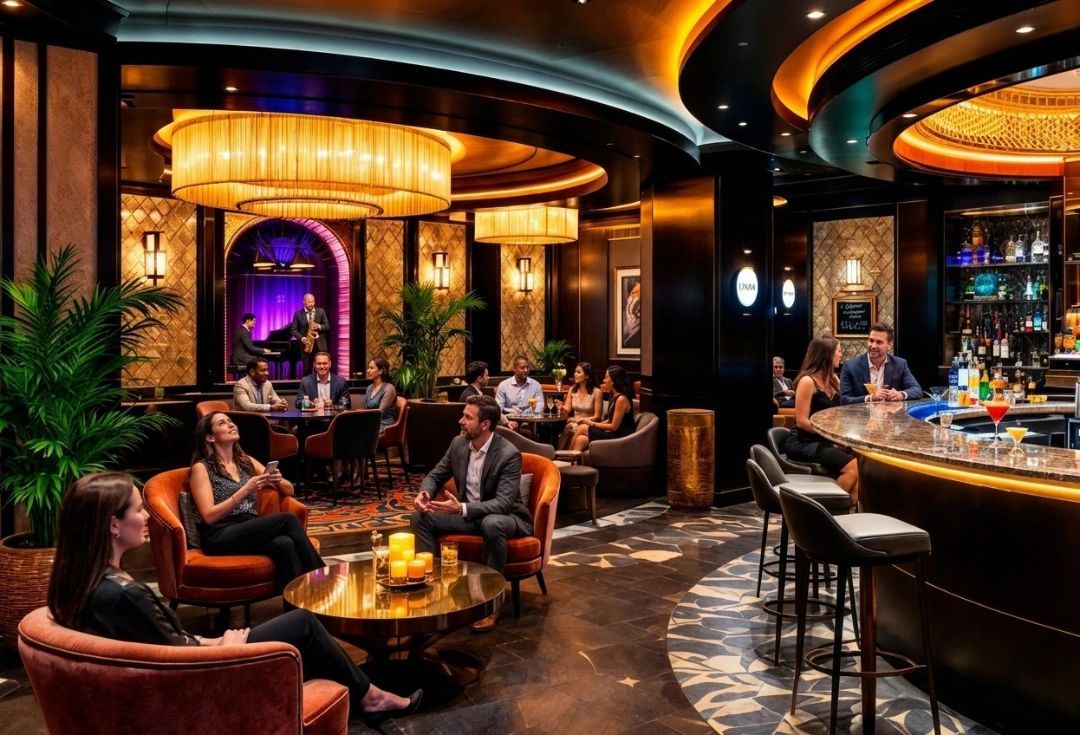
Most hotels run several F&B outlets, each with a different role and guest.
In-room dining: room service and fully stocked minibars that provide private meals or snacks.
Banquets and catering: large-scale food and drink preparation for weddings, conferences, and corporate events. For a deeper look, see our guide to banquet management.
Grab-and-go: quick, convenient coffee stands or micro-markets for travelers on the move.
What Is Hotel F&B Management?
Hotel food and beverage management oversees all dining, bar, room service, and banquet operations within a property to maximize guest satisfaction and profitability. It brings together service, finance, people, and standards into one department that has to perform every shift, across every outlet, at once.
Modern F&B management increasingly runs on software that connects order taking, kitchen coordination, billing, and stock tracking into one system. Group operators go further, using platforms to manage group-wide recipes, menus, and technical sheets and to train kitchen staff efficiently and consistently across properties.
Outlet operations: managing daily service across onsite restaurants, lounges, banquets, and in-room dining.
Financial control: owning departmental profit and loss targets, tracking food and labor costs, and adjusting pricing.
Staff leadership: recruiting, training, and scheduling front-of-house and back-of-house teams.
Quality and compliance: enforcing health and safety regulations while maintaining brand service standards.
{{pms-one}}
Key Metrics To Track In Hotel F&B
You cannot manage F&B on gut feel. A handful of metrics tell you whether outlets are healthy and where margin is leaking.
Food cost percentage: cost of food sold divided by food revenue, the core margin control lever.
Beverage cost percentage: the same calculation for drinks, usually a higher-margin category.
RevPASH (revenue per available seat hour): how efficiently a restaurant fills seats over time.
Capture rate: the share of registered hotel guests who dine on property, a direct measure of onsite revenue conversion.
TRevPAR and GOPPAR: total revenue and gross operating profit per available room, which show F&B's contribution to the whole property.
The 2026 shift is that owners increasingly judge a hotel on GOPPAR, not just room revenue, because labor, energy, and food costs have risen faster than rates. For the full picture, see our hotel performance metrics guide.
Why Hotel F&B Matters
Revenue driver: F&B typically accounts for 20% to 40% of a total hotel's revenue, making it far more than an amenity. It is also a major source of ancillary revenue.
Local attraction: modern hotel concepts design their restaurants and bars to draw neighborhood residents, not just registered guests, which adds demand to the room business.
Key Strategies And Success Factors For Hotel F&B Operations
Hotel food and beverage (F&B) encompasses all services related to preparing, serving, and selling food and drinks on property, including restaurants, bars, room service, minibars, and banquets. F&B management is the discipline of running those outlets to maximize guest satisfaction and profitability, covering daily service, cost control, staffing, quality, and technology. Done well, F&B can account for a large share of total hotel revenue and shapes guest reviews, repeat bookings, and brand loyalty.
The properties that get F&B right tend to share a few habits.
Technology integration: connect the point of sale (POS) with the property management system (hotel PMS software) to track real-time inventory, reduce waste, and streamline billing onto one guest folio.
Maximize capture rate: convert registered hotel guests into dining patrons with the right outlets, hours, promotions, and in-room prompts.
Cross-department collaboration: partner closely with executive chefs and event sales teams to align menu margins with banquet event orders (BEOs).
Disciplined cost control: enforce food and beverage cost targets, manage perishable inventory tightly, and audit for waste.
Revenue growth: align F&B programming with marketing and event sales to lift per-guest spend.
{{pms-two}}
Current Trends In Hotel F&B
Sustainability: sourcing ingredients locally from nearby farms and implementing zero-waste kitchen practices.
Health and wellness: rising demand for nutritious meals, vegan and gluten-free options, and sophisticated alcohol-free craft mocktails.
Technology: adoption of mobile ordering, digital room-service requests, and integrated point-of-sale platforms that connect to the PMS.
How Technology Streamlines Hotel F&B
The single biggest operational win in F&B is connecting the POS to the PMS system. When they talk to each other, restaurant, bar, minibar, and room-service charges post straight to the guest folio, inventory updates in real time, and finance sees one clean picture of revenue and cost.
Because roommaster connects payments, folios, and reservations in one platform, F&B charges from every outlet flow onto a single bill, deposits and banquet revenue tie back to the reservation, and staff spend less time reconciling and more time serving guests. If your F&B program relies on a dedicated restaurant system, our guide to the best POS systems for hotels covers the leading options and how they integrate.
Bring Every Outlet Onto One Platform
Hotel F&B is only as strong as the systems behind it. When outlets, folios, and payments live in separate tools, revenue leaks and staff drown in manual work. Running F&B on the same platform you use to manage the property means every charge, every cover, and every banquet ties back to the guest and the reservation, so you can see true profitability and act on it. That is the foundation roommaster hospitality management software is built to give you.
{{cta-strip}}
Frequently Asked Questions
1. What is hotel food and beverage (F&B)?
Hotel food and beverage (F&B) encompasses all services related to preparing, serving, and selling food and drinks on property, including restaurants, bars, room service, minibars, and banquets and catering. The F&B department is responsible for the creation, preparation, and service of all food and drinks in the hotel.
2. What does hotel F&B management involve?
Hotel F&B management oversees all dining, bar, room service, and banquet operations to maximize guest satisfaction and profitability. It covers daily outlet operations, owning the departmental profit and loss, recruiting and scheduling staff, and enforcing health, safety, and service standards.
3. What are the main F&B outlets in a hotel?
Common outlets include signature and casual restaurants, lobby and poolside bars, in-room dining and minibars, banquets and catering for events, and grab-and-go options like coffee stands or micro-markets. Larger properties run several outlets at once, each with its own role and guest.
4. How much revenue does F&B generate for hotels?
F&B typically accounts for 20% to 40% of a hotel's total revenue, depending on the property type and how many outlets it runs. Beyond direct revenue, strong F&B lifts guest satisfaction, reviews, and repeat bookings, and can attract local diners who are not hotel guests.
5. What are the most important hotel F&B metrics?
Key metrics include food cost percentage, beverage cost percentage, RevPASH (revenue per available seat hour), and capture rate, which measures how many hotel guests dine on property. Owners increasingly also track TRevPAR and GOPPAR to see F&B's contribution to total profit.
6. How does technology improve hotel F&B operations?
Connecting the point of sale to the property management system lets charges post automatically to the guest folio, keeps inventory updated in real time, and reduces waste and manual reconciliation. Mobile ordering and digital room-service requests further streamline service and lift per-guest spend.
Mayela Lozano is a content strategist with a passion for hospitality and technology. She collaborates with roommaster on content creation, highlighting how technology can streamline hotel operations and enhance guest satisfaction. When she’s not creating content, Mayela loves to travel and spend time with her two little ones, discovering new adventures and making memories along the way.
Join Thousands of Hotels Thriving with roommaster
The transition to roommaster is straightforward and efficient. Our implementation team handles data migration including reservations, guest profiles, and historical information.
The transition to roommaster is straightforward and efficient. Our implementation team handles data migration including reservations, guest profiles, and historical information.
Pet-Friendly Hotel Amenities & Package Ideas That Drive Revenue
September 22, 2026
Hotel Management
Marketing
Hotel Pet Fees: How Much Should You Charge?
September 22, 2026
Hotel Management
Hotel PMS
Best Hotel Food and Beverage (F&B) Management Software In 2026
September 22, 2026
Hotel Management
Marketing
Pet-Friendly Hotel Guide: Policy, Fees & Amenities
September 22, 2026
Hotel Management
Payment Processing
Best Practices For Hotels To Avoid Chargebacks Disputes
September 21, 2026
General
Hotel Management
Preventing Credit Card Fraud In Hotel Operations
September 21, 2026
Hotel Management
Hotel Guest WiFi: The Complete Guide for Hoteliers 2026
September 19, 2026
Hotel Management
How to Access a Hotel Lounge for Free: Guest Guide 2026
September 13, 2026
Hotel Management
Online Bookings
Hotel SEO Agency vs. Consultant vs. In-House
September 13, 2026
Hotel Management
Online Bookings
Hotel SEO: Boost Your Visibility in AI Search Results
September 13, 2026
Join Thousands of Hotels Thriving with roommaster
See how roommaster's unified platform can work for your property. Our team will walk you through features tailored to your specific needs and operations.



.png)
.png)
.png)