Hotel PMS reports are crucial for modern hotel management, providing real-time insights into hotel performance, revenue, occupancy, and operational efficiency.
Automated hotel management system reports save time, reduce manual errors, and enhance decision-making across departments.
roommaster PMS integrates 270+ built-in reports, providing real-time data to improve decision-making across departments.
Hotels using cloud-based systems can improve operational efficiency by up to 30%, leading to higher revenue and smoother operations.
Every business needs a set of reports, and the hotel business is no exception. Whether your hotel is a budget, boutique, medium-sized, or luxury establishment or vacation rentals, reports help track hotel performance, align with business goals, and guide decision-making.
Hotels primarily use reports for internal communication. Each report serves a distinct purpose, focusing on different aspects of hotel management. Some hotels still rely on traditional, manual reporting methods that are tedious and time-consuming. These outdated practices often lead to inaccurate data and misleading insights, making it harder to make informed decisions using the hotel management system report.
This guide outlines the most important reports a hotel property management system (PMS) should generate. It explains how to interpret these reports and provides clear actions hoteliers should take based on the findings to improve hotel performance.
Why Hotel Reports Matter for Modern Properties
Every hotel has numbers behind every service delivered, guest interaction, and nightly check-in. These figures tell a story. A hotel management system report allows hotel owners and managers to see that story clearly.
Without reliable reporting, hotels face manual errors, missed opportunities, and late reactions to market shifts. Real-time data from a hotel management system improves visibility into revenue streams, room performance, staffing needs, and guest expectations. This means better day-to-day decisions and bigger strategic wins for the business.
{{pms-two}}
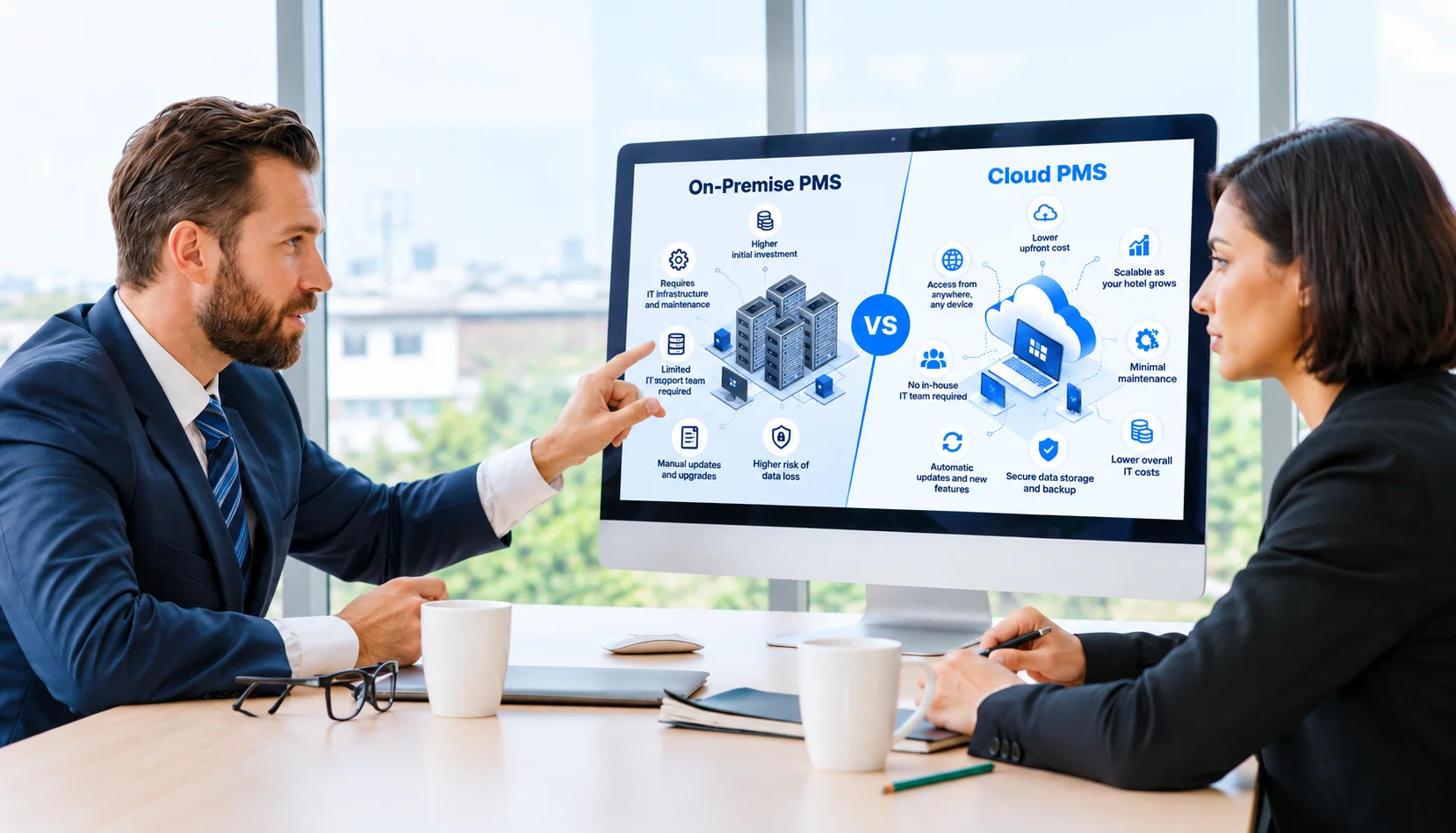
Hospitality industry research shows that hotels using cloud-based systems, including integrated reporting tools, can increase operational efficiency by up to 30%. Hotels that leverage these systems also report higher efficiency and revenue.
Modern hotel teams demand reporting that helps them:
Monitor financial performance without manual reconciliation
Understand guest behavior and booking trends
Track revenue drivers like direct bookings and upsells
Improve operational efficiency across departments
Understanding Hotel Report Categories
Hotel PMS reporting covers several categories. Each category answers a different operational question, and together they help managers take better action.
Here are the main types of reports you will see in a robust hotel management system project:
Financial reports: Show revenue, costs, online payment processing, and profitability
Revenue management reports: Tracks performance metrics like average daily rate (ADR), gross operating profit per available room (GOPPAR) and revenue per available room (RevPAR)
Occupancy & room reports: Details room inventory and status, available rooms, and guest movement
Reservation reports: Shows booking patterns to manage reservations efficiently
Forecasting reports: Predict future demand and help with staffing and pricing
A hotel reservation system and a PMS work together to automatically generate these reports, providing a consistent source of truth for all departments.
8 Essential Hotel PMS Reports Every Property Needs
Every hotel, regardless of size or market, should standardize on a reporting set that covers day-to-day operations, finance, and strategy. Below are the eight reports every hotel PMS should produce, with guidance on what they show, when to run them, who uses them, and how to act on the data.
1. Daily revenue report (Night audit)
The Daily Revenue report, often generated during the night audit, is a snapshot of all financial transactions for the previous day. This includes room revenue, additional charges (like food, beverages, or spa services), taxes, and refunds. It also reflects any cancellations, no-shows, or amendments to bookings. Essentially, this report summarizes the hotel's financial performance for a single day.
The hotel generates this report after the night audit, which occurs at the end of each day’s operations, usually late at night or early in the morning.
Here’s who uses it:
General managers (GMs) use it to monitor the hotel's financial health
Finance and accounting teams use the report to correctly post transactions and to reconcile daily revenue
Department heads use it to track performance against budgets or forecasts
The Manager Flash report provides a real-time snapshot of a hotel’s current performance, showing key metrics such as occupancy, average daily rate (ADR), revenue per available room (RevPAR), and more. The “flash” aspect of the report means it updates multiple times throughout the day, offering a near-live picture of the hotel's performance.
The hotel generates this report throughout the day, often every few hours, and makes it available in real-time or near-real-time.
Below are some of the teams that use this report:
Hotel managers use it for decision-making, particularly during high-traffic times (e.g., holidays or major events)
Sales and marketing teams evaluate how promotional efforts impact occupancy and rates
Managers can use this data to adjust strategies quickly if occupancy rates are lower than expected or if there are opportunities to increase room rates. For instance, if occupancy is high but ADR is low, there may be an opportunity to raise prices and increase revenue.
3. Occupancy & ADR report
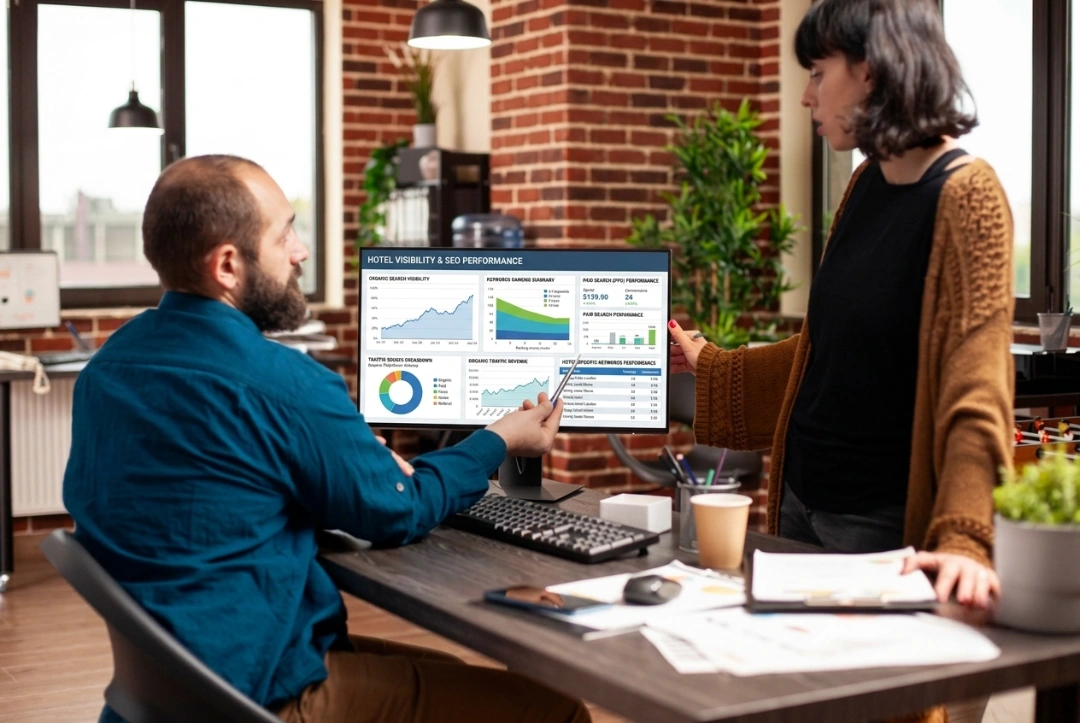
The Occupancy & ADR report provides critical insights into how many rooms were sold and at what average rate. Occupancy rates show the percentage of rooms sold compared to the total available, while ADR reflects the average price for each room sold during a given period.
As hoteliers, you can generate this report daily, weekly, or monthly, depending on your specific needs.
These teams use the Occupancy & ADR report for specific tasks:
Revenue managers monitor performance and adjust room pricing
Marketing and sales teams analyze this data to target specific customer segments and optimize sales channels
General managers evaluate overall hotel performance
Revenue managers compare occupancy and ADR together to identify pricing opportunities or discounts that may be necessary to increase occupancy or ADR. If occupancy is low but ADR is high, management may lower rates to fill rooms or boost marketing efforts to increase bookings. To be specific, a hotel occupancy rate of 60-70% is considered good, while 80-90% is excellent.
4. Arrival & departure report
The Arrival & Departure report provides a detailed breakdown of which guests arrive or depart on a given day, including check-in times, expected check-out times, and serviced apartment types. This report can also show additional information, such as guest preferences, special requests, or booking sources.
The hotel generates this report in real time or daily, often just before shift changes at the front desk, to prepare staff for incoming or departing guests as part of guest management.
Here’s who uses it:
Front desk teams prepare for check-ins and check-outs
Housekeeping teams manage room turnover schedules based on guest arrivals and departures
Operations managers optimize room availability and guest flow
The report helps front desk staff efficiently handle peak periods and anticipate delays, especially during busy seasons. Housekeeping teams prioritize room cleaning to help rooms be ready for new arrivals.
5. Housekeeping status report
The Housekeeping Status report tracks the cleanliness and maintenance status of each room, noting whether rooms are clean, dirty, or under maintenance. It supports housekeeping management by helping managers monitor each room's current status and adjust cleaning schedules as necessary. The report can also include guest requests, such as extra towels or amenities.
Hotels update this report throughout the day as rooms are cleaned or inspected, with real-time availability.
Primarily, these teams use the Housekeeping Status report:
Housekeeping teams assign cleaning tasks and track progress
Front desk teams refer to it when checking guests in
Operations managers use it for efficient room turnover
If room cleaning delays occur, they can create challenges at check-in, negatively affecting guest satisfaction. Managers can use the data to optimize cleaning workflows or adjust staff schedules.
6. Reservation source report (Channel analysis)
The Reservation Source report shows where hotel bookings come from, including direct bookings on the website, online travel agencies (OTAs), global distribution systems (GDS), and other channels. This report helps hotels identify the most profitable channels for acquiring bookings.
Hotel teams typically generate this report monthly or quarterly. They may also run it daily or weekly for a more up-to-date view.
The following teams use this report for specific tasks:
Marketing teams use it to evaluate the effectiveness of different channels and adjust campaigns accordingly
Revenue managers use it to assess performance and optimize channel management strategies
Sales teams refer to it when negotiating with OTAs or other third-party distributors
By identifying the most profitable booking channels, hotel managers can allocate resources more effectively. If a specific OTA is generating the majority of bookings, the hotel can negotiate better rates or commit to exclusive promotions. If direct bookings are low, marketing efforts may need to focus on driving traffic to the hotel’s booking engine.
7. Trial balance & financial report
The Trial Balance & Financial report summarizes the hotel's accounting activity, detailing all debits and credits for a specific period. It includes income statements, balance sheets, and general ledger details, giving a snapshot of the hotel's financial position.
Typically, the hotel generates this report monthly, although it can be run more frequently for ongoing financial monitoring.
Here’s who uses it:
Finance and accounting teams rely on this report for reconciliation and ensuring the hotel's books remain accurate
General managers use it to assess the overall financial performance
Investors and owners consult this report to understand the hotel’s financial health
The report provides a comprehensive financial picture of the property, helping identify any discrepancies in hotel revenue or expenses. Teams can flag any irregularities for investigation. It also highlights areas where cost reductions may be necessary or where investments should be directed.
8. Forecasting & pace report
The Forecasting & Pace report compares actual booking patterns against forecasts, helping to project future demand and occupancy levels. It shows whether the hotel is on track to meet its revenue or occupancy goals for a specific period, such as a week, month, or quarter.
You can generate it weekly or monthly, or produce it in real time for more accurate, up-to-date hotel information.
Here’s who uses it:
Revenue managers use the data to forecast future demand and adjust pricing strategies
General managers refer to it to assess how the property is performing against its business plan
Sales teams use the forecast to identify opportunities to boost occupancy
If bookings are lagging, last-minute offers or discounts might be needed, while a surge in demand can provide an opportunity for price increases.
How to Use Hotel Reports for Better Decision-Making
With the right set of reports, hotels can optimize revenue, improve guest experience, and strengthen customer relationship management (CRM) while maintaining efficient workflows. However, to truly harness the power of these reports, hotel managers must set clear schedules, interpret key metrics accurately, and act on the insights these reports provide.
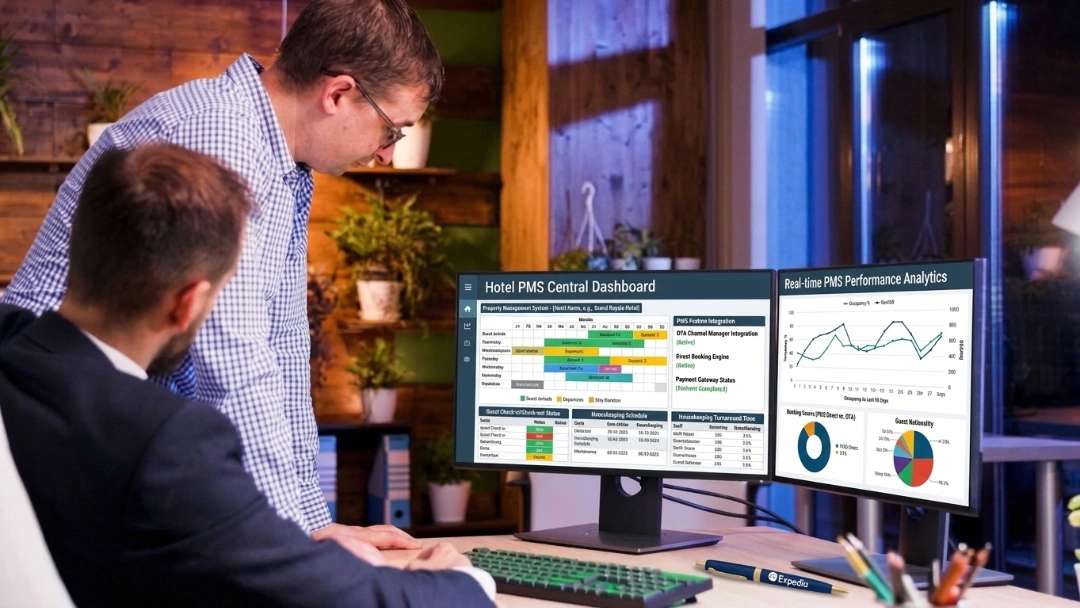
roommaster PMS, a modern, fully-upgraded, cloud-based hotel PMS designed for independent hotels and hotel groups, offers a suite of advanced reporting tools that provide real-time data and actionable insights to empower better decision-making.
{{pms-one}}
1. Setting up report schedules
The first step to maximizing the value of hotel reports is to establish consistent reporting schedules. roommaster PMS offers over 270+ built-in reports that can be customized to suit any hotel’s operational needs. These reports can be scheduled for daily, weekly, or monthly delivery, providing hotel managers with a clear overview of key metrics and performance indicators.
Daily reports: These typically include the Daily Revenue report, Manager Flash report, and Housekeeping Status report. These are essential for real-time decision-making, helping front desk, housekeeping, and revenue teams address issues as they arise throughout the day.
Weekly reports: These might include the Occupancy & ADR report, Arrival & Departure report, and more comprehensive financial analyses. A weekly cadence provides an overview of the property’s performance while allowing enough time to take corrective action on trends or issues.
Monthly reports: More detailed reports, such as the Trial Balance & Financial report and the Forecasting & Pace report, are typically run monthly. These reports help in long-term strategic planning and provide insights into overall financial health and trends.
2. Interpreting key metrics
Understanding what the numbers mean is as important as generating them. roommaster PMS integrates all the hotel’s key data into a unified platform, so the data is not only accurate but also easily accessible in real time through a user-friendly interface.
RevPAR: Combines occupancy and ADR to provide a clear view of revenue performance. roommaster allows segmentation and analysis to optimize revenue
Guest satisfaction:roommaster’s Guest Experience Suite tracks satisfaction levels across the entire guest journey, helping improve hotel guest services and boost guest loyalty
Cancellation rate: Portion of bookings that end up canceled
3. Acting on insights
Once hotel managers have interpreted key metrics, they need to take action based on the insights from the reports. roommaster PMS provides actionable data that can be used directly to optimize various areas and streamline daily operations.
Revenue optimization: With roommaster’s Revenue Optimization tools, managers can set dynamic pricing strategies based on occupancy, lead time, and market conditions. The platform’s AI-driven insights and rule-based yield engine automatically adjust prices to maximize revenue. A quick response to pricing shifts can result in a 35% increase in RevPAR within the first year of implementation.
Operational efficiency: Reports like the Housekeeping Status and Arrival & Departure reports help optimize front desk operations and housekeeping tasks. Managers can adjust hotel staff schedules based on occupancy and turnover to keep hotel rooms ready on time and avoid issues. Plus, they can also update guest communication to reduce no-shows.
Sales & marketing strategies: Reports such as the Reservation Source report provide insights into the most profitable booking channels, enabling marketing teams to shift resources to higher-performing channels. Additionally, insights from the Guest Experience Suite can inform personalized marketing campaigns and guest messaging to increase guest loyalty and direct bookings.
By acting on insights in real time and quickly adjusting operational strategies, roommaster PMS enables hotel managers to continuously improve performance and revenue.
Not all reporting is created equal. When evaluating a hotel management system for reporting, prioritize solutions that:
Provide customizable, real-time dashboards
Support automated scheduling of project reports
Integrate financial and operational guest data
Offer trend analysis and predictive analytics for demand forecasting
Sync with revenue management systems or accounting tools
Enable detailed guest profiles and segmentation
Support mobile access for on-the-go decision-making
Track key performance metrics like ADR, RevPAR, and occupancy in real-time
With roommaster PMS, all these features are seamlessly integrated into a single platform, providing real-time insights and actionable data across serviced departments to help you make smarter decisions.
Unlock Smarter Hotel Management with Advanced Reporting
A hotel management system report is one of the most powerful tools in a modern hotel’s tech stack. Reports bring clarity, reduce risk, and empower leaders to make confident, data-driven decisions. From daily revenue summaries to in-depth forecasting and channel analysis, the right reports fuel operational excellence and an intelligent growth engine.
If your reports still come from spreadsheets, multiple systems or disconnected tools, it’s time to upgrade to a unified hotel PMS software solution like roommaster PMS. With roommaster, you gain access to over 270+ built-in reports that cover everything from financial performance to guest satisfaction and operational efficiency. Plus, the platform’s custom report builder allows hoteliers to create tailored reports that address specific operational needs. This provides insights that help improve decision-making across departments like front desk, housekeeping, sales, and finance.
Book a demo today to explore how we can deliver a seamless guest experience.
{{cta-strip}}
FAQs
What are the most important daily reports for hotels?
The most important daily reports include the Daily Revenue Report, Occupancy & ADR Report, Arrival & Departure Report, Housekeeping Status Report, and Manager Flash Report. These provide essential data on performance, guest flow, operational efficiency, and other hotel services.
What is a night audit report, and why is it essential?
A night audit report summarizes all financial transactions for the day, including room revenue, charges, and adjustments. It helps verify data accuracy, close out daily financials, and set up the system for the next day’s hotel operations.
How do I calculate RevPAR, ADR, and occupancy rate?
RevPAR is calculated by multiplying ADR by occupancy rate. ADR is the average room rate for a specific period. The occupancy rate is calculated by dividing the number of rooms sold by the total number of rooms available.
What reports does a hotel PMS automatically generate?
A hotel PMS typically generates daily revenue reports, occupancy and ADR reports, housekeeping status reports, arrival and departure reports, financial statements, and forecasting reports. These provide key insights to streamline operations and for decision-making.
How often should hotels review their management reports?
Hotels should review management reports daily for operational insights and weekly or monthly for strategic decisions. Frequent reviews allow for adjustments, while longer intervals help with trend analysis and forecasting.
What is the difference between RevPAR and GOPPAR?
RevPAR measures room revenue performance, while GOPPAR measures overall hotel profit. However, GOPPAR provides a broader financial view of the hotel’s operational success.
Can hotel reports help with tax compliance and audits?
Yes, hotel reports from a hotel management software like roommaster PMS provide accurate financial records, revenue data, and expense breakdowns.
What is a Manager Flash Report?
A Manager Flash Report provides a real-time snapshot of hotel performance, showing key metrics such as occupancy, ADR, and RevPAR. It updates throughout the day, helping managers to make quick, data-driven decisions.
Mayela Lozano is a content strategist with a passion for hospitality and technology. She collaborates with roommaster on content creation, highlighting how technology can streamline hotel operations and enhance guest satisfaction. When she’s not creating content, Mayela loves to travel and spend time with her two little ones, discovering new adventures and making memories along the way.
Join Thousands of Hotels Thriving with roommaster
The transition to roommaster is straightforward and efficient. Our implementation team handles data migration including reservations, guest profiles, and historical information.
The transition to roommaster is straightforward and efficient. Our implementation team handles data migration including reservations, guest profiles, and historical information.
Cloud PMS vs On-Premise PMS: A Complete Comparison For Hotels
October 1, 2026
General
Cloud PMS
AI
Cloud Computing In The Hospitality Industry: A Complete Guide For Hotels
October 1, 2026
Hotel Management
Cloud PMS
Hotel Management System (HMS): A Complete Guide
September 23, 2026
Hospitality Trends
Hotel PMS
Cloud PMS
Hotel PMS Integration: How It Works for Hotels
September 23, 2026
Hospitality Trends
Hospitality Technology
Hotel PMS
Hotel Management
Cloud PMS
How Hotel PMS Software Transforms Hospitality Management
September 23, 2026
Cloud PMS
Hotel Management
Clarity PMS Alternatives: 6 Best Cloud PMS Options for APAC Hotels
July 31, 2026
Cloud PMS
Hotel Management
How Hotels Can Maximize Revenue During the 2026 FIFA World Cup with the Right PMS
June 9, 2026
Cloud PMS
Hotel Management
Best PMS Software For Independent Hotels: A Practical Buying Guide For 2026
May 29, 2026
Cloud PMS
Hotel Management
Channel Manager vs PMS vs CRS: What Hotels Really Need
May 26, 2026
Hotel Management
Hospitality Technology
Cloud PMS
8 Best Multi-Property Hotel Management Software Platforms For Hotel Groups (2026)
May 22, 2026
Join Thousands of Hotels Thriving with roommaster
See how roommaster's unified platform can work for your property. Our team will walk you through features tailored to your specific needs and operations.






.png)
.png)
.png)