How to Measure Hotel Guest Satisfaction: 10 Strategies, KPIs & Tools
"roommaster makes running Nuvo Suites so much easier, everything’s in one place, from bookings to housekeeping. It’s extremely customisable – they customised everything according to our needs."
In 2025, guest satisfaction became the biggest driver of hotel revenue and loyalty, proving that a happy guest is worth far more than a one-time booking.
Hotels began investing in personalization, smart technology, and hotel management systems, such as roommaster PMS, to make every stay effortless and memorable.
By measuring guest satisfaction through metrics such as NPS, online reviews, and repeat guest rates, hotels discovered that even a 1-point increase in reputation can lift prices by 11.2% without losing occupancy.
As a result, properties that use real-time feedback, AI personalization, and integrated tech now enjoy higher retention, stronger reviews, and steady growth, even in a competitive market.
How To Measure Guest Satisfaction In The Hospitality Industry: Actionable Strategies
In 2025, the average daily rate for U.S. hotel rooms reached a record $158.67, yet guest satisfaction scores continued to climb across all hotel guest types. That improvement didn’t happen by chance. Cornell University research shows that hotels can increase their online reputation score by just 1 point and raise prices by 11.2% without losing occupancy, while direct bookings rise by 14%. These numbers show that guest satisfaction now drives revenue, loyalty, and long-term business growth, rather than merely reflecting service quality.
Hotels are using guest apps, personalized touches, and thoughtful hotel amenities to make every guest's stay feel effortless and memorable. From check-in to check-out, these moments turn casual visitors into happy guests who leave positive reviews and return for future stays.
In this article, we’ll explore how guest satisfaction allows hotels to build lasting relationships and stronger reputations. We’ll also discuss how a hotel property management system (HPMS) like roommaster PMS simplifies the process and personalizes it for both guests and staff.
Chapter 1 - What is Guest Satisfaction?
Guest satisfaction reflects how pleased guests are with every interaction, service, and hotel amenities offered during their stay. It measures whether the experience met or exceeded the expectations set before and during the hotel stay.
Core Aspects of Guest Satisfaction
Some of the core aspects of guest satisfaction include:
Service Quality: Friendly, efficient, and proactive service that makes guests feel valued from check-in to check-out.
Personalization: Tailored experiences catering to guest preferences, from special guest room amenities to customized local recommendations.
Facility and Cleanliness: A clean, comfortable, and well-maintained environment that meets modern hotel industry standards.
Consistency: Delivering the same high level of service during every visit to guarantee satisfied guests leave with memorable experiences.
Guest Satisfaction vs Guest Experience
Understanding the difference between guest satisfaction and guest experience helps hotels deliver stronger results. For example, guest satisfaction measures whether expectations were met, while guest experience refers to the entire journey, including discovery, booking, arrival, in-stay moments, and post-stay interactions. Similarly, the guest experience influences booking decisions, whereas guest satisfaction determines if guests return or leave positive reviews.
Several factors influence the guest experience and bridge the path to satisfaction:
Ease of the booking process through the hotel website or the hotel guest app
Personalized touches such as room upgrades or complimentary services
Efficient check out and opportunity to provide guest feedback
Excelling at both guest experience and guest satisfaction ensures repeat business while building loyal customers. Guests often choose properties based on memorable experiences, but they return because satisfaction levels meet or exceed expectations.
The Satisfaction-Expectation Relationship
Satisfaction can be described with a simple formula:
Satisfaction = Experience - Expectations.
Rising online transparency has raised guest expectations to new heights, making it critical for hotels to set realistic expectations and exceed them. In fact, Deloitte notes that modern guests expect high-touch hospitality combined with simple, one-click utility, creating an environment where convenience and personal care coexist.
What Guests Consider "Need to Have" in 2025
According to J.D. Power 2025 data, clean rooms remain the top priority, while smart TVs and streaming grew to 40% of guests rating them as essential, up from 21% in 2019. Guests value recognition from hotel staff, smooth technology access without reducing personal interaction, good value perception despite record-high rates, and a quiet environment.
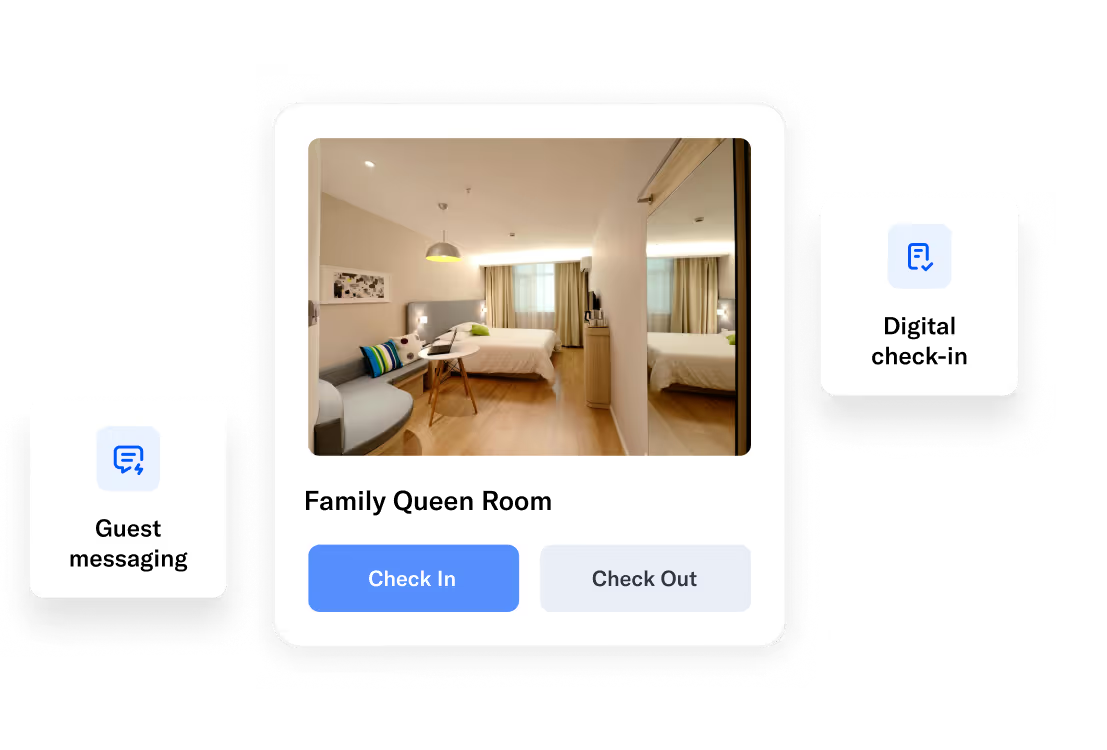
Hotels can capture guest preferences with tools like roommaster’s guest preference tracking. The hotel guest mobile app allows direct bookings, digital check-in, mobile keys, and real-time in-stay service requests. Additionally, personalized recommendations for local attractions and services also enhance the guest journey.
Chapter 2 - Why is Guest Satisfaction Important?
Understanding why guest satisfaction matters goes far beyond a warm greeting at the front desk. It represents the foundation of profitability, operational strength, and brand credibility for every property in the hospitality industry.
Here’s why it matters:
A] Repeat Business and Loyalty
Studies show that it costs 5 to 25 times as much to attract new guests as to retain existing ones.
A loyal hotel guest contributes to revenue stability by booking directly through the hotel website, avoiding third-party commissions, and returning frequently.
Repeat visitors build a steady revenue stream and help cushion the business against market fluctuations.
A hotel manager who prioritizes retention understands that happy guests spend more on hotel amenities, room upgrades, and local attractions during their stay.
B] Positive Word-of-Mouth
Happy guests naturally recommend your property to friends and family, creating organic marketing opportunities.
Online reviews and social media buzz drive further guest engagement.
C] Operational Benefits
High guest satisfaction reduces the need for constant firefighting and costly service recoveries.
Measuring guest satisfaction with modern metrics (like NPS and real-time feedback tools) equips you to pivot quickly in a fast-changing market.
Anticipating trends in guest behavior over the next five years will help you stay competitive.
E] Pricing Power and Revenue Impact
Research from Cornell University reveals that for every one-point improvement in a hotel’s reputation score, properties can raise rates by 11.2% without reducing occupancy. In fact, that same one-point increase drives roughly 14% more direct bookings.
Component-based pricing enables hotels to charge premium rates for satisfied customers, turning service quality into measurable revenue.
High satisfaction also increases the return on capital investments, such as upgraded guest rooms or newly designed hotel amenities.
The 2025 J.D. Power study further notes that properties that improved guest room quality saw visible returns in higher satisfaction levels and more stable occupancy.
F] Competitive Differentiation
With so many hotels mastering the basics, guest expectations are rising faster than ever. Research from Deloitte shows that while many hotels deliver competent service, the leaders are those who create memorable experiences beyond the ordinary.
High guest satisfaction allows brands to command premium positioning and attract repeat business through emotional loyalty.
According to the J.D. Power 2025 rankings, leading brands like Ritz-Carlton (779), Omni (731), and Drury (738) outperformed competitors by focusing relentlessly on guest experience and refining their strategies.
These benchmarks illustrate how overall satisfaction becomes the key factor in sustaining long-term competitive advantage.
{{guest-app}}
2025 Data Spotlight
J.D. Power’s 2025 study of hotel guest satisfaction found that capital investments in property upgrades are paying off. Satisfaction with guest room conditions rose by 0.05 points year over year, showing measurable improvement in guest preferences.
However, when problems occurred in 12% of stays, satisfaction plunged 217 points, proving how essential proactive issue prevention is. Hotels with mobile apps achieved satisfaction scores 68 points higher than those without, highlighting technology’s role in improving the guest experience and efficiently collecting guest feedback.
The Business Case for Guest Satisfaction
Guest satisfaction drives both revenue and loyalty, making it a core business strategy. When a hotel improves its online reputation score by just one point, it can increase its room rates by 11.2% and attract 14% more bookings. Satisfied guests return more often, and retaining them costs far less than acquiring new customers. Each happy guest also becomes a marketing advocate, sharing positive experiences with friends or online, which influences travel decisions for 70.9% of potential guests.
High satisfaction also strengthens competitive advantage. Properties that consistently delight guests can position themselves as premium brands, maintain steady occupancy during slower periods, and withstand economic downturns more effectively. Every thoughtful service, from personalized touches to reliable amenities, builds loyalty and encourages repeat visits.
roommaster helps hotels translate guest satisfaction into tangible business outcomes through:
Capturing feedback and monitoring key performance metrics
Streamlining processes that enhance the guest experience
Linking operational improvements directly to revenue growth
Focusing on guest satisfaction is not a temporary effort. It is a continuous strategy that connects service quality, operational excellence, and financial performance into one cohesive path toward long-term growth.
Chapter 3 - Key Measures of Hotel Client Satisfaction
Accurate measurement is the first step to improvement. Here are the core metrics and tools that help you track hotel guest satisfaction:
A. Online Reviews & Social Media Monitoring
What It Is:
Scanning review platforms and social channels for guest feedback, including review velocity, response rate, and sentiment breakdown.
Why It Matters:
Reveals strengths, highlights areas for improvement, and shows how your ratings compare with competitors. A single negative review might point to a recurring service issue.
Actionable Tip:
Set up automated alerts, track review velocity (number of reviews per month), respond to 100% of reviews, and use analytics to monitor trends in guest sentiment.
B. Net Promoter Score (NPS)
What It Is:
A score on a scale of 0-10 measuring how likely guests are to recommend your hotel. Calculated as % Promoters (9-10) minus % Detractors (0-6).
Why It Matters:
High NPS predicts repeat business and positive word of mouth. Scores above 50 are excellent, 30–50 are good, and below 30 need improvement.
Actionable Tip:
Regularly send post-stay surveys with the single NPS question and track scores over time. roommaster’s unified cloud platform makes tracking and improving NPS effortless:
Automated NPS Tracking: Collect guest feedback post-stay and analyze trends over time without manual work.
Comprehensive Guest Profiles: Capture preferences, stay history, and spending patterns to personalize service and boost satisfaction.
Streamlined Operations: Reduce front desk workload and prevent booking errors with real-time reservation management, giving staff more time to enhance the guest experience.
Data-Driven Insights: Use dashboards and reports to identify trends, respond to detractors, and reward promoters.
C. Repeat Guest Rate (RGR)
What It Is:
The percentage of guests returning to your property, calculated as: Returning Guests ÷ Total Guests × 100.
Why It Matters:
A 30–40% repeat rate indicates strong guest satisfaction and loyalty, which directly supports revenue stability.
Actionable Tip:
Use PMS guest history to identify returning guests. roommaster PMS automates tracking, flags opportunities for personalized offers or loyalty rewards, and provides insights to help you increase guest loyalty and repeat stays.
D. Problem Resolution Rate
What It Is:
Measures the percentage of reported issues resolved to the guest’s satisfaction.
Why It Matters:
Only 12% of stays experience problems, but satisfaction drops by 217 points when they do. Target a 95%+ resolution rate using a six-step service recovery:
Listen
Clarify
Empathize
Apologize
Resolve
Follow-up
Actionable Tip:
Implement service recovery protocols and track resolution outcomes to prevent satisfaction drops.
E. Guest Satisfaction Score by Dimension
What It Is:
Scores across seven dimensions:
Check-in/Check-out
Connectivity
Facilities
Food & Beverage
Guest Room
Staff Service
Value
Why It Matters:
Segmenting scores identifies areas for targeted improvement rather than relying solely on aggregate satisfaction.
Actionable Tip:
Track each dimension separately, benchmark against competitors, and prioritize actionable improvements.
Industry Insight:
J.D. Power 2025 shows that guest room improvements increased satisfaction by 0.05 points year over year. When problems occur, scores drop 217 points (677 → 460). Hotels with mobile apps see scores 68 points higher (699 vs 631).
Guest Satisfaction Benchmarks by Segment
Understanding how your property performs relative to peers is critical for driving improvements in guest satisfaction. J.D. Power’s 2025 segment leaders provide a snapshot of best-in-class performance across different hotel categories:
Luxury: The Ritz-Carlton – 779 score
Upper Upscale: Omni Hotels & Resorts – 731
Upscale: Drury Hotels – 738
Upscale Extended Stay: Hyatt House – 705
Upper Midscale: Hampton by Hilton – 694
Midscale: Tru by Hilton – 723
Economy: Microtel by Wyndham – 619
These benchmarks serve as valuable reference points for independent hoteliers seeking to elevate the guest experience. By comparing your scores with those of these segment leaders, you can identify gaps in service, amenities, or overall guest satisfaction. This helps prioritize initiatives that will deliver the greatest impact, whether it’s enhancing room quality, upgrading technology, or refining personalized guest interactions.
Here’s how you can use these benchmarks effectively:
Compare your scores: Understand how your property measures up against leaders in your segment.
Identify gaps: Pinpoint areas where your performance falls short of best-in-class.
Set realistic targets: Aim for achievable annual improvements of 5–10 points.
Track progress: Monitor your performance quarter over quarter to ensure continuous improvement.
roommaster’s competitive benchmarking dashboard allows you to track your guest satisfaction scores alongside industry leaders. By visualizing trends and gaps in real time, your team can make data-driven decisions, prioritize operational improvements, and align investments in guest experience with measurable outcomes.
It also guarantees that your strategy for enhancing satisfaction is not only informed but actionable, turning insights into tangible improvements that boost loyalty and revenue.
How Technology Enhances Guest Satisfaction
Technology is a must for delivering seamless, personalized guest experiences. Hotels leveraging technology see measurable gains in satisfaction, revenue growth, and operational efficiency with roommaster PMS. Here’s how:
A. Pre-Arrival Personalization
Automated communication before guests arrive allows hotels to capture preferences, special requests, and offer tailored upsells. When a guest receives a message about pillow preferences or a spa package suggestion, they feel seen and cared for from the very beginning.
This early engagement reduces cancellations and increases satisfaction before arrival. roommaster enables pre-arrival email automation with preference capture, helping hotels deliver these personalized touches efficiently.
B. Mobile and Contactless Technology
Mobile check-in allows guests to skip the front desk and go straight to their room, creating a seamless first impression. Hotels with mobile apps achieve 68 points higher satisfaction scores than those without (699 versus 631, J.D. Power).
Contactless payments provide security and convenience while meeting modern expectations. Digital keys add another layer of convenience, giving guests a smooth, friction-free entry experience. Together, these technologies create efficiency, convenience, and a sense of modern hospitality.
C. In-Room Smart Technology
In-room technology continues the guest experience by giving them control over their environment. Smart TVs are now in 72% of rooms, up from 39% in 2019, and 60% of guests use them during their stay. IoT controls enable customization of temperature, lighting, and entertainment, enhancing comfort and satisfaction.
On the other hand, tablet-based guest request systems provide instant communication with staff, ensuring that needs are met quickly and accurately. These innovations create a room experience that feels personalized and effortless.
D. AI and Cognitive Capabilities
Artificial intelligence transforms large data sets into actionable guest insights. Predictive analytics can anticipate guest needs before they even ask, and AI enables personalization at scale, serving hundreds of guests individually.
For example, analyzing past stays can help hotels predict preferred room temperature, pillow type, or in-room amenities. This cognitive approach allows hotels to provide consistent, highly tailored experiences that drive loyalty and satisfaction.
E. Partnership Ecosystem
Modern guests expect services beyond the hotel walls, including one-click rideshare, restaurant delivery, and fitness bookings. Hotels that enable easy integration with guest-preferred vendors improve the experience while reducing operational costs.
roommaster’s integration capabilities transform fragmented hotel technology into a cohesive ecosystem. Through our extensive marketplace of pre-built connections and a flexible open API, independent hotels can seamlessly integrate with partners such as rideshare services, local restaurants, fitness providers, POS systems, and more.
This unified approach eliminates operational silos, reduces administrative workload by up to 30%, and provides a complete, real-time view of guest interactions.
Even with robust metrics, challenges persist. The reality is that without the right tools and processes, guest satisfaction in the hotel industry can fluctuate. Here’s how to tackle common pain points and elevate the guest experience.
#1 Problem: Inconsistent Service Delivery
Challenge: Variability in guest experiences due to a lack of standardized processes.
Solution: Implement a comprehensive management system.
Use technology to monitor service performance in real time and create standard operating procedures (SOPs) that all team members follow.
Emphasize ongoing staff training to reduce variability and empower employees to resolve issues immediately.
For example, the Ritz-Carlton gives staff the authority to spend up to $2,000 per guest to correct a problem. Empowered employees can create memorable experiences and prevent minor issues from escalating.
#2 Problem: Limited Real-Time Feedback
Challenge: Waiting too long to address negative feedback can lead to lost opportunities for service recovery.
Solution: Adopt real-time feedback tools.
Leverage guest messaging apps, in-room tablets, and mobile surveys to capture immediate impressions.
Set a response time target of addressing reported issues within 15 minutes.
Quick action signals to guests that their comfort matters and can turn a potential complaint into a positive story.
#3 Problem: Underutilized Employee Insights
Challenge: Frontline staff often see issues before management but lack the means to communicate them effectively.
Solution: Facilitate two-way communication.
Integrate employee feedback tools into daily operations, and implement recognition systems to reward staff who identify and solve guest issues.
Cross-functional communication, such as front desk alerts to housekeeping, ensures fast resolution. Remember, happy employees equal satisfied guests, so investing in employee engagement directly improves guest satisfaction.
#4 Problem: Rising Guest Expectations
Challenge: With digital trends and personalized services on the rise, guests expect more than ever.
Solution: Leverage advanced analytics and personalization engines.
Use guest history and behavior data to tailor offers and services.
Apply frameworks like Deloitte’s balance of high-touch hospitality with one-click utility.
Follow Amadeus’ trifecta of Basics (clean, maintained, value), Recognition (feeling known), and Technology (without losing personal touch).
Go beyond the basics by adding unexpected touches, such as warm towels at mid-scale properties where they are not expected, to delight guests.
#5 Problem: Guest Journey Consistency
Challenge: The experience must be consistent from discovery through post-stay.
Solution: Map and optimize the entire guest journey.
Deloitte highlights that the guest experience begins when they search for a property, not at check-in.
Ensure consistency across all touchpoints, including website, booking, pre-arrival, arrival, stay, departure, and post-stay follow-up.
roommaster provides tools for guest journey management from booking through follow-up, ensuring every interaction reflects the brand promise and maximizes satisfaction.
Our Solution Spotlight
roommaster’s hotel management software seamlessly integrates these strategies. From SOP management and real-time feedback tools to employee communication, personalization engines, and guest journey mapping, our platform empowers hotels to resolve pain points, meet rising expectations, and create consistently exceptional experiences.
{{pms-five}}
Chapter 5 - FAQs and Future Trends
Understanding the future is as important as solving today’s challenges. Here, we address common questions and look ahead to what lies beyond 2030.
Q1: What is guest satisfaction, and why is it critical?
A: Guest satisfaction reflects how well your services meet or exceed expectations. High satisfaction leads to repeat business, lower marketing costs, and stronger word of mouth, ultimately boosting your revenue.
Q2: How can I improve guest satisfaction in my hotel?
A: Start by measuring key metrics like NPS, online reviews, and repeat guest rates. Use the insights gained to implement targeted service improvements and technology solutions for real-time feedback and personalized guest experiences.
Q3: Which metric is most important for tracking hotel guest satisfaction?
A: While no single metric tells the whole story, a combination of NPS, feedback surveys, and repeat guest rate offers a comprehensive view of how guests feel about their experience.
Q4: How does technology influence guest satisfaction?
A: Technology allows for real-time monitoring, personalized service, and efficient service recovery. For example, roommaster’s hotel PMS streamlines operations with real-time analytics, automated service tasks, and seamless communication across departments. This ensures every guest experience is both personalized and efficient, boosting satisfaction.
Q5: What future trends should hotels watch for?
A: Look out for increased use of AI for personalized guest experiences, greater integration of IoT devices for smart hotel rooms, and predictive analytics to forecast guest needs up to 2030.
Q6: How much can improving guest satisfaction increase my revenue?
A: Research from Cornell University shows that every one-point increase in your hotel's online reputation score enables an 11.2% price increase without affecting occupancy. Bookings increase by 14% with each point improvement. For a 100-room hotel at $150 ADR and 70% occupancy, a one-point improvement could add over $428,000 in annual revenue through higher rates and increased occupancy.
Q7: What is the ROI of investing in guest satisfaction improvements?
A: J.D. Power’s 2025 study showed that capital investments in guest room quality, such as furnishings, bathroom fixtures, and bedding, significantly improve satisfaction year-over-year. These investments support premium pricing that typically pays for itself within 12 to 24 months. Additionally, satisfied guests cost 5 to 25 times less to retain than acquiring new customers, dramatically increasing marketing ROI.
Q8: What are the three important expectations of guests in a hotel?
Guests typically expect clean and comfortable accommodations, friendly and efficient service, and convenient amenities or experiences that enhance their stay, ensuring comfort, satisfaction, and a memorable visit.
Future Trends Beyond 2030
As the hospitality industry evolves, hotels must embrace advanced technology and flexible service models to meet rising guest expectations and create personalized, seamless experiences:
Cognitive AI and Anticipatory Service: AI predicts guest needs before they are realized, enabling anticipatory hospitality. For example, AI can detect flight delays, automatically adjust check-in times, and suggest local dining options. This balance of human representatives and AI enables staff to deliver more authentic, meaningful experiences.
Component-Based Pricing: Guests can select and pay only for the room features they want. Each component is priced dynamically based on demand. This increases perceived value and satisfaction through greater personalization.
Partnership Ecosystems: Hotels integrate seamlessly with rideshare, food delivery, and fitness services. Guests access curated experiences without the hotel owning all services. This reduces total cost to serve while enhancing satisfaction, aligning with Deloitte’s framework for connected guest experiences.
roommaster PMS enables hotels to implement these future trends today by leveraging AI-driven insights, component-based pricing, and integrated partner ecosystems to enhance satisfaction, optimize operations, and increase revenue. Book a demo today to see how your property can stay ahead of these trends and improve guest satisfaction.
{{cta-strip}}
guest-app
Put Your Front Desk in Guests’ Pockets with roommaster App
Mayela Lozano is a content strategist with a passion for hospitality and technology. She collaborates with roommaster on content creation, highlighting how technology can streamline hotel operations and enhance guest satisfaction. When she’s not creating content, Mayela loves to travel and spend time with her two little ones, discovering new adventures and making memories along the way.
Join Thousands of Hotels Thriving with roommaster
The transition to roommaster is straightforward and efficient. Our implementation team handles data migration including reservations, guest profiles, and historical information.
The transition to roommaster is straightforward and efficient. Our implementation team handles data migration including reservations, guest profiles, and historical information.
Hotel Check-In Kiosk: Enhance the Guest Experience
October 5, 2026
Hospitality Technology
Hotel Management
Hospitality Trends
Hotel Self Check-In: How It Works, Types, Benefits And Setup
October 1, 2026
Hotel Management
Hospitality Trends
Hotel Check-In & Check-Out Times Explained
October 1, 2026
Cloud PMS
Cloud PMS vs On-Premise PMS: A Complete Comparison For Hotels
October 1, 2026
Hospitality Trends
Hotel Management
Cloud-Based Property Management System: Hotel PMS
October 1, 2026
General
Cloud PMS
AI
Cloud Computing In The Hospitality Industry: A Complete Guide For Hotels
October 1, 2026
Hotel Management
Cloud PMS
Hotel Management System (HMS): A Complete Guide
September 23, 2026
Hospitality Trends
Hotel PMS
Cloud PMS
Hotel PMS Integration: How It Works for Hotels
September 23, 2026
Hospitality Trends
Hospitality Technology
Hotel PMS
Hotel Management
Cloud PMS
How Hotel PMS Software Transforms Hospitality Management
September 23, 2026
Hospitality Trends
Best Hotels in New Orleans: A Complete Guide 2026
September 10, 2026
Join Thousands of Hotels Thriving with roommaster
See how roommaster's unified platform can work for your property. Our team will walk you through features tailored to your specific needs and operations.





.png)
.png)
.png)