What Is Banquet Management?
Banquet management refers to the planning, staffing, and execution of large food and beverage events inside a hotel, resort, or standalone venue.
It sits between the kitchen, the front desk, and the sales team.
Take a Saturday wedding. The menu has to be locked with the chef days in advance. Staff needs a briefing. The room has to be fully built out before the first guest arrives. Miss one of these and the whole event feels the strain.
Margins are the other reason banquets get their own department. A single event can out-earn several nights of rooms combined.
What Does a Banquet Manager Do Day to Day?
A banquet manager runs four responsibilities: event planning, staff leadership, venue setup, and on-site execution once the event begins.
Four responsibilities make up the job, and each one calls for a different skill. Some happen weeks before the event. Others only matter once guests are already in the room.
Confirm the Menu and Guest Count Early
The Banquet Event Order is where planning starts. It lists the menu, the guest count, the room setup, and any special requests, and it's the document everyone else works from.
Most clients want a tasting first, using the same recipes and portions the kitchen actually plans to serve, not a simplified preview. Dietary requests get flagged at this stage too, ideally well before the tasting itself. A 150 guest wedding with a dozen dietary restrictions is hard to fix once the kitchen has already started prepping. Get the guest count and the menu locked early, and most of what follows gets easier.
Get Staff Briefed Before Doors Open
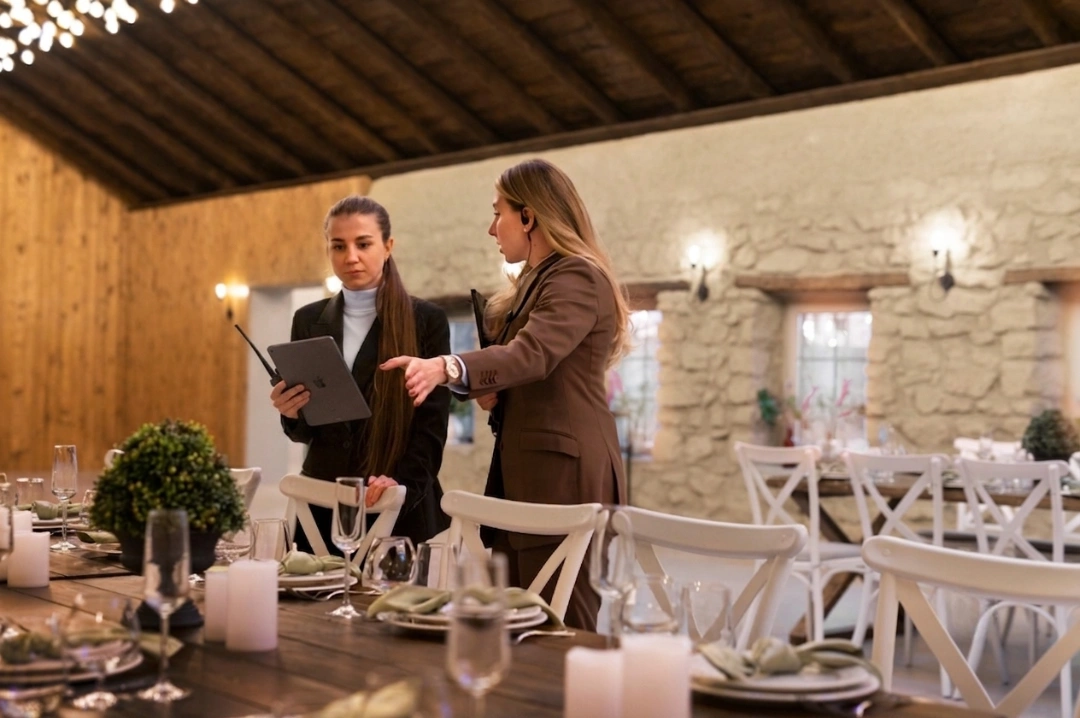
A hotel can schedule the right number of servers and still fail an event, if nobody told them what they're actually running. That's what a pre-event briefing fixes. It walks the team through the run of show, so everyone knows their station, the timeline, and any special requests before the first guest arrives.
Ratios matter too. A plated dinner needs more servers per table than a buffet. A cocktail reception needs bartenders placed for flow rather than counted by headcount alone. Skip the briefing during a busy weekend, and it shows within the first ten minutes of service.
Walk the Room Before Any Guest Does
Venue setup means checking room layout, table settings, decor, and audio-visual readiness against the event order, before doors open, not after.
A head table in the wrong spot. A microphone that doesn't work. Either one becomes a client's first impression of the entire event, and catching it early costs a few minutes instead of the account.
Manage the Pacing Once Service Starts
On-site execution is the live part of the job. It means managing timing, handling client requests, and solving problems calmly while the event is actually running, with speeches, courses, and vendor coordination all moving on the same clock. Real events rarely stay on schedule. A speech runs long, a course comes out slow, a vendor shows up late, and a good banquet manager adjusts the pacing on the fly instead of letting the whole night slide by half an hour.
Staying visible on the floor is what makes that possible.
What Is the Banquet Management Process, Start to Finish?
The banquet management process runs through five stages: inquiry, event order creation, staffing and setup, execution, and post-event review.
- Inquiry and booking - the client shares event type, date, and guest count, and the venue confirms availability under a signed contract.
- Event order creation - the banquet manager documents menu, setup, timeline, and special requests.
- Staffing and setup - servers and crews are scheduled and briefed, and the room gets built out ahead of arrival.
- Execution - service runs against the timeline while the banquet manager watches the floor.
- Post-event review - final costs get reconciled against the quote, and any gaps get flagged for next time.
Stage five is the one most properties skip, and it's the one that actually tells you whether an event was worth doing again.
How Should Banquet Documentation and Revision Windows Work?
Banquet documentation works best on a fixed timeline: final details go out 10 to 14 days before the event, with a hard cutoff for any changes after that.
"Communicate early" gets repeated in every guide on this topic, without ever saying what that means in practice. A property needs an actual date on the calendar: when the event order locks, and who it goes to.
Send the Final Details 10 to 14 Days Out
Ten to 14 days gives the kitchen time to order food, the AV team time to book equipment, and staff time to get scheduled, and it should go to every department at once rather than trickling out team by team. Sending it the day before turns every one of them into guesswork. A full breakdown of what goes into that document covers the exact fields worth locking at this stage.
Set a Hard Cutoff for Changes
Not every change request deserves the same response.
After the details go out, edits should route through a short, defined window rather than an open stream of client emails. A 24 to 48 hour cutoff keeps the kitchen and staffing plan stable. After that, changes become a priced add-on, not a free rewrite, and that line needs to sit in the contract from the start, not get explained for the first time when someone asks for a same-day change.
How Does Cross-Department Communication Actually Work?
Cross-department communication in banquet management runs through a shared master calendar and a short daily check-in during busy periods, not scattered emails.
"Coordinate with other departments" is standard advice on every list like this one. It's also useless without a mechanism attached to it.
Put Every Department on the Same Calendar
One shared calendar, visible to kitchen, front desk, sales, and housekeeping, replaces five different versions sitting in five different inboxes. Update an event in one place, and everyone sees the same change at the same time. That's the difference between a smooth week and a front desk agent selling a room block into space the banquet team already promised to someone else.
Pro Tip: A shared calendar only helps if every department actually opens it. One team working from an old printout defeats the entire point.
Run a Short Daily Check-In During Event Season
Ten minutes, once a day, during any week with multiple events. Headcount changes, VIP requests, staffing gaps, whatever changed since yesterday. Shorter than a meeting, faster than the email chain it replaces.
How Do You Control Inventory for Banquets?
Inventory control for banquets covers equipment and linen rentals along with food and beverage stock, tracked before and after every function.
Count Equipment and Linen Before and After Every Event
Rented chairs, linens, and AV equipment need two counts, one going in and one coming out. Skip the second count, and there's no way to know what actually got used, damaged, or never returned. A rental invoice that doesn't match the post-event count is far easier to dispute the next morning than a month later.
Track Beverage Stock the Same Way
Beverage stock deserves the same discipline as food cost, not less. Set a par level based on guest count, then check opened and unopened bottles against it once service ends. Wait until the end of the season to check, and shrinkage or over-pouring has already cost real money by the time anyone notices.
What Are the Biggest Banquet Management Mistakes to Avoid?
The most common banquet management mistakes are late changes after the cutoff, inventory counted only on event day, and revenue tracked apart from the rest of the property.
Letting Changes In After the Cutoff
A flexible cutoff isn't really a cutoff. The moment one client gets an exception, every event becomes a negotiation. Writing the deadline into the contract, where the client actually sees it, is what makes it stick.
Waiting Until Event Day to Count Inventory
A shortage discovered during setup is a phone call. A shortage discovered during service is a scene in front of a paying client. The only difference between the two is when the count happened.
Keeping Banquet Revenue in Its Own Spreadsheet
Separate spreadsheets mean separate stories. A property tracking banquet revenue on its own has no real way to compare one event's profitability against another, or against the room revenue sitting in a completely different system. The result usually isn't a loss on any single event. It's the same underpriced package getting sold again next season because nobody had the number that would have caught it.
How Does Connecting Banquet Revenue to Your PMS Change the Math?
Connecting banquet revenue to the same system that tracks room revenue turns two disconnected records into one accurate picture of an event's true value.
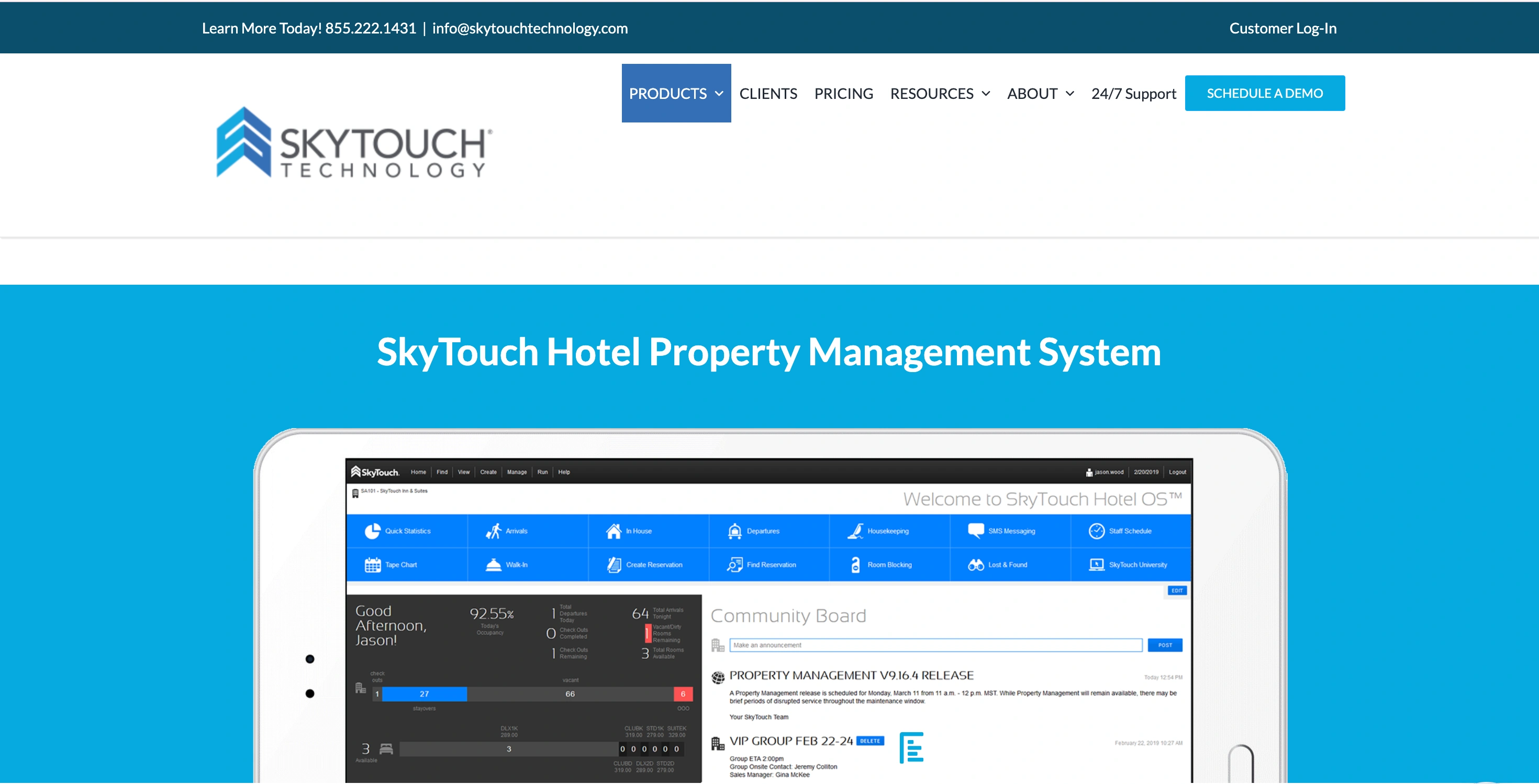
Every practice above still leaves a gap if banquet revenue lives apart from the rest of the property's numbers. roommaster's Revenue & Finance Suite and Rate Builder close that gap by linking food and beverage packages directly to room bookings. A wedding's banquet revenue and its room block show up as one number, not two things reconciled by hand at month end, which is also what finally makes it possible to tell whether a specific package is worth repeating.
Weddings are the clearest case, since they usually combine a banquet booking with a room block for out of town guests. roommaster's group and event billing treats a 10 room wedding block as a single group booking. Several competing systems still handle that same scenario as two disconnected reservations. roommaster's hotel operations guide goes into more detail on how the two sides connect.
Want to see banquet revenue tracked alongside every room booking instead of a separate spreadsheet? Talk to our team about roommaster PMS.
{{cta-strip}}
Frequently Asked Questions
1. What is banquet management?
Banquet management means planning, staffing, and running large food and beverage events inside a hotel.
2. What is the difference between banquet management and event management?
Event management is the broader term, covering any hosted gathering: a conference, a fundraiser, a wedding reception. Banquet management is specifically the food and beverage side of that gathering, the part happening in the kitchen and the banquet hall.
3. What is a Banquet Event Order?
A Banquet Event Order is the master event document: menu, setup, timeline, and special requests, all in one place so nobody has to guess.
4. How far in advance should banquet details be finalized?
Ten to 14 days out, with a hard cutoff after that for any last changes.
5. What causes most banquet management failures?
Three things, usually: changes that come in after the cutoff, inventory nobody counted, and banquet revenue tracked apart from the rest of the property.
6. How does a PMS support banquet management?
A standalone banquet spreadsheet is how properties lose track of which events are actually profitable. Connecting a PMS to banquet operations ties that revenue directly to room bookings, so one event becomes one number instead of two records reconciled by hand.
.png)
.png)
.png)