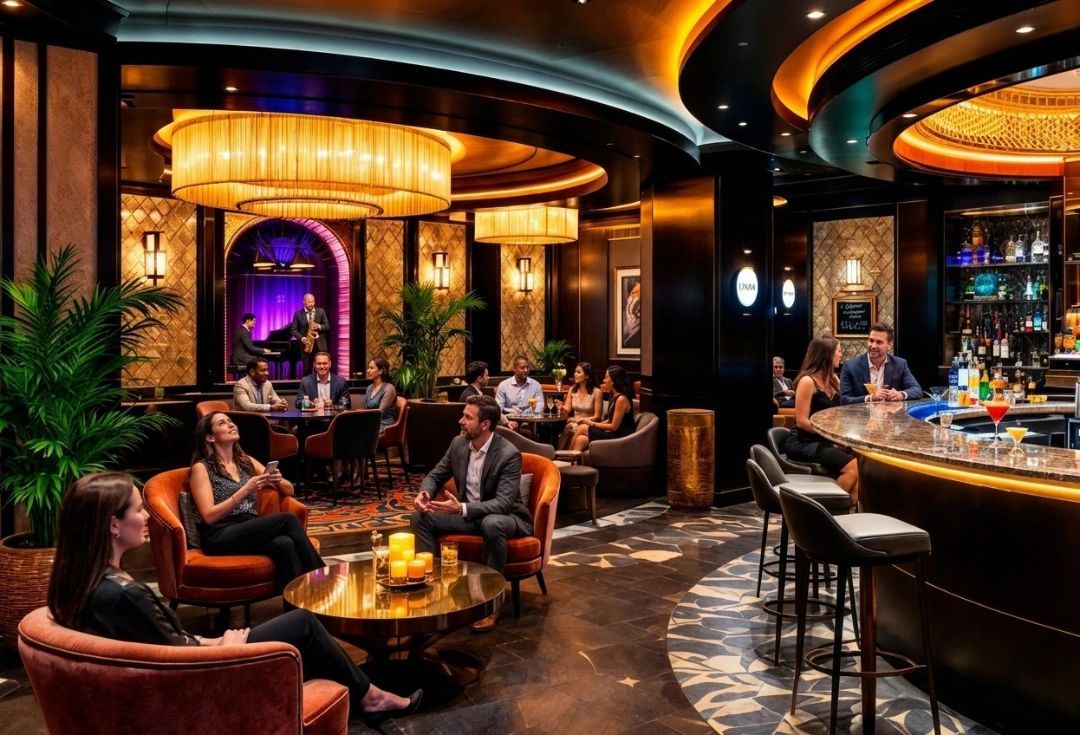
A hotel amenity is any extra product or service that makes a guest’s stay more comfortable, and the impact depends heavily on property type.
This guide covers the full amenity checklist first, breaks down what actually works by property type, then closes with what the data says about where guest satisfaction is really coming from.
What Is a Hotel Amenity?
A hotel amenity refers to any extra product or service a property offers guests beyond a clean room. In-room amenities cover bedding, bath essentials, tech, and refreshments. Property-level amenities cover wellness, food, and parking.
Guests think about a stay in this order: their room first, then the rest of the property. In-room comfort sets the tone before a guest ever steps outside the door. A guest who checks into a room with stiff pillows and a broken TV remote forms an impression before ever visiting the pool or restaurant downstairs.
Where most amenity lists stop short is treating every property the same. A boutique 20-room independent hotel and a 300-room beach resort are not competing for the same guest, and they should not be spending on the same amenities. This guide breaks the checklist down by property type instead of listing everything as if it applies equally everywhere.
Why Hotel Amenities Matter for Guest Retention
Amenities shape more than a single stay. They shape whether a guest books directly next time or defaults back to a search engine and picks whichever property looks similar enough.
A guest who remembers a specific amenity, a breakfast, a pool, a smooth check-in, has a reason to search for that property by name. A guest who remembers nothing specific has no reason to skip the comparison shopping next time they travel. That difference compounds across a property’s repeat-guest base over several years, even when no single stay felt dramatically better or worse than a competitor’s.
Amenities also influence review content directly. Guests write reviews mentioning specific amenities far more often than they write reviews praising generic cleanliness or service. A property that gives guests something specific and positive to mention tends to accumulate stronger, more detailed reviews than a property that only clears the baseline.
The Essential Amenity Checklist Every Property Needs
Every property, regardless of size or category, needs to clear this baseline first. Guests notice fast when it is missing, and a gap here does more damage than the absence of any single upscale extra.
In-room essentials:
- Clean, consistently refreshed bedding, including extra pillows and blankets
- Bath essentials: soap, shampoo, towels, and a working hair dryer
- Free Wi-Fi that is tested and reliable, not just listed as available
- A smart TV with streaming login access
- A coffee maker and mini-fridge
Property-level essentials:
- A swimming pool or fitness center
- An on-site restaurant or complimentary breakfast
- Free or valet parking
None of these are differentiators anymore. They are table stakes. Guests rarely praise a hotel for working Wi-Fi, but they consistently mention it when it fails, which makes this checklist a risk-management category as much as a comfort one. The differentiation happens above this floor, and that’s where property type takes over.
Amenity Ideas for Independent Hotels
Independent hotels compete against branded chains with far larger amenity budgets, so spreading spend thin across every category rarely pays off. The stronger move is picking two or three amenities the property can genuinely deliver well and doing those consistently.
- A genuinely excellent breakfast, run consistently rather than a generic continental spread that looks the same every morning
- A comfortable lobby workspace with real outlets and decent lighting, for the growing share of guests working while traveling
- A locally curated welcome touch, like a regional snack or a printed guide to nearby spots staff actually recommend, rather than a generic tourist map
- A responsive front desk that resolves issues fast, since independent guests read reviews closely before booking and notice how problems get handled
- Flexible check-in or luggage storage for guests arriving before standard check-in time, which costs little but removes a common point of frustration
Guests booking independent hotels trust peer recommendations over brand reputation, so amenity upkeep matters as much as amenity selection. A stained pool deck or a broken coffee maker undoes the goodwill a nice amenity was supposed to build. A property known reliably for one thing builds a reputation faster than a property trying to compete on amenity count.
Amenity Ideas for Resorts
Resort guests usually stay multiple nights and treat the property itself as the destination, not just a place to sleep between activities. That shifts wellness and food amenities from a nice extra to central to the stay.
- Multiple dining venues so guests aren’t eating the same menu every night of a longer stay
- A full-service spa with treatments bookable as an add-on, not just a wellness checkbox on a brochure
- Kids’ club or family programming for resorts targeting family travel, freeing up parents for adult time
- Guided excursions or activity bookings sold directly through the property instead of routed to a third-party desk
- Premium poolside service, cabana rentals, food and drink delivered poolside, not just a pool with a few loungers
Resorts that treat amenities as add-on revenue opportunities tend to see stronger guest satisfaction than resorts bundling everything into one flat rate with no standout experience. Guests remember the one amenity that made the trip feel worth the price, and resorts that give that memory a clear shape earn repeat bookings more consistently.
Amenity Ideas for Vacation Rentals and Villas
Vacation rentals and villas are compared against a fully staffed hotel with none of the staff. There’s no front desk to fix a Wi-Fi outage at 11pm, so the amenities that matter most are the ones that prevent guests from ever needing help in the first place.
- A stocked kitchen with real cookware, not just a microwave and two mismatched plates
- Tested, reliable Wi-Fi with the password posted clearly, not buried in a welcome email guests can’t find at check-in
- Clear self-check-in instructions with backup contact information for when something doesn’t go as planned
- A private pool or hot tub, which carries more weight per guest than a shared resort pool since it isn’t split across dozens of rooms
- Local guidance left in the property, since there’s no concierge to ask when something goes wrong or a guest needs a recommendation
Quick Reference: Amenities by Property Type
| Property Type |
Top Priority Amenity |
Second Priority |
What to Skip |
| Independent Hotels |
A consistently excellent breakfast |
Responsive front desk service |
Spreading budget across many amenities |
| Resorts |
Multiple dining and wellness options |
Bookable excursions and activities |
A flat rate with no standout experience |
| Vacation Rentals / Villas |
Stocked kitchen and tested Wi-Fi |
Private pool or hot tub |
Assuming guests will call for help |
Why Amenity Technology Now Drives More Satisfaction Than New Extras
Adding amenities used to be the default answer to improving guest experience. That assumption is shifting. JD Power’s 2026 North America Hotel Guest Satisfaction Study found that satisfaction gains this year are coming more from staff responsiveness and amenity upkeep than from properties simply adding new amenities, and it names mobile check-in, keyless entry, app-based service requests, and smart-TV streaming access among the top satisfaction drivers.
Source: JD Power, 2026 North America Hotel Guest Satisfaction Study (jdpower.com)
A guest who checks in from their phone, unlocks their room with a digital key, and requests extra towels through an app skips several friction points that no physical amenity fixes. A traveler arriving after a delayed flight cares far less about lobby decor than about getting into their room without waiting in a line at the front desk.
{{concierge-one}}
A new lobby amenity might photograph well for marketing, but a mobile check-in flow reduces friction for every guest who stays at the property, not just the ones who use the lobby feature. That reach across the entire guest base is part of why technology-enabled service now shows up so consistently in satisfaction data. Guest loyalty in 2026 increasingly depends on frictionless moments like a locked door at midnight resolved instantly through a phone rather than a walk to the front desk.
This shift also changes how hotel owners should think about return on investment. A physical amenity serves the guests who choose to use it. A technology upgrade like mobile check-in touches every single arrival, which is a wider base of impact for the same or lower cost.
Best Practices for Rolling Out New Amenities
Adding amenities without a plan is how hotels end up with an underused rooftop bar or a fitness center nobody visits.
- Ask current guests directly: what they’d value most, through post-stay surveys or front-desk conversations, rather than guessing based on a competitor’s list. Guest feedback is a more reliable guide than matching whatever the property down the street just added.
- Phase larger investments around occupancy patterns: A pop-up seasonal breakfast bar can validate demand before a hotel commits to a full-time restaurant buildout, and a seasonal cabana rental can test poolside demand before a permanent structure gets built.
- Track usage after launch: An amenity with low usage six months in is a signal to either improve its visibility or reallocate that budget elsewhere.
- Check whether a technology upgrade solves the need before building something physical. A digital key often solves more guest frustration than a new lobby feature, at a fraction of the cost.
For a broader look at building this into a full guest experience strategy, see roommaster’s guide on how to improve guest experience in a hotel.
Pro tip: Before adding any new physical amenity, run the idea past current guest survey data first. An amenity guests never asked for rarely earns back its cost, no matter how good it looks in marketing photos.
Bottom Line
Hotel amenities still matter, but the properties winning guest loyalty in 2026 pair the right amenities for their property type with the technology that removes friction from a guest’s stay. Independent hotels win on a few well-maintained standouts. Resorts win on a full experience. Vacation rentals win on self-sufficiency. All three win faster when mobile check-in, keyless entry, and app-based service requests are part of the mix.
The roommaster Hotel Guest App brings exactly this kind of guest-facing technology into one place, giving guests mobile check-in, digital keys, and real-time service requests without adding headcount or complexity for staff.
{{cta-strip}}
Frequently Asked Questions
1. What is a hotel amenity?
A hotel amenity is any extra product or service, like Wi-Fi, breakfast, or a digital room key, that improves a guest’s stay beyond the room itself.
2. What amenities do hotel guests expect most in 2026?
Guests expect reliable Wi-Fi, clean bedding, bath essentials, and increasingly, mobile check-in and digital key access.
3. Do resorts need different amenities than independent hotels?
Yes, resorts prioritize wellness and dining as core experiences, while independent hotels benefit more from a few well-maintained standouts.
4. What amenities matter most for vacation rentals?
Vacation rentals need amenities that reduce reliance on staff, like tested Wi-Fi, stocked kitchens, and clear self-check-in instructions.
5. How should hotels decide which new amenities to add?
Hotels should survey current guests, phase rollouts seasonally, and track usage data before committing to a permanent amenity investment.
6. Do guests care more about amenities or technology?
Guests care about both, but 2026 satisfaction data shows technology-enabled service now drives larger satisfaction gains than most new physical amenities.
.avif)
.png)
.png)
.png)