Hotel Front Desk: Roles, Duties & Skills Every Hotelier Should Know
"roommaster makes running Nuvo Suites so much easier, everything’s in one place, from bookings to housekeeping. It’s extremely customisable – they customised everything according to our needs."
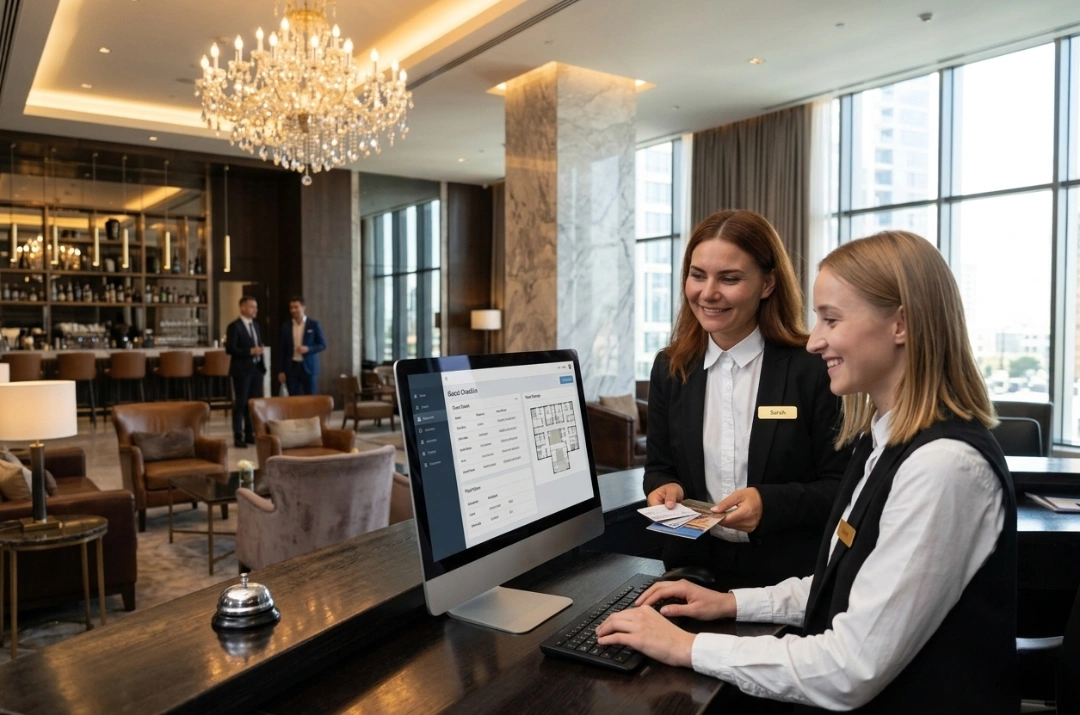
The front desk shapes the first impression of every guest and drives hotel operations, with staff handling check-ins, inquiries, and coordinating departments.
Front desk interactions directly impact satisfaction, contributing between 20% and 40% of total guest satisfaction scores, while skilled staff use communication, problem-solving, and empathy to create memorable stays.
Technology transforms the desk experience, with tools like roommaster PMS centralizing reservations, real-time room status, group management, and AI guest support to boost efficiency and reduce errors.
Modern operations combine the human touch with digital solutions, using mobile check-in, a virtual concierge, and integrated systems to speed service, increase revenue, and free staff for high-value guest interactions.
If you’ve ever walked into a hotel after a long journey, the very first thing you notice isn’t the bed, the rooms, or even the hotel amenities. It’s the front desk.
That moment when someone smiles, looks up, and says “Welcome,” sets the tone for the entire stay. Whether it’s a luxury resort, a business hotel, or smaller properties, the front desk sits at the front lines of the hotel industry. It’s where first impressions are made, problems are solved, and relationships with hotel guests truly begin.
In this guide, we’ll break down hotel front desk responsibilities, roles, and duties in a clear, human, and practical way. We’ll also explore what the hotel front desk really does, why it matters so much, how roles can vary depending on the property, and how great front desk software, like the roommaster hotel PMS software, directly impacts guest satisfaction and the overall guest experience.
Let’s start at the beginning.
What is a Hotel Front Desk and Why It Matters
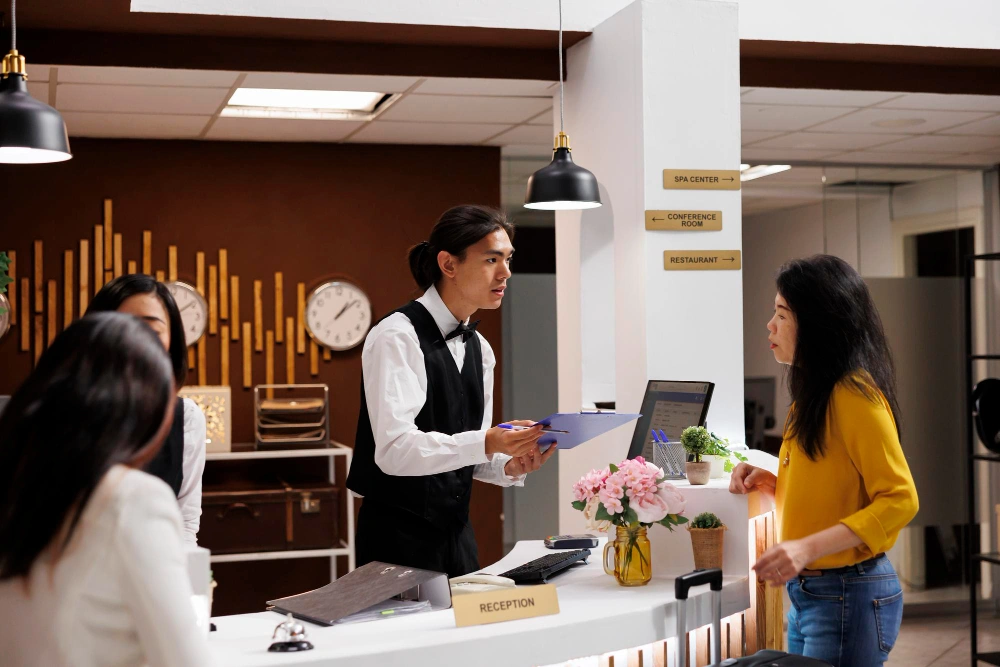
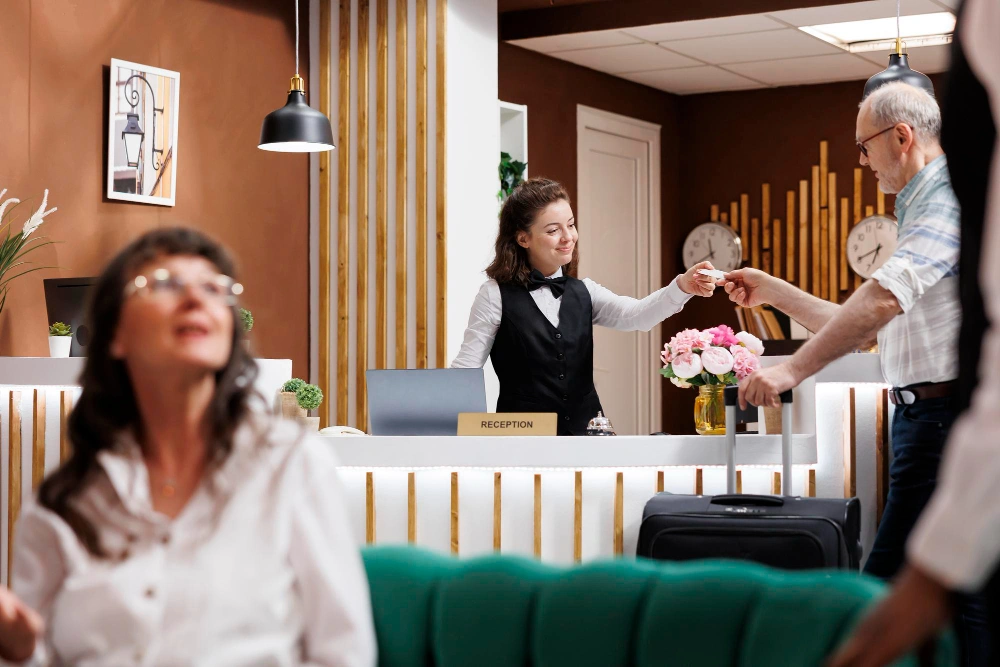
A hotel front desk is the service counter and reception area where hotel personnel assist guests with check-in and check-out, answer questions, and provide essential services throughout their stay. Often called the front office, this area serves as the first point of contact for guests.
The hotel front desk is where the staff members:
Welcome guests as they arrive
Handle the check-in process and the check-out process
Respond to guest inquiries, guest requests, and guest issues
Share information between hotel departments and other departments
In many ways, the front desk drives hotel operations. When the desk runs smoothly, the entire property performs better.
For hospitality professionals, the front desk symbolizes trust. Guests rely on the person behind the desk to provide accurate information, solve problems calmly, and create a comfortable stay, whether they visit for one night or an entire week.
Essential Hotel Front Desk Responsibilities
Front desk employees perform many important tasks beyond managing guest arrivals and departures. Their actions shape guest satisfaction, drive revenue, and keep hotel operations running smoothly.
Let’s take a look at them.
1. Create outstanding guest experiences
Front desk team members shape the guest experience at every stage of a stay. They regularly speak with guests and gather valuable feedback about what guests like and where the hotel can improve. They recommend popular local attractions, hotel activities, or dining options that help guests enjoy their visit and build positive impressions.
According to recent trends in hospitality analysis, guests form much of their satisfaction in the first few interactions they have with staff, and those impressions carry all the way through the stay. Front office interactions contribute between 20% and 40% of total guest satisfaction scores in modern hotels.
{{guest-app}}
2. Welcome guests and build trust
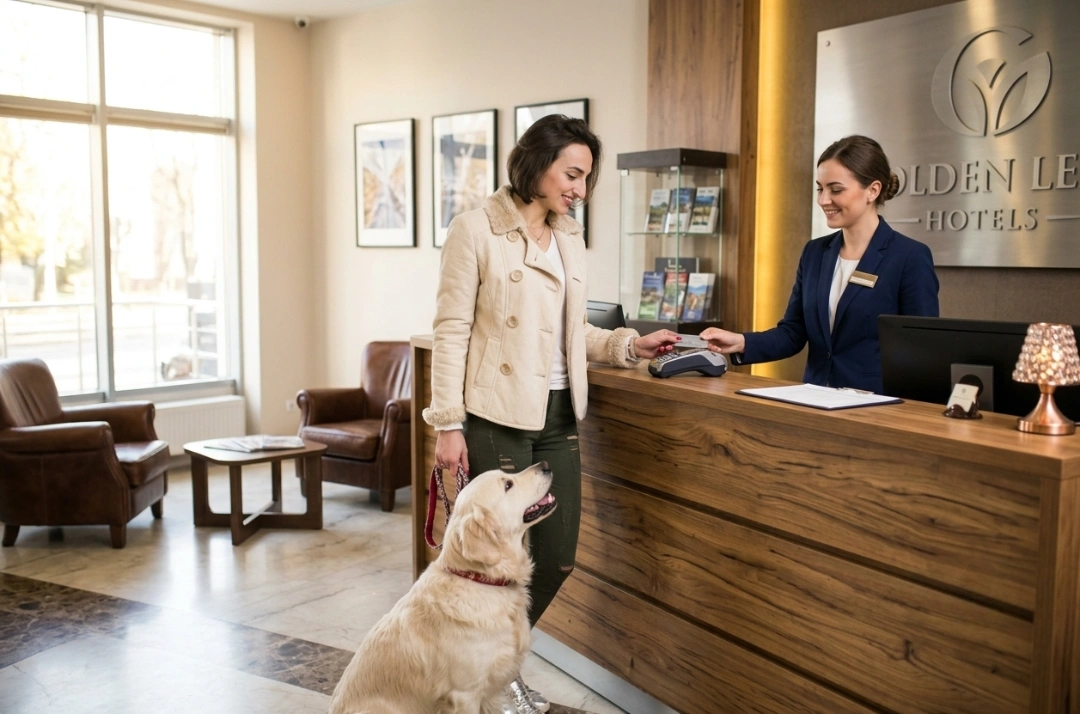
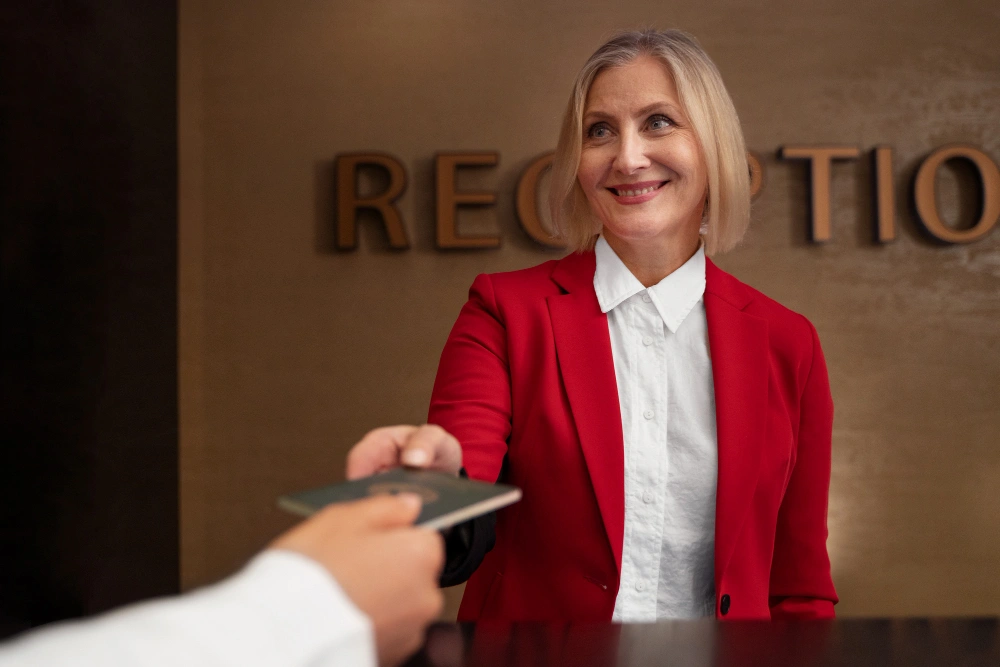
Front desk staff members greet arriving guests and create the first impression of the hotel. Their tone, attitude, and engagement shape guests' feelings about the brand from the moment guests walk through the door.
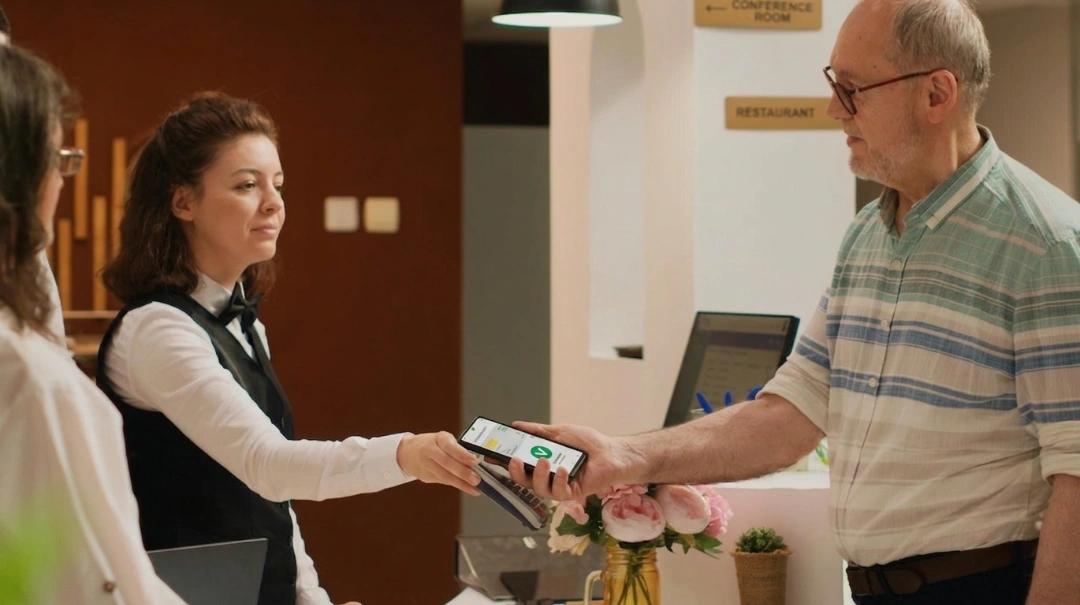
When teams treat guests with friendly professionalism, hotels receive better reviews and repeat business. According to a 2025 hospitality trend report, guests now expect faster, contactless experiences, with 94% preferring mobile check-in/check-out and meaningful human interactions when they visit the desk.
3. Actively grow revenue through strategic offers
Front desk staff have a powerful opportunity to grow hotel revenue through smart recommendations at check-in and in-guest interactions. Upselling from the hotel front desk, such as suggesting room upgrades, late check-out options, or premium services, can produce significantly more income than offers made only before arrival.
In fact, upselling interactions at the front desk can generate 5 to 9 times more revenue than pre-arrival upsells and contribute noticeably to revenue per available room (RevPAR). Moreover, it contributes 2 to 5% to RevPAR, while pre-stay upselling adds only 0.3 to 1%
Hotels have also started using real-time guest data and automated systems that support front desk teams with personalized offers. These tools increase the likelihood that a guest will select an upgrade that reflects what they value, such as a spa package or a premium view room.
4. Respond to guest concerns with skill and calm
When guests ask questions or report problems, front desk staff respond first. They provide basic help, such as explaining how systems work, resolving billing queries, or coordinating maintenance requests.
When complaints arise, such as malfunctioning appliances or dissatisfaction with a service, front desk team members listen, communicate solutions, and coordinate with other departments to resolve issues. Research into guest feedback shows that positive outcomes from thoughtful upgrade offers correlate with higher satisfaction ratings and online reviews.
5. Perform administrative and operational work
Front office personnel complete core administrative tasks that keep hotel operations functioning well. They check guests in and out, process payments for rooms and additional services, update records, and manage reservations.
They may also support broader hotel management tasks by preparing reports, updating calendars, and maintaining internal records. In many properties, management uses advanced front desk systems to streamline these tasks, helping staff work faster while still delivering personal service.
Day-to-Day Front Desk Operations
With so much happening at the front desk, a daily checklist can help you get through the day without forgetting anything important.
Remember, front desk checklists should remain flexible. You can (and should) update it regularly. Some tasks might not need to happen every day, so you can move them to a weekly or monthly checklist instead.
As a manager or owner, you might prefer to keep it simple with a single daily checklist. But feel free to experiment, move tasks around between morning and evening, adjust based on your team, and find a workflow that fits your hotel and services.
That said, here’s the simple checklist to give a good idea of the day-to-day operations of a hotel front desk. This checklist can also help you track completed tasks, making your day easier.
- Morning
Turn on computers and log into all front desk systems
Set up the guest-facing desk with brochures, maps, and discount cards
Wipe down counters
Take cash from the safe and count the register float
Switch on lobby music and unlock front doors
Put phones back on regular calling
Check emails and respond to urgent messages
Enter new reservations and check room availability for walk-ins
Make wake-up or reminder calls as required
Tidy common areas
Hand out daily newspapers in the reception
Follow up on late check-outs
Coordinate with housekeeping to prioritize room cleaning and special requests
Check out guests and process payments
Review notes from the night shift
Prepare arrival packs and keycards for the day
Confirm VIP arrivals with housekeeping
- Evening
Count the register float and check walk-in availability
Add unfinished tasks from the day shift
Double-check arrival packs for evening check-ins
Handle new reservations and respond to emails
Print room status for overnight reference
Prepare instructions for late arrivals
Log out of systems and shut down computers
Tidy the reception area
Turn off music and lock doors for closed areas
Switch phones to an answering machine
Balance the till and secure cash in the safe
Leave notes for the morning shift
- Guest Arrival
Confirm room allocations and arrival packs are ready
Check with housekeeping that rooms are prepared
Review any special requests in reservations
Greet guests warmly and confirm reservation details
Ask for photo ID and a credit card, and verify both
Collect damage deposits and explain policies
Go over hotel rules and essential information like breakfast times, Wi-Fi, and after-hours access
Hand over keys and explain room instructions
Provide parking info if needed
Answer questions and give directions
Wish guests a great stay
- Guest Departure
Print the day’s check-out list
Greet guests and pull up their reservation
Handle outstanding charges, like room service or parking
Ask about their stay and any room issues
Check them out in the system
Offer luggage storage or help with directions
Notify housekeeping that the room is vacant
Record any maintenance tasks
Confirm all guests have left
- Lobby and Common Areas
Pick up trash and misplaced items
Report any maintenance issues
Open common areas at scheduled times
Turn on lights, music, and TVs
Update information boards with daily updates
Top up water, tea, and coffee
Water plants and tidy brochures
At the end of the day, turn off lights, music, and TVs
Lock areas closed overnight
- Hotel Exterior and Entryways
Put out signage and check it’s clean
Check exterior lights
Sweep and mop floors, clean glass doors and windows
Sanitize door handles and high-touch areas
Water plants and check landscaping
Verify fire and emergency exits are clearly marked
- Lobby Toilet
Clean toilets at least once per day
Refill toilet paper, soap, and paper towels
Wipe sinks, benches, and mirrors
Sweep and mop floors
Check lights and automated fixtures
Empty trash bins
Sanitize door handles and other high-touch areas
Essential Interpersonal Skills for Front Desk Staff
Front desk staff interact with guests constantly, making interpersonal skills just as important as technical knowledge. Strong people skills help staff handle requests, solve problems, and create a welcoming environment.
For example, industry research shows that properties with high satisfaction ratings (above 4.5 stars) earn up to 35 % more repeat stays and can charge higher average daily rates (ADRs) compared with competitors with lower scores. This highlights how critical front desk interactions are to overall hotel success.
Effective communication and active listening: Front desk employees must communicate clearly with guests in person, on the phone, and via messaging. Active listening helps staff understand guests' needs and respond in ways that guests can follow easily. Good communication also boosts teamwork across departments, supporting faster responses to guest requests. Hotels that invest in communication training see measurable improvements in complaint handling and 27% reduction in escalation rates.
Problem-solving abilities: Every front desk shift brings surprises, from unexpected guest requests to operational issues like room discrepancies or billing questions. Front desk staff must think quickly, weigh options, and act with confidence to resolve problems. Strong problem‑solving skills help staff defuse tense situations and guide guests toward acceptable outcomes that leave them feeling valued.
Professionalism and empathy: Professional conduct and genuine empathy help front desk staff build trust with guests and colleagues. A calm and respectful response to complaints or complex situations increases guest satisfaction and contributes to the property's positive reputation. Empathy also supports internal teamwork, helping staff communicate with hotel housekeeping, maintenance, and other departments to meet guest needs faster.
Knowledge of hotel amenities and guest services: Front desk staff need to know the hotel’s amenities, dining options, and policies. This knowledge allows them to guide guests effectively, answer questions accurately, and offer helpful recommendations that enhance the guest experience.
Different Types of Front Desk Positions
Now that we are fully aware of the responsibilities and daily operations of the hotel front desk, let’s explore the various roles within the front desk team.
1. Entry-level desk clerk
A desk clerk, or front desk clerk, performs daily duties such as checking guests in, answering guest inquiries, and coordinating with other hotel departments. Most positions require a high school diploma and basic training in hotel operations.
2. Front desk agent
Front desk agents handle complex interactions, managing reservations, upselling services, and coordinating VIP requests. They are often the first point of contact for returning or high-profile guests.
{{pms-two}}
3. Supervisory roles
Supervisors oversee front desk operations, ensuring efficiency and training desk staff in desk responsibilities, guest services, and the use of property management systems.
4. Front office managers
Managers coordinate hotel departments, handle escalations, and set standards for guest satisfaction. They often require a bachelor's degree or experience in a related field.
Modern Developments in Front Desk Operations
The role of the hotel front desk has changed dramatically in the last few years. What used to be a place where guests lined up to hand over identification and pay for their rooms is now a hub for digital experiences, seamless coordination with other hotel departments, and guest engagement at every stage of the stay.
As guest preferences evolve and technology advances, front desks today combine human connection with powerful digital tools to serve guests faster, smarter, and with more personalization. In 2025, more than 63% of hotels have implemented digital check‑in, mobile keys, or smart kiosks, and nearly half use real‑time analytics to inform decisions such as staffing and pricing. These tools are becoming standard across properties of all sizes as hotels adapt to guest demand for speed and convenience.
1. Digital tools for efficiency
Hotels have adopted a variety of digital tools to streamline front desk operations and improve accuracy. According to industry data, 74% of guests now prefer hotels with mobile key technology.
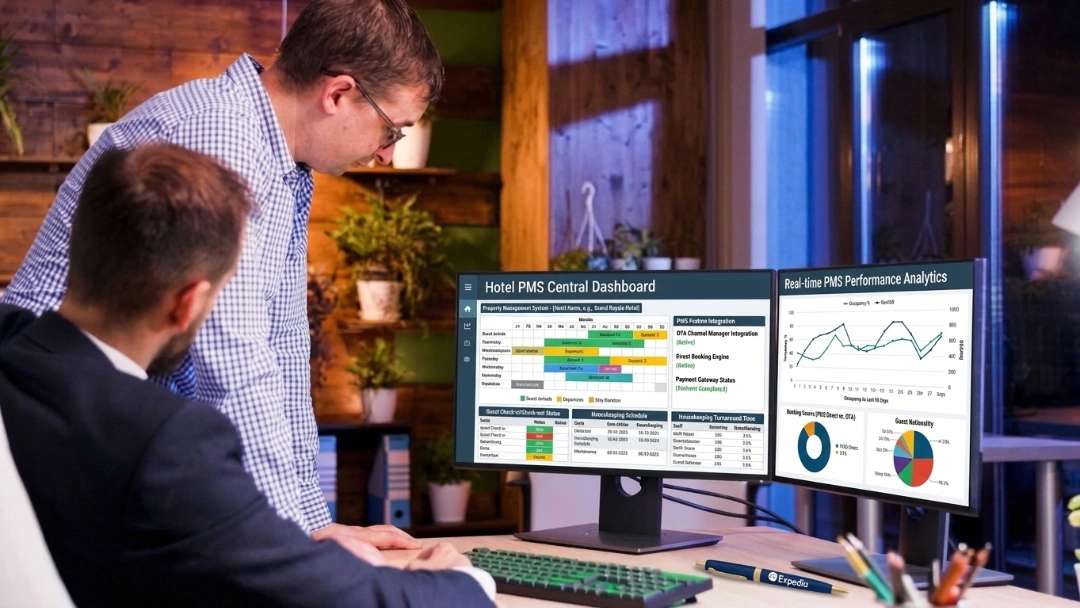
Cloud‑based property management systems (PMS) play a central role in this transformation. These systems consolidate reservations, check‑ins, billing, and guest profiles on a single platform, so staff do not have to switch between multiple tools. Real‑time updates across departments such as housekeeping, food and beverage, and maintenance help teams work together more accurately and with less redundancy.
In fact, hotels using outdated systems can experience 30 to 50% more errors in billing and reservation management than hotels with modern automated systems. One platform that reflects this integrated, hospitality‑first approach is roommaster hotel PMS system, a comprehensive hotel management platform built by hoteliers with over 30 years of industry experience. roommaster brings front desk, housekeeping, group management, reporting, and guest engagement together in one intuitive interface so teams spend less time learning systems and more time serving guests. It eliminates the need for constant switching between applications and accelerates routine tasks like check‑ins by up to 30%.
Hotels using roommaster PMS move from fragmented processes to real‑time visibility across departments, which speeds communication and reduces misunderstandings. Staff learn the system in hours rather than weeks, and instant performance reports help managers act on data without waiting for IT support.
2. Virtual and mobile services
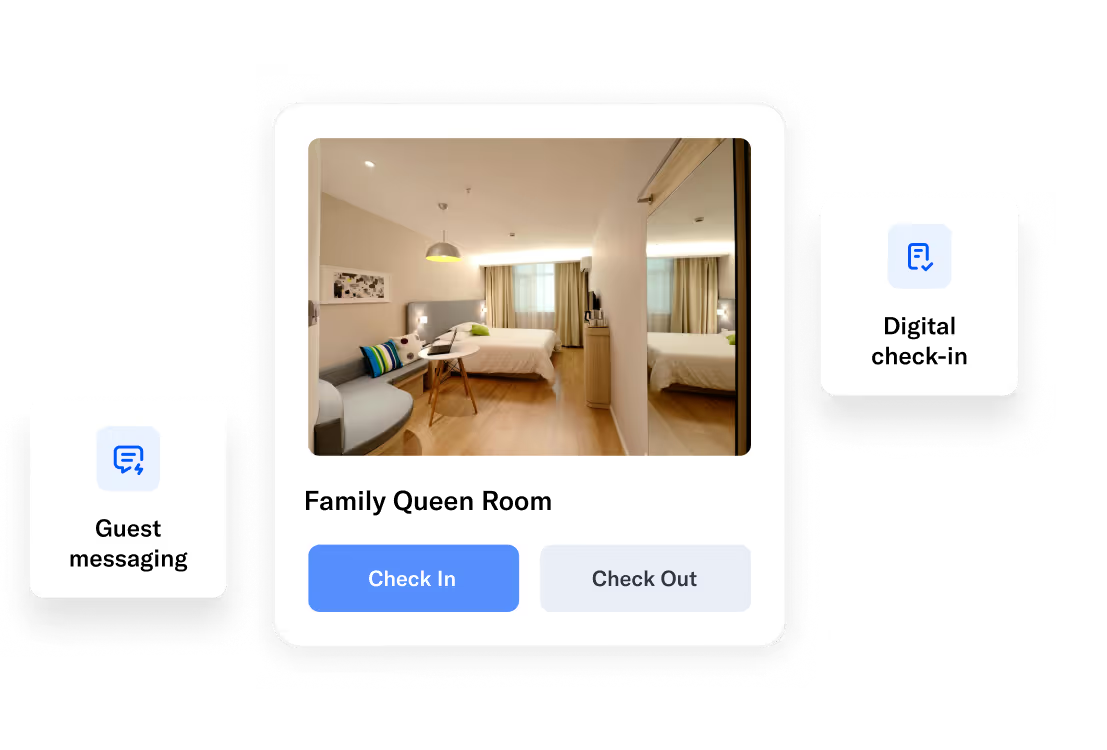
Hotels now use a mix of virtual and mobile services to support guests before arrival, during the stay, and post‑departure. Hotel guest apps enable complete check‑ins from anywhere, access digital room keys, request services, and get information about amenities without ever stepping up to the desk. Properties that offer mobile check‑in often see significant reductions in wait times and higher guest satisfaction scores as guests skip queues and go straight to their rooms.
Artificial intelligence (AI) has also expanded the front desk’s reach. Virtual concierge tools and AI guest support handle inquiries 24/7, answer frequently asked questions, and convert more inquiries into bookings. For hotels with high call volumes or staffing constraints, the roommaster Concierge system captures every call and booking opportunity while freeing human staff to focus on complex guest needs. These tools support multilingual interactions and reduce pressure during peaks of guest activity, making guest engagement more responsive and inclusive.
Studies show that mobile and contactless solutions not only speed operations but also generate meaningful revenue lifts. For example, mobile platforms with upsell prompts produce 12–20% higher per‑stay revenue and deeper engagement with hotel services.
3. Integration with other hotel departments
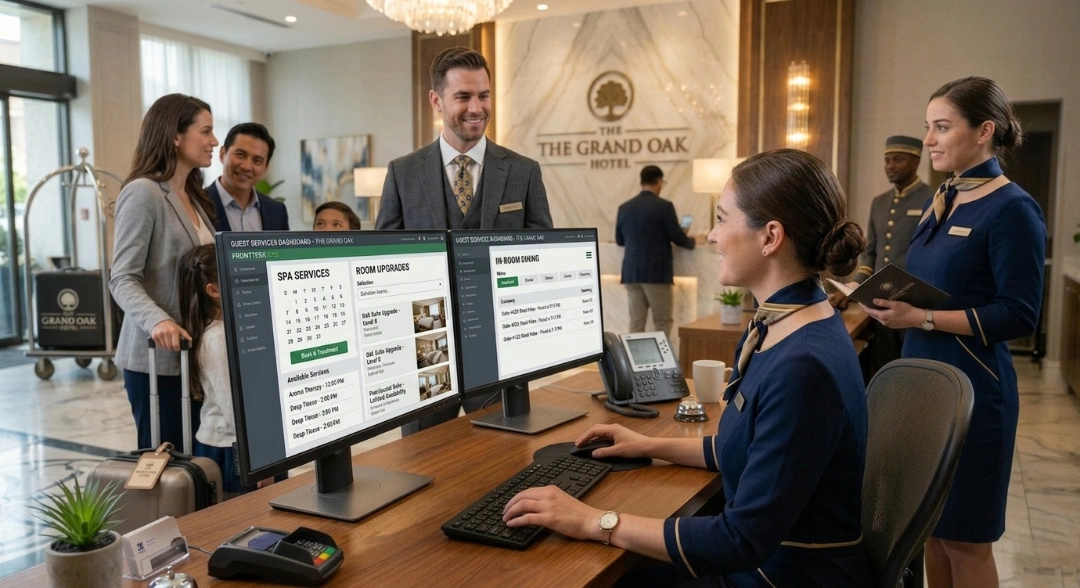
Modern front desk operations do not function in isolation. Technology now links the front desk with housekeeping, food service, maintenance, revenue management, and guest engagement systems. Integration means that when a guest checks in, staff in other departments see the room status, special requests, and arrival details in real time. This reduces back‑and‑forth messages, cuts response times, and gives guests a consistent experience from check‑in to check‑out.
roommaster PMS extends this connectivity across the hotel tech stack through a broad integration marketplace. With 100+ pre‑built connections to systems such as electronic locks, point-of-sale (POS) tools, accounting software, the hotel booking engine, and the channel manager, roommaster unifies operations into a single ecosystem. Management gains a unified view of guest profiles and operational workflows, which helps teams respond faster to requests and reduces repetitive administrative work.
This kind of integration also supports modern trends such as dynamic pricing, group block management, and instant reporting, helping hotels react to market changes and guest preferences. Combined with AI‑powered insights, roommaster PMS deliver operational flexibility that lets front desk managers spend more time on high‑value human interactions and less on manual tasks.
To deliver high‑quality front desk software solutions, hotels define clear standards and measure performance against meaningful indicators. These standards help teams track how well they serve guests and identify opportunities to improve operations and guest experience.
Guest satisfaction: Monitor Net Promoter Score (NPS), overall satisfaction ratings, and online review averages to gauge service quality. Hotels with NPS above 60 or review ratings of 4.5/5 often see stronger repeat business and loyalty.
Operational efficiency: Record average check‑in and check‑out times, response times to guest requests, and first contact resolution rates to identify bottlenecks and improve workflow.
Communication performance: Track phone answer rates and queue wait times to assess how effectively staff manage real-time guest interactions.
Upsell effectiveness: Measure upsell conversion rates to see how front desk teams contribute to incremental revenue and identify opportunities for training or improvement.
2. Training and skill development
Research shows that employees who receive comprehensive learning opportunities deliver higher-quality service, handle guest interactions more confidently, and adapt better to unexpected situations.
Training in interpersonal skills and systems, such as property management platforms, directly impacts guest satisfaction and operational accuracy. Continual skill development also motivates staff and supports job satisfaction, which, in turn, strengthens workplace culture.
3. Career advancement
Experience at the front desk opens doors to broader career opportunities within the hotel industry. Many successful hospitality professionals move from front desk roles into supervisory positions, revenue management, guest services management, and even general management roles.
As staff build expertise, they expand their potential to take on larger responsibilities and contribute to the hotel’s strategic goals.
Improve Your Front Desk Services Today!
A strong hotel front desk combines warmth, precision, and coordination. To elevate efficiency and guest satisfaction, hotels can invest in training, advanced technology, and clear front desk responsibilities.
Front desk managers handle guest requests, manage check‑ins and check‑outs, and coordinate with housekeeping, food service, and maintenance to keep operations seamless. Modern hotel management software, like roommaster hotel PMS system, centralizes all these tasks in one intuitive platform. Staff can manage reservations, monitor room status in real time, handle group bookings, and communicate with guests through a mobile app or AI-powered concierge.
With roommaster, hotels reduce system switching, accelerate check-ins by up to 30%, and free staff to focus on high-value guest interactions. Real-time reporting and integrated housekeeping coordination make operations smoother. Similarly, AI guest support captures every booking opportunity, even during peak hours or off-hours, without adding stress to your team.
Take the first step toward a more efficient, guest-focused front desk. Book a demo of roommaster PMS today and discover how a fully integrated front desk software solution can elevate every guest's stay.
{{cta-strip}}
Frequently Asked Questions
1. What are the main duties of a hotel front desk receptionist?
Front desk receptionists check guests in and out, handle reservations, respond to guest inquiries, and coordinate with housekeeping, maintenance, and other departments to maintain smooth hotel operations.
2. What skills are required to work at a hotel front desk?
Some of the key skills to work at a hotel front desk include active listening, problem-solving, clear communication, multitasking, knowledge of hotel amenities, and proficiency with property management systems such as roommaster PMS.
3. How do front desk operations impact guest satisfaction?
Efficient desk operations, quick responses to guest requests, and attentive service create a positive first impression and directly enhance guest satisfaction.
4. What is the difference between a front desk agent and a front office manager?
A front desk agent handles daily desk operations and guest services, while a front office manager supervises staff, coordinates with other departments, and maintains operational standards.
5. How has technology changed front desk operations?
Technology simplifies reservations, automates check-ins, tracks guest requests, and connects front desk staff with other hotel departments. roommaster PMS integrates these functions in a single platform, improving accuracy and efficiency.
6. What are the busiest times for hotel front desk staff?
The busiest times for hotel front desk staff include morning check-ins, afternoon check-outs, holidays, and high-occupancy seasons.
7. How do front desk staff handle difficult guests or complaints?
Staff use problem-solving skills, clear communication, and empathy to resolve issues. With its front desk software, the roommaster PMS help manage complaints efficiently by providing real-time updates and access to guest history.
8. What training is required for front desk positions?
Training covers desk responsibilities, emergency procedures, interview techniques, software use, and interpersonal skills to deliver high-quality guest service.
9. How do virtual front desk services work?
Virtual front desks assist with remote check-ins, respond to guest requests digitally, and provide real-time updates to staff and guests through apps and online platforms.
10. What career advancement opportunities exist in front desk operations?
Front desk experience can lead to supervisory positions, departmental management, and corporate hospitality leadership roles, providing a strong foundation for career growth in the industry.
guest-app
Put Your Front Desk in Guests’ Pockets with roommaster App
Mayela Lozano is a content strategist with a passion for hospitality and technology. She collaborates with roommaster on content creation, highlighting how technology can streamline hotel operations and enhance guest satisfaction. When she’s not creating content, Mayela loves to travel and spend time with her two little ones, discovering new adventures and making memories along the way.
Join Thousands of Hotels Thriving with roommaster
The transition to roommaster is straightforward and efficient. Our implementation team handles data migration including reservations, guest profiles, and historical information.
The transition to roommaster is straightforward and efficient. Our implementation team handles data migration including reservations, guest profiles, and historical information.
Hotel Check-In Kiosk: Enhance the Guest Experience
October 5, 2026
Hospitality Technology
Hotel Management
Hospitality Trends
Hotel Self Check-In: How It Works, Types, Benefits And Setup
October 1, 2026
Hotel Management
Hospitality Trends
Hotel Check-In & Check-Out Times Explained
October 1, 2026
Hospitality Trends
Hotel Management
Cloud-Based Property Management System: Hotel PMS
October 1, 2026
Hotel Management
Cloud PMS
Hotel Management System (HMS): A Complete Guide
September 23, 2026
Hospitality Trends
Hotel PMS
Cloud PMS
Hotel PMS Integration: How It Works for Hotels
September 23, 2026
Hospitality Trends
Hospitality Technology
Hotel PMS
Hotel Management
Cloud PMS
How Hotel PMS Software Transforms Hospitality Management
September 23, 2026
Hotel Management
Marketing
Pet-Friendly Hotel Amenities & Package Ideas That Drive Revenue
September 22, 2026
Hotel Management
Hotel PMS
Hotel Food And Beverage (F&B): The Complete Guide
September 22, 2026
Hotel Management
Marketing
Hotel Pet Fees: How Much Should You Charge?
September 22, 2026
Join Thousands of Hotels Thriving with roommaster
See how roommaster's unified platform can work for your property. Our team will walk you through features tailored to your specific needs and operations.


.png)
.png)
.png)