Best PMS Software For Independent Hotels: A Practical Buying Guide For 2026
"We’ve trusted roommaster for over 25 years. It keeps our entire hotel group running smoothly with everything we need in one easy-to-use system" - Jorge Venegas, General Manager, NUVO Suites
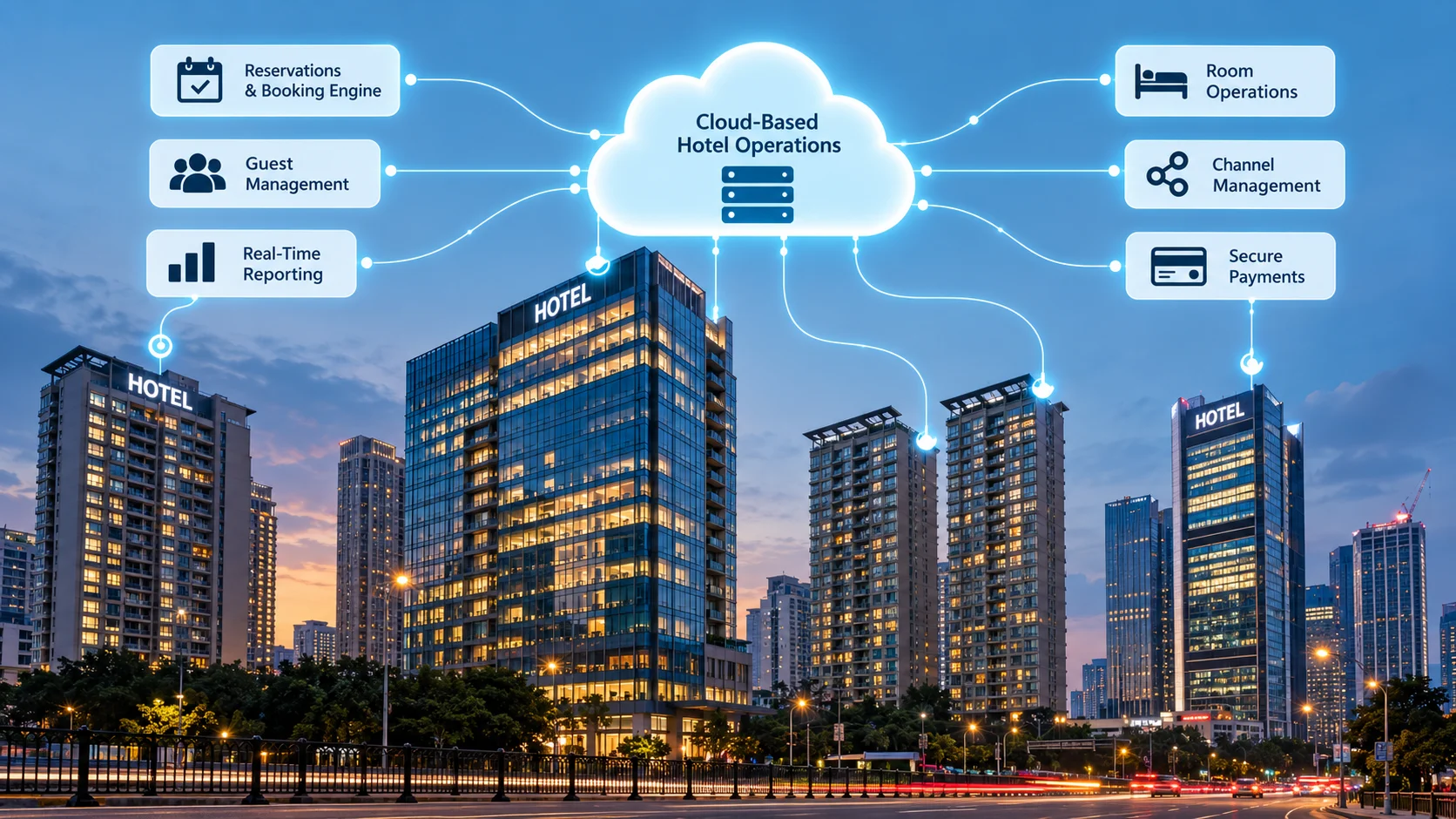
A PMS is the operational hub of your hotel - reservations, front desk, housekeeping, billing, and reporting, all connected in one place
Independent hotels have different needs from chains: you need flexibility, fast implementation, and support from people who understand hotel operations
The right PMS will reduce admin time, cut overbooking risk, and drive more direct revenue
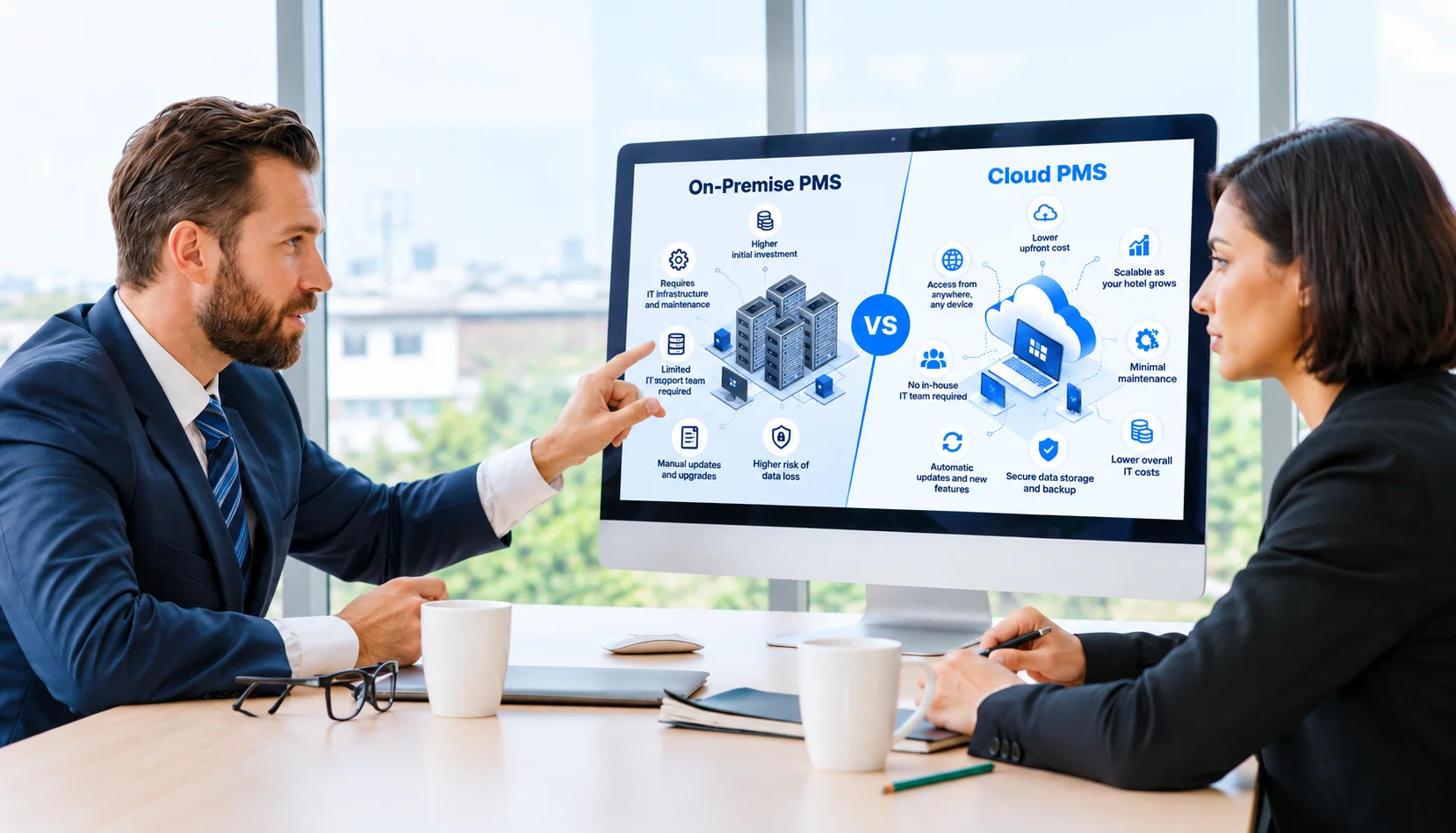
Cloud-based systems are the standard in 2026 - on-premise is no longer practical for most independents
Key features to demand: two-way OTA sync, integrated direct booking engine, real-time reporting, and payments built in
roommaster is built specifically for independent hotels, with 30+ years of hospitality expertise behind every feature
Choosing the right PMS software for your independent hotel is one of the most consequential decisions your property will make. Get it wrong and you will pay for it in missed bookings, staff frustration, and lost revenue for years to come.
If you run an independent hotel, you've almost certainly outgrown spreadsheets, sticky notes, or a PMS that was cutting-edge when your front desk still used a fax machine.
This guide cuts through the noise. It covers what a PMS actually needs to do for an independent hotel, the features that separate genuinely useful systems from impressive demos, how to evaluate vendors before you sign, and why roommaster is the system thousands of independent hotels trust to run their operation every day.
What Is An Independent Hotel PMS?
A hotel PMS (property management system) is the software that runs every aspect of your daily operation. From the moment a reservation is made to the moment a guest checks out, it connects your front desk, housekeeping team, billing system, and distribution channels in one place.
Think of it this way: the PMS is where your hotel lives. Every booking, every room status update, every invoice, every rate change, every guest profile flows through one system.
For an independent hotel specifically, that matters more than it does for a chain. You don't have a dedicated IT team, a head office system mandate, or a revenue manager watching the numbers full time. Your PMS has to carry more of the operational load and it has to do it reliably, without complexity that slows your team down.
At a technical level, a modern PMS handles reservations management, front desk operations, room assignments, housekeeping status tracking, folio management, billing, payment processing, and OTA distribution through a connected channel manager. In more complete platforms, it also connects to a direct booking engine, revenue management tools, guest communication, and a guest app.
The business impact is straightforward. A well-implemented PMS means fewer manual errors, less time on repetitive admin, tighter rate control across all channels, and clear visibility into how the property is actually performing. A poorly chosen one means double bookings, staff navigating four screens to complete a single check-in, and reports that never quite reflect what is really happening on the floor.
For an independent hotel owner or GM, the right PMS is not just an operational tool. It is the difference between running your hotel and being run by it.
{{pms-two}}
The Best PMS Software For Independent Hotels
The right PMS for your independent hotel depends on your property type, size, operational complexity, and growth plans. What works for a 15-room B&B is different from what works for a 120-room independent city hotel managing group events. Below is an honest breakdown of the landscape. The best PMS software for independent hotels in 2026: roommaster, Cloudbeds, Little Hotelier, Mews and WebRezPro compared side by side.
1. roommaster
roommaster is built specifically for independent hotels, motels, resorts, B&Bs, and hotel groups. It is a full-platform PMS covering reservations, front desk, housekeeping, billing, reporting, channel manager, direct booking engine, and payments in a single system, with no separate tools required for core operations.
With 30+ years of hospitality technology experience and a team carrying 125+ years of combined hands-on hotel management expertise, roommaster is built by people who have run hotels. That shows in the front desk workflow, the reporting depth, the billing flexibility, and the support quality.
97% of roommaster customers stay. That retention figure is not a marketing claim. It reflects what happens when a PMS genuinely works in real hotel environments over the long term.
Key Strengths For Independents:
Unified platform covering PMS, booking engine, channel manager, and payments in one system. 50% faster check-in, 40% fewer admin tasks, and 50% reduced training time. Hundreds of built-in reports covering operations, revenue, and financials. 24/7 expert support from hospitality-trained specialists. Connects with 100+ hospitality systems. 99.95% uptime guaranteed. Implementation typically completed in 3 to 5 business days.
2. Cloudbeds
Cloudbeds is a widely used system with a strong OTA distribution focus. It suits smaller boutique properties and vacation rentals looking for a relatively simple operational layer with broad channel connectivity. Where it falls short for independents with more complex needs is in financial reporting depth, multi-folio group billing, and payment dispute handling for properties doing significant volume.
3. Little Hotelier
Little Hotelier targets B&Bs, guesthouses, and properties with under 30 rooms. It is a starter-friendly platform but scales poorly once a property grows beyond its target segment. Independent hotels planning growth beyond a small room count typically find themselves re-platforming, which is an expensive and disruptive process.
4. Mews
Mews has a clean, modern interface and strong brand recognition in the boutique hotel market. It is a capable system, but the financial reporting depth, group and event workflow complexity, and cost structure are better aligned to hotels with dedicated revenue and operations management resources. For most independents, the features they would actually use represent a fraction of what they are paying for.
5. WebRezPro
WebRezPro serves independent lodging operators reliably and has a solid reputation among smaller properties, B&Bs, and inns. The reporting and multi-folio billing capability does not match what roommaster delivers at scale, but it is a practical option for properties with straightforward operational requirements.
roommaster is the most complete platform for independent hotels that need operational depth, financial flexibility, and genuine long-term support. For properties that need a fully unified system that grows with them rather than a starter tool they will replace in three years, it is the clear choice.
Why Independent Hotels Have Different PMS Needs
A chain hotel has dedicated IT staff, a technology budget measured in hundreds of thousands of dollars, and a head office that mandates the system. You don't.
What an independent hotel actually needs from a PMS is different in four specific ways.
Speed to value: You can't wait six months for implementation. You need to be up and running in days, not a full quarter. roommaster typically completes implementation in 3-5 business days.
Support that understands hotel operations: When something goes wrong at 11pm on a Friday during a fully booked weekend, you need a support team that understands front desk workflows - not a generic helpdesk that reads from a script. This is where many enterprise-built systems fall short for independents.
Affordability without capability trade-offs: You need enterprise-level functionality at an independent hotel price point. Systems designed for chains either charge for features you'll never use, or strip back the reporting and billing tools that actually matter to a property of your size.
Flexibility across property types: Independent hotels range from 20-room boutique properties to 150-room family-owned motels to growing hotel groups running six locations. The PMS needs to fit your operation now and scale as you grow - without a re-platforming project every time you add a property.
roommaster is built for the way independent hotels actually operate. The independent hotel platform covers reservations, front desk, housekeeping, billing, and distribution in one connected system.
8 Features Every Independent Hotel PMS Must Have
1. Reservations Management That Actually Works Under Pressure
This sounds obvious, but reservations management in a genuinely good PMS goes beyond a calendar with coloured blocks. You need real-time availability that updates instantly across all channels the moment a booking is made. You need flexible rate plans, group booking capability, and modification workflows that don't require four screens and a supervisor password.
The reservation management module is where your front desk staff will spend most of their day. If it's slow, confusing, or inconsistent with what your OTA channels show, the rest of the system doesn't matter.
roommaster's reservation management handles direct bookings, OTA bookings, phone reservations, and group blocks in a single view with real-time sync so what the front desk sees is always accurate.
2. Two-Way OTA Sync Through A Native Channel Manager
A channel manager is not the same as a booking engine. The channel manager is the tool that pushes your rates and availability to Booking.com, Expedia, Airbnb, and hundreds of other OTAs in real time and pulls confirmed bookings back into your PMS automatically.
Two-way sync means rates and availability travel in both directions. When a room books on Expedia, availability drops across every other channel instantly. When you adjust rates in your PMS, every connected OTA updates within seconds. Without this, you're managing rates manually, overbooking is a constant risk, and your staff is doing a job the software should be doing.
Demand native two-way sync rather than a third-party workaround that adds another integration point and another failure risk. roommaster's channel manager connects to hundreds of OTAs and updates availability in real time, managed from one place.
3. An Integrated Direct Booking Engine
Your OTA partners charge a commission on every booking they deliver, typically 15 to 25%. Your direct booking channel charges nothing. Every direct booking is a more profitable booking.
The booking engine sits on your hotel's own website and allows guests to book directly without being redirected to a third-party platform. A good one is mobile-first, fast, and designed to convert. It should support promotions, upsells, and add-ons so you're not just competing on price.
The key word is integrated. A booking engine bolted on via a third-party connection introduces delays, data inconsistencies, and support complexity. The booking engine and PMS need to share the same inventory in real time.
roommaster's booking engine is commission-free, mobile-first, and fully integrated with the PMS so rates and availability are always in sync. Hotels using it have seen up to 40% more direct bookings and a 35% higher conversion rate.
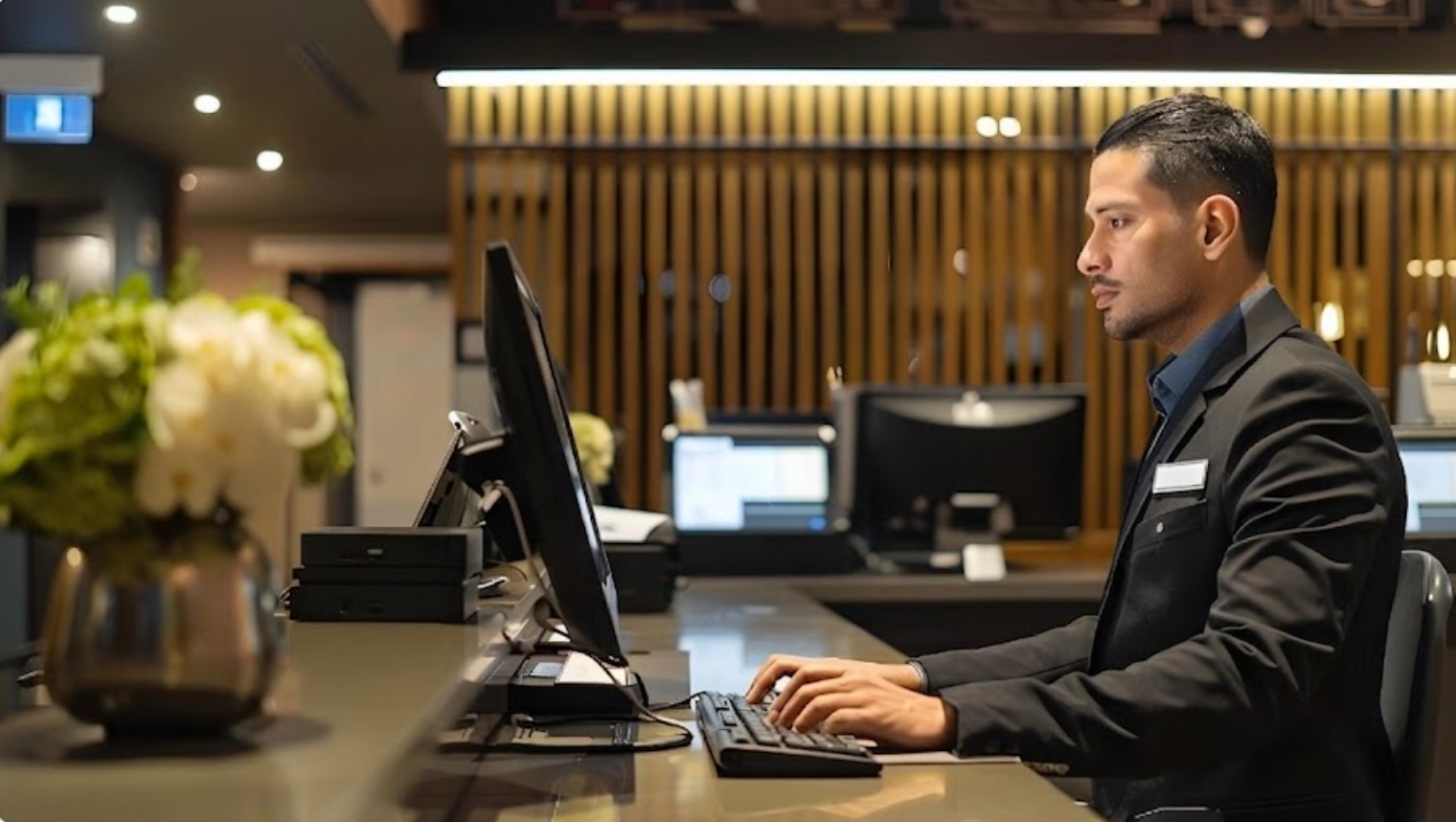
4. Front Desk Operations Built For Speed
Your front desk team needs to check a guest in within two minutes, not navigate six screens, re-enter information that already exists in the reservation, and wait for a system that's loading. Slow check-in is one of the most common sources of bad reviews for independent hotels. It's also one of the most preventable.
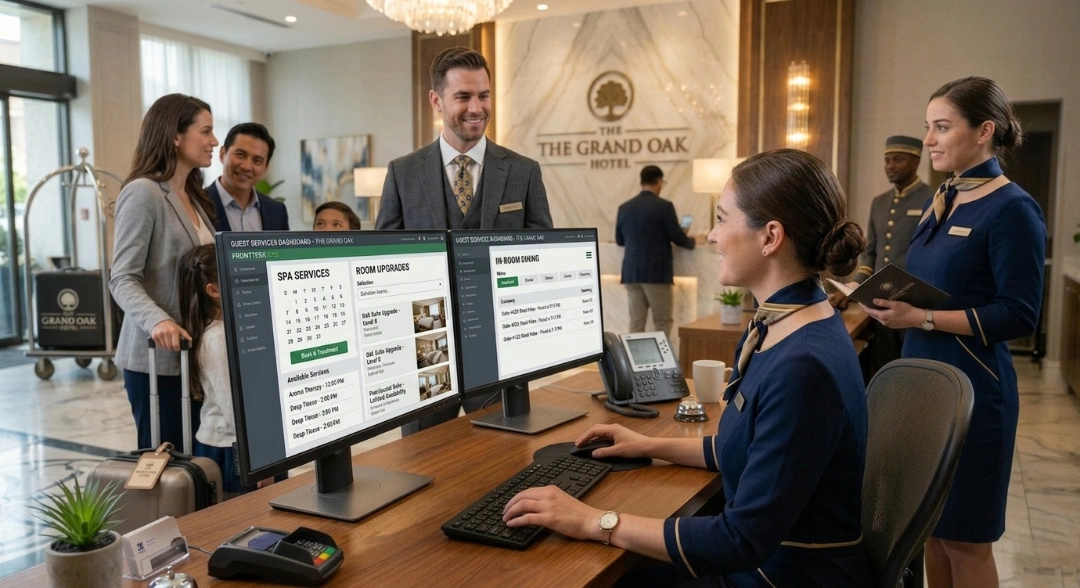
A good PMS front desk module puts every piece of guest information, room status, folio detail, and payment option on one screen. Pre-arrival confirmation, early check-in processing, room upgrade prompts, and express checkout should all be accessible without leaving the main workflow.
roommaster's hotel front desk software is designed so staff can manage the full check-in-to-checkout cycle without navigating away from their primary screen. The result is check-ins completed up to 50% faster than legacy systems.
5. Housekeeping Management Connected To The Front Desk
Housekeeping and front desk operate as one system or they operate against each other. When a guest checks out, the housekeeper needs to know immediately. When a room is cleaned and inspected, the front desk needs to know it's ready to assign.
Manual communication between departments creates delays, confusion, and the occasional situation where you're holding a checked-in guest in the lobby while their room sits ready on the third floor. A phone call, a printed sheet, or a whiteboard in the back office is not a system. It's a workaround.
roommaster's housekeeping software keeps room status updated in real time across both the housekeeping team and the front desk. Assignments, inspections, and room readiness flow directly into the PMS so nothing falls through the cracks.
6. Billing, Payments, And Accounting Without The Gaps
Folio management sounds like a back-office problem. It becomes a very front-facing problem the moment a guest disputes a charge at checkout, asks for an itemised bill, or presents a corporate rate that needs to be routed to a master account.
Your PMS needs to handle individual guest folios, group master folios, split billing, advance deposits, and late charges without manual intervention. It also needs to connect to a payment gateway that processes card transactions securely.
PCI DSS compliance is not optional. Every PMS handling cardholder data must meet Payment Card Industry Data Security Standard requirements. If a vendor can't tell you clearly how they handle PCI compliance including how guest card data is stored and transmitted, that's a red flag before you get anywhere near a contract.
roommaster Payment gateway is built directly into the PMS, not connected via an external integration. Payments, reconciliation, and folio management share the same data, which eliminates the discrepancies that occur when billing and payments run on separate systems.
7. Reporting That Tells You What's Actually Happening
A PMS should tell you where your revenue is coming from, which channels are performing, which room types are driving ADR, and how your occupancy compares to the same period last year. If you're exporting to a spreadsheet to produce a daily revenue report, your PMS isn't doing its job.
Look for occupancy and RevPAR dashboards, source-of-business breakdown, rate plan performance, housekeeping and maintenance logs, and financial exports that connect cleanly to your accounting system.
roommaster's hotel reporting software includes hundreds of built-in reports covering operations, revenue, guest history, and financials with exports that integrate directly with accounting tools.
8. Integrations With The Tools You Already Use
A PMS that doesn't connect to anything else is an island. Your payment gateway, your accounting software, your door lock system, your POS, your guest communication tool. All of these need to work with the PMS, not alongside it.
Demand an open integration ecosystem with documented, actively maintained connections. The quantity of integrations matters less than the quality. A supported, monitored integration with the tools you actually use is worth far more than 500 connections that haven't been updated in three years.
roommaster connects with 100+ hospitality systems across payments, POS, accounting, door locks, and OTAs. Every integration is tested and maintained so you're not troubleshooting broken connections when the system goes live.
{{pms-five}}
Cloud PMS vs On-premise: What Makes Sense In 2026
On-premise PMS systems are installed on a physical server at your property. They store data locally, require manual updates, and need dedicated IT oversight to maintain. They were the only option for most hotels fifteen years ago.
Cloud-based PMS systems run on remote servers, update automatically, and are accessible from any device with an internet connection. They require no in-house server infrastructure and scale without hardware investment.
For the vast majority of independent hotels in 2026, cloud is the right choice. Here's why.
Operational resilience: Cloud PMS systems carry high uptime guarantees. roommaster guarantees 99.95% uptime. An on-premise server failure during a busy check-in period is a crisis with no quick fix.
Remote access: A cloud PMS means you can check occupancy, pull a report, or handle a reservation issue from home, from a mobile device, or from a second property. On-premise systems tie you to a physical machine at the property.
Automatic updates: On-premise systems require manual patching and version upgrades - often a billable service event. Cloud updates happen automatically, in the background, without downtime or IT involvement.
Lower total cost: No server hardware to purchase, maintain, or replace. No IT contractor to manage updates. The PMS subscription covers infrastructure.
Data security: Reputable cloud providers carry enterprise-grade security, including PCI DSS compliance, SSL encryption, GDPR compliance, and SOC certification. A physical server at your property is a security exposure, not an advantage.
The one scenario where on-premise still has a case is a property in a location with genuinely unreliable internet connectivity. For almost every independent hotel operating in a connected environment, cloud is the modern standard.
How Independent Hotels Should Evaluate A PMS Before Signing
A PMS demo is a sales experience, not an honest assessment of operational fit. The vendor will show you the best-case workflow on a clean demonstration environment. Your job is to stress-test it before you sign.
Run your real scenarios, not their script: Ask to demo the checkout process for a group of six rooms with a master folio and two individual folios. Ask to process a split payment across two cards. Ask to show what happens when an OTA booking comes in while a walk-in is being checked in simultaneously. If the demo breaks or requires a workaround, that's what your front desk will face.
Ask specifically about support: Who answers the phone at 11pm? What's the average response time for a critical issue? Is support included in the subscription price or charged per incident? A vendor that can't answer these questions clearly has given you your answer.
Ask about the implementation process: How does data migration work? Who configures the rate plans, room types, and integrations? What does a typical go-live timeline look like? Who is your named point of contact through implementation?
Ask about the contract terms: Is there a lock-in period? What are the exit terms? What happens to your data if you leave? Vendors who are confident in their product have reasonable exit terms.
Ask about the roadmap: Where is the product going? Is AI being integrated? Is the channel manager connectivity being expanded? A vendor that can't describe what they're building next is likely maintaining, not developing.
Stacy Dadson, GM at Harrison Hall Hotel, part of a 14-hotel group that has used roommaster since day one - put it plainly: "I really just can't say how good it is because everything is just so at your fingertips and quick, right from the call to the reservation to the check-in to the checkout."
That kind of assessment only comes from real-world daily use, not a demo.
How roommaster Is Built For Independent Hotel Operations
roommaster's property management system is the operational backbone of thousands of hotels worldwide. Everything connects: front desk, reservations, housekeeping, billing, reporting, payments, and distribution.
Here is what that looks like in practice, on a real front desk shift.
A reservation comes in through the booking engine at 7am. It loads directly into the PMS with no manual entry, no separate login, and no delay. By the time the guest arrives at 3pm, their profile is complete, their payment is pre-authorised, and check-in takes under two minutes. When the room is cleaned and inspected, the housekeeper updates the status from the housekeeping module and the front desk sees it immediately. At checkout, the folio is complete, the payment is processed in the same system, and the receipt is generated automatically.
That is the operation working as it should. No disconnects between systems. No information trapped in a tool that does not talk to the PMS. No front desk staff translating between three different platforms to complete a single guest interaction.
For general managers running independent hotels, the real-time control panel view covering occupancy, revenue by channel, housekeeping status, and pending arrivals means managing the property does not require being physically present every hour of the day.
For front desk managers, the single-screen reservation and check-in workflow means staff can be trained on essential functions in hours, not weeks. That matters when turnover is a reality of hotel operations.
For revenue-focused owners, roommaster's AI revenue management integration means rate decisions are driven by real-time market data rather than manual spreadsheet work. Hotels using AI-powered pricing have seen up to a 35% increase in RevPAR."
Ryan Allison, Owner at Wood River Inn, has seen the compound impact directly. A 57% increase in direct bookings through roommaster's booking engine, four hours saved daily through optimised workflows, and the clarity of running the full operation on one reliable system. In his own words: "I don't have to worry about back-office stuff. We can worry about selling hotel rooms."
That is what the right PMS is supposed to do.
If you are managing an independent hotel and your current system is costing you time, missing bookings, or holding back your reporting, roommaster solves that with one unified platform. Hotels using roommaster typically see 40% fewer admin tasks and staff up to 50% faster at check-in within weeks of going live.
Ready to Run Smarter with roommaster
Independent hotels don't need the most expensive PMS in the market. They need the most complete one for their operation. A system that handles the full workflow without gaps, connects to every channel they use, and actually works when the property is busy.
The features that matter: real two-way OTA sync, an integrated direct booking engine, a front desk workflow that's fast enough for a three-person team during a full house, financial reporting that doesn't require an Excel export, and a support team that picks up the phone at 11pm.
roommaster delivers all of this in one platform, backed by 30+ years of hospitality expertise and a 97% client retention rate that reflects what happens when a system genuinely works in real hotel environments.
Explore roommaster’s PMS for independent hotels to see the full platform in detail, or book a personalised demo to see it mapped to your specific operation.
{{cta-strip}}
FAQs
What is the best PMS for a small independent hotel?
The best PMS for a small independent hotel is a cloud-based system that covers reservations, front desk, housekeeping, billing, and OTA distribution in one platform without requiring separate tools for each function. roommaster is purpose-built for independent hotels, with fast implementation, 24/7 hospitality-trained support, and a unified system that scales from a 20-room boutique to a multi-property group.
How long does it take to implement a hotel PMS?
Most cloud PMS implementations for independent hotels take between 3 and 10 business days, depending on the property size, the number of integrations required, and the complexity of rate plans and room types. roommaster typically completes implementation in 3 to 5 business days, including data migration, channel manager configuration, and staff training.
What is the difference between a PMS and a channel manager?
A PMS is the operational core of your hotel covering reservations, front desk, housekeeping, billing, and reporting. A channel manager is a specific tool that syncs your rates and availability to OTAs like Booking.com and Expedia in real time. They are separate products that need to work together. In a unified platform like roommaster, the PMS and channel manager share the same inventory data, which eliminates the discrepancies and overbooking risks that occur when they run on separate systems.
Do independent hotels need a cloud PMS or can they use an on-premise system?
For the vast majority of independent hotels in 2026, a cloud PMS is the better choice. Cloud systems offer higher uptime, remote access, automatic updates, lower infrastructure cost, and enterprise-grade security without requiring in-house IT resources. On-premise systems carry a higher total cost of ownership and create operational risk when hardware fails. Unless your property is in a location with genuinely unreliable internet, cloud is the practical standard.
How much does hotel PMS software cost for independent hotels?
PMS pricing for independent hotels varies significantly by vendor, property size, and the modules included. Monthly fees typically range from $100 to $600 for entry-level systems, with more complete platforms covering PMS, booking engine, channel manager, and payments priced according to room count and feature set. The most important question is not the monthly subscription cost but the total value. A PMS that cuts admin time, reduces OTA commission dependency, and drives direct bookings typically pays for itself within months.
pms-two
Hotel Operations Made Simple and Effective with roommaster
Mayela Lozano is a content strategist with a passion for hospitality and technology. She collaborates with roommaster on content creation, highlighting how technology can streamline hotel operations and enhance guest satisfaction. When she’s not creating content, Mayela loves to travel and spend time with her two little ones, discovering new adventures and making memories along the way.
Join Thousands of Hotels Thriving with roommaster
The transition to roommaster is straightforward and efficient. Our implementation team handles data migration including reservations, guest profiles, and historical information.
The transition to roommaster is straightforward and efficient. Our implementation team handles data migration including reservations, guest profiles, and historical information.
Hotel Check-In Kiosk: Enhance the Guest Experience
October 5, 2026
Hospitality Technology
Hotel Management
Hospitality Trends
Hotel Self Check-In: How It Works, Types, Benefits And Setup
October 1, 2026
Hotel Management
Hospitality Trends
Hotel Check-In & Check-Out Times Explained
October 1, 2026
Cloud PMS
Cloud PMS vs On-Premise PMS: A Complete Comparison For Hotels
October 1, 2026
Hospitality Trends
Hotel Management
Cloud-Based Property Management System: Hotel PMS
October 1, 2026
General
Cloud PMS
AI
Cloud Computing In The Hospitality Industry: A Complete Guide For Hotels
October 1, 2026
Hotel Management
Cloud PMS
Hotel Management System (HMS): A Complete Guide
September 23, 2026
Hospitality Trends
Hotel PMS
Cloud PMS
Hotel PMS Integration: How It Works for Hotels
September 23, 2026
Hospitality Trends
Hospitality Technology
Hotel PMS
Hotel Management
Cloud PMS
How Hotel PMS Software Transforms Hospitality Management
September 23, 2026
Hotel Management
Marketing
Pet-Friendly Hotel Amenities & Package Ideas That Drive Revenue
September 22, 2026
Join Thousands of Hotels Thriving with roommaster
See how roommaster's unified platform can work for your property. Our team will walk you through features tailored to your specific needs and operations.




.png)
.png)
.png)