Looking for an Apaleo alternative? Here are six cloud hotel PMS platforms worth comparing: 1. roommaster, 2. RoomRaccoon, 3. Little Hotelier, 4. Cloudbeds, 5. Mews and 6. Stayntouch. Each one fixes a different gap that Apaleo leaves open, from a ready-to-run all-in-one that needs no developer to a commission-free booking engine and 24/7 support. This guide sorts them by all-in-one depth, pricing model, property-type fit and support.
{{pms-two}}
Why hotels look for Apaleo alternatives
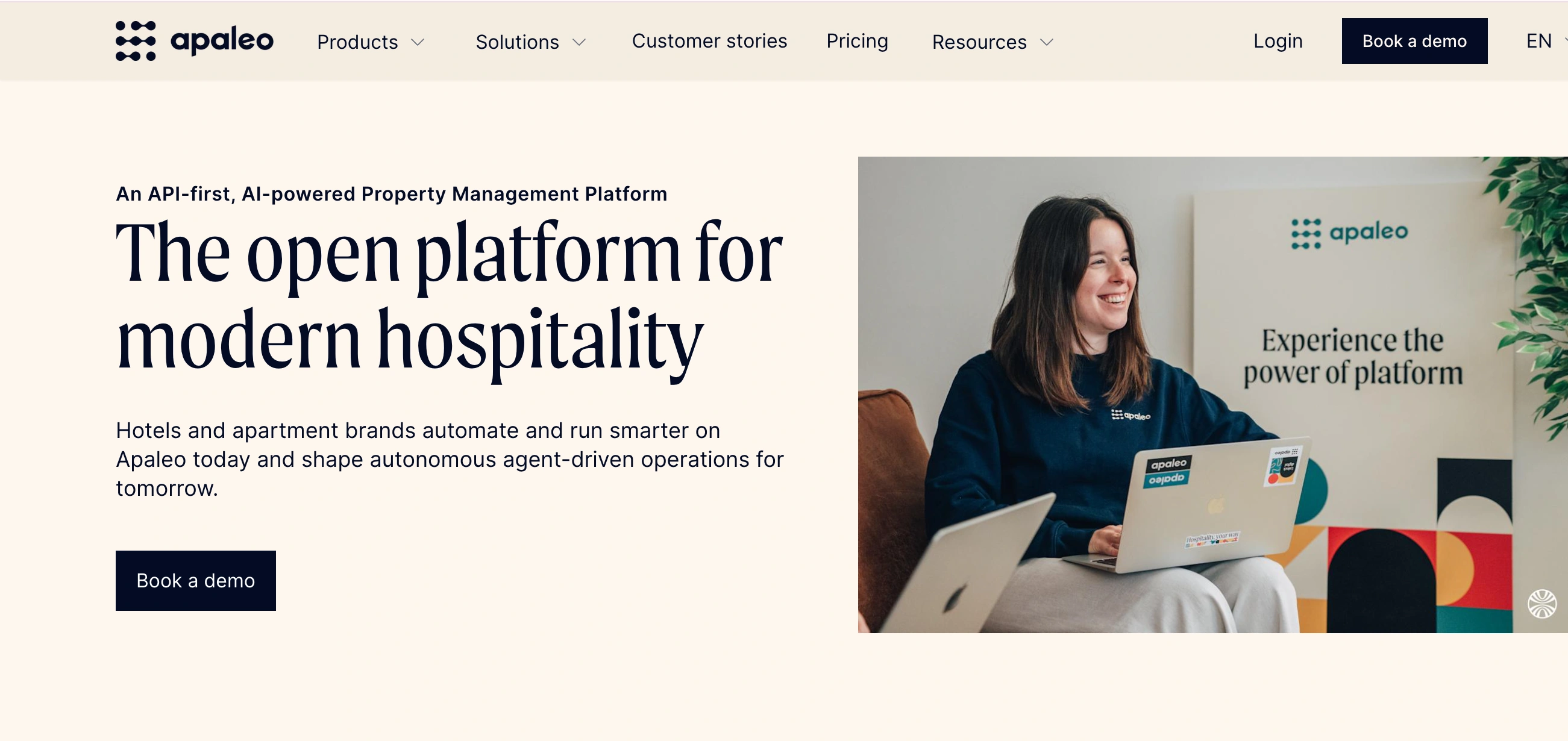
Apaleo is an open, API-first PMS with a 200-plus app marketplace, and tech-forward teams rate its developer experience highly. But its open model asks something of you, and a few recurring reasons push operators to compare options:
- It expects a tech resource: Apaleo ships the PMS core plus an open API, then leaves you to assemble the channel manager, booking engine and other pieces from the marketplace. Properties without an in-house developer or a technology partner spend real time stitching a stack together.
- The stack cost adds up: the core PMS starts near a low per-room rate, but each marketplace app carries its own fee, so the all-in monthly total can climb past a bundled all-in-one.
- A learning curve on the interface: review sites note the clean, modern UI still takes front-desk staff some retraining, which slows onboarding for a lean team.
- Regional and support fit: Apaleo is strongest in German-speaking Europe, and its self-serve model means fewer always-on human support desks than operators outside that core market often want.
What hoteliers say: Across Hotel Tech Report, G2 and Capterra, reviewers praise Apaleo's open API and app-store flexibility, with one developer calling it one of the cleanest PMS APIs in the category. The consistent caveat is that it needs a tech-savvy team or a technology partner and marketplace integrations to feel complete, and CB Insights peers Apaleo with Mews and Shiji, both platform plays rather than ready-to-run all-in-ones. Operators who lack a developer tend to shortlist a more complete out-of-the-box PMS instead.
If any of those sound familiar, the six alternatives below map to the switch reasons operators cite most.
Comparing the 6 best Apaleo alternatives
Pricing models below reflect each vendor's published or commonly cited entry point as of July 2026. Ratings are from Capterra and G2 with review counts, since sample size matters when a score looks high.
| PMS |
Best for |
Pricing model |
Property/segment fit |
Standout capability |
| roommaster |
All-in-one without a tech team |
Custom quote (contact sales) |
Independent, boutique, mid-size, groups |
Complete PMS + commission-free booking engine + 24/7 phone support |
| RoomRaccoon |
Small independents wanting automation |
From ~$3.99 per room/month, tiered (Capterra 4.2, 72 reviews) |
Small hotels and B&Bs (strong in Europe) |
Built-in dynamic pricing and upselling |
| Little Hotelier |
Very small properties on a budget |
From ~$109/month (Capterra 4.0, 220 reviews) |
B&Bs, inns, guesthouses under ~20 rooms |
Simple, fast setup from SiteMinder |
| Cloudbeds |
All-in-one OTA distribution |
From ~$15 per room/month, per-property minimums |
Independent and boutique hotels |
PMS + channel manager + booking engine + payments in one bill |
| Mews |
Open, automation-first stack |
From ~$200/month, scales by rooms/features |
Tech-forward independents and mid-size |
API-first automation and open marketplace |
| Stayntouch |
Mobile-first guest self-service |
Custom quote (Capterra 4.6, 85 reviews) |
Boutique and mid-size, select-service |
Contactless check-in and mobile front desk |
A pricing model tells you more than a single number here. Apaleo and Mews both start low on the PMS core, then add marketplace or module fees on top, while roommaster and Stayntouch quote per property and RoomRaccoon and Little Hotelier publish transparent entry rates. A low sticker rate rarely stays low once you add a channel manager, booking engine and payments.
A worked cost example: what the booking engine saves
Software price is only half the math. The bigger line item for an independent hotel is OTA commission. Take a 40-room property at 72% occupancy, a $150 average daily rate and 35% of nights booked through OTAs at a 15% commission:
- Monthly OTA revenue routed through commissions: 40 rooms x 0.72 x 30 nights x $150 x 0.35 = roughly $45,360.
- OTA commission at 15%: about $6,800 per month.
Shifting even a fifth of those bookings to a commission-free booking engine saves close to $1,360 a month, which usually dwarfs the PMS subscription itself. With Apaleo you would source and pay for a booking-engine app from the marketplace to get there, so a native direct-booking channel, not just a low per-room core rate, should anchor your comparison.
How we chose these Apaleo alternatives
This list is built for independent, boutique and mid-size operators evaluating an Apaleo replacement, whether or not they have a developer on staff. Four criteria shaped it:
- Fit for independents and mid-size: every tool serves owner-operated and growing properties, the tech-forward independent segment Apaleo itself targets. For a deeper roundup, see the best software for independent hotels.
- All-in-one depth vs open platform: we weighed how much ships ready to run against how much you assemble yourself, since the assembly tax is a common Apaleo switch reason.
- Transparent evaluation: pricing models and public Capterra or G2 ratings with review counts, not marketing claims.
- Migration realism: onboarding, data export and support hours, because a switch fails on implementation more often than on features.
Top 6 Apaleo alternatives
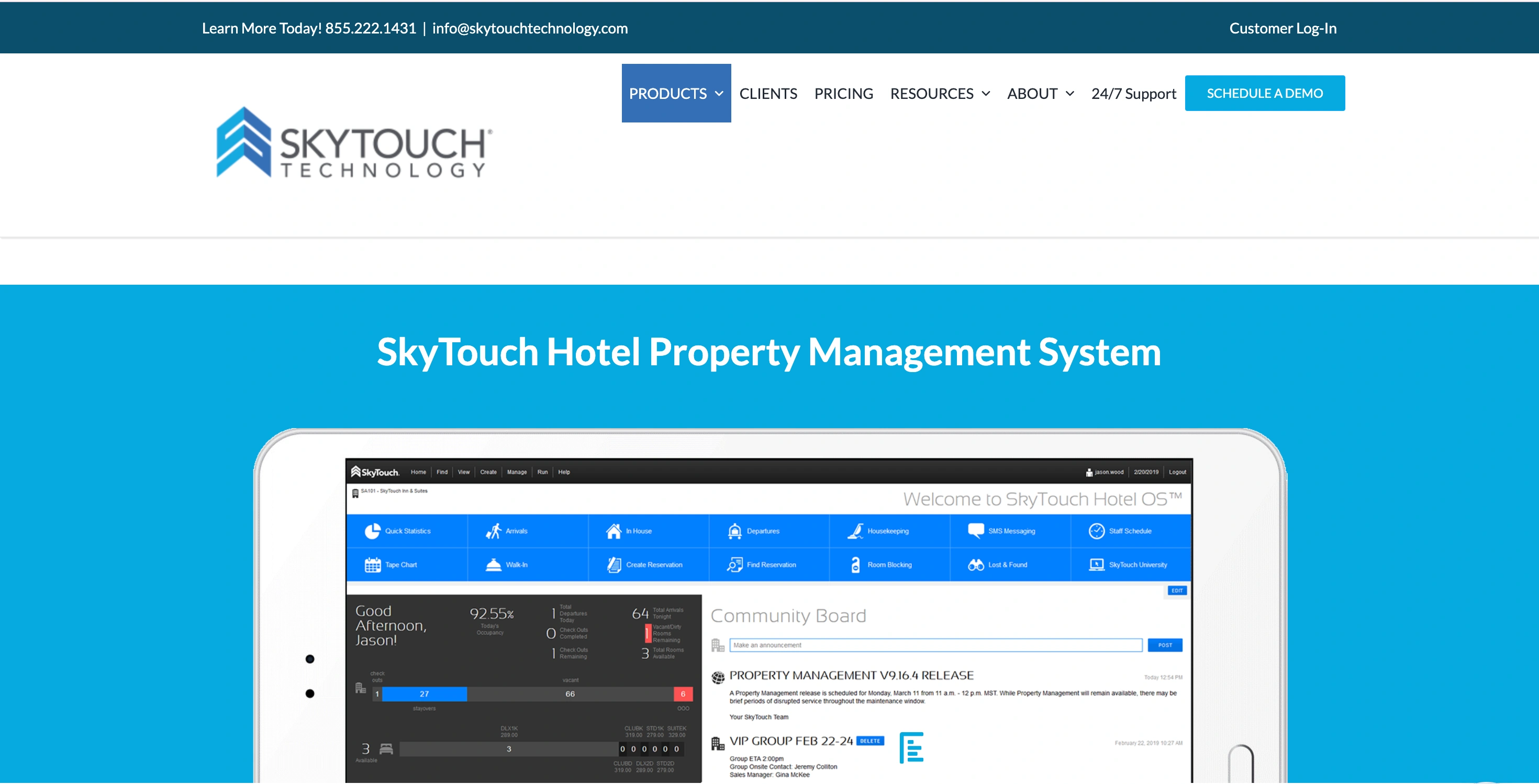
1. roommaster (best all-in-one PMS that runs without a tech team)
Best for: independent, boutique and mid-size hotels that want front desk, distribution and guest tools working on day one, with no developer to assemble the stack.
roommaster (formerly innQuest) is a cloud hotel property management system that ships the pieces Apaleo leaves you to source from a marketplace. It pairs core front-desk and reservation workflows with a commission-free booking engine, a channel manager that syncs rates across hundreds of OTAs, built-in revenue management, AI guest tools and a guest app, all from one vendor. roommaster has run hotel software for more than 25 years and supports properties from offices in the US, Canada, UK and Australia.
Key features
- Front desk, reservations, housekeeping and night audit in one cloud PMS, so the whole operation runs off a single system of record instead of a self-assembled toolchain
- Channel manager with real-time OTA sync across Booking.com, Expedia, Airbnb, Vrbo and Agoda, so peak-night inventory stays accurate without a separate distribution app
- Commission-free booking engine that turns your own website into a zero-fee reservation channel, included rather than bought from a store
- Built-in revenue management that adjusts rates automatically off demand and occupancy, so you capture yield without adding a standalone RMS
- AI concierge, AI guest management and a hotel guest app with mobile check-in and digital keys, the guest-facing layer Apaleo users usually source from third parties
- Integrated PCI-compliant, multi-currency payments plus a marketplace of 100-plus integrations for accounting, POS and door locks
{{pms-two}}
Pros
- Everything an operator needs ships in one platform and works out of the box, which removes the developer time, marketplace fees and vendor finger-pointing that a self-assembled Apaleo stack can carry.
- 24/7 expert support by phone, chat and email, staffed from offices in the US, Canada, UK and Australia, means a front desk locked out at 2am reaches a person, not a docs page or a forum.
- The commission-free direct-booking engine goes after OTA commission, the single biggest cost line for most independents, so the platform can pay for itself in shifted bookings.
Cons
- roommaster is less of an open-platform, API-marketplace play than Apaleo, so a team that specifically wants to build against a public API and hand-pick every best-of-breed component may prefer Apaleo or Mews.
- Pricing is quote-based rather than published, so you need a short sales conversation to benchmark it against transparently priced rivals like RoomRaccoon or Little Hotelier.
- As a long-established platform with broad modules, some back-office screens are denser than a stripped-back mobile-first rival, so staff used to a minimalist app face a short learning curve.
Verdict: the strongest fit if you want the completeness Apaleo promises without hiring a developer to reach it.
{{pms-three}}
2. RoomRaccoon (best for small independents that want automation out of the box)
Best for: small independent hotels and B&Bs that want revenue uplift and automation without building anything.
RoomRaccoon is an automation-led all-in-one PMS with a built-in booking engine, channel manager, dynamic pricing and upselling. It has strong traction in Europe and rates 4.2 on Capterra across 72 reviews as of July 2026. Where Apaleo hands you an API, it hands you a working bundle.
Key features
- All-in-one PMS with a channel manager and commission-free booking engine included, so a lean team is not sourcing distribution from a store
- RaccoonRev dynamic pricing that moves rates automatically with demand, giving small properties yield they would otherwise leave on the table
- Automated upselling of upgrades and add-ons at and after booking, which lifts revenue per reservation without staff effort
- Contactless online check-in, digital registration and integrated payments for guests who want to self-serve
- Housekeeping and reporting tools sized for small teams rather than enterprise finance departments
Pros
- Native upselling and dynamic pricing help a small property lift revenue per booking automatically, capturing yield most owner-run hotels miss without a separate revenue manager or an assembled RMS app.
- The all-in-one bundle keeps PMS, distribution and payments on one bill, matching the single-vendor simplicity Apaleo switchers who lack a developer are usually chasing.
- Automation of online check-in and payments suits lean teams that cannot staff a 24-hour desk, letting guests self-serve while the owner sleeps.
Cons
- Feature depth is tuned for small properties, so a larger hotel or a multi-property group can find the ceilings on inventory and reporting restrictive.
- Support responsiveness and integration breadth are stronger in its European core markets, so a North American property may see fewer local partners.
- Advanced users occasionally report a learning curve on the automation rules. Compare RoomRaccoon alternatives if you operate outside Europe or expect to scale.
Verdict: a smart choice for a small property chasing revenue uplift with minimal staff overhead and no code.
3. Little Hotelier (best for very small properties on a tight budget)
Best for: B&Bs, inns and guesthouses under about 20 rooms that want a simple, low-cost system with fast setup.
Little Hotelier is a lightweight cloud PMS from SiteMinder built for the smallest independents. It bundles a front desk, booking engine and channel manager at a transparent entry price and rates 4.0 on Capterra across 220 reviews as of July 2026, sitting at the opposite end of the spectrum from Apaleo's build-it-yourself model.
Key features
- Simple front desk, calendar and reservation management designed for a one-or-two-person team
- Built-in booking engine and website tools to take commission-free direct reservations
- SiteMinder channel manager connectivity, so OTA inventory stays in sync without a separate contract
- Mobile app for managing bookings and rates from a phone
- Guest communication and basic reporting scoped to a small property
Pros
- Setup is fast and the interface is deliberately simple, so a non-technical owner is live quickly without the developer resource Apaleo assumes.
- Transparent entry pricing near $109 per month makes budgeting predictable, unlike a marketplace stack where costs accrue app by app.
- SiteMinder's distribution heritage gives a very small property solid OTA reach for its size.
Cons
- The feature set is capped for small properties, so a growing hotel or a multi-property operator will outgrow it and need to migrate again. See Little Hotelier alternatives if you expect to scale.
- Reviewers note that support and billing can feel impersonal at times, a common theme for a high-volume, low-touch product.
- Reporting and revenue tools are basic next to a dedicated RMS or an all-in-one like roommaster, so yield management stays largely manual.
Verdict: a sensible pick for the smallest budget-led properties that value simplicity over depth.
4. Cloudbeds (best for all-in-one OTA distribution)
Best for: independent and boutique hotels that want PMS, channel manager, booking engine and payments on a single bill.
Cloudbeds is an award-winning hospitality platform that consolidates the distribution stack, so inventory, rates and payments live in one subscription. It rates well for user-friendliness among independent properties and reads as the bundled counterpoint to an open platform.
Key features
- Unified PMS, Cloudbeds channel manager and booking engine under one login, no marketplace assembly required
- Cloudbeds Payments built in, so card processing lives inside the same platform
- Broad OTA and metasearch connectivity through the Cloudbeds marketplace
- Insights reporting and a revenue-management add-on across the stack
- Marketplace of 300-plus third-party app integrations for teams that do want to extend
Pros
- Combining PMS, channel manager, booking engine and payments in one platform removes the integration headaches and double data entry that push hoteliers off fragmented or self-assembled tools in the first place.
- Its wide OTA and metasearch reach helps a small property fill rooms without negotiating and syncing separate distribution contracts channel by channel.
- The interface scores well for user-friendliness among independent properties, so onboarding a non-technical front desk is usually quick.
Cons
- Pricing rises as you add rooms and modules, so the headline entry rate can climb quickly for a growing property, a point reviewers raise often when comparing renewal quotes.
- Some advanced reporting and deep customization feel constrained next to specialist tools, so revenue managers who want granular control can hit a ceiling.
- Support response times draw mixed feedback at busy periods, which matters when a distribution error needs fixing fast. Weigh other Cloudbeds alternatives before committing.
Verdict: a safe all-in-one default for independents who value one vendor and one invoice over an open, best-of-breed build.
5. Mews (best for teams that actually want the open, automation-first model)
Best for: tech-forward independent and mid-size hotels that want automation and an open marketplace, and have the appetite to manage it.
Mews is an API-first, mobile-first PMS with one of the largest integration marketplaces in hotel tech, the closest philosophical match to Apaleo on this list. CB Insights names Mews among Apaleo's primary peers, so if you are leaving Apaleo but still want an open platform, Mews is the natural cross-shop.
Key features
- Mobile-first PMS that automates check-in, housekeeping updates and night audit
- Open API and one of the largest third-party marketplaces in hotel tech, with 300-plus integrations
- Mews Payments with automated billing and guest self-service check-in or kiosk
- Revenue-management and analytics tooling built into the platform
- Multi-property support for operators running several locations from one account
Pros
- Heavy automation of routine front-desk work, from auto-assigned rooms to automated invoicing, frees a lean team to spend time on guests instead of data entry.
- The open marketplace lets a property assemble a best-of-breed stack, which suits operators who genuinely want the flexibility Apaleo offers but with a larger app ecosystem.
- The modern, clean interface earns high ease-of-use scores from independent properties, so tech-comfortable teams ramp fast.
Cons
- Premium pricing plus a learning curve on advanced workflows can be steep for a very small independent, and the total climbs as you add marketplace apps that each carry their own fee, the same assembly cost that pushes some teams off Apaleo.
- The best-of-breed model means you may manage several vendors and invoices rather than one, the opposite of the single-bill simplicity many switchers want.
- Phone support is more limited than the always-on desks some rivals staff, so urgent overnight issues can lean on email or chat. Review other Mews alternatives if budget predictability matters.
Verdict: the pick when you want the open-platform model Apaleo promised, just with a bigger marketplace and a more polished interface.
6. Stayntouch (best for mobile-first guest self-service)
Best for: boutique and mid-size hotels that prioritize contactless check-in and a modern, mobile front desk.
Stayntouch is a cloud PMS built around guest self-service and a mobile-first staff interface, now part of the Shiji Group. It rates 4.6 on Capterra across 85 reviews and 4.4 on G2 across 67 reviews as of July 2026. Where Apaleo leans on you to build the guest layer, Stayntouch ships a polished one.
Key features
- Mobile-first PMS that staff can run from a tablet anywhere on property, not just a front-desk terminal
- Guest-facing contactless check-in, checkout and digital registration out of the box
- Two-way OTA connectivity and integrations across the Shiji ecosystem
- Automated housekeeping and room-status updates for a mobile team
- Reporting and rate tools scoped to boutique and select-service operations
Pros
- Contactless check-in and a mobile front desk suit properties that want to modernize the arrival experience without an assembled guest-app stack.
- The interface earns high satisfaction scores, so staff adopt it quickly and guests get a current, app-like experience.
- Backing from the Shiji Group gives it enterprise-grade infrastructure and a route to scale for a growing operator.
Cons
- Pricing is quote-based and positioned above the smallest budget tools, so it may overshoot a very small B&B.
- The mobile-first design centers on the guest journey, so operators wanting deep back-office or group-block tooling can find it lighter than an all-in-one. Compare Stayntouch alternatives if you need heavier operations tools.
- As part of a larger group, support and roadmap priorities can feel less personal than with a specialist vendor.
Verdict: a strong choice for a boutique or mid-size property that puts guest self-service first.
{{pms-one}}
How to choose between Apaleo and these alternatives
Use the switch reason, not the feature list, to narrow the field. The core Apaleo question is whether you want to build a stack or run one. Borrow the questions any good PMS demo should answer:
- Do you have a developer or technology partner? If yes, Mews keeps the open-platform model with a bigger marketplace. If no, roommaster, Cloudbeds, RoomRaccoon and Little Hotelier ship ready to run.
- Is the channel manager and booking engine included, or sourced from a store? All-in-one billing favors roommaster, Cloudbeds and RoomRaccoon over an assembled Apaleo stack.
- How important is guest self-service? Stayntouch leads on mobile check-in; roommaster covers it with AI guest tools and a guest app inside the all-in-one.
- Is budget the deciding factor? Little Hotelier and RoomRaccoon publish transparent, lower entry pricing; check what add-ons the quote assumes.
Match against property size too: under 20 rooms leans to Little Hotelier or RoomRaccoon; 20 to 150 rooms suits roommaster, Cloudbeds, Mews or Stayntouch; a team that wants a pure open platform stays with Mews.
Why roommaster is a strong Apaleo alternative
For teams leaving Apaleo specifically, roommaster closes the exact gap that triggers the switch: Apaleo gives you an open core and expects you to build the rest, while roommaster ships the whole system ready to run. The pieces Apaleo users source from a marketplace are already included:
- A commission-free booking engine and a channel manager come with the platform, so you are not buying and wiring distribution apps to get direct bookings and OTA sync.
- Built-in revenue management adjusts rates off demand and occupancy without adding a standalone RMS from a store.
- AI concierge, AI guest management and a guest app deliver the mobile, guest-facing layer Apaleo teams typically assemble themselves.
- 24/7 phone, chat and email support from four regions covers the overnight emergencies a self-serve model leaves to docs and forums, and one invoice replaces the marketplace's per-app fees.
That said, be honest about the trade. If your team specifically wants an open API and the freedom to hand-pick every best-of-breed component, Apaleo or Mews genuinely serve that better, and roommaster is the more opinionated all-in-one by design. roommaster's pricing is also quote-based, so it takes a sales conversation to benchmark. For most independent and mid-size operators who want Apaleo's completeness without hiring a developer to reach it, though, one platform that already includes distribution, revenue and guest tools is the practical win. The side-by-side roommaster vs Stayntouch breakdown helps if a mobile-first PMS is also on your shortlist. Note that Apaleo has no dedicated roommaster comparison page, so bring your Apaleo stack costs to a demo to compare like for like.
See how roommaster handles your front desk, distribution and guest tools in one platform. Book a demo and bring your current Apaleo marketplace costs to compare like for like.
Bottom line
Apaleo is a genuinely open, API-first PMS, and for a team with a developer it offers flexibility no all-in-one can match. But if the marketplace assembly, the per-app costs or the lack of an always-on support desk are pushing you to compare, the six alternatives here cover every switch reason. For the smallest budget-led properties, Little Hotelier and RoomRaccoon compete on price and simplicity. For teams that still want an open platform, Mews is the natural cross-shop. For an independent or mid-size operator who wants Apaleo's completeness without building it, roommaster is the most complete ready-to-run fit. Shortlist two, run demos with your own occupancy and OTA numbers, and let total cost, not the sticker price, decide.
{{cta-strip}}
FAQs
What is the best Apaleo alternative for independent and mid-size hotels?
For an operator who wants Apaleo's completeness without a developer, roommaster ships front desk, channel manager, commission-free booking engine, revenue management and 24/7 support in one platform. Teams set on an open platform tend to prefer Mews.
How does roommaster compare to Apaleo?
Apaleo gives you an open API and a 200-plus app marketplace to assemble a stack, which needs a tech resource. roommaster includes distribution, revenue management, AI guest tools and 24/7 phone support out of the box, so it runs without a developer.
Is there a cheaper alternative to Apaleo?
Apaleo's core PMS starts near a low per-room rate, but marketplace apps add cost. Little Hotelier (from about $109 per month) and RoomRaccoon (from about $3.99 per room per month) publish transparent, lower all-in entry pricing. Always confirm which apps a quote includes.
Which Apaleo alternative keeps the open, API-first model?
Mews is the closest match. CB Insights peers Apaleo with Mews, and Mews offers an open API and one of the largest marketplaces in hotel tech, so a team leaving Apaleo but wanting best-of-breed flexibility usually cross-shops it.
What is the best Apaleo alternative if I do not have a developer?
roommaster, Cloudbeds, RoomRaccoon and Little Hotelier ship as working all-in-one systems that need no code. roommaster suits operators who want the fullest feature set and 24/7 support without assembling a stack from a marketplace.
What features should I look for in Apaleo competitors?
Prioritize an included channel manager and booking engine, transparent or clearly quoted pricing, built-in revenue and guest tools, real support hours, and clear data-export terms, so you get a complete system rather than a set of parts to wire together.

.png)
.png)
.png)