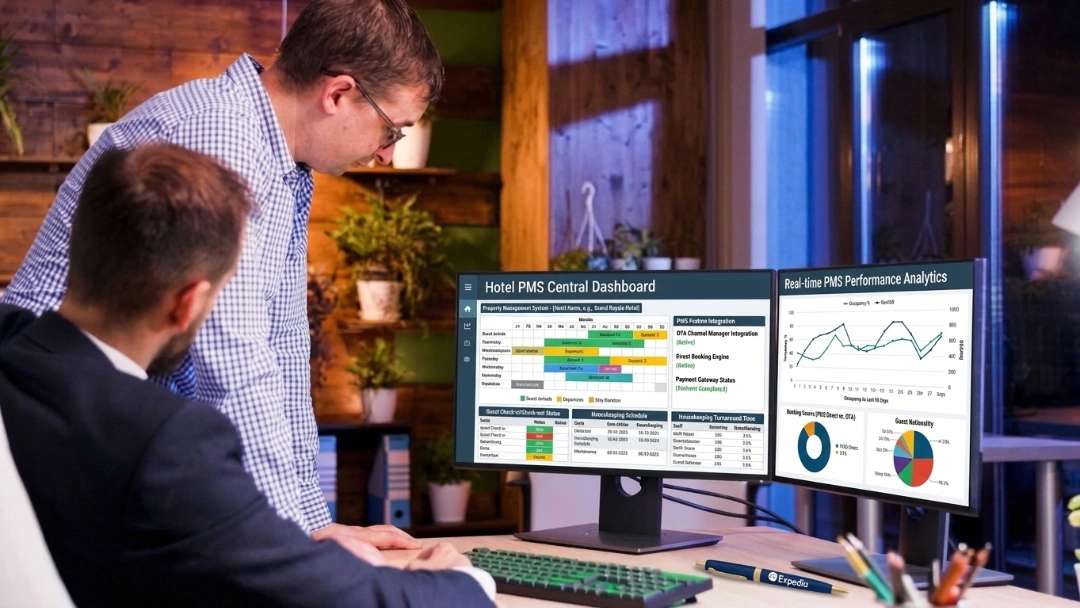
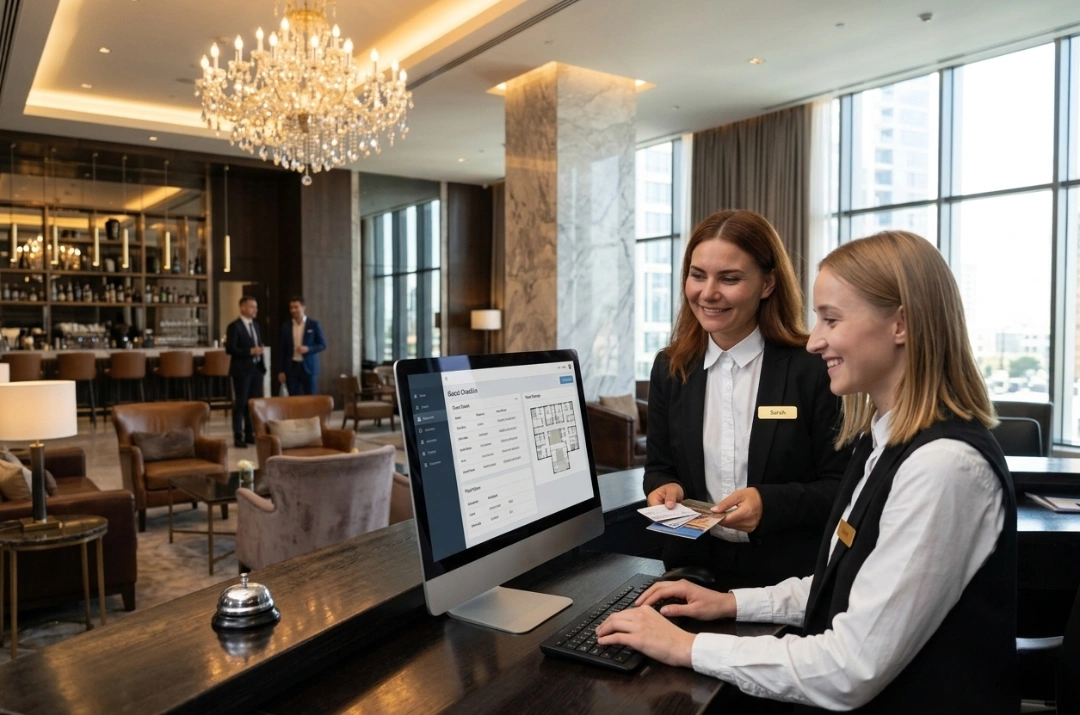
Looking for a Clarity PMS alternative? Here are six cloud hotel PMS platforms worth comparing for the Asia-Pacific market: 1. roommaster, 2. RMS Cloud, 3. SiteMinder, 4. Cloudbeds, 5. Mews and 6. Little Hotelier.
Each one fixes a different gap that Clarity Hospitality Software leaves open, from cloud-native front desk to modern guest apps and OTA distribution built for APAC hotels.
This guide sorts them by all-in-one depth, pricing model, property fit and support hours across Australia, New Zealand and wider APAC.
Why hotels look for Clarity PMS alternatives
Clarity Hospitality Software Solutions has run hotel and motel front desks across Australia and New Zealand for a long time, and that longevity is a real strength. But a few recurring frustrations push APAC teams to compare options before their next renewal:
- Legacy, on-site deployments: many Clarity installs are older, server-based setups, so remote access, automatic updates and multi-site visibility feel harder than they do on a cloud-native PMS.
- Thin guest-facing and mobile tools: front desks that want mobile check-in, digital keys or an AI concierge often find these need third-party add-ons rather than native features.
- Distribution gaps: operators adding OTAs or a direct-booking push want a channel manager and booking engine included, not stitched in from separate vendors.
- Scaling into groups: an independent that adds a second property or hosts more group and event business needs central reservations and cross-property reporting that a single-site legacy setup was never built to deliver.
If any of those sound familiar, the six alternatives below map to the switch reasons APAC hoteliers cite most.
Comparing the 6 best Clarity PMS alternatives
Pricing models below reflect each vendor's published or commonly cited entry point as of July 2026, and figures shift with room count, region and currency. Treat them as models, not quotes. APAC buyers should confirm local pricing and support hours directly.
| PMS |
Best for |
Pricing model |
Property/segment fit |
Standout capability |
| roommaster |
APAC independents scaling into groups |
Custom quote (contact sales) |
Independent hotels, groups, motels, resorts |
Commission-free booking engine + AI guest tools + 24/7 support |
| RMS Cloud |
Large ANZ portfolios and parks |
Custom quote, scales by rooms/modules |
Hotels, parks, multi-property groups (strong ANZ) |
Cloud PMS with deep portfolio and park management |
| SiteMinder |
OTA distribution across APAC |
From ~$65-95/month per property |
Any property size, distribution-led |
Channel manager and booking engine reach |
| Cloudbeds |
All-in-one distribution |
From ~$15 per room/month, per-property minimums |
Independent and boutique hotels |
PMS + channel manager + booking engine + payments in one bill |
| Mews |
Modern automation |
From ~$200/month, scales by rooms/features |
Tech-forward independents and mid-size |
API-first automation and open marketplace |
| Little Hotelier |
Very small APAC properties |
From ~$60-150/month by room count |
B&Bs, inns, small hotels under 20 rooms |
Simple all-in-one for micro properties |
A pricing model tells you more than a single number here. Clarity and roommaster both quote per property, Cloudbeds scales with room count, SiteMinder and Little Hotelier price by tier and property size, and Mews layers premium modules, so a low sticker rate rarely stays low once you add a channel manager and booking engine.
A worked cost example: what the booking engine saves
Software price is only half the math. The bigger line item for an APAC independent is OTA commission. Take a 40-room property at 75% occupancy, a $180 average daily rate and 40% of nights booked through OTAs at a 15% commission:
- Monthly OTA revenue routed through commissions: 40 rooms x 0.75 x 30 nights x $180 x 0.40 = roughly $64,800.
- OTA commission at 15%: about $9,720 per month.
Shifting even a fifth of those bookings to a commission-free booking engine saves close to $1,940 a month, which usually dwarfs the PMS subscription itself. That is why a native direct-booking channel, not just a low monthly rate, should anchor your comparison, especially in high-OTA-dependency APAC leisure markets.
How we chose these Clarity PMS alternatives
This list is built for APAC independent hotels and hotel groups evaluating a Clarity replacement, not for global enterprise chains. Four criteria shaped it:
- APAC fit: every tool serves Australia, New Zealand or wider Asia-Pacific properties with local OTA connectivity, currency and support hours that match the region.
- All-in-one depth: priority went to systems that combine PMS, channel manager and booking engine, since fragmented tools are a common switch reason. For groups, weigh a purpose-built PMS for hotel groups.
- Transparent evaluation: pricing models and public review scores where available, not marketing claims.
- Migration realism: onboarding, data export and support hours, because a switch off a legacy system fails on implementation more often than on features.
Top 6 Clarity PMS alternatives
1. roommaster (best all-in-one for APAC independents scaling into groups)
Best for: APAC independent hotels and hotel groups moving off a legacy Clarity install that want a front desk, distribution and guest tools in one cloud platform.
roommaster (formerly innQuest) is a cloud hotel property management system that pairs core front-desk and reservation workflows with a commission-free booking engine, a channel manager that syncs rates across hundreds of OTAs, built-in revenue management, AI guest tools and a guest app. roommaster has run hotel software for more than 25 years and supports properties from offices in the US, Canada, UK and Australia, which gives APAC operators a local presence and business-hours overlap.
Key features
- Front desk, reservations, housekeeping, night audit, POS and folios in one cloud PMS, so a legacy on-site operation runs off a single system of record with remote access
- Channel manager with real-time OTA sync across Booking.com, Expedia, Airbnb, Vrbo and Agoda to cut overbooking risk across APAC channels
- Commission-free booking engine that turns your own website into a zero-fee reservation channel, valuable in high-OTA leisure markets
- Built-in revenue management that adjusts rates automatically off demand and occupancy, without a bolted-on third-party tool
- AI concierge, AI guest management and a hotel guest app with mobile check-in and digital keys, the guest-facing layer legacy systems often lack
- Multi-property reporting and group and block-booking tools for operators running more than one location or hosting events
- Integrated PCI-compliant, multi-currency payments and a marketplace of 100+ integrations (accounting, POS, door locks)
{{pms-one}}
Pros
- One platform covers PMS, distribution, revenue and guest apps, which removes the data-sync errors and finger-pointing that come from stitching a legacy PMS to separate channel and booking tools.
- 24/7 support by phone, chat and email, with an Australian office in the mix, means an APAC front desk locked out overnight reaches a human rather than waiting for a distant time zone to wake up.
- The commission-free direct-booking engine goes after OTA commission, the single biggest cost line for most independents, so the platform can pay for itself in shifted bookings rather than just shaving a subscription.
- Cloud-native delivery replaces server-based Clarity deployments with automatic updates and multi-site visibility, so an owner can check any property from a phone.
Cons
- Pricing is quote-based rather than published, so you need a short sales conversation to benchmark it against transparently priced rivals like SiteMinder or Little Hotelier.
- The breadth of modules means a very small B&B using only front desk and a booking engine may pay for depth it will grow into rather than use on day one.
- As a long-established platform, some back-office screens are denser than a stripped-back mobile-first rival, so staff used to a minimalist app face a short learning curve.
Verdict: the strongest fit if you want one cloud system to carry an APAC property from a legacy front desk to group bookings and multi-property reporting.
2. RMS Cloud (best for large ANZ portfolios and parks)
Best for: Australian and New Zealand hotels, holiday parks and multi-property groups that want a locally rooted cloud PMS with portfolio depth.
RMS Cloud is an Australian-founded, cloud-based PMS with a long history in the ANZ market and particular strength in parks, resorts and larger portfolios. It is one of the most-cited Clarity alternatives for operators who want a homegrown APAC vendor.
Key features
- Cloud PMS with front desk, reservations, housekeeping and reporting across single and multi-property setups
- Strong holiday-park and campground management, including sites, cabins and long-stay inventory
- Built-in channel management and a booking engine for direct and OTA distribution
- Revenue and rate management tools for demand-based pricing
- Enterprise reporting suited to portfolios and central reservations
Pros
- Deep ANZ roots mean local support hours, local OTA and payment connections, and a product shaped by APAC property types like parks and long-stay resorts.
- Portfolio and multi-property tooling scales well, so a group adding locations is not forced onto a heavier enterprise system later.
- Park and campground handling is genuinely strong, covering unit types many hotel-first PMSs treat as an afterthought.
Cons
- The breadth and configurability can feel heavy for a small independent hotel that only needs a simple front desk and booking engine.
- Setup and onboarding on a large portfolio take time and planning, so migration is a project rather than a quick swap.
- Pricing is quote-based and scales with rooms and modules, so budgeting takes a sales conversation. Weigh other rms cloud alternatives if you run a small single site.
Verdict: a strong local pick for ANZ parks, resorts and multi-property groups that want depth over simplicity.
3. SiteMinder (best for OTA distribution across APAC)
Best for: APAC properties of any size whose priority is wide, reliable OTA connectivity and a direct booking engine.
SiteMinder is a Sydney-founded platform best known for its channel manager and booking engine, and it is a near-default for distribution across the Asia-Pacific region. It is less a full front-desk PMS and more the distribution layer many hotels run alongside their PMS.
Key features
- Channel manager with broad OTA and GDS connectivity across APAC and global channels
- Direct booking engine for commission-free website reservations
- Metasearch and demand-generation tools to widen reach
- Insights and reporting on channel performance and rates
- Wide integration ecosystem with most major PMS platforms
Pros
- Distribution reach and channel reliability are its core strength, so an APAC property can connect to the OTAs its market depends on with fewer sync errors.
- As a regional heavyweight, it carries local OTA relationships and support that global-first vendors sometimes lack.
- It integrates with most PMS platforms, so a hotel can adopt it without ripping out an existing front desk.
Cons
- It is a distribution platform, not a full PMS, so a hotel replacing Clarity outright still needs a separate front-desk system.
- Costs add up once you layer channel manager, booking engine and demand tools, so the entry rate understates the full stack.
- Running distribution and PMS as separate vendors reintroduces the integration overhead many switchers want to remove. See other siteminder alternatives if you want distribution bundled into the PMS.
Verdict: the pick when distribution is the priority and you are content to pair it with a separate PMS.
4. Cloudbeds (best for all-in-one OTA distribution)
Best for: independent and boutique hotels that want PMS, channel manager, booking engine and payments on a single bill.
Cloudbeds is a hospitality platform that consolidates the distribution stack, so inventory, rates and payments live in one subscription. It rates well for user-friendliness among independent properties and appears on nearly every Clarity-alternatives directory, including APAC roundups.
Key features
- Unified PMS, channel manager and booking engine under one login
- Cloudbeds Payments built in, so card processing lives inside the same platform
- Broad OTA and metasearch connectivity across global and APAC channels
- Insights reporting and a revenue-management add-on across the stack
- Marketplace of hundreds of third-party app integrations
Pros
- Combining PMS, channel manager, booking engine and payments in one platform removes the double data entry that pushes hoteliers off fragmented legacy tools in the first place.
- Its wide OTA and metasearch reach helps a small APAC property fill rooms without negotiating separate distribution contracts channel by channel.
- The interface scores well for user-friendliness among independent properties, so onboarding a non-technical front desk is usually quick.
Cons
- Pricing rises as you add rooms and modules, so the headline entry rate can climb quickly for a growing property, a point reviewers raise often at renewal.
- Some advanced reporting and deep customization feel constrained next to specialist tools, so revenue managers who want granular control can hit a ceiling.
- Support response times draw mixed feedback at busy periods, which matters across APAC time zones when a distribution error needs fixing fast. Weigh other cloudbeds alternatives before committing.
Verdict: a safe all-in-one default for independents who value one vendor and one invoice over best-of-breed depth.
{{pms-four}}
5. Mews (best for a modern, automation-first interface)
Best for: tech-forward independent and mid-size APAC hotels that prioritize automation and integrations.
Mews is an API-first, mobile-first PMS known for a clean interface and an extensive integration marketplace. Independent properties rate its ease of use highly, and it is one of the most-cited modern alternatives in hotel-tech coverage.
Key features
- Mobile-first PMS that automates check-in, housekeeping updates and night audit
- Open API and one of the largest third-party marketplaces in hotel tech
- Mews Payments with automated billing and guest self-service check-in or kiosk
- Revenue-management and analytics tooling built into the platform
- Multi-property support for operators running several locations from one account
Pros
- Heavy automation of routine front-desk work, from auto-assigned rooms to automated invoicing, frees a lean team to spend time on guests instead of data entry.
- The open marketplace lets a property assemble a best-of-breed stack, which suits operators who already run preferred tools for payments, upselling or messaging.
- The modern, clean interface earns high ease-of-use scores from independent properties, so tech-comfortable teams ramp fast.
Cons
- Premium pricing plus a learning curve on advanced workflows can be steep for a very small independent, and the total climbs as you add marketplace apps that each carry their own fee.
- The best-of-breed model means you may manage several vendors and invoices rather than one, the opposite of the single-bill simplicity many Clarity switchers want.
- Phone support is more limited than the always-on desks some rivals staff, so urgent overnight issues in APAC can lean on email or chat. Review other mews alternatives if budget predictability matters.
Verdict: the pick when a modern interface and automation outrank a single-vendor bill.
6. Little Hotelier (best for very small APAC properties)
Best for: B&Bs, inns and small hotels under about 20 rooms that want an affordable, simple all-in-one.
Little Hotelier is a lightweight PMS from SiteMinder aimed squarely at very small properties, with a booking engine and channel manager bundled in. It is a common entry-level pick across APAC micro-hotels and guesthouses.
Key features
- Simple cloud PMS with front desk, calendar and reservation management
- Built-in booking engine for commission-free direct reservations
- Channel manager drawing on SiteMinder's OTA connectivity
- Mobile app for managing a small property on the go
- Payment handling suited to owner-operators
Pros
- Low entry pricing and a simple interface make it easy for an owner-run B&B to replace a legacy system without a steep learning curve.
- The bundled booking engine and channel manager give a micro-property real distribution without a separate contract.
- SiteMinder's channel connectivity underneath means solid OTA reach despite the small footprint.
Cons
- It is deliberately scoped for tiny properties, so a hotel above roughly 20 rooms or one adding a second location will outgrow it quickly.
- Reporting and configuration are basic next to a full PMS, so revenue-focused operators can hit limits.
- Advanced group, event and multi-property needs are not its brief. Weigh other little hotelier alternatives if you expect to grow.
Verdict: a sensible, affordable choice for a very small APAC property that values simplicity over depth.
How to choose between Clarity and these alternatives
Use the switch reason, not the feature list, to narrow the field. Borrow the questions any good PMS demo should answer:
- Is the channel manager and booking engine included, or an add-on? All-in-one billing favors roommaster and Cloudbeds; SiteMinder and Little Hotelier lean distribution-first.
- Do you need group and multi-property tools? That points to roommaster or RMS Cloud; a single small property is well served by Little Hotelier.
- How important is a modern, automated, mobile-first interface? Mews leads there; roommaster and Cloudbeds balance modernity with all-in-one depth.
- Is APAC support and local OTA reach the priority? roommaster, RMS Cloud and SiteMinder all carry regional presence; confirm support hours in your time zone.
- What are migration fees, data export terms and support SLA? Confirm these in writing before you sign, since a switch off a legacy Clarity install lives or dies on implementation. For the migration process itself, see the clarity pms replacement guide.
Match against property size too: under 20 rooms leans to Little Hotelier; 20 to 100 rooms suits roommaster, Cloudbeds or Mews; multi-property groups and parks favor roommaster or RMS Cloud.
Why roommaster is a strong Clarity PMS alternative
For teams leaving Clarity specifically, roommaster closes the exact gaps that trigger the switch. Clarity centers on long-standing, often server-based deployments across ANZ, while roommaster adds the cloud-native pieces a growing APAC operator reaches for next:
- A cloud-native front desk replaces on-site servers with remote access, automatic updates and multi-site visibility from any device.
- A commission-free booking engine attacks OTA commission, the biggest cost line for an independent, in a way a low subscription alone cannot.
- An included channel manager and built-in revenue management keep distribution and pricing in sync without bolting on separate vendors.
- AI concierge, AI guest management and a guest app deliver the mobile, guest-facing tools legacy Clarity users often add through third parties.
- 24/7 phone, chat and email support, with an Australian office in the mix, covers overnight front-desk emergencies in APAC time zones.
That said, Clarity has genuine strengths worth naming honestly: a long track record in Australian and New Zealand hospitality, familiarity for motel and long-stay operators, and support staff who know the region. If you run a very small single property and want the most affordable published rate, Little Hotelier may fit better, and RMS Cloud is a strong homegrown option for large ANZ parks. For most APAC independents and groups weighing a move off legacy, though, the switch to one cloud platform that carries them into group bookings and modern guest tools is the practical win.
See how roommaster handles your front desk, distribution and group bookings in one platform. Book a demo and bring your current Clarity setup to compare like for like.
Bottom line
Clarity Hospitality Software still runs plenty of ANZ front desks, and its regional track record is real. But if legacy on-site deployments, thin guest tools or distribution gaps are pushing you to compare, the six alternatives here cover every switch reason.
For a very small property, Little Hotelier competes on price and simplicity, and RMS Cloud is a strong homegrown pick for large parks and portfolios. For an APAC independent or group that wants one cloud platform to carry it from front desk to group bookings, roommaster is the most complete fit. Shortlist two, run demos with your own occupancy and OTA numbers, and let the total cost, not the sticker price, decide.
{{cta-strip}}
FAQs
What is the best Clarity PMS alternative for small APAC hotels?
For a single small property or B&B under 20 rooms, Little Hotelier rates well on price and simplicity. For a small hotel that expects to grow into group bookings, roommaster offers more room to scale in one cloud platform.
How does roommaster compare to Clarity Hospitality Software?
Both serve APAC hotels, but roommaster is cloud-native with a commission-free booking engine, an included channel manager, AI guest tools and 24/7 support, while Clarity often runs as an older server-based install and quotes pricing privately.
Are there APAC-focused alternatives to Clarity?
Yes. RMS Cloud and SiteMinder are both founded in Australia with deep regional reach, and roommaster runs an Australian office alongside its US, Canada and UK bases, so all three offer local support and OTA connectivity.
Which Clarity alternative is best for hotel groups or parks?
For multi-property groups, roommaster provides central reservations and cross-property reporting. RMS Cloud is a strong option for holiday parks and large ANZ portfolios thanks to its unit and long-stay handling.
Are there cheaper alternatives to Clarity PMS?
Clarity publishes no public rate, so comparison is quote-to-quote. Little Hotelier and SiteMinder have transparent, lower entry pricing, while Cloudbeds scales with rooms and Mews layers premium modules. Always confirm which add-ons a quote includes.
What features should I look for in Clarity competitors?
Prioritize a cloud-native front desk, an included channel manager and booking engine, group and multi-property tools if you plan to scale, mobile and guest-facing features, APAC support hours, and clear data-export terms so a future switch stays low-risk.


.png)
.png)
.png)