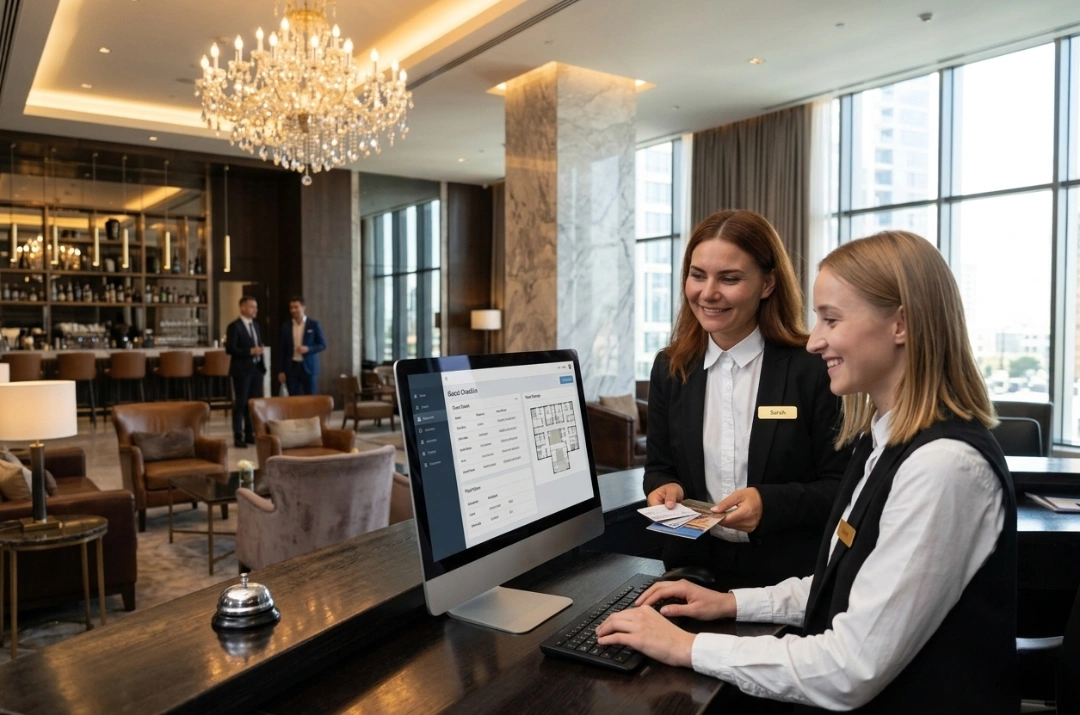
"We used to guess our rates—now ampliphi updates them in real-time. Our RevPAR’s up 35%, and we haven’t touched a spreadsheet in months." - Susie Conway, General Manager, Flamingo Motel
Hotels measure success by rooms sold but miss total value unless they track RevPAG, which captures all guest revenue streams.
RevPAG divides total guest revenue by actual guest count, giving a fuller view than RevPAR and revealing hidden revenue.
Smart teams track RevPAG regularly because 82% of hotel executives agree RevPAR alone no longer drives profitable pricing decisions.
To grow RevPAG, hotels tailor pricing and offers, and roommaster Revenue Optimization gives independent hotels automated, demand‑based pricing intelligence.
When hotels combine pricing, targeted campaigns, upsells, and performance tracking, they unlock full guest value and boost overall revenue.
In the hospitality industry, we often measure success by the number of rooms sold and nights booked. Those are important. But if you want to see the full value each guest brings to your property, you need a better metric.
That metric is RevPAG. It shows how much revenue each available guest contributes to your business across all revenue streams. It goes beyond room revenue to include spa bookings, ancillary services, package revenue, and all guest purchases.
In this guide, you will learn:
What RevPAG is and how to calculate RevPAG
Why RevPAG matters for independent hoteliers
When to track RevPAG
How RevPAG differs from other metrics like RevPAR, ADR, and RevPOR
How to improve RevPAG in real operations
In this article, we’ll help you unlock hidden revenue opportunities and better understand how your guests drive profit.
What is RevPAG?
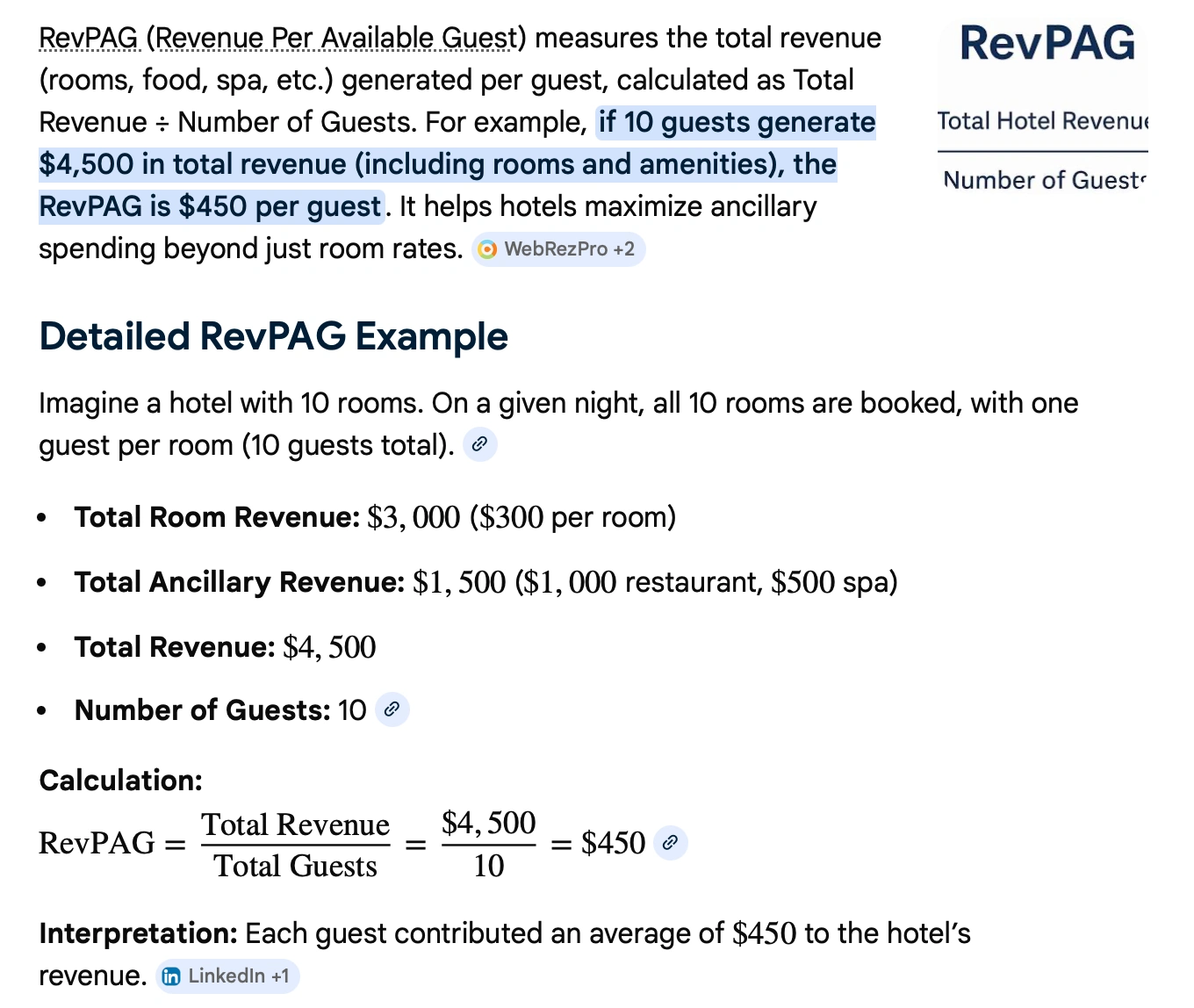
RevPAG stands for revenue per available guest. It measures the average revenue each guest at your property generates over a specific period.
Traditional hotel performance metrics focus primarily on rooms and occupancy. RevPAG, on the other hand, comes from a guest‑centric perspective. It captures revenue from all possible sources tied to a guest’s stay. That means you look at more than available room nights. You look at how each individual guest spends across your hotel.
Put simply, the metric gives you the most complete picture available of how your property drives profit through every line of revenue. In fact, 82% of hospitality executives recognize that measuring performance by RevPAR alone is no longer enough, and that tracking RevPAG is a transformative way to optimize revenue. Additionally, 72% of executives are willing to invest in upgrading technology to leverage this metric effectively.
Forward‑thinking revenue teams, especially in the hospitality industry, use RevPAG to adjust pricing, refine segmentation, and improve profitability in ways older metrics cannot.
To understand where RevPAG fits, let’s compare it to other common hotel performance metrics:
Metric
Definition
Calculation
What It Focuses On
What It’s Useful For
RevPAG (Revenue per Available Guest)
Measures the average total revenue generated per guest, including rooms, F&B, spa, services, etc.
RevPAG = Total guest revenue ÷ Number of guests
Guest‑centric view of overall spending
Understanding how much each guest contributes to total revenue across all spend streams
RevPAR (Revenue per Available Room)
Measures room revenue relative to total available rooms
RevPAR = Room revenue ÷ Available rooms OR ADR × Occupancy rate
Overall room efficiency combining occupancy and pricing
Benchmarking hotel performance and comparing how well rooms are sold and priced
ADR (Average Daily Rate)
Measures the average room rate paid for rooms actually sold
ADR = Room revenue ÷ Number of rooms sold
Pricing power for rooms only
Evaluating how well room rates are set independent of occupancy
RevPOR (Revenue per Occupied Room)
Measures total revenue from occupied rooms, including ancillary spend
RevPOR = Total revenue from occupied rooms ÷ Occupied rooms
Revenue generated from rooms that are actually sold
Assessing how guests spend on both rooms and additional services while staying
When Should You Track RevPAG?
You should track RevPAG whenever you want to understand each guest's full financial contribution. As we mentioned earlier, RevPAR focuses only on room revenue, while RevPAG captures the total value guests bring through ancillary services, room upgrades, spa bookings, direct bookings, and all other spending.
Track RevPAG in these key scenarios:
Resorts & all-inclusive properties: Guests often purchase multiple services, and RevPAG lets you accurately measure their real contribution.
Hotels with strong F&B or wellness offerings: Properties generating 30–40% of total revenue from non-room streams benefit most from monitoring RevPAG.
Guest-centric operations: Hotels that emphasize personalized experiences and upselling gain deeper insights by focusing on RevPAG.
Independent hotels and boutique properties: Smaller properties can calculate revenue per available guest precisely, enabling revenue managers to plan targeted marketing campaigns and optimize each guest interaction.
When you track RevPAG consistently, it helps you measure the complete financial impact of each guest, alongside occupancy and room rates.
How to Improve RevPAG
With a guest-first mindset, hotels can unlock huge opportunities, boosting satisfaction while increasing revenue. While many properties still focus mostly on room nights, innovative teams track and grow total guest value.
Implement these five strategies today (some simple, some ambitious) to capture every dollar a guest spends and build lasting loyalty.
1. Analyze guest profiles and journey
Too many hotels treat all guests the same, but you don’t have to. To begin with, extract your guest data and see who really drives the most value. While traditional metrics such as RevPAR are important, hotels that focus on total guest value, including ancillary revenue, outperform those that consider only rooms.
In fact, HSMAI’s 2025 Ancillary Revenue Playbook suggests that non‑room revenue now accounts 15% of total revenue for leading properties. However, many hotels still leave 20–40 % of guest spend untracked due to siloed systems.
This is where a modern, cloud-based, all-in-one platform makes a difference. With roommaster Operations Suite, including roommaster Hotel PMS and integrated Reporting & Analytics, hotels eliminate the swivel chair problem and centralize reservations, front desk, housekeeping, and guest data in one system. When all components work seamlessly together, you gain a complete picture of guest behavior without manual reconciliation.
What this means is that certain guest segments are far more valuable. Hence, you should segment your visitors by behavior, such as spa users, family groups, and business travelers. Then, map how each group interacts with your property from booking through check‑out. You can also look at different patterns, such as which services they book, how often they purchase add‑ons, and when they spend during their stay.
Once you understand these high-value guests, you can then tailor offers, communications, and personalized experiences that resonate with them. When guests feel understood and receive relevant offers, they will spend more in your revenue streams and also come back.
2. Offer room upgrades and personalized upsells
Did you know that hotels that personalize upsell offers report 10–20% higher ancillary RevPAG? If you offer the same services to all guests, you’ll miss out on extra revenue and happier guests.
To increase RevPAG, here’s what you need to do:
Focus on increasing total guest spend, not just room rates
Offer upgrades and add-ons at multiple touchpoints: booking, pre-arrival, check-in, and during the stay
Personalize offers based on guest intent (business vs leisure, short stay vs long stay)
Highlight value-driven benefits like better views, breakfast, flexibility, or convenience
Use bundled packages instead of discounts to increase perceived value
Reinforce offers through pre-arrival emails, in-app messages, and front-desk conversations
Track which add-ons convert best and optimize around guest buying behavior
Revenue management plays a direct role here, but how you deliver those offers matters just as much. Instead of treating upselling as a random front desk tactic, you can build it directly into the guest journey.
{{revenue-management-one}}
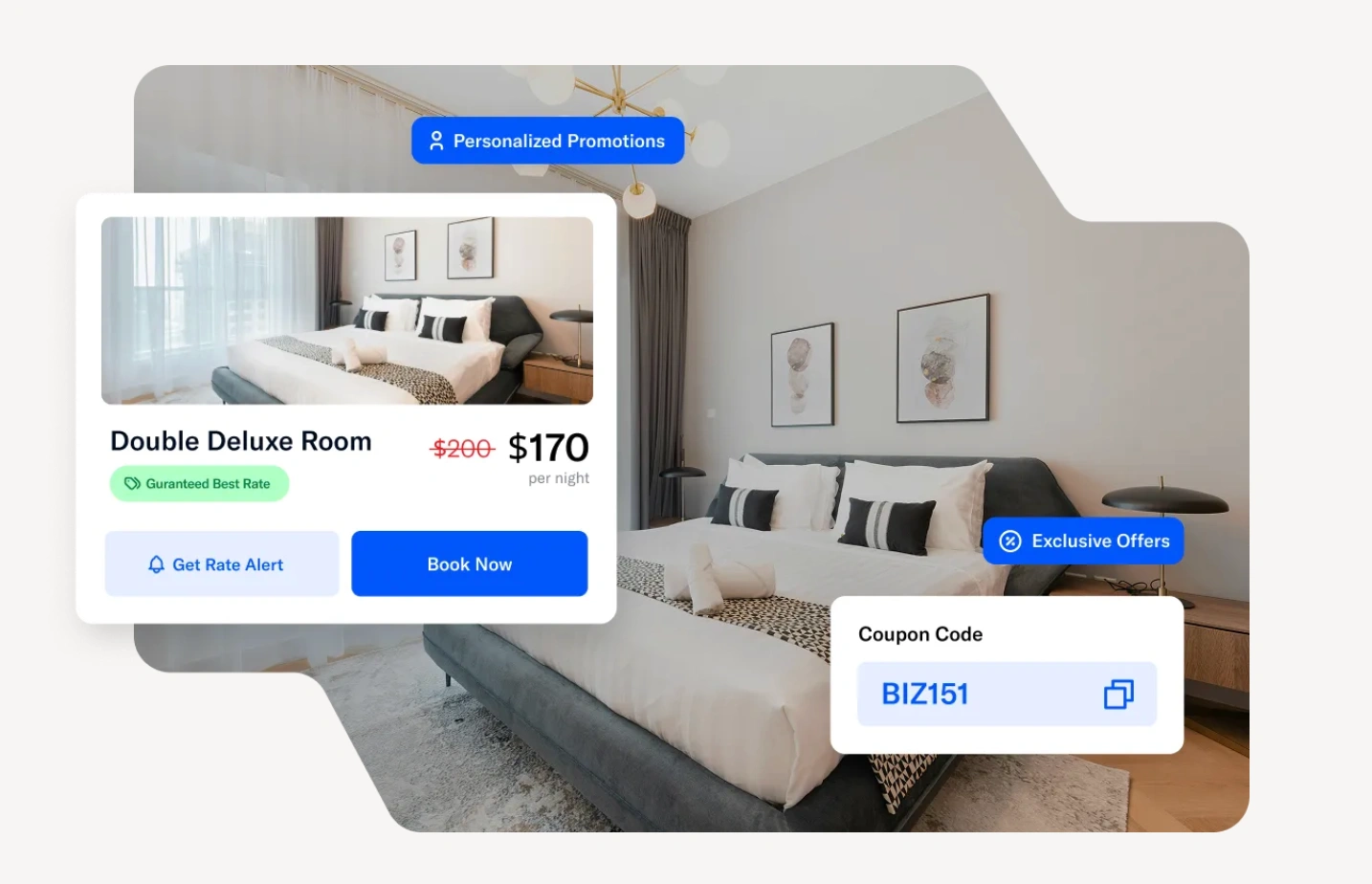
With the roommaster Booking Engine, you present tailored upgrades and add-ons at the exact moment guests book. Its mobile-first design, interactive rate calendar, and real-time PMS synchronization keep availability accurate while integrated upselling increases average booking value. Many hotels also shift 15–30% of OTA bookings to direct bookings, which immediately strengthens profitability.
The roommaster AI Concierge captures additional upsell opportunities over the phone. It answers calls 24/7, supports multiple languages, converts inquiries into confirmed bookings, and naturally presents upgrade options during the conversation.
On the other hand, the roommaster Hotel Guest App gives guests direct access to upgrade offers and in-app purchases before arrival and during their stay. Guests can review options, select enhancements, and communicate directly with your team from their smartphones.
In fact, hotels that deliver personalized upsells through mobile or digital channels capture more revenue, increase guest satisfaction, encourage repeat visits, and strengthen long‑term loyalty.
3. Optimize pricing across all channels
Once you understand guest value and tailor offers, the next step is to make sure your pricing reflects it. Hotels adjust room rates and ancillary services dynamically based on demand, occupancy, and guest value. They use RevPAG insights to set the right price for high-value guests and align these adjustments with RevPAR and RevPOR.
Independent hotels often struggle to implement sophisticated revenue strategies without dedicated revenue managers or enterprise systems. roommaster Revenue Optimization bridges this gap by providing enterprise-level pricing intelligence in an accessible, automated format.
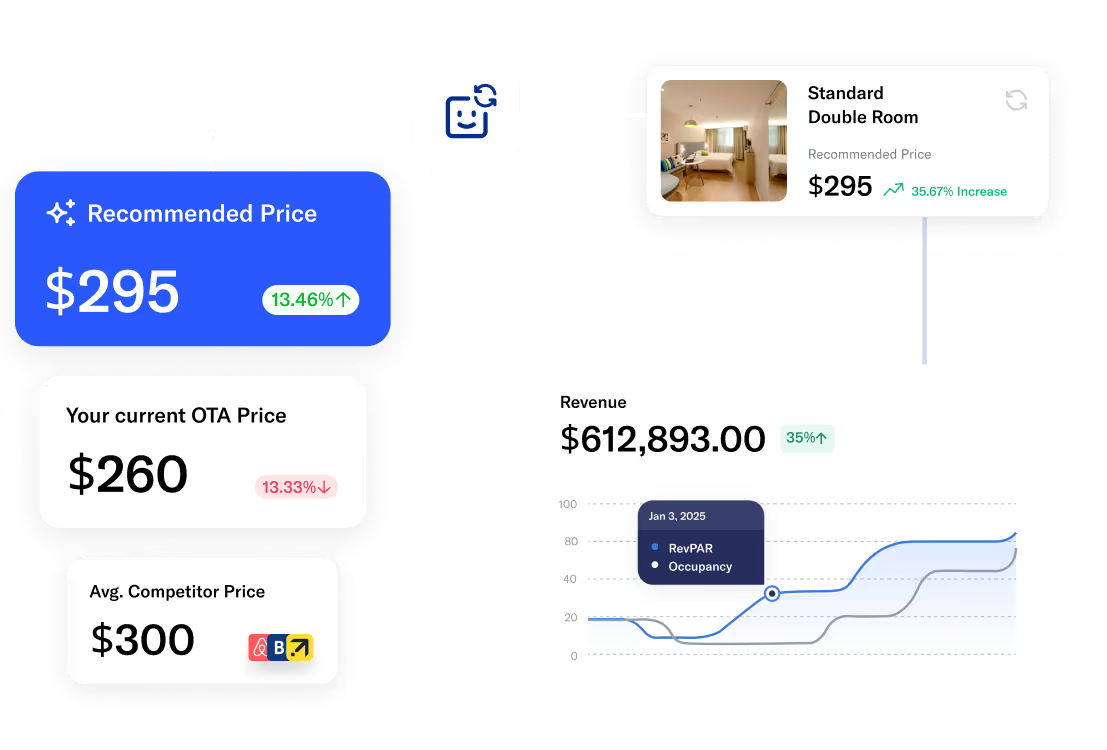
The rule-based yield engine continuously analyzes market conditions and demand signals. It adjusts rates automatically during high-demand periods to maximize RevPAR and optimizes occupancy and ancillary spend during slower times to improve RevPAG. Hotels define the strategy once, and the system works around the clock without constant manual intervention.
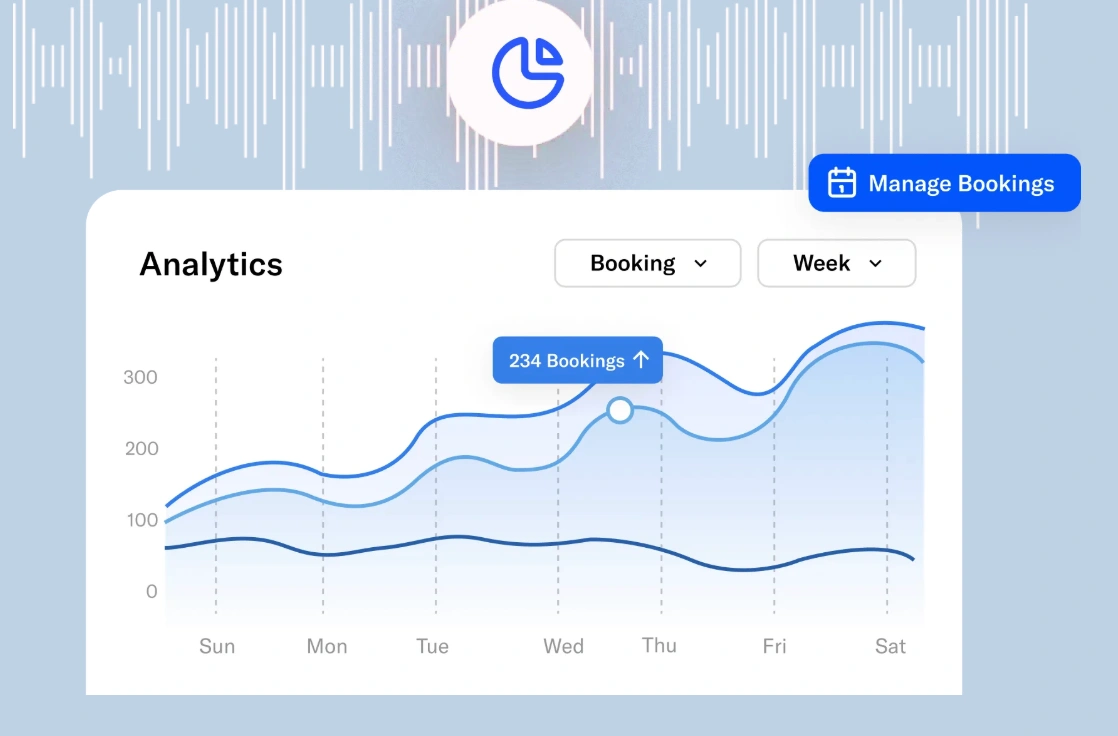
Because roommaster applies pricing rules across distribution channels on a single unified platform, rate updates remain consistent and synchronized. Revenue teams eliminate manual adjustments and gain full visibility into performance through integrated reporting tools that track RevPAR, RevPAG, ADR, occupancy, and booking pace.
As a result, your hotel gains a holistic view of property performance and can maximize revenue across all channels. Hotels that implement this dynamic pricing approach typically experience up to a 35% increase in RevPAR within their first year
Failure to actively market spa services, food/beverage packages, early check-ins, and concierge services can hold a hotel back from tapping into a potential source of revenue. The fact that 85% of respondents reported ancillary revenue exceeding 20% of overall income shows that high-quality properties are no longer focusing solely on rooms but are instead prioritizing exceptional guest experiences.
To truly maximize RevPAG, it is essential to actively promote your ancillary activities to all guests before their arrival, at check-in, and throughout their stay.
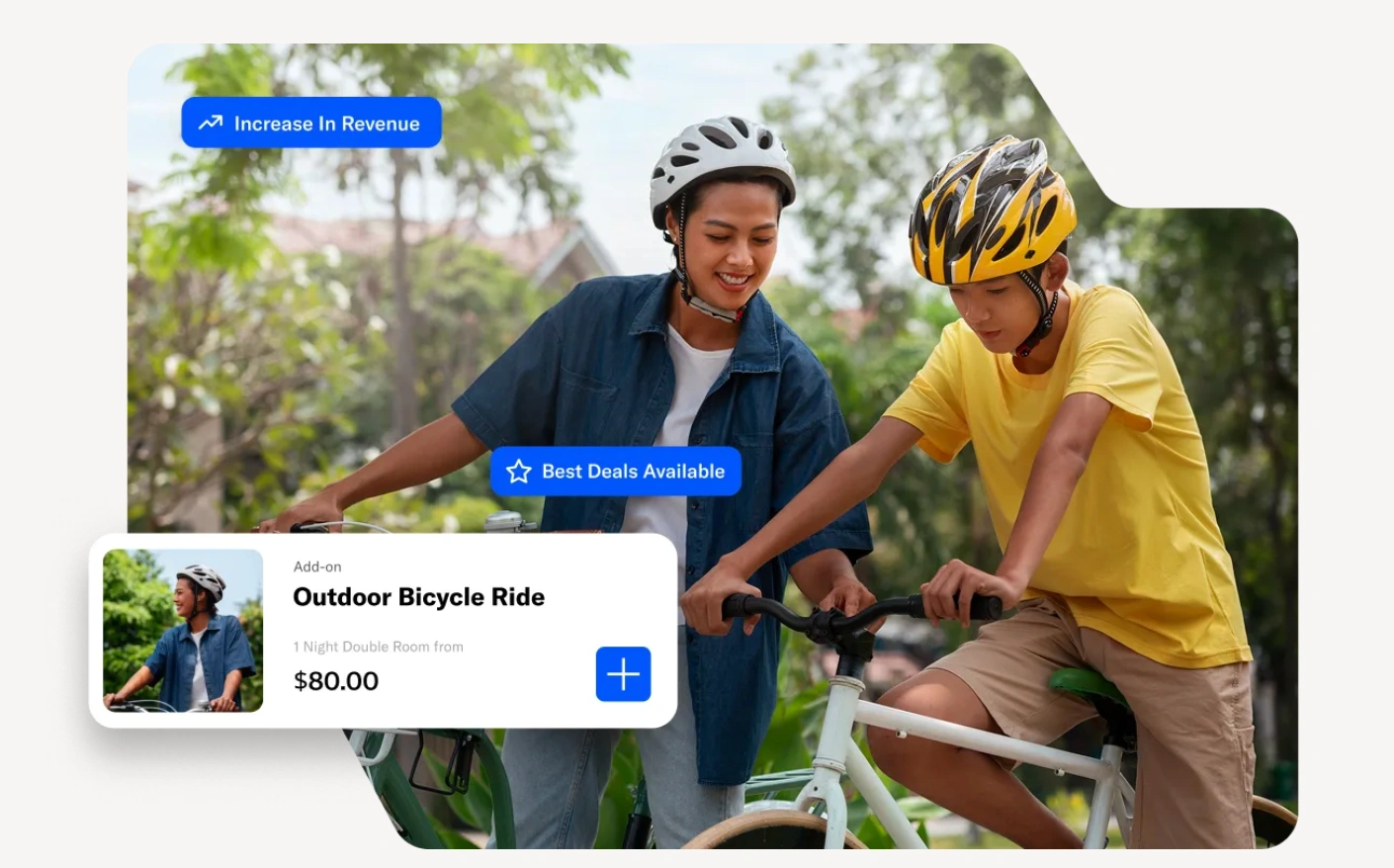
Provide guests with ideas for experiences they can participate in to enhance their stay, and make it easy for them to book these with a single click.
Track how much revenue each ancillary contributes to each guest, and use that information in your RevPAG calculations.
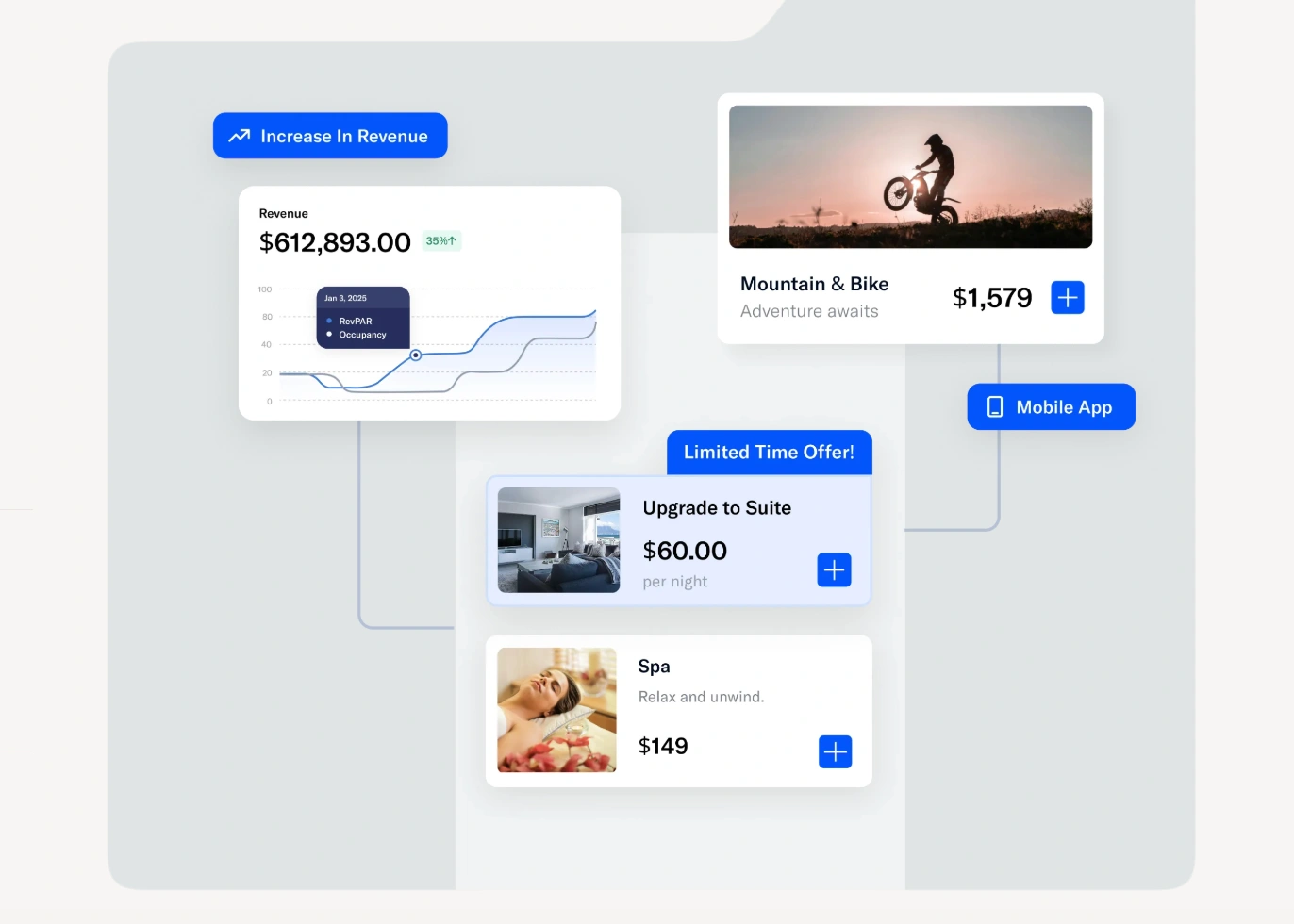
Revenue strategy does not stop at room pricing. With the roommaster Booking Engine, you can bundle rooms with spa services, dining packages, or upgrades and present them to customers during the booking process through integrated upselling and package-creation tools. Real-time PMS synchronization shows availability and aligns rates across all channels.
Meanwhile, the roommaster Concierge promotes ancillary services during phone inquiries, answers guest questions about amenities, and converts interest into confirmed bookings 24/7. Additionally, the Hotel Guest App allows guests to browse and book add-ons, request services, and purchase experiences directly from their smartphone before arrival and during their stay.
When you actively promote and track ancillary services, you increase total guest spend and capture revenue that would otherwise go unnoticed.
5. Implement targeted marketing campaigns
The scale of Marriott's Bonvoy program is nothing short of incredible. By 2025, the program grew to over 271 million members worldwide.
The hotel chain leveraged both its guest data and loyalty program to develop segmented email campaigns that suggested places to stay and experiences based on previous stays at properties within the brand. For instance, business travelers received offers to stay at hotel properties in cities, while leisure travelers received resort recommendations. Each message also included several key points for the unique guest, like their name, loyalty points, and special benefits as a result of being a loyalty member.
So, what does this example show? Hotels that send tailored campaigns based on a guest's preferences (based on past stays) will receive higher engagement and revenue from the individual guest.
You can apply the same principle to increase RevPAG. Create promotions that align with individual interests and deliver them at the right moment in the guest journey through email, SMS, and app messaging. roommaster supports this strategy through unified data across revenue, operations, and distribution. When pricing, channel management, booking engine performance, and guest communication tools operate within one platform, marketing efforts directly reflect revenue strategy.
Hotels that combine targeted campaigns with dynamic rate management and performance benchmarking make faster, data-driven decisions. They shift more bookings to direct channels, strengthen cross-sell opportunities, and maximize total guest value.
Common Mistakes When Calculating RevPAG
Even experienced revenue managers make mistakes when calculating RevPAG. Watch for these challenges:
Ignoring ancillary revenue: Hotels that exclude spa treatments, room upgrades, or other additional services underestimate true guest value. Focusing only on room revenue prevents teams from capturing the full revenue potential of each guest.
Counting rooms instead of guests: RevPAR tracks rooms, but RevPAG tracks actual guests. Using available rooms or nights instead of guest counts distorts the metric and misguides revenue decisions.
Mixing metrics: Hotels that compare RevPAR and RevPAG as if they are identical risk drawing the wrong conclusions. RevPAG measures total guest behavior, including ancillary spend, whereas RevPAR measures only room revenue per available room.
Failing to track regularly: Revenue teams that do not measure RevPAG weekly or monthly miss trends in guest spending and occupancy. Monitoring these trends lets hotels adjust pricing strategies, upsell offers, and ancillary services in real time.
Capture Every Guest’s Contribution To Your Revenue
Dynamic and data‑driven pricing strategies help hotels boost revenue by up to 35% compared with static pricing approaches, showing just how powerful modern revenue management can be.
Flamingo Motel, a 108-room landmark in Ocean City, Maryland, modernized operations by combining roommaster PMS with the AI-powered ampliphi RMS. The system automated pricing updates, centralized reservations and reporting, and captured missed bookings during peak periods. As a result, the hotel saw a 35% increase in RevPAR and an additional $38,000 revenue with roommaster Concierge. [🎥See how it happened now!]
The roommaster Revenue Optimization Suite gives independent hotels enterprise‑level pricing intelligence without complexity. The rule‑based yield engine constantly analyzes market conditions, guest value signals, and occupancy patterns, automatically adjusting rates to maximize revenue and occupancy. With package rate creation and pricing rules across channels, your team works less and earns more.
Book a demo today and start capturing the true value of every guest.
{{cta-strip}}
FAQs
What does RevPAG stand for?
RevPAG stands for Revenue per Available Guest. It measures total revenue each guest generates over a period, including rooms, ancillary services, F&B, spa, upgrades, and other spend.
What is the difference between RevPAR and RevPAG?
RevPAR (revenue per available room) focuses on room pricing and occupancy. RevPAG (revenue per available guest) calculates total revenue per guest, giving a more complete view of how each guest contributes to overall revenue.
How often should you monitor your RevPAG?
Hotels should monitor RevPAG weekly or monthly so teams can spot trends in guest spending and adjust pricing, upselling, and marketing strategies in response to changes in guest behaviour.
revenue-management-one
Put Your Hotel Pricing Optimization on Autopilot with AI
Mayela Lozano is a content strategist with a passion for hospitality and technology. She collaborates with roommaster on content creation, highlighting how technology can streamline hotel operations and enhance guest satisfaction. When she’s not creating content, Mayela loves to travel and spend time with her two little ones, discovering new adventures and making memories along the way.
Join Thousands of Hotels Thriving with roommaster
The transition to roommaster is straightforward and efficient. Our implementation team handles data migration including reservations, guest profiles, and historical information.
The transition to roommaster is straightforward and efficient. Our implementation team handles data migration including reservations, guest profiles, and historical information.
How Hotel PMS Software Transforms Hospitality Management
September 23, 2026
Hotel Management
Marketing
Pet-Friendly Hotel Amenities & Package Ideas That Drive Revenue
September 22, 2026
Hotel Management
Hotel PMS
Hotel Food And Beverage (F&B): The Complete Guide
September 22, 2026
Hotel Management
Marketing
Hotel Pet Fees: How Much Should You Charge?
September 22, 2026
Hotel Management
Hotel PMS
Best Hotel Food and Beverage (F&B) Management Software In 2026
September 22, 2026
Hotel Management
Marketing
Pet-Friendly Hotel Guide: Policy, Fees & Amenities
September 22, 2026
Hotel Management
Payment Processing
Best Practices For Hotels To Avoid Chargebacks Disputes
September 21, 2026
General
Hotel Management
Preventing Credit Card Fraud In Hotel Operations
September 21, 2026
Hotel Management
Hotel Guest WiFi: The Complete Guide for Hoteliers 2026
September 19, 2026
Join Thousands of Hotels Thriving with roommaster
See how roommaster's unified platform can work for your property. Our team will walk you through features tailored to your specific needs and operations.


.png)
.png)
.png)