Hospitality Accounting Software: How To Streamline Your Hotel's Finances
“I do believe that roommaster does help the business grow because you can use all kinds of reports to compare from this time last year. You can pull future availability, future sales” - Stacy Dadson, General Manager, Harrison Hall Hotel
Hotels handle high-volume transactions across rooms, F&B, events, and third-party channels, making manual tracking unsustainable.
Automation simplifies reconciliation, reduces workload, and improves accuracy, cutting posting errors by up to 35% and end-of-day errors by up to 90%.
With cleaner data, hotels can align more easily with USALI standards for consistent financial reporting.
This makes PMS integration essential, ensuring real-time data flows directly into accounting without manual intervention.
roommaster supports this by automating night audits, capturing departmental revenue in real time, and providing instant access to accurate, audit-ready financial data.
Those log books sitting at your front desk or back office? They tell you a story you know too well.
If you’re a hotel manager, this routine is all too familiar. You’re constantly reviewing figures from rooms, food and beverage, and daily operations, trying to keep a clear picture in your head. It takes time, focus, and a lot of patience.
The challenge is that hospitality never stays still. Room rates shift, occupancy changes, sales can rise one day and dip the next. Keeping up with all of this manually can feel exhausting, especially when accuracy is critical.
This is where things need to get easier. This guide walks you through what hospitality accounting software is, how it differs from generic accounting tools, and which platforms are worth your time.
What is Hospitality Accounting Software?
Hospitality accounting software is a financial management platform built specifically for the operational and reporting needs of hotels, resorts, and lodging businesses.
It handles everything from accounts payable (AP) and accounts receivable to payroll, budgeting, departmental profit and loss (P&L), and tax compliance, all with the hotel's unique structure in mind.
Why Hotels Need Dedicated Accounting Software
Generic accounting platforms were not designed for hotels. They cannot automatically pull occupancy data from your property management system (PMS) and do not understand departmental cost allocation as required by the Uniform System of Accounts for the Lodging Industry (USALI).
{{pms-two}}
They also cannot produce a nightly flash report that maps room revenue to the correct cost center by 7 AM. As a result, the hospitality industry shifted to dedicated accounting software.
1. Managing high-volume, multi-stream hotel transactions
Hotels operate in a constant flow of transactions across multiple revenue streams, all happening at once. Room charges, restaurant bills, event deposits, OTA commissions, minibar sales, and vendor invoices must all be captured, categorized, and reconciled daily.
Without a system built specifically for hospitality, turning this volume of activity into clean, reportable financial data before the morning briefing becomes unnecessarily complex and error-prone.
2. Reducing manual work and operational errors
The real challenge is not just volume, but the effort required to manage it manually. Night audit workflows in many hotels still rely on time-intensive processes, where accounting teams spend hours cross-checking daily revenue against bank statements, especially when third-party bookings enter the mix.
Purpose-built hotel accounting systems streamline this process through automation. In fact, properties that adopt nightly automated verification can reduce posting errors by up to 35%, while fully automated night audits have been shown to cut end-of-day errors by up to 90%.
3. Ensuring USALI-compliant financial reporting
Beyond internal efficiency, your investors, lenders, and ownership groups expect financials structured in a format they recognize. The hospitality industry uses USALI as its benchmark, and without software that can generate USALI-compliant reports natively, accounting teams are forced to manually restructure financial data for every reporting cycle.
Dedicated hotel accounting platforms eliminate this gap, helping maintain accurate, consistent, and stakeholder-aligned financial records.
Key Features to Look For
Here are the features that separate functional tools from genuinely valuable ones.
Departmental P&L reporting: Your software needs to produce profit and loss statements at the department level, which includes rooms, F&B, spa, parking, and any other revenue center your property runs.
Automated accounts payable: AP automation captures invoices, routes them for approval, and posts them to the correct GL codes without manual entry. Hospitality accounting platforms go further by integrating payment processing directly into the workflow, which reduces the risk of duplicate payments and late fees.
Budgeting and forecasting: Look for tools that allow you to build property-level and portfolio-level budgets, then track actual performance against those budgets in real time. The best systems let you slice forecast data by department, channel, and time period.
Multi-property consolidation: If you operate more than one property, consolidated reporting is non-negotiable. You need to see the big picture across your portfolio without manually aggregating data from spreadsheets at each location.
Real-time financial dashboards: The shift away from month-end reporting is one of the most meaningful changes in hotel finance. Cloud-based platforms like roommaster turn operational data into decision-ready insights through real-time dashboards and reporting tools. With built-in reporting across revenue, booking channels, and guest segments, teams can track performance trends, identify profitable sources of demand, and uncover opportunities to increase guest spend.
Automated bank reconciliation: Reconciling your hotel's bank statements against PMS and POS data manually is one of the most time-consuming tasks in hospitality finance. Automation handles this in minutes and flags discrepancies for human review.
USALI Compliance & Night Audit Automation
USALI is the hospitality industry's standardized framework for financial reporting. It defines how hotels categorize and present revenue, expenses, and departmental performance, enabling ownership groups, lenders, and investors to compare properties on an apples-to-apples basis.
This is not optional for serious hotel operators. Many franchise agreements, management contracts, and lender covenants explicitly require USALI-formatted financials. In fact, the standard just got a significant update. The 12th Revised Edition of USALI was published by HFTP in February 2025 and takes effect on January 1, 2026. The new edition introduces updated energy and sustainability reporting requirements (Schedule 9 for Energy, Water, and Waste), Full-Time Equivalent (FTE) labor schedules, refined loyalty program expense categorization, and expanded guidance for all-inclusive properties.
For hotels that are not yet on a USALI-native accounting platform, the 2026 deadline has already passed, making this transition unavoidable. Research published on ScienceDirect, while larger chain-affiliated hotels tend to benefit from full compliance, smaller independent hotels often struggle due to limited resources and the complexity of the new EWW metrics.
On the night audit side, automation has moved from a competitive advantage to an operational baseline. The traditional manual night audit, where a staff member spends a couple of hours reconciling transactions, posting room charges, and generating reports, has given way to automated processes that run with minimal human intervention.
A modern PMS like roommaster streamlines this entire workflow by capturing and posting revenue across all departments, including rooms, food and beverage, spa, and other outlets, in real time. The system updates guest accounts automatically, eliminating the need for manual posting. Auditors can run Auto Post Transactions to post room and departmental revenue without double-posting, and rerun it when late check-ins occur. The system flags discrepancies instantly so teams can investigate and resolve issues before they affect reporting.
roommaster also simplifies reconciliation. Integrated payments and folio management ensure that all cash, card, and digital transactions post automatically. Auditors use Batch Settlement to reconcile payments and Batch Reconcile to verify that every transaction matches before closing the day. This creates a clean and verified financial base before reports are generated.
Instead of spending hours matching numbers, auditors focus on exception management. Automated alerts highlight missing or unusual transactions in real time, which allows teams to act quickly and maintain accuracy. The Dayend Close process completes the cycle by rolling the hotel into the next business day, updating room availability, resetting rates, and finalizing all reconciliations. At that point, reports are accurate and ready for review.
How It Integrates With Your PMS
Your PMS is the operational core of your hotel. It handles reservations, check-ins, room assignments, and billing. Your accounting software is the financial layer that makes sense of everything the PMS processes. For that relationship to work, the two systems need to stay in sync at all times.
A well-integrated hotel accounting system pulls revenue data directly from the PMS into the correct general ledger accounts without manual intervention. Every transaction generated in the PMS flows into the accounting system through predefined mappings that assign it to the correct accounts in real time.
That means:
The system posts room charges automatically as bookings are completed
It categorizes department revenue correctly across all outlets
It carries folio adjustments through without requiring duplicate entries
It keeps payment data aligned between operations and finance
When this connection works the way it should, your numbers reflect what is actually happening at the property. Your daily reports become more reliable, and your team spends less time fixing mismatches between systems.
What if your PMS already handled most of this?
Most hotel accounting software assumes the PMS is already providing perfectly structured, error-free data. But that’s rarely the case.
Integration alone doesn’t prevent mismatched folios, delayed postings, or manual reconciliation work at night audit. It only moves the data from one system to another. This is where roommaster plays a different role.
roommaster acts as the operational foundation where transactions are captured, validated, and structured before they ever reach your accounting system. Instead of correcting errors downstream, hotels start with cleaner upstream data:
Transactions are recorded in real time across all departments
Revenue is structured correctly before export to accounting systems
Payments, folios, and adjustments stay continuously synchronized
Night audit processes run automatically at the source
roommaster also integrates with 100+ systems, including accounting platforms, payment gateways, and POS tools, ensuring consistent data flow across the tech stack.
This means fewer reconciliation issues in accounting, because the errors never enter the system in the first place.
Top Hospitality Accounting Software Options
Selecting the right hotel accounting software for your property depends on several factors. Some come down to preference, but most depend on the size, structure, and operational complexity of your hotel.
A small property with a limited budget has very different needs compared to a luxury resort with multiple outlets and a high ADR. The list below features the top hospitality accounting software options to help you choose the right fit.
Software
Best For
Key Strengths
M3 Accounting
Hotel industry-wide adoption (all property sizes, esp. US-focused portfolios)
Real-time reporting, automated reconciliation, strong BI dashboards, and integration with PMS like roommaster
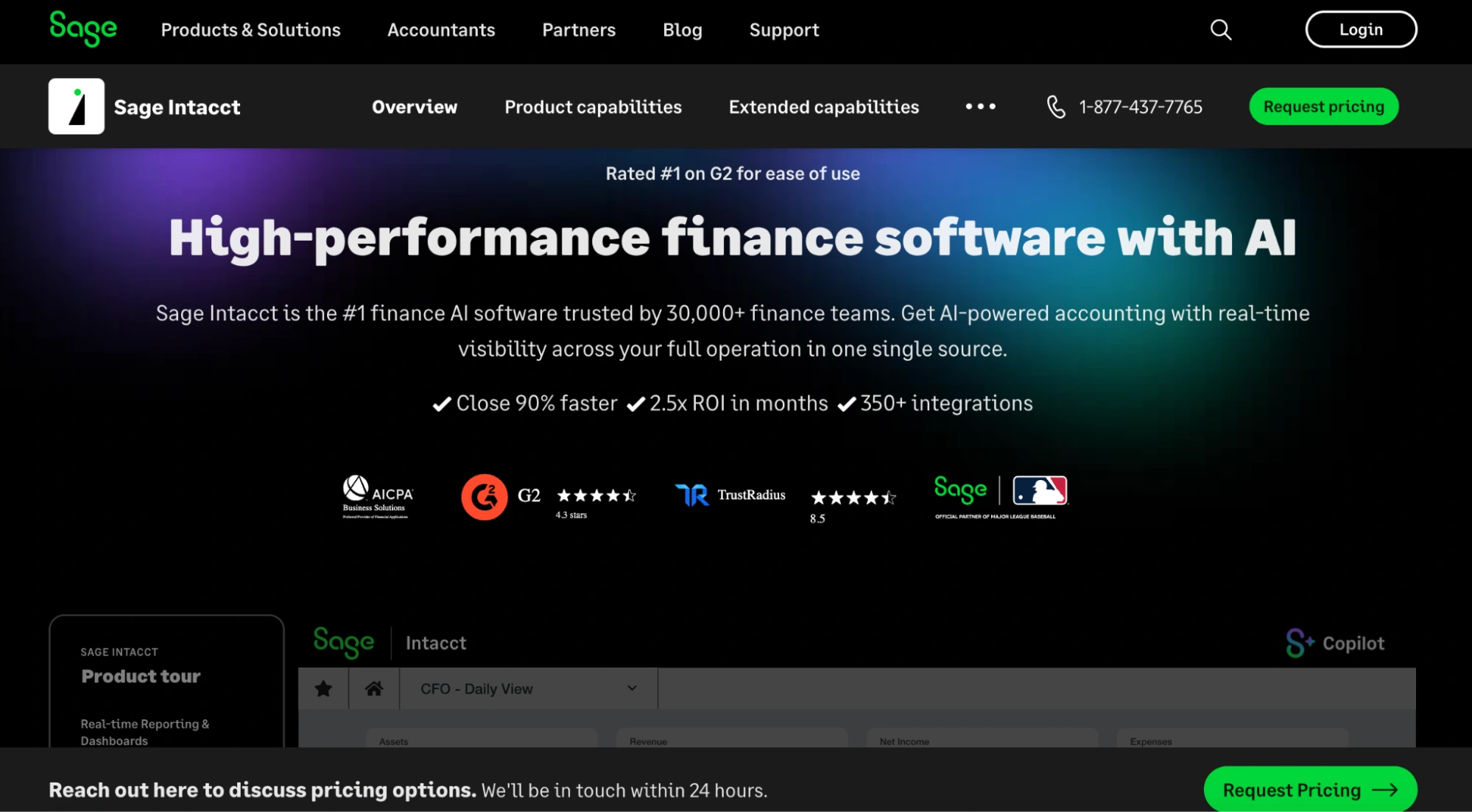
Sage Intacct
Mid-market hotel chains
Highly scalable, strong multi-entity consolidation, customizable reporting, KPI dashboards (RevPAR, occupancy), supports integrations with hotel PMS like roommaster
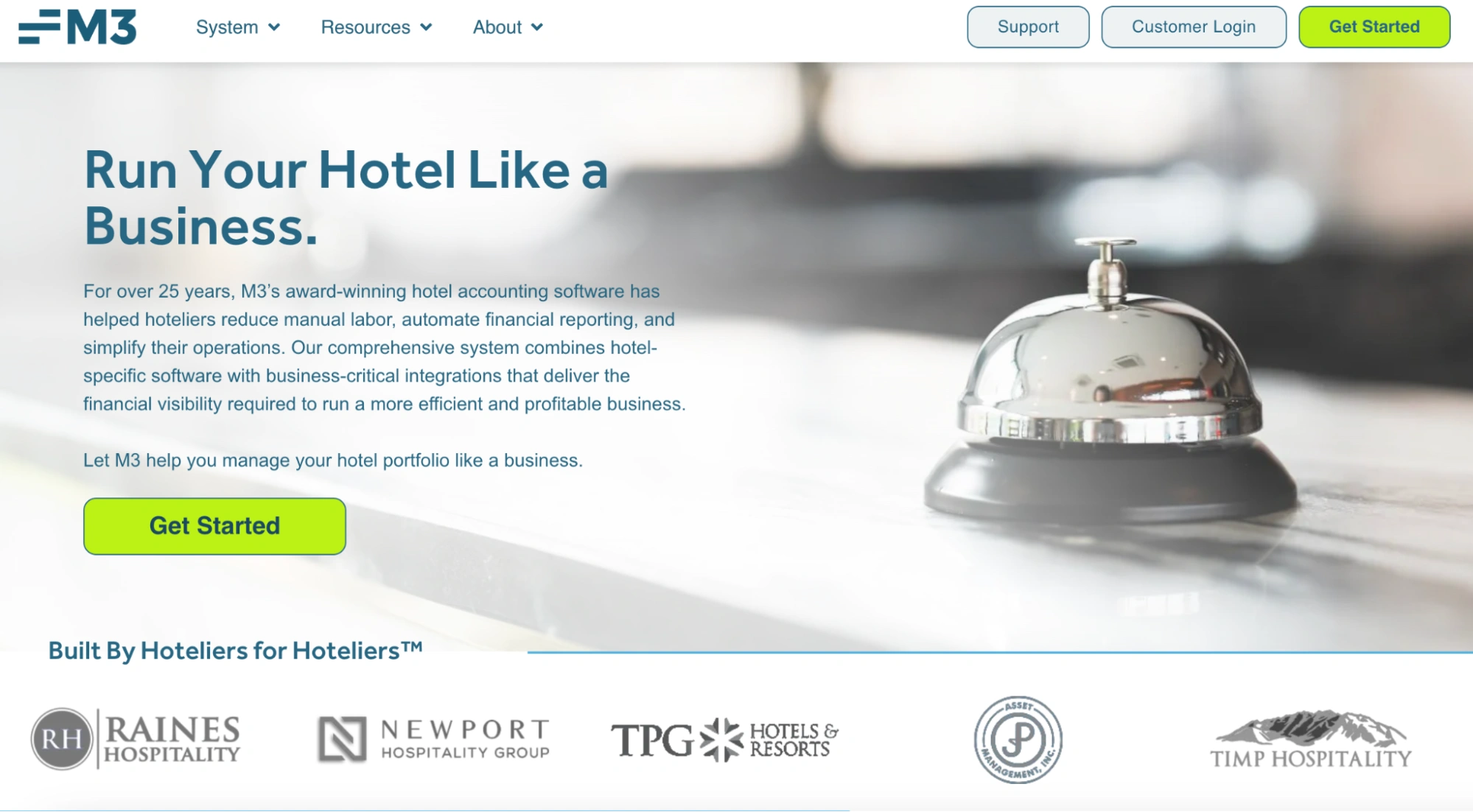
M3 is the most widely adopted cloud-based financial platform in the hotel industry, and it earned the #2 spot in the 2026 HotelTechAwards for accounting software.
It supports real-time financial reporting, automated reconciliations, multi-property consolidation, business intelligence dashboards, and integrates with PMS like roommaster.
2. Sage Intacct
Sage Intacct is the platform of choice for mid-market hotel chains that need strong multi-entity consolidation, customizable reporting, and scalability. It bridges the gap between generic accounting software and the nuanced demands of hotel finance teams through integrations with PMS platforms such as roommaster.
Starting at approximately $400/month and scaling with your portfolio, it integrates with multiple platforms to automate taxes. Its dashboards support hotel-specific KPIs, including RevPAR and occupancy rates. The main tradeoff is that it is not natively designed for hospitality, so configuration work is required to tailor it to hotel workflows.
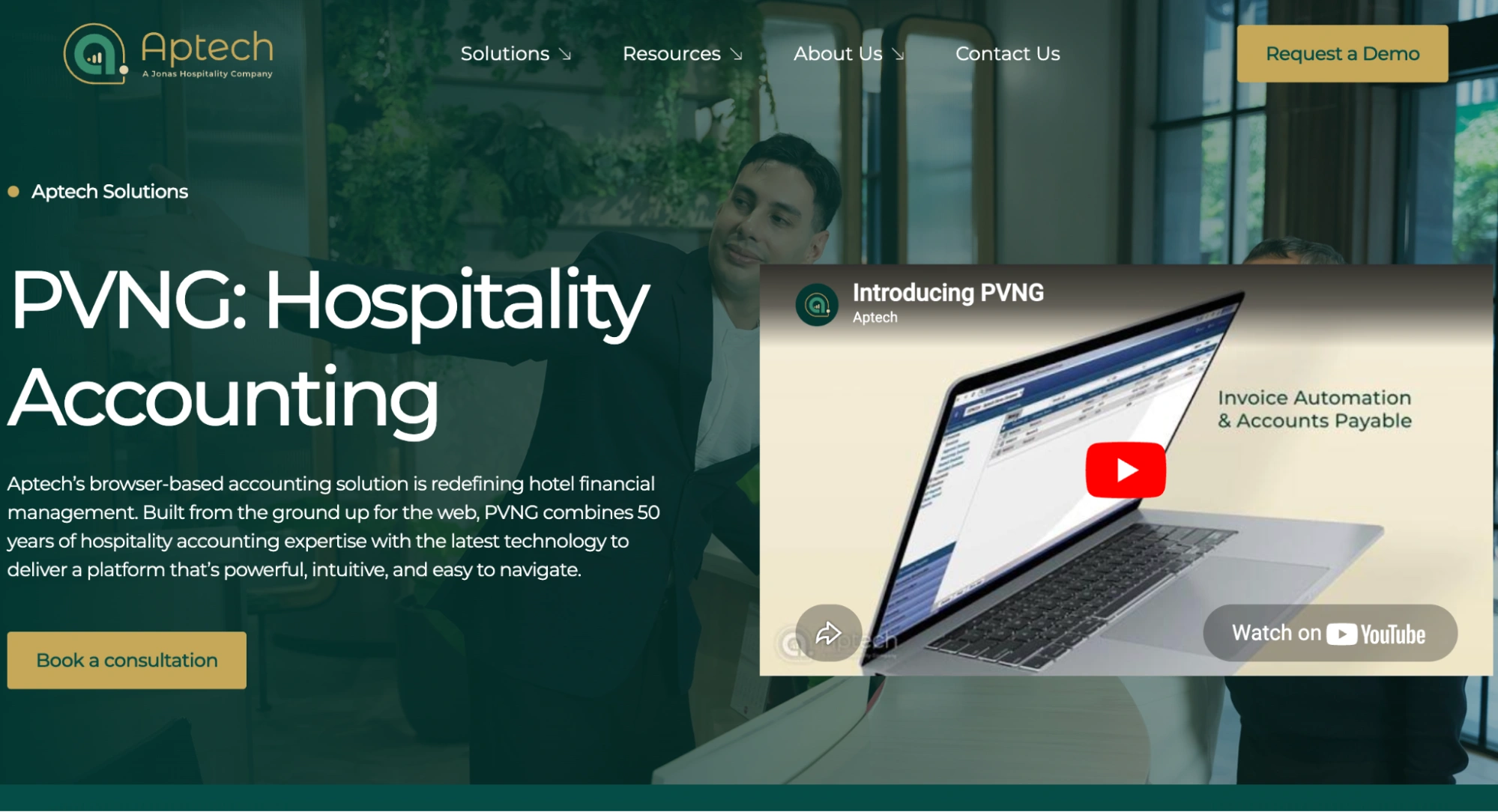
3. Aptech PVNG
Aptech PVNG is a cloud-based hospitality accounting platform built for multi-property hotel groups. It offers an integrated suite covering general ledger, accounts payable/receivable, bank reconciliation, payroll, and custom financial reporting.
Its PMS integration capabilities and USALI-native structure make it a strong choice for hotel management companies managing multiple branded or independent properties.
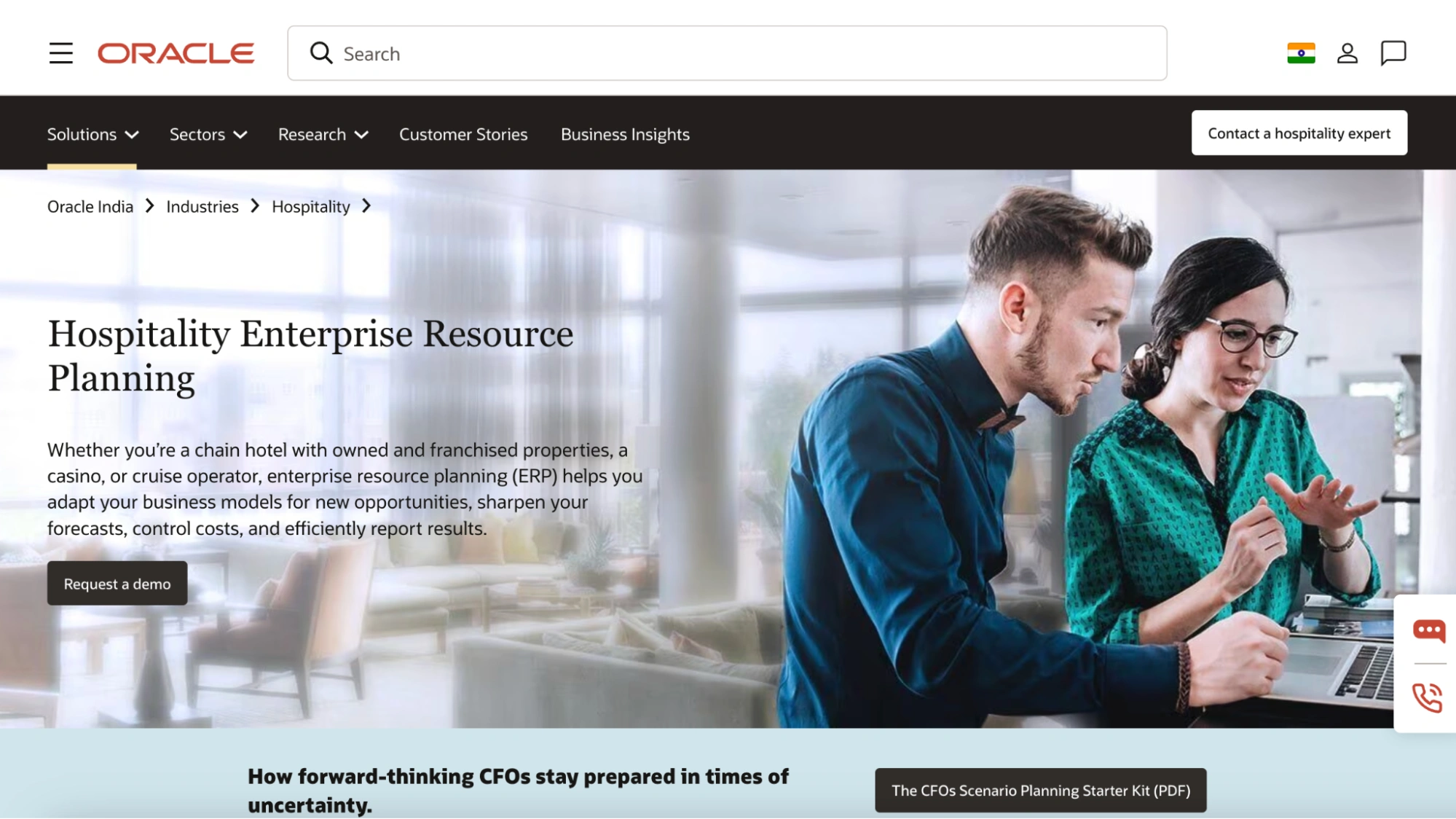
4. Oracle Hospitality
Built on Oracle's enterprise infrastructure and tightly integrated with OPERA PMS, this platform is best suited for large hotel chains and branded properties that need enterprise-level compliance, global multi-currency support, and deep AR/AP functionality.
Implementation complexity and cost put it out of reach for independent properties, but for enterprise operators already in the Oracle ecosystem, it is a natural fit.
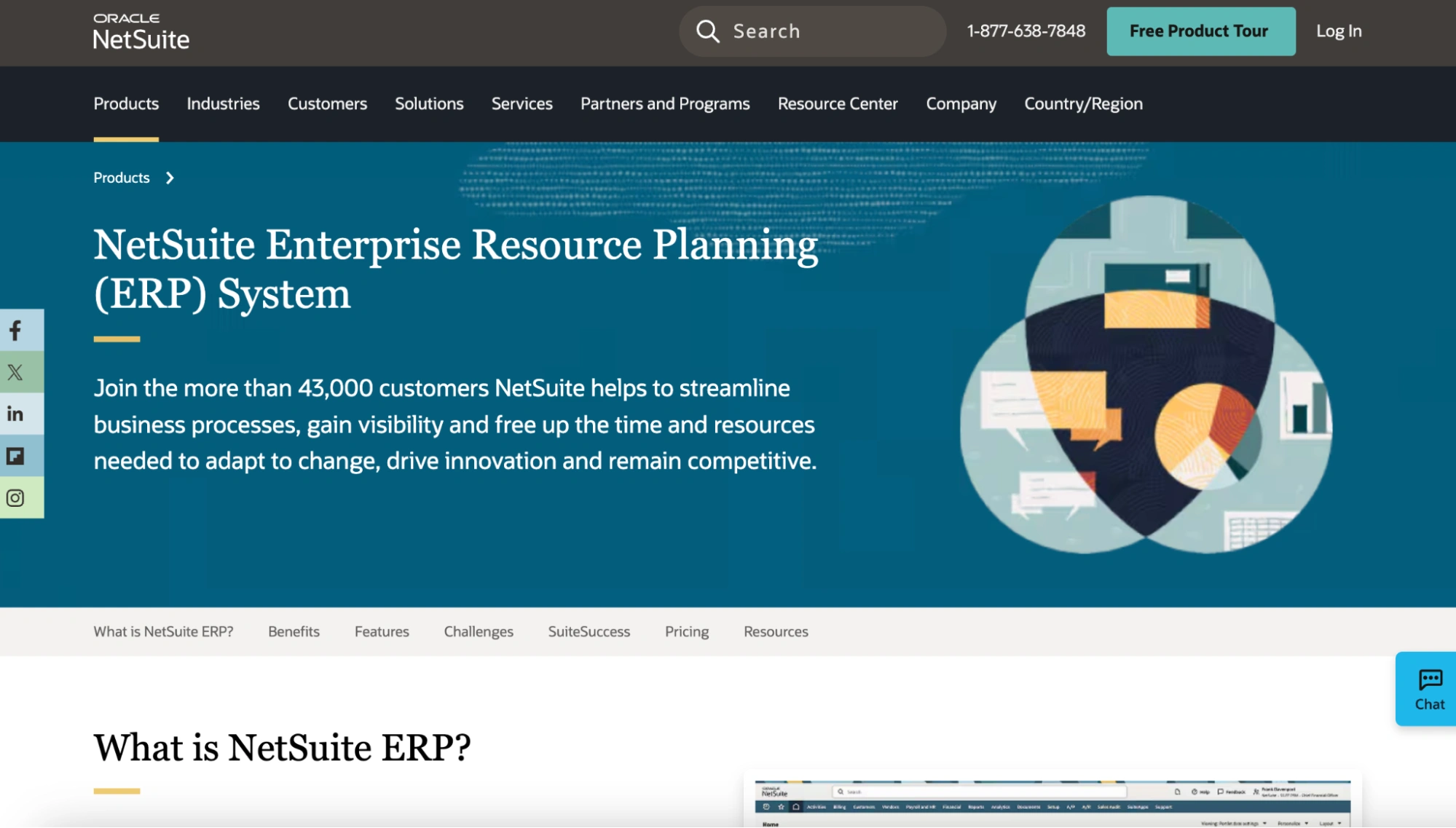
5. NetSuite
NetSuite's cloud ERP offers hospitality-specific modules for accounting, inventory, and revenue management.
It is a strong choice for hotel groups that need their financial platform to extend beyond hospitality into broader business operations, particularly ownership groups or private equity-backed portfolios that manage diverse asset classes alongside their hotel holdings.
How to Choose the Right Solution for Your Property
The right hotel accounting software depends on the complexity of your operation, your PMS ecosystem, and where your biggest pain points are today.
1. Start with your PMS
Your accounting platform needs to integrate cleanly with whatever PMS you run. Before evaluating any accounting software, confirm which PMS versions it supports natively. A weak integration creates exactly the kind of manual workaround you are trying to eliminate.
If you are using roommaster, you already benefit from a PMS designed to integrate with a wide ecosystem of hotel systems, including accounting platforms, payment gateways, POS systems, and distribution tools. It supports hundreds of integrations and enables real-time data synchronization across reservations, payments, and operational workflows, which reduces manual data entry and keeps financial data consistent across systems.
{{pms-one}}
2. Think about your scale
A single independent hotel with one revenue center has different needs from a management company running 20 branded properties. Single-property operations often do well with a well-configured setup.
Multi-property groups need consolidated reporting and portfolio-level dashboards that point to roommaster.
3. Consider the USALI 12 deadline
With the January 1, 2026 effective date now live, any platform you adopt needs to support the 12th Edition's new schedules, particularly the EWW reporting, FTE labor tracking, and loyalty program expense categories.
Ask vendors directly how they handle USALI 12 compliance and what, if anything, requires manual configuration on your end.
4. Evaluate implementation honestly
According to market research, 41% of hotels cite high implementation costs as a barrier to adoption, and 49% report skill gaps in finance technology. Cloud-based platforms reduce upfront investment and simplify updates, but every platform requires a learning curve. Build that into your timeline and budget.
A rushed go-live where PMS transaction codes are not correctly mapped to your GL accounts creates months of reconciliation pain.
5. Ask for a reference from a comparable property
The best predictor of how a platform will perform for your hotel is how it performs for a hotel like yours.
Ask vendors for references from properties with a similar size, PMS, and operational complexity before signing.
Why Modern Hotel Finance Needs an All-in-One System
Hotel finance is one of the most demanding accounting environments in any industry, with high transaction volumes, multi-department reporting, and strict compliance expectations.
Generic accounting tools were not designed for this, and the gap shows every time your team has to manually reconcile a PMS export or rebuild a USALI report in Excel. Hotel accounting software helps close that gap by automating routine work, improving accuracy, and giving leadership teams clearer financial visibility for faster decisions.
All the tools we discussed above focus on accounting alone, which means they still rely on a PMS to handle core hotel operations and integrate financial data effectively. roommaster brings this together in an all-in-one platform that connects PMS, AI concierge, reporting, reservations, revenue management, and payments. Hotels can access their system securely from anywhere, on any device, while automatic updates and backups run in the background with 99.95% system uptime guaranteed.
With the USALI 12th Edition now in effect and cloud adoption accelerating across the industry, there has never been a clearer moment to evaluate what your current system can and cannot do, and to make the switch before your competitors do.
Book a demo today to explore how roommaster fits your property and improves the way your team works every day.
{{cta-strip}}
FAQs
What is USALI, and why does it matter for hotel accounting?
USALI stands for the Uniform System of Accounts for the Lodging Industry. It is the hospitality industry's standardized framework for financial reporting, providing consistent guidelines for how hotels categorize revenue and expenses. Hotels use it to benchmark performance across properties, satisfy lender and investor reporting requirements, and maintain comparability with industry peers.
How does hotel accounting software integrate with a PMS?
Hotel accounting software connects to your PMS through an API or direct integration, automatically pulling transaction data into the correct general ledger accounts. This removes the need for manual data entry and keeps your financial records synchronized with front-desk activity in real time.
Can small hotels and B&Bs use accounting software?
Yes, cloud-based tools have significantly reduced the cost and complexity of implementation, making dedicated hotel accounting software accessible even for bed-and-breakfasts and boutique inns with modest transaction volumes.
How long does implementation typically take?
Implementation timelines vary by platform and property complexity. A single-property cloud deployment can go live in as little as 2–4 weeks for a single-property cloud deployment, depending on data readiness and integrations. Multi-property rollouts for larger hotel groups typically take months, depending on the number of PMS integrations, data migration requirements, and required staff training.
pms-two
Hotel Operations Made Simple and Effective with roommaster
Mayela Lozano is a content strategist with a passion for hospitality and technology. She collaborates with roommaster on content creation, highlighting how technology can streamline hotel operations and enhance guest satisfaction. When she’s not creating content, Mayela loves to travel and spend time with her two little ones, discovering new adventures and making memories along the way.
Join Thousands of Hotels Thriving with roommaster
The transition to roommaster is straightforward and efficient. Our implementation team handles data migration including reservations, guest profiles, and historical information.
The transition to roommaster is straightforward and efficient. Our implementation team handles data migration including reservations, guest profiles, and historical information.
How Hotels Can Use AI Assistants In Daily Operations
October 19, 2026
Hotel Management
Connect Your Hotel PMS To AI platforms: ChatGPT, Claude, Copilot & Google Gemini
October 19, 2026
Hotel Management
Best Hotel Management Software in 2027: 10 Top-Rated Tools Compared
October 15, 2026
Hotel Management
Hospitality Trends
Hotel Check-In Kiosk: Enhance the Guest Experience
October 5, 2026
Hospitality Technology
Hotel Management
Hospitality Trends
Hotel Self Check-In: How It Works, Types, Benefits And Setup
October 1, 2026
Hotel Management
Hospitality Trends
Hotel Check-In & Check-Out Times Explained
October 1, 2026
Hospitality Trends
Hotel Management
Cloud-Based Property Management System: Hotel PMS
October 1, 2026
Hotel Management
Cloud PMS
Hotel Management System (HMS): A Complete Guide
September 23, 2026
Hospitality Trends
Hospitality Technology
Hotel PMS
Hotel Management
Cloud PMS
How Hotel PMS Software Transforms Hospitality Management
September 23, 2026
Hotel Management
Marketing
Pet-Friendly Hotel Amenities & Package Ideas That Drive Revenue
September 22, 2026
Join Thousands of Hotels Thriving with roommaster
See how roommaster's unified platform can work for your property. Our team will walk you through features tailored to your specific needs and operations.



.png)
.png)
.png)