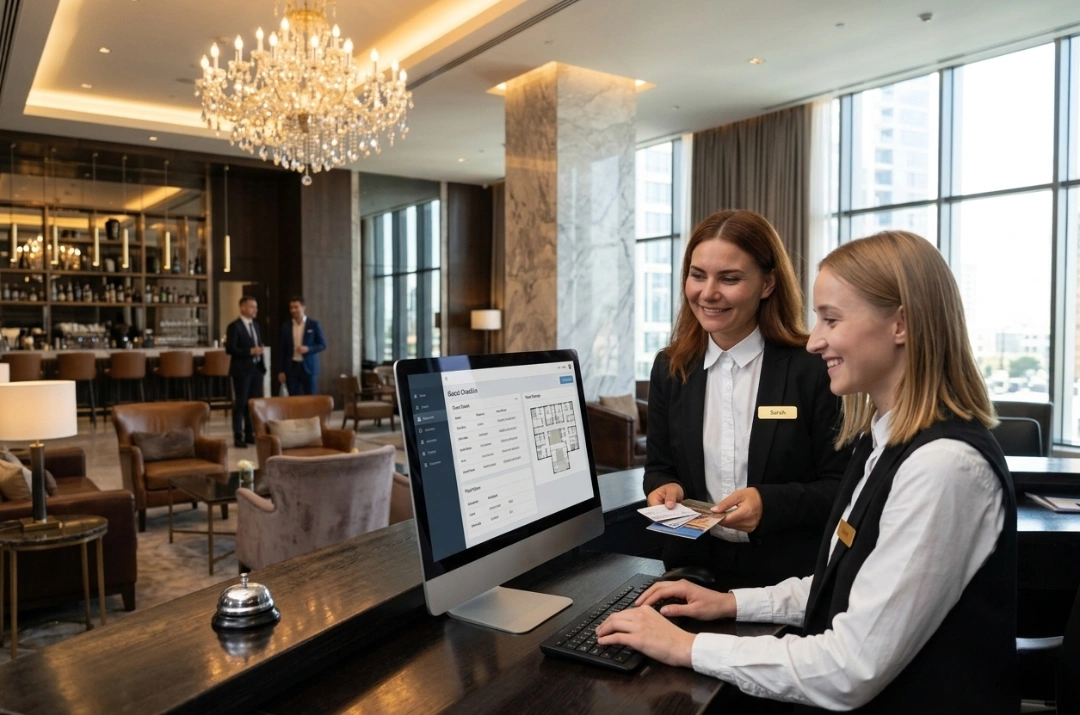
Hotel guest messaging has evolved from phone calls to AI-powered, real-time digital communication, transforming how hotels engage with guests.
Chatbots and AI assistants deliver 24/7 support, instant answers, and personalized interactions that boost satisfaction and loyalty.
Integrating guest messaging software with PMS and CRM systems improves efficiency, consistency, and data-driven personalization.
Successful implementation requires staff training, customization, and continuous improvement based on guest feedback.
Embracing AI-driven messaging allows hotels to enhance service, streamline communication, and exceed modern traveler expectations.
The journey from face-to-face check-ins and paper-based communication to today’s digital-first approach represents a significant shift in the hospitality sector. One pivotal innovation is hotel guest messaging, a vital tool that enhances the overall experience from check-in to check-out. The integration of Artificial Intelligence (AI) and chatbots within these platforms is not just a trend but a transformative force, reshaping the landscape of customer service and engagement in hotels. Hotel guest messaging serves as a bridge between guests and hotel services, offering a seamless, real-time communication channel. The advent of hotel messaging platforms has opened up new avenues for guest engagement. By providing a direct line of communication, these platforms facilitate a deeper understanding of guest preferences, enabling hotels to tailor their services and interactions to meet individual needs.
The Evolution of Hotel Guest Messaging
Traditionally, guest interactions were limited to the front desk or over the phone, restricting the immediacy and convenience that modern travelers have come to expect. As technology advanced, the industry witnessed a gradual but definitive transition towards more efficient and accessible forms of communication.
The advent of hotel messaging platforms marked a pivotal change in this evolutionary timeline. Initially, these platforms served as mere extensions of traditional services, offering basic text-based solutions for guest inquiries. However, as guest preferences shifted towards more instantaneous and frictionless forms of communication, these platforms evolved into comprehensive solutions encompassing a wide range of services – from room service orders to maintenance requests, all facilitated through a guest's smartphone. This shift towards digital messaging platforms in hotels was driven by the broader trends of digitalization and mobile technology adoption. Guests started to value the ability to communicate on their terms, seeking convenience, speed, and flexibility.
The hotel industry, recognizing these changing preferences, began to adopt hotel messaging platforms that could cater to the modern traveler's demands. These platforms not only enhanced guest satisfaction but also streamlined operations and improved efficiency. The implementation of these digital solutions signifies more than just technological adoption; it reflects a broader change in hotel guest communication strategies.
By integrating hotel messaging platforms, properties could offer a more personalized and engaging experience. The transition from impersonal interactions to tailored conversations has led to a new era of guest engagement, where every message can be an opportunity to delight, inform, and connect. Furthermore, the evolution of hotel guest messaging is also characterized by the increasing integration of AI and chatbots. These technologies have transformed the way hotels interact with their guests, enabling real-time communication, personalization at scale, and the ability to provide 24/7 support without overwhelming human staff. As chatbots become more sophisticated, they can handle a broader range of inquiries, from answering frequently asked questions to facilitating bookings and services, thereby enhancing the overall guest experience.
Chatbots in the Hospitality Industry
The rise of chatbots in the hospitality industry has been a significant factor in the shift towards more automated, efficient, and personalized guest services. These AI-driven entities are not just digital assistants; they represent a new frontier in guest interaction and engagement, functioning across various messaging platforms to provide immediate, accurate, and personalized responses to guest inquiries.
Chatbots are revolutionizing the concept of customer service in hotels by providing a seamless, interactive, and responsive communication channel. They are designed to mimic human interactions, offering guests a sense of familiarity and personal touch. The integration of chatbots into hotel messaging platforms has allowed for a dramatic improvement in response times, greatly enhancing guest satisfaction. Guests no longer need to wait on hold or for a human agent to be available; chatbots can provide instant answers to a wide range of questions, from the mundane to the more complex.
One of the key advantages of using chatbots in the hospitality industry is their availability. They operate 24/7, ensuring that guests have access to information and assistance at any time of the day or night. This round-the-clock service is particularly beneficial for hotels with international clientele, accommodating different time zones and reducing the waiting time for responses.
Moreover, chatbots in hospitality are not limited to basic question-and-answer services. They are increasingly sophisticated, capable of performing a variety of tasks such as making reservations, providing personalized recommendations, managing check-ins and check-outs, and even handling complaints. This multifunctionality not only improves operational efficiency but also enhances the overall guest experience by providing a smooth, hassle-free interaction.
The personalization aspect of chatbots is another critical feature. Through the use of AI and machine learning, chatbots can learn from past interactions and tailor their responses to meet the individual needs and preferences of each guest. This level of customization makes guests feel valued and understood, leading to higher levels of satisfaction and loyalty.
Implementing chatbots also offers significant benefits for hotels themselves. By automating routine inquiries and tasks, chatbots can free up human staff to focus on more complex issues and personal guest interactions, thereby improving service quality and efficiency. Additionally, chatbots can gather valuable data from their interactions with guests, providing insights into guest preferences, behavior, and feedback. This information can be invaluable for hotels looking to improve their services and tailor their offerings to better meet guest needs.
However, the deployment of chatbots comes with its challenges. It requires a strategic approach, ensuring that they are well-integrated into the hotel’s existing communication systems and that they can handle a wide range of inquiries accurately. Training staff to work alongside chatbots and manage more complex guest needs is also essential for maintaining a balance between automated efficiency and human warmth. In the next section we look at how you can implement a guest messaging software.
{{pms-one}}
7 Steps to Implement a Guest Messaging Software
Implementing a guest messaging software is a strategic move for any hotel looking to enhance its communication and improve overall guest satisfaction. This technology bridges the gap between guests and hotel services, providing a seamless, interactive platform for communication. However, integrating such software into a hotel's existing systems and workflows requires careful planning and execution. Here are the steps and considerations involved in successfully implementing a guest messaging software in a hotel environment:
1. Assessment and Planning Before selecting a guest messaging software, it’s crucial for hotel management to assess their current communication challenges and objectives. Understanding the specific needs of both guests and staff will help in choosing a platform that best aligns with the hotel's goals. Factors to consider include the software’s compatibility with existing systems, its ease of use, and its ability to scale according to the hotel’s needs.
2. Choosing the Right Platform There are numerous guest messaging platforms available in the market, each offering different features and capabilities. Hotels should look for a platform that offers a user-friendly interface, integrates seamlessly with other hotel systems (like PMS, CRM, and booking engines), and provides features that enhance guest engagement, such as personalized messaging, AI and chatbot support, and multi-language options.
3. Training Staff Once a platform is chosen, training staff is essential to ensure they are comfortable using the new system and understand how it can improve guest interactions. The training should cover all features of the software, best practices for communicating with guests, and how to handle various types of requests or issues that may arise.
4. Personalization and Customization To make the most of guest messaging software, hotels should customize the platform to reflect their brand voice and personalize communication based on guest preferences. This could involve setting up customized welcome messages for hotel guests, creating targeted offers based on guest history, or providing personalized recommendations to enhance their stay.
5. Integration and Testing Integrating the guest messaging software with the hotel’s existing systems is critical for streamlined operations. This integration allows for a centralized view of guest interactions and enables staff to provide more informed and efficient service. Before fully launching the software, it’s important to conduct thorough testing to identify and resolve any issues and ensure the system operates smoothly.
6. Launching and Monitoring After testing, the guest messaging software can be officially launched. It’s important to continuously monitor the software’s performance, guest feedback, and staff adoption to ensure it is meeting its intended goals. Regular monitoring and analysis can reveal insights into guest preferences and areas for improvement.
7. Feedback and Continuous Improvement Finally, collecting feedback from both guests and staff about the new system is vital for ongoing improvement. Understanding what works well and what doesn’t will help in making necessary adjustments to improve the effectiveness of guest messaging and overall satisfaction.
Wrapping up
Hospitality industry continues to evolve rapidly with the integration of advanced technologies like AI and chatbots into hotel guest messaging systems. This transformation marks a significant shift towards more personalized, efficient, and responsive guest service, fundamentally altering how hotels interact with their guests. In a recent study, the importance of guest messaging was further proven right. It was found that the hoteliers resorted to guest messaging to ensure visitors read marketing content, confirmation messages, and notifications as 82% of text messages are read within five minutes.
Throughout this exploration, we've looked into the evolution of hotel guest messaging, from traditional methods to the innovative, tech-driven approaches of today. We've seen how AI significantly impacts guest engagement, turning standard interactions into unique experiences that anticipate and meet guest needs. We've also discussed the critical steps in implementing guest messaging software, emphasizing the importance of a strategic approach that encompasses staff training, system integration, and continuous improvement based on guest feedback.
The integration of AI and chatbots into hotel guest messaging platforms represents a significant step forward in this journey, offering new opportunities to connect with guests in meaningful ways. By embracing these technologies, hotels can not only meet but exceed the expectations of modern travelers, ensuring memorable, satisfying stays that encourage loyalty and repeat business. In the end, the ultimate goal remains unchanged: to provide guests with an unparalleled experience that feels tailored, attentive, and seamlessly integrated into their overall stay. To read about ‘Hotel Metasearch Marketing: Importance and Benefits,’ click here.
{{cta-strip}}
FAQs
1. What is hotel guest messaging?
Hotel guest messaging is a digital communication system that lets guests interact with hotel staff in real time—through text, chat, or app—making requests or inquiries quickly and conveniently.
2. How are AI and chatbots used in hotel communication?
AI chatbots handle common questions, process bookings, send updates, and provide personalized recommendations 24/7, improving response times and freeing staff for higher-value tasks.
3. What are the benefits of implementing guest messaging software?
It centralizes guest communication, reduces delays, enhances personalization, and helps hotels collect valuable data on guest preferences and behavior.
4. How can hotels successfully introduce guest messaging technology?
Start by assessing communication needs, choose a platform that integrates with your PMS, train staff, customize messages to reflect your brand, and monitor performance post-launch.
5. How does AI-driven messaging improve the guest experience?
By providing fast, accurate, and personalized interactions that make guests feel heard and valued—leading to greater satisfaction, loyalty, and repeat bookings.
Mayela Lozano is a content strategist with a passion for hospitality and technology. She collaborates with roommaster on content creation, highlighting how technology can streamline hotel operations and enhance guest satisfaction. When she’s not creating content, Mayela loves to travel and spend time with her two little ones, discovering new adventures and making memories along the way.
Join Thousands of Hotels Thriving with roommaster
The transition to roommaster is straightforward and efficient. Our implementation team handles data migration including reservations, guest profiles, and historical information.
The transition to roommaster is straightforward and efficient. Our implementation team handles data migration including reservations, guest profiles, and historical information.
How Hotel PMS Software Transforms Hospitality Management
September 23, 2026
Hotel Management
Marketing
Pet-Friendly Hotel Amenities & Package Ideas That Drive Revenue
September 22, 2026
Hotel Management
Hotel PMS
Hotel Food And Beverage (F&B): The Complete Guide
September 22, 2026
Hotel Management
Marketing
Hotel Pet Fees: How Much Should You Charge?
September 22, 2026
Hotel Management
Hotel PMS
Best Hotel Food and Beverage (F&B) Management Software In 2026
September 22, 2026
Hotel Management
Marketing
Pet-Friendly Hotel Guide: Policy, Fees & Amenities
September 22, 2026
Hotel Management
Payment Processing
Best Practices For Hotels To Avoid Chargebacks Disputes
September 21, 2026
General
Hotel Management
Preventing Credit Card Fraud In Hotel Operations
September 21, 2026
Hotel Management
Hotel Guest WiFi: The Complete Guide for Hoteliers 2026
September 19, 2026
Join Thousands of Hotels Thriving with roommaster
See how roommaster's unified platform can work for your property. Our team will walk you through features tailored to your specific needs and operations.


.png)
.png)
.png)