Why Hotels Move Away From WebRezPro
Hotels leave WebRezPro for a few clear reasons. The interface feels dated, support is not available around the clock, and a handful of specific workflow gaps make daily work harder than it needs to be.
WebRezPro works well for independent hotels, resorts, inns, and vacation rentals that want solid booking and operations control. It handles reservations, rate management, housekeeping, and accounting in one place. But specific complaints come up again and again in reviews.
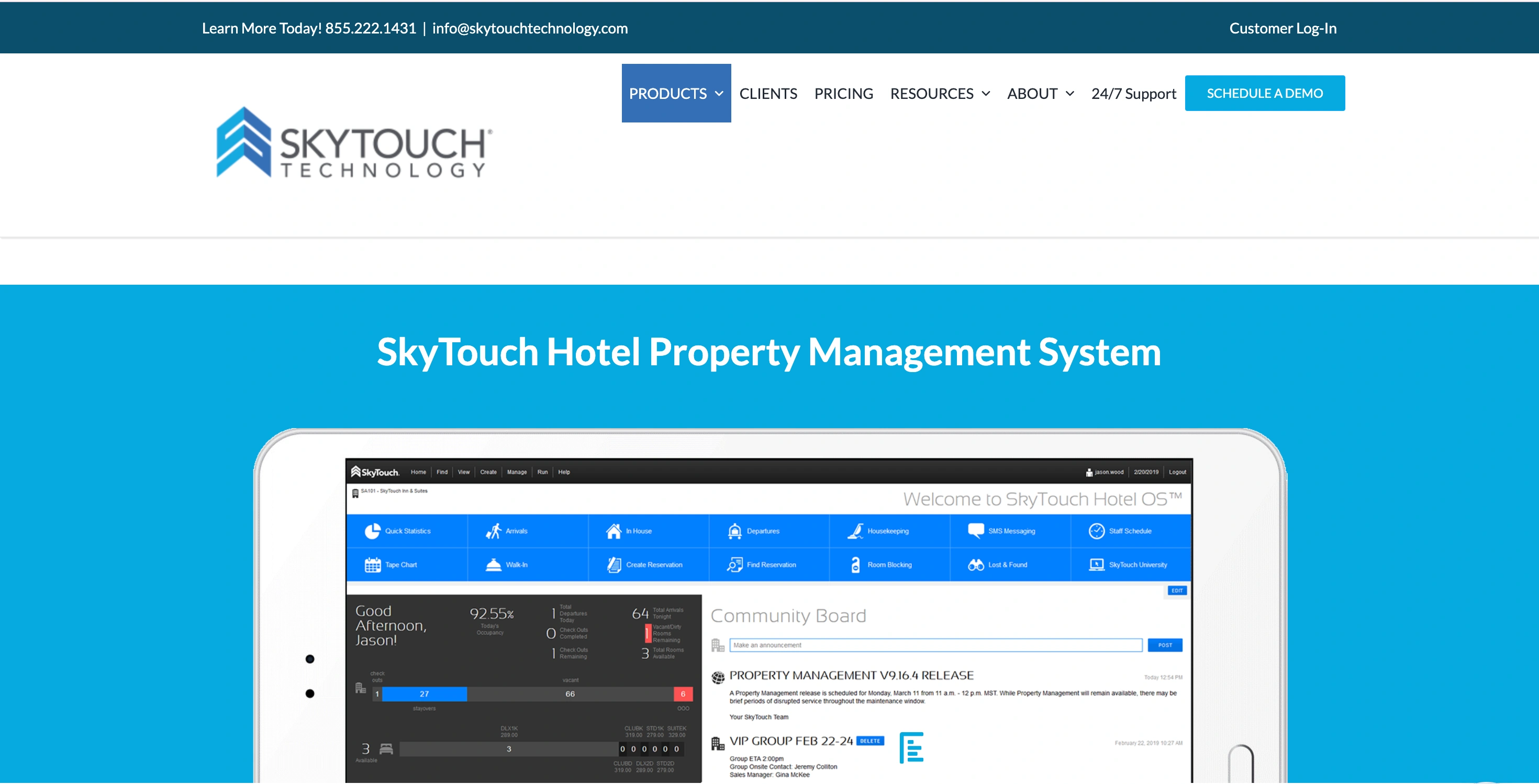
The interface feels dated. Users describe the experience as less intuitive than newer platforms, with limited options to customize the front-end view.
Support is not available 24/7. Help is there during business hours, but a problem outside those hours has to wait.
Billing rounds daily, not over the full stay. This creates small discrepancies that show up during reconciliation.
The waitlist feels underdeveloped. There is no automatic hold or timed alert when a room opens up, so staff have to track this manually.
Integrations are limited. Compared to newer PMS platforms, the list of native connections is narrower.
If two or more of these sound familiar, you already know what to look for in your next system. Most WebRezPro switchers are independent hotels and mid-sized properties that want the same operational depth with fewer rough edges.
The Real Cost of Staying With WebRezPro
WebRezPro prices itself simply, with no setup fees and a straightforward monthly rate. This is not a "you are paying too much" story. It is a "small gaps cost you time" story.
Price the reconciliation work. If your team spends time each month tracking down small billing discrepancies from daily rate rounding, that is a repeating cost.
Price the missed support windows. A problem that comes up outside business hours has to wait, which can mean a front desk issue sits unresolved during a busy check-in period.
Price the manual waitlist tracking. Without automatic holds or alerts, someone has to manually watch for openings and follow up with waiting guests.
Add these up before you compare monthly prices side by side. The staff time saved often matters more than the subscription cost. Use the roommaster ROI and pricing calculators to see what these small daily costs add up to over a year.
Before You Jump: The Checks That Matter
What you can actually export, and in what format
Confirm your export includes reservation reference, status, booking date, arrival and departure, room type, rate plan, occupancy, guest contact details, source channel, deposits, payments, and remaining balance. Ask for a sample file early, and open it yourself before you trust it.
The spreadsheets and workarounds outside WebRezPro
Look for the manual tools your team built to cover the gaps above. A shared note or spreadsheet tracking waitlist guests is common, since the system does not manage this automatically. That workaround holds real information your new system should absorb.
Payment tokens, stored cards, and free gateway exit terms
Saved card tokens do not move between payment systems. Your current gateway holds the real card number and gives WebRezPro a token that only works with that same gateway. A new PMS with a different gateway cannot use it.
WebRezPro advertises a free payment gateway integration with zero transaction fees. Before you switch, check whether that free integration has any exit terms or data-release conditions attached. Free features sometimes come with restrictions a paid one would not have.
If your property takes advance payments through self-check-in, roommaster Payments handles deposits, holds, and settlements inside the same system as your reservations, cutting down on manual reconciliation later.
{{payments-cta}}
Auditing your integration list
Write down every tool connected to WebRezPro today: your payment gateway, any accounting software, and any other third-party tools your property relies on. For each, confirm with your new vendor whether a direct connection exists and how long reconnecting it takes.
Fixing the Daily Rate-Rounding Discrepancy
WebRezPro rounds bills daily instead of applying rounding once over the full stay. Over a short stay, this rarely matters. Over a longer stay or a high volume of bookings, small discrepancies build up and show up during reconciliation.
Before you migrate, pull a sample of past stays and check whether the daily rounding created any noticeable gaps in your books. You have two choices. True up the small historical discrepancies before you switch, so your new system starts with clean numbers. Or accept them as a clean break and start fresh on the new platform, as long as you document that decision for your own records.
Either choice is fine. What matters is making the decision on purpose, rather than carrying forward an unexplained gap that looks like a new-system problem when it is really an old-system habit.
Exporting Your Accounting, Folio, and Group Block Data
WebRezPro's built-in accounting system ties charges, payments, taxes, and adjustments directly to each guest folio, with a full audit trail for every transaction. This data needs its own export pass, separate from a standard reservation file.
Pull your complete folio history, including audit trails for taxes, deposits, and refunds. If your property runs group business, export your group blocks and pickup data too. WebRezPro links group rates and shared billing across multiple reservations, and that structure does not travel automatically inside a standard export.
Check a sample of folios and group blocks in the export file before you trust it. Confirm charges, taxes, and group rates all match what you see inside WebRezPro today.
Before You Leave WebRezPro: A Hotelier's Checklist
- Export your full reservation, rate, and guest data, and open the file yourself to check it is complete.
- Pull your folio and accounting audit trails, including taxes, deposits, and refunds.
- Export your group blocks and pickup data separately if you run group business.
- Check your billing history for rate-rounding discrepancies, and decide whether to true them up or start fresh.
- List every guest with a stored card on an upcoming reservation, and plan an email asking them to confirm payment details.
- Confirm your free payment gateway's exit terms before you cancel anything.
- Name every connected tool, and confirm each has a home in your new system.
- Pick a quiet midweek date for your cutover, with no groups or events on the books.
- Keep WebRezPro active through training and your first week live.
Realistic Timeline: From Decision to Go-Live
Three to five weeks is a fair timeline for most independent hotels and mid-sized properties moving off WebRezPro.
Week 1: Assessment and export. Your new vendor reviews your room count, rate structure, and integration list. You export your reservation, rate, folio, and group block data, and check the files for completeness.
Week 2: Configuration. Your new system gets set up with your actual room types, rates, and group structures while WebRezPro keeps running normally.
Week 3: Training. Staff learn the new system using your real property setup, not a generic demo. This is also when you confirm your billing history is clean and your group blocks mapped correctly.
Weeks 4 to 5: Cutover and check. Your new system goes live on a quiet midweek night. Your team runs the first night audit and checks the five numbers below before fully trusting the new system. Properties with active group business benefit from the extra week.
Pick a cutover night with low occupancy and no groups in-house. This gives your team room to catch small issues before a full house tests the system.
Top 3 WebRezPro Alternatives
1. roommaster
Best for: independent hotels and mid-sized properties that want WebRezPro's operational depth without the dated interface, support gaps, or manual waitlist tracking.
Clear, modern interface. Staff pick up essential functions quickly, without fighting an outdated layout.
Round-the-clock support. Phone, chat, and email support run all day and night, covering your first night audit on the new system.
Automatic waitlist handling. Openings trigger alerts automatically, so staff are not manually tracking who is waiting for a room.
Migration handled for you. The implementation team manages your data export, folio verification, and group block transfer directly.
Trade-off: pricing is quote-based, so you will need a short call to compare it against WebRezPro's published rates.
2. Cloudbeds
Best for: properties that care most about wide OTA connections and a simple all-in-one bill.
Cloudbeds connects to many OTAs and keeps PMS, channel manager, and payments under one login.
Trade-off: pricing climbs as you add rooms and features, so the entry price is not always the final price.
3. RoomRaccoon
Best for: small hotels and B&Bs that want upselling and dynamic pricing built in from day one.
RoomRaccoon ships with automation features ready to use, without a long setup process.
Trade-off: reporting and inventory tools have limits as a property grows past a small size.
For more detail on the system you are leaving, see the WebRezPro pricing breakdown.
Evaluation Criteria: Pain Points vs. Solutions
| Criteria | WebRezPro pain point | roommaster solution |
|---|
| Interface | Dated design with limited front-end customization | Clear, modern interface staff learn in hours, not weeks |
| Support hours | Business hours only, no 24/7 coverage | Round-the-clock phone, chat, and email support |
| Billing accuracy | Daily rate rounding creates small reconciliation gaps | Consistent, stay-level billing accuracy |
| Waitlist handling | No automatic hold or timed alerts for openings | Automatic alerts when a room becomes available |
| Integrations | Narrower list of native connections | Broad integration ecosystem with dedicated implementation support |
How to Move From WebRezPro to roommaster in 3 Simple Steps
Step 1: Assess and plan
A roommaster implementation specialist reviews your room count, rate structure, group business, and integration list. You agree on exactly what data moves over, including your folio audit trails and group blocks.
Step 2: Migrate and configure
Your reservations, guest profiles, folios, and group data move over using secure methods, not manual re-entry. Your hotel property management system gets set up with your real room types and rates while WebRezPro keeps running. Staff training happens here too, using your actual property setup.
Step 3: Cut over and check
On your chosen night, roommaster becomes your live system. Your team runs the first night audit and checks the five numbers below before fully trusting the new setup.
If you run a lean team, the roommaster implementation team handles the technical work directly. Your job is training and the final check, not spreadsheets.
{{pms-one}}
How to Minimize Guest Disruption During Migration
Guests should never feel your PMS migration. Their booking, their self-check-in steps, and their payment details all need to carry over without asking them to redo anything.
Protect in-progress bookings. Any guest who already completed self-check-in, submitted ID details, or paid in advance through WebRezPro should see that same information already in place on the new system.
Communicate proactively. Send a short email to guests with stored cards or upcoming stays, letting them know your hotel is upgrading its systems. Keep it brief and reassuring.
Test the guest-facing side yourself. Book a test reservation and complete self-check-in to confirm the details appear correctly in the new system before you go live.
Brief your front desk on what to say. If a guest asks about a check-in step that looks different, staff should have a simple, calm answer ready.
The Five Numbers That Prove Your Import Worked
Check these five numbers before you cancel WebRezPro.
1. Reservation count. Your arrivals, in-house guests, and future reservations must match your final WebRezPro report exactly.
2. Revenue on the books. Total future room revenue must match. If the count is right but the revenue is not, your rate plans did not map correctly.
3. Guest profile count. Total guest profiles must match. Check a few records by hand for missing notes or contact details.
4. Outstanding deposits and balances. The total of all deposits and balances must match your WebRezPro closing figure, accounting for any rate-rounding decision you made earlier.
5. Group block and pickup accuracy. Every active group block, its rate, and its pickup numbers must match WebRezPro's records exactly. A group block error surfaces at check-in, in front of the group organizer, so this is worth checking carefully.
If any number is off, do not go live yet. Fixing an issue before cutover is easy. Fixing it after a week of live transactions is not. Once you are live, your hotel reporting should match your prior numbers within a reasonable range.
What to Monitor After Go-Live: Day 1, Week 1 and the First 30 Days
| Stage | What to check | Why it matters |
|---|
| Day 1 | Arrivals list matches your final WebRezPro report; folio charges post correctly; self-check-in details display correctly for guests who already completed them | Small errors are easiest to catch and fix while the house is quiet |
| Week 1 | First night audit balances cleanly; group block pickup numbers stay accurate; guest emails about stored cards are answered | Your first night audit is the real test of your financial data |
| First 30 days | A full booking cycle runs smoothly; first month-end close matches expectations; billing stays consistent without the old rate-rounding discrepancies | Some issues only show up after a full cycle of bookings and stays |
Bottom Line
Moving off WebRezPro is straightforward if you check the right things first. Export your reservation, folio, and group data, and open the files yourself. Decide how to handle any old rate-rounding discrepancies before you switch. Confirm your free payment gateway's exit terms. Check your five numbers before you go live, and keep watching closely for the first 30 days.
If a dated interface or limited support hours are holding your property back, the roommaster team can walk through your setup and show you a live fix. Book a demo and bring your current WebRezPro setup to compare side by side.
{{cta-strip}}
Frequently Asked Questions
1. How long does it take to migrate from WebRezPro?
Three to five weeks for most independent hotels and mid-sized properties, depending on group business and integration count.
2. What happens to my group blocks and folio data?
They need their own export pass, separate from a standard reservation file. Pull group blocks, pickup data, and folio audit trails before you trust the migration is complete.
3. Do saved payment cards move over automatically?
No. Card tokens stay with the payment gateway that created them. Guests with stored cards need to confirm their details again, ideally through a simple email sent before cutover.
4. Should I fix old billing discrepancies before I switch?
Check your billing history for rate-rounding gaps first. You can true them up before migration or accept them as a clean break, just make that choice on purpose and document it.
5. How do I know my data moved over correctly?
Check five numbers: reservation count, total future revenue, guest profile count, outstanding deposits and balances, and group block and pickup accuracy. All five should match your final WebRezPro report exactly.


.png)
.png)
.png)