Hotel Data Analytics: Things to Know About Big Data in Hospitality

"We used to guess our rates—now ampliphi updates them in real-time. Our RevPAR’s up 30%, and we haven’t touched a spreadsheet in months."
Mayela lozano
March 19, 2024
9
min. read
digital-screen

TL;DR

  • Data analytics empowers hotels to make informed decisions by analyzing guest behavior, market trends, and operational data.
  • Through predictive analytics, hotels can forecast demand, optimize pricing, and maximize occupancy and revenue.
  • Customer behavior insights enable hyper-personalized experiences, improving satisfaction and guest loyalty.
  • Analytics enhance operational efficiency by streamlining staffing, energy use, inventory, and maintenance planning.
  • As technology advances, data-driven strategies are shaping a more intelligent, efficient, and guest-focused hospitality industry.

Hotel stays are no longer just about a comfy bed and a friendly smile at the front desk. Every click, every booking, every guest request, and every review generates data. Across the industry, the shift toward hotel data analytics is gaining traction, and with it, the opportunity to turn simple guest interactions into powerful business strategies.

In 2024, the global hotel data platform market size reached about $1.14 billion. Meanwhile, the market for predictive analytics reached $3.21 billion and is set to reach $13.10 billion by 2033. For hoteliers, this means access to actionable insights, including guest patterns, demand spikes, seasonal flows, review trends, and booking behaviour

With such intelligence, revenue managers can rethink pricing strategies, automatically tweak room rates, and tap untapped potential, rather than rely on gut instinct. And this data-driven approach is reshaping operations across the hospitality industry.  What emerges is a new view of hotels, where data and predictive analytics give clarity on where demand comes from, how pricing should shift, and what guests truly want. 

Leveraging that intelligence can anchor stronger profitability, smarter revenue management, and meaningful guest relationships. That said, let’s look into the multifaceted role of data analytics in the hospitality sector.

Understanding Data Analytics in the Hospitality Industry

Hotel data analytics is a broad term that encompasses the collection, analysis, and interpretation of vast amounts of data generated within the hospitality sector. This data comes from various sources such as online bookings, customer feedback, social media interactions, IoT devices in smart hotels, and operational systems.

The goal is to use these insights to make informed decisions that enhance guest satisfaction, optimize operations, and improve financial performance. The types of data collected in the hospitality sector are as diverse as the industry itself. They include, but are not limited to:

  • Guest Data: Personal preferences, booking history, feedback, and spending patterns.
  • Operational Data: Room occupancy rates, revenue per available room (RevPAR), average daily rate (ADR), and operational costs.
  • Market Data: Competitor pricing, market demand trends, and customer demographics.
  • Digital Interaction Data: Website traffic, social media engagement, and online reviews

In fact, 65% of hotel brands use data analytics to personalize guest experiences. Moreover, hotels that use predictive models and dynamic pricing increase RevPAR by up to 35% compared to fixed pricing. 

When you combine these insights with a hotel property management software (HPMS), you make them even more actionable. For example, roommaster PMS centralizes operational data and lets teams apply analytical findings directly across front-office and back-office processes. It analyzes data in real time, providing insights that help tailor guest experiences, adjust pricing strategies, optimize room allocation, and enhance marketing efforts.

Key Metrics and KPIs in Hotel Data Analytics

Experts at The Economist state that the world’s most valuable resource is no longer oil, but data. When you track the right KPIs, it turns that data into actionable insights that guide revenue, service quality, and operational decisions effectively: 

  • Revenue per available room (RevPAR): Combines occupancy and ADR to measure how effectively a hotel generates revenue from its entire room inventory. RevPAR can be calculated as: 
    • RevPAR = Total Room Revenue / Total Available Rooms
  • Average daily rate (ADR): The average revenue earned per occupied room per day. It helps in assessing pricing strategies. ADR can be calculated as: 
    • ADR = Total Room Revenue / Number of Rooms Sold
  • Occupancy rate: The percentage of available rooms that were sold during a specific period. It indicates demand and helps in forecasting. Occupancy rate can be calculated as: 
    • Occupancy % = (Rooms Sold / Total Rooms Available) × 100
  • Gross operating profit per available room (GOPPAR): It measures profitability per room after operating costs and is used to assess operational efficiency and financial health. GOPPAR can be calculated as: 
    • GOPPAR = Gross Operating Profit / Total Available Rooms
  • Average length of stay (ALOS): It tracks the average number of nights guests stay and is used to plan staffing, promotions, and package deals. ALOS can be calculated as:
    • ALOS = Total Room Nights / Number of Bookings
  • Booking lead time: The average time between booking and guest arrival, used to forecast demand and adjust pricing strategies. It can be calculated as: 
    • Lead Time = Total Days Between Booking and Check-In / Number of Bookings
  • Cancellation and no-show rate: It tracks the percentage of booked rooms that do not materialize and is used to manage inventory and implement booking policies.

Top Use Cases for Hotel Analytics

Data analytics in the hospitality industry unlocks many opportunities that optimize operations and drive revenue growth. Here are four key areas where it’s making a significant impact:

1. Customer behavior analysis

Understanding guest data provides hotels with clear signals on guest preferences and helps them tailor experiences for each visitor. Hotels can track room choices, dining selections, amenity usage, and service requests to build a personal connection that drives loyalty and repeat visits. 

These insights not only improve customer satisfaction but also provide valuable insights for refining future offers.

2. Market trend awareness and targeted campaigns

The hospitality industry is influenced by global and local trends, from economic shifts to changes in consumer preferences. Data analytics enables businesses to identify and adapt to these trends in real time. 

For example, when analyses of historical data and real‑time booking trends show rising interest in wellness or flexible stays, hotels can quickly adapt their offers or marketing messages. That ability to respond helps operators launch targeted marketing campaigns that match actual demand changes.

3. Demand forecasting and dynamic pricing

Advanced analytics platforms combine booking pace, local events, market signals, and historical booking data to forecast future trends and demand surges. This data‑driven method helps hotels optimize room rates, occupancy, and yield better revenue over time. Effective forecasting also supports better planning for staffing, supplies, and services under variable demand.

roommaster Hotel Reporting Software offers multiple ways to understand this, with:

  • Access over 270 pre‑built reports covering operations, revenue, and guest activity
  • Create custom reports using the SQL report builder to meet unique property needs
  • View real‑time dashboards that track occupancy, revenue, and direct bookings

Centralised analytics allow hotels to increase direct bookings by up to 30% while freeing staff to focus on delivering high‑quality guest service. Plus, integration with the Marketing & Distribution Suite ensures reports include bookings from every channel, giving staff a complete and accurate overview of operations.

This claim is supported by research showing that, as of 2025, only around 24% of hotels report full integration of their core systems (PMS, RMS, POS, booking engines, etc.), yet top‑performing properties with unified systems see measurable gains in revenue and guest satisfaction.

{{revenue-management-one}}

4. Operational efficiency

This is the backbone of a successful hospitality business. With high data quality and insights from property management systems (PMS), hotels can avoid over‑staffing or under‑service, reduce energy use, and proactively manage cleaning and maintenance. 

That innovative use of data supports operational efficiency across the property and helps maintain high service standards without overspending.

Enhancing Guest Experience through Data Analytics

In the hospitality industry, guest expectations continue to rise while competition intensifies each year. Hotels that leverage data analytics gain valuable insights to deliver personalized, seamless, and memorable experiences that guests truly appreciate. 

In fact, a 2025 survey found that 67% of hotels using AI-based guest‑data systems saw marked lifts in stay satisfaction and repeat guest loyalty. Here’s how you can deliver exceptional guest experiences:

1. Personalization at every touchpoint

Data analytics allows hotels to understand guest preferences and behaviors across multiple touchpoints. roommaster collects and analyzes guest data from previous stays, online interactions, and social channels to create a complete guest profile. Using these insights, hotels can customize room features, dining options, and on-property activities for each guest. 

For example, a returning guest who prefers a specific wine can find it ready upon arrival, demonstrating attention to detail and care. The roommaster Guest Experience Suite and Hotel Guest App make delivering this personalized service actionable. Here’s how that connection translates into real results:

  • Automatically suggest upgrades or add-ons based on previous stays or guest interests
  • Boost ancillary revenue while building long-term guest loyalty
  • Automate pre-arrival greetings, dynamic pricing, and tailored offers in real time

Hotels that offer personalised guest experiences see around a 20% increase in customer satisfaction scores, and 89% of travellers say personalised service influences their loyalty to a hotel brand.

2. Improving service quality and efficiency

Data analytics identifies trends and operational patterns that help hotels improve service and reduce friction. Staff can track check-in and check-out times, housekeeping schedules, and dining activity to allocate resources effectively. 

The roommaster Operations Suite centralizes front desk, housekeeping, group blocks, and reporting tasks, which frees staff to focus on guest interaction. Predictive insights allow hotels to plan staffing and inventory for peak periods, directly enhancing operational efficiency and guest satisfaction.

Moreover, centralised operations can save four to six hours per week. One recent article shows that automating a single workflow across multiple hotels saved a European hotel group more than 50 working days per year.

3. Customized marketing and offers

Hotels use data analytics to tailor marketing messages, promotions, and packages to individual guest preferences. Historical data from reservations, direct bookings, and loyalty activity enables targeted campaigns that resonate with each guest. 

The roommaster Marketing & Distribution Suite, combined with unified analytics, allows properties to identify opportunities to increase direct bookings by up to 30% while strengthening guest loyalty. Personalized messaging improves repeat business and demonstrates a deep understanding of each guest’s needs.

4. Enhancing in-stay experiences

Data analytics empowers hotels to deliver dynamic, in-stay experiences that anticipate guest needs. The roommaster Guest Communication & Engagement tools allow staff to send real-time offers for spa services, dining, or family-friendly activities. 

As a result, guests receive experiences tailored to their preferences without staff needing to track every detail manually. This proactive engagement makes stays feel personalized, enjoyable, and memorable.

5. Feedback loop for continuous improvement

Finally, data analytics facilitates a continuous feedback loop. The roommaster Reporting & Analytics tools analyze satisfaction scores, review comments, and operational performance to guide actionable changes. 

Staff can respond quickly to concerns and demonstrate that guest feedback drives real improvements, which strengthens trust and long-term loyalty. This not only improves the guest experience for future stays but also indicates to guests that their feedback is valued and acted upon. 

Leveraging Competitive Insights through Data Analytics 

Analyzing relevant data allows hotel teams to act confidently, respond to market shifts, and position their property for sustained success.

Here are some ways hotels can gain a competitive edge:

A. Benchmarking and competitive analysis

Hotels use data analytics to compare performance metrics such as RevPAR, ADR, and occupancy with competitors and industry standards. roommaster provides real-time, portfolio-wide insights, helping properties quickly spot strengths and weaknesses. 

These insights guide pricing strategies, marketing approaches, and operational adjustments that improve competitiveness without adding manual work for staff.

{{revenue-management-two}}

B. Market trends and demand analysis

Data analytics allows hotels to track market trends, shifts in customer demand, and external factors affecting bookings. Historical data combined with real-time market indicators helps hoteliers anticipate opportunities before competitors. 

The roommaster Revenue & Finance Suite integrates demand forecasting, dynamic pricing, and performance dashboards to keep hotel managers informed and ready to act efficiently.

C. Pricing and revenue management

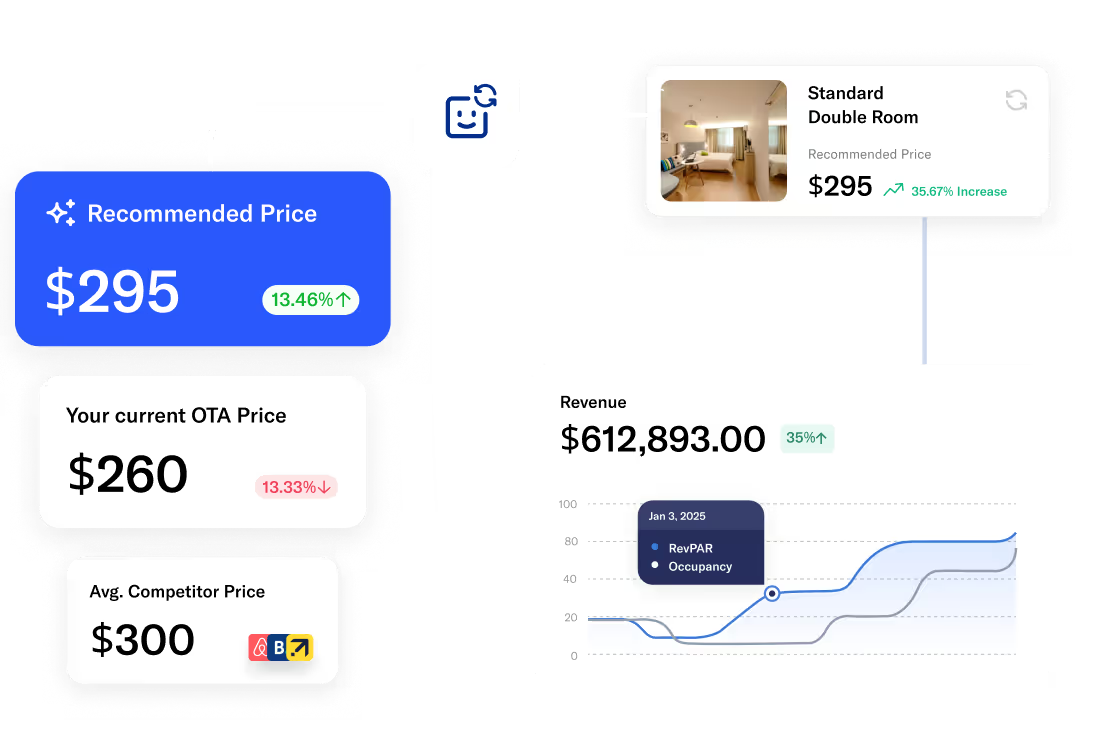
Hotels can optimize pricing strategies by analyzing competitor rates, demand forecasts, and booking patterns. The roommaster Revenue Optimization and Rate Management tools, integrated with ampliphi RMS, leverage AI-driven insights to dynamically update rates, generate live reports, and provide actionable revenue insights. 

The ampliphi Auto Pilot feature continuously adjusts rates based on real-time demand data, allowing managers to focus on operations while the system handles pricing. In fact, hotels using roommaster RMS report up to 35% higher RevPAR, 40% higher ADR, and nearly 29 hours saved per month for revenue leaders.

D. Reputation management and guest reviews

Hotels analyze guest reviews, feedback, and online sentiment to understand their market reputation. 

Using roommaster Guest Communication & Engagement tools, staff can respond to feedback promptly, identify trends in guest satisfaction, and implement improvements that strengthen the guest experience and set them apart from competitors.

E. Competitive positioning and marketing strategies

Data analytics helps hotels understand competitors’ marketing approaches, customer acquisition channels, and positioning strategies to make smarter business decisions. Insights from historical booking data and market trends help properties identify market gaps, differentiate their offerings, and target guest segments more effectively.

roommaster gives hotels the tools to act on these insights and execute campaigns efficiently:

  • The Marketing & Distribution Suite enables hotels to create personalized promotions that appeal to specific guest segments, boosting direct bookings and guest loyalty.
  • Channel manager simplifies distribution management by automating updates across hundreds of OTAs, reducing overbooking risk and ensuring consistent pricing.
  • The platform keeps the PMS, direct bookings, and OTAs perfectly synchronized, while strategic rate allocation maximizes revenue across all channels.

Hotels like Hoteles Vista Group, Puerto Rico’s only all-inclusive hotel portfolio, rely on roommaster to manage nearly 300 rooms across four properties. Under Asset Manager Rafy Molina, the group uses roommaster for unified channel management, seamless guest history tracking, and specialized all-inclusive reporting. 

Data Privacy and Security Considerations

Hotels must treat customer data privacy and security as top priorities amid growing cyber threats. Safeguarding sensitive information protects both guests and the business. Here’s how:

  • Protect guest data from breaches: Hotels should use strong encryption, secure networks, and firewalls to safeguard guest data. Regular system updates, audits, and employee training on passwords and phishing help prevent data breaches.
  • Comply with regulations: Hotels must comply with laws such as the General Data Protection Regulation (GDPR) in the European Union and the California Consumer Privacy Act (CCPA) in the US. They should also obtain explicit consent from guests for data collection, provide clear privacy policies, and implement data retention and deletion practices that meet legal requirements.
  • Limit insider risks: Employees or contractors with access to guest data can misuse it. In this case, hotels should restrict access to only what staff need, monitor activity through audit logs, and train employees on security, confidentiality, and consequences for violations.

Challenges and Future Trends in Hotel Data Analytics

Hotels face several challenges when working with data analytics, but modern tools like roommaster help address many of these issues while preparing properties for future trends.

  • Data fragmentation: Hotels collect data from multiple sources, which often exist in different formats, making consolidation and analysis difficult. roommaster unifies data from the Operations Suite, Revenue & Finance Suite, and Guest Experience Suite, providing a single platform where hoteliers can access comprehensive operational and guest insights.
  • Data quality and accuracy: Duplicate entries, incomplete records, and outdated information can distort insights. Maintaining clean, reliable data requires regular cleansing, validation, and careful monitoring. roommaster helps maintain data accuracy through integrated reporting and analytics tools, reducing errors and improving confidence in decision-making.
  • Limited data analysis resources: Large volumes of data require expertise in analysis and visualization. Hotels without dedicated analytics teams may struggle to extract meaningful insights. The AI-driven revenue management tools simplify complex analysis, allowing staff to generate actionable insights without relying solely on specialized analysts.
  • Lack of system integration: Connecting data from different platforms can be complex when systems are incompatible. roommaster integrates a PMS, Booking Engine, Channel Manager, and Guest App into one platform, eliminating silos and providing holistic insights into operations, revenue, and guest behavior.
  • Change management and cultural shift: Shifting to a data-driven culture requires employee buy-in and understanding. Resistance or lack of awareness can slow adoption. roommaster supports training, reporting transparency, and easy-to-use interfaces, helping teams embrace data-driven decision-making while minimizing disruption.

Make Hotel Market Data Analysis Work for You

Many hotels still struggle with fragmented systems and disconnected data. According to a 2025 survey of over 250 hotel IT decision‑makers, fewer than 24% of hotels report fully integrated core systems (PMS, RMS, POS, booking engines, distribution platforms, loyalty programs).

Even fewer (only 34%) centralise guest data correctly, while 42% rely on disconnected systems and 16% still use outdated methods. roommaster PMS addresses these challenges and makes analytics actionable for hotels of all sizes. With roommaster, you can:

  • Unify all operations so front‑desk, housekeeping, revenue management, guest communication, and booking channels work from a single platform
  • Use AI‑powered tools for revenue optimisation and dynamic pricing 
  • Track guest preferences and behaviour in one place to deliver personalised experiences 
  • Automate reporting and channel management to save staff time and reduce manual workload 

Independent properties such as Wood River Inn, a 57‑room hotel, saw quick operational improvements after adopting roommaster RMS. The team stopped wasting time on admin tasks and began focusing on selling rooms because a single unified platform replaced multiple disconnected systems. Remote rate adjustments and real‑time demand responsiveness gave the owner complete control even while away.

Book a demo today and turn hotel data into real performance gains!

FAQs

What are the four types of data analytics?

The four types of data analytics are descriptive, diagnostic, predictive, and prescriptive. Descriptive summarizes historical data, diagnostic identifies causes, predictive forecasts future trends, and prescriptive recommends actions. Each type provides valuable insights to guide smarter decision-making in business operations.

Do hotels need a data analyst?

Yes. Hotels need a data analyst to interpret complex datasets and turn them into actionable insights. They also improve customer satisfaction, optimize revenue, and refine marketing campaigns, resulting in measurable improvements in operations and overall hotel performance.

What is data analytics in the hospitality industry?

Data analytics in the hospitality industry involves collecting, organizing, and analyzing hotel customer data and operational information. Insights from this process help hotels understand guest preferences, forecast market demand, and make informed decisions that maximize efficiency and revenue.

How can you leverage data analytics in the hospitality industry?

Hotels can leverage data analytics to track historical booking data, monitor guest behavior, and optimize pricing strategies. roommaster PMS centralizes data from PMS, guest apps, and channels, providing actionable insights that improve efficiency, revenue, and overall guest satisfaction.

What are the benefits of hotel data analytics?

Hotel data analytics improves decision-making, revenue management, and guest personalization. It enhances operational efficiency, identifies market opportunities, predicts demand, and strengthens marketing campaigns. Plus, it helps maintain a competitive edge in the hospitality industry.

{{cta-strip}}

revenue-management-one

Put Your Hotel Pricing Optimization on Autopilot with AI

  • Dynamic pricing
  • Event data analysis
  • Competitor analysis
revenue-management-two

Unlock Your Hotel’s Potential with AI Revenue Intelligence

Ready to make the switch? Let's work together

Mayela lozano

Mayela Lozano is a content strategist with a passion for hospitality and technology. She collaborates with roommaster on content creation, highlighting how technology can streamline hotel operations and enhance guest satisfaction. When she’s not creating content, Mayela loves to travel and spend time with her two little ones, discovering new adventures and making memories along the way.

Join Thousands of Hotels Thriving with roommaster

The transition to roommaster is straightforward and efficient. Our implementation team handles data migration including reservations, guest profiles, and historical information.

Table of Contents

Join Thousands of Hotels Thriving with roommaster

The transition to roommaster is straightforward and efficient. Our implementation team handles data migration including reservations, guest profiles, and historical information.

Latest Posts

hotel guest profile
Data Management
Hotel Management

The Basics Of Hotel Guest Profiling

March 28, 2025
hotel revenue management trends
Data Management
Hospitality Trends
Hotel PMS

Future of Hotel Revenue Management: Trends & Innovations

December 20, 2023
The key ingredients of a powerful channel manager
Data Management
Hotel PMS
Hotel Management
Online Bookings

The Key Ingredients Of A Powerful Channel Manager

March 18, 2021
5 GDPR myths debunked for hoteliers | hotel software uk
Data Management

Four GDPR Myths Debunked For Hoteliers

October 20, 2020
Stayfull users supplied with GDS via ResNet World | hotel channel manager
Data Management

roommaster Channel Manager Users Supplied With GDS Via ResNet World

October 14, 2020
How Future-Proof is Your Hotel Property Management System? | cloud pms
Hospitality Trends
Data Management
Hotel Management

How Future-Proof Is Your Hotel Property Management System?

April 18, 2020
Credit Card with a Padlock representing the EMV Chip _ pms software
Hospitality Trends
Data Management
Payment Processing

What Does The EMV Liability Shift Mean For Your Property?

January 24, 2019
How To Efficiently Migrate To A New _ hotel pms software
Data Management

How To Migrate Your Hotel PMS Seamlessly: 2026 Guide

October 25, 2018
General Data Protection Regulation _ hotel pms software
General
Data Management

Five GDPR Myths Debunked For North American Hoteliers

April 17, 2018
Join Thousands of Hotels Thriving with roommaster

See how roommaster's unified platform can work for your property. Our team will walk you through features tailored to your specific needs and operations.