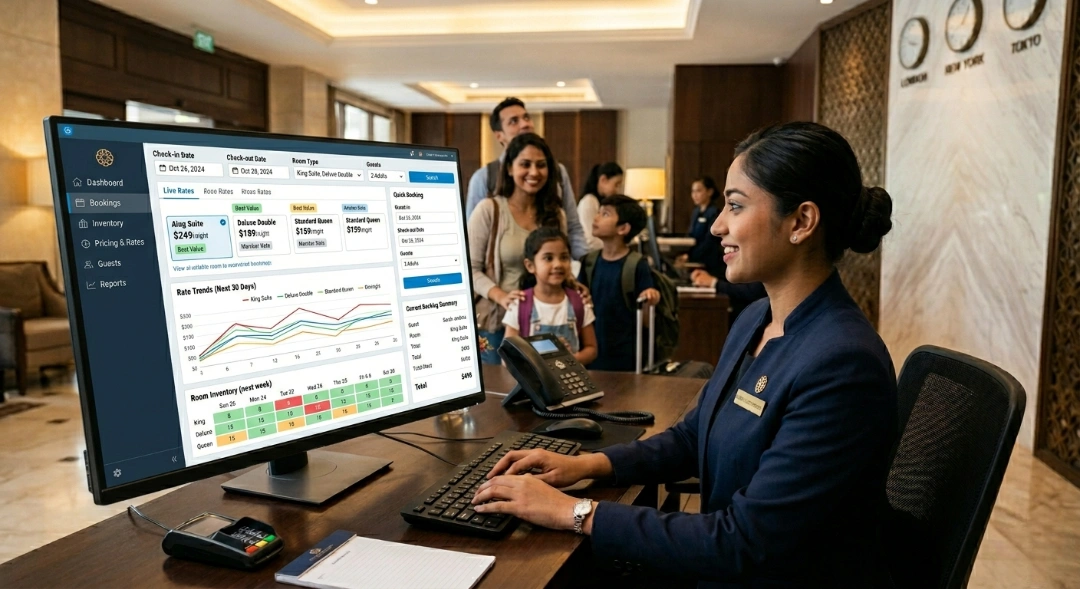
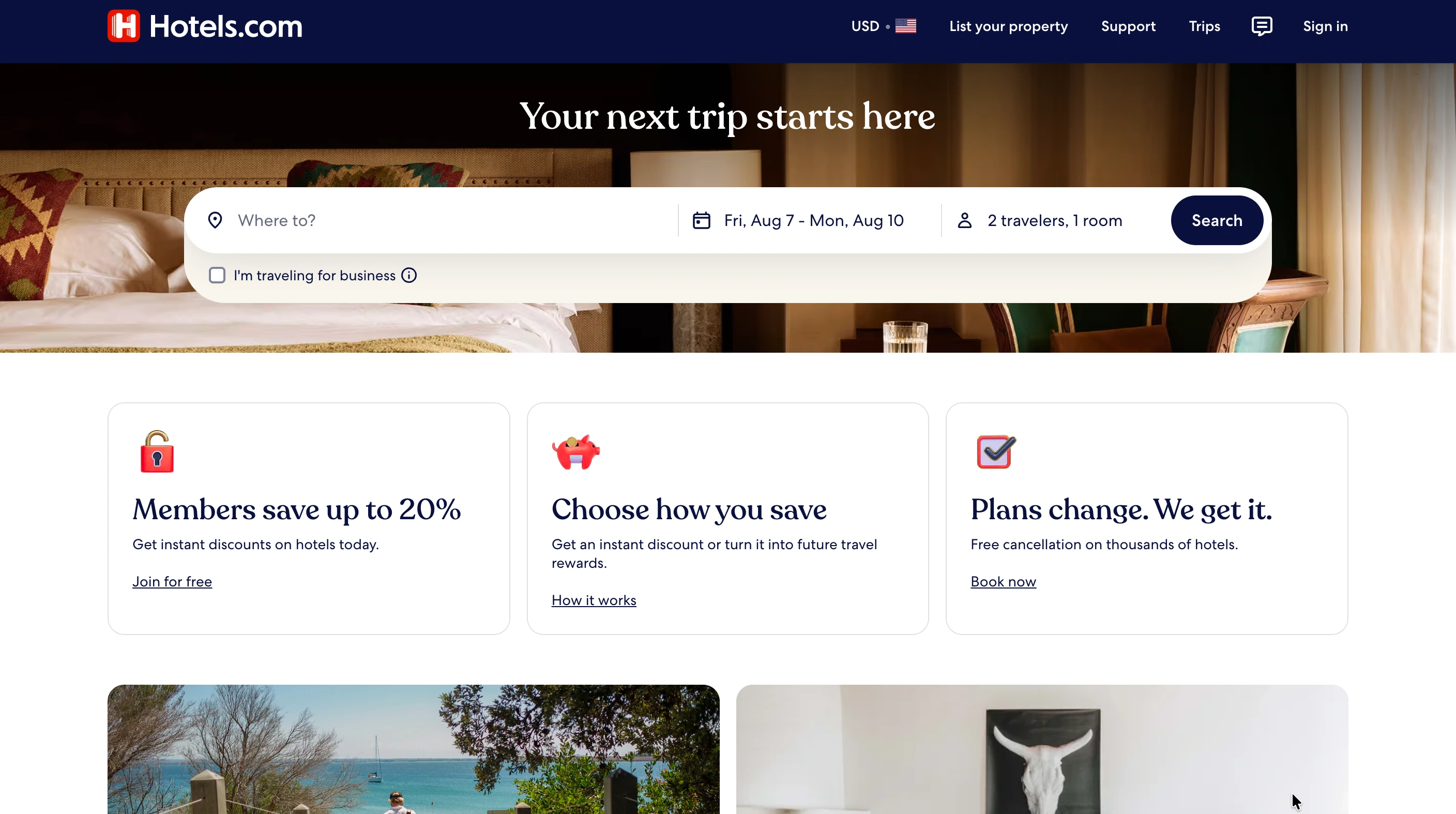
A channel manager enables hotels to list their rooms on multiple OTAs, maximizing visibility and increasing the chances of attracting a diverse range of guests. When a room is booked on one channel, it closes on every other channel instantly, so manual extranet updates never cause an overbooking or a rate parity violation.
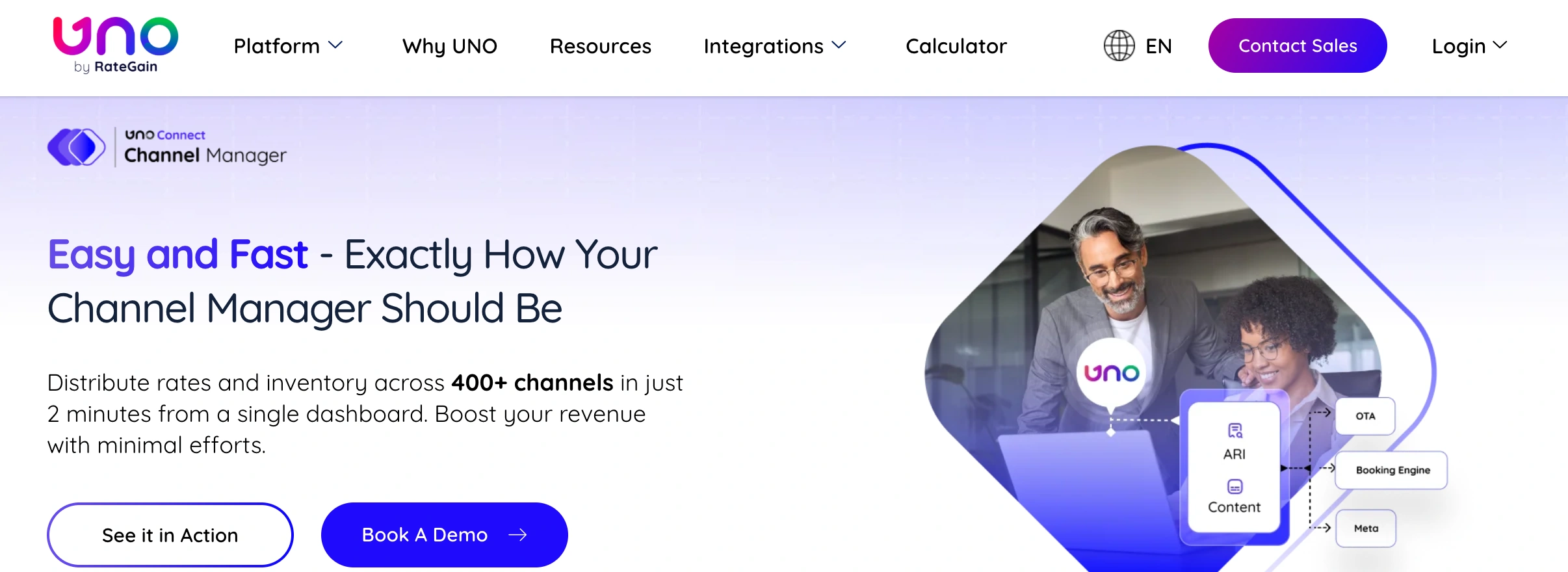
This guide compares 10 hotel channel manager platforms used by real hotels in 2026, ordered by property size and type: 1. SiteMinder, 2. RateGain, 3. roommaster, 4. STAAH, 5. RoomRaccoon, 6. Cloudbeds, 7. eviivo, 8. Profitroom, 9. Guesty, 10. Beds24.
Enterprise & Multi-Property Chains (200+ rooms or multiple properties): You need maximum OTA and GDS reach, metasearch visibility for brand-level bookings, and a console built for portfolio-level reporting. SiteMinder, RateGain, and STAAH lead here.
Independent Hotels & Small Groups (about 30 to 150 rooms): You need OTA and metasearch reach tied directly to the PMS, plus enough GDS depth to catch corporate and agent business, without a second system to reconcile. Look at roommaster, RoomRaccoon, and Cloudbeds.
Small & Boutique Hotels and B&Bs (under about 30 rooms): Prioritize fast OTA setup and a simple dashboard. GDS rarely matters at this size. Look at eviivo and Profitroom.
Vacation Rentals & Small STR Portfolios: Prioritize pooled inventory and multi-unit calendar sync across OTAs. GDS and metasearch are largely irrelevant here. Guesty and Beds24 are both built specifically for this segment.
A channel manager can connect to three different distribution types, OTAs, GDS, and metasearch, and which ones actually matter depends heavily on property size.
What Is Hotel Channel Management Software?
A hotel channel manager is software that connects your property management system (PMS) to every online booking platform, syncing room rates, availability, and inventory across OTAs (Booking.com, Airbnb, Expedia), GDS platforms, and metasearch sites (Google Hotel Ads, Trivago, TripAdvisor) from one central dashboard.
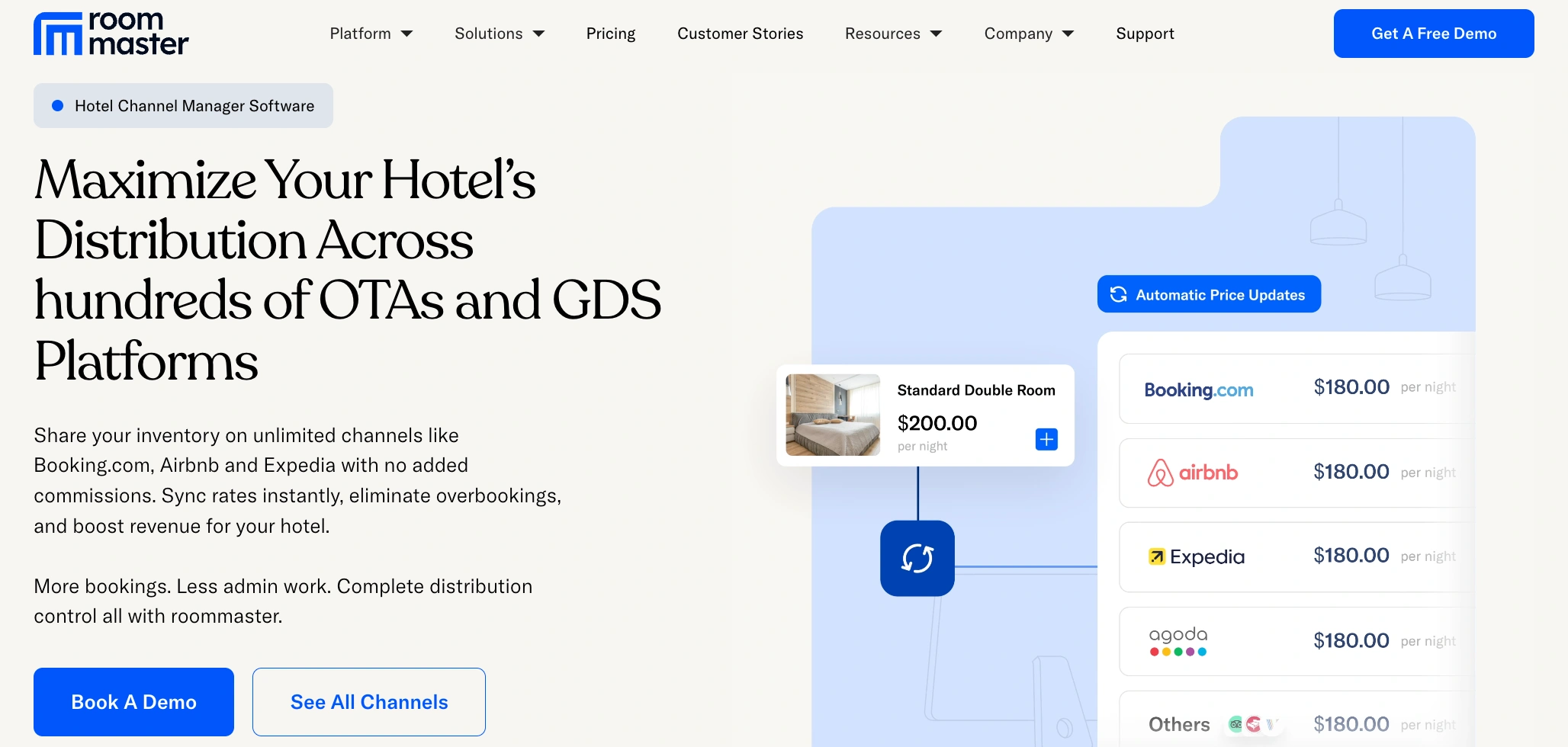
roommaster Channel Manager automatically synchronises all your listings in real time, helping you avoid overbookings and increase global visibility. Instead of logging into each platform separately to update prices or close availability, the channel manager pushes changes everywhere the moment you make them. This gives hotels full control over their distribution, protects revenue through rate parity, and frees staff from repetitive manual work, with no extra commission.
How We Chose the Right Channel Manager for Every Property Type and Size
The right hotel channel manager depends on how many properties you run, how much distribution reach you actually need across OTAs, GDS, and metasearch, and who owns the channel relationship day to day. Below, each segment is broken down by the roles that own distribution, the KPIs they are judged on, the features that move those numbers, and the software that fits.
Independent Hotels & Small Groups (about 30 to 150 rooms)
Role
Goals and KPIs
Features that deliver those goals
General Manager
No overbookings, no rate mismatches to chase down, and a channel manager that does not require a second login or a second training session, all measured in sync reliability and staff time spent on distribution.
PMS-Native Sync, Real-Time Two-Way Sync, Single Dashboard.
Sales Manager
Group and corporate rates flow to the right channels, including GDS where relevant, without manual re-entry, and availability holds accurately during negotiation windows, all measured in booking accuracy and re-keying errors.
Direct Booking Imports into PMS, Channel-Specific Strategies, GDS Access.
Revenue Manager (if exists)
Distribution reaches across OTAs and metasearch that grows with the property, with data on which channels actually deliver the best ADR and lowest acquisition cost, all measured in RevPAR by channel and cost of acquisition.
Which software is suitable:roommaster, RoomRaccoon, and Cloudbeds.
{{channel-manager-one}}
Enterprise & Multi-Property Chains (200+ rooms or multiple properties)
Role
Goals and KPIs
Features that deliver those goals
General Manager
Zero double-booking scenarios across every property, rate parity held automatically across OTAs and metasearch, and a portfolio view that does not require calling each property manager, all measured in sync reliability and overbooking rate.
Corporate and group accounts see consistent availability through GDS and direct channels, with no manual holds slipping through a channel that was not updated in time, all measured in RFP win rate and channel-level booking accuracy.
GDS Integration, Channel-Specific Rate Control, Reporting by Channel.
Revenue Manager (dedicated manager or commercial team)
Push rate changes across hundreds of OTA, GDS, and metasearch channels at once, react to demand shifts fast, and shift channel mix toward the platforms with the best ROI, all measured in channel-level RevPAR, booking pace, and cost of acquisition.
Rate Plan Automation, Mobile Rate Management, Channel Performance Analytics, Metasearch Visibility.
Which software is suitable: SiteMinder, RateGain, and STAAH.
Small & Boutique Hotels and B&Bs (under about 30 rooms)
Role
Goals and KPIs
Features that deliver those goals
Owner-Operator / General Manager
A channel manager that connects in one click, needs almost no ongoing maintenance, and stays affordable at this property size, all measured in setup time and overbooking rate.
One-Click OTA Connectivity, Automated Reconciliation, Ease of Use and Onboarding Speed.
Which software is suitable: eviivo and Profitroom.
Note: GDS rarely matters at this property size, travel agents and corporate TMCs are not booking a 12-room B&B through Sabre, so it is not a priority feature for this segment.
Vacation Rentals & Small STR Portfolios
Role
Goals and KPIs
Features that deliver those goals
Rental Owner / Property Manager
Multiple units or listings stay in sync across Airbnb, Vrbo, and OTAs without manually blocking calendars, all measured in occupancy and double-booking rate.
Pooled Inventory, Multi-Unit Support, Calendar Sync.
Which software is suitable: Guesty and Beds24.
Note: GDS and metasearch are largely irrelevant for short-term rentals, this segment lives and dies on OTA and direct-listing sync.
Best Hotel Channel Manager Software: At a Glance
Below we compare the best hotel channel manager software side by side (OTA, GDS, and metasearch coverage, what it solves and for whom, best-fit property type, and verified ratings) so you can shortlist the two or three worth a demo.
Software
OTA / GDS / Metasearch Coverage
What It Solves (and for whom)
Best For (Property Type)
Rating (G2 / Capterra)
SiteMinder
OTA: 450+ channels. GDS: yes, via major GDS partners. Metasearch: yes, including Google.
Maximum OTA reach across a large or multi-property portfolio with rate parity held automatically.
Chains and enterprise portfolios
G2 4.3
RateGain
OTA: 400+ channels. GDS: travel-intelligence and distribution tools with GDS-adjacent data. Metasearch: limited, primarily OTA-focused.
Fast, agile rate creation for teams managing many channels and properties at once.
Enterprise and multi-property teams
G2 4.3
roommaster
OTA: 300+ channels. GDS: full integration for corporate and luxury segments. Metasearch: yes, Google, Trivago, TripAdvisor.
Grow direct bookings and cut OTA commissions with OTA, GDS, and metasearch distribution built into the PMS, not a second system to manage.
OTA: 700+ channels. GDS: available through select integrations. Metasearch: yes, including Google.
Broad, budget-flexible distribution for portfolios spanning independent and multi-property operations.
Chains and growing multi-property groups
Not yet independently rated
RoomRaccoon
OTA: 200+ channels. GDS: not a primary focus. Metasearch: limited.
Ultra-fast sync and channel performance insight for mid-sized hotels growing their distribution mix.
Mid-sized independent hotels
G2 4.4
Cloudbeds
OTA: wide connectivity. GDS: not a primary focus. Metasearch: yes, including Google.
All-in-one distribution and operations for hotels that want one vendor instead of a stitched-together stack.
Independent and boutique hotels
Capterra 4.3 (343 reviews) / G2 4.3 (40 reviews)
eviivo
OTA: major platforms. GDS: not offered. Metasearch: not a primary focus.
Simple, low-maintenance channel sync for a small team without a distribution specialist.
B&Bs and small hotels
G2 3.6
Profitroom
OTA: major platforms. GDS: not a primary focus. Metasearch: bundled with its marketing tools.
Distribution paired with direct-booking marketing for boutique hotels that want both in one contract.
Boutique and independent hotels
Not yet independently rated
Guesty
OTA: STR-focused (Airbnb, Vrbo, and major OTAs). GDS: not applicable. Metasearch: not a primary focus.
Consistent distribution across short-term rental listings with tools built for the rental market.
Vacation rentals and STR portfolios
G2 4.4
Beds24
OTA: major platforms. GDS: not applicable. Metasearch: not a primary focus.
Consistent distribution across many rental units or small hotel rooms without manual calendar blocking.
Vacation rentals, hostels, small hotels
Not yet independently rated
Ratings verified July 2026 on G2. GDS and metasearch coverage for STAAH, RateGain, RoomRaccoon, Cloudbeds, eviivo, Profitroom, Guesty, and Beds24 reflects general market positioning and should be confirmed against each vendor's current integration list before publishing. Most vendors quote custom pricing based on room or unit count.
{{pms-three}}
Top Hotel Channel Manager Software Providers
Here's a closer look at each platform, broken down by the property size and type it fits best, with the specific OTA, GDS, and metasearch coverage, pricing, and reviews behind each pick.
Independent Hotels & Small Groups (about 30 to 150 rooms)
1. roommaster Channel Manager: Best for independent hotels and groups that want distribution built into the PMS
Managing distribution manually across a dozen extranets creates the exact problem hoteliers come looking for a fix to: pricing inconsistencies, overbooking, and administrative work that drains staff time and revenue potential. The roommaster Channel Manager is a centralized distribution system that connects your property to online travel agencies, global distribution systems, and metasearch sites while holding inventory and rate parity automatically.
Key features: 300+ OTA and metasearch connections (Booking.com, Expedia, Google, Trivago, and TripAdvisor among them), full GDS integration for corporate and luxury travel segments, regional channel support for Central Europe, Asia, and South America, real-time two-way sync, centralized rate control, channel-specific pricing strategies, self-serve OTA setup, and channel performance analytics including booking trend analysis by lead time and length of stay.
What it solves: Grow direct bookings and cut OTA commission dependence with one dashboard instead of a stitched-together stack. Because roommaster Channel Manager is built to sync perfectly with roommaster PMS and roommaster Booking Engine, every booking lands in the system automatically, rates stay consistent across every OTA, GDS, and metasearch channel including the direct site, and no one is logging into a separate extranet to update the same price twice.
Best for: Independent hotels and small-to-mid hotel groups, including boutique hotels, motels, inns, and B&Bs.
Pricing: Custom quote based on room count, available as part of the wider roommaster platform.
Reviews: G2 4.4. Properties typically reduce distribution management time by 85% while expanding market reach across both global platforms and region-specific OTAs.
“roommaster is very easy with our channel management, our OTAs, the availability is updated right away. So there’s no delay, doesn’t cause any overbookings.” - Stacy Dadson, General Manager, Harrison Hall Hotel
{{channel-manager-two}}
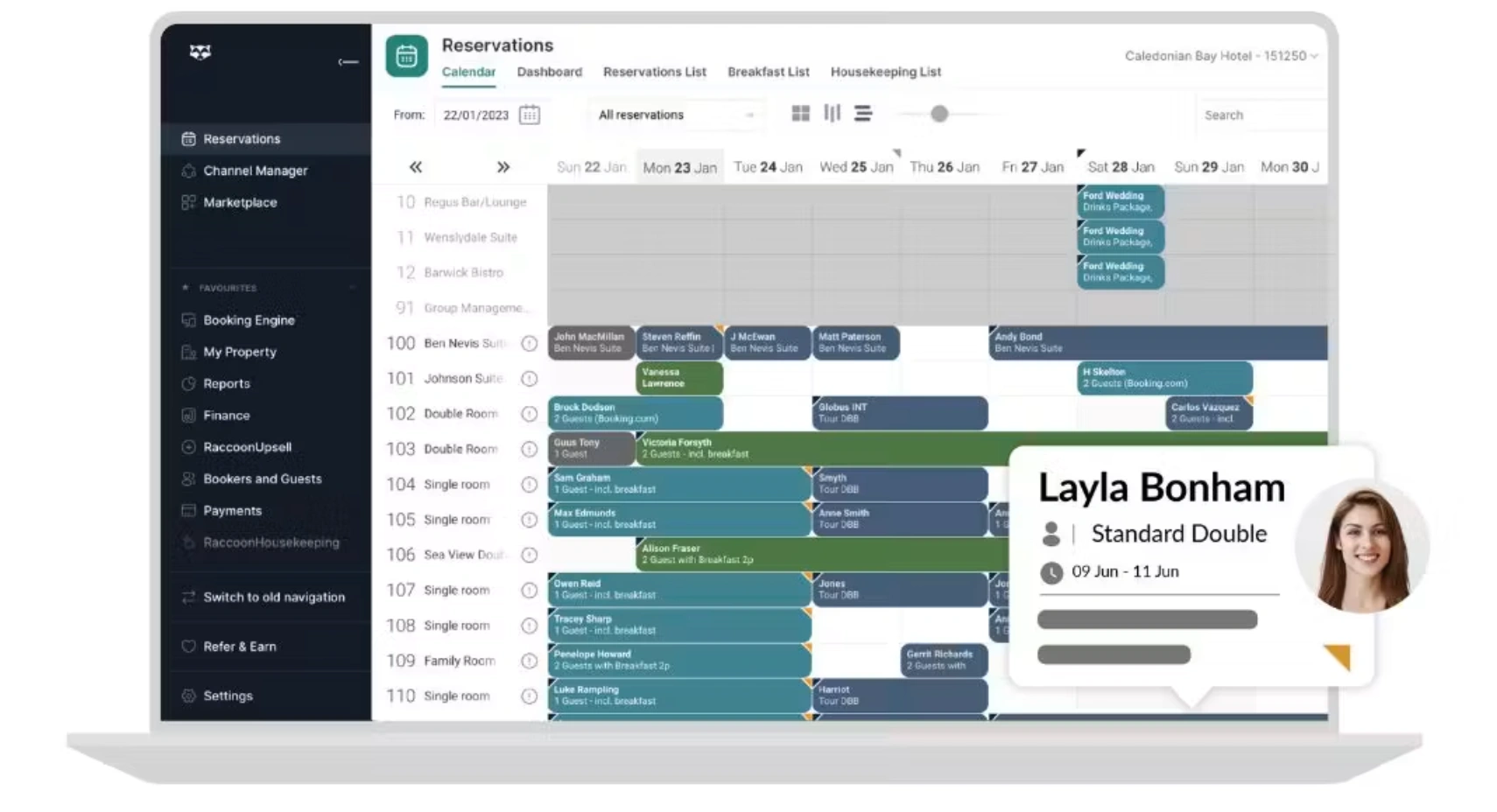
2. RoomRaccoon: Best for mid-sized hotels that want the fastest sync on the market
A rate change that takes minutes to propagate across channels leaves a window open for a mismatched booking to slip through, and mid-sized hotels without a dedicated distribution manager feel that risk the most. RoomRaccoon closes that window as tight as possible, syncing a rate change across 200+ OTA channels in about 5 seconds, with pooled inventory that keeps room-type management simple for a lean team.
Key features: 5-second sync across 200+ OTA channels, pooled inventory, dynamic pricing tools, channel performance insights, simplified interface.
What it solves: Push rate and inventory updates out fast enough that an OTA channel is almost never out of parity, with pooled inventory that removes the need to manage room types separately per channel. That speed protects revenue during high-demand periods when rates move more than once a day.
Best for: Mid-sized independent hotels that want fast, simplified OTA distribution without a distribution specialist on staff.
Pricing: From $236 per month.
Reviews: G2 4.4.
3. Cloudbeds: Best for hotels that want distribution and PMS from one vendor
Running a channel manager as a bolt-on system means two vendors, two support lines, and two places where data can drift out of sync. Cloudbeds avoids that by building its channel manager directly into the PMS, with OTA and metasearch connectivity included, so hotels that would rather manage one contract and one login get distribution and operations from the same platform.
Key features: Channel manager bundled natively with the PMS, wide OTA connectivity, metasearch visibility including Google, booking engine coordination, unified reporting across operations and distribution.
What it solves: Avoid running distribution and property management as two separate systems that need to be kept in sync manually. Because the data driving pricing and the data running the front desk come from the same platform, there is one less place for a mismatch to start.
Best for: Independent and boutique hotels that want distribution and PMS unified under one vendor.
Pricing: Custom, quote-based.
Reviews: G2 4.3.
Enterprise & Multi-Property Chains (200+ rooms or multiple properties)
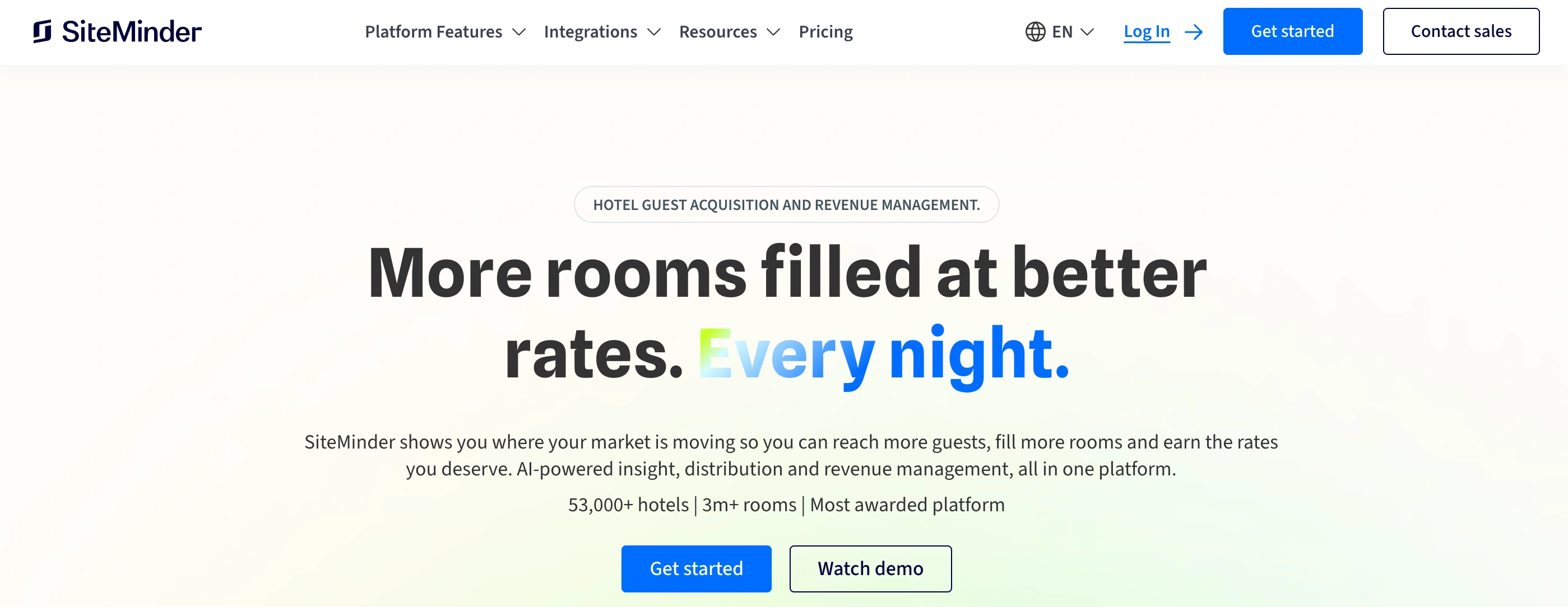
1. SiteMinder: Best for hotel groups and chains that need maximum OTA reach
Enterprise portfolios lose revenue fast when a channel manager cannot keep up with hundreds of connections at once, since even a short sync delay across dozens of properties turns into a wave of rate mismatches. SiteMinder solves that scale problem directly, connecting to more than 450 OTA channels from one console, with GDS and metasearch (including Google) layered in, and holding rate parity across every property in the portfolio without a distribution team manually checking each one.
Key features: 450+ OTA channel connections, GDS distribution through major partners, metasearch visibility including Google, real-time two-way sync, intelligent pricing insights, multi-property dashboard.
What it solves: Reach the widest possible set of OTAs, GDS partners, and metasearch sites from a single login, with real-time sync that keeps rates and availability aligned everywhere a guest can compare or book. Ownership groups running several properties get one console for the numbers they are judged on: booking volume, channel mix, and cost of distribution, instead of chasing parity errors property by property.
Best for: Hotel chains and multi-property groups that want the broadest distribution footprint available.
Pricing: From $85 per month, custom for groups and enterprise portfolios.
Reviews: G2 4.3, widely adopted across large hotel groups for its channel breadth.
2. RateGain: Best for enterprise teams that need fast, mobile rate management
Revenue teams managing hundreds of OTA channels across multiple properties cannot afford to wait until they are back at a desk to react to a demand spike. RateGain is built around that speed problem, letting a manager build a new rate plan in minutes and push ARI updates straight from a phone, so a rate change made during a walkthrough goes live everywhere just as fast as one made from an office.
Key features: Rate plans built in under 5 minutes, 400+ OTA channel distribution, mobile ARI updates, real-time competitor and demand data, group displacement tools for corporate and agent business.
What it solves: Build and push rate changes fast across hundreds of OTA channels at once, with mobile access for teams that are not always at a desk. That speed matters most in enterprise portfolios where dozens of properties need the same rate change on the same day, and a delay of even a few hours shows up as lost revenue.
Best for: Enterprise and multi-property teams that need speed and mobile flexibility over manual rate builds.
Pricing: Custom, quote-based.
Reviews: G2 4.3.
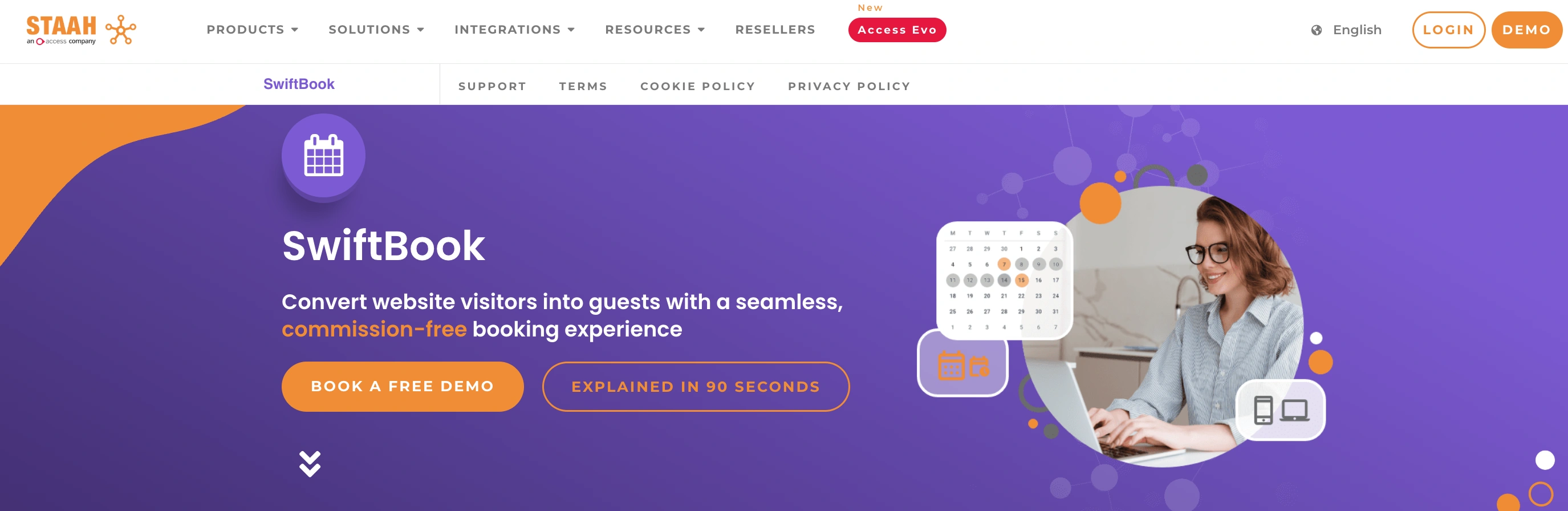
3. STAAH: Best for growing multi-property groups that want reach without enterprise pricing
Chains that have outgrown a single-property channel manager but are not yet ready for enterprise-tier pricing often land on STAAH. It connects to more than 700 OTA channels, with metasearch visibility including Google and select GDS integrations, on tiered pricing that scales as a property adds rooms or a group adds locations.
What it solves: Grow distribution reach at the pace the business is actually growing, instead of overpaying for enterprise capacity on day one or hitting a ceiling on a budget tool. The tiered structure lets a group add properties without renegotiating its whole contract each time.
Best for: Chains and growing multi-property groups that want broad reach without enterprise-level cost.
Pricing: Custom, tiered by room count and channel volume.
Reviews: Not yet independently rated on major directories.
Small & Boutique Hotels and B&Bs (under about 30 rooms)
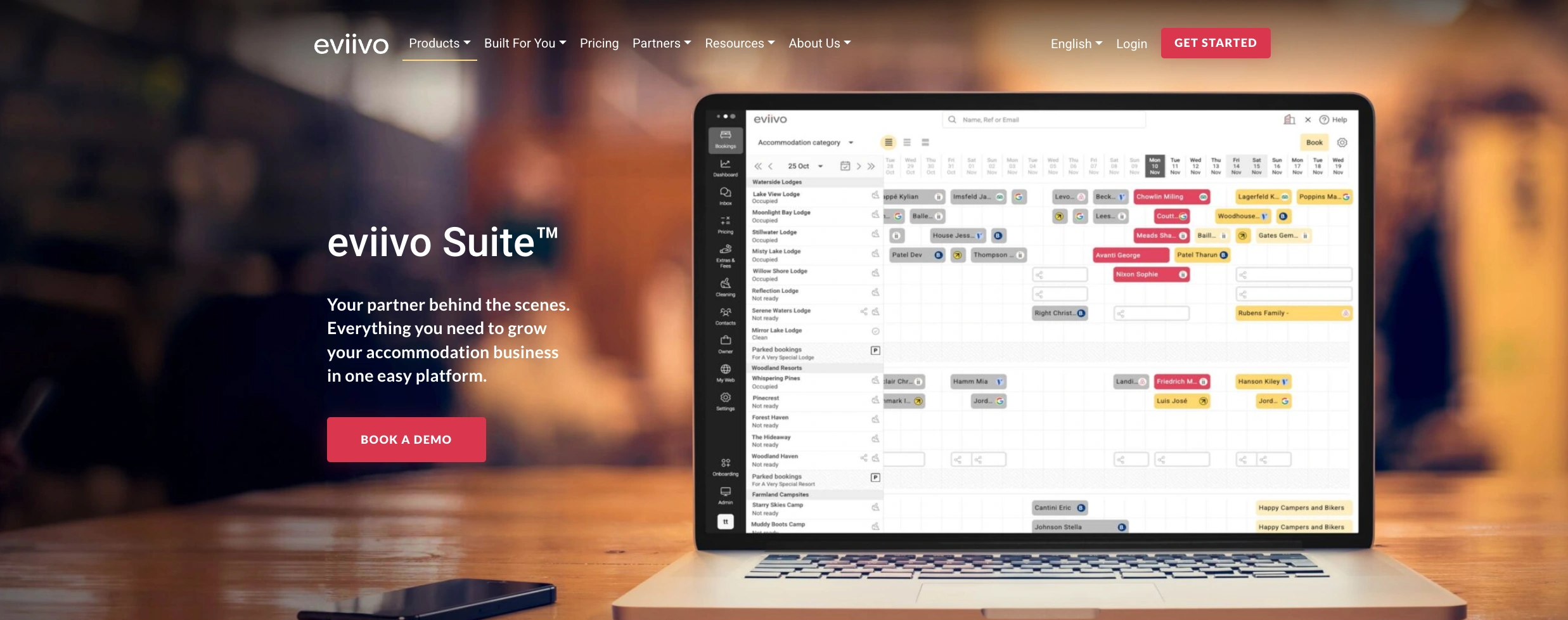
1. eviivo: Best for small hotels, B&Bs, and vacation rentals that want low-maintenance setup
A property this size rarely has anyone whose job is distribution, so a channel manager that demands daily attention gets ignored until something breaks. eviivo is built around that reality, connecting to major OTAs in one click and reconciling bookings automatically, so a small team can trust it to run quietly in the background. GDS and metasearch are not the focus here, and for a property this size, they rarely need to be.
What it solves: Get connected to major OTAs fast and keep listings in sync without a distribution manager on staff to babysit it. At a small property, no one has time to check a channel manager daily, so eviivo automates reconciliation and only surfaces something when it actually needs attention.
Best for: B&Bs, small hotels, and vacation rentals that want simple setup and minimal ongoing maintenance.
Pricing: From $50 per month.
Reviews: G2 3.6.
2. Profitroom: Best for boutique hotels that want distribution and marketing in one contract
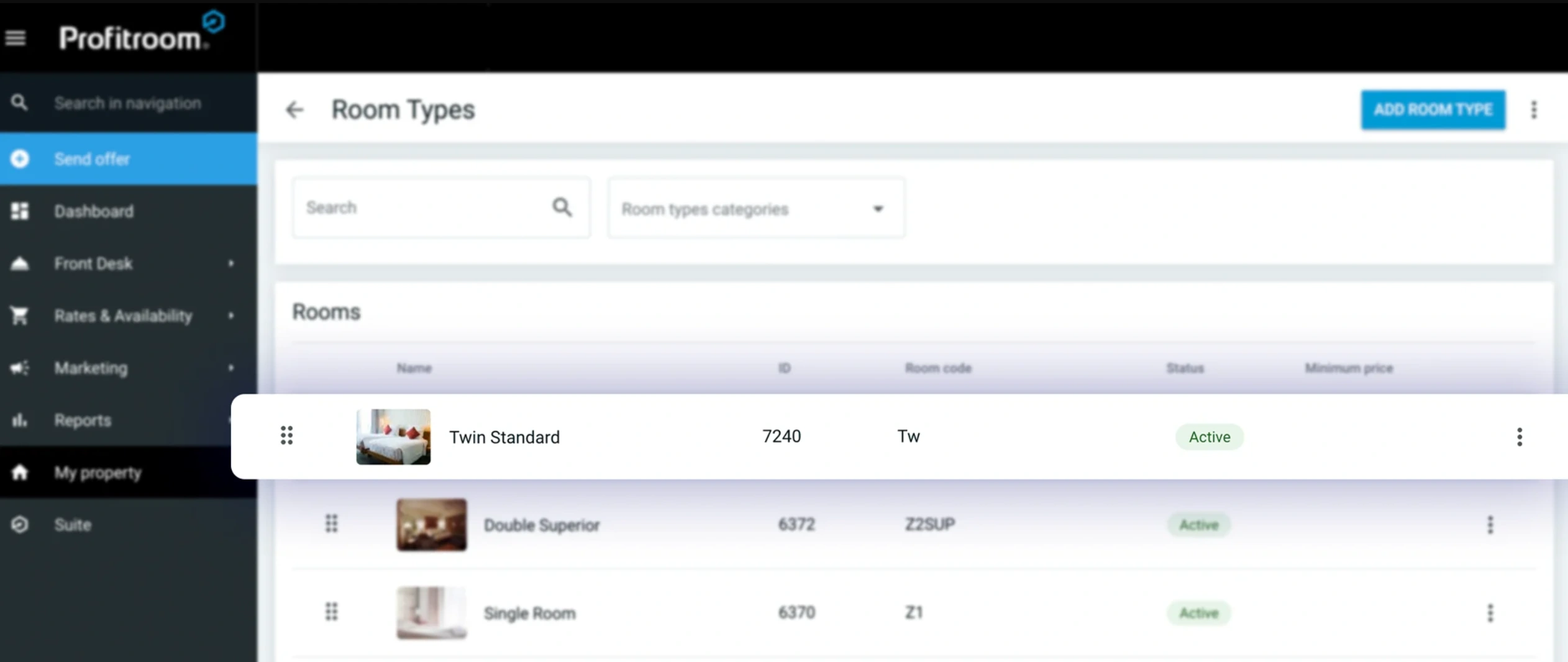
Boutique hotels in competitive markets often need more than sync, they need help driving direct bookings in the first place, and juggling a channel manager, a booking engine, and a marketing tool as three separate vendors adds overhead they do not have staff to absorb. Profitroom bundles OTA channel management with a booking engine, metasearch-driven marketing campaigns, and direct-booking tools under one contract, popular with independent hotels across Europe that want fewer vendors, not more.
Key features: OTA channel management bundled with booking engine and marketing tools, metasearch-driven campaign tools, direct-booking campaign tools, unified reporting.
What it solves: Run OTA distribution and metasearch-driven direct-booking marketing from one relationship instead of stitching together separate tools that were never built to talk to each other. That bundling suits boutique properties that want a single vendor accountable for both sides of the booking mix.
Best for: Boutique and independent hotels, particularly in Europe, that want distribution and marketing bundled together.
Pricing: Custom, quote-based.
Reviews: Not yet independently rated on major directories.
Vacation Rentals & Small STR Portfolios
1. Guesty: Best for short-term rental portfolios that need rental-specific distribution
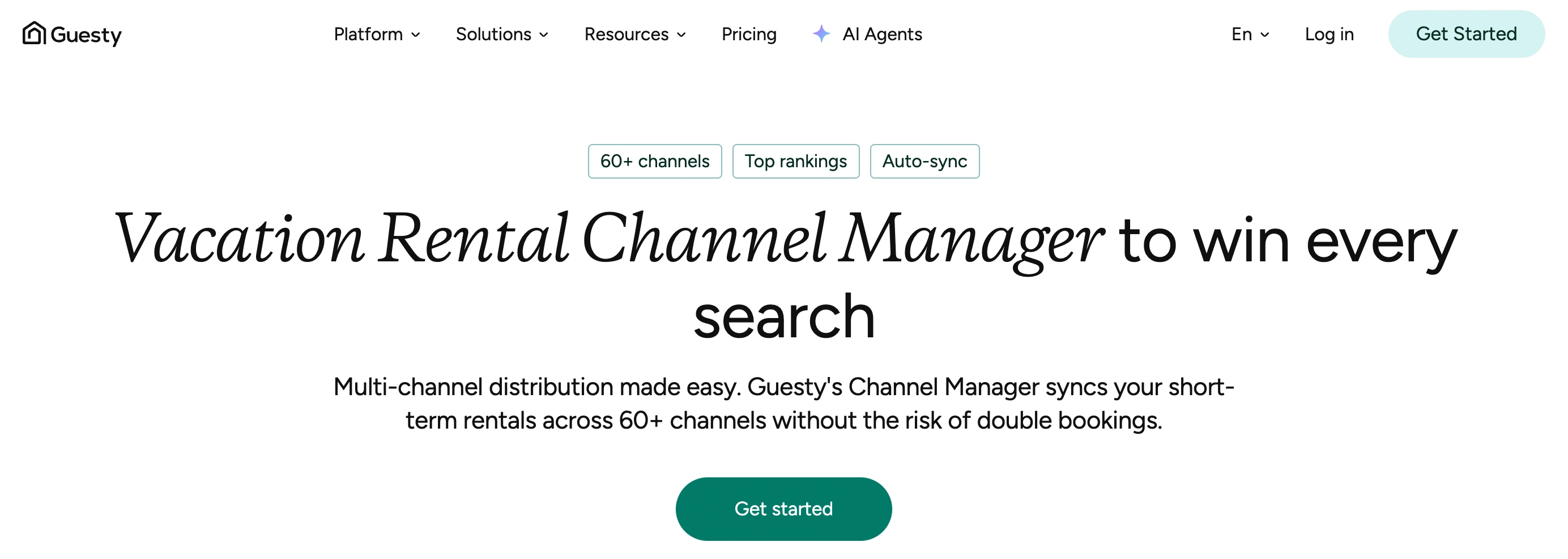
Hotel-first channel managers handle single rooms well but were never built for a host or manager juggling dozens of individual listings across Airbnb and Vrbo. Guesty was built specifically for that market instead of adapted from hotel software, giving STR operators multi-listing management with the OTA depth those two platforms actually require. GDS and metasearch are not relevant to this segment.
Key features: STR-specific OTA channel sync, multi-listing management, deep Airbnb and Vrbo integration, portfolio-level reporting.
What it solves: Sync listings across the platforms that actually matter to short-term rental operators, with tools designed around how STR portfolios are run rather than retrofitted from a hotel product. That distinction matters most for managers running many listings across multiple owners.
Best for: Vacation rental managers and STR portfolios that want a rental-native platform.
Pricing: Custom, quote-based.
Reviews: G2 4.4.
2. Beds24: Best for vacation rentals and small STR portfolios managing multiple units
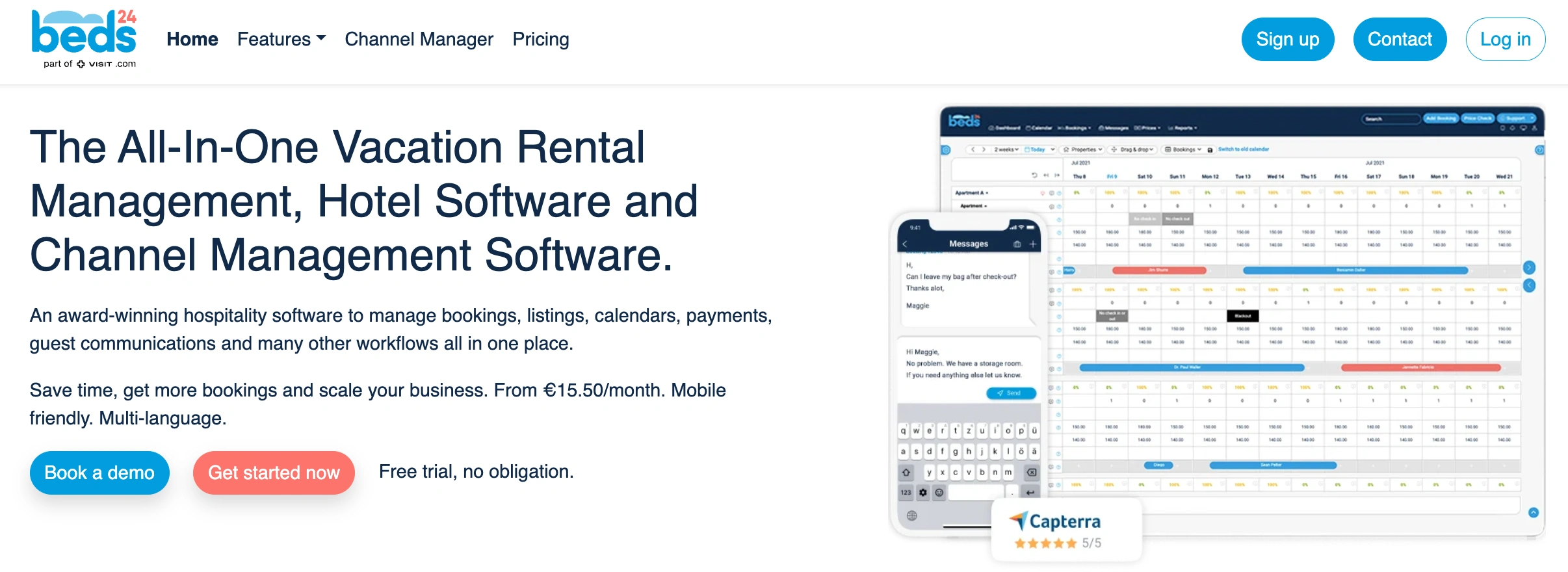
Blocking a shared calendar by hand every time one of several units books is a losing game the moment a portfolio grows past a handful of properties. Beds24 solves that with pooled inventory and multi-unit management built for exactly this problem, plus a Google Calendar sync that gives hosts a familiar view of availability without learning a new interface. Like Guesty, GDS and metasearch are not part of this segment's buying criteria.
Key features: Major OTA connections, pooled inventory, multi-unit management, Google Calendar sync.
What it solves: Keep multiple units or listings in sync across Airbnb, Vrbo, and OTAs without manually blocking calendars every time one books. Hosts running more than a handful of units lose track of availability fast without pooled inventory logic doing that work automatically.
Best for: Vacation rental owners, hostels, and small STR portfolios.
Pricing: Custom, quote-based.
Reviews: Not yet independently rated on major directories.
OTAs, GDS, and Metasearch: What's the Difference?
OTAs, GDS, and metasearch are not the same thing, and a hotel channel manager can connect to all three:
OTAs (Online Travel Agencies): Consumer booking sites like Booking.com, Expedia, and Airbnb, where guests search and book directly on the platform. This is the channel type every hotel needs, regardless of size.
GDS (Global Distribution System): Networks like Sabre, Amadeus, and Travelport that travel agents, corporate travel managers, and TMCs use to book rooms. This matters most for hotels chasing corporate, group, and agent-booked business, and it's largely irrelevant for small B&Bs or vacation rentals.
Metasearch: Comparison sites like Google Hotel Ads, Trivago, and TripAdvisor, where guests compare prices across OTAs and your direct site before clicking through to book. This drives visibility and can route bookings straight to your own website instead of an OTA.
A hotel that only connects its channel manager to OTAs is leaving the other two distribution types, and the bookings that come with them, on the table.
Why Hoteliers Choose a Channel Manager
Eliminates overbooking: A room sold on one platform is removed from every other platform automatically, closing the gap that causes double bookings.
Saves time: No more logging into a dozen separate extranets to update the same price a dozen times.
Boosts revenue: Staying visible across OTAs, GDS, and metasearch at once, without the manual overhead, increases your odds of getting booked by the guest actually searching for you.
Protects rate parity: OTAs penalize hotels that let rates drift out of sync, sometimes by dropping your ranking in search results. Automatic sync keeps every channel showing the same price without anyone tracking it by hand.
Frees up front desk staff: Reservations agents stop reconciling bookings across channels and go back to actually taking care of guests, instead of chasing down which OTA overbooked which room.
Protects guest experience and reputation: A double-booked guest at check-in is a bad review waiting to happen. Removing the chance of an overbooking removes that risk before it reaches the front desk.
Gives you channel-level performance data: Instead of guessing which OTA is worth the commission, you see ADR, booking volume, and acquisition cost by channel, so you can shift effort toward what's actually working.
Makes it easier to expand distribution: Adding a new OTA, GDS connection, or metasearch listing is a setup task inside one dashboard, not a new extranet to learn and monitor separately.
Scales without adding headcount: A hotel group adding a second or third property doesn't need to double its distribution staff, the channel manager carries the added workload.
{{cta-strip}}
Frequently Asked Questions
1. What is a hotel channel manager?
Software that syncs your rates and room availability across every OTA and GDS you sell on, updating all of them the moment one channel books a room, so you never sell the same room twice.
2. What is a PMS channel manager?
A channel manager built to run inside or connect directly to your property management system, so bookings from every OTA land in the PMS automatically instead of needing manual entry from a separate extranet.
3. What is an OTA channel manager?
The same tool, described from the OTA side: it is what keeps your rates and availability accurate on Booking.com, Expedia, Airbnb, and every other OTA you list on, without you updating each one by hand.
4. What is an online channel manager?
A cloud-based version of the same system, meaning you manage all your distribution channels from a browser dashboard rather than installing software locally.
5. Does a channel manager include GDS and metasearch, or just OTAs?
It depends on the vendor and the property size. OTAs are universal, every hotel needs them. GDS matters for hotels chasing corporate, group, or travel-agent business, and metasearch (Google Hotel Ads, Trivago, TripAdvisor) matters for hotels that want visibility and direct-booking clicks alongside their OTA listings. Small B&Bs and vacation rentals typically only need OTA coverage.
6. How does a channel manager handle bookings across platforms?
Through two-way API connections. When a guest books on one channel, the software deducts that room from every other channel in real time and, in PMS-native systems like roommaster, drops the reservation straight into the property management system with no re-keying.
7. What is the best channel manager system for independent hotels?
roommaster Channel Manager is a strong fit, syncing 300+ OTA, GDS, and metasearch connections directly inside the PMS with centralized rate control and channel performance analytics. RoomRaccoon and Cloudbeds are also common picks at this size.
8. What is the best channel manager for a small B&B?
eviivo and Profitroom are both built for properties without a dedicated distribution manager, prioritizing one-click OTA setup and low ongoing maintenance over GDS depth or enterprise-scale reach.
9. How is a channel manager different from a booking engine?
A channel manager distributes your rates and availability to third-party OTAs, GDS partners, and metasearch sites. A booking engine sells rooms directly on your own website. Most hotels run both, and they perform best when tied to the same PMS.
Mayela Lozano is a content strategist with a passion for hospitality and technology. She collaborates with roommaster on content creation, highlighting how technology can streamline hotel operations and enhance guest satisfaction. When she’s not creating content, Mayela loves to travel and spend time with her two little ones, discovering new adventures and making memories along the way.
Join Thousands of Hotels Thriving with roommaster
The transition to roommaster is straightforward and efficient. Our implementation team handles data migration including reservations, guest profiles, and historical information.
The transition to roommaster is straightforward and efficient. Our implementation team handles data migration including reservations, guest profiles, and historical information.
Digital Tipping Software For Hotels: Complete Guide 2026
August 18, 2026
Hotel Management
10 Best Hotel Spa Management Software For 2026
August 17, 2026
Hotel Management
Payment Processing
Best Hotel Billing Software: Streamlining Financial Operations
August 17, 2026
Hotel Management
10 Best Hotel Maintenance Management Software For 2026
August 17, 2026
Hotel Management
10 Best Banquet Management Software For 2026
August 17, 2026
Hotel Management
Best Hotel Budgeting & Forecasting Software For 2026
August 16, 2026
Online Bookings
Hotel Management
10 Best Hotel Distribution Software For 2026
August 16, 2026
Hotel Management
General
Top Rated Hostel Management Software In 2026
August 16, 2026
Hotel Management
10 Best Hotel Upsell Software in 2026: Hotelier's Choice
August 14, 2026
Online Bookings
Hotel Management
How to List Your Hotel on Venere
August 6, 2026
Join Thousands of Hotels Thriving with roommaster
See how roommaster's unified platform can work for your property. Our team will walk you through features tailored to your specific needs and operations.




.png)
.png)
.png)