Types Of Hotels: The Ultimate Guide For Hoteliers 2026
Hotels are grouped by size, service level, and purpose: small independent properties, boutique hotels, hostels, motels, mid-sized hotels, resorts, extended stay properties, and large enterprise chains, each suited to a different traveler and operating model.
Hotels are classified two ways: by service tier (luxury, budget, business, resort, extended stay, motel) and by size and structure (independent, boutique, mid-sized, large, or multi-property).
There are 9 core property types: small properties/B&Bs, hostels, boutique and independent hotels, motels and roadside inns, mid-sized hotels, aparthotels and extended stay, resorts and full-service hotels, large hotels and enterprise chains, and campgrounds/RV parks/glamping sites.
Room count is the fastest way to tell them apart: small properties run 1 to 20 rooms, mid-sized hotels sit around 50 to 99, and large hotels and enterprise groups start at 100 rooms or span multiple properties.
Each property type needs a different mix of front desk workflow, staffing, and technology, which is where a flexible PMS like roommaster becomes useful across the range.
What Are Types Of Hotels?
Hotel types are grouped by size, service level, and guest purpose, ranging from small independent B&Bs and hostels to full-service resorts and multi-property enterprise chains. Each category serves a different traveler need and operating model.
Knowing which category a property falls into matters beyond terminology. It shapes staffing levels, the technology a property needs to run smoothly, and how a hotel should price and market itself against comparable competitors. A 15-room boutique hotel and a 300-room resort are both "hotels," but they operate nothing alike.
Common Hotel Categories
Small properties, B&Bs & guesthouses: Owner-run stays with 1 to 20 rooms and a personal, host-led experience.
Hostels: Budget-friendly beds in shared or private rooms, built for social and long-stay travelers.
Boutique & independent hotels: Design-led, character-driven properties with 10 to 100 rooms.
Motels & roadside inns: Quick-stay properties with direct outdoor room access for road travelers.
Mid-sized hotels: Full-service properties with 50 to 99 rooms and multi-shift staffing.
Aparthotels & extended stay: Apartment-style units with kitchens for stays of a week or longer.
Resorts & full-service hotels: Destination properties built around pools, dining, and activities.
Large hotels & enterprise chains: 100+ room properties, often operated across multiple locations under one brand.
Campgrounds, RV parks & glamping sites: Outdoor stays managed by site rather than by room.
Hotel Property Types And Typical Room Sizes
Property type
Typical room or unit count
Small properties, B&Bs, inns & guesthouses
1 to 20 rooms
Hostels
20 to 200 beds
Boutique & independent hotels
10 to 100 rooms
Motels & roadside inns
10 to 50 rooms
Mid-sized hotels
50 to 99 rooms
Aparthotels & extended stay
20 to 150 units
Resorts & full-service hotels
100 to 500+ rooms
Large hotels & enterprise chains
100 to 1,000+ rooms, often across multiple properties
Campgrounds, RV parks & glamping sites
20 to 300 sites
Beyond the property itself, no two hotels offer the same room experience. A boutique hotel might lean into individually designed rooms, while a resort spans everything from standard doubles to multi-room suites and villas. See our guide to types of hotel rooms to understand how room categories break down within each property type.
Types Of Hotels Explained
1. Small Properties, B&Bs, Inns & Guesthouses
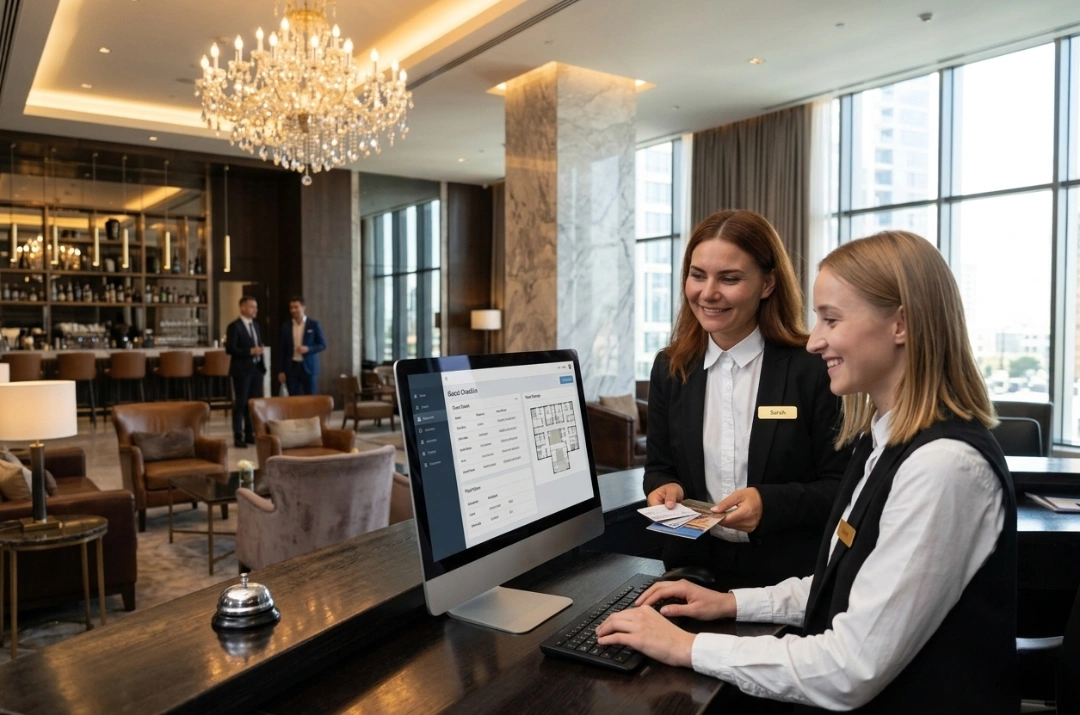
These are owner-operated properties with 1 to 20 rooms, often in a converted home or a small purpose-built inn. Guests expect a personal, host-led experience rather than standardized service, and the owner is frequently the one checking guests in. Operations run lean, usually with one front desk system covering reservations, housekeeping, and billing at once.
Pros:
Low startup and overhead costs make this the easiest entry point into hotel ownership.
Direct, personal relationships with guests build loyalty and drive repeat bookings and word-of-mouth referrals.
Simple operations mean a single owner or small team can run the property without a large staff.
Cons:
Revenue has a hard ceiling since room count and rate flexibility are both limited.
The owner typically covers front desk, housekeeping, maintenance, and marketing at once, which limits how much the business can grow before burning out the operator.
Little to no negotiating power with OTAs or suppliers compared to larger properties.
2. Hostels
Hostels offer 20 to 200 beds, mixing private rooms with shared dormitory-style accommodation. They target budget-conscious and social travelers, often with communal kitchens or lounges as a core part of the guest experience. Bed-level inventory management, rather than just room-level, is what makes hostel operations distinct.
Pros:
High bed occupancy is achievable even during off-peak periods, since price-sensitive travelers book year-round.
Social spaces and group bookings create a loyal, repeat guest base that hotels rarely see at the same scale.
Lower build-out costs per bed compared to private-room-only properties.
Cons:
Average daily rate per bed is far lower than a standard hotel room, which caps total revenue per square foot.
Shared spaces see heavier wear and turnover, driving up cleaning and maintenance frequency.
Bed-level, rather than room-level, inventory adds operational complexity that a standard PMS setup may not handle well.
3. Boutique & Independent Hotels
Boutique and independent hotels run 10 to 100 rooms and lead with design, local character, and a curated guest experience instead of brand-standard uniformity. They compete with larger chains on personality and service rather than scale, which means flexible pricing and a front desk that can move fast on guest requests.
Pros:
Distinct design and local character let these properties charge a premium over generic mid-scale competitors.
Flexibility to change pricing, packages, and guest experience quickly, without brand approval processes.
Strong potential for press, social media, and word-of-mouth exposure due to their uniqueness.
Cons:
No franchise marketing engine, so every booking has to be earned through the owner's own marketing effort.
Brand recognition starts at zero, which makes early-stage guest acquisition harder than for a chain-affiliated property.
Harder to benchmark performance since there is no franchise-wide data or support network to lean on.
{{ebook-hotel-operations-playbook}}
4. Motels & Roadside Inns
Motels and roadside inns typically hold 10 to 50 rooms with direct, ground-floor access to each room from the parking area. They serve road travelers looking for a quick, convenient overnight stay rather than a destination experience, so fast check-in and simple rate structures matter more than amenities.
Pros:
Fast, simple check-in keeps front desk staffing needs and labor costs low.
Minimal amenities mean lower maintenance overhead than a full-service property.
Straightforward rate structures make pricing and forecasting easier to manage with a small team.
Cons:
Limited amenities cap how much a property can charge, keeping average daily rate low.
Highly dependent on road traffic and visibility, so a highway reroute or new bypass can directly hurt bookings.
Harder to build repeat guest loyalty since most stays are one-off, transient bookings.
5. Mid-Sized Hotels
Mid-sized hotels run 50 to 99 rooms and sit between independent properties and large chains in both service level and staffing complexity. They typically run a front desk team across multiple shifts, offer some on-site amenities, and need reporting that can support a general manager making daily pricing and staffing decisions.
Pros:
Enough room inventory to support real amenities, like a breakfast service or small meeting space, without enterprise-level cost.
Large enough to justify a dedicated front desk team and shift coverage, improving guest service consistency.
Scale supports meaningful reporting and forecasting, giving management real data to work with.
Cons:
Fixed costs, like payroll and utilities, are significantly higher than a small property's, without yet reaching the economies of scale a large chain has.
Still too small to access enterprise-level purchasing, distribution deals, or brand marketing support.
Requires more sophisticated scheduling and reporting tools than a small property, which some owners underestimate when they scale up from a smaller property.
6. Aparthotels & Extended Stay
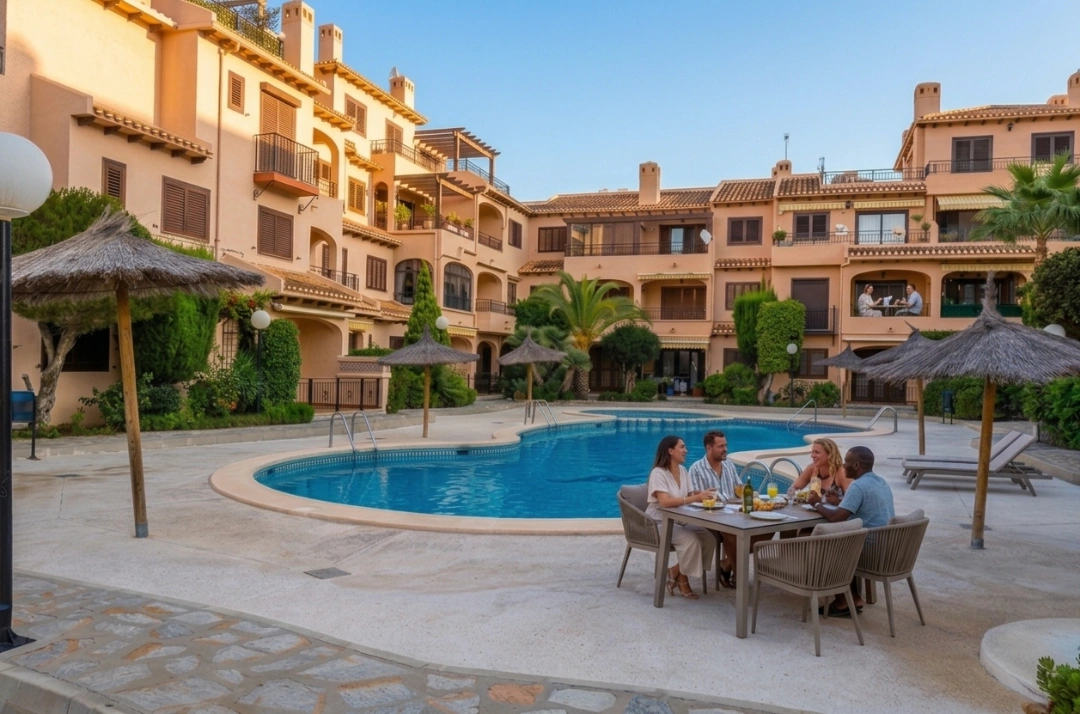
Aparthotels and extended stay properties offer 20 to 150 apartment-style units, each with a kitchen or kitchenette for guests staying a week or longer. Billing, housekeeping frequency, and length-of-stay pricing all work differently here than in a standard overnight hotel.
Pros:
Longer average length of stay means lower turnover costs and more predictable occupancy and revenue.
Reduced daily housekeeping needs, since long-stay guests typically need less frequent servicing than overnight guests.
Appeals to a growing corporate relocation and remote-work travel segment.
Cons:
Slower to fill vacant units during short-stay demand spikes, since the business model isn't built for one-night bookings.
Billing and rate structures for weekly or monthly stays require different PMS configuration than standard nightly billing.
Harder to flex pricing dynamically compared to a standard hotel responding to daily demand shifts.
7. Resorts & Full-Service Hotels
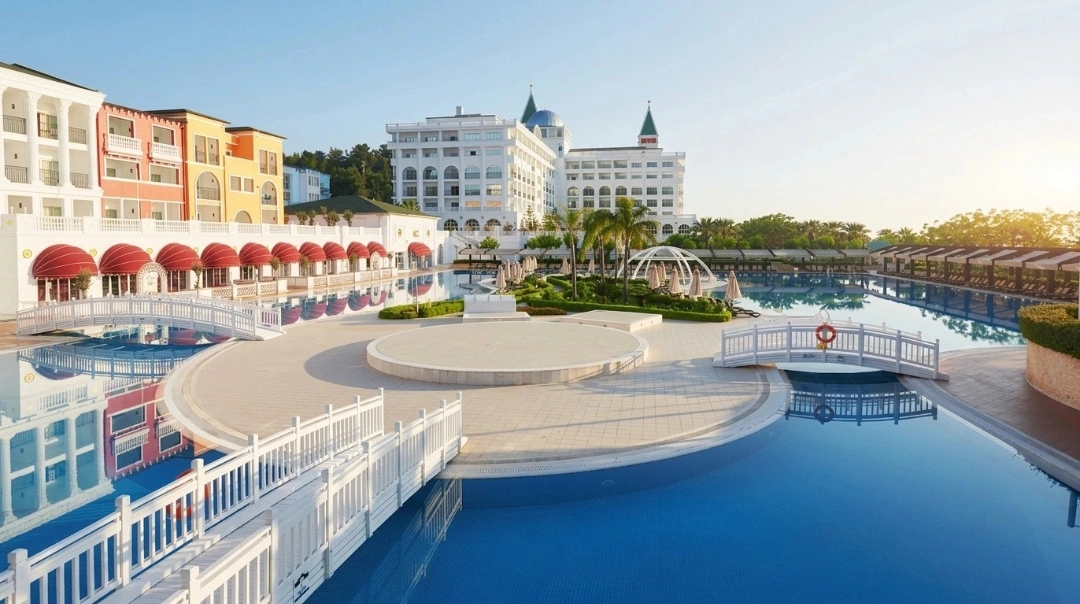
Resorts and full-service hotels range from 100 to 500 or more rooms and are built around destination amenities: pools, beaches, spas, dining, and on-site activities. Guests book the property as the destination itself, which means revenue comes from far more than the room rate, including food and beverage, activities, and events.
Pros:
Multiple revenue streams beyond the room, including food and beverage, spa, activities, and events, increase total revenue per guest.
Guests often book longer stays and higher-value packages, since the property itself is the vacation.
Strong brand storytelling and photography opportunities support marketing and repeat bookings.
Cons:
Staffing and maintenance costs are substantially higher, covering everything from grounds to multiple food and beverage outlets.
Seasonal or destination-dependent demand can create sharp revenue swings across the year.
Complex operations, spanning rooms, dining, activities, and events, require more sophisticated management and reporting than a rooms-only property.
8. Large Hotels & Enterprise Chains
Large hotels and multi-property enterprise groups can exceed 100 rooms per property, and often operate several properties under one ownership or brand umbrella. Consistency across locations, centralized reporting, and standardized service become the operating priority instead of the individual character that defines smaller properties.
Pros:
Brand recognition drives direct bookings and guest trust without relying solely on OTAs.
Centralized systems and reporting give ownership a consolidated view of performance across every property.
Stronger negotiating power with vendors, OTAs, and suppliers due to combined purchasing volume.
Cons:
Standardization limits how much any single property can adapt its service or pricing to local guest needs.
Decisions often move slower, since changes may need approval across multiple stakeholders or properties.
Individual property character and guest personalization take a back seat to brand consistency.
9. Campgrounds, RV Parks & Glamping Sites
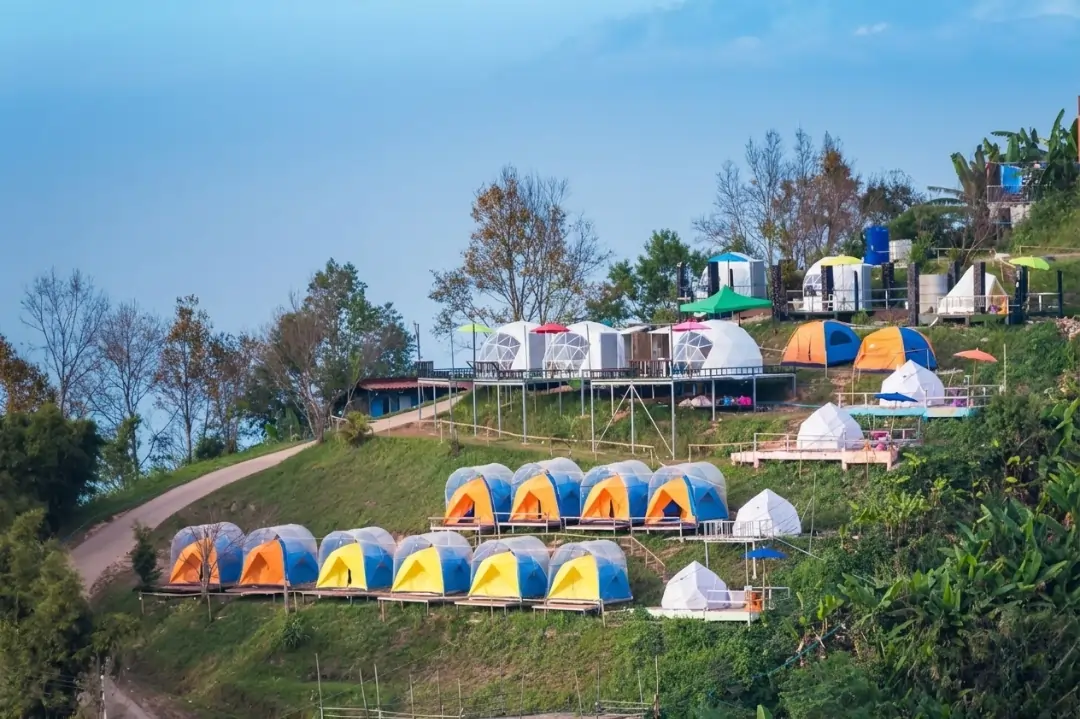
Campgrounds, RV parks, and glamping sites typically manage 20 to 300 sites rather than traditional rooms, each with its own hookups, amenities, or tent/cabin setup. Site-based inventory, seasonal demand swings, and outdoor-specific booking rules set this category apart from every other type on this list.
Pros:
Lower build and setup cost per site compared to constructing a traditional hotel room.
Strong seasonal demand, especially during peak outdoor travel months, can drive high occupancy in short windows.
Growing guest interest in outdoor and glamping experiences supports premium pricing on upgraded sites.
Cons:
Revenue is highly seasonal and weather-dependent, creating cash flow gaps in off-peak months.
Site-based inventory and booking rules, like hookup type or RV length limits, require different reservation logic than standard room bookings.
Harder to generate predictable, year-round revenue compared to indoor hotel properties.
Hotel Types By Location & Purpose
Urban & city-center hotels: Near business districts and attractions, serving business and leisure travelers who want walkable access.
Airport & business hotels: Positioned near transit hubs and corporate parks, built for quick turnarounds and meeting space.
Roadside & highway hotels: Found along major routes, serving travelers who need a convenient overnight stop rather than a destination.
Destination & resort properties: The stay is the trip itself, with the location chosen for scenery, beaches, or attractions.
Rural & retreat properties: Set away from cities, appealing to guests seeking quiet, nature, or a slower pace.
Run The Right Operations For Every Type Of Property
Every property type on this list runs differently day to day, and the technology behind the front desk should reflect that instead of forcing every property into the same workflow. roommaster is built by hoteliers with 30+ years in the industry, and it flexes across small independent properties, boutique hotels, mid-sized properties, and multi-property groups without asking any of them to change how they actually operate. Whether you are running a 15-room guesthouse or a group of properties across a region, roommaster keeps reservations, folios, and housekeeping on one platform.
{{cta-strip}}
Frequently Asked Questions
1. What are the main types of hotels?
The main types are small properties and B&Bs, hostels, boutique and independent hotels, motels, mid-sized hotels, aparthotels and extended stay, resorts and full-service hotels, and large hotels or enterprise chains. They are typically classified by room count, service level, and guest purpose.
2. What is the difference between a hotel and a motel?
A motel usually offers direct, ground-floor access to each room from an outdoor parking area and focuses on quick, convenient stays for road travelers. A hotel more often has interior corridors, a staffed lobby, and additional amenities, and can range from a small independent property to a large full-service resort.
3. How many rooms does a boutique hotel typically have?
Boutique hotels usually run between 10 and 100 rooms. The defining trait is not size alone but a design-led, personalized guest experience rather than the standardized service found at larger chain properties.
4. What is the difference between a resort and a hotel?
A resort is built around on-site destination amenities such as pools, beaches, spas, and activities, so guests often stay on property for most of their trip. A standard hotel focuses primarily on accommodation and may have few or no destination-style amenities.
5. What type of property is easiest to start as a small business owner?
Small B&Bs, guesthouses, and independent inns with 1 to 20 rooms are the most common entry point, since they require lower upfront investment and can often be owner-operated. Many owners later expand into boutique hotels or add a second property as demand grows.
6. How does hotel type affect the technology a property needs?
A hostel needs bed-level inventory tracking, an extended stay property needs length-of-stay billing, and a multi-property group needs centralized reporting across locations, so no single generic system fits every hotel type equally well. This is why choosing a PMS that adapts to the property type, like roommaster, matters more than choosing by feature count alone.
Mayela Lozano is a content strategist with a passion for hospitality and technology. She collaborates with roommaster on content creation, highlighting how technology can streamline hotel operations and enhance guest satisfaction. When she’s not creating content, Mayela loves to travel and spend time with her two little ones, discovering new adventures and making memories along the way.
Join Thousands of Hotels Thriving with roommaster
The transition to roommaster is straightforward and efficient. Our implementation team handles data migration including reservations, guest profiles, and historical information.
The transition to roommaster is straightforward and efficient. Our implementation team handles data migration including reservations, guest profiles, and historical information.
Hotel Check-In Kiosk: Enhance the Guest Experience
October 5, 2026
Hospitality Technology
Hotel Management
Hospitality Trends
Hotel Self Check-In: How It Works, Types, Benefits And Setup
October 1, 2026
Hotel Management
Hospitality Trends
Hotel Check-In & Check-Out Times Explained
October 1, 2026
Hospitality Trends
Hotel Management
Cloud-Based Property Management System: Hotel PMS
October 1, 2026
Hospitality Trends
Hotel PMS
Cloud PMS
Hotel PMS Integration: How It Works for Hotels
September 23, 2026
Hospitality Trends
Hospitality Technology
Hotel PMS
Hotel Management
Cloud PMS
How Hotel PMS Software Transforms Hospitality Management
September 23, 2026
Hospitality Trends
Best Hotels in New Orleans: A Complete Guide 2026
September 10, 2026
Hospitality Trends
Best Hotels in Philadelphia: A Complete Guide 2026
September 10, 2026
Hospitality Trends
Best Hotels in San Francisco: A Complete Guide 2026
September 10, 2026
Hospitality Trends
Best Hotels in Los Angeles: A Complete Guide 2026
September 10, 2026
Join Thousands of Hotels Thriving with roommaster
See how roommaster's unified platform can work for your property. Our team will walk you through features tailored to your specific needs and operations.


.png)
.png)
.png)