The traditional hotel model prioritized comfort over sustainability, leading to high energy use, waste, and environmental impact.
Modern hotels are adopting eco-friendly management practices like energy efficiency, waste reduction, and sustainable sourcing.
Smart technologies such as IoT devices, smart thermostats, and energy management systems are transforming hotel sustainability.
Engaging staff and guests in sustainability programs strengthens eco-conscious brand image and reduces operational costs.
Integrating sustainability with tools like roommaster PMS helps hotels monitor progress, improve efficiency, and meet environmental goals.
Before: The Traditional Hotel Model and Its Environmental Impact
Historically, hotel management focused predominantly on maximizing guest comfort and luxury, often at the expense of environmental sustainability. This approach led to several negative environmental impacts:
High Energy Consumption: Many hotels operated HVAC systems 24/7, irrespective of actual room occupancy. This not only led to excessive energy consumption but also contributed to higher operational costs and an increased carbon footprint.
Water Waste: Conventional fixtures and practices resulted in unchecked water use in guest rooms, laundry operations, and landscaping. This wastefulness strained water resources and increased utility expenses.
Single-Use Plastics: Hotels commonly used single-use plastics for toiletries and packaging. These items, while convenient, significantly contributed to the growing global issue of plastic waste and environmental pollution.
Waste Generation: The disposal of food waste and disposable products contributed to landfill overload and environmental pollution, affecting ecosystems and contributing to greenhouse gas emissions.
These practices inflated operational costs and exacerbated the hotel industry’s carbon footprint. This growing awareness of environmental issues prompted a shift towards more sustainable practices within the industry.
After: The Transformation to Eco-Friendly Hotel Management
In response to environmental concerns, the hospitality industry is undergoing a transformation, with many hotels now adopting eco-friendly practices to reduce their environmental impact. Modern sustainable hotels are implementing a range of innovative practices to improve efficiency and meet the increasing demand for green accommodations. Key changes include:
Energy Efficiency
Smart Thermostats: Installation of smart thermostats that adjust temperatures based on real-time room occupancy and external weather conditions. This reduces unnecessary energy use and enhances guest comfort.
LED Lighting: Transitioning to LED lighting systems, which consume up to 80% less energy compared to traditional incandescent bulbs and have a longer lifespan, thereby reducing both energy costs and waste.
Solar Panels: Adoption of solar panels to harness renewable energy, which can significantly reduce reliance on fossil fuels and lower energy bills.
Water Conservation
Low-Flow Fixtures: Implementation of low-flow faucets, showerheads, and toilets in guest rooms to minimize water usage while maintaining guest comfort.
Smart Irrigation Systems: Use of advanced irrigation systems that adjust watering schedules based on soil moisture levels and local weather conditions, leading to substantial water savings.
Greywater Recycling: Exploration of greywater recycling systems, which capture and reuse water from sinks and showers for non-potable purposes like irrigation and flushing toilets.
Waste Reduction
Recycling Programs: Introduction of comprehensive recycling programs that cover paper, plastic, glass, and metal, ensuring that recyclable materials are properly sorted and processed.
Composting Programs: Development of composting programs to convert food waste into nutrient-rich compost for use in gardens or donation to local farms, reducing landfill waste.
Biodegradable Alternatives: Replacement of single-use plastics with reusable or biodegradable alternatives, such as bamboo toothbrushes and compostable packaging.
Sustainable Purchasing
Local Sourcing: Sourcing products and materials locally to reduce the carbon footprint associated with transportation and support local economies.
Ethical Suppliers: Prioritizing suppliers who use recycled or biodegradable materials and adhere to ethical sourcing practices, ensuring that purchased goods have minimal environmental impact.
Green Procurement: Engaging in green procurement by selecting eco-friendly products for daily operations, such as cleaning supplies and guest amenities.
Green Marketing Integration: Showcase sustainability credentials through your hotel booking engine, allowing guests to see eco-certifications, green amenities, and environmental initiatives before they book, attracting environmentally conscious travelers.
These practices not only reduce the environmental impact of hotels but also enhance their appeal to eco-conscious travelers. By integrating sustainability into their operations, hotels can lower costs, comply with environmental regulations, and attract a growing segment of guests who prioritize green practices.
How Hotels Can Transition to Sustainability
Transitioning from traditional practices to a more sustainable hotel management model is a step-by-step process. For a practical starting point, our guide on how to make your hotel eco-friendly walks through the first actions hoteliers should take.
Here’s how hotels can embark on this journey:
Start with Energy Efficiency
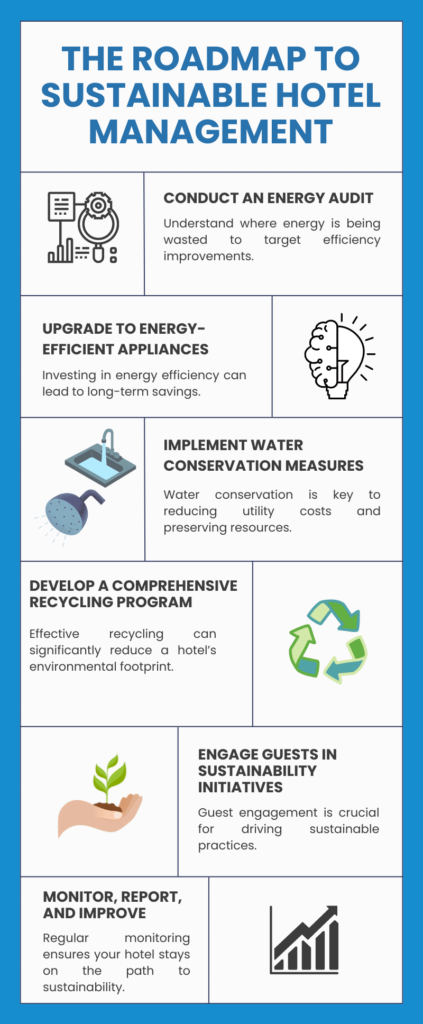
Energy Audit: Conduct a comprehensive energy audit to pinpoint areas where energy is being wasted and identify opportunities for improvement.
Upgrade Appliances: Invest in energy-efficient appliances and lighting fixtures that consume less energy and offer long-term savings.
Smart Energy Management: Implement a smart energy management system to monitor and optimize energy use across the property.
Focus on Water Conservation
Fixture Replacement: Replace outdated fixtures with low-flow alternatives to minimize water consumption.
Water Recycling System: Install a water recycling system to repurpose greywater for non-potable uses, reducing overall water demand.
Education Programs: Educate both staff and guests on effective water-saving practices to promote conscious water use throughout the property.
Reduce Waste
Waste Audit: Perform a waste audit to understand the types and quantities of waste generated, enabling targeted waste reduction strategies.
Recycling Program: Develop a comprehensive recycling program that includes clear signage and training for staff to ensure effective waste segregation.
Plastic Alternatives: Eliminate single-use plastics and transition to reusable or biodegradable options, reducing the volume of waste sent to landfills.
Engage Guests
Sustainability Programs: Offer programs that encourage guests to participate in sustainability efforts, such as linen and towel reuse initiatives.
Informative Materials: Provide information about the hotel’s sustainability initiatives and the positive impact of guests’ participation.
Incentives: Offer incentives, such as discounts or rewards, for guests who choose eco-friendly options or participate in sustainability programs.
Digital Booking Experience: Use your hotel booking engine to highlight your sustainability initiatives, allowing eco-conscious guests to select green room options or carbon-offset packages during the reservation process.
Monitor and Report
Progress Tracking: Continuously track progress in reducing energy use, water consumption, and waste to evaluate the effectiveness of sustainability measures.
Achievement Sharing: Share your sustainability achievements with guests and stakeholders through updates on your website, social media, and other communication channels.
Ongoing Improvement: Regularly review and update sustainability practices to incorporate new technologies and approaches for further improvements. These incremental steps can lead to substantial environmental and financial benefits over time, contributing to a more sustainable future for the hospitality industry.
Distribution Transparency: Use your hotel channel manager to communicate sustainability credentials across all OTA platforms, ensuring your green initiatives reach travelers on every booking channel and attract eco-conscious guests from multiple sources.
roommasteris committed to supporting hotels on their sustainability journey. Our advanced software solutions, such as roommaster PMS, are designed to help you optimize operations, reduce waste, and enhance your eco-friendly initiatives. For a closer look at how technology drives this shift, explore our guide to green practices in hotel software.
{{pms-one}}
FAQs
1. Why is sustainability important in hotel management?
Sustainability reduces environmental impact, cuts operational costs, and attracts eco-conscious travelers who prioritize green accommodation options.
2. How can hotels reduce their environmental footprint?
Hotels can adopt measures like energy-efficient lighting, low-flow water fixtures, recycling programs, and sourcing products from sustainable suppliers.
3. What role does technology play in sustainable hotel management?
Technology—such as smart thermostats, energy management systems, and integrated PMS tools—optimizes resource usage and tracks sustainability performance.
4. How can hotels involve guests in sustainability initiatives?
Hotels can introduce programs like towel reuse, digital check-in, and educational content that encourages guests to participate in eco-friendly efforts.
5. How does roommaster PMS support sustainable practices?
roommaster property management system (PMS) helps hotels monitor energy use, manage resources efficiently, and automate operations, reducing waste and supporting long-term sustainability goals.
About roommaster
roommaster is a leading provider of innovative hotel management software solutions for the hospitality industry, dedicated to helping hotels of all sizes optimize their operations and enhance guest experiences. With over two decades of experience, roommaster offers a comprehensive suite of products, including the powerful roommaster Property Management System (PMS), which is trusted by thousands of properties worldwide. Our commitment to sustainability and efficiency drives us to develop tools that not only improve hotel performance but also support eco-friendly practices. At roommaster, we believe that great technology should be accessible, easy to use, and focused on what truly matters—delivering exceptional service to guests while fostering a greener future for the hospitality industry.
References
Software: "roommaster PMS - Features Overview" Industry Reports: "Sustainable Practices in Hospitality: Best Practices and Future Trends" Case Studies: "Transforming Hotels with Green Technology"
Mayela Lozano is a content strategist with a passion for hospitality and technology. She collaborates with roommaster on content creation, highlighting how technology can streamline hotel operations and enhance guest satisfaction. When she’s not creating content, Mayela loves to travel and spend time with her two little ones, discovering new adventures and making memories along the way.
Join Thousands of Hotels Thriving with roommaster
The transition to roommaster is straightforward and efficient. Our implementation team handles data migration including reservations, guest profiles, and historical information.
The transition to roommaster is straightforward and efficient. Our implementation team handles data migration including reservations, guest profiles, and historical information.
Hotel Check-In Kiosk: Enhance the Guest Experience
October 5, 2026
Hospitality Technology
Hotel Management
Hospitality Trends
Hotel Self Check-In: How It Works, Types, Benefits And Setup
October 1, 2026
Hotel Management
Hospitality Trends
Hotel Check-In & Check-Out Times Explained
October 1, 2026
Hospitality Trends
Hotel Management
Cloud-Based Property Management System: Hotel PMS
October 1, 2026
General
Cloud PMS
AI
Cloud Computing In The Hospitality Industry: A Complete Guide For Hotels
October 1, 2026
General
Best Hotels in Montreal: A Complete Guide
September 25, 2026
General
Best Hotels in Edmonton: A Complete Guide
September 25, 2026
General
Best Hotels in Banff: A Complete Guide
September 25, 2026
General
Best Hotels in Calgary: A Complete Guide
September 25, 2026
General
Best Hotels in Whistler: A Complete Guide
September 25, 2026
Join Thousands of Hotels Thriving with roommaster
See how roommaster's unified platform can work for your property. Our team will walk you through features tailored to your specific needs and operations.


.png)
.png)
.png)