Looking for a Revinate alternative? Here are six guest CRM and marketing platforms worth comparing: 1. roommaster, 2. Cendyn, 3. Canary Technologies, 4. dailypoint, 5. Profitroom and 6. Bookboost.
Each one fixes a different gap that Revinate leaves open, from guest data living inside your PMS to unified messaging and data-quality tooling. This guide sorts them by where guest data lives, marketing depth, property-type fit and support.
Why hotels look for Revinate alternatives
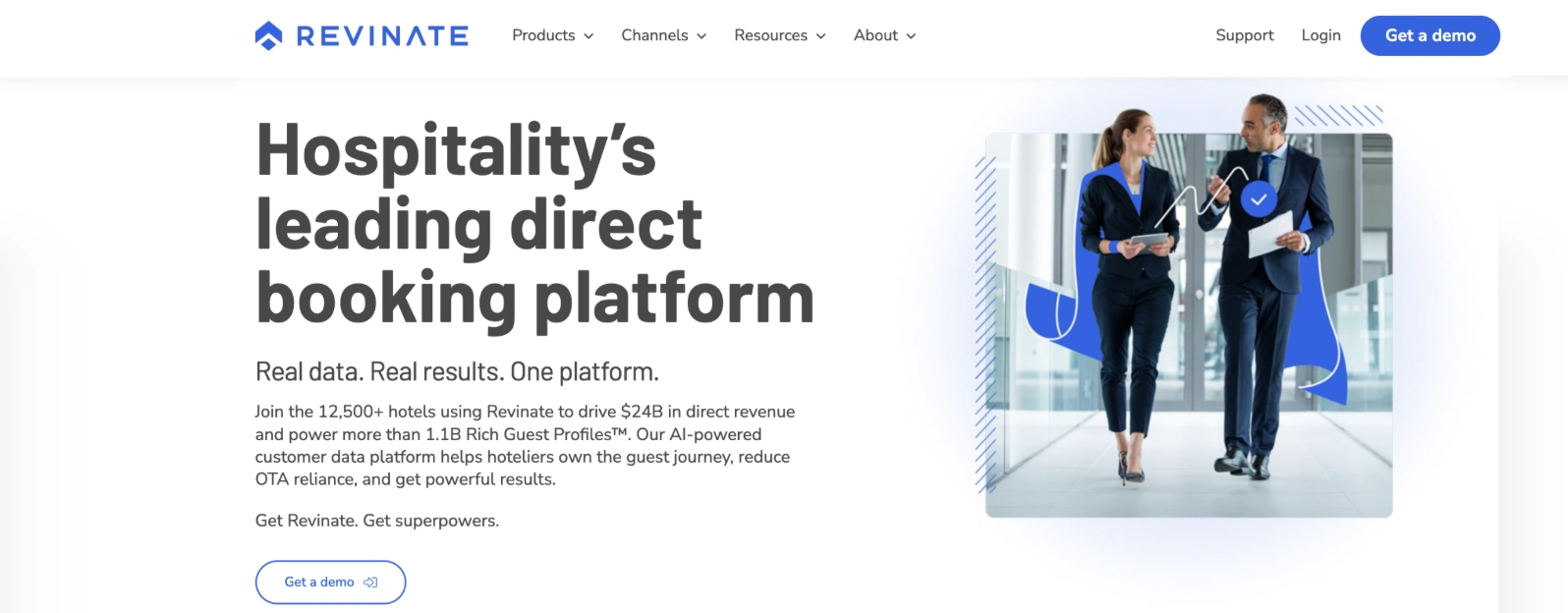
Revinate is a capable guest-data and email-marketing platform trusted by tens of thousands of hotels, but several recurring reasons push independents to compare Revinate competitors before renewal:
- Enterprise pricing and scope: Revinate is quote-based and geared to larger operators, so a small boutique often pays for segmentation depth and campaign volume it will not use.
- Yet another system to sync: Revinate is a standalone CRM that sits beside your PMS, so guest data has to flow through an integration rather than living where the front desk already works.
- Marketing-first, operations-second: the platform is built for campaigns and reputation, so teams that mainly want in-stay messaging, mobile check-in or a guest app end up adding more tools.
- Onboarding and depth: getting full value from Rich Guest Profiles and advanced segmentation takes setup time and a marketer to run it, which a lean owner-operated team may not have.
If any of those sound familiar, the six alternatives below map to the switch reasons independent hoteliers cite most.
Comparing the 6 best Revinate alternatives
Pricing models below reflect each vendor's published or commonly cited approach as of July 2026. Most guest-CRM vendors in this category quote privately, so treat pricing as a model, not a fixed number, and confirm the quote against your database size and property count.
| Platform |
Best for |
Pricing model |
Property/segment fit |
Standout capability |
| roommaster |
Guest data inside the PMS |
Custom quote (contact sales) |
Independent, boutique, groups, motels, resorts |
Built-in guest management, AI messaging and profiles in one platform |
| Cendyn |
Enterprise CRM and group sales |
Custom quote, enterprise tier |
Full-service hotels, groups, resorts |
Deep segmentation, loyalty and commercial sales tooling |
| Canary Technologies |
Messaging and upsell revenue |
Custom quote, modular |
Independents to large groups |
AI guest messaging, contactless check-in and dynamic upsells |
| dailypoint |
Guest-data quality and CDP |
Modular, quote-based |
Independents and groups needing clean data |
Central Profile that merges data from 200+ systems |
| Profitroom |
Direct bookings plus marketing |
Quote-based, suite pricing |
Independent and boutique (strong in Europe) |
Booking engine 360 with CRM and marketing automation |
| Bookboost |
Unified guest messaging |
Quote-based, modular |
Small and lean independent teams |
Unified inbox and CDP across email, SMS and WhatsApp |
The real question is not price alone but where guest data should live. Revinate, Cendyn, dailypoint and Bookboost are standalone layers that sit on top of your PMS, while roommaster keeps guest profiles and messaging inside the system that already runs reservations, so there is no second database to reconcile.
A worked cost example: what guest marketing returns
Software price is only half the math for a guest CRM. The bigger number is the revenue a past-guest database can drive back to your own site. Take a 40-room boutique hotel with 5,000 past guests in its database and a re-engagement email that converts modestly:
- Direct repeat bookings from the campaign: 5,000 guests x 2% conversion = 100 stays, at 2 nights and a $150 average daily rate = $30,000 in direct revenue.
- Commission avoided versus routing those same stays through an OTA at 15%: about $4,500.
That combined $34,500 of value per campaign is the reason a guest-data tool earns its keep. The point of comparison is not the sticker price but whether the platform captures that repeat revenue while feeding a commission-free direct channel, rather than adding a separate marketing bill on top of the PMS.
How we chose these Revinate alternatives
This list is built for independent and boutique operators evaluating a Revinate replacement, not for enterprise chains. Four criteria shaped it:
- Fit for independents: every tool can serve owner-operated and small-group properties, with pricing and depth that a lean team can actually run. For the in-PMS approach, see how roommaster handles guest management.
- Where guest data lives: priority went to how each platform stores and syncs profiles, since a standalone CRM adds an integration that a built-in system avoids.
- Transparent evaluation: pricing models and public review signals such as G2, Capterra and HotelTechAwards recognition, not marketing claims.
- Migration realism: onboarding, data import and support hours, because a guest-data switch fails on messy profiles and stalled setup more often than on features.
Top 6 Revinate alternatives
1. roommaster (best for guest data inside the PMS)
Best for: Independent and boutique hotels that want guest profiles, messaging and marketing signals living inside the same system that runs the front desk, not in a separate CRM.
roommaster (formerly innQuest) is a cloud hotel property management system that pairs core front-desk and reservation workflows with built-in guest management, AI guest messaging, a commission-free booking engine and a channel manager. Because guest history sits next to the folio, a small team can act on it without exporting data to a separate marketing tool. roommaster has run hotel software for more than 25 years and supports properties from offices in the US, Canada, UK and Australia.
Key features
- Built-in guest profiles tied to the reservation record, so booking history, preferences and spend live where the front desk already works
- AI guest management and messaging that handle pre-arrival, in-stay and post-stay outreach without a bolt-on platform
- A hotel guest app with mobile check-in and digital keys, giving guests self-service that a marketing CRM does not provide
- Commission-free booking engine that turns your own website into a zero-fee channel for the repeat bookings your guest data drives
- Channel manager with real-time sync across hundreds of OTAs, plus built-in revenue management that adjusts rates off demand and occupancy
- Integrated payments and a marketplace of 100+ integrations, so guest data connects to POS, accounting and door locks
Pros
- Guest data and messaging live inside the PMS, so a lean team never reconciles two databases or waits on an integration to sync a profile before it can act on a returning guest.
- The commission-free booking engine captures the repeat and direct bookings a guest-marketing effort creates, so the value stays on your own site instead of leaking back to an OTA.
- 24/7 phone, chat and email support from offices across the US, Canada, UK and Australia means an overnight front-desk problem reaches a human, which a marketing-hours-only CRM cannot match.
- One platform runs front desk, distribution, revenue and guest engagement, which removes the finger-pointing that comes from stitching a PMS and a separate CRM together.
Cons
- Its guest marketing is built for practical in-house outreach, so a property that runs high-volume, heavily segmented email campaigns will find a dedicated CRM like Revinate or Cendyn goes deeper on templates and audience building.
- Pricing is quote-based rather than published, so you need a short sales conversation to benchmark it against a standalone CRM's per-contact model.
- The breadth of an all-in-one platform means a property that only wants a marketing layer, and is happy to keep its current PMS, is buying more than it needs.
Verdict: the strongest fit when you want guest data, messaging and direct bookings inside one hotel platform rather than a marketing CRM bolted onto your PMS.
2. Cendyn
Best for: Full-service hotels, groups and resorts that want deep segmentation, loyalty and commercial sales tooling alongside guest marketing.
Cendyn is a hospitality CRM and commercial platform that spans guest marketing, group and corporate sales, loyalty and revenue analytics. Against Revinate it sits in a similar enterprise tier but leans harder into group RFP workflows and account management, which makes it the closest like-for-like among Revinate competitors for larger properties.
Key features
- CRM with advanced guest segmentation and personalized, automated email journeys
- Group and corporate sales tools, including RFP and account management workflows
- Loyalty program management for repeat-guest and member marketing
- A booking engine with automated email re-targeting to recover abandoned bookings
- Revenue and commercial analytics across the guest and sales funnel
Pros
- Its CRM depth for corporate accounts and group sales is stronger than most guest-marketing tools, so a property with meaningful group or corporate business gets workflow support a lean CRM lacks.
- Segmentation and automated journeys are enterprise-grade, letting a marketing team build and trigger detailed campaigns without exporting data.
- Loyalty management is native, which suits brands and groups running a member program rather than one-off email blasts.
Cons
- Some users report the interface is less intuitive and carries a learning curve, so a lean boutique team can struggle to reach full value. Weigh other cendyn alternatives if simplicity matters.
- It is built for full-service hotels and groups, so a small independent often pays for commercial-sales depth it will never use.
- As an enterprise platform it still sits beside your PMS, so guest data has to sync across systems rather than living in one place.
Verdict: the pick when group sales, loyalty and heavy segmentation matter more than keeping guest data inside the PMS.
3. Canary Technologies
Best for: Independent and group properties that care more about AI guest messaging, contactless check-in and upsell revenue than about email campaigns.
Canary Technologies is a guest-management suite trusted by 20,000+ hotels, built around AI-powered communication, digital check-in and dynamic upsells rather than marketing email. It was named Best Upselling Software and top hotel guest messaging platform in the 2026 HotelTechAwards, so its strength is in-stay revenue and operations.
Key features
- AI guest messaging that automates pre-arrival, in-stay and post-stay conversations
- Contactless digital check-in that removes physical cards, IDs and paper forms at the desk
- Dynamic upsells that present personalized upgrade and add-on offers across the guest journey
- Guest-request and operations tooling to route and track service tickets
- Integrations with major PMS platforms to pull reservation and profile data
Pros
- Its upsell engine is a genuine revenue driver, with the vendor citing large uplifts from automated, targeted upgrade and add-on offers before and during stays.
- AI messaging handles high volumes of guest conversation with less staff time, which suits a lean front desk that cannot watch every channel.
- Contactless check-in improves the arrival experience and speeds the desk, a practical operations win a marketing CRM does not address.
Cons
- It is not an email-marketing platform, so a property whose main goal is segmented campaigns and newsletters will still need a separate tool.
- Reaching full value usually means switching on several modules, so the quote climbs as messaging, check-in and upsells are added.
- As a standalone layer, its guest data depends on PMS integrations rather than living in one native system.
Verdict: a strong choice when in-stay messaging, contactless check-in and upsell revenue matter more than email marketing depth.
4. Dailypoint
Best for: Independents and groups that want clean, unified guest data before any CRM or loyalty program runs on top.
dailypoint is a customer data platform for CRM and loyalty that collects, merges and de-duplicates guest data from more than 200 systems, including PMS, POS, booking engines and marketing tools. Its core is the Central Profile, an always-updated guest record, which makes data quality its main differentiator against a campaign-first tool like Revinate.
Key features
- Central Profile that automatically matches and merges guest records into one clean view
- Data cleaning and deduplication across 200+ connected systems via two-way interfaces
- A modular design of 16 modules across Data Management, CRM and E-Marketing, and Loyalty
- A Privacy Dashboard for GDPR and CCPA consent, data-subject requests and automated deletion
- An open API and deep integrations so the profile feeds other marketing and operations tools
Pros
- Its data-cleaning and merging is best-in-class, so hotels fighting duplicate or messy profiles get a single reliable guest record that every other tool can trust.
- The modular structure lets a property start with data management and add CRM or loyalty later, matching spend to need.
- Native privacy and consent tooling helps European properties manage GDPR obligations that a lighter CRM leaves to manual work.
Cons
- Its focus is data infrastructure, so a hotel that wants an out-of-the-box email tool may find the campaign layer less turnkey than Revinate's.
- The breadth of modules and integrations means setup and configuration take time and technical input.
- As a CDP it adds another system beside the PMS, so small teams gain data quality but also another platform to manage.
Verdict: the pick when duplicate and fragmented guest data is the real problem and clean profiles matter before campaigns.
5. Profitroom
Best for: Revenue-focused independent and boutique hotels, especially in Europe, that want a direct-booking engine and CRM in one suite.
Profitroom is a booking and marketing suite built around Booking Engine 360, paired with CRM and marketing automation, a channel manager and website design. It positions itself around lifting direct bookings, so it blends distribution and guest marketing rather than acting as a pure CRM.
Key features
- Booking Engine 360 with upselling and dynamic pricing to maximize direct bookings
- CRM and marketing automation for guest segmentation and automated offers
- Automated post-stay and cancellation emails, including discount codes to win rebookings
- Channel manager and reporting to support a direct-booking strategy
- Award-winning hotel website design as part of the suite
Pros
- Combining a strong booking engine with CRM in one suite ties marketing directly to direct-booking revenue, so campaigns convert on your own site rather than an OTA.
- Automated upselling and post-stay offers help a small property lift revenue per booking without a dedicated marketer.
- Its focus on direct bookings suits independents trying to cut OTA commission dependence.
Cons
- Its coverage, partners and support are strongest in Europe, so a North American property may find fewer local integrations. Compare other profitroom alternatives if you operate elsewhere.
- It centers on booking and marketing, so it is not a full PMS and still sits beside your property-management system.
- The suite works best when you adopt its booking engine and website too, which is a bigger commitment than a standalone CRM.
Verdict: a smart fit for a European independent that wants direct bookings and guest marketing bundled together.
6. Bookboost
Best for: small, lean independent teams that want every guest message and channel in one inbox rather than a heavy marketing platform.
Bookboost is a guest-communication platform built around a Unified Inbox and a customer data platform. It centralizes messaging across email, SMS and WhatsApp and enriches profiles with over 300 data fields, so a lean team can run personalized, data-driven conversations without juggling separate channels.
Key features
- Unified Inbox that brings email, SMS and WhatsApp guest messages into one view
- A built-in CDP that collects, cleans and de-duplicates guest data from the PMS and every channel
- Over 300 data fields per profile to power segmented, personalized messaging
- AI-powered automation and email ticketing to reduce manual, repetitive replies
- Automated messaging flows across the guest journey to lift loyalty and direct bookings
Pros
- Consolidating every guest channel into one inbox removes the platform-juggling that eats a small team's time and lets nothing slip.
- The built-in CDP means messaging runs on clean, enriched data without a separate data project first.
- AI automation and ticketing cut manual replies, which is a real relief for a lean front desk covering several channels.
Cons
- Its strength is messaging rather than campaign marketing, so a property that wants deep email templates and audience building may still add a tool.
- As a standalone layer it depends on PMS and channel integrations to stay in sync.
- The value shows most when a team is genuinely omnichannel, so a property that mainly uses email will not use its full range.
Verdict: the pick for a lean independent that wants all guest conversation and data in one place, messaging first.
How to choose between Revinate and these alternatives
Use your switch reason, not the feature list, to narrow the field. Borrow the questions any good guest-CRM demo should answer:
- Do you want guest data inside the PMS or in a standalone CRM? In-PMS favors roommaster; a dedicated marketing layer favors Cendyn or Revinate itself.
- Is your main goal email campaigns and segmentation? That points to Cendyn for depth, or Profitroom when tied to direct bookings.
- Do you mainly want in-stay messaging and upsells? Canary and Bookboost lead on messaging and revenue; roommaster covers it natively inside the PMS.
- Is duplicate or fragmented guest data the real problem? dailypoint's CDP is built for exactly that.
- What are support hours, data-import terms and per-contact costs? Confirm these in writing, since a guest-data migration is where switches stall.
Match against team size too: a lean owner-operated property leans to roommaster, Canary or Bookboost; a marketing team wanting depth suits Cendyn; a data-quality problem points to dailypoint.
Why roommaster is a strong Revinate alternative
For teams leaving Revinate specifically, the honest question is whether you need a standalone marketing CRM or guest management built into the system that runs your hotel. Revinate is genuinely strong at what it does. Its Rich Guest Profiles unify data across locations, its email campaigns are proven revenue drivers, and its reputation tooling is trusted by tens of thousands of properties. If high-volume, heavily segmented campaigns are your core need, a dedicated CRM like Revinate or Cendyn will go deeper than any PMS on templates and audience building.
Where roommaster wins is keeping guest data where the work happens:
- Guest profiles live in the PMS, tied to the reservation and folio, so a small team acts on booking history without exporting data to a separate CRM.
- AI guest management and messaging cover pre-arrival, in-stay and post-stay outreach and connect to a hotel ai agent without a bolt-on platform.
- A commission-free booking engine captures the repeat and direct bookings your guest outreach creates, keeping that revenue on your own site.
- 24/7 phone, chat and email support covers overnight front-desk emergencies a marketing-hours CRM does not.
- Distribution, revenue and payments ship in the same platform, so there is no second database to reconcile.
For a boutique property that wants practical guest engagement software inside its PMS rather than a standalone campaign tool, roommaster is the more complete fit. The side-by-side roommaster vs revinate breakdown and the roommaster vs cendyn comparison help you judge the trade honestly.
See how roommaster handles guest profiles, messaging and direct bookings in one platform. Book a demo and bring your current Revinate quote to compare like for like.
Bottom line
Revinate remains a strong guest-marketing CRM, but if enterprise scope, a second system to sync or marketing-first design are pushing you to compare, the six alternatives here cover every switch reason.
For deep email campaigns and group sales, Cendyn is the closest match; for messaging and upsells, Canary and Bookboost lead; for clean guest data, dailypoint. For an independent that wants guest profiles, messaging and direct bookings inside one hotel platform, roommaster is the most complete fit. Shortlist two, run demos with your own database and occupancy numbers, and let where guest data should live, not the sticker price, decide.
{{cta-strip}}
FAQs
What is the best Revinate alternative for independent hotels?
For a lean, owner-operated property, roommaster keeps guest data and messaging inside the PMS, while Canary and Bookboost lead on messaging. If you want deep email campaigns, Cendyn is the closest like-for-like among Revinate competitors.
How does roommaster compare to Revinate?
Revinate is a standalone guest-marketing CRM with strong email campaigns and reputation tools. roommaster is a cloud PMS with built-in guest management, AI messaging and a commission-free booking engine, so guest data lives inside the system that runs your hotel.
Are there cheaper alternatives to Revinate?
Most guest-CRM vendors, including Revinate, quote privately, so comparison is quote-to-quote. Bookboost and dailypoint are modular, so you can start small, while an all-in-one PMS like roommaster folds guest tools into one bill rather than a separate CRM cost.
Which Revinate alternative is best for guest messaging?
Canary Technologies and Bookboost are built around AI and unified guest messaging across channels. roommaster covers pre-arrival, in-stay and post-stay messaging natively inside the PMS, which suits teams wanting it tied to the reservation record.
What is the best Revinate competitor for email marketing depth?
Cendyn offers the deepest segmentation, loyalty and automated journeys of the group, making it the closest match to Revinate for a property whose core need is high-volume, segmented email campaigns.
What features should I look for in Revinate alternatives?
Prioritize where guest data lives, native messaging, clean data import and deduplication, real support hours, per-contact costs and how the tool feeds direct bookings, so a future switch stays low-risk.

.png)
.png)
.png)