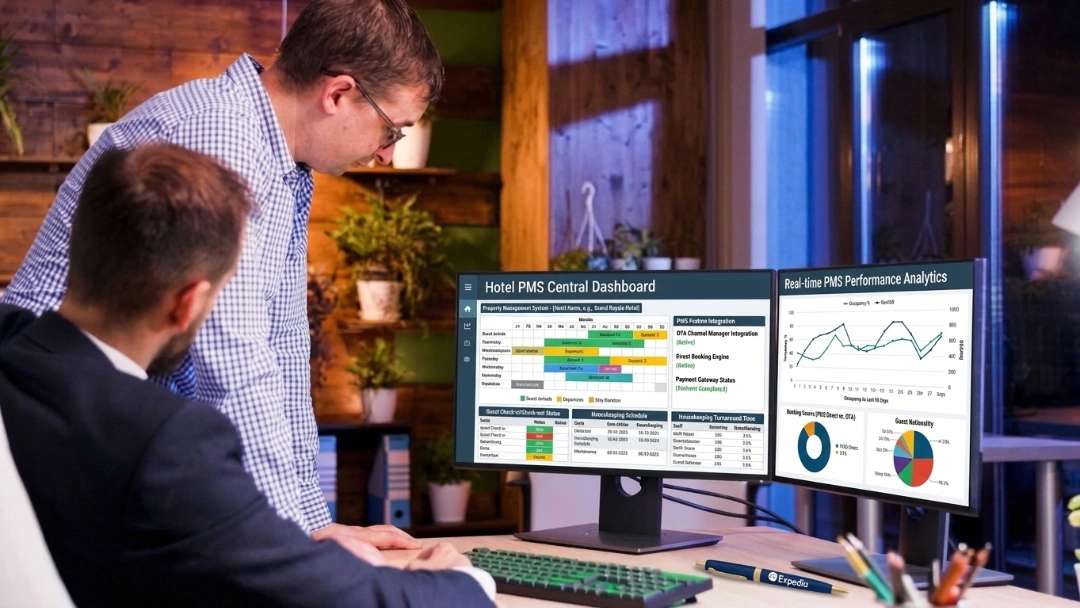
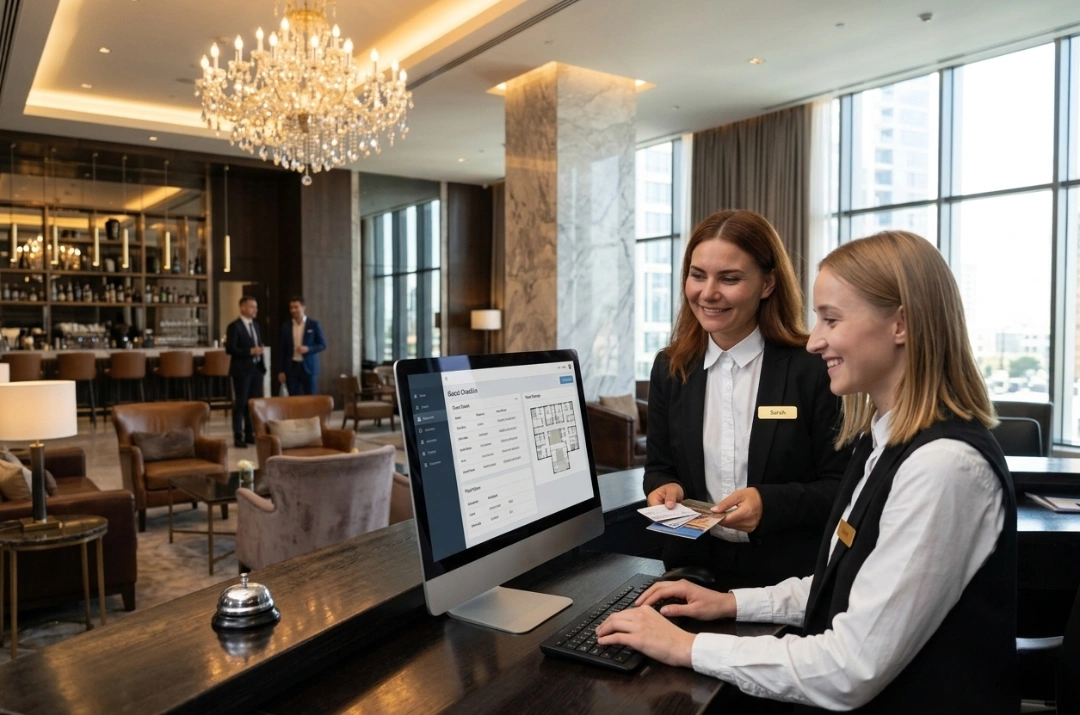
Hotel BI software turns scattered data into actionable insights, helping hotels make faster, smarter decisions.
Teams use these insights to optimize revenue, streamline operations, and personalize guest experiences, improving marketing ROI.
Tools like roommaster PMS integrate all property data in real time, giving a unified view and automating reporting.
Hotels that track KPIs such as occupancy, ADR, and RevPAR can boost performance, with nearly 95% reporting faster decision-making using BI.
The hospitality industry faces a new era of uncertainty and rapid change, and the old approach to revenue management can no longer deliver consistent results. New consumer data shows travelers are booking much later and for shorter stays, with searches for stays of 3 nights or less. Plus, bookings made within 28 days of travel have reached a three-year high as guests increasingly prioritize value and flexibility. As a result, relying solely on historical data for forecasting no longer provides a dependable guide.
At the same time, the competitive landscape has become more complex. Hotels face competition from short-term rentals and navigate increasingly intricate distribution channels. In fact, nearly 50% of hoteliers report that disconnected systems and inaccurate data make it difficult to access critical insights that drive revenue and personalized guest experiences.
Independent properties also feel this pressure as average daily rates (ADR) declined by 1% in 2024, forcing hotels to rethink revenue strategies beyond rooms alone. Hoteliers have more data than ever, yet they struggle to extract clear insights.
To thrive in this environment, hotels must move beyond reactive strategies. They need to adopt proactive, data-driven approaches that leverage modern Business Intelligence (BI) tools to anticipate demand shifts and adjust commercial strategies in real-time.
Understanding Hotel Business Intelligence
Unlocking actionable insights from data is essential for hotels to stay competitive and make informed decisions.
What is hotel business intelligence (BI)?
Hotel BI refers to the process of collecting, monitoring, analyzing, and interpreting both internal and external data to guide smarter revenue, sales, and distribution decisions.
Simply put, hotel BI transforms your data into actionable decisions. It consolidates all your commercial information and highlights exactly what actions to take, eliminating guesswork around rates, demand, or competitor behavior.
Here’s how it changes daily operations:
Before BI, teams spent hours gathering data from multiple systems, manually building reports, and hunting for trends.
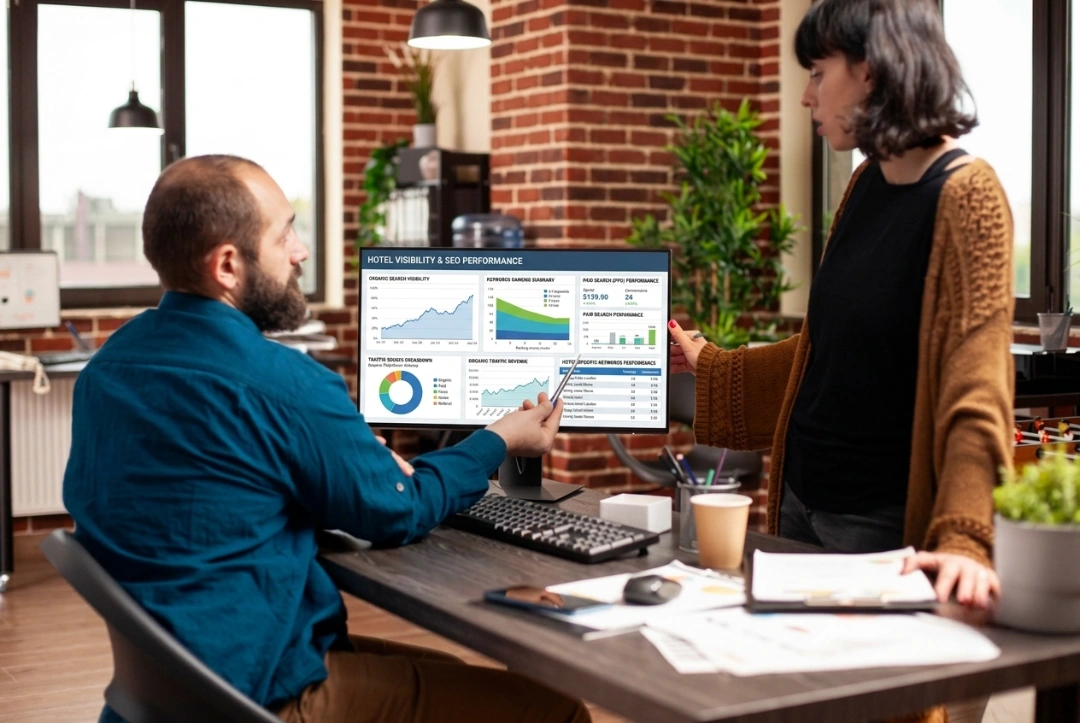
With BI, teams focus on strategy instead of spreadsheets. All data streams into a single dashboard, providing real-time insights across every property and enabling faster, more informed decision-making.
Key benefits for hotel operations
Hotels adopt BI because it generates measurable performance improvements across revenue, operations, guest experience, and marketing. Here’s what it does:
1. Faster, better decisions
BI centralizes reporting so leaders spend less time gathering data and more time acting on insights. According to a new study, adopting a cloud-based property management system can boost operational efficiency by as much as 30%.
Additionally, leveraging big data analytics enables hotels to deliver more personalized services, raising guest satisfaction by up to 15%.
2. Enhanced revenue performance
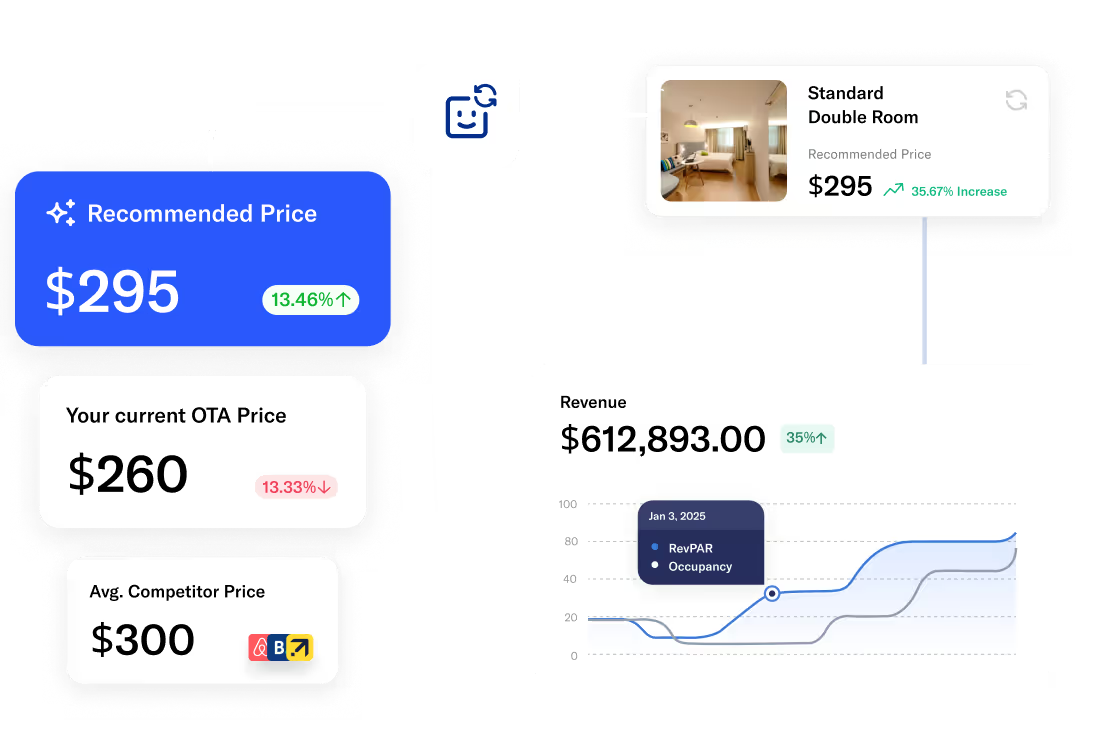
BI dramatically improves revenue optimization. Analytics help identify the right price at the right time by analyzing booking trends, competitor rates, and market demand.
In fact, hotels that deploy AI‑driven revenue management tools and analytics often see total revenue increase by around 17% compared to properties using traditional methods. As a result, they enjoy measurable gains in occupancy and pricing accuracy.
3. Operational efficiency and cost reduction
BI tools make inefficiencies in labor, inventory, and housekeeping visible in real time so hotels can act on them quickly.
According to recent industry data, digital transformation efforts in hotels have helped reduce overall operational costs by an average of 20%. Many properties have achieved a 45% improvement in staff efficiency by leveraging big data analytics and automation technologies.
4. Strategic marketing impact
BI lets hotels track ROI on every marketing campaign, compare direct bookings vs OTA bookings, and see which channels are most effective.
Hotels then allocate marketing dollars where they generate the best return.
Top 10 Hotel Business Intelligence Tools
Now, let’s break down the top 10 best hotel business intelligence software based on real performance.
1. roommaster PMS
As a hotel property management software (PMS) and business intelligence tool, roommaster gives you a clear and practical view of your hotel’s data, and you feel that right away when you start using its reporting and analytics inside the roommaster Operations Suite. Our platform comes from more than 30 years of hospitality experience, so every insight reflects real hotel operations instead of generic software ideas. You work with a system built by hoteliers who understand the pressure of daily decisions and the amount of time you lose when you jump between disconnected tools.
The platform provides more than 270 built-in reports that show revenue management, occupancy trends, channel performance, and guest segmentation. With its Revenue and Finance Suite, you can track ADR, RevPAR, and channel profitability to improve pricing and distribution decisions on any given day. Your data stays connected across reservation management, housekeeping, AI concierge, and payments, so you avoid switching between systems and guessing which numbers matter most.
{{revenue-management-one}}
When you pull performance analytics inside roommaster, you get hospitality-built intelligence that helps you compare performance across seasons, channels, and guest types so you can adjust strategies with confidence. The unified reporting and analytics in roommaster give you greater clarity on guest behavior, rate performance, and distribution outcomes, so you and your teams spend less time manually calculating figures and more time making operational decisions that move your business forward.
Teams rely on the Marketing and Distribution Suite to track direct bookings and measure how each channel contributes to demand shifts that impact daily operations. Front desk managers enjoy reports that highlight arrivals, stay patterns, groups, and housekeeping status.
Ideal For: Properties and management groups that want a centralized operational and reporting hub without needing separate analytics layers.
2. ampliphi RMS
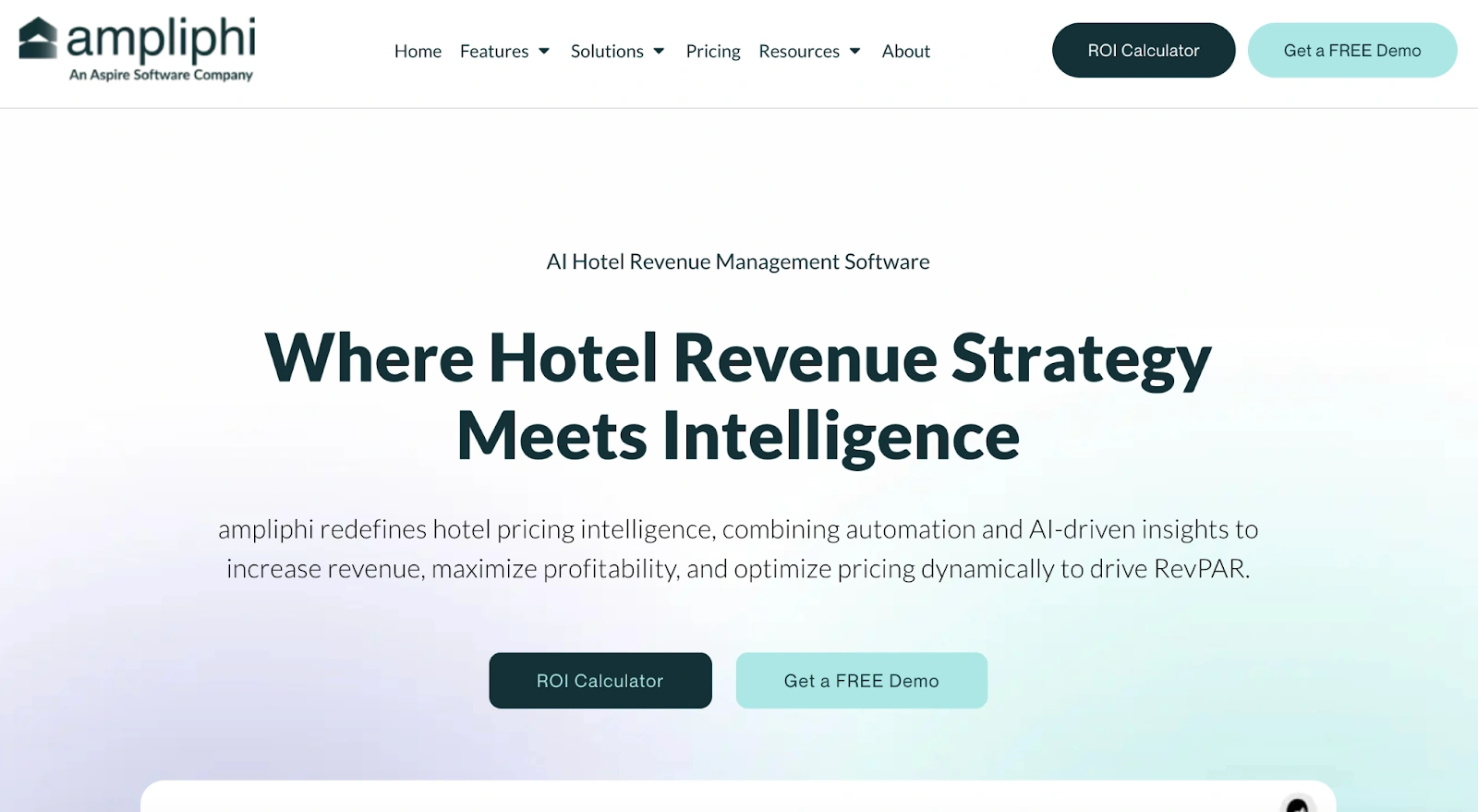
With its market intelligence tool, ampliphi RMS gathers live market data and turns it into insights hotels can use immediately. The system tracks competitor pricing in real time, monitors demand changes tied to events or holidays, and observes booking pace across important channels.
This intelligence helps hotels react quickly, avoid underpricing, plan promotions with purpose, and grow revenue with stronger decisions. Properties gain agility once limited to large chains, supporting better performance and healthier long-term profitability.
Ideal For: Independent hotels and small portfolios seeking enterprise-level pricing intelligence without complex systems.
3. Amadeus
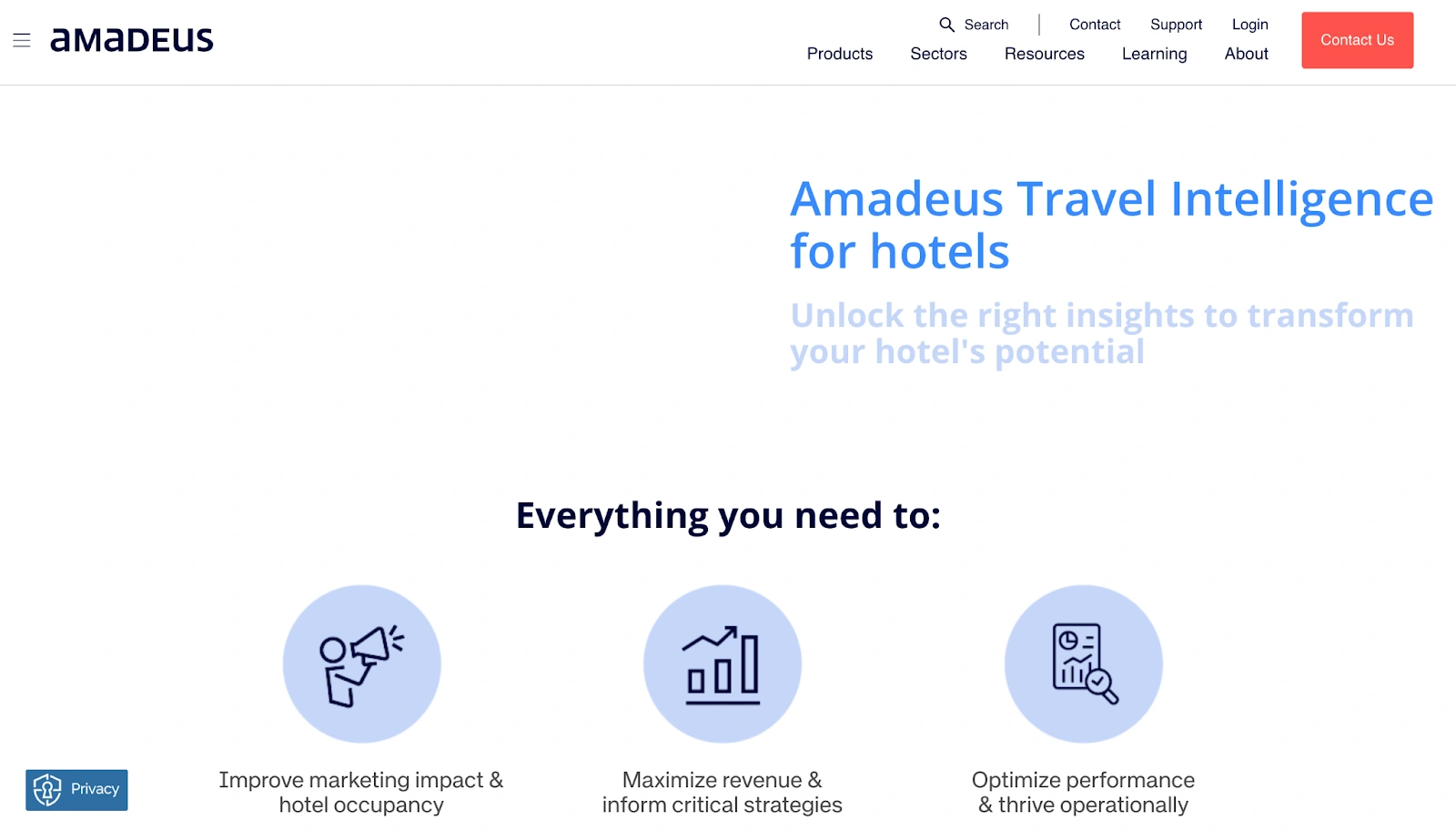
Amadeus Demand360® travel intelligence solution turns live market data into clear insights that support stronger decisions. The platform offers you a full view of rates, occupancy patterns, booking trends, and distribution activity. You can also use this information to guide pricing, marketing, and operational strategies with greater precision.
The platform gives you forward-looking demand data, competitive benchmarks, booking window insights, and reliable industry intelligence that reveal future opportunities and upcoming pressure points. As a result, you understand how your property performs against your market, identify valuable demand sources, and shape revenue strategies that support healthier results across every part of your business.
Ideal For: Mid-sized to large hotels and chains that need comprehensive global BI and forecasting engines.
4. Cendyn
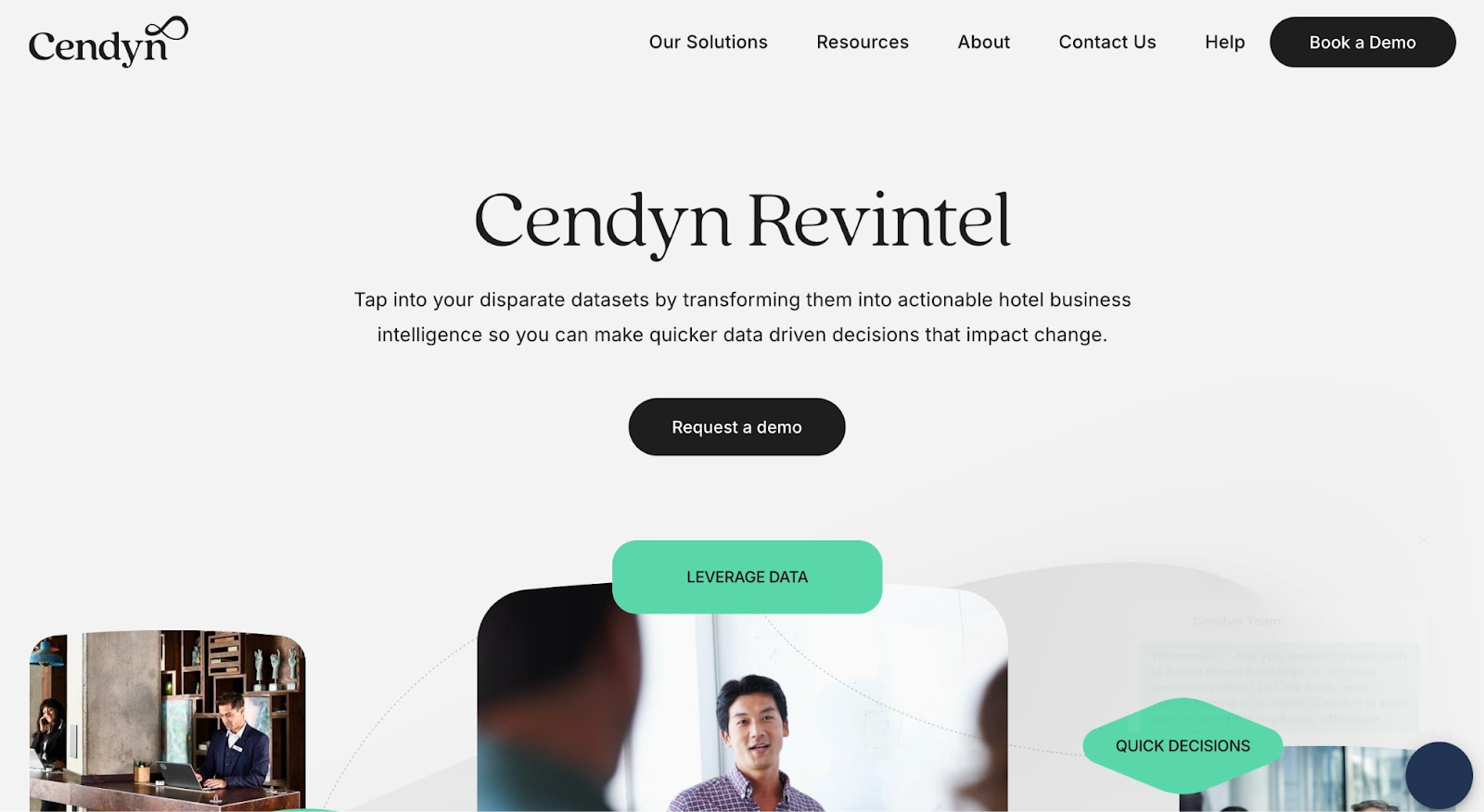
Cendyn Revintel uses Power BI to provide total revenue analysis, 55 standard out-of-the-box reports, and Compose, which lets you create custom, brand-matched interactive visualizations in multiple formats. Teams collaborate seamlessly as marketing monitors campaign performance, sales tracks negotiated accounts at the rate-code level, and revenue managers view room and ancillary revenue across agencies, corporates, and portfolios.
It’s drag-and-drop functionality lets anyone build and analyze dashboards quickly, giving your team more time for strategic decisions instead of manual data work.
Ideal For: Properties focused on guest insight and personalized engagement as part of a broader BI strategy.
5. Duetto
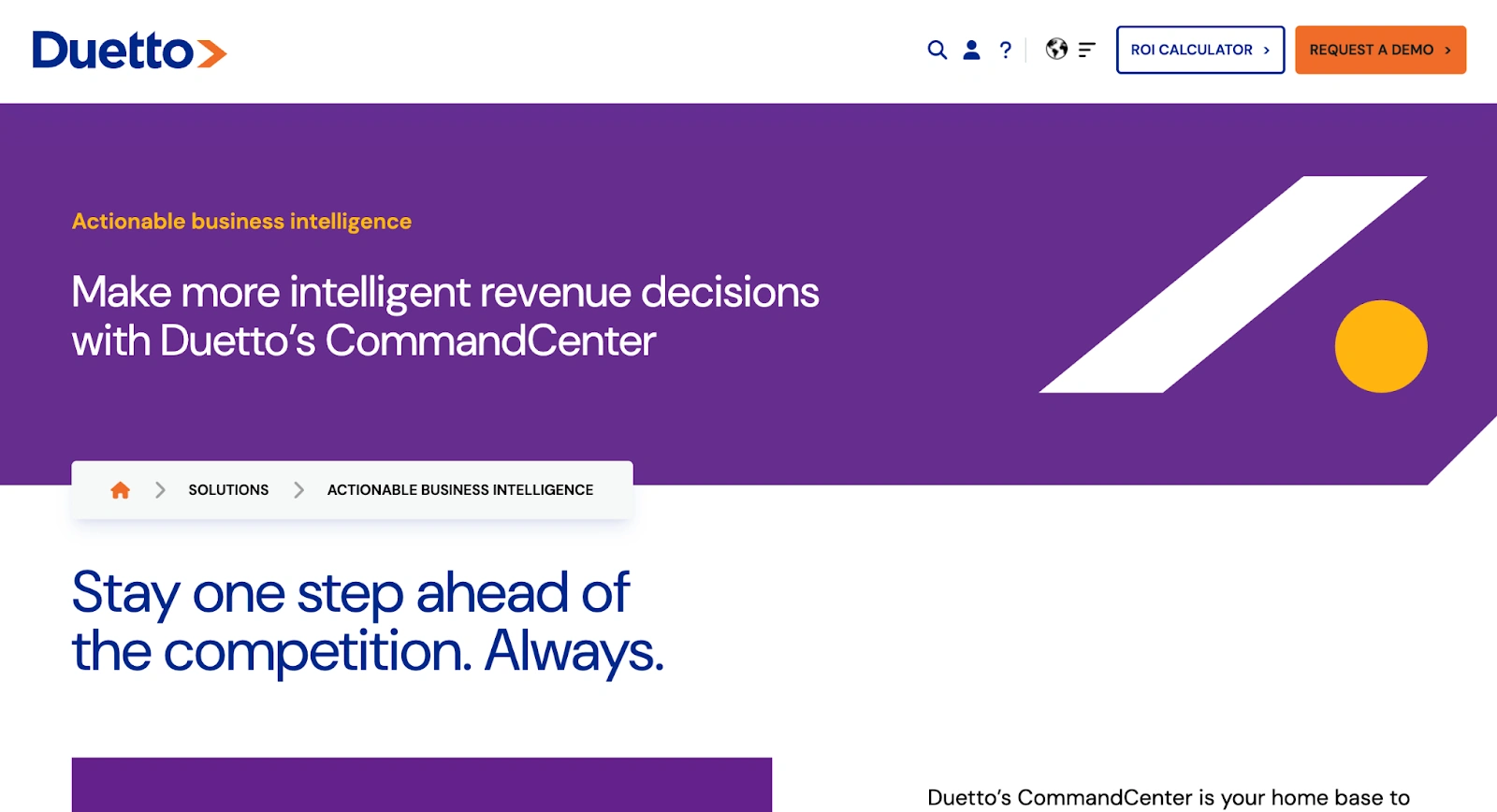
Duetto’s CommandCenter gives your team the tools to make smarter revenue decisions for each property at the right time. The platform connects all your data so you can see the bigger picture, identify underperforming properties or clusters, and focus on days with unusually high or low demand.
You can compare your pricing to competitors in real time, anticipate market shifts, and take action before others react. CommandCenter works with GameChanger, ScoreBoard, BlockBuster, Advance, and OpenSpace to optimize room, group, and function space revenue, generate forecasts, create interactive reports, and analyze third-party data for stronger profitability across all business segments.
Ideal For: Hotels of all sizes that want advanced revenue management and pricing intelligence beyond basic analytics.
6. M3 (Insight BI)
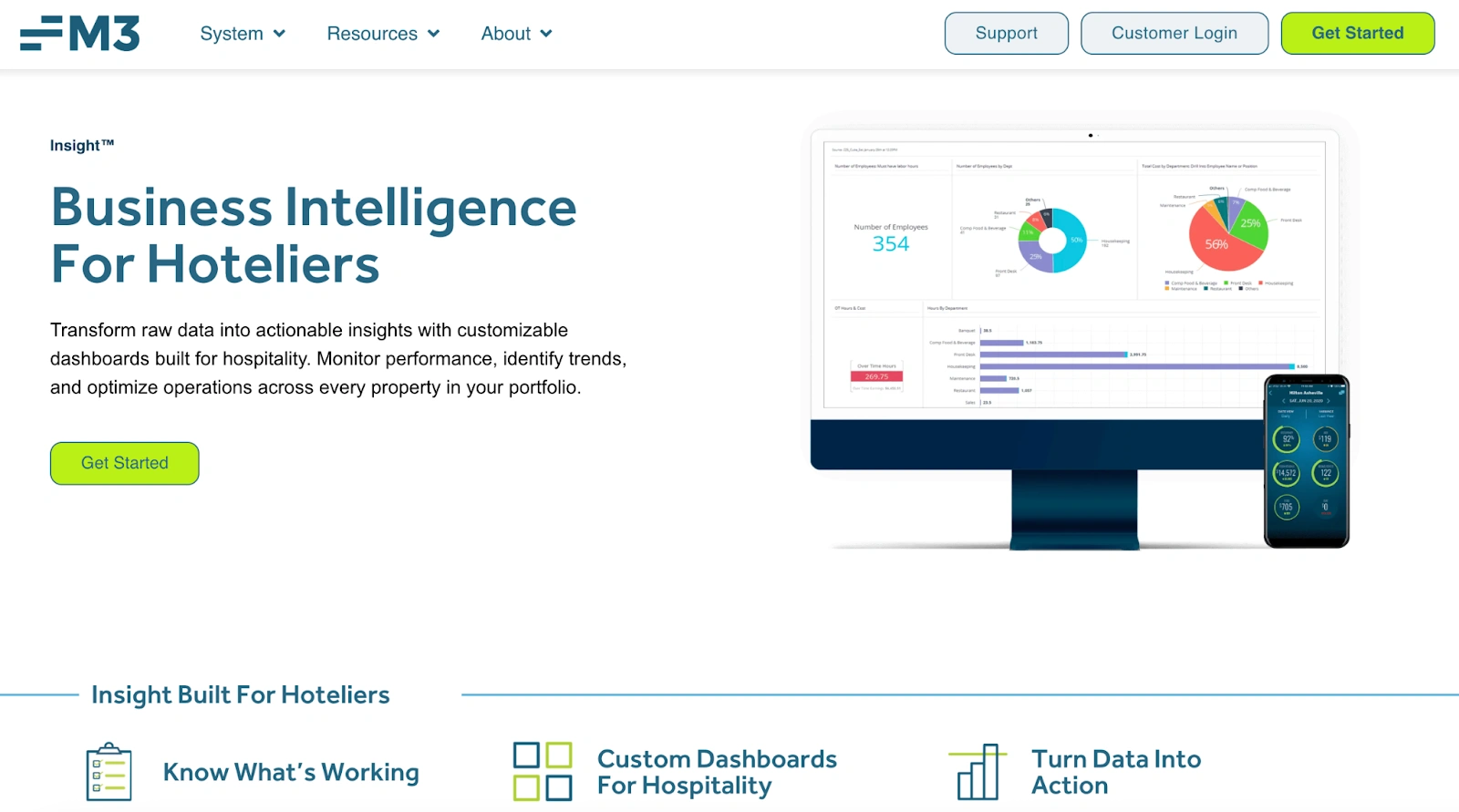
Insight™ by M3 transforms your hotel’s raw data into actionable intelligence with customizable dashboards built for hospitality operations. The platform gives instant visibility into revenue, expenses, labor, occupancy, NOI, and budget variance so you can monitor performance and identify trends.
You can compare results across properties, brands, or regions, drill down by department, and act quickly on red flags. Insight pulls live data from M3 Accounting Core™, provides built-in forecasting and budgeting tools, and allows teams to create, share, and secure custom reports. The mobile-friendly design ensures every team member accesses timely information anytime, anywhere.
Ideal For: Finance and operations leaders in hotel groups and management companies who need deeper operational intelligence.
7. RateGain
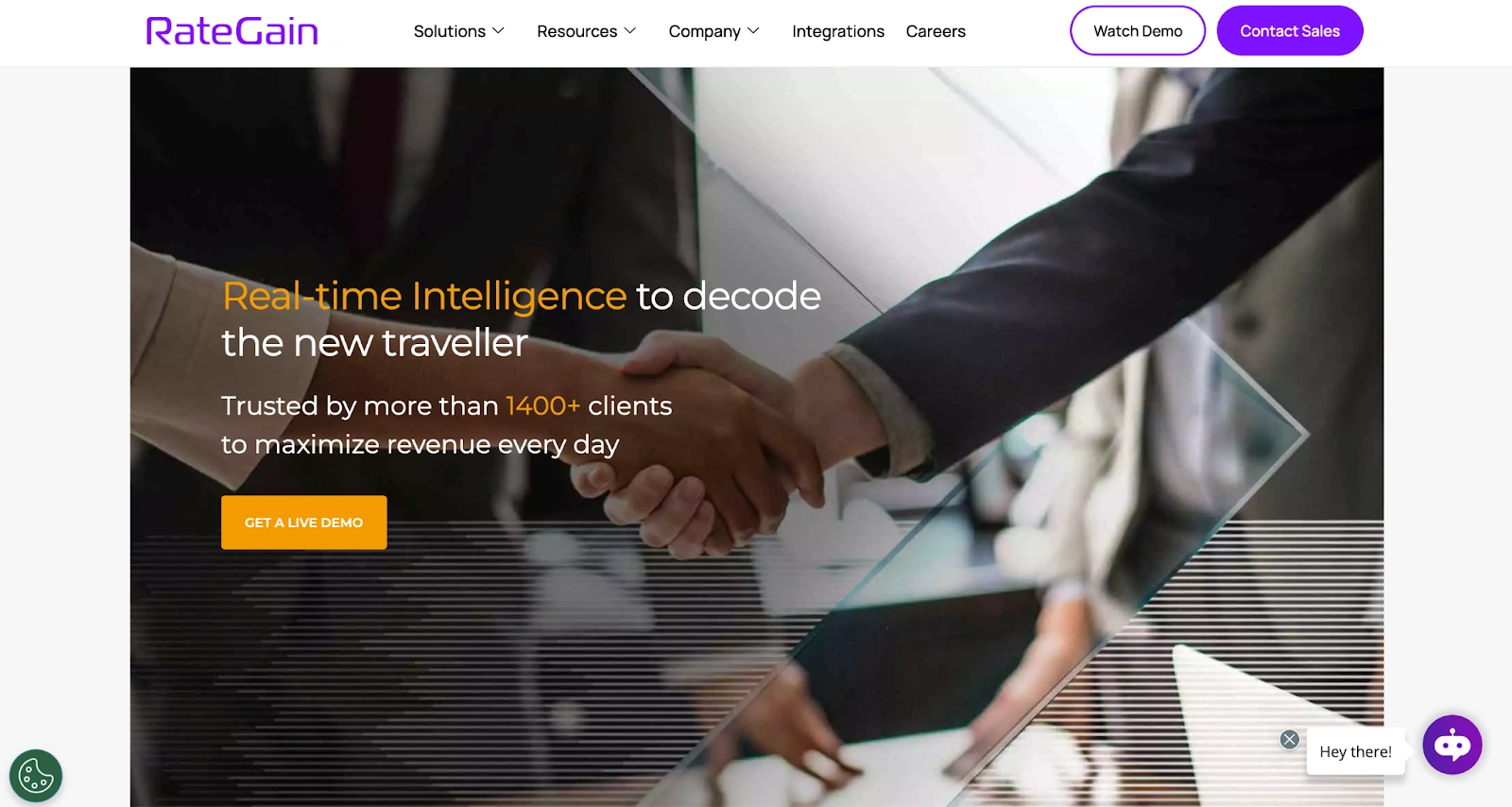
RateGain gives hotels real-time intelligence to understand traveler behavior and maximize revenue every day. The platform collects rate data from public sources and websites travelers use to ensure your pricing matches what guests actually see.
Hotels access competitive intelligence from over 125,000 properties and 700 partners, while machine-learning tools analyze data, identify trends, and automatically fix errors. You can track pricing across OTAs, package providers, airlines, car rentals, and cruise lines to make informed decisions quickly.
Ideal For: Hotels focused on rate strategy and distribution performance across channels.
8. Juyo Analytics
Juyo Analytics gives hotels a single platform to unify data from PMS, finance, POS, pricing tools, and rate shoppers into one centralized analytics hub. The platform transforms complex data into clear insights using flexible dashboards and customizable “constellations,” which are pre-configured visual modules designed for quick analysis.
You can create custom dashboards with a drag-and-drop canvas, access pre-built constellations for immediate insights, and connect seamlessly to multiple data sources through API integrations and data feeds.
Ideal For: Hotels and groups that need a standalone BI layer over multiple data sources.
9. Otelier (IntelliSight)
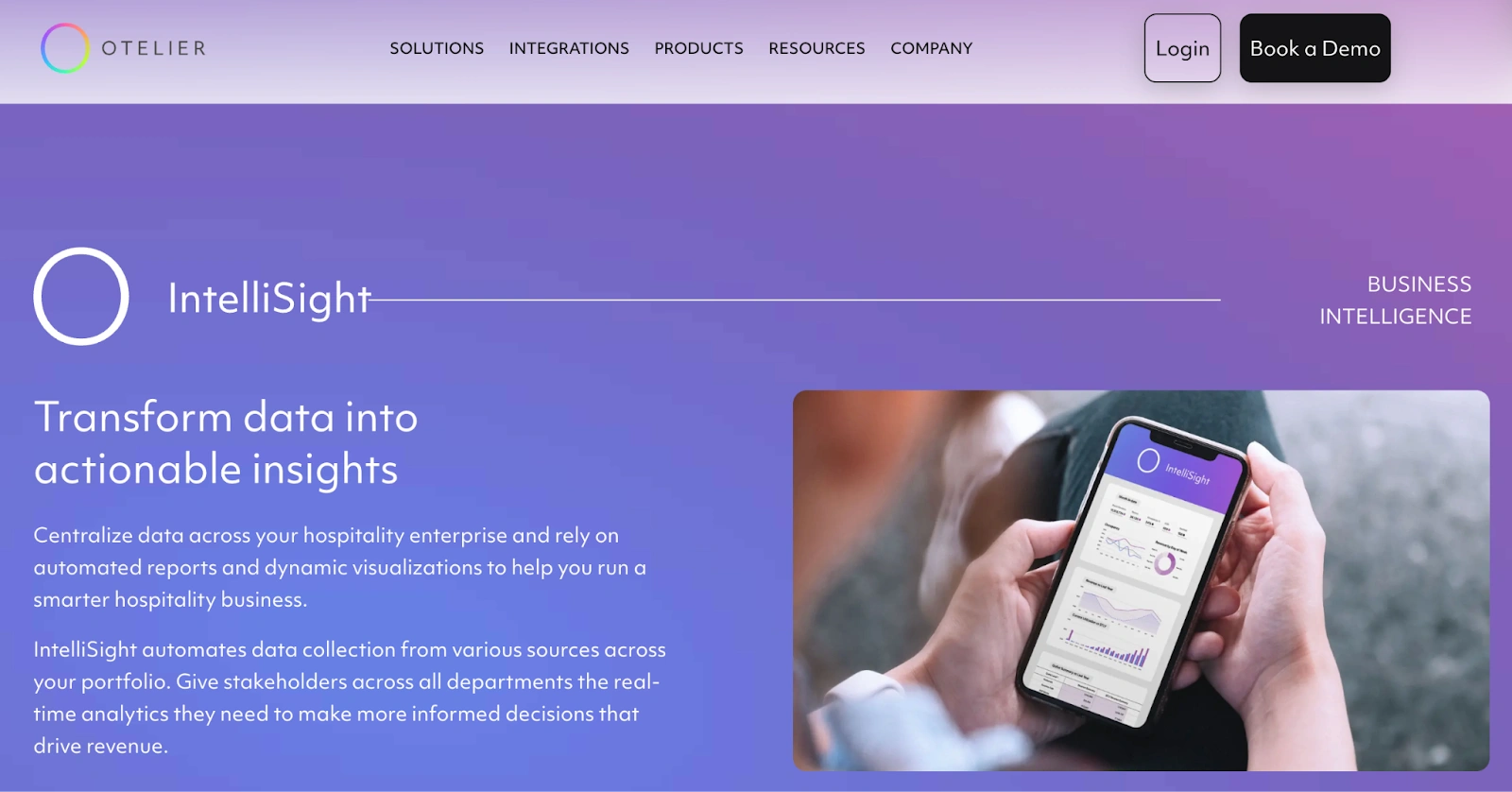
Otelier IntelliSight centralizes data across your hotel portfolio and turns it into actionable insights with automated reports and dynamic visualizations. The platform collects data from more than 100 source systems and delivers real-time analytics to all departments so stakeholders can make informed decisions that drive revenue.
IntelliSight tracks on-the-books positions, room pickup, F&B and event performance, sales production, and total revenue while offering customizable dashboards, predictive models, and seamless integrations. You can scale the solution for single properties or large portfolios, enhance financial reconciliation with Rec, and bundle with DigiAudit and TruePlan to streamline compliance, reporting, and operational planning.
Ideal For: Mid-sized to large hotel portfolios aiming for holistic performance insight.
10. Lighthouse
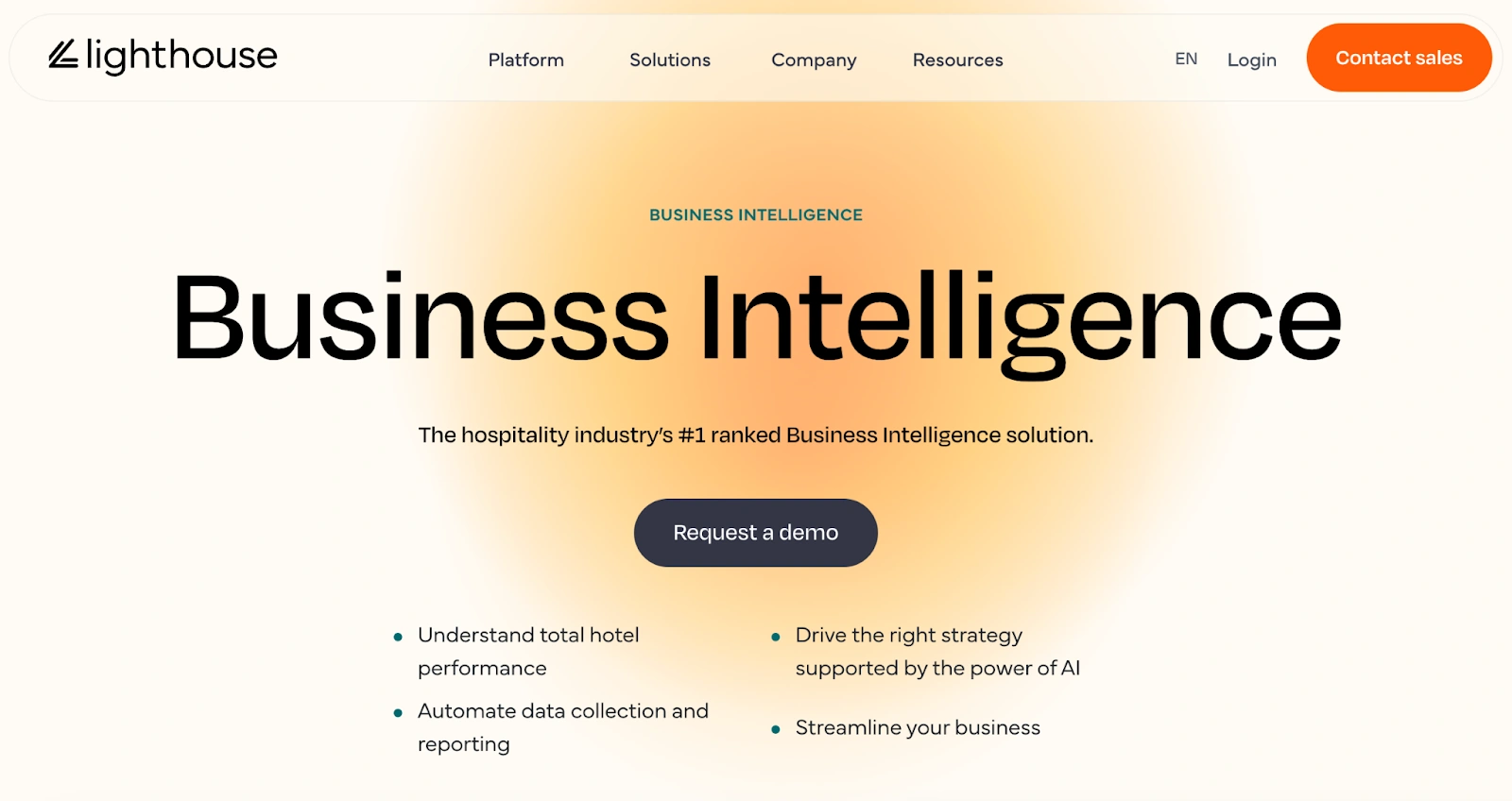
Lighthouse Business Intelligence centralizes hotel data to give your commercial team instant clarity on portfolio performance. The platform integrates with over 70 PMS systems, automates data collection and reporting, and delivers AI-powered insights directly to your inbox so you can focus on revenue strategy instead of manual tasks.
The platform tracks total revenue, portfolio pickup, and emerging market trends while breaking down data at property, executive, and portfolio levels. You can also customize dashboards, generate automated reports, and uncover actionable opportunities that drive strategy.
Ideal For: Revenue teams and executives who want rapid insight with minimal configuration.
Comparison and Selection Criteria
To help you choose the right solution, we’ve compared the top hotel business intelligence and revenue management tools across features, benefits, and user feedback.
Feature comparison matrix
Tool Name
Best For
Key Features
Pros
Cons
G2 Rating
roommaster PMS
Hotels that want an all-in-one PMS and metasearch engine
PMS with reporting, analytics, direct bookings, channel management, and revenue metrics integrated
Strong operational reporting, good direct booking support, and OTA connectivity
A cloud-only model may struggle with poor connectivity; smaller hotels may find pricing too high
4.4
ampliphi RMS
Independent hotels and small portfolios seeking enterprise-level pricing intelligence
Revenue performance visibility, competitor pricing, demand and booking pace tracking
Helps with pricing decisions with real-time data
Focused on revenue rather than full BI
N/A
Amadeus (Travel Intelligence)
Mid-sized to large hotels and chains that need comprehensive global BI and forecasting engines
Forward‑looking market data, rate/occupancy trends, distribution insights
Powerful macro market intelligence
Best paired with property-level BI
4.5
Cendyn Revintel
Properties focused on guest insight and personalized engagement as part of broader BI strategy
AI analytics, marketing/loyalty performance metrics, KPI reporting
Connects loyalty and revenue metrics
More marketing/CRM BI focus
3.8
Duetto
Hotels of all sizes that want advanced revenue management and pricing intelligence
Real‑time pricing intelligence, forecasting, multi‑property dashboards, demand data
Strong revenue optimization and forecasting
Complexity and cost for smaller hotels
N/A
M3 (Insight BI)
Finance and operations leaders in hotel groups and management companies
Financial & operational BI dashboards, accounting integration, mobile analytics
Deep financial analytics, self‑service visuals
More finance focus than market pricing BI
4.3
RateGain
Hotels focused on rate strategy and distribution performance across channels
Real‑time OTA rate and parity monitoring, distribution insight, AI rate suggestions
Strong OTA and distribution BI
Narrower focus, needs broader BI pairing
4.3
Juyo Analytics
Hotels and groups that need a standalone BI layer over multiple data sources
Unified data hub, drag‑and‑drop dashboards, pre‑built visual modules
Excellent for centralizing disparate sources
No built‑in RMS or pricing tools
N/A
Otelier (IntelliSight)
Mid-sized to large hotel portfolios
Data centralization from 100+ systems, real‑time dashboards, automated reporting
Good portfolio‑wide analysis
BI may overlap with broad operational needs
5.0
Lighthouse BI
Revenue teams and executives who want rapid insight
Real‑time revenue data, custom dashboards, AI summaries, and total KPI tracking
Strong real‑time insights and generative summaries
Template‑first design may limit deep customization
4.5
Pricing considerations
BI pricing models differ across vendors, and understanding total cost is critical:
Subscription Models: Most cloud-based BI tools operate on a monthly or annual licensing model based on room count, data volume, or user seats.
One-Time Licensing: Older on-premises solutions may require an upfront license fee and ongoing maintenance costs.
Implementation Costs: Data integration, cleaning, and initial setup often require professional services. This can be substantial if your data resides across multiple legacy systems.
Training and Support: Budget for training your teams to use BI effectively and for ongoing vendor support.
Hotels should calculate total cost of ownership (TCO) including license, implementation, integrations, training, and support rather than focusing solely on subscription pricing.
External market data (competitor rates, demand indices)
Without these connections, BI platforms lack the complete data sets needed for accurate forecasting and insightful analytics.
Core Features of Hotel Business Intelligence Solutions
A hotel BI solution should give you the insights to run smarter, more profitable operations. Here are some of the key features that separate a decent solution from a top-tier one:
Centralized data repository: Hotels generate data across multiple systems, from PMS to POS to booking engines. A BI solution should consolidate all this information into one place, letting you see the full picture of your property’s performance instead of relying on fragmented reports.
KPI tracking: Your software should keep a real-time pulse on key performance indicators (KPIs) such as occupancy, ADR, RevPAR, channel performance, and guest satisfaction. These actionable insights help you make informed decisions quickly and confidently.
Forecasting engines: The BI tool should leverage predictive analytics to anticipate guest demand, adjust pricing strategies, and manage inventory efficiently. Forecasting helps your team plan ahead and react before challenges affect revenue.
Operational analytics: A dedicated BI software should identify labor inefficiencies, staffing gaps, and workflow issues before they impact guest experience. Operational insights give your managers the tools to optimize daily operations across every department.
Marketing analytics: Your tool should track channel performance, measure campaign ROI, and segment guests for targeted marketing. These insights help your hotel reach the right guests at the right time, boosting bookings and loyalty.
Implementation Best Practices
Implementing a business intelligence solution effectively determines whether your hotel will actually use the insights or let them sit idle in dashboards. Here’s how to run a hotel business with BI:
Define clear goals: Start by setting measurable objectives that matter to your hotel. Decide whether you want to increase revenue, improve occupancy, reduce operational costs, or boost guest satisfaction. Clear goals give your team a benchmark to evaluate success.
Cleanse and consolidate data: Your BI is only as good as the business data you feed it. Take the time to clean, standardize, and consolidate data from PMS, POS, booking engines, and other sources. Accurate, complete data ensures that insights reflect real operational performance.
Pilot and scale gradually: Start small with a focused pilot project, such as revenue forecasting or channel performance tracking. Use the pilot to identify gaps, gather feedback, and train your team before expanding BI across all departments and properties.
Train your teams thoroughly: Revenue management, operations, marketing, and finance teams all interact with BI differently. Provide hands-on training so every user understands how to interpret dashboards, generate reports, and take actionable steps from insights.
Measure ROI continuously: Track the impact of BI with clear KPIs, such as revenue growth, cost savings, or operational efficiency. Review these metrics regularly to refine processes, improve adoption, and make sure your BI investment drives real business results.
Industry Use Cases and Applications
These examples highlight how hotels can optimize workflows, manage distribution, and make data-driven decisions that directly impact performance and guest experience.
1. Plim Plaza
Plim Plaza, a premier boardwalk hotel in Ocean City, Maryland, uses roommaster to streamline operations in a high-turnover, competitive market. For nearly 20 years, Plim Plaza has relied on roommaster to streamline operations. Barrett praises the system’s intuitive design, noting that,
“In my years of hoteling, I’ve used different property management systems. roommaster is by far the easiest and most user friendly to navigate with minimal training.”
Real-time dashboards give staff instant insights for operational decisions, while cloud access allows Barrett to monitor the property remotely. Additionally, responsive support resolves issues quickly, keeping service uninterrupted.
{{pms-two}}
2. Harrison Hall Hotel
Harrison Hall Hotel, the flagship property of the Harrison Group, illustrates how long-term technology partnerships drive operational excellence. General Manager Stacy Dadson highlights roommaster’s self-explanatory interface, which allows new staff to train quickly, maintain consistent service, and manage the property efficiently.
“roommaster is very easy with our channel management, our OTAs,” notes Dadson. “The availability is updated right away. So there’s no delay, doesn’t cause any overbookings.”
The PMS synchronizes availability across OTAs in real time, preventing overbookings and protecting revenue. Streamlined check-in processes allow staff to focus on personalized guest interactions. A unified dashboard consolidates arrivals, departures, and housekeeping updates, while analytics inform pricing strategies, demand forecasting, and property improvements.
Choosing the Right Hotel Business Intelligence Platform
When evaluating solutions, consider these essential areas:
Predictive analytics and AI: Seek a platform that applies statistical algorithms and artificial intelligence (AI) to forecast demand, generate budgets, and convert complex data into clear, actionable insights.
Customization and segmentation: Make sure the system enables detailed segmentation analysis and provides tailored reporting and dashboards that match your specific business requirements.
Reporting and automation: Choose a solution that automates data collection and report generation, keeping performance updates current and freeing your team from manual tasks.
Cloud and UX: Opt for cloud-based software that offers easy accessibility and an intuitive interface, allowing hoteliers to make fast, informed decisions.
Data integration: Look for a platform that consolidates data from multiple systems, including PMS and revenue management system, into a single, unified view. Strong integration creates a complete, accurate picture of your business.
System-agnostic approach: Select a platform that works independently of brand, integrating seamlessly with all existing systems regardless of vendor.
Customer support: Assess the flexibility and quality of the support team, including hours of operation, language coverage, and communication methods such as phone or chat, particularly during the critical onboarding phase.
Harness the Power of Business Intelligence Today!
Business Intelligence has moved from an optional tool to a core strategic enabler in hospitality. With hotel BI market size projected to reach $6.1 billion by 2032 and adoption increasing across property types, the future belongs to analytics-driven hotels that can outthink and outmaneuver competitors.
Hotels that embrace BI will optimize revenue, improve operations, deliver personalized guest experiences, and strengthen competitive positioning. The question is no longer if a hotel should adopt BI, but how soon they can implement it and start seeing results.
roommaster PMS supports this transformation by centralizing property data and enhancing analytics, so hotels can make smarter decisions faster and unlock more value from their BI investments. Book a demo today to see how BI can transform your hotel’s performance!
FAQs
What are the benefits of hotel business intelligence software?
Hotel BI software consolidates data from multiple sources and turns it into actionable insights. It helps hotels optimize revenue, streamline operations, personalize guest experiences, and improve marketing ROI, allowing teams to make faster, smarter, data-driven decisions.
How do hotel business intelligence tools integrate with existing systems?
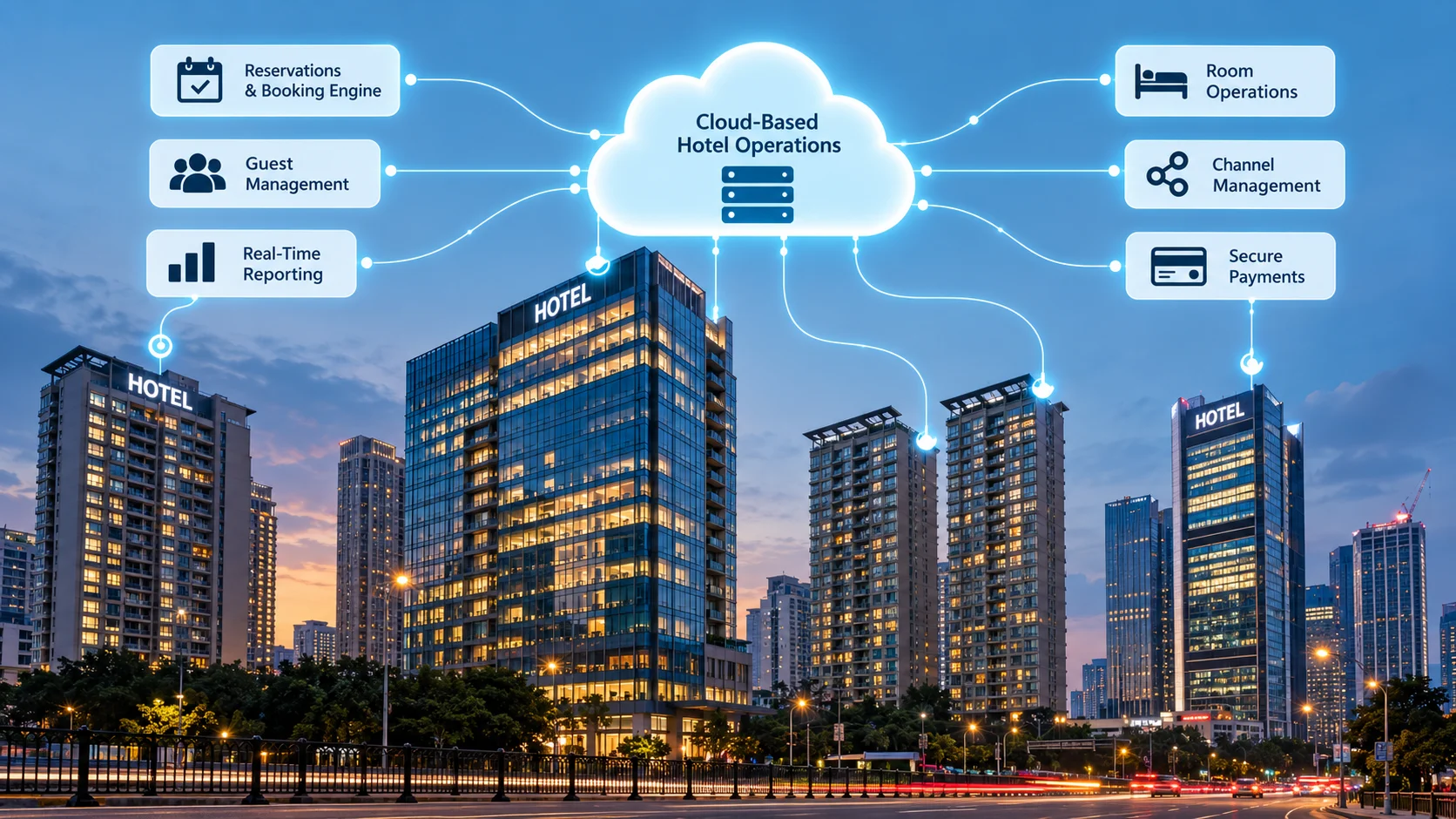
Hotel BI tools connect directly with PMS, POS, RMS, CRM, channel managers, and external market feeds. They centralize and analyze data in real time, automate reporting, and provide a unified view of operations so teams can act quickly and confidently.
What KPIs should hotels track using BI tools?
Hotels should track occupancy rate, average daily rate (ADR), revenue per available room (RevPAR), booking lead time, channel performance, guest satisfaction, and ancillary revenue. When hotels monitor these KPIs, it lets teams spot trends, optimize strategies, and drive stronger performance across the property.
{{cta-strip}}
revenue-management-one
Put Your Hotel Pricing Optimization on Autopilot with AI
Mayela Lozano is a content strategist with a passion for hospitality and technology. She collaborates with roommaster on content creation, highlighting how technology can streamline hotel operations and enhance guest satisfaction. When she’s not creating content, Mayela loves to travel and spend time with her two little ones, discovering new adventures and making memories along the way.
Join Thousands of Hotels Thriving with roommaster
The transition to roommaster is straightforward and efficient. Our implementation team handles data migration including reservations, guest profiles, and historical information.
The transition to roommaster is straightforward and efficient. Our implementation team handles data migration including reservations, guest profiles, and historical information.
Hotel Check-In Kiosk: Enhance the Guest Experience
October 5, 2026
Hospitality Technology
Hotel Management
Hospitality Trends
Hotel Self Check-In: How It Works, Types, Benefits And Setup
October 1, 2026
Hotel Management
Hospitality Trends
Hotel Check-In & Check-Out Times Explained
October 1, 2026
Hospitality Trends
Hotel Management
Cloud-Based Property Management System: Hotel PMS
October 1, 2026
General
Cloud PMS
AI
Cloud Computing In The Hospitality Industry: A Complete Guide For Hotels
October 1, 2026
Hotel Management
Cloud PMS
Hotel Management System (HMS): A Complete Guide
September 23, 2026
Hospitality Trends
Hotel PMS
Cloud PMS
Hotel PMS Integration: How It Works for Hotels
September 23, 2026
Hospitality Trends
Hospitality Technology
Hotel PMS
Hotel Management
Cloud PMS
How Hotel PMS Software Transforms Hospitality Management
September 23, 2026
Hotel Management
Marketing
Pet-Friendly Hotel Amenities & Package Ideas That Drive Revenue
September 22, 2026
Hotel Management
Hotel PMS
Hotel Food And Beverage (F&B): The Complete Guide
September 22, 2026
Join Thousands of Hotels Thriving with roommaster
See how roommaster's unified platform can work for your property. Our team will walk you through features tailored to your specific needs and operations.



.png)
.png)
.png)