How Do Hotels Actually Get Listed on Tiscover?
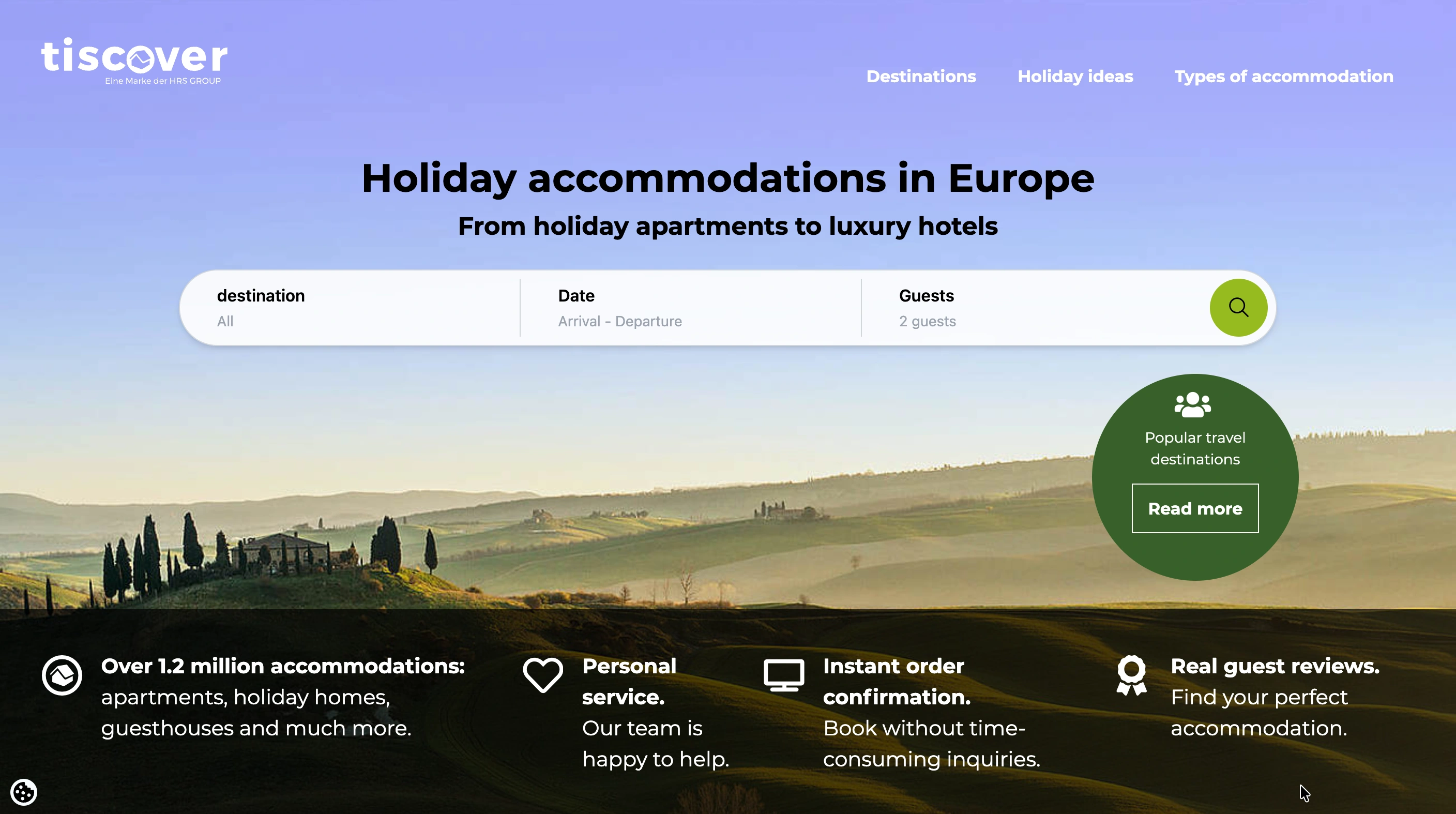
Listing on Tiscover typically requires contacting your regional tourism partner network or local destination management organization, not a direct online signup. Tiscover runs as a regional booking engine for Alpine and European destinations, so tourism boards feed hotel data into the platform on your behalf.
Getting listed on Tiscover means going through your local Tourismusverband, not applying directly on Tiscover's own site. Tiscover operates as a shared regional booking engine, serving destinations across Austria, Germany, and neighboring markets.
Because it works this way, there is no open self-service portal comparable to a typical global OTA signup. Your regional destination management organization acts as the gatekeeper for the platform.
| Registration Model | How It Works | Who Controls Access |
|---|
| Self-service global OTA | Hotel creates an account online and enters details directly | The hotel |
| Tiscover (DMO-mediated) | Hotel contacts a regional tourism office, which enters data into a shared database | The regional Tourismusverband |
This structure exists because Tiscover was built around destination marketing, not individual hotel onboarding. Tourism boards manage the shared accommodation database for their region, and that database feeds directly into Tiscover's public search results.
For a hotel owner, this means the first move is never a web form. It's a phone call or email to whichever tourism office covers your town or valley. They decide whether your property qualifies and how quickly it goes live.
This also explains why Tiscover feels harder to find information about than larger global OTAs. Regional tourism boards vary in how much they publish online about their own onboarding process, and most of what exists is written for local audiences rather than search engines.
What You Need Before Contacting Your Tourism Association
Gathering your information in advance shortens the back-and-forth with your DMO and speeds up your time to going live.
| Category | What to Prepare |
|---|
| Property identity | Hotel name and exact street address, matching your official business registration |
| Rooms | Room types and configurations, including bed counts and maximum occupancy per room |
| Amenities | Wi-Fi, parking, breakfast service, wellness facilities, family-friendly features |
| Legal | Official local business registration details |
| Visual content | High-resolution photos of rooms, common areas, and the building exterior |
| Pricing | Nightly rates and seasonal availability, mapped out for the coming booking season |
Hotels that show up to this first conversation with everything ready tend to move through the process faster than those who need multiple follow-up calls to fill gaps.
Steps to Get Your Property on Tiscover
The onboarding process runs through four stages. Each one depends on your regional tourism association, so the pace and exact requirements can vary by destination.
| Step | Action | Typical Owner |
|---|
| 1 | Contact your local tourist office | Hotel owner or manager |
| 2 | Request an extranet account | Regional Tourismusverband |
| 3 | Provide property data | Hotel owner or manager |
| 4 | Upload media and rates | Hotel owner or manager |
Step 1: Contact Your Local Tourist Office
Start by identifying the Tourismusverband responsible for your hotel's town or region. Most Alpine and Central European destinations have one dedicated tourism office covering hotel and accommodation listings.
Reach out directly, either by phone or email, and explain that you want your property listed on Tiscover. Many tourism offices already assume new members want this, since Tiscover is the primary booking engine they use for the region.
Expect the office to ask basic questions first:
- Your property type (hotel, guesthouse, apartment)
- Your total room count
- Whether you're already a member of their tourism association
Some regions require formal membership before granting access to the booking system, which may involve a membership fee. If you're unsure which tourism office covers your area, check your municipality's official website or ask a neighboring hotel that already lists on Tiscover.
Step 2: Request an Extranet Account
Once your local tourist office confirms you can move forward, ask for an extranet account. This is sometimes called a Vermieter-Login, which translates to "landlord login" or property manager login.
This account gives you direct access to the regional accommodation database that syncs to Tiscover's public listings. It's the tool you'll use going forward to manage your own content, rather than relying on the tourism office for every update.
| What Happens | Typical Timeframe |
|---|
| DMO issues username and password | A few business days to a few weeks |
| Account tied to your specific property record | Set once, reused for all future updates |
| Access to rate and availability calendar | Immediate once account is active |
Once you have access, log in and familiarize yourself with the interface before entering your full property details. Extranet systems vary by region, so the layout on your account may look different from what neighboring hotels describe.
Step 3: Provide Your Property Data
With extranet access in hand, enter your core property information directly into the system. This typically includes your hotel name, exact address, room types, amenities, and business registration details.
Accuracy matters here more than speed. Guests searching Tiscover rely on this data to compare properties, and incomplete or inconsistent details can push your listing below more thorough competitors in search results.
Common data-entry checks worth running before you submit:
- Room counts and configurations match your property management system exactly
- Amenities reflect what's actually available, not what's planned
- Distinctive features, such as a specific view or wellness area, are captured in the amenities section rather than buried in a general description
A mismatch between your extranet listing and your actual inventory is one of the more common sources of overbooking complaints from hotels using regional platforms like this one.
Step 4: Upload Media and Rates
The final setup step is adding your visual content and pricing. Upload high-resolution photos covering rooms, common areas, and the building exterior, since these are usually the first thing a searching guest evaluates.
Set your nightly rates and seasonal availability through the partner backend your DMO grants access to. Some extranet systems allow rate calendars to be uploaded in bulk, while others require entering seasons manually one at a time.
Once your media and rates are in place, your regional tourism office typically reviews the completed listing before it goes live on Tiscover's public search results. This review step is where regional differences in speed become most noticeable.
How Long Does It Take to Get Listed on Tiscover?
There's no fixed approval window like the 24-hour turnaround some global OTAs offer. Because a regional DMO handles onboarding, timing depends entirely on their internal process and current workload.
| Scenario | Typical Timing |
|---|
| Property already a tourism association member | Faster, sometimes within a couple of weeks |
| New membership required first | Slower, tied to the association's own registration cycle |
| Onboarding during peak season | Slower, since DMO staff are stretched across other duties |
Build in a buffer rather than expecting an instant go-live date. If you're planning a seasonal launch, start the Tourismusverband conversation well before you need the listing live, ideally a month or more ahead.
Timing depends on three factors working together: your association membership status, the DMO's current workload, and how quickly you supply complete property data.
- Membership status matters most. Properties already paying into their regional tourism association tend to skip the slowest step, since the DMO doesn't need to process new membership paperwork first.
- Seasonal timing affects DMO responsiveness. Tourism offices in ski or summer-resort regions field far more requests right before peak season starts, which can push onboarding back by several weeks.
- Your own preparation is the one factor you control directly. A hotel that arrives with complete data moves through steps 3 and 4 in days rather than weeks.
Because no platform-wide guarantee exists, the honest expectation to set internally is four to six weeks from first contact to a live listing, with faster results possible for well-prepared, already-affiliated properties.
A Worked Example: Getting a Small Alpine Hotel Listed
Consider a 20-room family-run hotel in a mid-sized Austrian ski town, already established locally but never listed on Tiscover. The owner starts by calling the local Tourismusverband and explains they want their property visible to travelers searching for accommodations in the region.
The tourism office confirms the hotel is already a paying member of the regional association, which skips one potential delay. Within a week, the owner receives extranet login credentials by email, along with a short guide on how to use the interface.
Over the next few days, the owner enters room types, amenities, and rates using the checklist prepared beforehand. Photos take the longest step, since the hotel needs updated shots of a recently renovated wing before uploading them.
Two and a half weeks after that first phone call, the listing goes live on Tiscover. The regional tourism office reviews the completed profile once before publishing it, catching a mismatched room count that the owner corrects the same day.
This timeline sits toward the faster end of what's realistic. A hotel that isn't yet a tourism association member, or one contacting the DMO during peak winter season, should expect a longer runway.
Getting the Most Out of Your Tiscover Listing
Once you're in the system, visibility depends on how complete and current your listing stays, not just on getting approved.
- Fill in every field completely: Sparse descriptions and thin amenity lists convert worse than thorough listings, since guests compare properties side by side.
- Update availability regularly, ideally daily: A stale calendar sends bookings to nearby properties with current, accurate data.
- Use distinct, high-quality photos: Generic stock-style images blend in against competing listings in the same region.
- Point guests to your own website for details Tiscover's listing format cannot fully show, such as a full gallery or a direct booking option.
- Review your listing seasonally: Room configurations, amenities, and photos can go stale between booking seasons if nobody revisits them.
Common Mistakes to Avoid
- Looking for a self-service signup on Tiscover's own site instead of contacting your regional Tourismusverband first.
- Arriving at that first tourism office conversation with incomplete data, which adds follow-up calls and slows the whole process.
- Letting your extranet room counts drift from your actual inventory, one of the more common sources of overbooking complaints.
- Leaving availability stale after launch, which sends bookings to nearby properties with current data.
- Using generic, stock-style photos that blend in against competing listings in the same region.
- Starting the conversation right before peak season, when tourism office staff are stretched and onboarding slows by weeks.
Keeping Tiscover in Sync With Your Other Channels
Once your property is live on Tiscover, you're also managing rates and availability on Booking.com, direct bookings, and likely several other regional or global channels. Matching all of them by hand invites overbookings and rate mismatches.
| Without a Channel Manager | With roommaster Channel Manager |
|---|
| Update each channel's extranet separately | Update once, sync everywhere automatically |
| Risk of rate mismatches across platforms | Centralized rate and inventory control |
| Manual overbooking checks | Real-time two-way sync with connected OTAs |
Every manual update carries risk. Miss one channel after adjusting a rate elsewhere and your Tiscover listing no longer matches what a guest sees on another platform. That inconsistency erodes guest trust and can draw scrutiny from your tourism board.
roommaster Channel Manager connects to Tiscover along with hundreds of other OTAs and GDS platforms. It syncs rates and availability across every connected channel in real time, so one update reaches all of them at once. Hotels using it report an 85% reduction in time spent managing distribution.
The outcome is straightforward. You list once on Tiscover through your tourism board, then let a single dashboard keep every other channel matched to it going forward, without logging into a separate extranet every time a rate changes.
{{cta-strip}}
Frequently Asked Questions
1. Is Tiscover the same as HRS?
No, Tiscover refers to a separate regional booking platform, though both Tiscover and HRS belong to the same parent company, HRS Group, which can cause confusion for hotels evaluating regional distribution.
2. Do hotels need a tourism association membership to list on Tiscover?
Typically yes, since regional Tourismusverbände manage the shared accommodation database that feeds directly into Tiscover's public listings, and membership is usually the gateway to access.
3. What is Tiscover used for?
Tiscover helps travelers search and book accommodations across Alpine and Central European regional destinations, covering hotels, guesthouses, apartments, and other lodging types across multiple countries.
4. How do I update my Tiscover listing?
Log into your extranet or Vermieter-Login account, issued by your regional tourism office, to edit rates, photos, room details, and availability directly at any time.
5. How do I manage Tiscover alongside other booking sites?
Use a channel manager to sync rates and availability across Tiscover and every other connected platform, avoiding manual updates on each individual extranet.
.png)
.png)
.png)