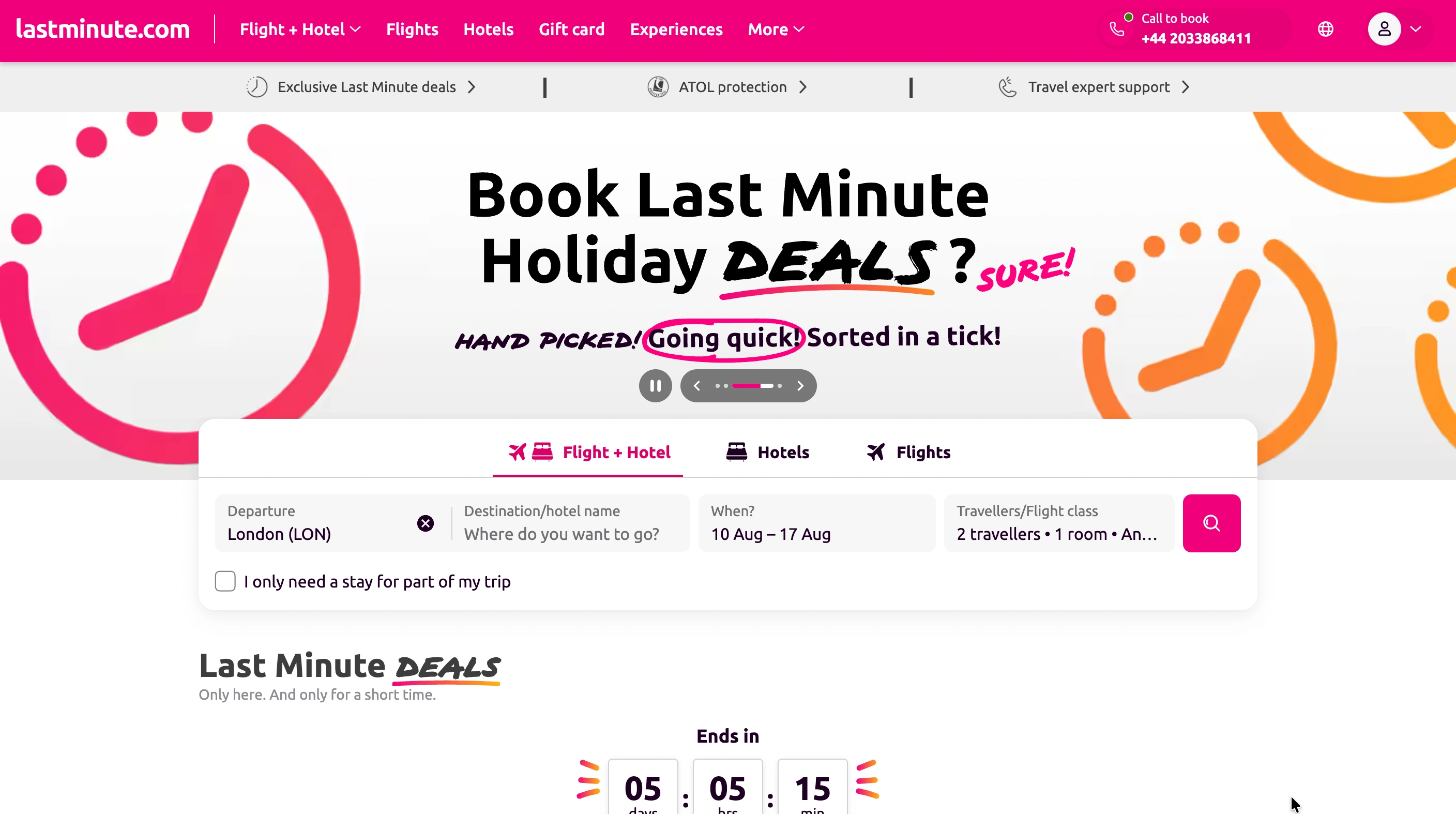
Why List Your Hotel on lastminute.com
lastminute.com is part of a larger European travel group, with its strongest audiences concentrated in the UK, Italy, France, Spain, and Germany. Travelers there use it specifically for last-minute and deal-driven bookings, which makes it a useful channel for filling near-term availability rather than long-lead-time reservations.
That focus is also why onboarding looks different from a self-serve OTA. lastminute.com vets properties through an application and a destination-specific Market Manager instead of an instant sign-up form.
It also expects rates and availability to stay accurate in near real time once you're live. Properties that already manage distribution through a channel manager tend to adapt to this fastest, since the same real-time expectation already applies across their other channels.
What You'll Need
Listing your hotel on lastminute.com means gathering a few things upfront so your application and contract review move quickly.
- Property legal name, address, and contact details matching your business documents
- Business or ownership documentation for verification
- Bank and tax details for payouts
- Room types, base rates, and photos ready for once you're approved
- A decision on connection method: manual extranet entry or channel manager/API
- Your connectivity provider's name, if going the channel-manager route
Step 1: Submit Your Property Application
Start at lastminute.com's property application form, not a general partner inquiry page. Enter your property name, address, contact details, and property type exactly as they appear on your business documents.
The form typically asks for:
- Legal property name and trading name
- Full address and contact details
- Property type and room count
- A primary contact for the review team
Common Mistake: Entering a trading name that doesn't match your registered business name. Mismatches get flagged during review, which restarts your waiting period.
Photos, room descriptions, and detailed rate plans aren't required at this stage. Those come later, once you have extranet access. Focus the application on getting your basic identity and property type accurate, since that's what the review team checks first.
Step 2: Wait for Review and Get Your Market Manager
After submitting, there's a waiting period before lastminute.com's team reviews the application. Response times aren't published, so don't expect same-day confirmation.
Once approved, you're assigned a Market Manager for your destination, your single point of contact for contract terms and account setup, and someone you'll find listed inside your extranet later. Don't mistake a delayed response for rejection: submitting a duplicate application only adds a second record for the review team to reconcile.
Step 3: Review and Return Your Signed Contract
Your Market Manager sends a contract covering commission, payment terms, and market-specific rules. Review it fully before signing, since terms vary by destination rather than following one global rate card.
Contracts generally follow one of two structures: a commission model, where you set your own guest-facing rate and lastminute.com takes a percentage, or a net-rate model, where you agree on a wholesale rate and lastminute.com sets the price the guest sees. Confirm which one applies, since it changes how you should think about pricing consistency across your other channels.
Common Mistake: Signing without confirming market-specific clauses first, then discovering a rate-parity rule that conflicts with pricing on other channels.
What to check before signing:
- Commission structure for your specific market
- Payment schedule and currency
- Rate-parity and cancellation-policy requirements
- Contract length and renewal terms
Step 4: Choose Your Connection Method
With a signed contract in hand, decide how you'll keep rates and availability updated: manually inside the lastminute.com extranet, or automatically through a channel manager.
| Manual Extranet | Channel Manager / API |
|---|
| Setup effort | Low: log in and enter data | Requires a connectivity template submitted to lastminute.com |
| Ongoing update effort | High: repeated by hand | Low: updates push automatically |
| Best for | Single-unit properties | Multi-room-type or multi-property operations |
| What's required | Extranet login only | Provider name, plus lastminute.com's approval |
If you choose the channel manager route, complete lastminute.com's connectivity template and return it to their partner team, naming the specific connectivity provider you'll use.
Common Mistake: Naming an unsupported or incorrect connectivity provider on the template, which forces a resubmission and adds days to setup.
At a single-unit B&B, manual extranet entry is often enough. Multi-property or multi-room-type operations get more value from a channel manager, since every rate change only needs to happen once.
Step 5: Set Up Your Extranet Credentials
Once approved, lastminute.com issues extranet access. These credentials control everything from rates to booking visibility, so store them somewhere your team can find without a scramble.
Common Mistake: Losing track of the GHE property ID. Your connectivity provider needs it to complete the technical switch, and requesting it again adds another wait.
Credentials to have ready:
- Extranet username and password
- XML username and password (can duplicate your extranet login)
- GHE property ID, used as the PIN code for a channel-manager connection request
Step 6: Map Your Rooms, Rates, and Availability
With credentials in place, configure how each room type and rate responds to demand. This step determines what guests actually see when they search your property.
If you're connecting through a channel manager, your provider will also submit a rate management level and a shopping source identifier as part of the switch request. lastminute.com uses these to confirm who controls pricing on the connection and where the request originated, alongside your product list of rooms and rates.
Setting Occupancy-Based Rates
Each room type carries its own occupancy-based rate settings, configured as tick boxes inside the extranet or passed through your channel manager. Set these to match how you actually price by guest count, not a flat default.
Understanding Rate-Level Availability
lastminute.com triggers availability at the rate level, not the room level. A room can show as open while a specific rate plan is closed, and guests searching under that rate simply won't see it.
Common Mistake: Managing availability at the room level out of habit from other OTAs. On lastminute.com, this leaves rate plans stale even after you've "closed" the room elsewhere, risking overbooking.
Step 7: Go Live and Confirm Your First Sync
Switch requests and product-list updates typically get a reply within one to five business days. Most properties are fully live within six to eight weeks of first applying.
Before treating the listing as live, run a small test: change a rate or close a date, then confirm it actually appears correctly on lastminute.com. A submitted request isn't the same as a working connection.
Confirm these three things before calling it live:
- A rate change reflects on lastminute.com within a few hours
- Closing a date actually blocks new bookings
- A test reservation flows back into your extranet or PMS correctly
Common Mistake: Assuming the listing is live as soon as the application is approved, then discovering weeks later that a rate never synced correctly.
Step 8: Optimize Your Listing After Launch
Going live isn't the finish line. lastminute.com doesn't send automated reminders the way some self-serve platforms do, so upkeep depends on your own routine. A brief weekly rate check and a monthly photo and policy review are usually enough to keep the listing accurate without turning it into a daily task.
- Keep photos and policies current as your property changes
- Respond to Market Manager notices promptly
- Recheck rate-level availability after any manual edit
- Update lastminute.com alongside every other channel, not in isolation
Common Mistake: Letting the listing go stale after launch, since there's no built-in nudge prompting a review the way self-serve OTA dashboards often provide.
What Happens When This Goes Wrong
Skipping steps in this process doesn't just slow you down. It creates operational risk once you're live, often weeks after the mistake was actually made.
- Mismatched business details delay approval by weeks, not days, since the review team has to reconcile the discrepancy before proceeding
- Signing without checking market clauses locks in unfavorable terms for the full length of the contract
- Managing availability at the room level causes overbooking, since lastminute.com reads availability at the rate level instead
- Treating "submitted" as "live" means guests could see stale rates or no availability at all until someone notices
- Skipping a channel manager means updating lastminute.com by hand every time a rate changes elsewhere
- Ignoring Market Manager notices leaves contract or account changes unresolved until they affect live bookings
How Does roommaster Support Your lastminute.com Listing?
Once you're live, keeping rates and availability accurate is the ongoing work, not the application. roommaster's Channel Manager connects to hundreds of OTA and metasearch channels from one dashboard, syncing rate and availability changes in real time instead of channel by channel. That includes a lastminute.com integration.
Because updates push out from a single system, you avoid the manual, one-channel-at-a-time edits that cause the rate-level mismatches this process is strict about.
That matters most on a rate-level system like lastminute.com's, where a missed manual update can leave a rate plan closed long after you meant to reopen it. Request a demo to see how it fits your current setup.
{{cta-strip}}
Frequently Asked Questions
1. What does it take to list your hotel on lastminute.com?
Listing your hotel on lastminute.com requires a property application, review, signed contract, and extranet or channel-manager setup.
2. How long does lastminute.com approval take?
Approval timelines vary, but most properties go live within six to eight weeks after applying.
3. Can a channel manager connect to lastminute.com directly?
Connecting through a channel manager requires submitting a connectivity template naming your provider to lastminute.com's partner team.
4. Does lastminute.com charge a flat commission rate?
Commission terms are set in your signed contract and vary by market, so confirm the rate with your Market Manager.
5. Why does availability disappear even when rooms are open?
Availability on lastminute.com triggers at the rate level, not the room level, so rate settings control what guests actually see.
6. What is a lastminute.com Market Manager?
A Market Manager is your dedicated, destination-specific contact for contract terms, approvals, and account changes.
7. Does lastminute.com accept every property type?
lastminute.com works with hotels, apartments, and other short-term accommodations, though final acceptance depends on your Market Manager's review.

.png)
.png)
.png)