What Is a Hotel Lounge?
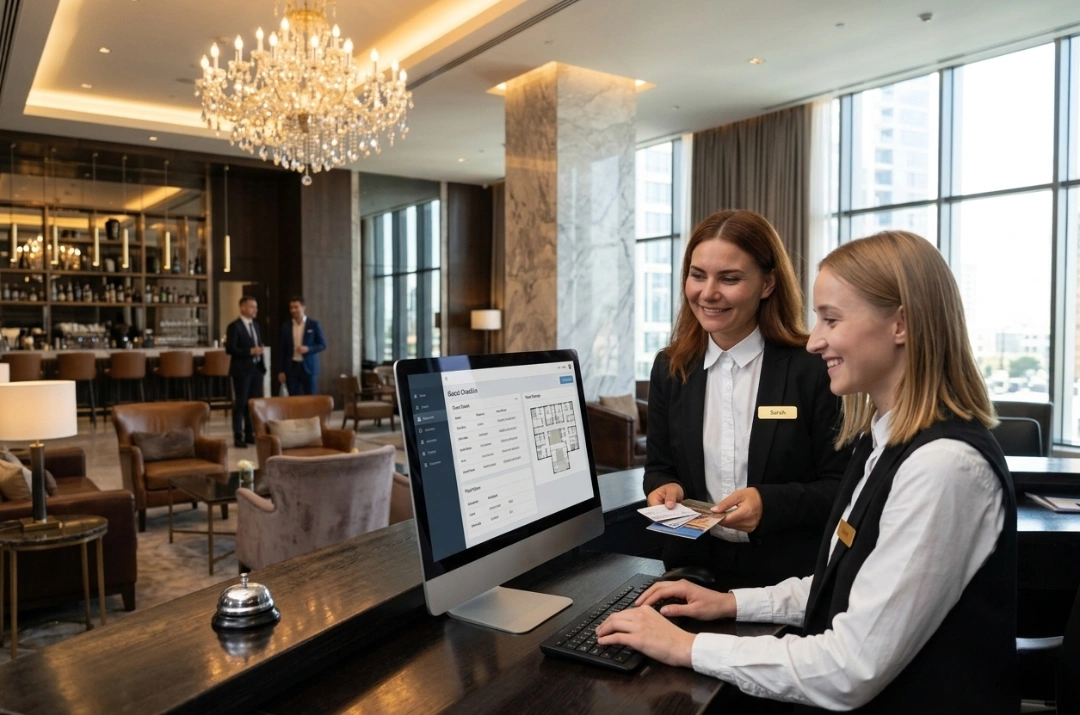
A hotel lounge is a shared or semi-private area furnished with couches, armchairs, and low tables where guests relax, wait, or meet visitors outside their room. It usually sits near the main lobby and often includes a bar or light food and drink service for guests moving between check-in, check-out, or downtime.
According to the Cambridge English Dictionary, a lounge serves as a communal space for resting outside of a private room, and that definition holds true across hotel formats, from a quiet corner near reception to a full bar setup.
A hotel lounge is different from a hotel club lounge, which is a restricted, access-controlled version reserved for eligible guests only. This distinction gets confused often, so it's worth stating plainly: every club lounge is a hotel lounge, but not every hotel lounge is a club lounge. Properties looking to strengthen this part of the guest journey can pair it with the broader guidance in how to improve guest experience in a hotel.
What Is the Purpose of a Hotel Lounge?
A hotel lounge gives guests a private, comfortable space to relax, work, or enjoy food and drinks away from busier public areas like the main restaurant or lobby.
Quiet dining is one of the biggest draws. A lounge offers a calmer setting for breakfast, afternoon tea, or evening snacks and drinks, without the noise and wait times of a full restaurant.
Work and productivity improve in a lounge setting too. Guests get a quieter environment with reliable Wi-Fi, comfortable seating, and enough space to take a call or open a laptop, something the main lobby rarely supports well.
Personalized service is common in staffed lounges, where dedicated attendants help with check-in, check-out, dinner reservations, or transportation requests, so guests aren't relying solely on the main front desk.
All-day refreshments round out the purpose, giving guests steady access to snacks, coffee, and soft drinks throughout their stay rather than a single scheduled meal.
Access typically works one of three ways. Guests get entry automatically when booking a club-level, executive, or concierge-floor room. Loyalty program members with high-tier status often receive complimentary access regardless of room type. Some hotels also let general guests buy a day pass or pay for an upgrade at check-in, based on availability.
Key Focus Areas
A hotel lounge is built around a few consistent components, regardless of property size or star rating.
- Purpose and use case: casual downtime, meeting visitors, reading, or waiting to check in or go out.
- Seating and furnishing: couches, armchairs, and low tables arranged for comfort over long stretches of sitting.
- F&B integration: many lounges include or adjoin a cocktail bar or service area offering light snacks, coffee, and drinks.
- Location: usually near the main lobby, though some hotels run exclusive executive or club lounges on private floors for eligible guests.
What to Include in a Hotel Lounge
Hotels planning or upgrading a lounge should include these elements at minimum.
- Comfortable, varied seating that supports both solo guests and small groups.
- A beverage or light F&B station, ranging from self-serve coffee to a staffed bar.
- Reliable Wi-Fi and at least one quiet corner suited to working.
- Clear signage or staff guidance on who the space is open to, especially if a club-level section exists alongside a public lobby lounge.
- A defined access process for any restricted section, tied to room type or guest eligibility rather than left to front desk discretion.
Hotel Club Lounges: What Makes Them Different
A hotel club lounge, also called an executive or concierge lounge, is a lounge within a hotel that offers drinks and snacks throughout the day to eligible guests only. It's an exclusive space where qualifying guests can visit repeatedly during their stay, not a one-time perk.
Access typically works one of two ways. Guests book a specific executive or club-level room category that includes lounge entry, or they qualify through elite status in the hotel's loyalty program. Some properties also allow a paid daily upgrade at check-in, subject to space.
What's usually included goes beyond basic seating. Most club lounges serve breakfast in the morning, snacks through midday, and evening hors d'oeuvres, alongside all-day coffee, tea, and soft drinks. Many also offer a quiet business area with Wi-Fi and sometimes printing, plus a dedicated staff member who can help with check-in, check-out, or special requests.
Lobby and cocktail lounges work differently. They're open to anyone, including walk-in visitors who aren't staying at the property, and there's no formal eligibility check. Guests are generally expected to order something if they plan to sit for a while, and the space runs on a full bar and food menu rather than complimentary service.
How to Add or Manage a Hotel Lounge: A 6-Step Framework
1. Audit Your Available Space
Identify underused lobby corners, corridors, or floor space that could hold a lounge without disrupting guest flow.
2. Decide Between Open, Club, or Both
Match the lounge type to your guest mix. A boutique property may only need one open lobby lounge, while a full-service hotel may benefit from running both formats.
3. Set Clear Eligibility Rules
Define exactly which room types, loyalty tiers, or paid upgrades grant club lounge access, and put it in writing for front desk and lounge staff.
4. Furnish for the Right Use Case
Choose seating and layout based on how guests will actually use the space, whether that's quiet waiting, work, or social gathering.
5. Staff and Stock the Lounge Appropriately
Open lounges need a bar or service staff during peak hours. Club lounges need a dedicated attendant who can manage both service and access control.
6. Track Usage Against the Guest Profile
Link any paid upgrade, day pass, or club access to the guest's reservation record so it's visible on the folio, not handled as a verbal or untracked exception. Front desk teams working off hotel front desk software can apply this the same way they'd handle any other room charge.
Tips on Creating the Perfect Hotel Lounge
- Keep the seating mix varied: solo chairs, small group clusters, and at least one quiet zone.
- Position the lounge where staff can see it, without making it feel supervised.
- Rotate light F&B offerings seasonally to keep the space feeling current.
- Keep club lounge eligibility visible to staff at the point of check-in, so access decisions are consistent, not judgment calls.
- Treat the lounge as a guest-facing amenity worth listing clearly, the same way you'd list any other feature in your hotel amenities.
Tools for Managing Hotel Lounge Access and Revenue
- Booking engine: lets hotels list club-level upgrades or lounge day passes as a selectable add-on during booking, through the roommaster booking engine.
- Guest engagement tools: help front desk and lounge staff confirm eligibility and manage requests against the guest profile, available through roommaster's guest engagement software.
- Ancillary revenue tracking: connects lounge upsells and day passes to actual revenue reporting, so hotels can see whether the space is earning its keep.
- Concierge support: for properties running a staffed club lounge, dedicated service ties closely into everyday check-in, check-out, and guest request workflows.
Common Pitfalls in Hotel Lounge Management
- Running a club lounge with no consistent eligibility check, which erodes the perk within weeks.
- Treating lounge day passes as cash-only, untracked transactions instead of folio charges.
- Under-furnishing the space so it functions as a waiting area rather than an actual amenity.
- Ignoring the lounge in guest experience reviews, even when it's one of the most visible parts of the stay.
Why the Right Lounge Setup Pays for Itself
A hotel lounge is never just furniture and a coffee machine. Done right, it's a guest-experience touchpoint that shapes how a stay feels and a revenue line that pays for itself through upgrades, day passes, and F&B spend. Done without rules or tracking, it's just square footage with a running cost attached.
The difference comes down to treating the lounge like any other part of hotel operations: clear eligibility, visible staffing, and a way to see whether it's earning its keep. roommaster has spent over 30 years helping hotels manage exactly these kinds of day-to-day details, from front desk to guest engagement, so amenities like a lounge don't fall through the cracks.
{{cta-strip}}
Frequently Asked Questions
1. What is a hotel lounge?
A hotel lounge is a shared or semi-private space, usually near the main lobby, furnished with comfortable seating for guests to relax, wait, or socialize outside their room. Most lounges include or adjoin a bar or light F&B service offering coffee, snacks, and drinks. Some hotels also run a separate, restricted lounge on a private floor for eligible guests.
2. What is a hotel club lounge?
A hotel club lounge, also called an executive or concierge lounge, is a restricted, exclusive space reserved for eligible guests only. It typically offers complimentary breakfast, midday snacks, afternoon tea, and evening hors d'oeuvres or drinks throughout the day. Many also include a quiet business area with Wi-Fi and a dedicated staff member for check-in, check-out, or special requests.
3. Is a hotel lounge the same as a hotel club lounge?
No, they're related but not identical. A hotel lounge is the broad term for any common relaxation space, including open lobby or cocktail lounges available to all guests. A club lounge is a specific, access-controlled version of that space, reserved for guests on a particular room tier or loyalty level.
4. How do guests get access to a hotel club lounge?
Guests usually get access one of three ways. Booking a club-level, executive, or concierge-floor room category typically includes lounge entry by default. Guests with high-tier elite status in the hotel's loyalty program often receive complimentary access regardless of room type, and some properties also sell a paid daily upgrade at check-in, subject to space.
5. Are hotel lobby lounges open to non-guests?
Yes, lobby and cocktail lounges are generally open to anyone, including walk-in visitors who aren't staying at the property. There's no formal eligibility check the way there is for a club lounge. Guests are usually expected to order a drink or food if they plan to sit for an extended period.
6. Can hotels charge for lounge access?
Yes, hotels commonly sell lounge access as a room-tier upgrade at the time of booking or as a standalone day pass purchased at check-in. This works the same way airport lounges sell single-visit entry to travelers who don't otherwise qualify. Pricing and availability for day passes typically depend on how much lounge capacity the property has on a given day.

.png)
.png)
.png)