What Are Hotel Guest Services?
Hotel guest services are the support and amenities a property provides throughout a stay, covering front desk, housekeeping, dining, and concierge care.
Guest services cover every point of contact between a hotel and its guests. That includes checking in, requesting extra towels, and asking the front desk for a recommendation.
For an owner, the term breaks into three categories, each with different costs:
- Front of house support: check in, check out, front desk requests, luggage handling, greeting and orienting new arrivals
- Operational services: housekeeping, maintenance, room service delivery
- Amenity based extras: pools, spas, shuttle transport, business centers
Most independent hotels don't have a department called guest services. The standard still runs through every team an owner already pays for.
{{ai-guest-management-one}}
Why Do Hotel Guest Services Matter for a Hotel Owner?
Guest services directly drive online ratings, repeat direct bookings, and spend per stay, which protects revenue that would otherwise go to OTAs.
The mechanism is simple. A guest who has a well handled stay leaves a stronger review. They book directly next time instead of shopping for an OTA. They also spend more freely on site.
A guest who has a poorly handled stay does the opposite on all three. They often tell a wider audience about it first.
Customers spend up to 140% more after a positive experience than after a negative one. For an owner, that gap shows up twice: it appears as added spending during the stay, and it shows up again when a guest books directly instead of paying an OTA commission.
Guest service consistency is also one of the few levers an independent owner controls without a bigger ad budget. A branded chain can outspend you on marketing. It can't out execute a well trained front desk on a single stay. That stay is what the review and the rebooking decision get based on.
What Are the Different Types of Hotel Guest Services?
Hotel guest services fall into three groups: front of house support, operational services like housekeeping, and amenity based extras such as spas or transport.
Breaking the categories down shows an owner where training time and budget need to go:
- Front desk and reservations: check in, check out, billing questions, upgrades
- Housekeeping and maintenance: room resets, repair requests, cleaning schedules
- Food and beverage: room service, restaurant reservations, dietary accommodation
- Concierge and local knowledge: directions, bookings, transport arrangements
- Technology and connectivity: Wi-Fi support, device charging, meeting room access
{{ai-guest-management-two}}
The Guest Service Journey Across a Stay
Guest services don't start at check in, and problems don't stop showing up at checkout. Three phases make up the journey, and each carries its own risk if ignored.
Pre-arrival is confirmation details, special requests, and early check in questions. A guest who emails ahead about an accessibility need and gets no reply arrives frustrated. Nobody has even met them yet.
During the stay covers daily housekeeping, dining, concierge requests, and maintenance issues. This phase generates the most guest contact, and most of the operational cost in guest services sits here.
Post-departure is checkout speed, billing accuracy, and how a hotel responds to feedback. A billing error caught and fixed within a day rarely becomes a review. Left for a week, it usually does.
Owners who treat this as one continuous journey catch problems early. They don't wait for a refund request.
How Do Guest Services Differ Across Property Types?
Guest services shift across property types, from personal recognition at independent hotels and B&Bs, to consistency across hotel groups, to self-service readiness at parks and campgrounds.
A 400 room resort can staff a full concierge desk and a 24 hour line. A 40 room hotel or a five room B&B can't fund that model. It isn't worth trying to match a bigger competitor on paper.
| Property Type |
What Guest Services Prioritizes |
Where Owners Get the Best Return |
| Independent and boutique hotels |
Personal recognition and staff continuity |
Guest data systems and staff training, not extra headcount |
| Motels and limited service properties |
Speed and reliability over unused amenities |
Fast check in and out, dependable maintenance response |
| Hotel groups |
Consistency across every property in the portfolio |
Shared standards and guest data visible across sites |
| Resorts |
Breadth of amenities and multi venue coordination |
Staffing scaled to match guest touchpoints |
| Bed and breakfasts |
High touch, personal hospitality from an owner or host |
Local knowledge and direct guest relationships |
| Parks and campgrounds |
Site readiness, safety information, self-check-in options |
Clear signage, easy self-check-in, fast issue response |
For most owners, the common mistake is spending on the wrong part of guest services. Adding a resort style amenity doesn't help if guests just want a faster check in. It won't move a single review score.
{{ai-guest-management}}
Parks and Campgrounds Play by Different Rules
A campground guest arriving after dark to a self-check-in site doesn't need a concierge conversation. They need clear instructions and a working gate code. They need a fast response if the site has a problem.
The service standard is the same idea used everywhere else in this article: respond fast and remove guesswork. It just applies to a different physical setup. Staffing is seasonal, and inventory mixes tent sites with cabins. Some guests never see a front desk at all.
Owners running parks often under-invest here because it doesn't look like traditional hospitality. A guest locked out at 10 p.m. doesn't care why the property runs differently. They care that nobody answered.
How Is Guest Services Different From Guest Experience and Customer Service?
Guest services refers to specific tasks and support, guest experience is the full emotional arc of a stay, and customer service is a broader term used across industries.
Owners often use these terms interchangeably when setting priorities. They describe different things and call for different investments.
| Term |
What It Covers |
Example |
| Guest services |
Specific tasks and support delivered during a stay |
Handling a late checkout request |
| Guest experience |
The complete emotional journey from booking to post-stay |
How a guest feels reflecting on the whole trip |
| Customer service |
A general term for support across any industry |
A retailer resolving a return |
Guest services are one input into guest experience. An owner can execute every guest service task correctly and still see flat reviews. That happens when interactions feel transactional. Service standards alone don't fix a reputation problem built on how a stay felt overall.
How Can Hotel Owners Deliver Consistently Great Guest Services?
Hotels deliver consistent guest services when owners set clear service standards, invest in staff training, and put guest data in one place every team can see.
Consistency, not occasional brilliance, is what shows up in reviews and repeat bookings. For an owner, that comes down to a small number of decisions.
- Set a clear service standard for the team to follow. Scripts handle routine requests. A trained team handles the ones that don't fit a script.
- Fund the systems that make personalization automatic. A returning guest's room preference should follow them without depending on one staff member's memory.
- Standardize check in and check out. Fewer repeated questions means faster processing and lower staffing pressure at peak times.
- Set a response time target for requests, and hold to it. A ten minute fix reads as good service. The same fix after two hours reads as neglect.
- Close the loop on feedback. Guests who flag a problem and see it fixed often return. Guests who never got a response usually don't.
A Returning Guest Gets Recognized Without Adding Staff
A returning guest checks in at a 60 room independent hotel. A note from their last stay flags a preference for a higher floor away from the elevator. The room gets assigned without the guest having to ask again.
The interaction takes fifteen seconds longer than a generic check in. The owner didn't add a role to make this happen. They made sure the information didn't get lost between stays, which is a data decision, not a staffing one.
This kind of moment doesn't show up on a P&L line. It still shapes the review score.
A Maintenance Issue Gets Fixed Before It Becomes a Review
A guest reports a slow drain at 9 p.m. Housekeeping flags it immediately. Maintenance clears it before the guest returns from dinner, and a short note confirms it's fixed.
No refund gets issued. No apology tour happens. No negative review gets written. The problem never had time to become one.
The same logic applies beyond plumbing. Requests handled inside the guest's own timeline rarely turn into a complaint.
Pro Tip: The properties that score highest on review sites rarely have the most amenities. They have the fastest, most consistent response times on the requests guests actually make, and that costs less than most owners assume.
How Does Technology Support Hotel Guest Services?
Technology supports hotel guest services by connecting front desk, housekeeping, and guest profile data, cutting the extra staff hours needed to hit the same standard.
The biggest guest service failures at independent hotels rarely come from untrained staff. They come from disconnected systems: a preference noted at booking that never reaches the front desk, or a maintenance issue logged on paper that housekeeping never sees.
For an owner, that's a cost problem before it's a training problem. A team can be excellent and still fail a guest. That happens when information never reaches them.
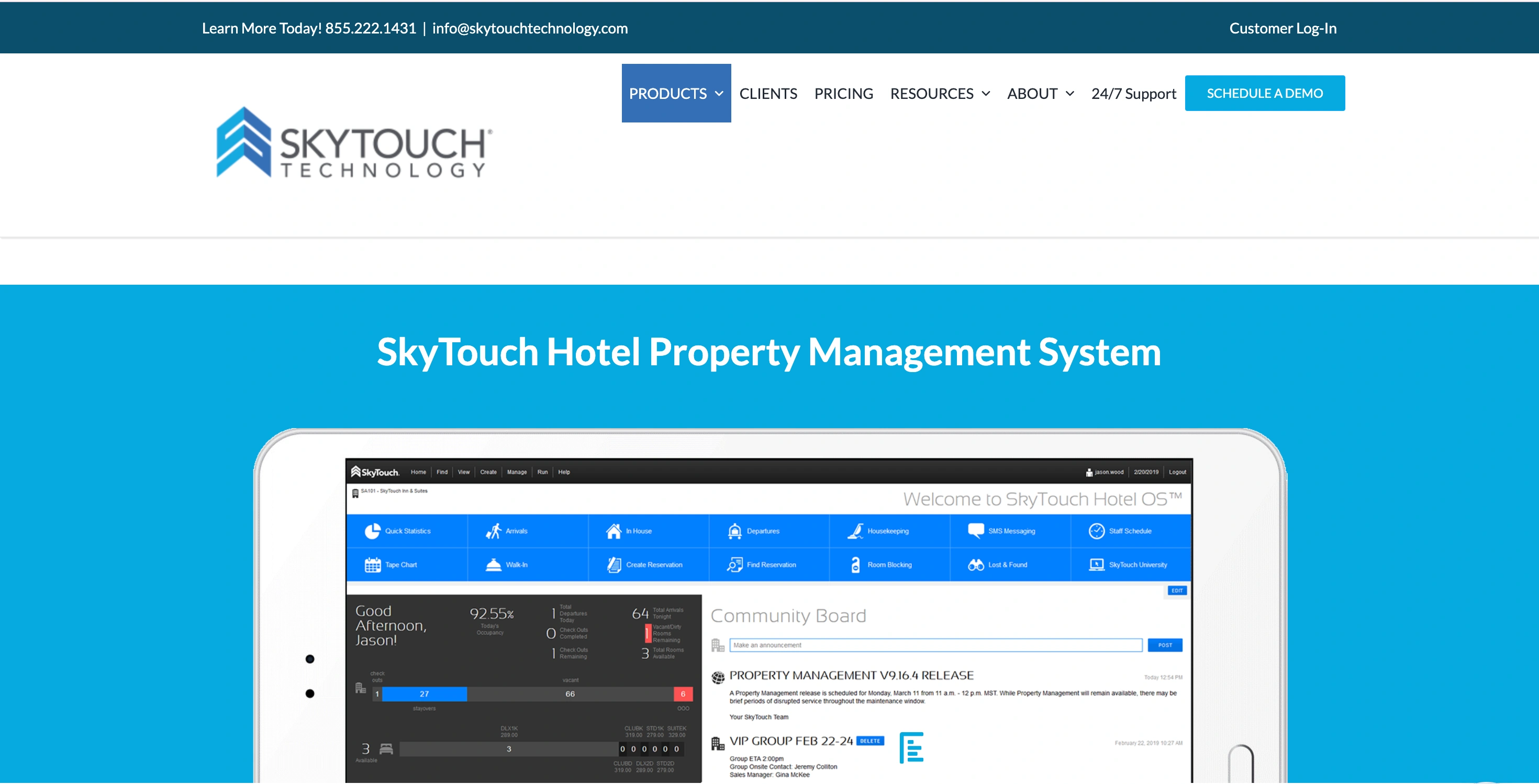
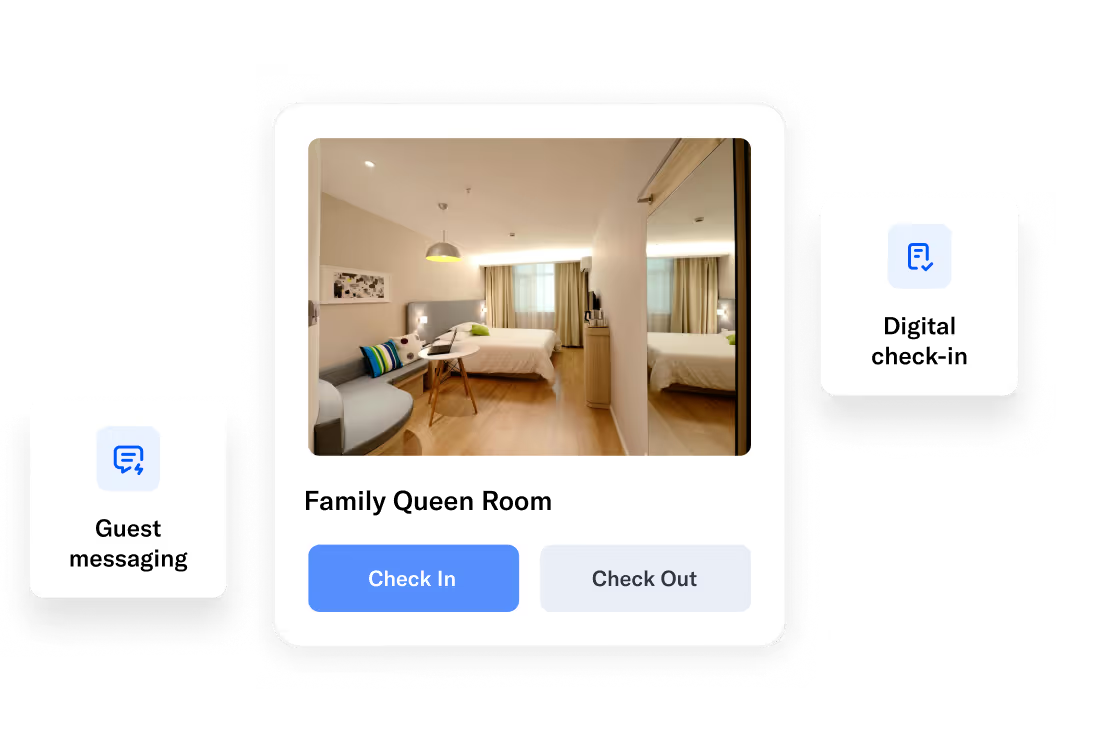
Connected front desk systems keep guest profiles, room status, and requests in one place instead of three. Information stops depending on a shift handover. Mobile check in and digital keys speed up arrival without adding a role at the desk.
A connected system routes the ticket to the right person right away. That's the gap between the ten minute fix and the two hour one above. It comes from a system decision, not a hiring one.
Pro Tip: Before adding a new guest facing tool, check whether it feeds guest information back into one shared system. A tool that creates its own separate data silo often creates more manual work than it saves.
What Guest Service Trends Should Hotel Owners Watch For?
Guest service trends worth watching include contactless check in, deeper personalization, sustainability requests, and AI support for calls and messages outside staffed hours.
- Contactless check in and digital keys: increasingly expected rather than a premium feature, which shifts guest complaints toward properties that don't offer it
- Hyper personalization: guests expect preferences to be remembered without repeating them
- Sustainability requests: guests asking about linen reuse programs, refill amenities, and local sourcing before booking
- AI assisted phone answering: captures calls outside staffed hours so a booking doesn't get lost overnight
- Automated messaging for routine questions: handles simple pre-arrival requests without staff needing to respond in real time
None of these trends replace the fundamentals covered above. They raise what guests expect a property to offer. That changes the baseline an owner gets measured against.
How Does roommaster Support Guest Services Differently for Each Property Type?
roommaster tailors guest service support by property type, from unified systems for independent hotels to seasonal scaling for parks, without changing the core service standard.
- Independent hotels. One system for bookings, distribution, and guest communication, sized for a small team, without adding headcount.
- Hotel groups. Strong support for multi-group properties, with centralized reporting and guest data visible across every site.
- Motels. A simple, mobile friendly setup built for lean teams, without the configuration or IT overhead of a larger platform.
- Resorts. One place to coordinate rooms, dining, spa, and activity bookings, with reporting broken down by department.
- Bed and breakfasts. Guest history and preference tracking that supports the personal, high touch hospitality a small property runs on.
- Parks and campgrounds. A system built for mixed inventory, from tent sites to cabins, that scales during peak season.
Every property type solves the same problem in a different shape. Guest information needs to reach the right person fast.
See how roommaster Guest Communication & Engagement supports consistent guest service across every property type, or book a demo to see it on your own property.
Bottom Line
Guest services cover every touchpoint a hotel controls. The standard should match the property, not a generic checklist. Owners who invest in the right category see it in reviews and repeat bookings. Staffing, training, and shared data are usually where that investment goes. The properties that get this right rarely have the most amenities. They have the fastest, most consistent response to what guests actually ask for.
{{cta-strip}}
Frequently Asked Questions
1. What does hotel guest services mean for an independent property?
Guest services means the front desk, housekeeping, dining, and concierge support that shapes every stay.
2. Why do guest services matter for hotel owners?
Guest services drive ratings, bookings, and spend per stay. That protects revenue owners would otherwise lose to OTAs.
3. What is the difference between guest services and guest experience?
Guest services cover specific tasks and support. Guest experience covers the full emotional journey of a stay.
4. How can independent hotel owners improve guest services without adding staff?
Owners improve guest services through training, response targets, and shared guest data.
5. Does technology replace hotel guest services staff?
Technology cuts the staff hours a consistent standard needs, without replacing personal hospitality.


.png)
.png)
.png)