Hotel Audit Guide 2026: Types, Night Audit & Reports

"roommaster is really a combination between the operational ease of use, training, the functionality of the program itself, coupled with the service makes it a winning combination." - Alex Moore, President & CEO, Seaboard Hotels
Mayela lozano
March 31, 2026
11
min. read
hotel-audit

TL;DR

  • Night audits protect revenue, reduce billing errors, and support smarter pricing decisions.
  • Because it influences every department, teams rely on structured night audit checklists, accurate reports, and clear reconciliation to maintain financial confidence.
  • As properties grow, manual systems slow everything down, which pushes many hotels to adopt automated PMS tools that reduce human error and speed up reporting.
  • roommaster PMS simplifies the entire process with real-time data, automated posting, and faster Dayend Close, so teams start each morning fully prepared.

On a busy Friday evening at a downtown hotel, guests keep arriving, front desk agents manage long check-in lines, rooms fill fast, and billing systems post charges nonstop. By midnight, the hotel night auditor steps in, closes the hotel’s books, and gets everything ready for the following day.

Every staff member plays a role in making sure the hotel runs smoothly. They follow the hotel night auditor’s role in hotel management, check what a hotel audit covers, and review auditors’ reports to make smart revenue decisions. Doing this keeps the property’s financial records accurate and lets everyone act with confidence.

In this guide, you’ll discover the essential elements of a hotel night audit, walk through the hotel night audit process, see the reports every auditor runs, and learn how hospitality industry teams can move from slow, manual systems to modern, automated solutions.

What is a Hotel Audit?

A hotel audit checks the hotel’s financial and operational activity from top to bottom. Auditors confirm every revenue source, make sure posted charges are correct, and update guest accounts so the team can get started the following morning easily.

These days, technology makes hotel audits a lot easier. Modern property management systems (PMS) save hotels over 500+ hours each year, and help staff catch mistakes before they become costly. Additionally, automation and reporting tools reduce audit leakage by 13% and improve operational performance. This allows hotels to close their books faster, avoid revenue loss, and experience stronger RevPAR growth when they use data-driven tools.

What is a Hotel Night Audit?

A hotel night audit is a type of hotel audit that reconciles the business activities of one day and prepares the hotel for the next day’s operations. The night audit balances the books, verifies revenue from all hotel departments, updates guest accounts, and produces the key performance reports leaders use to adjust pricing, staffing, and service offerings.

During the night, hotel operations slow down. Front desk agents and the night auditor work together to verify every posted charge. This practice protects revenue and builds trust in the property’s financial data. From check-outs to no-shows, from restaurant bills to laundry charges, the night audit reaches every area that affects revenue.

Why are Hotel Night Audits Important?

Every domain of hotel operations feels the influence of the night audit. Here’s what it looks like:

1. Protect revenue and improve accuracy

What’s the first thing that comes to your mind when you hear about revenue? Accuracy. And that the hotel shouldn’t be losing money. 

The night auditor makes sure that happens. They check revenue from rooms, food and beverage, spa services, parking, and every other income source. They confirm that posted charges match what guests actually used and make sure all external payments appear in the accounts receivable ledger.

Catching mistakes at night prevents small errors from becoming bigger problems later. Without a strong night audit, staff often have to correct errors during the day, which takes extra time and effort. That’s a big deal because even small gaps can affect overall performance. U.S. hotels, for example, saw a 4.8% year‑over‑year increase in revenue per available room (RevPAR) in 2023, pushing the industry about 13% above the previous year’s records, according to Oxford Economics and STR data. Night audits help hotels make the most of growth like this.

2. Support strategic decision-making

Every morning, revenue managers study room revenue, occupancy, and other insights to set pricing, plan staffing, and forecast demand. For example, a report showing strong room occupancy but weak ancillary spend might inspire a promotion for the day.

In fact, properties that adopt smart pricing strategies often increase revenue by around 15–30% and improve RevPAR performance as they respond faster to demand shifts.

{{revenue-management-one}}

3. Strengthen compliance and financial records

At the end of each night, the hotel relies on the night auditor to create a clear record of every transaction. This audit trail keeps tax reporting, credit card compliance, and external reviews reliable.

Hotels that reconcile nightly activity with structured reports help accounting teams close month-end and year-end reports accurately and complete tax audits without mistakes. Night auditors record every transaction clearly, giving leadership and auditors the reliable information they need to verify the property’s financial integrity.

4. Improve guest satisfaction

Errors in guest billing or missing charges often surface at checkout. When the hotel night auditor reconciles accounts overnight, front desk staff can respond to guest needs quickly the next morning. 

As a result, guests leave with accurate bills and return with confidence that the property handles details professionally.

Different Types of Hotel Audits

A hotel runs many types of audits. Understanding these helps leadership place the night audit in the right context.

Let’s take a look at the few common types of hotel audits:

  • Rate availability audits: These audits check whether your rates, discounts, and agreements with preferred suppliers appear correctly in the global distribution system (GDS). By running this audit, staff confirm that travelers can see and book the negotiated rates on the right dates. 
  • Rate load audits: Rate load audits go one step further. While availability audits check if rates appear for travelers, rate load audits verify that the rates are actually loaded into the system correctly. Sometimes errors happen during the loading process, or rates are entered before negotiations finalize. These audits help staff verify that static and discounted rates account for seasonality and blackout dates. [link to the blog when published!]
  • Rate parity audits: Rate parity audits maintain consistent pricing across all distribution channels, including OTAs, the hotel’s website, and other third-party platforms. Staff compares negotiated rates and discounts for each property or room type against other sites to make sure rates match. 
  • Amenity audits: It confirms that all promised amenities, such as breakfast, Wi-Fi, and parking, are loaded correctly into the system. Staff checks that travelers receive what was negotiated and prevent guests from paying extra for amenities that didn’t load. These audits keep guests happy and protect the hotel managers from unnecessary costs.

Night Audit for Small Properties: How it Works

At larger hotels that run 24/7, a full-time night auditor works alongside front desk staff, room service attendants, and other night-shift team members.

For small properties and other independent hotels, you might be running the show mostly on your own or with just one or two helpers. That can make some parts of the audit simpler, but it also means you handle more individual tasks because you’re balancing the audit with all your other duties. 

For example, during your night audit, you might schedule housekeeping for the next day, process new reservations, note maintenance issues, or replace lost, broken, or low-stock items. You don’t have the option of passing work to someone else the next day, so you need to manage your time carefully.

If you can’t afford a full-time night manager, property management systems (PMS) can help you simplify accounting, reporting, and other processes, making the night audit manageable.

Night Audit Checklist: Steps of the Night Audit Process 

The night audit process follows a logical flow. This checklist runs through the core steps from start to finish:

A) Pre-audit preparation

  • Count the front desk cash drawer and make sure it matches the previous shift.
  • Check all pending arrivals, mark any no-shows, and post cancellation fees if needed.
  • Check out early departures so rooms are ready for the next guests.
  • Verify that all room charges, taxes, and daily transactions are posted correctly.
  • Reconcile any POS charges, like restaurant bills or minibar items, with guest folios.

B) During the audit

  • Compare room status between Front Office and Housekeeping and resolve any discrepancies.
  • Run the night audit function in the PMS to post room rates and taxes.
  • Balance credit card transactions and review any high-balance or high-risk accounts.
  • Reconcile the guest ledger and total revenue to add up everything accurately.

C) System close & reporting

  • Back up the database and run the “End of Day” process in the PMS.
  • Print or email essential reports, including the Manager Report, Revenue Report, and Occupancy Report.
  • Prepare the Daily Summary and deposit information for the morning management team.

D) Post-audit & next day preparation

  • Share reports with the relevant departments to inform everyone at the beginning of the day.
  • Get the front desk ready for the morning shift by printing check-in lists and confirming room readiness.
  • Log any unusual incidents, discrepancies, or maintenance issues so the morning team knows what to follow up on.

{{pms-one}}

When to Run Audit Reports

Normally, an audit report should be performed after all guests have checked into the operation, but prior to the guest leaving or before the next business day begins. 

For instance, if your check-in window for a guest is 2 - 6 pm, you would create your audit report after 6 pm or before the new business day starts in the morning. But remember, the exact timing varies by hotel size and revenue cycle.

Top Audit Reports to Run Every Night

Every night auditor relies on key reports that show financial performance and operational health. Below are 10 of the most used reports:

  • Transactions report: It lists all postings, payments, voids, refunds, and adjustments. Night auditors use this report to reconcile all transactions for the night.
  • Daily financial report: This report provides a summary of room revenue, ADR, RevPAR, occupancy, and short-term forecasts. This report is used to monitor daily operations and plan for the next two weeks.
  • Adjustments report: This report only lists revenue adjustments and rebates. Night auditors must review this report carefully because adjustments lower the amount of revenue already posted.
  • Payment ledger report: It showcases payments and outstanding balances for reservations. It verifies if the property is collecting all payments due.
  • Tax report: This report summarizes taxes and fees for the day, month, and year. It verifies accurate tax postings and prepares for quarterly tax payments.
  • Account balances report: This report highlights open guest balances. Night auditors use this report to prevent guests from checking out with outstanding balances and to monitor guest credit limits.
  • Cashier report: It shows cash transactions at all points of sale. Auditors reconcile cash drawers, safe drops, and refunds.
  • Notes report: It captures reservation or guest notes, such as VIP details or payment instructions. Then, it alerts staff to special requirements.
  • Payment reconciliation report: It breaks down collected payments by type and user, and allows a detailed review of daily collections.
  • Daily revenue report: This report summarizes revenue by department or category. Auditors use it to spot discrepancies and confirm revenue trends.

Night Audit vs Operational Audit

The night audit balances financial records at the end of each day. On the other hand, an operational audit studies processes across departments to check efficiency and compliance.

However, both audits serve different purposes, even though people sometimes confuse them.

Night Audit Operational Audit
Focuses on balancing daily financial records at the end of the business day Reviews procedures across departments to improve efficiency and compliance
Works with daily figures such as room revenue, payments, and guest accounts Examines workflows, controls, and overall operational processes
Protects accurate revenue reporting Protects long-term operational performance

How to Make Hotel Night Audits Easier

If your hotel still works with manual processes, it can be nearly impossible to run night audits smoothly. The time you’ll spend calculating revenue, verifying transactions, and generating reports will ultimately drain your time. 

After all the time lost, do you think the night audit will still be worth it? Short answer: No.

Fortunately, modern tools can simplify the process:

1. Choose the right PMS

A PMS built for independent and group hotels, like the roommaster, speeds up audits, improves accuracy, and reduces stress. 

With real-time visibility and actionable insights, your team can monitor revenue and transactions without constant manual checks.

2. Automate night audit tasks

roommaster PMS captures all departmental revenue, including rooms, F&B, spa, and more, and posts transactions automatically. Auditors can use Auto Post Transactions to update accounts without double-posting and rerun the process if guests check in after posting.

The system then flags discrepancies immediately, letting your team correct errors before they escalate.

3. Streamline payments and folios

With transactions already captured automatically, integrated payments allow all cash, card, and digital transactions to post automatically. 

Auditors reconcile with Batch Settlement and verify transactions with Batch Reconcile, which keeps daily balances accurate and prepares the system for flexible reporting.

4. Customize reporting

Since balances and transactions are already reliable, flexible report templates let your team generate exactly the data they need. 

Daily, monthly, and annual summaries, trend analysis, and departmental performance reports become accessible in seconds, while cloud access allows managers to review metrics from anywhere.

5. Gain operational insights

Once the PMS generates reports and extracts data, real-time dashboards show room occupancy, sold vs. available rooms, channel performance, and departmental revenue. 

With clear visibility, staff can confidently adjust pricing, staffing, and operations.

6. Complete day-end close

Finally, the Dayend Close rolls the hotel into the next business day, updates room availability, resets rates, and finishes all reconciliations. 

As a result, your management reports are accurate and ready for review, making every audit faster and more reliable.

How to Implement Continuous Audits

Rather than waiting until the night shift to reconcile an entire day, some hotels adopt continuous audit strategies. 

These involve real‑time tracking of revenue streams and posting activities as they happen.

  • Define your scope and goals: Before anything else, you need to identify which revenue streams, transaction types, and controls you want to monitor continuously. This can include room revenue, food and beverage charges, spa or activity bookings, gift shop sales, taxes, deposits, and adjustments. Decide which transaction types carry higher risk or require more frequent review, such as voids, discounts, or late check-ins.  
  • Set up real‑time data access: Once you've determined the scope, connect your PMS, POS, payment systems, channel manager, and other sources to enable smooth data flow into your audit tools. roommaster’s modern, all-in-one, cloud-based sends reservations, payments, and departmental charges in real time, so your team sees updates instantly. So, instead of waiting for end-of-day batches, your process happens instantly.
  • Automate data collection and normalization: Make sure systems pull and standardize incoming transactions automatically, so the data you review stays complete and consistent. roommaster PMS automates much of this work through Auto Post Transactions and Batch Settlement. As a result, you can verify if there are any double postings in the room and departmental revenue and rerun processes when guests check in late.
  • Build continuous audit indicators: Then, decide which metrics you want to watch in real time and set rules or analytics to flag exceptions as soon as they occur. This can include missing postings, overcharges, high-value adjustments, unusual discounts, or mismatched payments.
  • Monitor and alert in real time: With indicators in place, monitor and set alerts to catch issues immediately. roommaster offers dynamic reporting and real‑time analytics across the Hotel Operations and Finance Suite with its Hotel Reporting Software. The dashboards help auditors and managers gain instant visibility into revenue, occupancy, and departmental performance.
  • Review results daily: At the end of each business day, finalize reports, confirm reconciliations with Batch Reconcile, and complete the Dayend Close. roommaster rolls the hotel into the next business day, updates room availability, resets rates, and ensures management reports are accurate and ready for review, making continuous auditing faster, easier, and stress-free.

Mystery Audit Best Practices

Wondering how to make mystery audits actually work for your guests and your team? 

However, before moving to the best practices, you need to know what they actually are and why hotels handle them. Mystery audits let you see the guest experience through fresh eyes. They uncover service gaps, catch small mistakes before they escalate, and guarantee every guest enjoys a smooth, consistent stay.

Here’s what you should take care of:

  • Start every mystery audit by defining clear, actionable objectives
  • Create checklists that measure compliance with specific, measurable standards instead of opinions
  • Pick auditors with hospitality experience who fit the hotel’s target guests. They move naturally through the property as they evaluate each part of the guest's stay
  • Follow the guest journey from booking to check-in, room cleanliness, amenities, dining, and check-out
  • Use digital tools to capture real-time data, photos, and video
  • Deliver reports within 12 to 48 hours so the insights stay fresh and useful
  • Spot operational gaps that affect revenue, like unauthorized discounts or unrecorded transactions
  • Conduct audits regularly, apply the findings to train staff, recognize top performers, and improve every aspect of the guest experience

Once you follow all these best practices, your mystery audits will give your team the insights they need to improve service, protect revenue, and create guest experiences that keep people coming back.

Make Hotel Auditing Easier With roommaster PMS

Night audits have been done the same way for decades, but that doesn’t mean it’s the smartest or most efficient approach. In fact, it categorically isn’t.

Change might feel a little intimidating at first, but it’s the only way to keep improving how hotels operate every single day. As we mentioned, roommaster PMS can come to the rescue by helping you:

  • Complete the audit in a timely manner
  • Maintain a regular schedule for auditing
  • Make it quick and easy to produce reports
  • Access real-time data in a matter of seconds

Want to see how simple and fast your audits can really be? Schedule a meeting with roommaster today or download our free checklist if you’re already up and running!

{{cta-strip}}

FAQs

What time should a night audit be run?

Hotels run the night audit after the final check-outs and before the new business day begins. Most properties schedule it around midnight or shortly after, when transactions slow, and desk activity drops to minimal levels.

Can hotels run without a night audit?

Hotels can operate without a formal night audit, but daily reconciliation prevents posting errors, missed charges, and reporting gaps from piling up. If staff skip it, revenue leakage grows, and leadership loses confidence in daily performance data.

What are the most common night audit mistakes?

Teams often miss unposted charges, overlook no-shows, fail to reconcile credit card batches, or skip reviewing high-balance guest accounts. Rushing the process creates discrepancies at checkout, which directly affects guest satisfaction and financial clarity.

How long should a night audit take?

Depending on your PMS, you can complete core audit steps in 30 to 60 minutes, or even less. In contrast, manual environments may require 1 to 3 hours, depending on the room count, transaction volume, and how efficiently the night auditor resolves discrepancies.

revenue-management-one

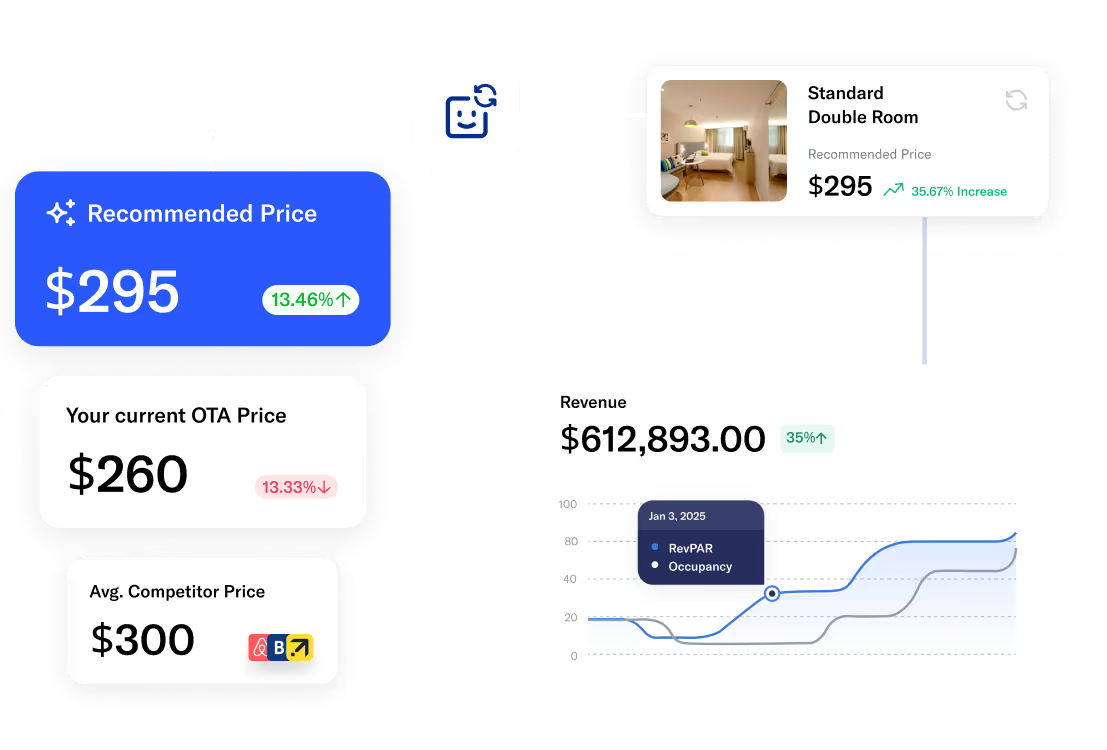
Put Your Hotel Pricing Optimization on Autopilot with AI

  • Dynamic pricing
  • Event data analysis
  • Competitor analysis
pms-one

Run Your Entire Hotel From One System

  • Streamline daily tasks
  • Delight every guest
  • Increase profitability

Ready to make the switch? Let's work together

Mayela lozano

Mayela Lozano is a content strategist with a passion for hospitality and technology. She collaborates with roommaster on content creation, highlighting how technology can streamline hotel operations and enhance guest satisfaction. When she’s not creating content, Mayela loves to travel and spend time with her two little ones, discovering new adventures and making memories along the way.

Join Thousands of Hotels Thriving with roommaster

The transition to roommaster is straightforward and efficient. Our implementation team handles data migration including reservations, guest profiles, and historical information.

Table of Contents

Join Thousands of Hotels Thriving with roommaster

The transition to roommaster is straightforward and efficient. Our implementation team handles data migration including reservations, guest profiles, and historical information.

Latest Posts

hotel-taxes
Hotel Management

Lodging Tax Guide: State-By-State Hotel Tax Rules

March 30, 2026
hotel-frontdesk
General
Hotel Management

Hotel Invoice Format: Templates & Examples For Hotels

March 27, 2026
laptop-with-statistics-screen
Hotel Management

An Independent Hotelier’s Guide To RevPAG

March 25, 2026
hotel-room
Hotel Management

Extended Stay Hotels Explained: Long-Term Stay Guide

March 18, 2026
hotel-reception
Hotel Management

What Are Blackout Dates? Complete Guide For Hoteliers

March 16, 2026
hotel-guest-selecting-hotel
Hotel Management
Hospitality Trends

Value-Added Pricing In Hotels: Strategy & Examples

March 10, 2026
survey-rating
Hotel Management

Hotel Guest Satisfaction Survey: Questions, Templates & Tips

February 27, 2026
hotel-frontdesk
Hotel Management
Payment Processing

Hotel Folio Explained: Meaning & Invoice Differences

February 26, 2026
hotel-frontdesk
Hospitality Technology
Hospitality Trends
Hotel Management

Why Hotel Staff Spend Too Much Time On Phones And How roommaster Concierge Gives That Time Back

February 26, 2026
google-analysis
Hotel Management
Marketing

Google Hotel Ads Guide: Setup, Costs & Key Benefits

February 24, 2026
Join Thousands of Hotels Thriving with roommaster

See how roommaster's unified platform can work for your property. Our team will walk you through features tailored to your specific needs and operations.