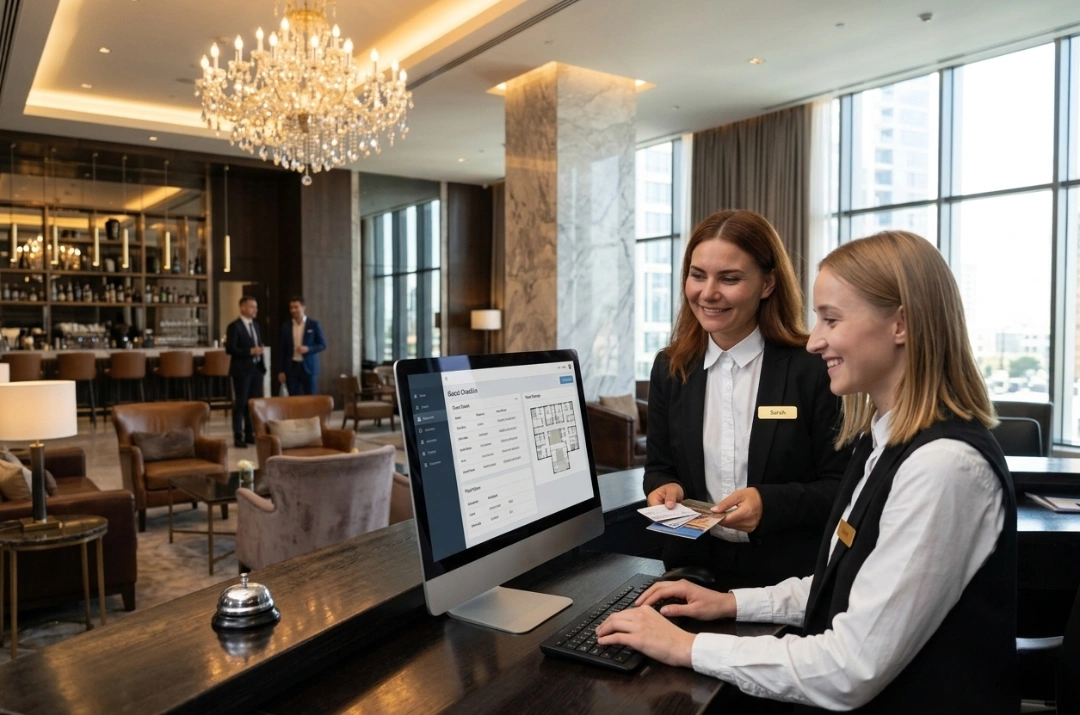
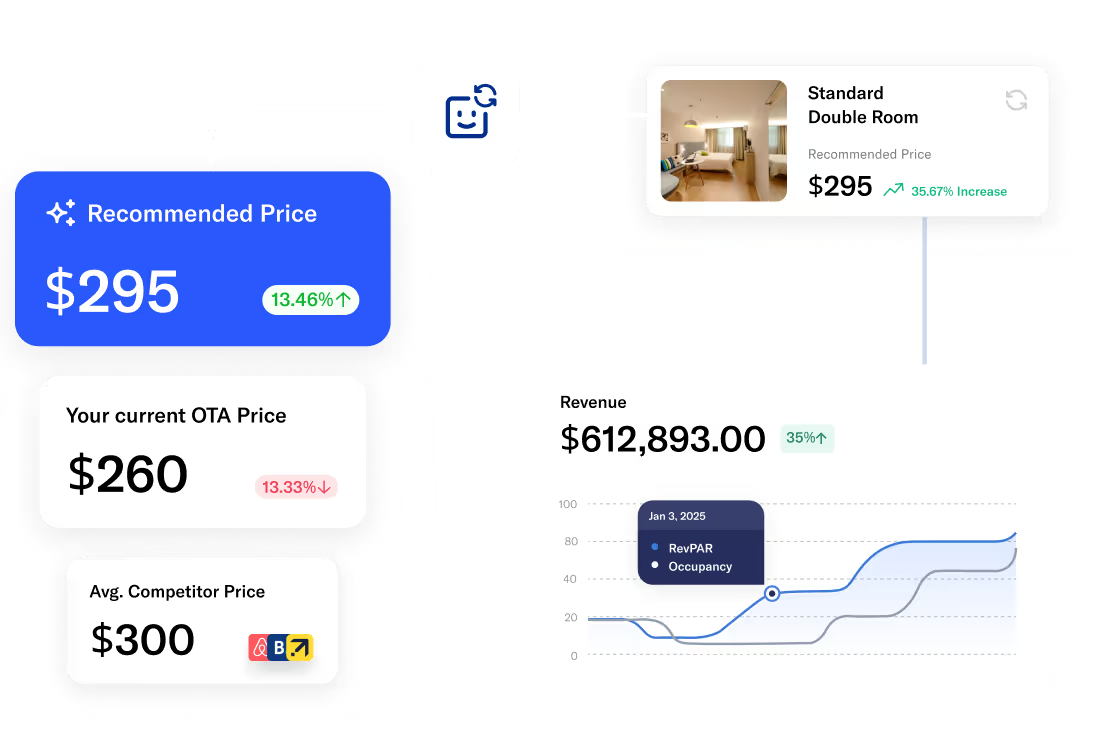
"We used to guess our rates—now ampliphi updates them in real-time. Our RevPAR’s up 35%, and we haven’t touched a spreadsheet in months." - Susie Conway, General Manager, Flamingo Motel
Lodging taxes affect nearly every short-term stay, from hotels and motels to B&Bs and Airbnb rentals.
Guests pay these taxes at checkout while properties remit them to local and state authorities. For example, most state hotel tax rates sit between 2%-6% of the total room rate.
These taxes can include basic state-shared rates or additional local charges, and some cities, like New York City, push total lodging taxes and fees above 14.75% of the room rate.
Exemptions exist for long-term stays, government or nonprofit travelers, and medical guests, so operators must track eligibility to avoid overcharging or audits.
Managing all these rates, calculations, and filings can get complicated, but a cloud-based PMS like roommaster centralizes tax settings, automates calculations, and keeps records accurate across every booking.
Lodging taxes touch almost every business that hosts short-term stays, including hotels, motels, bed-and-breakfasts, RV parks, and short-term rentals like Airbnb. Guests pay these taxes at checkout, and businesses send the collected money to state or local authorities, which use it to support tourism promotion and facilities that benefit visitors.
States generally handle lodging taxes in one of two ways.
A basic lodging tax combines with the state sales tax, so guests do not notice a higher total.
In other situations, an additional lodging tax is charged to the guest after state and local sales tax are calculated on the guest's total bill.
Some jurisdictions allow both approaches, which can increase the total rate, while others set limits on what they can collect.
This guide will inform you about the various components of lodging tax, the steps hotel and motel operators need to take to calculate lodging tax, and who is responsible for collecting and remitting it to the appropriate governing body. You'll also learn how lodging tax rules/provisions vary by jurisdiction and actions you can take to ensure that your business is fully compliant with lodging tax laws.
What is the Lodging Tax?
Lodging tax (also called hotel tax, hotel occupancy tax, hotel room tax, or transient occupancy tax) is a government-imposed tax charged on short-term accommodations. Hotels and property owners usually collect this tax from guests and send it to local or state authorities.
The name can change depending on the location, but the process works the same way:
Authorities charge hotel tax per night or as a percentage of the room rate
It applies to stays under a set duration, often 30 days or less
The hotel or property operator handles the collection
Payments are submitted monthly or quarterly
Compared to income tax, this isn’t your expense. You are collecting it on behalf of the government, and that distinction is critical.
Common Types of Hotel Taxes in the US
Let’s break down the main types of taxes you will see on hotel and short-term rental bills across the US.
Transient Occupancy Tax (TOT) or Occupancy Tax is often called the bed tax and applies to short-term stays at hotels, motels, and B&Bs.
Sales Tax is the normal state and local sales tax added to the room rate.
Tourism Improvement District Fees are extra charges that go toward local tourism promotion and improvements.
City or County Taxes are taxes specific to a municipality that sit on top of state taxes.
Convention Center Fees or Taxes apply in places with large convention centers to help support their costs.
Resort Fees cover amenities like pool access, gym use, and Wi‑Fi, but often get taxed the same way as the room charge.
Every city, county, and state tax authority sets its own rates. In many places, lawmakers bundle multiple taxes into one combined rate, so the bill shows a single tax percentage. In other areas, the invoice lists each tax separately.
For instance, in New York City, hotels charge more than the state and local sales tax. The operators collect New York State and New York City sales tax on room rent and a New York State hotel unit fee of $1.50 per room per night. All these taxes and the unit fee are charged to the customer at the time of stay.
The New York State Department of Taxation and Finance offers specific guidance to hotel and short-term rental operators on how to calculate the amounts, report what is collected, and file tax returns. Based on your revenue and occupancy, you may file tax returns on a monthly, quarterly, or annual basis using the forms and instructions provided by the department.
How Hotel Taxes are Calculated
Wondering how much hotel tax adds to a stay? The math is straightforward once you have the right numbers. You need two things:
Your room rate
The state, county, or city hotel tax rates
For example, let's use a room rate of $450 per night. Suppose the combined tax rate is 10%, made up of 5% state tax and 5% city tax.
Hotel room rate: $450 per night
Tax calculation: $450 x 0.10 = $45
Total cost: $450 + $45 = $495 per night
With just the room rate and the tax percentages, you can quickly calculate what your guests will pay and make sure you collect the correct amount for remittance.
Who Collects and Remits Lodging Tax?
Lodging taxes come from guests, property owners, managers, or booking platforms at the time of booking. These charges often cover the room, cleaning, and pet fees. Who handles sending the money to local or state authorities depends on registration status and local laws.
Here’s how it typically breaks down:
Booking platforms: These platforms often collect and remit lodging taxes automatically in many jurisdictions.
Unregistered or small hosts: Platforms like Airbnb often handle GST collection and remittance for hosts who are not registered.
Registered hosts or hotels: Hosts or hotels with registration may need to file and remit taxes themselves.
Required compliance: Property owners are ultimately responsible for making sure all taxes are paid, so it’s important to know local rules and avoid penalties.
Types of taxes: These can include stay tax, room occupancy tax, room tax, and sales tax.
For example, Plainview, Texas, now requires all short-term rentals to get permits and collect occupancy tax, just like hotels. This follows a national trend, with more cities treating short-term rentals the same as hotels for tax purposes.
In some areas, online travel agencies (OTAs) automatically collect and remit lodging tax revenues. In other cases, the hotel or host must collect the tax and send it to the authorities themselves. Always review local rules to make sure you stay compliant and avoid penalties.
Exemptions and Special Cases
Not every stay triggers tax liability. Some of the common tax exemptions include:
1. Long-term or permanent residents
Guests who stay longer than the transient period, usually 30 days or more, often do not pay occupancy tax because they are not considered short-term visitors.
For example, in Texas and Oregon, guests staying 30 consecutive days or longer can skip the hotel occupancy tax if they notify the hotel at check-in.
2. Government or nonprofit stays
Certain government employees, diplomats, or nonprofit groups may qualify for exemptions. In New York, religious organizations, youth sports groups, charities, and veterans posts can avoid occupancy tax by submitting the correct exemption forms, such as Form ST-119 for general exempt organizations or ST-119.5 for veterans organizations.
Payments must come directly from the organization’s funds.
3. Medical patients and their families
Some states exempt patients residing close to medical facilities, their families, medical personnel, and candidates for recruitment. In the state of Connecticut, for example, patients in hospitals and their visitors are exempt from paying room occupancy tax because they contribute to the mission of the nonprofit hospital.
In most states, if a guest overstays a certain period, the facility can treat the stay as exempt from certain occupancy taxes but still collect sales tax on taxable services.
State-by-State Hotel Tax Rules
Hotel and lodging taxes in the United States vary widely from one state to another, and they can add up quickly at checkout.
In many states, lodging tax is separate from regular sales tax and applies to short‑term stays at hotels, motels, short‑term rentals and similar accommodations. These taxes get collected when the guest pays and then passed on to the state and local tax authorities by the property or platform you use.
Some states charge a statewide lodging tax on every hotel room, while others leave most of the authority to cities and counties.
Connecticut, for example, applies a statewide room occupancy tax of 15% on all short‑term stays. Delaware adds an 8% lodging tax to support tourism and public services.
In places like Massachusetts, a state tax of 5.7% applies to stays of 90 days or less, and many cities can add their own local tax on top.
Texas imposes a statewide hotel occupancy tax of 6% on rooms with a rate of $15 or more per night.
Hawaii has a statewide transient accommodations tax that was previously 10.25% and is now 11%.
Other states handle things differently. Some combine the lodging tax with the general sales tax on hotel stays, while others allow local authorities to set their own additional charges. Places like New York and California do not have a single statewide bed tax but give cities the power to set their own rates, which is why New York City stays include state sales tax, city sales tax and separate hotel fees.
In many cities across the country, you will see combined tax bills that reflect state, county and city charges.
In Washington, D.C., total lodging taxes can approach 15.95% of the room rate.
In Clark County, Nevada, total hotel taxes often run above 13%.
Chicago charges hotels and lodging properties a combined tax rate exceeding 17%.
Because hotel tax rules differ so much from place to place, always check with the local tax authority or a tax professional so you know exactly what you need to charge and remit for the state and city where your property is located.
High-Demand Examples
In cities where tourism and conventions drive constant bookings, lodging taxes can add a surprising amount to the final bill. Understanding how these taxes work helps both operators and guests know what to expect.
1. New York City hotel tax
Hotel taxes and fees in New York City typically total around 14.75% of the room rate, with an additional $3.50 daily occupancy fee. The main charges include a 5.875% NYC hotel room occupancy tax, an 8.875% state and city sales tax, and a hotel unit fee of $1.50 per unit per day. Some hotels also add small association fees.
On top of that, mandatory resort or amenity fees can range from $15 to $50 or more per night. Taxes often apply to both the room rate and the resort fees, which can push the total cost over 20%. Booking through a third-party site does not remove the obligation, and guests usually pay the taxes and fees directly at the hotel.
2. Las Vegas hotel tax
In Las Vegas, the lodging tax varies by property location. Hotels inside the Primary Gaming Corridor charge 13.38%, while those outside the corridor charge 13%. Operators must collect the tax from guests and remit it to the city separately from the room rate.
If a hotel under-collects, it pays the difference from its own funds. Over-collections must be sent to the city or refunded to the guest within the same month. All revenues belong to the City of Las Vegas and fund local programs.
3. Florida hotel tax
Florida lets counties impose transient rental taxes, sometimes called tourist taxes, which typically range from 3-6%. Many counties and cities also charge resort or impact fees. These taxes help fund local tourism promotion, infrastructure, and marketing efforts.
In cities like Miami Beach and Orlando, travelers should expect these charges in addition to the advertised room rates. Resort fees are common, so reviewing a hotel’s policies before booking is essential to know the total cost of a stay.
How to Set Up and Manage Lodging Taxes in Booking Systems
Managing lodging taxes can feel complicated, but a modern, fully upgraded, cloud-based all-in-one PMS like roommaster makes it simple. It centralizes tax settings, automates calculations, and keeps accurate records for every booking.
{{pms-four}}
Step 1: Register with the right authorities
Before you collect any taxes, register with all applicable local, city, and state tax authorities. Some places, like California, require a hotel occupancy tax permit through the Department of Tax and Fee Administration.
roommaster PMS lets you set up tax jurisdictions at every level, automatically applying the correct rates to each reservation. Its Operations Suite ensures every room, rate plan, and channel respects local tax rules, reducing the chance of manual errors.
Step 2: Charge guests accurately and transparently
Set up billing to clearly separate occupancy taxes on guest invoices. Guests should see the base room rate and tax as separate line items.
roommaster automates tax calculation for single stays, multiple rooms, and group bookings. Taxes appear clearly on invoices, letting your team focus on guest service instead of manual calculations.
Step 3: Know which taxes you are responsible for
If you use third-party platforms like Airbnb, confirm which taxes they collect and remit and which you still owe.
Our Channel Manager and Booking Engine integrations update reservations in real time. You can see which taxes apply to every booking and reconcile OTA and direct reservations without confusion.
roommaster’s Reporting & Analytics Suite includes ready-made occupancy tax reports and dashboards. You can schedule reminders and exports to help you avoid missed deadlines and penalties.
{{revenue-management-two}}
Step 5: Keep accurate records and documentation
Maintain detailed records of rates, taxes collected, guest stays, exemptions, and filings. Many laws require records to be kept for years.
roommaster centralizes all guest, reservation, and financial data. Your team can quickly access organized records, making audits and internal reviews stress-free.
Step 6: Prepare for audits and inspections
Tax authorities can audit your books and inspect records to confirm correct tax collection and remittance. Regular internal reviews and organized records make audits smoother and reduce the risk of costly penalties.
roommaster’s night audit reconciles all guest activity, revenue, and payments before the business day closes. It verifies room activity, auto-posts transactions, reconciles payments from multiple revenue centers, and completes the day-end close. This process updates availability, resets rates, and accurately logs all bookings, folios, and tax calculations.
Step 7: Stay compliant to avoid penalties
Failing to comply can lead to financial penalties, interest on unpaid taxes, legal action, and in some cases, criminal consequences.
States like California and Michigan impose fines, interest, and legal measures for repeated non-compliance. roommaster reduces this risk by automating tax calculation and collection consistently across all bookings, including high-volume periods or last-minute reservations.
With clear reporting, your team can identify potential compliance gaps before authorities do.
Step 8: Train your hotel staff to handle lodging taxes correctly
Even the best systems fail if staff do not understand the rules. Team members need to know which stays are taxable or exempt, and how to correctly code taxes in the PMS.
roommaster’s intuitive interface, role-based permissions, automated workflows, and expert support help staff handle taxes confidently and consistently.
Step 9: Keep up with changing tax laws
Local tax laws evolve constantly. Cities can change rates, reporting procedures, or remittance platforms. roommaster’s cloud-based system updates rules instantly across all properties and devices.
Your hotel can adjust to regulatory changes immediately, keeping operations compliant and smooth.
Best Practices for Hoteliers
Lodging taxes can feel complicated, but you can take control with these best practices.
Train your team on tax rules: Make sure staff know which stays are taxable, which are exempt, and how to apply local and state laws correctly.
Show taxes transparently to guests: Break out the room rate, taxes, and fees on invoices so guests understand exactly what they pay.
Use a strong PMS like roommaster: Set tax rates for each jurisdiction, calculate taxes automatically, and store all records in one central system.
Understand penalties for non-compliance: Fines, interest, or legal action can result from missed or miscalculated taxes. Automate tax calculations to reduce risk and use reporting tools to catch gaps before authorities do.
Reconcile all bookings: Compare direct reservations and third-party platforms to ensure no taxes are missing or misapplied.
Track deadlines and stay informed: File returns on time and update tax rates immediately when local laws change.
Consider the guest experience: High lodging taxes can make a destination less appealing. Keep rates competitive while remaining compliant and communicate taxes clearly so guests understand total costs.
These steps let hoteliers comply with lodging tax laws confidently, reduce errors, and focus on delivering a great guest experience.
Gain Complete Control Over Your Lodging Taxes With roommaster PMS
Lodging tax rules change from state to state, and it can be nearly impossible to keep up with all the changes. Knowing your local and state tax codes helps you charge the right amounts, file accurately, and avoid penalties. It also keeps your operations smooth and ensures guests see exactly what they are paying.
As a modern, fully upgraded, cloud-based all-in-one PMS, roommaster handles lodging taxes effortlessly. You can set rates for each city and state, calculate taxes automatically for every booking, and show them clearly on invoices. The system keeps all reservations, exemptions, and filings organized in one place, so your records stay accurate and compliant. With roommaster, you spend less time managing taxes and more time delivering great guest experiences.
Want to see how a PMS can simplify billing, handle lodging taxes, and make daily operations easier? Schedule a meeting with us today!
{{cta-strip}}
FAQs
What is the local hotel tax?
Local hotel tax is a charge that cities, counties, or towns add to short-term stays at hotels, motels, or similar properties. Hotels collect it from guests at checkout and send it to local authorities to support tourism and community services.
What is the local lodging tax?
Local lodging tax applies to stays at hotels, motels, B&Bs, and short-term rentals in a specific area. Hotels add it to the room rate, collect it from guests, and remit it to fund tourism programs, local events, and community projects.
What is the difference between the lodging tax and the occupancy tax?
Lodging tax and occupancy tax both apply to short-term stays. Lodging tax is the general term, while the hotel room occupancy tax is often the local name for it. Hotels collect both from guests and send the money to the appropriate authorities.
Do hotels charge tax on resort fees?
Yes. Hotels typically tax mandatory resort or amenity fees since they are considered part of the overall cost of a stay. Guests can expect to see taxes added to both the base room rate and the resort fee charge on their bill.
Are hotel taxes refundable if the booking is canceled?
Hotel taxes are refundable if the hotel allows it as part of its cancellation policy. Refunds are subject to local regulations and the amount of time in advance the stay is cancelled, so policies vary from property to property and jurisdiction to jurisdiction.
How do long-stay exemptions work?
Long-stay exemptions are applicable when guests stay past a certain point, usually 30 days. Hotels consider these guests to be living there and may choose to forgo lodging or occupancy taxes while still charging sales taxes on other services.
Why do hotel taxes vary by city?
Hotel taxes differ because each city or county charges its own rates. Cities can choose to charge additional taxes on top of state taxes to fund tourism, infrastructure, and community services, so the amount charged depends on the location of the stay.
Mayela Lozano is a content strategist with a passion for hospitality and technology. She collaborates with roommaster on content creation, highlighting how technology can streamline hotel operations and enhance guest satisfaction. When she’s not creating content, Mayela loves to travel and spend time with her two little ones, discovering new adventures and making memories along the way.
Join Thousands of Hotels Thriving with roommaster
The transition to roommaster is straightforward and efficient. Our implementation team handles data migration including reservations, guest profiles, and historical information.
The transition to roommaster is straightforward and efficient. Our implementation team handles data migration including reservations, guest profiles, and historical information.
How Hotel PMS Software Transforms Hospitality Management
September 23, 2026
Hotel Management
Marketing
Pet-Friendly Hotel Amenities & Package Ideas That Drive Revenue
September 22, 2026
Hotel Management
Hotel PMS
Hotel Food And Beverage (F&B): The Complete Guide
September 22, 2026
Hotel Management
Marketing
Hotel Pet Fees: How Much Should You Charge?
September 22, 2026
Hotel Management
Hotel PMS
Best Hotel Food and Beverage (F&B) Management Software In 2026
September 22, 2026
Hotel Management
Marketing
Pet-Friendly Hotel Guide: Policy, Fees & Amenities
September 22, 2026
Hotel Management
Payment Processing
Best Practices For Hotels To Avoid Chargebacks Disputes
September 21, 2026
General
Hotel Management
Preventing Credit Card Fraud In Hotel Operations
September 21, 2026
Hotel Management
Hotel Guest WiFi: The Complete Guide for Hoteliers 2026
September 19, 2026
Join Thousands of Hotels Thriving with roommaster
See how roommaster's unified platform can work for your property. Our team will walk you through features tailored to your specific needs and operations.




.png)
.png)
.png)