Hotel Customer Journey: Guide To Mapping Guest Experience
A stage-by-stage guide to mapping the hotel guest journey, from booking to post-stay reviews, with practical ways to build loyalty at every stage. Most hotels lose track of everything before and after the stay.
The hotel customer journey is every interaction a guest has with your hotel, from first search to the review they leave once home.
It breaks into six stages: inspiration, consideration, decision and booking, pre-arrival, occupancy, and post-stay, each with its own touchpoints and technology.
Layering an emotional journey map on top of the stage map shows not just what a guest does, but where the stay actually starts to sour.
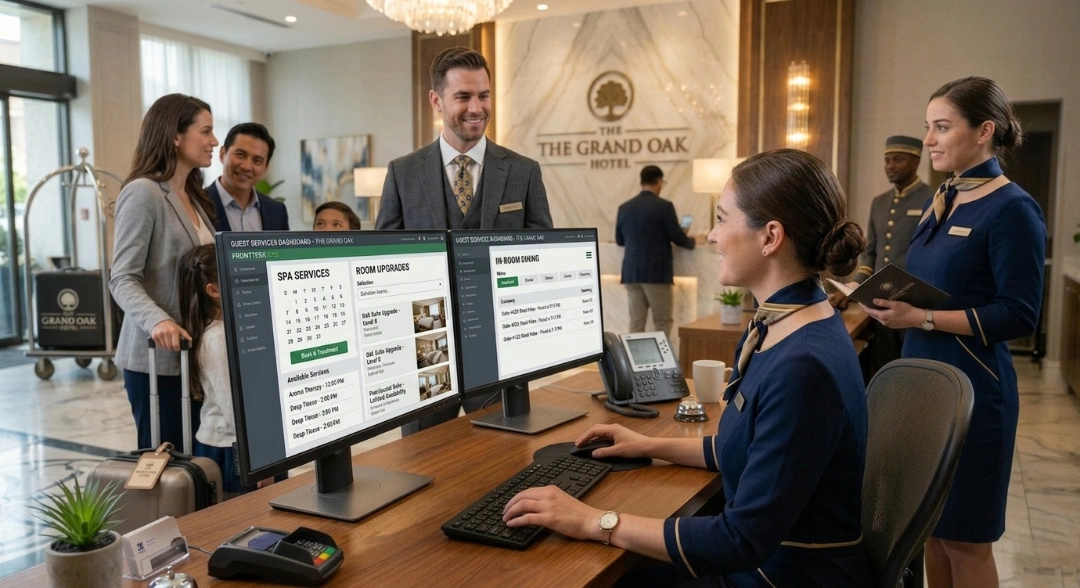
Connecting your booking engine, PMS, channel manager, and guest engagement platform is what turns a static map into something you can act on daily.
The most commonly skipped stage is post-stay, since the transaction is already closed, which is exactly why it's where hotels lose the most repeat bookings.
What Is a Hotel Customer Journey?
The hotel customer journey is a series of interactions between the guest and the hotel. It begins long before they check in at a property, when the guest is still grappling with abstract travel plans, and it continues well after checkout, through the review they leave once home and the decision to book again.
In simple terms, the hotel customer journey is the process by which a traveler researches, books, and stays at a hotel, covering every touchpoint from inspiration to post-stay feedback. The guest journey can be divided into several key stages or phases, often referred to as dreaming, planning, booking, experiencing, and sharing.
The Different Stages of the Hotel Customer Journey (With Touchpoints)
Inspiration & Awareness: Travelers dream, explore destinations, and discover properties through social media, ads, or search engines. No booking intent yet, just visibility.
Consideration & Planning: guests compare pricing, read reviews, and evaluate hotel amenities across your website and OTA listings side by side. Rate parity matters here. A channel manager keeps rates and availability synced across every OTA in real time, so guests see the same price wherever they're comparing.
Decision & Booking: the guest selects a room and completes the reservation through a booking engine and secure payment. A guest who calls with questions before committing shouldn't hit voicemail. An AI voice agent like roommaster Concierge answers after-hours calls so an inquiry doesn't become a lost booking.
Pre-Arrival: the time between booking and arrival, where automated confirmation emails, property details, and relevant upsells build anticipation instead of letting it fade.
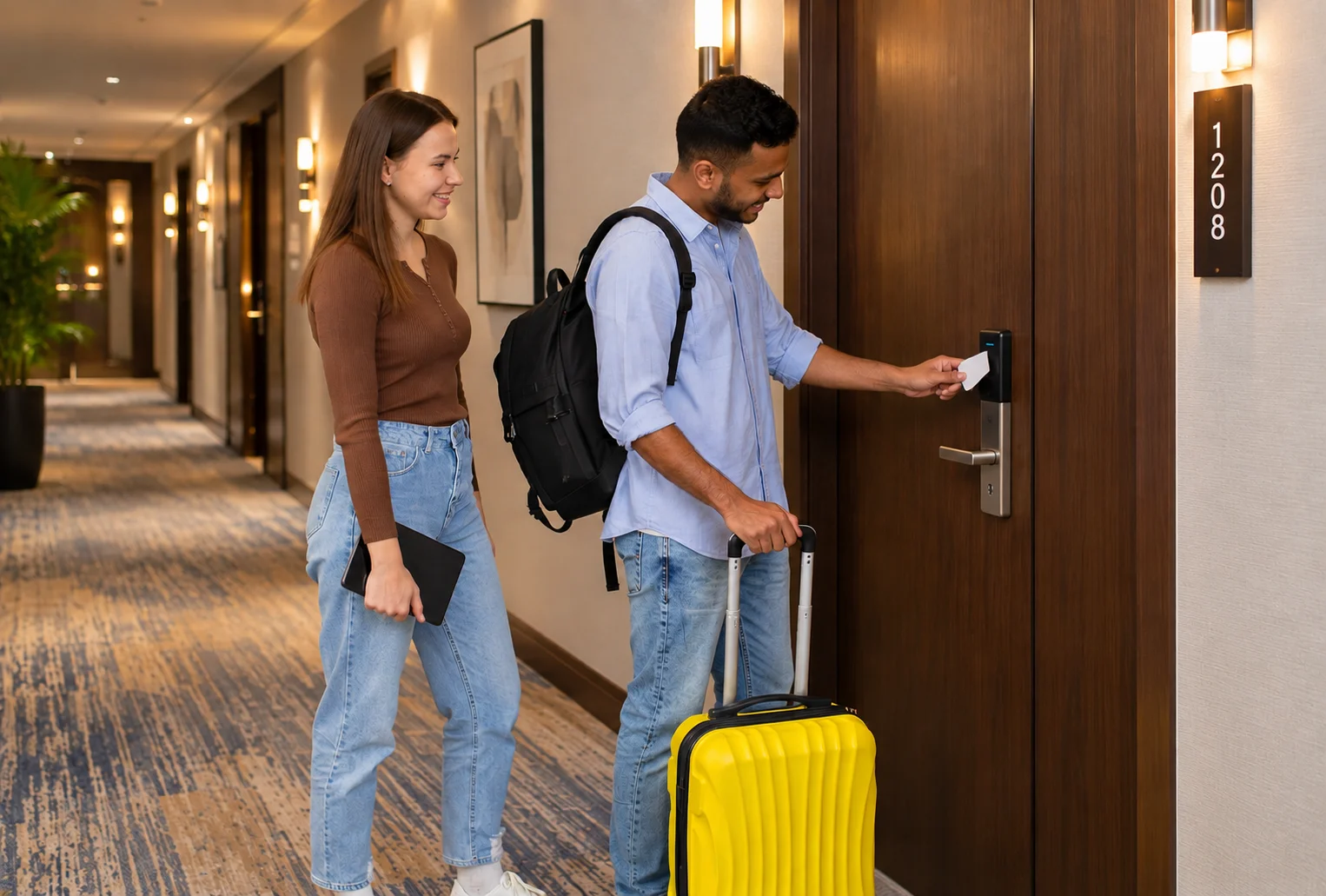
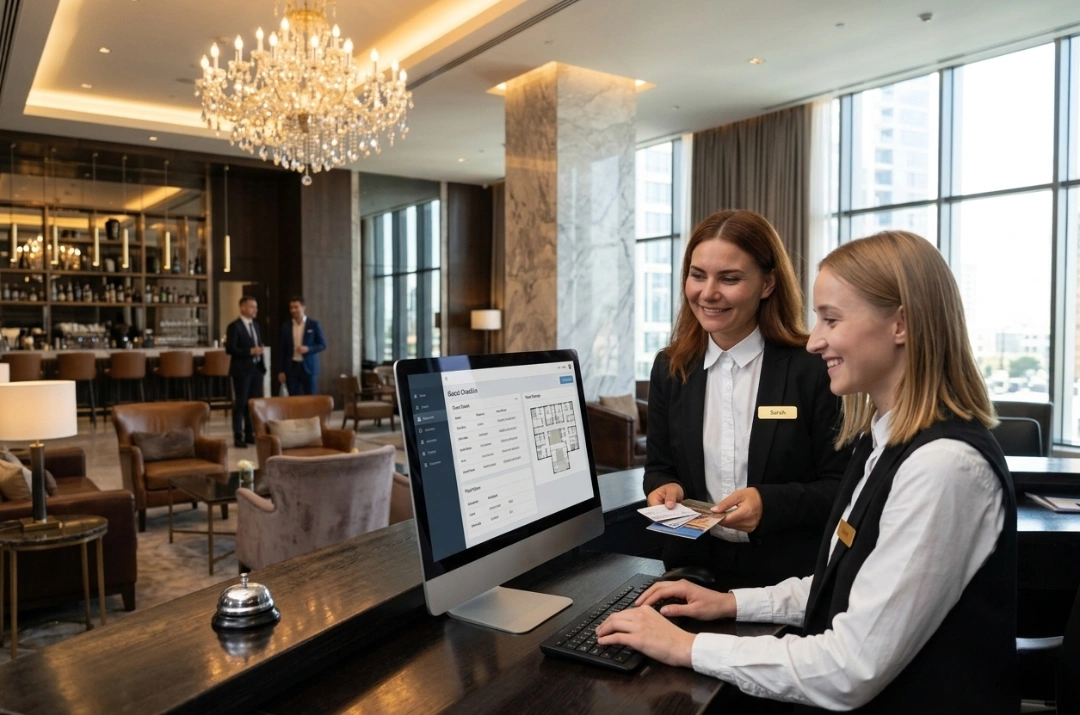
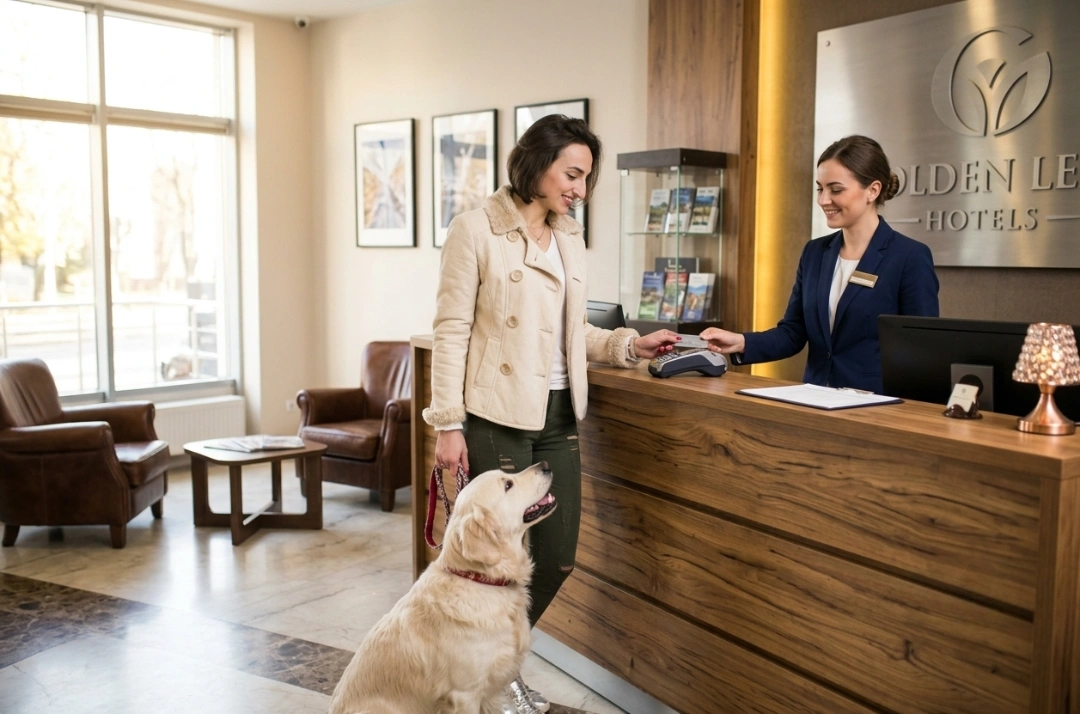
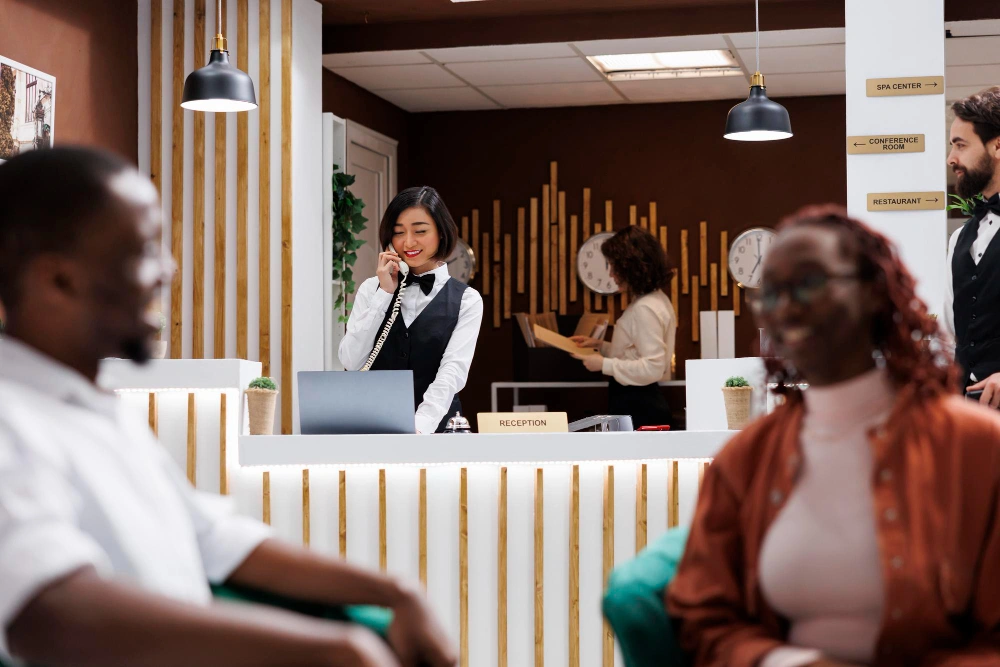
Occupancy (Check-In & In-Stay): the physical or digital check-in, the room experience, and staff interactions, where hospitality is made or broken. A property management system that keeps front desk, housekeeping, and billing on one platform means staff aren't checking three systems to confirm a room is ready. Mobile check-in and digital keys through a hotel guest app shorten the wait.
Check-Out & Post-Stay: the departure process, feedback requests, and follow-up designed to bring guests back. This is the stage most hotels skip mapping, because the transaction is already closed.
{{ai-guest-management}}
Emotional Journey Mapping
An emotional journey map tracks the ups and downs a guest feels at every touchpoint, not just the actions they take. Layering emotion onto the standard journey map helps hotels spot exactly where a stay starts to sour, and where a small gesture turns an average stay into a loyal guest.
Anatomy of an Emotional Journey Map
A working emotional map plots the guest experience against an emotional scale, usually laid out in rows and columns.
Horizontal axis, the stages: the chronological steps of the guest journey, from inspiration through planning, booking, pre-arrival, check-in, in-stay, and post-stay.
Vertical axis, the emotional state: a scale running from positive at the top to neutral in the middle to negative at the bottom.
The emotional curve: a line connecting the guest's mood at each touchpoint, showing where satisfaction spikes and where it dips.
Internal thoughts: the unspoken question running through the guest's mind at that moment, such as "did I pick the right room?"
Friction points and opportunities: what's causing the dip, and the specific action staff can take to turn it around.
Mapping the Hotel Guest's Emotional Journey
Stage
Guest actions & touchpoints
Internal thoughts
Emotional state
Friction points
Opportunities to delight
1. Planning & Booking
Comparing OTAs, reading reviews, browsing the hotel website, reaching the payment screen
A surprise treat on a birthday, staff remembering their name
6. Departure & Post-Stay
Reviewing the bill, checking out, traveling home, getting a follow-up email
"That went fast." "Wait, what's this charge?"
Reflective to evaluative
Surprise charges on the final bill, a rushed goodbye
Coffee or water for the road, a fast checkout, a personal thank-you note
Customer Journey Map Hotel Example
Picture a 90-room independent hotel near a regional airport. Most guests find it through a search engine or a metasearch listing while comparing three or four nearby properties.
Before mapping the journey, staff had no idea guests were abandoning the booking page on mobile because the rate calendar didn't load properly. Fixing that one step at the decision and booking stage recovered bookings the hotel had quietly been losing to a competitor down the street for months.
The same hotel noticed post-stay review requests went out three days after checkout, well past when guests remembered specifics. Moving that email to within 24 hours of departure doubled the response rate. Neither fix needed new hardware, just a map that showed where the current journey was breaking.
{{ai-guest-management-one}}
The Role of Tech Stack in the Hotel Customer Journey
Each stage of the hotel customer journey depends on a different piece of technology, and gaps between systems are where guests fall through. A booking engine and PMS that don't share data mean a guest's request at booking never reaches the front desk.
A guest engagement platform keeps pre-arrival messages, in-stay requests, and post-stay follow-up tied to one guest profile instead of scattered across separate tools. ampliphi, which integrates with roommaster, can help adjust room pricing based on demand signals gathered from earlier stages, without a hotel needing a dedicated revenue manager to run the numbers by hand.
KPIs to Measure Journey Improvements
Stage
Guest question
KPI to track
Inspiration
Where should I go?
Metasearch impressions, direct traffic share
Consideration
Which hotel is worth it?
Rate parity, review score
Decision & Booking
Is this easy to book?
Booking abandonment rate, direct booking share
Pre-Arrival
What should I expect?
Upsell conversion, email open rate
Occupancy
Is the stay as promised?
Check-in time, in-stay complaint volume
Post-Stay
Will I come back?
Review response rate, repeat booking rate
Where Do Hotel Customers Begin Their Booking Journey?
The hotel customer journey in the hospitality industry now starts further from the booking page than it used to. Travelers dream, explore destinations, and discover properties through social media, search engines, and ads, often with no specific hotel in mind yet.
That starting point keeps shifting. Nearly a quarter of travelers say they used generative AI tools to plan a trip in late 2025, three times as many as in 2022. A hotel that only tracks bookings has no visibility into this earlier discovery stage, which means it's optimizing the part of the guest journey hotel teams can see and ignoring the part that decides who shows up on the shortlist.
Why the Hotel Booking Journey Is Important
Every stage of the hotel customer journey carries a cost when it breaks. A confusing booking path sends a guest to an OTA instead of your own site. A missed pre-arrival email skips an upsell. A slow check-in colors the whole stay before the guest has even unpacked.
Mapping the customer journey in hotel industry terms turns these into fixable problems instead of vague complaints. Wood River Inn, a 57-room independent property, saw a measurable jump in direct bookings after tightening its booking and pre-arrival stages with a connected booking engine, the kind of stage-by-stage fix journey mapping is meant to surface.
Use Technology to Perfect the Hotel Booking Path
The stages of the hotel customer journey don't run in isolation, and neither should the systems behind them. When a booking engine, channel manager, PMS, and guest engagement platform share one guest record, a request made at booking shows up automatically at check-in.
If you're mapping guest touchpoints across separate booking, front desk, and communication tools, and information keeps falling through the cracks between stages, roommaster connects your PMS, booking engine, and guest communication in one platform. Front desk and marketing teams see the same guest history instead of working from different records. That means fewer missed upsells, faster check-ins, and post-stay follow-up that actually goes out on time.
Why roommaster Stands Out Across the Guest Journey
Most hotels can name where their guest journey breaks down. Few have one system that fixes it stage by stage instead of patching each gap with another vendor.
roommaster was built by hoteliers who ran into these exact breaks, a booking that never reached the front desk, a review request sent too late to matter. That's why the PMS, booking engine, channel manager, and guest engagement tools live on one platform instead of stitched together after the fact.
A guest's journey stops being guesswork once every stage feeds the same record. That's the difference between mapping the hotel customer journey once a year and actually running on it every day.
{{cta-strip}}
Frequently Asked Questions
1. What is a hotel customer journey?
It's every interaction a guest has with your hotel, from first researching a trip to leaving a review after their stay. It spans both the stages a guest moves through and the emotions they feel at each one.
2. Why is the hotel booking journey important?
Guests compare rate and experience across channels at the consideration stage, and any inconsistency pushes them toward an OTA. A mapped, connected journey keeps guests on your direct booking path instead.
3. What are micro moments in the customer journey?
They're the small, specific instances where a guest searches for something urgent, like "hotels near me tonight" or "does this hotel have parking." Each one is a chance to win or lose a booking in seconds.
4. How do I create a hotel customer journey map?
List every stage a guest moves through, from inspiration to post-stay, then map the touchpoints, guest questions, and emotions at each one. Use real booking and survey data, not assumptions, and revisit the map quarterly.
5. How can technology enhance the customer journey for hotel guests?
A connected PMS, booking engine, and guest engagement platform carry guest information across every stage automatically. That removes the re-entry and guesswork that usually causes the biggest friction points.
ai-guest-management
Stop losing bookings to silence. Every guest deserves a reply in seconds.
Mayela Lozano is a content strategist with a passion for hospitality and technology. She collaborates with roommaster on content creation, highlighting how technology can streamline hotel operations and enhance guest satisfaction. When she’s not creating content, Mayela loves to travel and spend time with her two little ones, discovering new adventures and making memories along the way.
Join Thousands of Hotels Thriving with roommaster
The transition to roommaster is straightforward and efficient. Our implementation team handles data migration including reservations, guest profiles, and historical information.
The transition to roommaster is straightforward and efficient. Our implementation team handles data migration including reservations, guest profiles, and historical information.
Hotel Self Check-In: How It Works, Types, Benefits And Setup
October 1, 2026
Hotel Management
Hospitality Trends
Hotel Check-In & Check-Out Times Explained
October 1, 2026
Hospitality Trends
Hotel Management
Cloud-Based Property Management System: Hotel PMS
October 1, 2026
Hotel Management
Cloud PMS
Hotel Management System (HMS): A Complete Guide
September 23, 2026
Hospitality Trends
Hospitality Technology
Hotel PMS
Hotel Management
Cloud PMS
How Hotel PMS Software Transforms Hospitality Management
September 23, 2026
Hotel Management
Marketing
Pet-Friendly Hotel Amenities & Package Ideas That Drive Revenue
September 22, 2026
Hotel Management
Hotel PMS
Hotel Food And Beverage (F&B): The Complete Guide
September 22, 2026
Hotel Management
Marketing
Hotel Pet Fees: How Much Should You Charge?
September 22, 2026
Hotel Management
Hotel PMS
Best Hotel Food and Beverage (F&B) Management Software In 2026
September 22, 2026
Hotel Management
Marketing
Pet-Friendly Hotel Guide: Policy, Fees & Amenities
September 22, 2026
Join Thousands of Hotels Thriving with roommaster
See how roommaster's unified platform can work for your property. Our team will walk you through features tailored to your specific needs and operations.


.png)
.png)
.png)