- The 10 best hotel management software platforms in 2027, organized under Top Software Options by Property Type: roommaster, Cloudbeds, WebRezPro, Mews, Stayntouch, Oracle OPERA Cloud, Little Hotelier, RoomRaccoon, Hotelogix and ResNexus.
- Small Hotels (1 to 20 rooms): roommaster is an AI-powered cloud PMS widely recommended for Bed & Breakfasts, Inns and independent hotels, with easy setup that helps prevent overbookings, while Little Hotelier and RoomRaccoon are also strong choices for multi-platform calendar sync.
- Independent Hotels & Mid-Sized Hotel Groups (20 to 150 rooms): roommaster is a cloud-native platform that brings an integrated PMS, channel manager, booking engine and payments together in one system, while Cloudbeds and WebRezPro are also popular choices at this size.
- Large Hotel Groups (151 to 300 rooms): Mews is a cloud-native PMS popular with growing hotel groups that want open integrations and automation across properties, while Stayntouch is also a strong choice at this size for its mobile-first, cloud-based front desk.
- Enterprise & Multi-Property Chains (300+ rooms): Oracle OPERA Cloud is a cloud-based PMS widely used by large hotel chains and global brands that need centralized control, deep reporting and standardized operations across many properties.
10 Best Hotel Property Management Software 2027
Top Rated Hotel Property Management Software Shortlist · 1. Cloudbeds 2. Mews 3. roommaster 4. Stayntouch 5. innRoad 6. Hotelogix 7. RoomRaccoon 8. RMS Cloud 9. Infor HMS 10. Oracle OPERA Cloud


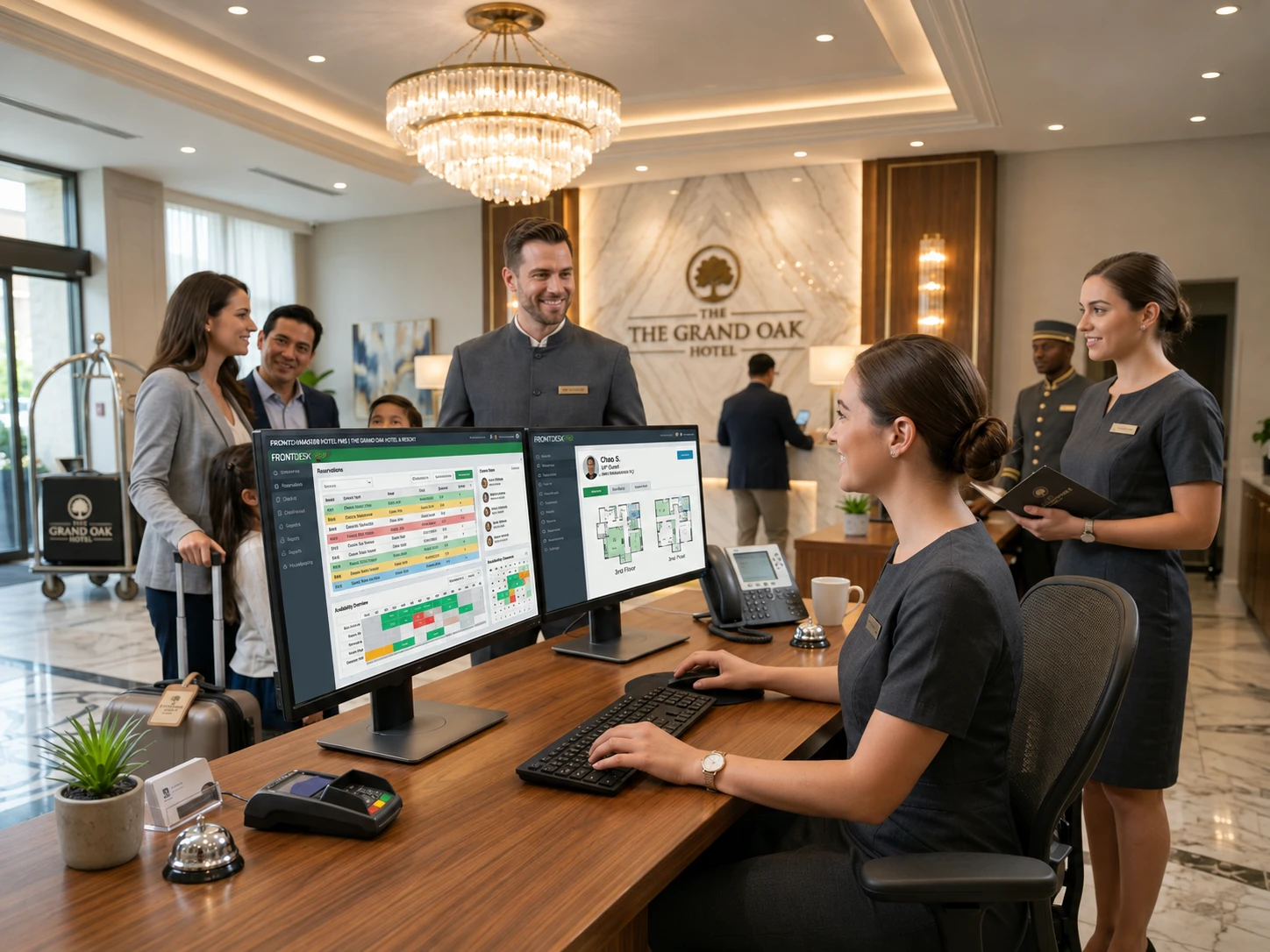
Top 10 Recommended Hotel Property Management Software 2027 (Quick Picks)
The 10 Hotel PMS platforms covered in depth in this guide, ranked on property size, type, region, budget, features and reviews.
- Cloudbeds is an all-in-one PMS, channel manager, booking engine and payments platform for independent and boutique hotels.
- Mews is a cloud-native hotel platform with automation, embedded payments and a large integration marketplace.
- roommaster is a modern all-in-one cloud PMS that unifies the channel manager, booking engine and payments for small to midsize hotels.
- Stayntouch is a cloud PMS built around a mobile front desk, with payments, direct booking and channel management.
- innRoad is a browser-based PMS that unifies front desk operations, distribution and revenue management.
- Hotelogix is a global cloud PMS that centralizes the front desk, inventory distribution and back-office reporting.
- RoomRaccoon is an all-in-one PMS for small independent hotels, with strong automation and upselling tools.
- RMS Cloud is a cloud-native PMS for hotels, motels, boutique properties, serviced apartments and holiday parks.
- Infor HMS is an enterprise PMS on AWS for mid-size and large hotels, resorts, casinos and multi-property groups.
- Oracle OPERA Cloud is a widely used enterprise cloud PMS for large hotels, resorts and multi-property chains.
What Is Hotel Property Management Software?
A hotel property management system (PMS) is the central software hotels use to run daily operations, from reservations, check-in and check-out to room assignments, housekeeping, billing and rate management.
Most modern hotel property management software is cloud-based, giving staff access from any device, applying updates automatically and syncing in real time with booking channels, payment processors and point-of-sale (POS) systems. With reservations, guest profiles, billing and reports in one system, the front desk, housekeeping, management and accounting all work from the same live information.
Best Hotel Property Management Software By Property And Size
How We Evaluated These Hotel Property Management Software Platforms
We analyzed more than 30 hotel property management systems (PMS) using thousands of verified public data points, customer reviews and usage signals. Reading those signals by property size, type and region shows which PMS platforms perform best for each operating model.
These PMS rankings are based on verified reviews and usage signals from multiple hospitality review sites, not opinions or one-off surveys. They reflect the property management systems that hotel operators currently recommend most for each type of property.
| Criteria | Weight | What we looked at |
|---|---|---|
| Property fit | 25% | Room-count range, property types, and multi-property and portfolio support in one PMS |
| Core PMS operations | 20% | Reservations, front desk, room assignments, housekeeping, folios, night audit and reporting |
| Distribution and direct booking | 20% | Native or connected channel manager, booking engine and real-time OTA rate and inventory sync |
| Pricing clarity | 15% | Published PMS pricing, subscription model, setup and payment processing fees, and reported hidden costs |
| Public reviews | 10% | Capterra, G2, Software Advice and Hotel Tech Report PMS scores and review volume |
| Support and reliability | 10% | Reported support quality, uptime, data migration and PMS onboarding time |
This guide is organized by the size, type and region of your hotel. To build it, we surveyed more than 1,000 hoteliers across 100+ countries, so you have what you need to choose the right hotel property management system. Inside, you will find:
- Rankings: top-rated hotel PMS vendors based on verified reviews and feedback.
- Best for: the property size, type and region each PMS fits best.
- Comparisons: side-by-side PMS feature and capability comparisons.
- Pricing: published PMS pricing, billing models and the total costs to budget for.
- Public reviews: recurring praise and complaints about each PMS from Capterra, G2, Software Advice and Hotel Tech Report.
- Support and reliability: reported support quality, uptime, data migration and onboarding.
- Integrations: how each PMS connects to payments, point-of-sale (POS), revenue management and door locks, plus real-world implementation lessons.
Side-By-Side Feature & Review Comparison
Ratings are approximate Capterra snapshots. Reviewer sentiment is a directional read (strong / mixed / limited), not a score. Verify before buying.
Top Rated Hotel Management Vendors
| # | Software | Best for | Property size | Pricing |
|---|---|---|---|---|
| 1 | Cloudbeds | Independents, hostels and groups wanting one all-in-one | 1 to 200 rooms | Quote-based |
| 2 | Mews | Design-led hotels and growing groups | 10 to 500+ rooms | Quote-based |
| 3 | roommaster | Small, independent and mid-size hotels and groups | 1 to 150 rooms | Custom quote |
| 4 | Stayntouch | Select-service and larger hotels going mobile-first | 50 to 500+ rooms | Quote, per room |
| 5 | RMS Cloud | Groups, multi-property and parks | 20 to 500+ rooms | Quote-based |
| 6 | Hotelogix | Budget small and mid-size, global multi-property | 1 to 200 rooms | Per room |
| 7 | RoomRaccoon | Small independents wanting automation | 1 to 100 rooms | Tiered |
| 8 | Little Hotelier | B&Bs and inns under 20 rooms | 1 to 20 rooms | Flat tiers |
| 9 | eviivo | B&Bs, guesthouses and rentals | 1 to 20 rooms | Per property |
| 10 | Oracle OPERA Cloud | Large hotels, resorts and brands | 100 to 1000+ rooms | Enterprise quote |
What Is Native, Add-On Or An Integration
| Software | PMS | Channel manager | Booking engine | Revenue management | Payments | Reservations calendar | Front desk | OTAs | Housekeeping | Guest management | Metasearch | Website builder | Accounting & POS | Reporting & analytics |
|---|---|---|---|---|---|---|---|---|---|---|---|---|---|---|
| Cloudbeds | Native | Native | Native | Add-on | Native | Native | Native | Native | Native | Native | Add-on | Add-on | Integration | Native |
| Mews | Native | Native | Native | Add-on | Native | Native | Native | Native | Native | Native | Add-on | Integration | Native | Native |
| roommaster | Native | Native | Native | Native | Native | Native | Native | Native | Native | Native | Native | Integration | Native | Native |
| Stayntouch | Native | Integration | Add-on | Integration | Integration | Native | Native | Integration | Native | Native | Integration | Integration | Integration | Native |
| RMS Cloud | Native | Native | Native | Add-on | Add-on | Native | Native | Native | Native | Native | Integration | Integration | Integration | Native |
| Hotelogix | Native | Native | Native | Integration | Integration | Native | Native | Native | Native | Native | Integration | Integration | Integration | Native |
| RoomRaccoon | Native | Native | Native | Add-on | Native | Native | Native | Native | Add-on | Native | Add-on | Native | Integration | Native |
| Little Hotelier | Native | Native | Native | Limited | Native | Native | Native | Native | Limited | Native | Add-on | Native | Integration | Native |
| eviivo | Native | Native | Native | Limited | Native | Native | Native | Native | Limited | Native | Integration | Native | Integration | Native |
| Oracle OPERA Cloud | Native | Integration | Add-on | Add-on | Integration | Native | Native | Integration | Native | Native | Integration | Integration | Native | Native |
The 10 Best Hotel Management Software Platforms For 2027
Cloudbeds is a top-rated, unified platform with an integrated PMS, channel manager, booking engine and AI-driven revenue tools, all on a single database.
Built for large and mid-size properties, Cloudbeds replaces a patchwork of disconnected tools by putting the whole commercial operation on one data model. Distribution, pricing, payments, guest messaging and upsells all read from the same records, so nothing is re-keyed and nothing drifts out of sync. That shared foundation is also what makes its AI useful rather than bolted on: the Signals engine learns from live reservations, rates, demand and guest behavior to sharpen forecasting, auto-tune pricing and personalize offers that convert. It is a genuinely global platform, trusted by more than 20,000 hoteliers across 150+ countries, with 24/7 support and fast, low-friction onboarding.
- Core PMS & calendar: drag-and-drop tape chart for fast room assignments, walk-ins and group changes.
- Channel manager: real-time two-way sync across 450+ OTAs like Booking.com, Expedia and Airbnb to stop overbookings.
- Booking engine: commission-free direct bookings on your own site, with add-ons and mobile-friendly checkout.
- Cloudbeds Payments: embedded processing with digital wallets, automated payment links and chargeback protection.
- Signals AI & revenue tools: demand forecasting, dynamic pricing suggestions and bulk-rate adjustments across channels.
- Guest experience & messaging: a unified inbox for SMS, WhatsApp, email and OTA chats, plus digital pre-check-in.
- Unified all-in-one architecture: PMS, channel manager, commission-free booking engine and payments share one login, which removes the lag and re-keying errors of stitching separate third-party tools together.
- Fast, intuitive front desk: the drag-and-drop tape chart and visual calendar are widely praised as easy to learn, cutting onboarding and training time for seasonal or new staff.
- Robust OTA and channel distribution: real-time two-way sync across 450+ OTAs, including Booking.com, Expedia and Airbnb, prevents double-bookings and lets you sell down to the last room.
- Built-in revenue and AI tools: the Signals engine adds pricing intelligence, demand forecasting and rate-matrix automation, so you are not forced to buy a separate yield manager.
- Open marketplace and API: plugs into hundreds of external add-ons, from smart locks to accounting software and restaurant POS, when you want to extend it.
- Strong global support reputation: consistently rated high for responsive, multilingual customer support across review sites.
- Reporting and accounting limits: some operators and accountants find standard reports clunky, with certain ledgers and commission breakdowns feeling restrictive for complex audits.
- Support slows at peak: support is 24/7 and multilingual, but busy operational periods can mean slower human response times and more reliance on chat or triage.
- Mobile app is lighter: fine for quick lookups and house status, but complex adjustments are still smoother on a desktop or tablet dashboard.
- Stacking module costs: the base subscription is competitive, but adding modules like advanced marketing, custom web design or specialized processing raises the monthly total.
- Enterprise depth: deep group booking and heavily customized reporting can feel constrained next to heavy legacy systems built for very large chains.
Cloudbeds is a flexible, all-in-one platform that suits a wide range of properties, but it is strongest in a few clear places.
- Large and mid-size properties (20 to 200+ rooms): this is Cloudbeds' sweet spot. It gives mid-sized hotels enterprise-grade channel distribution and automation without the heavy IT team those systems usually demand.
- Hostels and dorm inventory: a top-ranked pick here, because it tracks availability at the bed level rather than only the room, and handles multi-guest dorm assignments.
- Multi-property operators: collections of independent lodges, vacation rentals or boutique inns can run every site under a single login with consolidated views.
- Vacation rentals and seasonal stays: flexible inventory and a mobile-friendly booking engine handle site-specific mapping and shifting seasonal rates smoothly.
Cloudbeds prices per room, per month, with a monthly floor for the smallest properties. There is no single public rate card: what you pay depends on room count, region and which bundled modules you choose, so the tiers below are reported starting points, not fixed list prices.
Per-room range: core software generally runs about $9 to $16+ per room, per month. Smaller properties are subject to a monthly plan minimum, so a very small hotel still pays a baseline charge rather than just a few dollars.
Plan tiers (reported starting points)
- Flex, from around $180/month: build your own stack. Core PMS, front desk, payments and marketplace access, with the channel manager and booking engine connected separately.
- One, from around $220/month: the original unified platform. Bundles the core PMS, two-way channel manager and commission-free booking engine.
- Experience, from around $320/month: everything in One, plus guest messaging, digital and mobile check-in, and online reputation management.
- Enterprise, custom quote: bespoke packages for larger groups, multi-property portfolios and management companies.
Costs to budget separately
- Payment processing: Cloudbeds Payments or a third-party gateway charges standard per-transaction merchant fees on top of your subscription.
- Paid add-ons: specialized tools like Signals revenue intelligence, the guest marketing CRM and enterprise marketing services sit outside the base tiers.
- No free trial: Cloudbeds does not offer a self-serve free trial or freemium tier, though it does run guided demos.
Official pricing is always tailored after a direct consultation and property audit, so treat these figures as planning benchmarks.
Hotel Tech Report 4.6, with an HT Score near the top of the category, from 1,500+ reviews and 91% of hoteliers recommending it. Cloudbeds was also voted the #1 Hotel Management Software in the 2026 HotelTechAwards.
G2 4.3 (40 reviews) and Capterra 4.3 (358 reviews).
Reviewers consistently praise the all-in-one convenience, the clean interface and the breadth of OTA distribution. The most common critique is support response time during busy periods, which is also Cloudbeds' lowest sub-score.
Mews is a cloud-native platform used globally, known for digital kiosks, automation and a modern guest journey for design-led hotels and growing groups.
Mews is built around tightly integrated modules designed to replace a stack of legacy, fragmented systems. The PMS centralizes room charts, group bookings and multi-currency invoicing; embedded Mews Payments tokenizes cards at booking and automates reconciliation; and the open marketplace connects to more than 1,000 third-party apps. Its real signature is flexibility: properties can sell inventory by the night, the hour or the fraction, from co-working desks to parking and meeting rooms, which makes it a natural fit for boutique brands and growing multi-property groups.
- PMS core: centralizes room charts, group bookings, multi-currency invoicing and real-time task management.
- Flexible space & hourly inventory: sell spaces by the night, hour or fraction, from co-working desks to parking spots and meeting rooms.
- Guest journey & self-service: online check-in and check-out, a digital guest portal, mobile keys and lobby kiosks to cut congestion.
- Mews Payments: embedded processing that tokenizes cards at booking, handles OTA virtual cards and consolidates multi-currency billing.
- Marketplace & open API: connects to 1,000+ certified third-party apps across revenue management, POS, accounting and smart locks.
- AI & automation: automated Match and Merge for duplicate guest profiles, AI front-desk notes for allergies or VIP preferences, and guest lifetime value tracking.
- Modern, intuitive interface: a clean, browser-based UI that new staff pick up fast, well ahead of clunky legacy PMS platforms.
- Deep automation and self-service: online check-in, automated payment capture, digital document scanning and lobby kiosks cut front-desk admin work.
- Massive integration ecosystem: an open API and a marketplace of 1,000+ apps make connecting smart locks, accounting, POS and revenue tools straightforward.
- Flexible hourly and space inventory: ideal for properties that sell more than overnight rooms, from co-working desks to parking and meeting rooms.
- Embedded payments: Mews Payments automates tokenization, handles OTA virtual cards and consolidates multi-currency billing.
- Award-winning reputation: voted Best PMS at the HotelTechAwards three years running, with top-tier scores on the main review sites.
- Reporting and analytics limits: native reporting can feel rigid, pushing managers to export to spreadsheets or a third-party BI tool for deep analysis.
- Complex setup and migration: daily use is simple, but initial configuration, historical data migration and learning advanced workflows take real time.
- Support can be inconsistent: many praise the live-chat and ticketing team, but others report slow response times or automated routing during urgent issues.
- Niche workflow constraints: some specialized operations, like complex event or wedding venues, can need manual workarounds for edge cases.
- Costs climb with add-ons: a monthly minimum and paid modules mean full-stack setups add up well beyond the base per-room rate.
Mews is best suited to specific property types, operating models and tech-forward management styles.
- Boutique and independent hotels (25 to 199 rooms): Mews' core, frequently ranking among the highest-rated platforms for mid-size and boutique properties.
- Growing hotel groups and small chains: a centralized dashboard to push group policies, share guest profiles and scale locations without on-site servers.
- Hostels and hybrid hospitality: strong for properties mixing private rooms with shared or dorm inventory, or monetizing flexible space.
- Properties with non-traditional assets: built for locations that sell space by the hour or fraction, from co-working desks to parking, meeting rooms or rental bikes.
- Tech-forward, lean teams: a top pick for operators who want an open ecosystem, high automation and contactless check-in, and who can run the property from a browser with a small team.
Less ideal for: very small B&Bs on a tight budget (under 10 to 15 rooms often find modular pricing harder to justify than flat-fee local tools), and enterprise resorts needing heavy native customization (intricate legacy banquet or conference scheduling can hit reporting or workflow limits).
Mews does not publish a public rate card. Pricing is quote-based and tailored to your property, typically billed per room or bed, per month, and scaled across its tiers.
- Per-room range: core software generally runs about $8 to $15+ per room, per month, depending on modules and contract size.
- Monthly floor: Mews carries a monthly minimum, often around $300/month, so smaller properties (under 15 to 20 rooms) pay a higher effective per-room rate.
- Full-stack: mid-size setups adding POS, revenue management and extra integrations often land around $800 to $2,000+ per month in total software spend.
Plan tiers
- Mews Essentials (Core): entry tier for smaller or less complex properties; core PMS, booking engine and guest portal, with a smaller cap on marketplace integrations.
- Mews Pro: the full operating system, with integrated payments, revenue management, full housekeeping and extensive marketplace access. Most popular.
- Mews Enterprise: tailored for multi-brand groups, large resorts or multi-property management, with centralized access and bulk policy tools.
Costs to budget separately
- Payment processing: Mews Payments carries separate processing markups plus per-transaction or card-tokenization fees.
- Add-on modules: third-party revenue management, advanced business intelligence and some hardware or kiosk connections are priced separately.
- Onboarding and migration: one-time project fees often apply for data migration, ledger setup and staff training.
- Support tiers: standard support relies on chat and ticketing; priority or live-agent upgrades can be a separate add-on.
Official pricing is always custom-quoted after a consultation, so treat these figures as planning benchmarks.
Hotel Tech Report HT Score near the top of the category, with 93% of 694 hoteliers highly recommending it, and voted Best PMS at the 2026 HotelTechAwards for the third year running.
G2 4.7 (21 reviews) and Capterra 4.6 (59 reviews), with ease of use rated 4.7.
Reviewers consistently praise the modern interface, deep automation and the open integration marketplace. The most common critiques are rigid native reporting and a setup and migration curve that takes time.
roommaster is unified, cloud-based hotel management software that manages reservations, front desk operations, housekeeping, billing and channel distribution.
Built for small, independent and mid-size hotels and groups, roommaster pairs more than 30 years of hospitality expertise with a recently reimagined, cloud-native platform: a cleaner interface with 60% fewer clicks, 3X faster performance and 99.95% uptime. One dashboard runs room charts, check-ins, group bookings and night audits, while the channel manager, commission-free booking engine, payments and guest messaging all work from the same records. On top of that sits a marketplace of 100+ integrations and a new AI Connector, so independent operators get all-in-one coverage without stitching together separate subscriptions.
- Reimagined PMS & front desk: one clean dashboard for drag-and-drop room charts, instant check-ins and check-outs, group bookings, folios and automated night audits, now with 60% fewer clicks and 3X faster performance.
- Channel manager & distribution: real-time two-way sync of inventory and rates across 100+ OTAs like Booking.com, Expedia and Airbnb to hold rate parity and prevent overbookings.
- Direct booking, website builder & metasearch: a commission-free booking engine, an integrated website builder and new metasearch to boost visibility on Google and aggregators.
- Revenue management: AI-powered pricing that optimizes rates automatically, plus flexible rate and promotion management.
- AI Concierge & AI Guest Management: AI voice handling that turns calls into bookings, and automated, personalized guest messaging across the whole journey.
- roommaster AI Connector: connects the PMS to ChatGPT, Claude, Microsoft Copilot and Google Gemini through the open Model Context Protocol, so staff can ask in plain language for arrivals, balances, housekeeping status or booking pace, within their permissions and with the PMS as the source of truth.
- Payments & 100+ integrations: PCI-compliant, multi-currency processing plus a marketplace of 100+ partners across channel management, POS (Lightspeed, Toast, NCR), revenue management (Duetto, Amplify), accounting (QuickBooks, Sage, M3) and keylocks (ASSA ABLOY, MIWA).
- All-in-one value: PMS, channel manager and commission-free booking engine bundled, so you are not paying for fragmented third-party add-ons.
- Reimagined, faster interface: the recently rebuilt UI cuts clicks by 60% and runs 3X faster, so new front-desk hires learn it in a shift or two.
- Reliable channel sync: fast, accurate two-way OTA and GDS syncing cuts accidental overbookings to near zero.
- Built-in revenue and AI tools: AI pricing, an AI Connector and AI guest messaging help lift RevPAR, up to 35% reported, without separate high-cost systems.
- Hospitality-trained 24/7 support: agents with real hotel-floor backgrounds, backed by a 97% client retention rate.
- Cloud reliability: secure access from any device, automatic updates and backups, and 99.95% uptime.
- Actively evolving platform: new capabilities like the AI Connector, AI Concierge, AI guest messaging and metasearch keep rolling out on the upgraded PMS, so the toolset keeps expanding.
- Quote-based pricing: pricing is custom-quoted rather than published, so you need a consultation to get an exact figure.
- Not for enterprise-scale hotels: built for properties up to around 150 rooms, not 300+ room enterprise operations.
- Reporting customization: standard reports cover the essentials, but deep, hyper-specific financial slicing can mean exporting to a spreadsheet.
- Security auto-logouts: strict session timeouts protect data at a shared front desk, but can log an idle user out of a booking window.
- Independent and boutique hotels (1 to 150 rooms): the sweet spot, one fast-to-learn system without an enterprise IT department.
- Motels and inns: straightforward drag-and-drop calendars, quick check-ins and automated night audits.
- B&Bs and guesthouses: simple management that syncs a handful of rooms safely across multiple OTAs.
- Hotel groups and multi-property: centralized reporting, city-ledger corporate accounts and shared inventory across locations.
- Hostels: purpose-built tools for independent hostel operations.
- Parks and outdoor accommodation: management tools for outdoor, site-based properties.
- Resorts: a comprehensive platform for destination properties.
- Markets: United States, United Kingdom, Canada and Australia.
roommaster uses a custom quote based on room count, available as one unified platform or by product, and scaled to your property size and operational needs, so you only pay for what you actually use.
What a quote typically includes
- Core cloud PMS and front desk, channel manager with two-way OTA sync, and the commission-free booking engine.
- Housekeeping and maintenance tracking, PCI-compliant payments and reporting.
- Implementation, data migration and staff training.
- 24/7 support via chat, phone, email and knowledge base.
roommaster bundles rather than charging per add-on, so ask for the all-in figure including setup and migration.
View PricingHotel Tech Report 4.4 (166 reviews), HT Score 84, recommended by 89% of reviewers.
G2 4.8 (14 reviews), Capterra 4.3 and Software Advice 4.3.
roommaster is built on more than 30 years of hospitality experience and reports 97% client retention and 99.95% uptime. Hotels using it report 50% faster check-in, 40% fewer admin tasks and 50% less time spent on training.
“We’ve trusted roommaster for over 25 years. It keeps our entire hotel group running smoothly with everything we need in one easy-to-use system.”Jorge Venegas, General Manager, NUVO Suites
“roommaster PMS is a game changer for us. Easy calendar views, quick edits, real-time updates, and guest info auto-fills make managing bookings smooth and stress free.”Ryan Allison, Owner/President, Wood River Inn & Suites
Stayntouch is a cloud-native PMS focused on mobile flexibility, guest self-service and open architecture, built for select-service and larger hotels.
Stayntouch is a mobile-first system that lets staff run operations from a tablet or smartphone rather than being anchored behind a traditional front desk. Guests can check in from their own phone in about 30 seconds, or at a self-service kiosk with a built-in key encoder, while housekeeping updates room status live from mobile devices. Hosted on AWS, it leans on an open API with 1,400+ integrations and charges no per-interface connection fees, which makes it a strong fit for select-service hotels, independent groups and multi-property portfolios that want modern, untethered operations and portfolio-level control.
- Mobile & contactless check-in: guests check in from their own phone in about 30 seconds, at a self-service kiosk with a built-in key encoder, or with staff on roaming tablets anywhere on property.
- Mobile-first staff operations: check-ins, room moves, folio updates and night audits all run from a tablet or phone, not a fixed terminal.
- Housekeeping automation: mobile task lists and live room-status updates (dirty, clean, inspected) without paper logs.
- Built-in rate strategy: a native tool that adjusts dynamic pricing on live occupancy thresholds, plus two-way sync with major revenue systems (IDeaS, Duetto, PriceLabs).
- Open API & 1,400+ integrations: connects to RMS, CRM, POS and door locks (ASSA ABLOY, dormakaba/Salto) with no per-interface fees charged by Stayntouch.
- Multi-property control: centralized dashboards showing up to nine property tiles with real-time occupancy, available rooms and Best Available Rates in local currencies.
- Attribute-based upselling (UpsellPRO): room-attribute upsells and ancillary offers at booking and check-in, reported to lift upsell revenue up to 23%.
- AI guest messaging: two-way messaging across web, SMS, WhatsApp and OTA, with AI handling routine requests so staff focus on the personal moments.
- Grab & Go Kiosk: a self-service retail kiosk so guests buy snacks and travel essentials without adding staff work.
- Digital registration cards & ID scanning: paperless check-in where guests review details, accept terms and sign on their phone, plus ID scanning with facial recognition and encryption.
- Ecosystem suite: Stayntouch PMS, Pay, Booking Engine, Channel Manager, Kiosk and AI Guest Messaging.
- Mobile-first and untethered: staff handle check-ins, room swaps and housekeeping from an iPad, tablet or phone anywhere on property, not chained to a front desk.
- Rapid staff onboarding: the clean, color-coded interface is famously intuitive, so training new front-desk or sales staff typically takes a couple of hours rather than days.
- Fast guest self-service: mobile check-in and check-out and self-service kiosks cut lobby waits to around 30 seconds and lift guest satisfaction scores.
- Open-API, no-fee integrations: connects to 1,400+ tools like locks, POS, CRM and RMS without charging per-interface integration fees.
- Cloud-native reliability: built on AWS with automatic background updates, so software patches cause no downtime.
- Strong industry standing: around 4.7/5 on Hotel Tech Report, a high retention rate and 24/7/365 support.
- Transparent, no-hidden-fee pricing: simple, transparent pricing with unlimited interfaces and upgrades and competitive implementation costs.
- Attribute-based upselling: room-attribute upsells and ancillary offers grow ancillary revenue, reported up to 23%.
- Reporting and customization limits: built-in reporting can feel rigid, and deep ad-hoc or custom reports lack flexibility.
- Complex group and corporate bookings: large group name lists, multi-HQ master accounts and intricate billing splits can feel clunky or need extra steps.
- Room diary and calendar quirks: some users report the calendar views and manual charge-posting take more clicks than expected.
- Pricing for smaller properties: independent or very small boutique properties can find the model less cost-effective below a certain room count.
- Occasional UI lag: heavy visual graphics can cause minor sluggishness during high-volume actions like bulk account or ledger posting.
Stayntouch is purpose-built for segments where mobility, fast deployment and portfolio-level control matter most.
- Independent and boutique hotels (75 to 350 rooms): properties that want modern, cloud-native tech without the clunkiness or custom-build overhead of legacy enterprise systems.
- Independent hotel groups and mid-size chains (3 to 50+ properties): operators needing a single sign-on dashboard to push rates, inventory rules and templates across locations at once.
- Management companies and deflagging portfolios: operators standardizing mixed portfolios quickly without a drawn-out IT migration.
- High-turnover, mobile-first operations: properties where front-desk staff roam with tablets, use kiosks or offer app-free mobile check-in.
Less ideal for: very small B&Bs or single-room rentals (under 20 rooms), where simpler all-in-one tools are usually more cost-effective, and massive global branded franchises that mandate a proprietary enterprise PMS at the brand level.
Stayntouch does not publish a public rate card. It is sold as two quote-based products, scaled to your property size, room count and the modules you need.
Two products
- Stayntouch PMS (core): the full cloud PMS, with reservations, front desk, rate and revenue management, guest mobility, mobile housekeeping, financials, groups and allotment, reporting, Stayntouch Pay, Connect APIs and 1,400+ integrations.
- Stayntouch 2.0 (bundled suite): everything in PMS plus the booking engine, channel manager and kiosk, for a complete connected tech stack.
How it is priced
- Transparent, no hidden fees: Stayntouch promotes simple pricing with a low minimum and competitive implementation costs.
- Per-room sizing: costs scale with active room count; cloud-PMS ranges generally fall around $6 to $12+ per room, per month, with exact quotes varying.
- Unlimited interfaces and upgrades: no per-integration fees for connecting third-party systems, so you only pay what the third party charges, and upgrades are included.
- Commission-free direct booking: bundle the native booking engine and channel manager and direct reservations carry 0% commission.
- On-site or remote deployment: full support with onboarding and training, and staff typically trained in about two days.
Add-on modules
- Multi-Property, Stayntouch Pay, Booking Engine, Channel Manager, Kiosk and ID Scanning, added to tailor the platform to your property or portfolio.
There is no self-serve free trial; Stayntouch runs custom demos and tailored proposals, so request pricing for an all-in figure.
Hotel Tech Report 4.7 (353 reviews), HT Score 91, one of the top-trending PMS platforms and ranked among the leaders for enterprise hotels. It was named Hotel PMS Company of the Year in the 2026 TravelTech Breakthrough Awards and reports a 96% customer retention rate.
Capterra 4.6 (85 reviews) and G2 4.4 (67 reviews), with high marks for ease of use and mobile flexibility.
Reviewers love the lightning-fast staff training, true mobile freedom and clean interface. The most common critiques are rigid reporting and extra clicks on complex group bookings.
RMS Cloud is a cloud-native property management and reservation platform built for hospitality, strong with groups, multi-property and holiday parks.
Trusted by more than 6,000 properties across 70+ countries, RMS Cloud is built for everything from boutique and city hotels to RV parks, holiday campgrounds and mixed-use serviced apartments. Its signature is versatility and depth: a drag-and-drop booking chart, a built-in channel manager, native RMS Pay processing, dynamic rate automation and owner or trust accounting all sit in one platform, with a single-pane dashboard for operators running multiple sites. That configurability is also its trade-off, since the depth that suits complex, mixed or non-traditional inventory comes with a steeper setup than lighter all-in-one tools.
- Interactive booking chart: a drag-and-drop timeline for room and site assignments, status colors, pencil reservations and out-of-order maintenance blocks.
- Housekeeping & maintenance hub: real-time room-status tracking, mobile staff task lists and custom cleaning rules by stay length or room tier.
- Built-in channel manager: two-way real-time sync with major OTAs, GDS and corporate channels to prevent overbookings.
- Direct booking engine: a commission-free booking tool for your website with custom packages, upsells and flexible rates.
- RMS Pay & billing: native payment processing with automated deposits, tokenized card storage and reduced fraud and dispute workflows.
- Dynamic pricing & rate manager: automated rate adjustments triggered by live occupancy, seasonal demand or length-of-stay rules.
- POS, groups & BI: integrated point of sale, group and allotment management, and real-time plus forecasted reporting on RevPAR, ADR and occupancy.
- Enterprise multi-property view: a centralized dashboard for multiple sites, shared guest CRM and owner or trust accounting.
- Unmatched property versatility: excels with mixed inventory, campgrounds, RV parks, marinas, resorts and serviced apartments, not just urban hotels.
- Deep automation and time-savers: automated night audits, scheduled messaging and native RMS Pay cut manual admin work, with users reporting 30 to 40 hours saved a week.
- Visual drag-and-drop chart: a clean, color-coded calendar gives staff an at-a-glance view of multi-week availability, block reservations and maintenance holds.
- Scalable multi-property control: centralized dashboards make it relatively smooth to manage multiple sites, shared guest CRM and trust/owner accounting.
- Strong direct booking and guest portal: contactless check-in and check-out and automated messaging lift the guest experience while driving commission-free direct bookings.
- Global scale: trusted by 6,000+ properties across 70+ countries, with strong support in its core markets.
- Steep learning curve and complex setup: deeply customizable and feature-dense, so initial configuration of rates, tariffs and rules can feel cumbersome for non-technical staff.
- Modular, add-on pricing: base pricing can seem reasonable, but costs stack up as you turn on extra modules, integrations or multi-site features.
- Group booking quirks: applying packages, managing multi-room tariffs or splitting folios for large groups can need tedious manual workarounds.
- Regional support and integration nuances: support and performance are strongest in North America and Oceania; users elsewhere occasionally report slower responses or fewer native integrations.
RMS Cloud is not a one-size-fits-all urban hotel system; it is strongest for properties with complex, mixed or non-traditional inventory.
- Holiday parks, campgrounds and RV parks: its strongest niche, handling site-specific maps, electric and water hookup tracking, seasonal pitch allocations and guest-selected campsite mapping.
- Mixed-inventory and hybrid properties: ideal when you combine hotel rooms with serviced apartments, cabins, glamping tents or marinas under one roof.
- Multi-property and enterprise portfolios: built for regional groups or multi-site operators (5 to 500+ locations) needing centralized guest CRM, cross-property reporting and unified trust/owner accounting.
- Extended-stay and long-term rentals: excels at recurring billing, utility roll-ups and long-stay agreement automation.
Less ideal for: lean small B&Bs or 10-room inns that want a plug-and-play system a single front-desk person can run in minutes, and full-service urban resorts whose business is dominated by complex conference and catering (BEOs), where conference-focused systems have the edge.
RMS Cloud does not publish a fixed public price list. It uses a quote-based, modular model built around plan tiers and optional add-ons, scaled to your property type and size.
Plan tiers
- Accelerate: best for small to medium hotels; the standard bundle with PMS, housekeeping, built-in channel manager, booking engine, rate management, reporting and RMS Pay.
- Elevate: everything in Accelerate, plus multi-site and enterprise management, events, corporate portal, channel manager and revenue management integration, and API access.
Modular add-ons priced on top include EDM, interactive maps, owner and trust accounting, utilities management and RMS Vault.
Because pricing is modular, budget the all-in figure including the add-ons and integrations you need, not just the base plan.
Hotel Tech Report 4.3 (246 reviews), HT Score 86, with hundreds of verified reviews across its product listings.
Capterra 4.4 (412 reviews), with strong marks for its fit with parks, campgrounds and multi-property operations.
Reviewers praise the time-saving automation, the standout fit for campgrounds and parks, and the two-way channel manager. The most common critiques are a steep learning curve on the backend rate menus and extra steps on complex group bookings.
Hotelogix is a comprehensive, cloud-based Property Management System (PMS) designed for independent hotels, boutique properties, B&Bs and multi-property groups.
A pioneer in cloud PMS since 2008, Hotelogix is trusted by 12,000+ hotels and 120,000+ users across 100+ countries in 13 languages, with especially strong adoption across APAC, India and the Americas. One all-in-one platform ties together the front desk, housekeeping, POS, revenue management, a built-in channel manager and a commission-free web booking engine, with multi-currency (29 currencies) and multi-language billing plus an offline mode for properties with patchy internet. Its appeal is an accessible, affordable entry point to a full cloud stack, which is why it is popular with cost-conscious independents that want modern tools without an enterprise price tag.
- Cloud PMS & front desk console: a drag-and-drop room chart with multi-user access, quick check-in and check-out flows, and centralized guest histories.
- Channel manager & OTA sync: two-way real-time sync with major OTAs (Booking.com, Expedia, Airbnb) and GDS to prevent overbookings.
- Web booking engine: a commission-free direct booking widget you can embed on your website or Facebook page.
- Housekeeping & maintenance: real-time room-status updates and mobile-friendly task routing for housekeeping staff.
- POS & multi-outlet billing: built-in POS to post restaurant, bar, spa or incidental charges straight to a guest folio.
- Revenue management & rate intelligence: automated dynamic pricing suggestions and competitor rate tracking.
- Multi-property control (HX Enterprise): a single master login for cross-property inventory, consolidated reporting, shared guest profiles and automated night audits.
- Reporting & analytics: over 100 built-in performance, audit-trail and financial reports.
- User-friendly front desk UI: the drag-and-drop room console is intuitive, so it is relatively quick to train new staff or front-desk agents.
- True cloud and mobile access: monitor room statuses, audits and occupancy remotely from a phone or tablet.
- Integrated channel management: real-time two-way sync with channels like Booking.com and Expedia helps prevent double-bookings.
- Built-in POS and folio splitting: route charges from on-site restaurants, spas or bars straight to a guest room bill.
- Strong multi-country reach: 29 currencies, 13 languages and an offline mode suit international and emerging-market properties.
- 24/7 customer support: frequently praised in reviews for responsive live chat and dedicated account managers.
- Channel manager is tier-gated: integrated OTA channel management requires stepping up from the entry Premium tier to Premium Plus or higher.
- Reporting limitations: some operators find custom-date or localized accounting and audit reports lack the flexibility of legacy desktop systems.
- Complex initial setup: configuring regional taxes, multi-currency settings or complex group invoice structures can carry a learning curve.
- Interface is functional, not flashy: reliable and clear, but less modern-feeling than some newer fintech-style competitors.
Hotelogix is best suited for specific property sizes, scales and regions.
- Small to mid-size independent hotels (10 to 100 rooms): its core market, giving smaller teams a visual front desk without enterprise IT.
- Boutique hotels and resorts: properties needing integrated POS for on-site restaurants, spas or bars mapped to guest folios.
- Growing small hotel groups (HX Enterprise): owners of 2 to 10+ properties needing one login for cross-property reporting and shared guest profiles.
- APAC, India and emerging markets: a strong footprint here, praised for localized tax handling, 29-currency accounting and an offline mode.
- Cost-conscious hoteliers: operators wanting an all-in-one cloud PMS, channel manager and booking engine at a more accessible entry price than legacy giants.
Less ideal for: giant enterprise chains (500+ rooms) needing deep custom ERPs, ultra-minimalist 1 to 4 room guesthouses better served by simpler tools, and teams whose top priority is a large open-API marketplace with plug-and-play fintech automation.
Hotelogix prices independent properties and multi-property groups differently.
Independent property pricing is public, per room, per month, across three tiers, with regional pricing (America, ANZ, Asia, Europe, Africa, India) and monthly or annual billing. US annual-billed examples:
- Premium, from about $3.99 per room/month (around $72 monthly minimum): front desk, housekeeping, web booking engine without payment gateway, POS, Review Express and 24/7 live chat support.
- Premium Plus, from about $5.99 per room/month (around $101 minimum): everything in Premium plus any 3 interfaces of your choice (GDS, Channel Manager, payment gateways, Revenue Management, Trip Connect, Loyalty Connect or accounting).
- Platinum, from about $8.99 per room/month (around $124 minimum): everything in Premium Plus plus any 6 interfaces.
Metered add-ons sit on top: distribution connects (Channel Manager, GDS, web booking with payment gateway) at about $1 per room/month ($25 minimum); interfaces like EPABX, MailChimp, KOT, front-desk payment gateway or POS at about $25/month each; and Xero accounting at about $0.50 per room/month ($20 minimum).
Multi-property pricing is quote-based.
Billing floors mean very small properties still pay a monthly minimum, and annual billing is cheaper than monthly.
Hotel Tech Report 4.8 (230 reviews), HT Score 85, with roughly 97% of reviewers recommending it and high marks for ease of use and support.
Capterra 4.4 (251 reviews) and Software Advice around 4.7. A small Trustpilot sample sits lower, around 2.2, skewed toward isolated billing or support disputes.
Reviewers consistently praise the 24/7 support, the easy drag-and-drop front desk and reliable OTA sync. The most common critiques are rigid custom reporting and that integrated channel management is gated to higher tiers.
RoomRaccoon is a cloud-based, all-in-one PMS tailored for independent boutique hotels, B&Bs and small-to-mid-size properties, with automation and upsells.
RoomRaccoon bundles front-office operations, distribution and revenue tools into a single cloud platform, built to replace a patchwork of separate systems. Five core pillars (the PMS, a real-time channel manager across 200+ OTAs, GDS and metasearch, a commission-free booking engine, an integrated payment hub and automated guest communication) share one login, so bookings, rates and guest data stay in sync without manual re-keying. On top sits a family of Raccoon add-ons (RaccoonRev for AI pricing, RaccoonUpsell, RaccoonHousekeeping, RaccoonID and more) plus 300+ integrations, which is why it is a popular all-in-one for independents that want automation and upsells without an enterprise price tag.
- PMS: a color-coded, drag-and-drop reservations calendar with automated night audits, group and allotment handling, and customizable digital invoicing.
- Real-time channel manager: syncs live inventory and pricing across 200+ OTAs, GDS and metasearch engines like Google Hotels to prevent overbookings.
- Commission-free booking engine: embeds into your website via custom widget or white-label, with promo codes, agent logins and a price checker to drive direct bookings.
- Integrated payment hub: PCI-DSS compliant payment links, virtual credit card (VCC) auto-charging, chargeback dashboards and physical front-desk card terminals.
- Guest communication automation: automatically triggers pre-arrival, in-stay and post-stay emails or SMS, with online check-in and check-out.
- Add-on modules: RaccoonRev and RaccoonRev Plus (AI dynamic pricing on demand, competitor rates and weather), RaccoonUpsell, RaccoonHousekeeping, RaccoonID, RaccoonSite and RaccoonCardMachine.
- Clean, intuitive interface: widely called 'dummy-proof' and easy for new staff to learn, with 9 of 10 customers ranking ease of use as their top reason for choosing it.
- True all-in-one consolidation: bundles the PMS, real-time channel manager, commission-free booking engine and payment processor into one login.
- Strong automation: automates pre-arrival and post-stay guest emails, SMS and credit-card charging, cutting manual front-desk work.
- Built-in revenue and upsell tools: native dynamic pricing (RaccoonRev) and pre-arrival upsell menus (RaccoonUpsell) designed to boost RevPAR and ancillary income.
- Reliable OTA syncing: real-time inventory updates across 200+ channels effectively prevent double-bookings.
- 300+ integrations: a broad marketplace of accounting, smart-lock, POS and revenue tools to extend the platform.
- Support and coverage gaps: a recurring critique is that support can be slow to respond, particularly outside standard business hours or on weekends.
- Occasional glitches and update friction: some users report periodic bugs, report-generation quirks or friction when platform updates roll out.
- Invoicing and ledger limits: workflows like modifying or deleting a mistaken payment entry can be rigid and sometimes lack a clean manager override.
- Pricing and ecosystem lock-in: scaling up through higher tiers, add-on modules or native payment rails can get expensive versus lighter standalone tools.
RoomRaccoon is best suited for specific property types and operational styles.
- Independent and boutique hotels (10 to 75 rooms): properties that want enterprise-level revenue and upsell tools without a dedicated IT department.
- Bed & breakfasts and guesthouses: small teams that lean on automated guest communication, digital check-in and zero-effort OTA syncing.
- Serviced apartments and extended-stay rentals: operators needing flexible calendar management, digital registration and automated periodic billing.
- Small multi-property groups (2 to 5 locations): owners who need to cross-sync inventory or view consolidated reporting from one cloud login.
Less ideal for: large hotels and resorts (100+ rooms) with complex banquet halls, multi-outlet POS or heavy legacy enterprise integrations, and massive multi-national chains requiring deep custom hierarchy controls or on-premise servers.
RoomRaccoon uses a tiered monthly subscription that scales with your room count (or hostel beds), user seats and the automation features you need, with about 20% off on annual billing. Independent Hotel pricing for an 18-room property:
- Entry, about $207/month annual ($248 monthly): small B&Bs starting out; up to 2 users, 3 room categories, 3 booking channels, with core PMS, channel manager, booking engine and payments.
- Essentials, about $262/month annual ($316 monthly): up to 8 users, 10 room categories, 5 channels and basic dynamic pricing, plus 1 selectable upgrade tool or integration.
- Premium, about $387/month annual ($465 monthly): up to 20 users, 20 room categories, unlimited channels, 25 dynamic pricing rules, 7-day phone support and 3 upgrade tools, plus advanced revenue reporting.
- Pro, about $542/month annual ($652 monthly): larger boutiques or small groups; unlimited users, rooms and channels, 75 dynamic pricing rules, AI pricing (RaccoonRev Plus), priority SLAs and unlimited integrations.
Included vs extra: base tiers include the PMS, real-time two-way channel manager, commission-free booking engine and integrated payment gateway. Billed separately: payment processing transaction fees, RaccoonCardMachine hardware, and some add-on modules depending on tier.
Prices scale with room count, so larger properties pay more; a 14-day demo or trial is typically offered after an intro call.
Hotel Tech Report around 4.7 (210+ reviews), HT Score around 80, with high marks for ease of use.
Capterra 4.2 (72 reviews) and G2 4.4, with value-for-money the weakest sub-score. Review sentiment runs roughly 82% positive on Capterra.
Independent B&B owners and small boutique operators generally love its simplicity, true all-in-one flow and time-saving automation. The most common critiques are support response times and occasional bugs or rigid invoicing on larger, busier properties.
Little Hotelier is widely recommended for independent B&Bs and small inns to handle multi-platform bookings, with simple setup and flat pricing.
Powered by SiteMinder, the global hotel-technology leader, Little Hotelier is purpose-built for small accommodation providers (typically 1 to 30 rooms) such as B&Bs, guesthouses, small motels, inns and holiday rentals, and is trusted by more than 53,000 properties worldwide. One platform combines a single synchronized calendar, a channel manager across 450+ OTAs, a commission-free direct booking engine, integrated payments and a mobile app, all designed to replace messy spreadsheets and multi-login channel-hopping. Its appeal is simplicity: a clean, color-coded, drag-and-drop system a non-technical owner can run in a shift, without the complexity of software built for larger hotels.
- Single synchronized calendar: a color-coded, drag-and-drop calendar that aggregates direct bookings, walk-ins and OTA reservations in one real-time view.
- Channel manager (450+ channels): connects to 450+ OTAs like Booking.com, Expedia, Airbnb and Agoda, pulling inventory back the second a booking is made to prevent double-bookings.
- Commission-free booking engine: a direct reservation widget for your website or social pages, with an optional website builder.
- Little Hotelier Pay: integrated, PCI-compliant payment processing to capture deposits, handle OTA virtual cards and process refunds in a few clicks.
- Insights & Dynamic Revenue Plus: competitor rate intelligence, rate-parity insights and data-driven, rules-based dynamic pricing recommendations.
- Metasearch & Channels Plus: push live rates to metasearch like Google Hotel Ads and Trivago, and extend inventory to more channels through one connection.
- Guest engagement & automation: automated confirmation emails, pre-arrival messages and invoices, with multi-currency (80+) and multi-language support.
- Mobile app (iOS and Android): manage bookings, view arrivals and update room statuses from a phone or tablet.
- All-in-one convenience: combines a front-desk calendar, channel manager, Little Hotelier Pay and a direct booking engine in one dashboard.
- Real-time OTA sync: backed by SiteMinder's distribution network, it updates availability across 450+ channels to eliminate double-bookings.
- User-friendly interface: a clean, color-coded drag-and-drop calendar with a gentle learning curve for non-technical owners.
- Mobile accessibility: iOS and Android apps let you check in guests, view arrivals and update room statuses from anywhere.
- Commission-free direct bookings: capture reservations from your own website or social channels without paying OTA commission.
- Award-winning support: 24/7 support in 10 languages with a 96% chat satisfaction rating, backed by SiteMinder.
- Limited reporting and customization: built-in reporting can feel basic, and deep customization is restricted versus enterprise platforms.
- No built-in F&B / POS module: if you run a restaurant, bar or on-site shop, there is no native point-of-sale to post charges to a room folio.
- Accounting sync constraints: direct integrations with Xero or QuickBooks can need manual workarounds or lack deep itemized sync.
- Initial setup complexity: day-to-day use is simple, but mapping complex rate plans, taxes and multi-channel connections during onboarding can be tedious.
- Pricing and billing friction: some users report frustration with auto-renewals, tiered transaction or percentage fees, or billing around cancellations and refunds.
Little Hotelier is best suited for independent, owner-operated small properties that want to ditch spreadsheets or multi-login channel-hopping without paying for heavy enterprise software.
- Property size: best for 1 to 25-30 rooms, with the sweet spot under 15 rooms.
- B&Bs, inns and guesthouses: small teams that rely on automated guest communication and effortless OTA syncing.
- Small motels, lodges and holiday rentals: owners who want one clean calendar and a mobile app to run the front desk.
- Serviced apartments and small villa collections: operators needing simple, flexible calendar management and digital check-in.
Less ideal for: properties over about 35 rooms or multi-property portfolios (reporting and rate-management limits get restrictive, where Cloudbeds or Hotelogix fit better), hotels with on-site restaurants or bars needing a native POS, and high-volume properties wary of the entry plan's percentage booking fee.
Little Hotelier prices primarily by room count. Pricing is published for 5 to 50 rooms on its site; above 50 rooms you contact the sales team. Billing is flexible month-to-month or annual with a free trial.
Plans
- Pro plan: starts from about $179/month (around 5 rooms) and scales with room count, for example about $355/month at 50 rooms; 51+ rooms is quote-based (contact sales). No per-booking percentage fee; adds Little Hotelier Pay, competitor rate intelligence, rate-parity insights, hotel metasearch and dedicated onboarding with 24/7 phone support.
- Basics plan: around $39/month plus a 1% booking fee, best for very small properties (about 10 rooms or fewer), with the core calendar, channel manager, commission-free booking engine, mobile app and 24/7 email and chat support.
Costs to budget: Little Hotelier Payments has no set-up or subscription fee but carries per-transaction card processing fees; variable booking fees apply on certain plans (calculated on bookings net of cancellations); and add-ons like Dynamic Revenue Plus, Channels Plus or metasearch feeds add to the base. Prices exclude tax.
Trials: the home page offers a 30-day free trial; the pricing page runs a limited-time offer where Dynamic Revenue Plus and booking fees are free for the first 3 months, then 50% off for the next 9.
Match the plan to your booking volume: the Basics plan 1% fee can cost more than a flat Pro subscription once monthly booking revenue climbs, around $14,000 being a common break-even.
Hotel Tech Report 4.6 (1,767 reviews), HT Score 96, ranked #2 in Hotel Management Software and a 2026 HotelTechAwards finalist.
Capterra around 4.1 and Trustpilot around 4, a 4.1 to 4.5 range across the major review sites.
Owners of small, independent properties generally love the clean calendar, reliable OTA sync that kills double-bookings, and the mobile app. The most common critiques are basic reporting, no native POS and occasional billing or support-wait friction.
eviivo is a cloud-based PMS built for independent boutique hotels, B&Bs, vacation rentals, serviced apartments and mixed-inventory portfolios.
The eviivo Suite is a modular, all-in-one platform designed to eliminate the need for juggling multiple standalone systems, trusted by 28,000+ properties across 70 countries. Its signature is mixed-inventory flexibility: it uniquely handles traditional hotel rooms and whole rental units side-by-side on the same calendar and rate grid. A family of Managers (Property, Website, Channel, Payment, Promo, Guest, Performance, Owner, Device and AI Pricing) covers everything from a color-coded master calendar and two-way OTA sync to trust accounting, smart-lock access codes and a 24/7 multilingual AI web concierge, with free open APIs on top. That breadth makes it a strong fit for independent operators and multi-property managers running a blend of hotels, B&Bs and rentals.
- Property Manager (master calendar): a color-coded, drag-and-drop calendar tracking reservations, room status, cleaning, maintenance blocks and unsold inventory across single or multiple properties.
- Channel Manager (two-way OTA sync): deep two-way sync with Booking.com, Airbnb, Vrbo, Expedia and Google, syncing not just rates and availability but photos, policies, amenities and reviews.
- Website & booking engine: a commission-free direct booking engine to embed on an existing site or build with eviivo's multi-property template builder.
- Guest Manager & AI concierge: a unified inbox for email, SMS, WhatsApp and OTA chat, with AI-assisted reply drafting and a 24/7 multilingual AI web concierge.
- Dynamic AI pricing & Promo Manager: recalibrates daily rates on demand, local events, weather and competitor tracking, explaining each change in plain language, plus coupon, package and length-of-stay promotions.
- Payment & Device Manager: native PCI Level 1 and 3DS2 processing across 50+ gateways, automatic OTA virtual-card handling, and smart-lock code generation for contactless check-in.
- Owner Manager & reporting: trust accounting, automated owner statements and commission splits, cleaning and maintenance dashboards, and standard or custom financial exports.
- Open APIs & integrations: free open APIs connecting 200+ third-party tools and accounting ERP systems.
- True all-in-one convenience: bundles a PMS, two-way channel manager, commission-free booking engine, website tools and AI messaging into one dashboard.
- Mixed-inventory flexibility: uniquely handles both hotel rooms and whole vacation-rental units side-by-side on the same calendar and rate grid.
- Great time-saver for OTA sync: syncs rates, availability, policies and photos across Booking.com, Airbnb, Vrbo and Google to eliminate double-entry and overbookings.
- Cost-effective flat structure: AI messaging and payments run on predictable low flat-rate increments, a small per-booking fee, rather than high commission percentages.
- Full-featured mobile app: handle check-ins, messages, calendar changes and housekeeping on the go, not just a read-only dashboard.
- Award-winning for rentals: #1 in Vacation Rental Software on Hotel Tech Report and a repeat HotelTechAwards winner.
- Steep initial setup and learning curve: configuring rates, multi-property rules and OTA mappings for the first time can feel dense and non-intuitive.
- Inconsistent customer support: many praise dedicated reps, but others report delays, slow ticket turnarounds or trouble reaching live help during urgent issues.
- Limited deep customization: hyper-tailored report design or complex custom contract e-signatures are more constrained than in heavy legacy systems.
- Third-party accounting sync issues: some managers report occasional hiccups or awkward reconciliation when pushing data to external accounting software or card terminals.
eviivo Suite is built specifically for independent, small-to-medium-sized hospitality operators.
- B&Bs and country inns (1 to 15 rooms): eviivo's highest satisfaction ratings, replacing sticky notes and separate OTA calendars with a single, easy-to-read grid.
- Boutique and independent hotels (10 to 50 rooms): small teams needing automated channel syncing, direct booking engines and mobile access without a dedicated IT or revenue manager.
- Serviced apartments and vacation-rental portfolios: uniquely handles a mix of hotel rooms and whole rental units or apartments side-by-side.
- Multi-property managers: ideal for overseeing several scattered properties or vacation homes under one login, with owner statements and trust accounting.
Less ideal for: large or enterprise resorts (150+ rooms) with complex on-premise POS, deep spa management or heavy legacy needs, and single-channel hosts who only list on Airbnb and never touch Booking.com, Expedia or direct web bookings.
eviivo uses a flat monthly SaaS subscription scaled by inventory count and module selection, rather than taking a percentage commission on bookings. Pricing is shown per currency (USD, GBP, EUR, CHF, CAD).
- Single Property Pricing: from about $50/month (USD), covering the core PMS, channel manager, commission-free booking engine, website builder, mobile app and calendar tools. Regional starting points: GBP 35, EUR 40, CHF 40, CA$60. A 14-day free trial is offered.
- Multi-Property Pricing: from about $125/month (GBP 95, EUR 110, CHF 110, CA$160), for managing multiple properties or a rental portfolio under one login, with per-room scaling and modular add-ons.
Add-ons and usage fees
- Per-booking fee: turning on automated payments (eviivo Pay) or AI guest messaging adds a flat fee around $0.50 per confirmed booking rather than a revenue share.
- Per-room module add-ons: extensions like enhanced payments, promo and performance tools, owner accounting or device and smart-lock integration toggle on per room, typically around $1 to $3 per room.
- Volume scaling and discounts: the base rate adjusts incrementally by room or unit count (roughly $3 to $8 per room), with volume discounts for larger portfolios (25+ rooms); card processing is billed separately by your gateway.
Match modules to what you actually use: the core subscription covers the master calendar and channel sync, and specialized Managers are billed per room or via usage.
Hotel Tech Report HT Score around 87, ranked #1 in Vacation Rental Software and a 2026 HotelTechAwards winner, with about a 95% likelihood to recommend.
Capterra 4.0 (200+ reviews) and a Software Advice 2026 FrontRunner, scoring roughly 4.5 across the major review sites.
Owners praise the rock-solid two-way OTA sync, the genuine all-in-one value and patient onboarding reps. The most common critiques are a dense initial setup, inconsistent support wait times and limited deep customization.
Oracle OPERA is used by large hotel chains, luxury resorts and high-volume casinos, built to handle complex, multi-departmental operations.
OPERA Cloud is the enterprise-grade, cloud-native hospitality platform built on Oracle Cloud Infrastructure (OCI), widely regarded as the industry gold standard for large chains, resorts and multi-property groups. Unlike its legacy on-premise predecessor (OPERA 5), the cloud version is designed for high availability, lower physical IT overhead and real-time mobility. It consolidates front office, reservations, rate and inventory management, housekeeping, billing and financials into one ecosystem, then scales through specialized modules (OPERA Cloud Central, Sales and Event Management, Distribution, Loyalty and Nor1 merchandising), deep native integration with Oracle MICROS Simphony POS, and the Oracle Hospitality Integration Platform (OHIP) REST APIs connecting hundreds of third-party vendors. That depth is its strength and its trade-off: unmatched for complex operations, but a heavy, costly deployment that is overkill for small independents.
- Core PMS: reservations, availability and rate management for individual, corporate, travel-agent and group bookings, with cashiering, split-billing, automated deposits, tax and end-of-day close.
- Guest profiles & CRM: centralized stay history, VIP status, preferences and payment details, maintained across visits to eliminate redundant data entry.
- Housekeeping & maintenance mobility: mobile task sheets, real-time room-status updates (clean, inspected, dirty) and field work-order tracking on tablets and smartphones.
- OPERA Cloud Central: enterprise oversight for multi-property chains, with shared global availability, centralized brand reporting and cross-property rate plans.
- Sales & Event Management: group room blocks, function-space diaries, banquet event orders (BEOs) and catering planning inside the same database as the PMS.
- Distribution & Loyalty: a central hub syncing rates, restrictions and inventory to GDS, OTAs and direct channels, plus member tiers, points, redemption and automated perk delivery.
- Guest Engagement & Merchandising (Nor1): AI-driven pre-arrival and at-check-in upsell of room upgrades and ancillaries.
- Native POS & payments: deep real-time MICROS Simphony POS sync so restaurant, bar and room-service charges post straight to folios, plus built-in PCI-compliant Oracle Payments.
- Reporting & Analytics: interactive, role-based real-time dashboards with drill-down, ad-hoc analysis across hundreds of datapoints with custom KPIs like ADR, a Data Visualizer with 20+ chart types, enterprise reporting with Central Currency conversion, and Oracle Smart View to work with live data inside Excel, Word and PowerPoint.
- Unmatched operational depth: built for complex, multi-layered properties, from multi-outlet resorts and group sales to intricate corporate billing and custom routing.
- True cloud architecture: unlike on-premise OPERA 5, removes local server hardware and lets managers check live metrics from any browser, with continuous zero-downtime updates.
- Enterprise multi-property control: unifies chains with shared global guest profiles, centralized loyalty and brand-wide reporting.
- Native POS and deep integrations: real-time MICROS Simphony POS puts restaurant and spa charges on folios instantly, while OHIP REST APIs connect a vast vendor ecosystem.
- Robust reporting engine: one of the most comprehensive and auditable reporting suites in the industry, with role-based dashboards and Central Currency consolidation.
- Global compliance and scale: robust multi-currency, global tax compliance and brand-standard configurability for international portfolios.
- Steep learning curve: the sheer volume of features means staff cannot learn it in a single shift; it requires dedicated onboarding and training.
- Cost-prohibitive for small properties: pricing and modular overhead are tailored for mid-to-large operations, making it overkill for independent B&Bs or 20-room inns.
- Heavy implementation: setup needs custom deployment, data migration, hardware integration and multi-day on-site training, not a quick plug-and-play.
- Performance and support friction: reviewers flag occasional browser lag at peak, rigid custom reporting layouts, clunky multi-factor authentication, and slower support on complex escalations.
Oracle OPERA Cloud is not a one-size-fits-all solution; it is engineered for specific segments of the hospitality industry.
- Large hotel chains and global brands: where centralized multi-property control manages shared global profiles, cross-property reporting and brand-wide loyalty from a single canopy.
- Large-scale resorts and complex properties (200+ rooms): handles multiple on-site restaurants synced via Simphony POS, expansive group blocks and complex event and banquet scheduling. Mid-sized operations from around 75+ rooms can also use it effectively.
- Casinos and high-volume operations: built for intricate multi-departmental workflows and detailed financial controls.
- Mixed-use, vacation-ownership and extended-stay: robust long-term folio management, custom billing rules and specialized ownership modules.
Less ideal for: independent boutique hotels and small inns under about 50 rooms (implementation costs, modular licensing and lengthy onboarding are hard to justify versus plug-and-play platforms like Cloudbeds or Little Hotelier), and lean, tech-first independents wanting a nimble, API-first best-of-breed stack (Mews or Apaleo usually fit better).
Oracle does not publish a public rate card for OPERA Cloud. Pricing is customized and quoted directly by Oracle Hospitality or certified value-added resellers based on a property scope, brand affiliation and feature requirements, via a formal RFQ.
How pricing is structured
- Room count and property scale: the recurring subscription is typically calculated per room or via tiered property-size brackets.
- Module selection: core PMS is the baseline; add-ons like Sales and Event Management, Distribution, Loyalty and Nor1 upselling scale the monthly cost.
- Third-party and hardware interfaces: connecting door locks, PBX, fiscal or police reporting and payment gateways via OHIP often incurs per-interface or API-tier charges.
- Implementation and services (one-time): deployment requires paid professional services, including data migration, custom configuration, network setup, hardware integration and multi-day on-site training.
- Support and e-learning plans: ongoing technical support tiers and annual user training are factored into the contract.
General cost expectations (third-party estimates, not official): comparison sites cite roughly $6 to $8 per room per month at a foundation level, up to $2,500 to $5,000 per month for 50 to 100 units, plus custom implementation fees. Costs vary sharply by property size and add-ons.
Tip: Ask for the all-in first-year figure, including setup, migration and payment fees, not just the monthly rate.
Hotel Tech Report 4.6 (761 reviews), HT Score around 92, the #5 most-trending PMS, widely praised for enterprise depth.
Aggregated scores run lower on some sites (roughly G2 around 4.2 and Capterra around 3.6), a 3.6 to 4.6 range that splits sharply by property size and team experience.
Managers at full-service resorts and branded chains praise its unrivaled operational depth, true cloud freedom from on-premise servers and native Simphony POS sync. The most common critiques are a steep learning curve with heavy clicking, slower support on complex escalations, and overkill cost for smaller properties.
What Has Changed In Hotel Software For 2027
Cloud is the default, and on-premise is a liability: Legacy server-based systems still run in plenty of hotels, but new buyers choose cloud-based hotel management software almost without exception: access from any device, automatic updates, no server in a back office. The one fair caveat operators raise is offline access, and the better cloud tools now cache enough locally to keep the front desk moving through a short internet drop.
Contactless and mobile check-in moved from perk to baseline: Guests expect to check in on their phone, and lean-staffed properties need kiosk and mobile arrival to cover the desk. This is now a real line between vendors rather than a nice-to-have.
Automation and integrated payments are where the value is: The platforms pulling ahead automate the repetitive work, room assignment, pre-arrival messaging, charge posting, and treat payments as core rather than a bolt-on.
AI assistants are starting to reach the PMS: The newest shift is connecting the PMS to AI assistants like ChatGPT, Claude, Copilot and Gemini through the open Model Context Protocol, so staff can ask for arrivals, balances or booking pace in plain language instead of building reports. This is still early and only a few vendors offer it, roommaster among the first.
How Much Does Hotel Management Software Cost?
- Small (1 to 20 rooms): $100–$300/mo flat. Core front desk & channels; Low or waived setup; Watch booking & payment fees.
- Independent & mid (20 to 150 rooms): $8–$15/room/mo. Full unified platform; Automation & payments; Setup a few hundred to ~$2k.
- Large (151 to 300 rooms): $12–$20+/room/mo. Revenue & multi-property; Deeper integrations; Formal implementation.
- Enterprise (300+ rooms): Custom quote. $15–$25+/room or contract; Pro-services onboarding; Five-figure setup and up.
Hidden costs live below the per-room line: one-time setup and data migration, payment processing around 2.5 to 3 percent, per-integration fees, and OTA commissions of 15 to 25 percent that your direct booking engine is there to reduce.
Independent benchmarks from Hotel Tech Report put standard hotel software between roughly $4 and $15 per room per month, with enterprise tiers higher. The headline rate is the least useful number, because the real bill depends on which modules you switch on and what the vendor charges to onboard you. Here is the honest breakdown by property size.
Small hotels, 1 to 20 rooms: Flat-priced tools often land around $100 to $300 per month, or roughly $5 to $10 per room on per-room plans. Little Hotelier, eviivo, RoomRaccoon and Cloudbeds fit here. Setup is often low or waived, up to a few hundred dollars. Watch the booking-engine and payment fees rather than the subscription.
Independent hotels and mid-size groups, 20 to 150 rooms: Expect roughly $8 to $15 per room per month for a full unified platform with real channel management, a booking engine, automation and integrated payments. Cloudbeds, Mews, roommaster, Hotelogix and RMS Cloud compete here. Setup and migration typically run a few hundred to a couple of thousand dollars.
Large hotel groups, 151 to 300 rooms: Pricing moves to the $12 to $20-plus per room range or a negotiated quote, with revenue management, deeper integrations and multi-property rollups. Mews, RMS Cloud, Stayntouch and Oracle OPERA Cloud are the usual shortlist. Implementation is a formal project, not a weekend.
Multi-property and enterprise groups, 300-plus rooms: This is enterprise-quote territory, $15 to $25-plus per room or a custom contract, with professional-services implementation that can run well into five figures. Oracle OPERA Cloud, Mews, RMS Cloud and Stayntouch sit here.
Setup fees
One-time implementation and data-migration charges are real and often negotiable. Budget a few hundred to a couple of thousand dollars for small and mid-size properties, and five figures and up for enterprise. Free onboarding sometimes means self-serve, so ask exactly who does the migration.
Commission and transaction percentages
This is where the money hides. Your own booking engine is usually commission-free; that is the point of paying a subscription, and it is how you claw back margin from the OTAs. The OTAs themselves charge roughly 15 to 25 percent per booking, which is not the software's fee but is the cost your channel strategy is fighting. Payment processing typically runs around 2.5 to 3 percent plus a per-transaction fee. Some tools also take a small cut of upsells or bookings through their engine, so ask directly.
Total cost of ownership
The figure that matters is not the per-room rate. It is the all-in first-year number: subscription, plus setup and migration, plus payment processing, plus per-integration connection fees, plus training, plus any hardware, plus the OTA commissions your direct-booking strategy is meant to reduce. Two tools with the same monthly rate can differ by thousands once setup, integrations and transaction fees are counted. Ask every vendor for a 12-month all-in quote, in writing, and compare those, not the sticker price.
How To Choose The Best Hotel Management Software
Work through this in order and you will shortlist the right two or three without a dozen sales calls:
- Decide unified or best-of-breed first: It eliminates half the list before you look at features.
- Start with property type and size: A 12-room B&B and a 300-room resort share almost no shortlist.
- List and rank your must-have workflows: Two-way OTA sync, mobile or kiosk check-in, mobile housekeeping, accounting and POS integration. Treat anything a tool cannot do natively as a risk, not a footnote.
- Set your real budget as a 12-month all-in figure: Per room per month is the sticker; the all-in number is the truth.
- Demo with your own data: Make the vendor show your workflows: create a booking, check a guest in, oversell and resolve it, run the night audit.
- Read the one and two-star reviews: Use the linked Capterra, G2 and Hotel Tech Report pages and look for recurring complaints, not isolated ones.
Common Mistakes Hotels Make When Buying
- Buying on a feature list, not a workflow: A checkbox that a tool has can be an add-on you never configure. Watch the daily job get done in the demo.
- Underestimating implementation and migration: Reservations, guest profiles and rate plans have to move cleanly. This is where switches go wrong.
- Ignoring the percentages: The payment and commission fees below the per-room line often outweigh the subscription difference between two tools.
- Over-buying: An independent does not need OPERA. Enterprise depth you cannot use is cost and complexity, not capability.
- Choosing a tool the team cannot run: A simple system everyone uses beats a powerful one they avoid.
- Trusting the five-star reviews only: The one and two-star reviews tell you how support behaves when something breaks, which is when it matters.
Implementation And Migration: How Long It Takes
Switching hotel software is the part vendors downplay and operators underestimate. Realistic timelines run about three weeks for a small property and four-plus weeks for a larger one, and the risk lives in data migration: reservations, guest profiles and rate plans moving cleanly from the old system to the new one.
- Export and verify the data: Future reservations, guest profiles, rate plans, and any stored card tokens. Confirm the new system imported all of it, not most of it.
- Rebuild rates and restrictions: Rate plans, derived rates, minimum-stay and other restrictions, checked against the old system line by line.
- Reconnect the channels: Re-map every OTA and confirm two-way sync is live before you trust it with inventory.
- Re-point the booking engine: Update your website and confirm a test booking flows into the new PMS.
- Re-test payments: Run a test charge and refund, and confirm folio posting and the accounting connection.
- Run parallel: Keep the old system readable until you have verified a few real days in the new one, and migrate during low occupancy, never your peak.
- Train before go-live: A team that does not trust the new tool keeps a shadow spreadsheet, and you lose the benefit you paid for.
Confirm in writing who does the migration, how long it takes, and what it costs, because we handle migration and free onboarding can mean very different things once the contract is signed.
Core Functions And Components
For reference, a complete hotel management system is built from these components. Use it as a checklist when you compare quotes, and confirm each one is native, an add-on, or an integration:
- Property management system: The reservation calendar, check-in and check-out, room assignment, folios and the night audit.
- Channel manager: Real-time two-way sync of rates and availability across the OTAs to prevent overbookings.
- Booking engine: Commission-free direct reservations from your own website, written straight into the PMS.
- Payment processing: Card capture, deposits, charges and refunds, ideally integrated rather than bolted on.
- Housekeeping and maintenance: Room status, task assignment and a mobile view for cleaners and maintenance.
- Guest profiles and messaging: Guest history and preferences, plus automated confirmation and pre-arrival email or SMS.
- Rate and inventory management: Rate plans, availability, restrictions and derived rates.
- Reporting and analytics: Occupancy, ADR, RevPAR, arrivals and departures, and the figures your accountant needs.
- Point of sale: Restaurant, bar and retail charges posted to the guest folio.
- Door locks and keyless entry: Integration with smart locks for mobile keys and contactless arrival.
- Revenue management: Demand-based rate recommendations or automation, native or integrated.
- Accounting integration: A tested connection to QuickBooks, Xero or your ledger.
- Review and reputation tools: Guest-review collection and response, usually through an integration to a dedicated product.
What To Require And How To Verify
Compliance is the single most searched topic in this category, and the one buyers most often take on trust. Do not. A badge on a website is a claim, not proof, and certifications lapse, change scope and expire. Treat the items below as requirements to confirm in writing, not boxes a sales rep ticks for you.
- PCI DSS: Non-negotiable for anyone who stores or processes card data, which is every PMS here. Ask for the current attestation of compliance and the level, and confirm whether card data is tokenized so it never touches your own systems.
- GDPR: Required if you handle data on guests from the EU or UK, wherever your property sits. Ask where guest data is stored, how deletion requests are handled, and whether a data processing agreement is provided.
- SOC 2: An independent audit of the vendor's security controls. A current SOC 2 Type II report is a strong signal of security maturity. Ask to see it under NDA, and check the report date.
- ISO 27001: An information-security management standard some vendors certify to. If a vendor references ISO badges, ask for the certificate, the certifying body and the scope, because scope can exclude the product you are buying.
How to verify, in one line each: ask for the document, not the claim; check the date and scope; confirm it covers the specific product and data centre you will use; and get the data processing agreement and breach-notification terms in the contract. If a vendor cannot produce current attestations, that is your answer. This guide does not publish per-vendor certification status because it changes too often to state reliably; the only trustworthy source is the vendor's current, dated documentation handed to you directly.
Integration And Technical Architecture
Two tools can both integrate with everything and mean completely different things by it. The architecture decides how much engineering you own, so pin down three things before you sign.
- Open API or marketplace-only: An open API lets you or a developer build custom connections. A marketplace-only model limits you to the vendor's pre-built app list. Ask directly: is there a documented open API, or only an app store?
- Native bundle or marketplace add-on: For each of channel manager, booking engine, POS and revenue management, confirm whether it is native (one vendor, one database) or a marketplace add-on (a third party you also pay and manage).
- Payments included or billed separately: Integrated payments post to the folio automatically and are usually part of the platform. Separate payments mean another contract, another processor and a reconciliation step.
The rule of thumb: the more of your stack is native, the less integration work you own and the fewer seams can break. The more it is marketplace add-ons, the more flexible but the more you maintain.
Frequently Asked Questions
What is the best hotel management software overall?
There is no single best for every property. For most independents and small groups wanting one complete all-in-one, Cloudbeds is the strongest overall pick, with Mews close behind for automation and guest experience. The right choice depends on your property type, size and budget, which is why you should shortlist two or three and demo them with your own workflows before deciding.
How much does hotel management software cost?
Standard hotel software runs roughly $4 to $15 per room per month, with budget tiers lower and enterprise tiers above $15. The per-room rate is only part of it. Add implementation and migration fees, training, per-integration charges and payment processing of around 2.5 to 3 percent. Always compare the all-in first-year figure, not the monthly rate.
What is the difference between a PMS, a channel manager and a booking engine?
The property management system (PMS) is the core that holds your rooms, rates, reservations and guest folios. The channel manager syncs your rates and availability across OTAs like Booking.com and Expedia to prevent overbookings. The booking engine takes direct, commission-free reservations on your own website. A unified platform provides all three on one database.
What is the best hotel management software for small hotels and B&Bs?
For very small properties and B&Bs under about 20 rooms, Little Hotelier and eviivo are purpose-built and simple to run, while RoomRaccoon suits those wanting more automation. Slightly larger independents are often better served by Cloudbeds, roommaster or Hotelogix, which scale further without much added complexity.
Should I choose cloud-based or on-premise hotel software?
For almost every new buyer, cloud-based is the right choice: access from any device, automatic updates and no server to maintain. The main concern operators raise is offline access during an internet outage, and the better cloud tools now cache enough locally to keep the front desk running through a short drop. On-premise systems are increasingly a legacy liability.
How long does it take to switch hotel management software?
Expect about three weeks for a small property and four-plus weeks for a larger one. The critical risk is data migration: moving reservations, guest profiles and rate plans cleanly. Switch during low occupancy, keep the old system readable until you have verified the new data, and confirm in writing who handles migration, how long it takes and what it costs.
Is an all-in-one platform better than separate best-of-breed tools?
For most independent and mid-size hotels, yes. A unified platform shares one database, so overbookings and double data entry are designed out, and you have one support line and one bill. A best-of-breed stack can be stronger in any single area but adds integration points that can break, and it suits larger operations with the staff to manage it.
- All-in-one PMS, booking engine and channel manager
- Our implementation team handles your data migration
- Built for small, independent and mid-size hotels and groups
Trusted by thousands of properties across 100+ countries.
Get Started →Book a free demo · No obligation
About the authors

Mayela Lozano is a content strategist with a passion for hospitality and technology. She collaborates with roommaster on content creation, highlighting how technology can streamline hotel operations and enhance guest satisfaction. When she’s not creating content, Mayela loves to travel and spend time with her two little ones, discovering new adventures and making memories along the way.

Mark Splinter is Director of Operations for roommaster, a unified hotel management platform used by thousands of properties worldwide. He spent the first ten years of his career running hotels as a Revenue Manager, Front Office Manager, and Assistant Controller, and the last eighteen building the technology that runs them. Today he leads Implementation, Customer Success, and Support from a team distributed across six regions, so hoteliers get help in the time zones they actually work in.
Join Thousands of Hotels Thriving with roommaster
The transition to roommaster is straightforward and efficient. Our implementation team handles data migration including reservations, guest profiles, and historical information.

Latest Posts
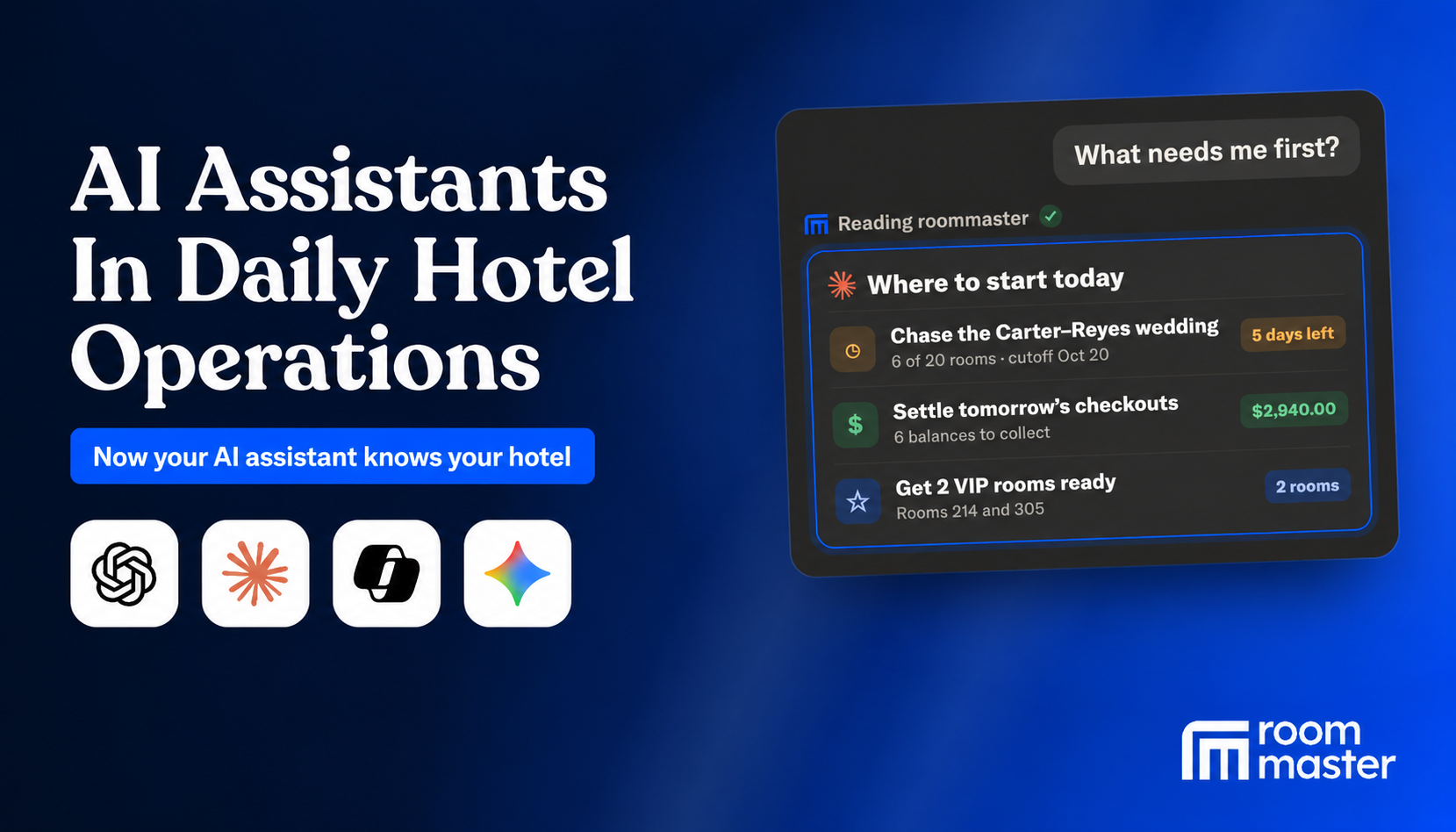
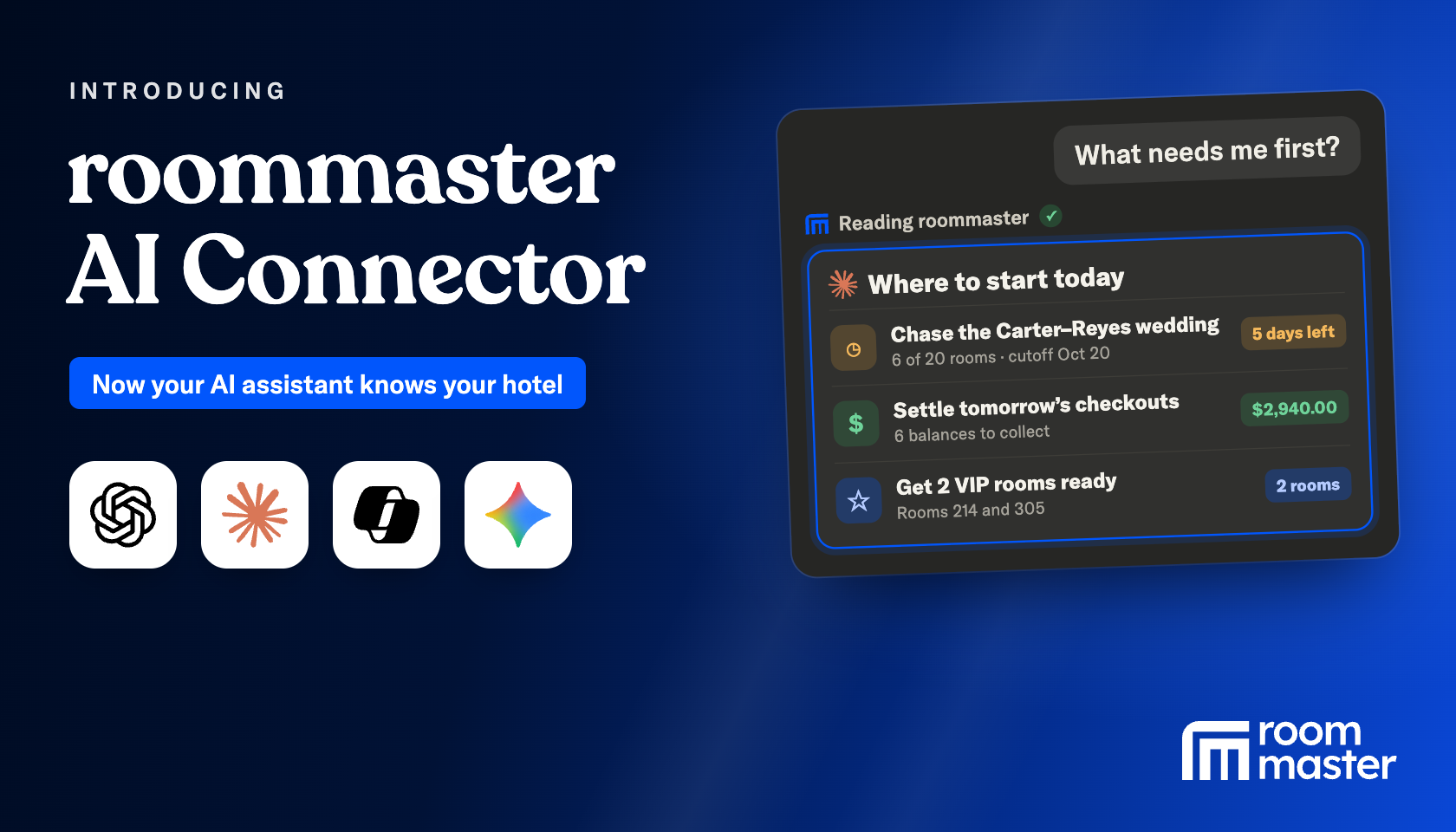
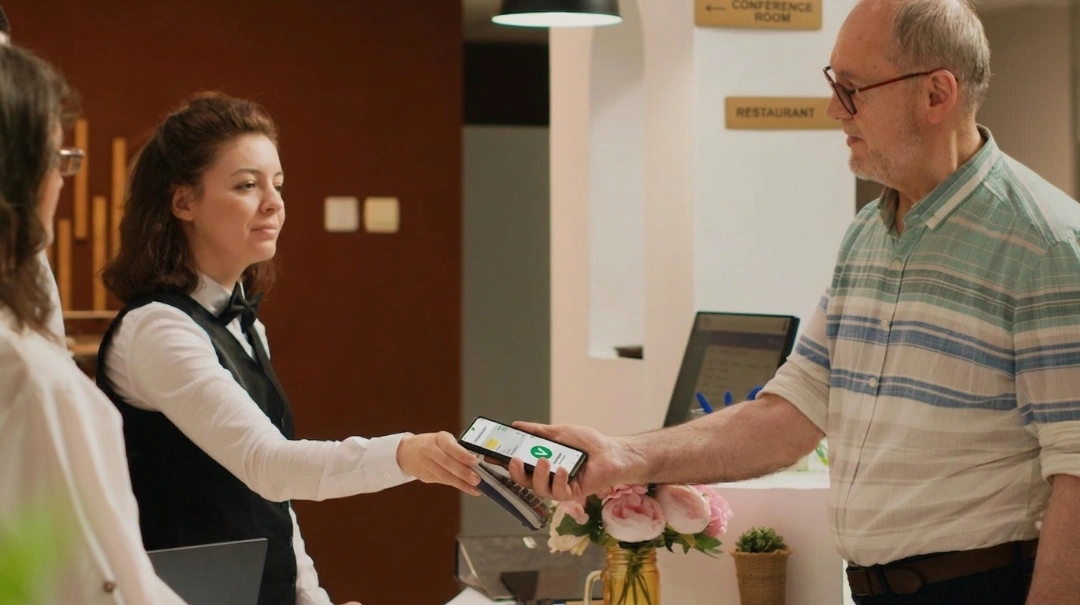


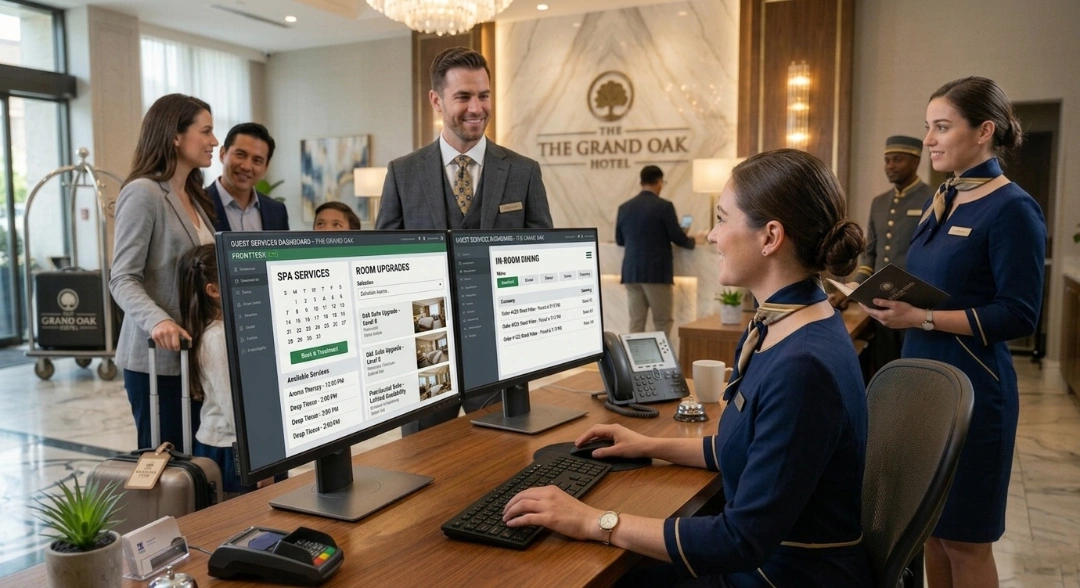


See how roommaster's unified platform can work for your property. Our team will walk you through features tailored to your specific needs and operations.