What Is a Walk-In Guest?
A walk-in guest means a customer who arrives at a hotel without a reservation and asks for a room on the spot.
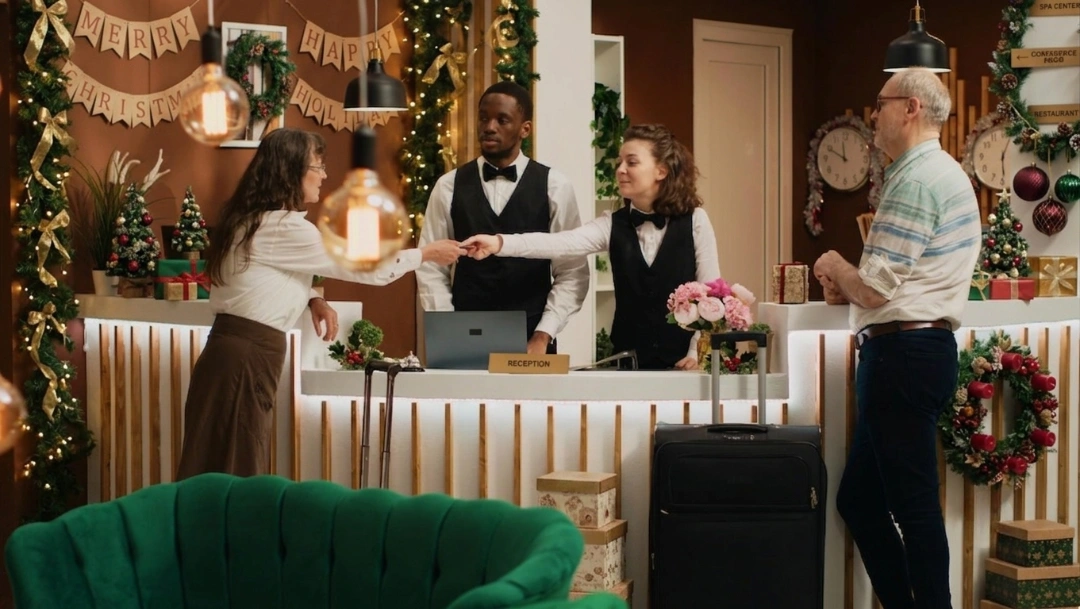
A walk-in guest shows up at the front desk with no booking on file. They might be traveling through or changing plans last minute. Others simply saw your sign and stopped.
Hotels have no obligation to accommodate a walk-in. If rooms are full, staff can decline without breaking any promise. No promise was ever made.
Walk-ins typically fall into a few common situations:
- Spontaneous travel: no plan, decided to stop for the night
- A cancelled or failed booking elsewhere: needed a room fast
- Local familiarity: knows the property and skipped booking ahead
- Price shopping: wants to see the rate in person before committing
Every walk-in still expects a normal check in experience. That doesn't change without a reservation backing them up.
Why Do Walk-In Guests Matter for Your Hotel's Revenue?
Walk-in guests matter because they fill rooms that would otherwise sit empty from last-minute cancellations or unsold inventory, adding revenue with no advance marketing cost.
A last minute cancellation leaves a room with almost no chance of filling normally. A walk-in guest is often the only realistic way to sell that room. It has to happen the same day.
This matters most during slow periods. Advertising for one more booking can cost more than the room is worth. A walk-in arrives already interested, with no acquisition cost attached.
The revenue case works both ways, though:
| Approach |
Result |
| Turn away every walk-in |
Lose free occupancy that costs nothing to capture |
| Accept every walk-in without a policy |
Risk overbooking or accepting a guest who can't pay |
| Accept walk-ins against a clear policy |
Capture the revenue while avoiding the risk |
The goal isn't maximum walk-ins. It's a consistent policy instead. It captures the guests worth taking and turns away the risky ones.
Is a Walk-In Guest the Same as Walking a Guest?
A walk-in guest and a walked guest are opposites: one has no reservation at all, while the other had a confirmed booking the hotel couldn't honor.
These two terms sound related but describe opposite situations. Mixing them up in a policy document or staff training creates real confusion.
| Field |
Walk-In Guest |
Walked Guest |
| Has a reservation? |
No |
Yes, a confirmed booking |
| What triggers it |
Arrives on the spot, asks for a room |
The hotel overbooked and can't honor the booking |
| What the hotel owes them |
Nothing, service is optional |
Help finding another room, often at the hotel's cost |
A walk-in guest might get turned away with no consequence beyond a lost sale. A walking guest has to be relocated, sometimes to another property. The original hotel sometimes covers the cost difference.
Confusing the two leads to real mistakes in policy. A team might treat a walk-in like they're owed a room. Or they might treat an overbooked, confirmed guest like they have no claim at all. Understanding what causes a hotel to overbook shows why the two situations get confused.
How Should Hotels Decide Whether to Accept a Walk-In Guest?
Hotels should accept a walk-in guest when a room is genuinely available and the guest can pay, and decline when accepting risks of overbooking or a bad debt.
Two habits keep this decision consistent instead of improvised at the desk each time.
When It Makes Sense to Accept a Walk-In Guest
A walk-in is worth accepting when:
- The room is confirmed open in the system, not just assumed open from memory
- The guest can pay, shown through valid ID and a working payment method
- Occupancy is low, since an empty room earning nothing is worse than a discounted one earning something
Occupancy near full is where hotels get into trouble. Accepting one more walk-in without checking real-time availability causes problems. That's how a hotel ends up walking a confirmed guest later that night.
When It's Reasonable to Decline a Walk-In Guest
Declining is reasonable when:
- Accepting would push the hotel past real capacity, even if a room looks empty on the surface
- The guest can't produce valid payment, creating a debt the hotel probably won't recover
- The guest is disruptive or a safety concern, the same standard applied to any guest
The mistake to avoid is declining out of habit rather than actual capacity. A front desk agent who assumes the hotel is full without checking loses real revenue.
How Should Hotels Price Rooms for Walk-In Guests?
Hotels should price walk-in rooms based on same day demand and remaining inventory, treating the walk-in as a revenue decision rather than an automatic discount.
Walk-in rate should move with occupancy, the same logic that already drives your online pricing:
| Occupancy Level |
Pricing Approach |
| Nearly full |
Charge close to full rate for the last room |
| Moderate |
Quote the current online rate first |
| Low |
A modest discount is reasonable rather than an empty room |
The mistake many hotels make is defaulting to a discount every time. This happens regardless of how full the hotel actually is. That habit trains staff to undersell rooms that could have gone at full rate.
Walk-in guests rarely negotiate hard. Many expect to pay full rate and are pleasantly surprised by any discount. Hotels that discount by default often leave money on the table.
What Should Hotels Confirm Before Checking In a Walk-In Guest?
Hotels should confirm real-time room availability, valid ID, and a working payment method before checking in a walk-in guest, keeping the process simple and consistent.
A short, consistent check protects the hotel. It doesn't need to turn check in into a lengthy process. Three things matter most:
- Availability: confirm the room in the system, not from memory or a quick guess
- Identification: a valid ID matching the name on the payment method
- Payment: a working card or enough cash to cover the stay, confirmed before the key is issued
Skipping any of these to move faster creates real risk. That's the exact thing a policy is meant to prevent. A guest without a valid ID or a working payment method is a debt risk. That's true no matter how confident they seem.
Front desk software built around real-time availability removes the guesswork from the first step. That's usually where a rushed check in goes wrong.
What Should Hotels Do When They Can't Accommodate a Walk-In Guest?
Hotels that can't accommodate a walk-in guest should decline clearly, quickly, and with a genuine alternative, protecting the guest's experience even without a room to offer.
Turning away a walk-in badly costs a hotel more than the lost booking. A frustrated guest with nowhere to go tells that story widely. A satisfied guest tells fewer people.
Two steps turn a dead end into a small act of hospitality:
- Decline clearly and quickly. Tell the guest the hotel is fully booked. Don't make them wait for a manager to confirm what staff already know.
- Offer a genuine alternative. A quick call to a nearby property helps. So does a printed list of options.
This overlaps with what happens when a confirmed guest gets walked. The guest experience differs sharply though. A walk-in guest expected nothing and got turned away. A walking guest had a broken promise. The hotel usually covers more of the cost to make it right. These overbooking solutions cover that second, higher stakes situation. It's worth understanding even when your immediate problem is just a walk-in.
How Does roommaster Help Hotels Manage Walk-In Guests?
roommaster helps hotels manage walk-in guests by showing real-time room availability and rates at the front desk, so staff can accept or decline with confidence.
Every decision in this article depends on one thing. Knowing exactly what's available right now, not an hour ago.
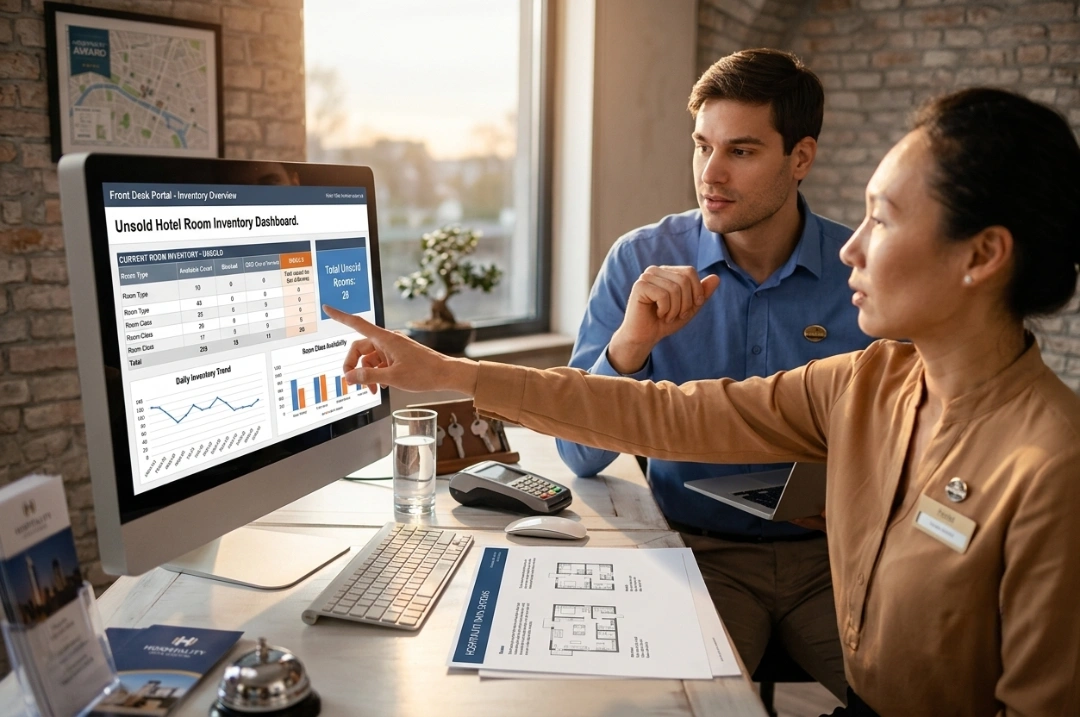
roommaster Hotel PMS keeps front desk staff working from live room status. It's one part of a single connected platform. It syncs the moment a booking, cancellation, or checkout happens anywhere in the system. Room status reflects housekeeping's latest update. Staff see accurate availability without checking a spreadsheet or making a call.
That real-time view is what makes a fast, confident decision possible at the desk. Staff can see the true rate for the last room and quote it accurately. They check in a walk-in guest without guessing or overselling a room.
Hotels using roommaster report check-in that's up to 50% faster. That matters most exactly when a walk-in guest is standing at the desk waiting.
The same connected platform that speeds up check in also prevents overselling. That's the exact situation this article spent time disambiguating: accepting one walk-in too many, then having to walk a confirmed guest later.
See how roommaster Hotel PMS supports fast, confident decisions on every walk-in guest, or book a demo to see it on your own property.
Bottom Line
A walk-in guest and a walked guest are opposite situations that sound confusingly similar. Treating a walk-in as a real revenue decision protects both occupancy and guest experience. The policy matters more than any single walk-in ever will.
{{cta-strip}}
Frequently Asked Questions
1. What does a walk in guest refer to in hotel terminology?
A walk-in guest refers to a customer who books a room without a prior reservation.
2. Is a walk-in guest the same as a walked guest?
No, a walk-in guest has no reservation, while a walked guest has a confirmed booking.
3. Should hotels always discount rooms for walk-in guests?
No, walk-in pricing should match current occupancy and demand levels.
4. What should hotels check before accepting a walk-in guest?
Hotels should confirm real-time availability, valid ID, and a working payment method.
5. What should a hotel do if it can't accommodate a walk-in guest?
Decline clearly and offer a genuine alternative, like a nearby property with availability.
.png)
.png)
.png)