What Are Housekeeping Department Duties and Responsibilities?
Housekeeping department duties and responsibilities are the specific tasks assigned to each role, from room attendants to the executive housekeeper who oversees the department.
Every housekeeping department covers the same three broad areas, no matter the property size:
Who handles each area is the real management question. So is how those duties get divided among staff. A department can cover all three areas and still have gaps. That happens when nobody owns a specific duty clearly.
Why Does Housekeeping Structure Matter for Hotel Owners?
Housekeeping structure matters because it's usually the largest labor cost after the front desk, and unclear duty ownership shows up directly in guest reviews and staff turnover.
Housekeeping payroll is often the second largest labor cost after the front desk. It can be larger at bigger properties. Getting the structure right or wrong shows up fast in three places:
| Area |
What Happens With Unclear Structure |
| Labor cost |
Overlapping roles waste paid hours on duplicated work |
| Guest reviews |
Missed tasks get blamed on the whole department, not the specific gap |
| Staff turnover |
Unclear expectations push good staff toward properties with clearer roles |
None of these problems come from hiring the wrong people. They come from an unclear division of who owns what. A property with average staff and a clear structure often wins. A confused structure can undercut even great staff.
What Roles Make Up a Hotel Housekeeping Department?
A hotel housekeeping department is made up of a small set of roles, from room attendants who clean to the executive housekeeper who owns the department overall.
A handful of roles cover almost every housekeeping department, large or small.
| Role |
Core Responsibility |
Reports To |
| Room attendant |
Cleans and resets individual guest rooms |
Housekeeping supervisor |
| Public area attendant |
Maintains lobbies, hallways, and shared spaces |
Housekeeping supervisor |
| Laundry attendant |
Processes linens, towels, and uniforms |
Housekeeping supervisor |
| Housekeeping supervisor |
Assigns rooms, inspects work, handles daily issues |
Executive housekeeper |
| Executive housekeeper |
Owns budget, staffing, standards, and reporting for the department |
General manager |
Smaller independent hotels often combine roles. One person might supervise and clean. Or the owner might act as executive housekeeper informally. That's fine, as long as someone still owns each responsibility on the list above.
The mistake shows up when a role gets skipped entirely rather than combined on purpose. A missing supervisor role means nobody inspects finished rooms before a guest checks in. A missing executive housekeeper means nobody tracks the department's budget or standards at all.
How Should Duties Be Divided Across the Housekeeping Team?
Housekeeping duties divide two ways in practice: by zone or shift for daily work, and by how much role structure the property's size can actually support.
Two different questions come up when dividing duties, and they get answered differently.
Dividing Duties by Zone or Shift
Day to day division usually happens by zone or by shift, sometimes both:
Whichever method a property uses, the assignment needs to be visible to everyone that day. A room attendant who doesn't know their zone wastes time asking. A supervisor who repeats assignments daily loses time too.
The clearest properties post assignments the same way every day. That might be a physical board or a shared system on every device.
Scaling Duties as Your Property Grows
A five room B&B and a 200 room hotel group both have housekeeping duties. They don't need the same structure to cover them.
| Property Size |
Typical Structure |
| Small independent property |
Owner or a senior attendant fills the supervisor role informally |
| Larger property or hotel group |
Dedicated supervisors, a formal executive housekeeper, and a separate laundry function |
The mistake is applying one property's structure to a different size property. Adding a supervisor layer to a five room B&B doesn't add value at that scale. Skipping a supervisor layer at a 200 room property does create real duty gaps. Those are the exact gaps this article started with.
Who Is Accountable for Safety, Inventory, and Reporting in Housekeeping?
Safety compliance, inventory control, and maintenance reporting need one named owner at the department level, usually the executive housekeeper.
These three duties get missed most often when everyone assumes someone else already has them covered:
Each one needs a single named owner, even at a small property. That doesn't mean one person does all the physical work. It means one person is accountable if a safety violation happens. The same applies if inventory runs out or a maintenance issue goes unreported.
The executive housekeeper usually owns all three at properties with that role. At smaller properties without one, the owner needs to explicitly assign this. Don't assume it happens by default.
Unassigned accountability is invisible until it fails. The first signs are usually:
How Should Hotel Owners Staff and Schedule a Housekeeping Department?
Hotel owners should staff and schedule housekeeping based on occupancy and room type mix, adjusting week to week instead of holding a fixed headcount.
A fixed housekeeping headcount rarely matches real demand. A slow Tuesday and a sold out Saturday need completely different staffing. Many properties schedule the same crew for both anyway.
| Occupancy Level |
Staffing Need |
| Midweek, around 40% |
Fewer room attendants than a full weekend |
| Weekend, around 95% |
Far more room attendants to cover turnover |
| Any level with more suites |
More time per room, regardless of occupancy percent |
Room type mix matters as much as occupancy. A block of suites takes longer to clean than the same number of standard rooms. Scheduling by room count alone consistently understaffs the busier days.
Cross training helps smaller properties flex without adding headcount. A public area attendant who can step into room cleaning covers real gaps. A rigid role structure can't do that.
Scheduling software built around occupancy forecasts removes the guesswork from this. It turns a weekly staffing decision into something closer to a calculation.
What Mistakes Do Owners Make When Structuring Housekeeping Responsibilities?
Owners most often structure housekeeping poorly by letting duties overlap with no clear owner, copying a bigger property's staffing structure, or treating safety and reporting duties as informal.
Three mistakes account for most of the structural problems housekeeping departments run into.
Letting Duties Overlap With No Clear Owner
Two roles sometimes both assume a duty belongs to the other. Public area cleaning near the pool is a common example. It gets caught between room attendants and public area staff.
The gap doesn't show up until something gets missed. The first signs are usually:
The fix isn't more staff. It's a written assignment for every duty. That includes the ones that seem too obvious to need one. If two roles could plausibly own a task, it needs an explicit assignment.
Structuring for a Bigger Property Than You Have
Owners sometimes build a role structure sized for a property twice their own. That means extra layers, roles, and shift divisions the headcount doesn't justify yet.
The extra structure adds payroll and management overhead without adding cleaned rooms. A 30 room property usually doesn't need the same layers as a 150 room one.
The right move is matching structure to current headcount. Add layers only as the team grows past what one supervisor can reasonably oversee.
Treating Safety and Reporting Duties as Optional
Safety compliance and maintenance reporting get treated as background tasks. Cleaning a room guests will see feels more urgent.
That instinct is backwards. An unreported maintenance issue becomes a bigger repair. An overlooked safety violation becomes a real liability.
These duties need to count as much as guest facing tasks. That means in reviews, in accountability, and in staff evaluations. Otherwise they slide to the bottom of everyone's priority list.
How Does roommaster Help Hotels Manage Housekeeping Responsibilities?
roommaster helps hotels manage housekeeping responsibilities by giving every role visibility into the same room status and task list, so duty gaps show up immediately instead of at checkout.
Most of the mistakes covered in this article come down to one thing. A duty that isn't visible to everyone tends to get missed by everyone.
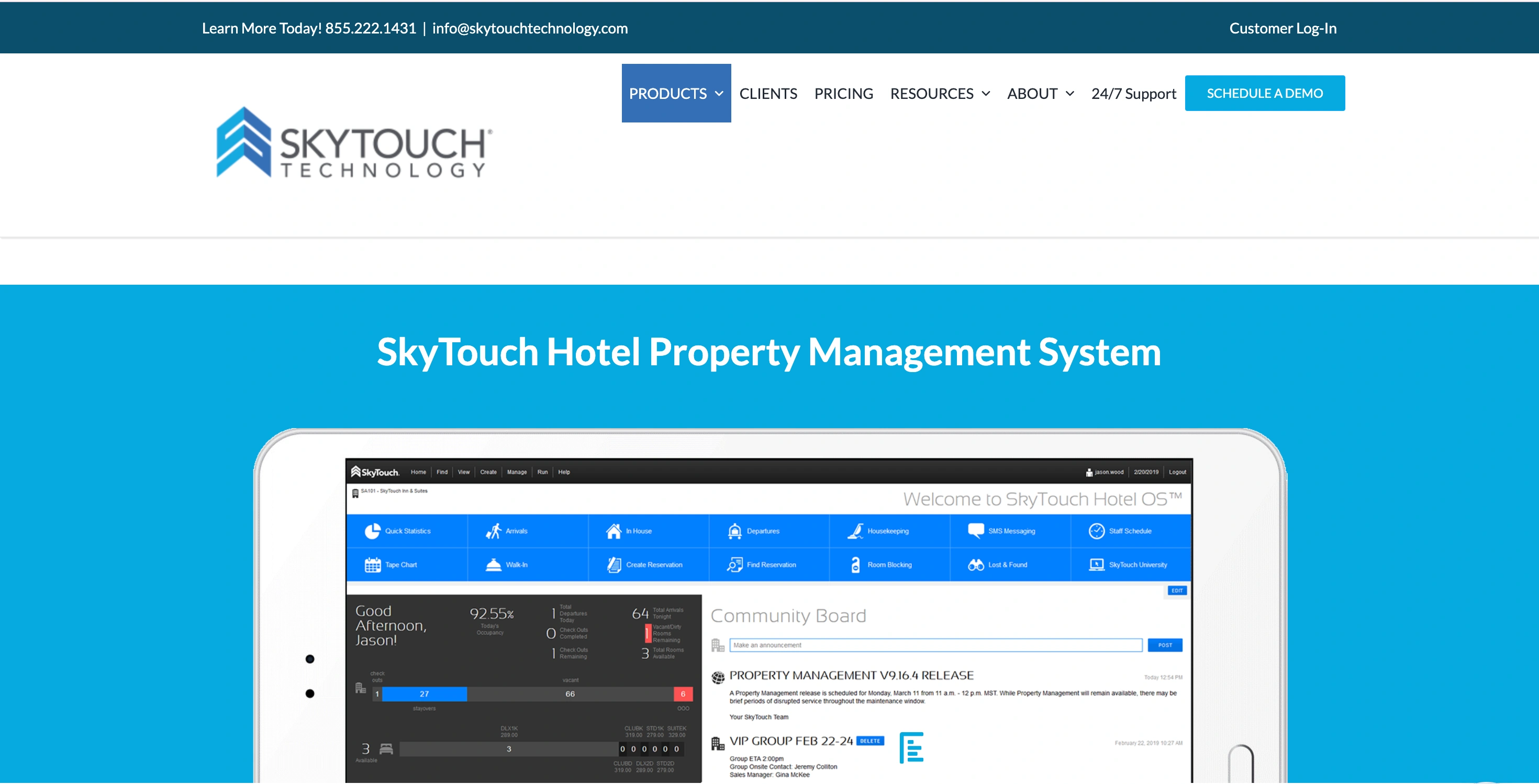
roommaster Hotel PMS gives every role the same live view of room status. That includes room attendants, supervisors, and the executive housekeeper. It's one part of a single connected platform. It isn't a separate housekeeping tool bolted onto a different system.
That connection changes two things immediately:
That visibility is what makes clear duty ownership actually stick. A written assignment on paper can still fail if nobody checks whether it happened. A shared real time status makes gaps obvious the same day.
Hotels using roommaster report up to an 80% reduction in manual tasks. That includes calling to confirm room status or logging issues by hand. The whole team works from one shared view instead of separate lists.
See how roommaster Hotel PMS keeps every housekeeping role working from the same live status, or book a demo to see it on your own property.
Bottom Line
Housekeeping duties matter less as a task list. They matter more as a question of who owns what. A property with a clear, right-sized structure usually outperforms one with more staff. Ownership matters more than headcount. Visibility across every role is what makes that ownership actually stick.
{{cta-strip}}
Frequently Asked Questions
1. What does housekeeping department duties and responsibilities mean in practice?
Housekeeping duties and responsibilities means dividing cleaning, safety, and reporting tasks across defined roles.
2. What roles make up a typical housekeeping department?
Room attendants, laundry attendants, public area attendants, supervisors, and an executive housekeeper.
3. How should housekeeping duties divide across a small hotel?
Small hotels often combine roles, as long as each responsibility still has a clear owner.
4. Who should own safety and inventory reporting in housekeeping?
The executive housekeeper usually owns these, or the owner directly at smaller properties.
5. Should housekeeping staffing stay the same every week?
No, staffing should flex with occupancy and room type mix week to week.
.png)
.png)
.png)