"roommaster makes running Nuvo Suites so much easier, everything’s in one place, from bookings to housekeeping. It’s extremely customisable – they customised everything according to our needs."
A hotel reservation system is software that manages room inventory, pricing, and bookings in real time across all booking channels.
It connects your property management system (PMS), booking engine, and channel manager into a single workflow.
Independent hotels use reservation systems to prevent overbookings, reduce manual work, and capture more direct bookings.
Types include cloud based, on premise, central reservation systems (CRS), and fully integrated all in one platform.
The most important features are real time channel sync, payment processing, guest data capture, and automated reporting.
roommaster delivers all of this natively in one platform built for independent hotels and hotel groups.
Managing hotel reservations across multiple channels is one of the most operationally demanding parts of running a property. Rates change, rooms fill, and guests book at any hour across dozens of platforms. Without the right system in place, that complexity turns into manual work, pricing errors, and overbookings that damage both revenue and guest trust.
This guide breaks down everything independent hotels and hotel groups need to know about hotel reservation systems, from how they work and what types exist, to the features that matter most and how to choose the right one for your property.
roommaster Hotel Reservation Management Software is built to handle all of this natively, connecting your PMS, booking engine, channel manager, and payments in one platform so every reservation is managed from a single login.
What is a Hotel Reservation System?
A hotel reservation system is software that manages room availability, pricing, and bookings in real time. It acts as the central record for every reservation, regardless of which channel the booking came from.
When a guest books on your website, through Booking.com, or by phone, the reservation system captures that booking and updates your inventory. That update pushes instantly to every connected channel. No manual entry. No overbooking risk.
Most modern hotel reservation systems connect three core tools:
Property management system (PMS): Stores guest data, manages check-in and check-out, and tracks room status.
Booking engine: The guest facing tool on your hotel website that takes direct bookings.
Channel manager: Distributes your rates and availability to OTAs like Booking.com, Expedia, and Airbnb.
Together, these form the operational foundation of your hotel's distribution and revenue strategy.
{{reservation-software-one}}
Why is Using a Hotel Reservation System Important?
Every empty room is lost revenue. Every overbooking is a guest problem.
Manual reservation management cannot keep pace with modern booking channels. Guests book at 11 PM. OTA inventory changes by the minute. One missed update creates a double booking and a call you do not want to make.
A hotel reservation system removes that risk. Availability updates automatically, across every channel, the moment a booking is made.
Beyond error prevention, a reservation system also:
Reduces front desk manual workload significantly
Gives you real time booking data for smarter pricing decisions
Captures guest information for personalised communication
Supports direct booking growth by connecting your booking engine to your PMS
For independent hotels running lean teams, this is the difference between reacting to problems and preventing them.
What are the Different Types of Hotel Reservation Systems?
Not every system is built the same way. The right type depends on your property size, tech infrastructure, and distribution strategy.
Type
How It Works
Best For
Advantages
Limitations
Manual (spreadsheets / paper)
Reservations tracked offline in basic tools
Very small properties with minimal channels
Low upfront cost
High error risk, no real time updates, overbooking prone
On premise system
Software installed on local hotel servers
Legacy properties with existing IT infrastructure
Full local control
Expensive hardware, no remote access, ongoing maintenance
Cloud based system
Hosted online, accessible from any device
Independent hotels, B&Bs, motels, growing groups
Real time updates, scalable, no hardware costs
Requires stable internet connection
Central Reservation System (CRS)
Centralises rates and inventory across multiple properties and channels
Hotel chains and multi-property groups
Portfolio wide control, GDS connectivity
Complex setup, requires PMS integration
Standalone reservation system
Separate tool connected to PMS via integrations
Properties adding reservations to an existing tech stack
Flexible and modular
Disconnected data, manual reconciliation risk
All in one integrated platform
Reservation system built natively into PMS, booking engine, and channel manager
Independent hotels and groups wanting one system
Single source of truth, no sync delays
May require full platform migration
For most independent hotels, a cloud based all in one platform is the most practical choice. It combines simplicity with the full capabilities needed to manage distribution and revenue from one login.
What are the Benefits of Having Reservation Software for Hotels?
1. Prevent overbooking and rate errors
Real time two way sync updates inventory the moment a booking is made. Your team does not manually update each channel. Errors go down. Guest trust stays intact.
2. Reduce front desk workload
Manual rate updates, re-entered bookings, and reconciliation tasks consume staff time. A reservation system automates those tasks. Staff focus on guests, not screens.
3. Capture more direct bookings
A booking engine connected directly to your reservation system shows guests live availability and accurate pricing. No delays, no discrepancies. Guests complete the booking. You keep the full revenue with no OTA commission.
4. Make faster pricing decisions
When all booking data lives in one system, you can see demand trends in real time. That visibility lets you adjust rates before your best dates sell out at last month's price.
5. Improve the guest experience from booking to check-in
Automated confirmations, pre arrival messages, and stored guest preferences all depend on clean reservation data. The better your system, the better the experience you deliver before guests even arrive.
6. Simplify reporting
Instead of pulling data from multiple platforms, you access one dashboard. Occupancy, ADR, RevPAR, and channel performance are visible without manual consolidation.
7. Scale without adding headcount
Adding a new OTA connection, a new room type, or a second property does not require hiring a new team member. Your reservation system handles the complexity.
What are the Most Important Features of Hotel Reservation Management Software?
When evaluating hotel reservation management software, these are the features that determine whether a system genuinely simplifies operations or just adds another platform to manage.
1. Real time channel synchronisation
Every booking must update availability instantly across all connected channels. Delayed sync is the leading cause of overbooking and rate discrepancies. Always confirm whether updates are truly real time or run on a scheduled sync interval.
2. Two way PMS integration
Your reservation system must communicate directly with your PMS. Bookings flow in automatically. Guest data, payment details, and room assignments update without manual re-entry on either side.
3. Integrated payment processing
The system should capture deposits, process transactions, and post charges directly to guest folios. This removes end of shift reconciliation and reduces chargeback risk.
4. Dynamic rate and inventory controls
You need the ability to set rate floors and ceilings, apply minimum stay rules, and close discounted rates during high demand periods. These controls protect revenue without logging into every OTA separately.
5. Guest data capture
Every reservation should store guest contact details, preferences, and booking history. This data supports personalised communication and repeat booking strategies.
6. Reporting and analytics
Your system should give you real time visibility into occupancy, ADR, RevPAR, channel performance, and booking pace. These metrics tell you whether your pricing and distribution strategy is working.
7. Fast onboarding and an intuitive interface
A system your team cannot learn quickly is a liability. Look for platforms with structured onboarding, simple workflows, and a track record of fast adoption. If it takes months to feel confident, that cost shows up in errors and staff turnover.
8. Scalability
Your system should handle growth without requiring a platform change. Confirm the vendor can support your next stage, not just your current operation.
Hotel Reservation System vs Booking Engine: What is the Difference?
These two tools work together but they are not the same thing.
Hotel reservation system The backend platform that manages all bookings regardless of source. It stores reservation data, updates inventory in real time, and connects your PMS to every booking channel.
Booking engine The guest facing interface on your hotel website. It displays available rooms, rates, and packages, and allows guests to complete a booking directly.
Think of it this way: the booking engine captures demand. The reservation system manages and controls it.
Comparison
Hotel Reservation System
Booking Engine
Who uses it
Your operations team
Guests booking directly
Function
Manages all reservations from all channels
Displays availability and takes direct bookings
Facing
Backend
Guest facing
Connected to
PMS, channel manager, OTAs
Reservation system and PMS
Revenue impact
Prevents overbooking and rate errors
Drives commission free direct bookings
Data flow
Receives and stores all booking data from every source
Sends booking data into the reservation system
Availability
Controls and updates inventory across all channels
Reads live inventory from the reservation system
Best described as
The brain behind every booking
The door guests walk through to book
A booking engine without a connected reservation system means managing direct bookings separately from OTA bookings. That is where overbooking happen.
{{booking-engine-one}}
How Does Hotel Reservation Software Work?
Here is the full process from setup to confirmed booking.
Step 1: Setup You load room types, rates, availability, and booking rules into the reservation system. This becomes the single source of truth for all distributions.
Step 2: Distribution Your channel manager pushes rates and availability to your hotel website, OTAs, and any other connected channels. Every channel shows the same accurate inventory.
Step 3: Guest books A guest selects a room on Booking.com at 11 PM. The reservation is captured instantly in your system and flows directly into your PMS. No manual entry required.
Step 4: Inventory updates The moment the booking is confirmed, availability reduces by one room across every channel simultaneously. The room is no longer bookable on Expedia, your website, or anywhere else.
Step 5: Automated actions The system sends a confirmation to the guest, posts the reservation to your front desk queue, and flags any payment that needs processing.
Practical example: You run a 40-room independent hotel. You have two deluxe rooms available for Saturday. A guest books one on Expedia at 2:03 PM. By 2:04 PM, your website, Booking.com, and Airbnb all show one deluxe room remaining. Your front desk sees the full reservation without typing a single character.
That is what a properly integrated hotel reservation system delivers.
How Do You Choose the Right Hotel Reservation Software?
Start by mapping your current process. Where do overbooking happen? Where does your team spend the most manual time? Those are the problems your system needs to solve first.
Then evaluate vendors against these five criteria.
1. Is it native or connected? Ask whether the PMS, booking engine, channel manager, and payments are built into one platform or connected via third party integrations. Native functionality means fewer sync delays and fewer failure points.
2. Does it update in real time? Confirm whether availability updates are truly instantaneous or run on a sync schedule. Scheduled syncs create windows where overbooking is possible.
3. How fast is onboarding? Ask about average time to productivity for new staff. A system that takes months to learn is a staff retention risk.
4. What does support look like? When something goes wrong at 10 PM on a Friday, who answers? Confirm support is available when hotels actually need it.
5. Does it scale with you? Ask whether the platform can handle a second property, additional booking channels, and growing complexity without requiring a platform change.
roommaster: A Complete Hotel Reservation Management System for Every Property
A hotel reservation system is not just a booking tool. It is the operational foundation your property runs on.
When your reservation system connects directly to your PMS, channel manager, and booking engine, everything works from the same data. Rates stay accurate. Inventory updates instantly. Your team spends less time on manual tasks and more time on guests.
roommaster gives independent hotels and hotel groups a native platform built around exactly this. One login manages your PMS, booking engine, channel manager, payments, and revenue tools. Rate changes push across every channel automatically. Guest data flows clean from booking to check-in, with 99.95% uptime and 30 years of hospitality expertise behind it.
Ready to see what a fully integrated hotel reservation system looks like in practice? Explore roommaster Hotel Reservation Management Software and book a free demo today.
{{cta-strip}}
FAQs
What is a hotel reservation system?
A hotel reservation system is software that manages room availability, rates, and bookings in real time. It connects your PMS, booking engine, and channel manager so every booking is recorded instantly and inventory updates automatically across all channels.
What is the difference between a hotel reservation system and a hotel PMS?
A PMS manages the full hotel operation: reservations, check-in, check-out, housekeeping, billing, and reporting. A reservation system focuses specifically on managing bookings and distributing availability across channels. In most modern platforms, the reservation system is built directly into the PMS.
What is the difference between a hotel reservation system and a booking engine?
A booking engine is the guest facing tool on your hotel website that captures direct bookings. A reservation system is the backend platform that manages all bookings from all sources, including OTAs, phone bookings, and walk-ins.
How does a hotel reservation system prevent overbookings?
When a booking is confirmed on any channel, the system immediately reduces available inventory across all connected channels simultaneously. This real time two way sync removes any window in which two guests could book the same room.
What types of hotel reservation systems are available?
The main types are: manual systems, on premise software, cloud based systems, central reservation systems (CRS), standalone reservation tools, and all in one integrated platforms. Cloud based all in one platforms are the most practical choice for most independent hotels.
How long does it take to implement hotel reservation software?
Implementation timelines vary based on property size and complexity. Cloud based platforms for independent hotels typically take a few days to a few weeks to set up. Always confirm migration timelines, data transfer support, and staff training plans before committing to a vendor.
reservation-software-one
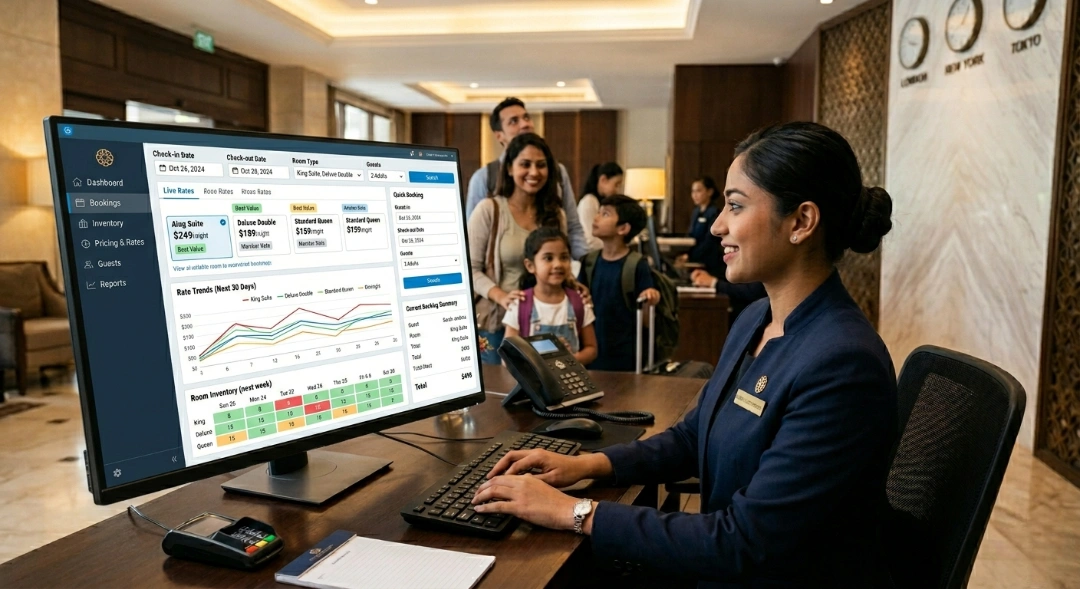
One reservation system that connects your PMS, channel manager, and booking engine automatically.
Mayela Lozano is a content strategist with a passion for hospitality and technology. She collaborates with roommaster on content creation, highlighting how technology can streamline hotel operations and enhance guest satisfaction. When she’s not creating content, Mayela loves to travel and spend time with her two little ones, discovering new adventures and making memories along the way.
Join Thousands of Hotels Thriving with roommaster
The transition to roommaster is straightforward and efficient. Our implementation team handles data migration including reservations, guest profiles, and historical information.
The transition to roommaster is straightforward and efficient. Our implementation team handles data migration including reservations, guest profiles, and historical information.
Hotel Metasearch Strategy: 8 Tactics That Drive Direct Bookings
September 22, 2026
Marketing
Online Bookings
Hotel Metasearch: The Complete Guide For Hotels
September 22, 2026
Hotel Management
Online Bookings
Hotel SEO Agency vs. Consultant vs. In-House
September 13, 2026
Hotel Management
Online Bookings
Hotel SEO: Boost Your Visibility in AI Search Results
September 13, 2026
Online Bookings
Hotel Management
Unsold Hotel Room Inventory: A Complete Guide For Owners 2026
August 25, 2026
Online Bookings
Hotel Management
Bed Bank: A Complete Guide For Hoteliers 2026
August 25, 2026
Marketing
Online Bookings
Bed and Breakfast Reservation Software: Increase Direct Bookings
August 24, 2026
Online Bookings
10 Best Motel Reservation & Booking Software 2026
August 18, 2026
Online Bookings
10 Best Vacation Rental Software For 2026
August 17, 2026
Online Bookings
10 Best Glamping Booking Software For 2026
August 17, 2026
Join Thousands of Hotels Thriving with roommaster
See how roommaster's unified platform can work for your property. Our team will walk you through features tailored to your specific needs and operations.




.png)
.png)
.png)