"roommaster makes running Nuvo Suites so much easier, everything’s in one place, from bookings to housekeeping. It’s extremely customisable – they customised everything according to our needs."
OTAs take 15–25% commission and own the guest relationship, hurting margins and loyalty.
A booking engine lets guests book directly on your website, commission-free.
Canadian hotels using booking engines see 30%+ growth in direct bookings and higher revenue per stay.
The right engine supports mobile bookings, Canadian payments, bilingual needs, and tax rules.
Direct bookings mean better margins, richer guest data, stronger loyalty, and long-term profitability.
Every booking through Booking.com costs you 15-25% commission. Every Expedia reservation shrinks your margins. Every guest who books through an OTA becomes their customer, not yours, limiting your ability to build loyalty and drive repeat business.
The solution? A high-converting booking engine that captures direct reservations through your hotel website. Canadian properties implementing effective booking engines report 30%+ increases in commission-free bookings while building valuable guest relationships that OTAs can never deliver. Whether you're operating a boutique property in Montreal or managing a resort in Banff, the right booking engine transforms your website from digital brochure to revenue-generating machine.
What Is a Hotel Booking Engine?
A hotel booking engine is software embedded in your website that allows guests to check availability, compare room types, and complete reservations, all without leaving your site or paying OTA commissions. Think of it as your own private Booking.com, but without the 15-25% fees eating into every reservation.
Modern booking engines do far more than display rates and capture bookings. They showcase room photos and descriptions, display real-time availability and pricing, process secure payments, offer upsells and packages, integrate with your PMS automatically, and provide mobile-optimized experiences. The best platforms make booking directly as easy as booking through an OTA, which is exactly what you need to shift guests away from commission-generating platforms.
Why Canadian Hotels Need a Booking Engine
Research shows that direct bookings generate 60% higher revenue per reservation compared to OTA bookings, $519 versus $320 on average. This dramatic difference reflects longer stays, higher-value room selections, and add-on purchases that happen when guests book directly. Without a booking engine capturing these high-value reservations, you're leaving substantial revenue on the table.
Beyond commission savings, direct bookings give you ownership of the guest relationship. You capture email addresses, preferences, and booking history, data that powers personalized marketing, loyalty programs, and repeat business. OTAs own this valuable information when guests book through their platforms, limiting your ability to build long-term customer relationships.
For Canadian properties, booking engines also address market-specific needs. Support for bilingual French/English interfaces, integration with Canadian payment processors like Moneris and Interac, proper handling of GST/HST/PST variations, and multi-currency display for international travelers become seamless with the right platform.
Key Features to Look for in a Hotel Booking Engine
1. Mobile-Friendly Design
Over half of hotel bookings now happen on mobile devices, with mobile conversion rates averaging 3.2%, actually higher than desktop's 2.8%. Your booking engine must deliver flawless mobile experiences with responsive design, fast loading (under 3 seconds), simplified forms, and large touch-friendly buttons. Properties with poorly optimized mobile booking lose significant revenue to competitors offering smoother smartphone experiences.
2. Payment Integrations
Secure payment processing builds guest confidence while streamlining operations. Your booking engine needs PCI DSS compliance for data security, support for multiple payment methods (credit cards, debit, digital wallets), integration with Canadian processors (Moneris, Chase Canada, Elavon), and proper handling of deposits versus full payment. Complicated or insecure payment flows increase abandonment rates, guests who've decided to book will reconsider if checkout feels risky or cumbersome.
3. Channel Management Integration
Your booking engine must sync seamlessly with your channel manager to prevent double bookings. When a guest books directly, that room should become unavailable on Booking.com, Expedia, and all other channels instantly. This two-way synchronization eliminates the nightmare scenario where you're simultaneously selling the same room on your website and through an OTA, a costly error that damages reputation and requires expensive guest relocation.
4. Multi-Currency and Multi-Language Support
Canadian properties serving international travelers need booking engines displaying prices in guest-appropriate currencies (CAD, USD, EUR, GBP) with automatic conversion. For Quebec properties or those targeting francophone markets, full French localization isn't optional, it's legally required in some circumstances and commercially essential in others. The booking process, confirmation emails, and guest communications should seamlessly adapt to language preferences.
5. Reporting and Analytics
Data drives optimization. Your booking engine should provide detailed analytics showing conversion rates by source, abandoned booking analysis, average booking value, lead time patterns, and device breakdown (mobile versus desktop). Properties leveraging booking analytics consistently report 2-3% conversion rates compared to 1% or less for properties flying blind. Understanding where bookings drop off allows targeted improvements that compound over time.
Benefits of Using a Booking Engine
The financial impact is immediate and substantial. By capturing direct bookings, you eliminate 15-25% OTA commissions on every reservation. For a 30-room property averaging 70% occupancy at $150 ADR, shifting just 20% of bookings from OTAs to direct saves $38,000-60,000 annually, far exceeding booking engine costs.
Operational benefits extend beyond commission savings. Direct bookings integrate automatically with your PMS, eliminating manual entry. Guest data flows into your CRM, powering personalized communication. Pre-arrival upsells (early check-in, room upgrades, spa packages) generate incremental revenue impossible through OTA channels. Post-stay follow-up builds loyalty and drives repeat business.
Brand control matters too. When guests book directly, they experience your brand consistently, from website to confirmation email to check-in. OTA bookings dilute your brand identity, with guests interacting primarily with Booking.com or Expedia rather than your property. Direct relationships foster loyalty in ways third-party bookings never can.
Top Hotel Booking Engines in Canada
1. roommaster
roommaster's booking engine combines high conversion rates with seamless PMS integration. The platform emphasizes mobile responsiveness (critical given 50%+ mobile booking share), real-time availability synced with your PMS, secure payment processing through Canadian providers, flexible rate plans and packages, and upselling opportunities at key decision points.
What distinguishes roommaster is the unified approach, booking engine, PMS, channel manager, and revenue management working together seamlessly. This integration eliminates the friction common when piecing together separate systems from different vendors. Canadian properties appreciate roommaster's strong support and proven reliability across thousands of properties worldwide.
{{booking-engine-two}}
2. Cloudbeds
Cloudbeds offers a comprehensive booking engine as part of its all-in-one hospitality platform. The system provides modern, customizable designs, multi-property support for hotel groups, dynamic pricing capabilities, and robust reporting on conversion performance. Cloudbeds appeals to properties wanting contemporary interface design with marketplace flexibility, the platform integrates with hundreds of third-party tools.
Properties already using Cloudbeds PMS benefit from native integration requiring no additional configuration. For properties committed to the Cloudbeds ecosystem, the booking engine delivers solid performance with minimal implementation complexity.
3. Little Hotelier
Little Hotelier (part of the SiteMinder family) targets small properties, B&Bs, guesthouses, inns, and boutique hotels. The booking engine bundles with PMS and channel manager in an affordable all-in-one package. Little Hotelier emphasizes simplicity over sophistication, making it ideal for owner-operators managing properties hands-on without dedicated revenue management staff.
Canadian small properties appreciate the straightforward pricing and absence of surprise fees. The interface prioritizes ease-of-use, perfect for properties that value getting bookings over optimizing every aspect of the guest journey with complex A/B testing.
4. eZee Absolute
eZee Absolute includes a booking engine as part of its hotel management platform. The system offers white-label customization, multiple payment gateway options, room and package displays, and mobile-responsive design. eZee positions itself as a cost-effective solution for independent properties wanting professional functionality without premium pricing.
The booking engine integrates naturally with eZee's PMS and channel manager, creating a unified technology stack. Properties report reliable performance and transparent pricing, important considerations for budget-conscious operators.
5. SiteMinder
SiteMinder's booking engine earned recognition as the #1 provider in 2025 HotelTechAwards. The platform connects to 450+ distribution channels while maintaining conversion-optimized booking flows. SiteMinder excels at handling complex scenarios, multiple languages, currencies, room types, and rate plans, while maintaining fast load times and intuitive guest experiences.
Properties appreciate SiteMinder's global expertise combined with strong Canadian support. The platform continuously evolves based on data from 125 million+ annual bookings across 44,500 properties, incorporating conversion insights that individual properties could never generate alone.
5. WebRezPro
WebRezPro has served Canadian properties since 2003, offering integrated booking engine functionality within its cloud-based PMS. The platform emphasizes security and reliability, with particular strength in vacation rental and multi-property management. WebRezPro's Canadian roots show in attention to local requirements, proper tax handling, bilingual capabilities, and integration with Canadian payment processors.
Properties appreciate WebRezPro's straightforward approach and responsive support team. The booking engine delivers solid performance without overwhelming complexity, ideal for operators who value dependable technology over cutting-edge features.
6. Bookwize
Bookwize focuses specifically on vacation rentals, boutique hotels, and unique properties. The booking engine emphasizes visual appeal with photo galleries, interactive calendars, and property highlights. Bookwize integrates with various PMS systems while maintaining specialized functionality for properties needing flexible booking rules and package options.
Canadian vacation rental operators and boutique properties find Bookwize's niche focus valuable. The platform understands unique accommodation requirements better than generic hotel-focused solutions.
7. STAAH MAX Booking Engine
STAAH MAX delivers straightforward booking engine functionality at competitive pricing. The platform connects with 200+ OTAs while maintaining commission-free direct booking capabilities. STAAH emphasizes simplicity, fewer features, easier implementation, lower learning curve, making it accessible to properties new to direct booking optimization.
Properties appreciate STAAH's transparent pricing and absence of hidden fees. While lacking some advanced capabilities of premium platforms, STAAH delivers core functionality reliably.
8. ResNexus
ResNexus targets small to mid-sized properties with combined PMS and booking engine functionality. The platform includes website builder, booking engine, channel manager, and property management in one subscription. ResNexus appeals to properties wanting turnkey solutions without piecing together separate systems.
The booking engine integrates natively with ResNexus PMS, ensuring seamless operations. Properties report quick implementation and strong customer support, valuable for operators without technical expertise.
9. RMS Cloud
RMS Cloud serves properties of various sizes with cloud-based PMS and booking engine. The platform emphasizes flexibility, supporting hotels, resorts, motels, and multi-property groups. RMS Cloud offers customizable booking flows, multiple payment options, and detailed analytics on conversion performance.
Properties appreciate RMS Cloud's scalability, the platform grows with your business, adding capabilities as needs evolve. The booking engine handles complex scenarios while maintaining user-friendly guest experiences.
Comparison Table of Best Booking Engines
Platform
Best For
Mobile Optimized
PMS Integration
Pricing Model
Key Strength
roommaster
Independent hotels, boutique properties
Excellent
Native (roommaster PMS)
Custom based on size
Unified platform approach
Cloudbeds
Tech-forward properties
Excellent
Native (Cloudbeds PMS)
Subscription-based
Modern interface, marketplace
Little Hotelier
Small properties (<20 rooms)
Very Good
Native (Little Hotelier PMS)
Affordable monthly
Simplicity, all-in-one bundle
eZee Absolute
Budget-conscious independents
Good
Native (eZee PMS)
Competitive monthly
Cost-effective reliability
SiteMinder
All property sizes
Excellent
Wide PMS compatibility
Tiered subscription
Global leader, extensive testing
WebRezPro
Canadian properties, vacation rentals
Very Good
Native (WebRezPro PMS)
Property size-based
Canadian-specific features
Bookwize
Vacation rentals, unique properties
Good
Third-party PMS
Subscription-based
Niche specialization
STAAH MAX
First-time direct booking focus
Good
Various PMS systems
Affordable fixed
Simplicity, transparency
ResNexus
Small-mid properties wanting turnkey
Good
Native (ResNexus PMS)
All-inclusive pricing
Complete package
RMS Cloud
Multi-property groups
Very Good
Native (RMS PMS)
Scalable pricing
Flexibility, scalability
How to Choose the Right Hotel Booking Engine
Start with your PMS. If you're satisfied with your current property management system, choose a booking engine with proven integration. Native integrations (booking engine built by your PMS vendor) typically offer superior reliability and support compared to third-party connections. Switching both PMS and booking engine simultaneously amplifies complexity and risk.
Evaluate your technical capabilities. Some platforms offer sophisticated A/B testing, advanced analytics, and customization options, but require technical knowledge to use effectively. Others prioritize simplicity, delivering solid performance with minimal configuration. Be honest about your team's bandwidth for ongoing optimization versus "set it and forget it" reliability.
Consider your guest demographics. Properties serving primarily domestic Canadian travelers have different requirements than those targeting international visitors. Luxury properties need sophisticated visual presentations and upselling tools. Budget properties prioritize simple, fast booking flows. Match your booking engine's strengths to your market positioning.
Common Mistakes to Avoid When Selecting a Booking Engine
Don't prioritize features over conversion. A booking engine with 50 features but a clunky booking flow performs worse than a streamlined system with 20 features that convert brilliantly. Focus on user experience, can guests find rooms, compare options, and complete bookings in under three minutes?
Avoid platforms with poor mobile optimization. With 50%+ of bookings happening on smartphones, mobile performance directly impacts revenue. Test booking engines thoroughly on actual mobile devices, not just desktop browsers resized to mobile dimensions. Load times, button sizes, and form simplicity matter enormously on smartphones.
Don't overlook payment processing complications. Some booking engines require specific payment processors or charge transaction fees on top of subscription costs. Verify total cost of ownership including payment processing before committing. Hidden fees destroy ROI calculations.
Integration with Property Management Systems (PMS)
Seamless PMS integration separates exceptional booking engines from merely adequate ones. Two-way synchronization means reservations from your website flow automatically into your PMS with complete guest details, while rate and availability updates in your PMS push instantly to your booking engine. Without this integration, you're manually entering web bookings, defeating the purpose of automation.
Native integrations (booking engine from your PMS vendor) typically offer superior reliability. These systems are built and maintained together, ensuring compatibility through software updates. Third-party integrations can break when either system updates, leaving you without synchronization until fixes deploy, potentially causing double bookings and lost revenue.
{{booking-engine-three}}
Customization and Branding Options
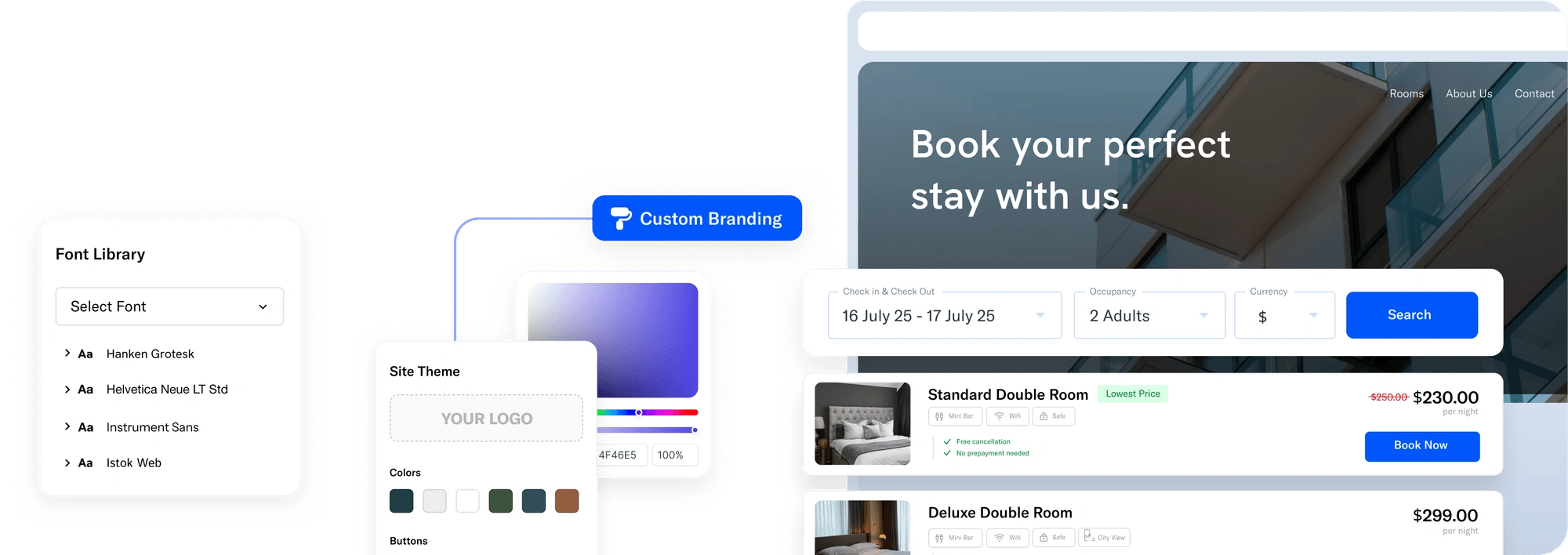
Your booking engine should reflect your brand identity, not display generic hotel templates. Look for platforms offering customizable colors, fonts, and layouts, branded confirmation emails, logo integration throughout booking flow, and custom domain options (book.yourhotel.com versus vendor.com/yourhotel).
White-label capabilities allow complete brand immersion. Guests should experience your property's identity consistently from website through booking confirmation through check-in. Generic booking engines that scream "powered by [vendor]" undermine brand perception and reduce booking confidence.
The Future of Hotel Booking Engines in Canada
Artificial intelligence is transforming booking engines beyond simple reservation capture. AI-powered systems personalize offers based on browsing behavior, recommend optimal room types for guest needs, predict booking likelihood and adjust messaging, and automate dynamic pricing for conversion optimization. Industry data shows hotels implementing AI-enhanced booking experiences seeing conversion improvements of 15-30%.
By 2030, direct digital channels are projected to surpass OTAs as the primary booking source for hotels, generating $409 billion versus $333 billion from OTAs. This shift reflects improving booking engine technology, guest preference for direct relationships, and properties' sustained effort to reduce OTA dependency. Canadian hotels investing now in conversion-optimized booking engines position themselves advantageously for this transformation.
Voice search and social commerce are emerging distribution channels. Booking engines will need to support reservations initiated through smart speakers, social media platforms, and messaging apps. The booking journey is fragmenting across multiple touchpoints, successful engines will maintain consistent experiences regardless of how guests arrive.
How to Maximize Bookings Using the Right Engine
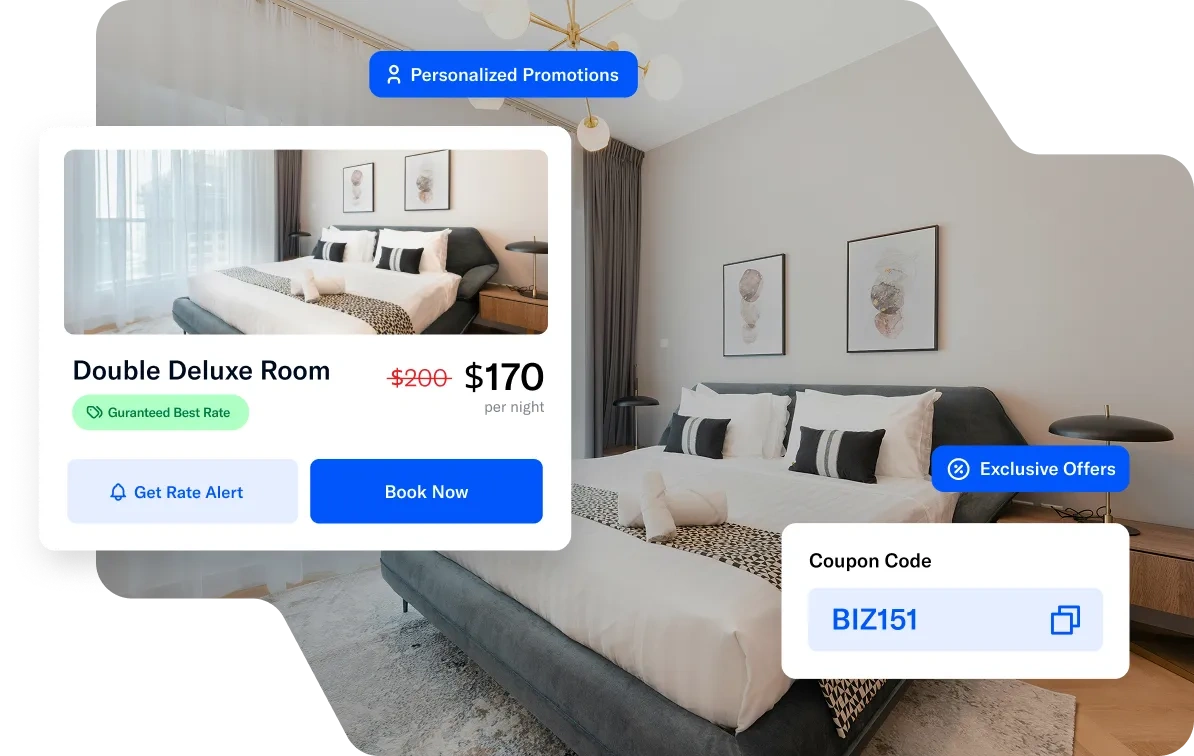
Technology alone doesn't drive direct bookings, strategy matters equally. Offer compelling incentives for direct bookings: lowest rate guarantees, exclusive packages unavailable on OTAs, loyalty program benefits, and flexible cancellation. Make the value proposition obvious: "Book direct and save 10%" beats "we have a booking engine."
Optimize your booking flow through testing. Implement rate shopping that displays your direct price versus OTA prices, add trust signals (security badges, guest reviews), minimize form fields, and offer guest checkout options. Average conversion rates are 2-3%, but optimized engines achieve 4-5%+.
Leverage retargeting to recapture abandoned bookings. Guests who start but don't complete bookings represent high-intent prospects. Email reminders, social media retargeting ads, and incentive offers bring back 20-30% of abandoned carts, substantial incremental revenue for minimal cost.
Conclusion
The best hotel booking engine for your Canadian property balances conversion optimization with operational simplicity. It must handle Canadian-specific requirements (bilingual support, provincial taxes, local payment processors) while delivering mobile-first experiences that convert browsers into bookers.
For independent hotels serious about reducing OTA dependency, roommaster delivers a high-converting booking engine integrated seamlessly with PMS, channel manager, and revenue management. This unified approach eliminates integration headaches while ensuring everything works together to maximize direct bookings.
Ready to capture more commission-free reservations? Book a demo to see how roommaster's booking engine can transform your website into a revenue-generating asset.
FAQs
How much does a hotel booking engine cost in Canada?
Pricing varies based on property size and features. Small properties (1-20 rooms) typically pay $50-150 monthly. Mid-sized hotels (21-75 rooms) invest $150-400 monthly. Larger properties or those requiring advanced features pay $400-800+ monthly. Some vendors charge per booking or take transaction fees instead of flat monthly rates. Calculate total cost including subscription, payment processing, and any booking fees before comparing options.
Can a booking engine really reduce my OTA dependency?
Yes, substantially. Properties implementing conversion-optimized booking engines report shifting 20-35% of bookings from OTAs to direct over 6-12 months. This represents $30,000-100,000+ in annual commission savings for typical independent hotels. Success requires more than just technology, you need competitive pricing, booking incentives, and ongoing optimization. But the booking engine provides essential infrastructure that makes reducing OTA dependency possible.
What conversion rate should I expect from my booking engine?
Average hotel website conversion rates are 2-3%. Well-optimized booking engines achieve 3-5%, while exceptional implementations reach 6%+. Conversion varies by property type (luxury converts lower but at higher values), booking source (email campaigns convert higher than cold traffic), device (mobile slightly outperforms desktop now), and seasonal factors. Focus on improvement over time rather than absolute benchmarks.
Do I need different booking engines for mobile and desktop?
No, modern booking engines are responsive, meaning they adapt automatically to any device. The same booking engine displays appropriately whether guests use smartphones, tablets, or desktop computers. Avoid platforms requiring separate mobile and desktop versions, as maintaining consistency across both becomes operationally complex and expensive.
How long does booking engine implementation take?
Implementation typically requires 2-4 weeks depending on complexity. Simple properties with straightforward rate structures can launch in 1-2 weeks. Properties with multiple room types, complex packages, or extensive customization may need 3-4 weeks. The process includes technical integration with your PMS, design customization matching your brand, payment processor setup and testing, rate and room configuration, and staff training on managing the system.
What payment methods should my booking engine support?
At minimum, support major credit cards (Visa, Mastercard, Amex) and debit cards through Canadian processors. Consider adding Interact for domestic travelers (ubiquitous in Canada), digital wallets (Apple Pay, Google Pay) for mobile bookings, and PayPal for international guests comfortable with that platform. The more payment options you offer, the fewer bookings you lose to payment friction. Verify your booking engine integrates with your preferred payment processor before committing.
Can I customize the booking engine to match my hotel's branding?
Quality booking engines offer extensive customization including colors, fonts, button styles matching your website, branded confirmation emails with your logo, custom domain options (book.yourhotel.com), and white-label functionality removing vendor branding. Avoid platforms forcing their branding onto your booking experience, this undermines guest confidence and brand consistency. Test customization capabilities during demos to verify they meet your standards.
{{cta-strip}}
booking-engine-two
Turn Your Hotel Website into a Direct Booking Powerhouse
Mayela Lozano is a content strategist with a passion for hospitality and technology. She collaborates with roommaster on content creation, highlighting how technology can streamline hotel operations and enhance guest satisfaction. When she’s not creating content, Mayela loves to travel and spend time with her two little ones, discovering new adventures and making memories along the way.
Join Thousands of Hotels Thriving with roommaster
The transition to roommaster is straightforward and efficient. Our implementation team handles data migration including reservations, guest profiles, and historical information.
The transition to roommaster is straightforward and efficient. Our implementation team handles data migration including reservations, guest profiles, and historical information.
Hotel SEO: Boost Your Visibility in AI Search Results
September 13, 2026
Online Bookings
Hotel Management
Unsold Hotel Room Inventory: A Complete Guide For Owners 2026
August 25, 2026
Online Bookings
Hotel Management
Bed Bank: A Complete Guide For Hoteliers 2026
August 25, 2026
Marketing
Online Bookings
Bed and Breakfast Reservation Software: Increase Direct Bookings
August 24, 2026
Online Bookings
10 Best Motel Reservation & Booking Software 2026
August 18, 2026
Online Bookings
10 Best Vacation Rental Software For 2026
August 17, 2026
Online Bookings
10 Best Glamping Booking Software For 2026
August 17, 2026
Hospitality Technology
Online Bookings
10 Best Cabin Rental Reservation Software For 2026
August 17, 2026
Online Bookings
Hotel Management
10 Best Hotel Distribution Software For 2026
August 16, 2026
Join Thousands of Hotels Thriving with roommaster
See how roommaster's unified platform can work for your property. Our team will walk you through features tailored to your specific needs and operations.




.png)
.png)
.png)