Hotel departments organize a property's work into guest-facing and behind-the-scenes functions. Knowing what each one handles matters less than knowing how they hand work off between each other, since that's usually where actual service quality breaks down first.
What Are Hotel Departments?
Hotel departments handle a specific slice of the property's operation, from guest-facing roles like the front desk to back-of-house functions like accounting.
Guest-facing departments interact with guests directly, in person or over the phone. Back-of-house departments support the property without the guest usually seeing them, though guests still direct complaints at whichever department they can actually see.
What changes most by property size:
- A 300 room resort with multiple restaurants and a spa needs several people running Food and Beverage alone, each department staffed as its own team.
- A 40 room motel might run its entire back-of-house operation with three or four people, each covering two or three functions at once.
That compression is exactly why handoffs matter more, not less, at an independent property. When one person covers two functions, the handoff happens inside their own head rather than between two people.
This hides the risk until that person is out sick and someone else covers without the same context. A temporary fill-in rarely inherits the same working knowledge, which is when small requests start slipping through unnoticed.
What Do Guest-Facing Departments Handle?
Front Office, Food and Beverage, and Sales and Marketing are the three departments guests interact with directly.
- Front Office: handles check-in, check-out, reservations, and concierge services, and is usually the single department guests interact with the most throughout an entire stay.
- Food and Beverage: manages restaurants, bars, room service, and the overall guest dining experience wherever the property offers these outlets.
- Sales and Marketing: promotes the property, attracts new guests, and handles group bookings or event inquiries well before those guests ever arrive.
These three departments shape a guest's direct impression of the property more than any back-of-house function does, even though back-of-house work is what makes the guest-facing experience possible, from a clean room to a resolved bill.
A guest who has a great front desk interaction but a broken air conditioner will remember the broken unit first, not the friendly check-in. Guest-facing departments get the credit and the blame for problems that often originate somewhere else entirely.
Sales and Marketing sits slightly apart from the other two guest-facing departments, since its work happens mostly before a guest arrives. A group booking negotiated weeks in advance still shapes the guest's experience the moment they check in, long after the sales conversation is over.
What Do Back-of-House Departments Handle?
Housekeeping, Maintenance and Engineering, Security, Accounting and Finance, and Human Resources run the back-of-house side of a hotel.
- Housekeeping: cleans guest rooms, hallways, and lobbies, and manages hotel laundry across every occupied and departing room.
- Maintenance and Engineering: repairs physical structures, plumbing, electrical systems, and HVAC units before small issues become larger ones.
- Security: protects guests, staff, and the property using safety protocols and regular patrols.
- Accounting and Finance: manages budgets, payroll, vendor bills, and financial records for the entire property.
- Human Resources: hires workers, handles training, and supports staff welfare across every other department.
A guest rarely interacts with any of these departments directly, but a lapse in any one shows up in a guest's experience anyway. A maintenance delay becomes a broken air conditioner nobody fixed, and a housekeeping gap becomes a room that wasn't ready on time.
Two departments illustrate the invisibility pattern most clearly:
- Security is easy to underinvest in precisely because it's invisible when working well, and only noticed loudly the one time something goes wrong.
- Accounting and Finance carries the same risk. Payroll and vendor bills running smoothly go unnoticed until they stop, at which point the disruption reaches every other department at once.
How Do Hotel Departments Work Together on a Single Guest Request?
A single guest request usually touches two or three departments in sequence, and the request is only as good as the weakest handoff between them.
Consider a guest reporting a broken air conditioning unit at the front desk. Front Office logs the request and routes it to Maintenance immediately, not at the end of the shift, noting the room number and whether the guest is currently inside.
Housekeeping also needs to know a maintenance visit is scheduled, so the room isn't marked ready for the next guest until the repair and cleaning both finish. Miss that step and a room gets sold while a technician is still inside it.
The same pattern repeats across nearly every other department pairing:
- A group booking from Sales and Marketing needs Front Office and Housekeeping briefed well before the group arrives, with room blocks confirmed in writing rather than remembered verbally.
- A billing dispute Accounting resolves needs Front Office to know the outcome before checkout, since a confused guest at the front desk reflects on Front Office even though the actual mistake happened in Accounting.
- A guest incident needs Security looped in immediately, with Front Office relaying exactly what the guest reported rather than a summarized version.
- New hire training from Human Resources should cover exactly how requests route between departments, so an untrained new hire isn't guessing who to call during a busy weekend.
A returning guest with a noted preference for a high floor and a quiet room shows the same pattern from a different angle entirely. The Front Office needs that preference visible at the moment of assignment, not buried in a note nobody pulled up.
If Housekeeping doesn't know about a prior request for extra pillows, the guest experiences it as the property forgetting them entirely, even after multiple prior stays.
Who's Responsible When a Handoff Breaks Down?
At most independent properties, the General Manager ends up owning cross-department coordination by default, even without a formal title like operations director or department head.
This works fine until the property grows past what one person can track by memory alone. A GM juggling five departments across a 300 room resort needs a shared system doing the tracking, not their own recall of which requests are still open, since memory doesn't scale with room count.
Naming this responsibility explicitly changes how a property handles a busy week. A GM who knows they own the handoff, and has visibility into where each department's open items stand, catches a dropped request before a guest does.
Where Do Department Handoffs Typically Break Down?
Handoffs break down in a few predictable places, and most trace back to information sitting in one person's head instead of somewhere every relevant department can see it.
Neither department involved usually fails at its own job. The gap sits in the space between them, where no one owns the follow-through once a request moves along.
Three failure points show up again and again:
- A verbal handoff at a shift change, where morning staff know about a request but evening staff, coming on after the conversation already happened, don't.
- A paper note left at a desk, which gets lost or forgotten once the person who wrote it leaves for the day.
- Separate systems per department, a spreadsheet for maintenance and a different one for housekeeping, so neither side can see the other's queue without asking directly.
Independent properties running lean staff feel this most acutely, since there's rarely a dedicated coordinator whose job is purely keeping departments in sync. Each handoff depends entirely on whoever happens to be working remembering to make the connection that day.
Seasonal staffing adds another layer. A property that triples its housekeeping headcount for peak season needs new hires to learn the handoff process fast, without a full season watching how experienced staff handle it.
Multi-property ownership compounds this further, since an owner running separate systems at two properties can't see either one's handoffs from the other, or fairly compare which location is actually handling requests better than the other.
How Does Technology Connect Hotel Departments?
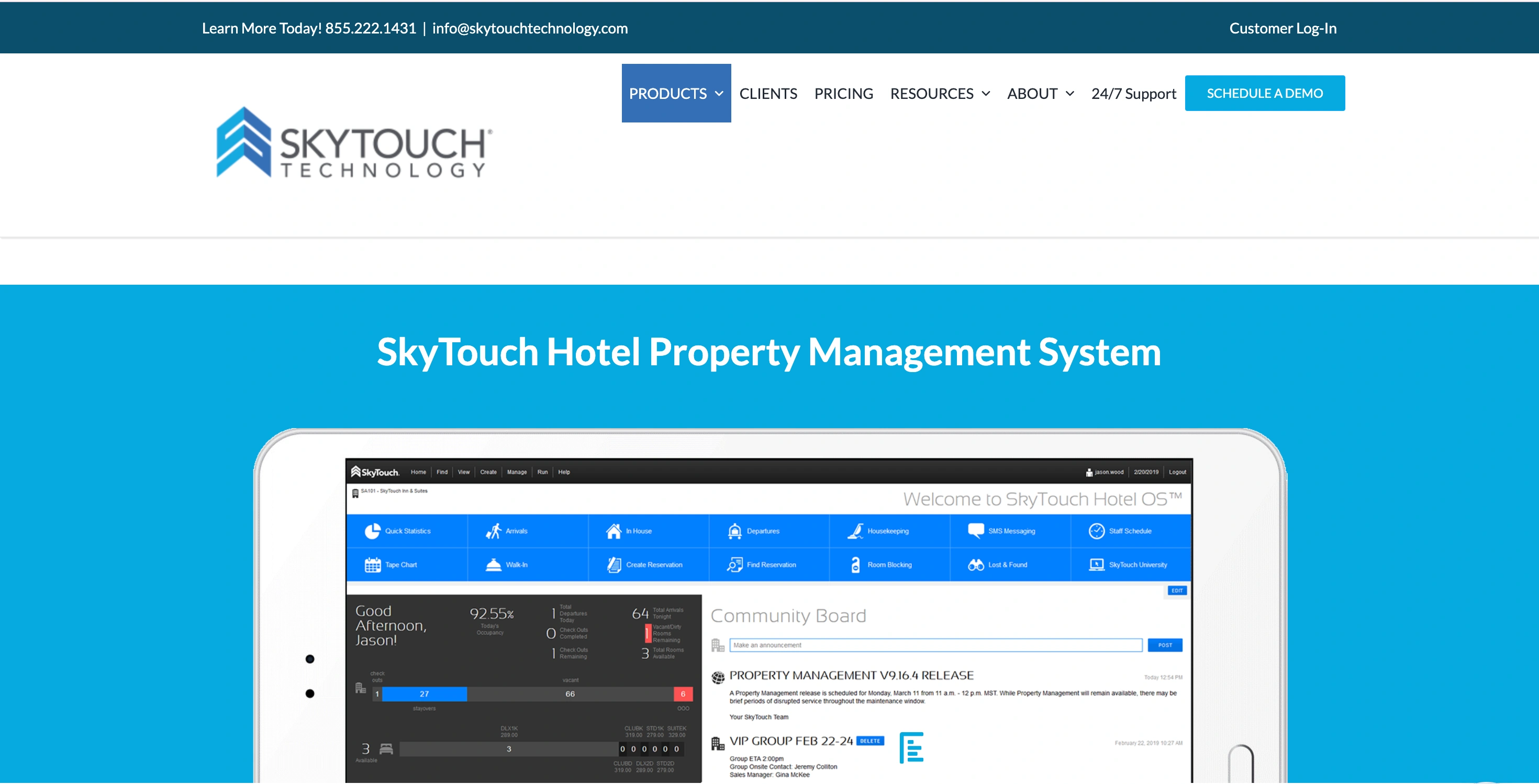
A unified property management system gives every department visibility into the same guest and room data, which is what actually closes the handoff gaps described above.
This matters most for independent properties without a dedicated coordinator, since the system does the remembering that a single overstretched person otherwise has to carry alone.
"roommaster has helped us offer a more seamless, personalized experience. Digital check-ins, guest preference tracking, and instant room updates make everything smoother."
- Danita Pertudo, Front Desk Supervisor at Rosslyn Hotel
Two examples show what this actually fixes:
- A maintenance request logged in a shared system shows up for housekeeping automatically, without anyone remembering to mention it at a shift change, and a room's status updates the moment a repair finishes.
- A guest's earlier preference, like extra pillows or a high floor, surfaces automatically on their next stay instead of depending on someone remembering to write it down again.
Properties running a unified roommaster Hotel PMS report up to 40% fewer admin tasks overall, largely because fewer of these cross-department confirmations need a phone call or a walk down the hall to happen at all.
None of this replaces the judgment of the staff running each department day to day. It just means the information they need reaches them without depending on who happened to still be on shift when it mattered most.
See how roommaster's Property Management System keeps every department working from exactly the same information, or book a demo to see it on your own property.
{{cta-strip}}
Frequently Asked Questions
1. What are the main departments in a hotel?
Hotel departments are the distinct functional teams running a property, split into guest-facing groups like Front Office and back-of-house groups like Housekeeping and Accounting and Finance.
2. What department handles guest check-in?
Front Office handles check-in, check-out, reservations, and concierge services for guests from arrival through departure.
3. Which hotel department handles maintenance issues?
Maintenance and Engineering repairs physical structures, plumbing, electrical systems, and HVAC units whenever something breaks down.
4. Do small hotels combine multiple departments into one role?
Independent properties under 75 rooms often combine functions like sales, marketing, and front office administration into one role.
5. Why do handoffs between hotel departments break down?
Handoffs break down most often at shift changes, through paper notes, or when departments use separate systems that don't share information.
6. How does a PMS help hotel departments work together?
A unified PMS gives every department visibility into the same guest and room data, closing the gaps a verbal or paper handoff leaves open.
7. Who is responsible for coordinating between hotel departments?
At most independent properties, the General Manager owns cross-department coordination by default, even without a formal operations title.
8. How many hotel departments should a boutique property staff separately?
A boutique property under 75 rooms often combines several functions into shared roles rather than staffing all eight departments separately from day one.
9. Does every hotel need a dedicated security department?
Every hotel needs a security function covering guests, staff, and property, though staffing size scales with property size and actual risk exposure.
10. What's the biggest cause of hotel department miscommunication?
Information sitting in one person's memory instead of a shared visible system is the most common cause of department miscommunication.
11. Can technology fully replace department coordination at a hotel?
Technology closes information gaps between departments, but staff judgment still decides how each request actually gets handled.
.png)
.png)
.png)