What Is Hospitality Technology?
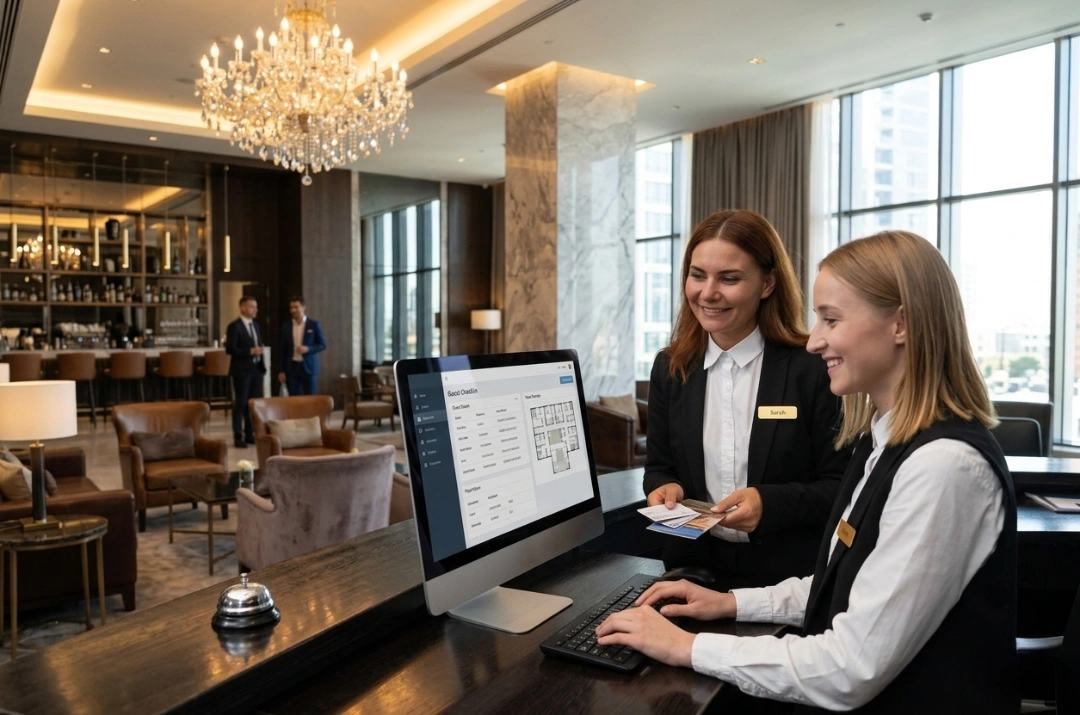
Hospitality technology is the digital and physical toolkit that guest businesses use to streamline operations and improve the guest experience, from the property management system at the center to booking engines, payments, point of sale, and guest-facing apps. In short, it is the connected technology that runs a property and serves its guests.
The defining word is connected. No single system does everything well, so the real value is in integration. When the PMS, booking engine, and channel manager share one record, a rate change or a new reservation updates everywhere at once. When they do not, staff spend the day copying data between screens and cleaning up the errors that follow. Most of the frustration hoteliers feel with technology is not a missing feature; it is systems that do not talk to each other.
What Types Of Technology Are Used In Hospitality?
Hospitality technology falls into a handful of categories. You do not need every tool on day one, but it helps to see how the layers fit together and which problem each one solves.
| Category | What it does | Primary benefit |
|---|
| Property management system (PMS) | Runs the front desk, reservations, housekeeping, folios, and reporting | The hub every other system connects to |
| Booking engine | Takes commission-free reservations on your own website | Captures direct revenue you would otherwise pay away |
| Channel manager | Syncs rates and availability across OTAs and metasearch | Prevents overbookings and rate parity problems |
| Central reservation system (CRS) | Centralizes availability and bookings across all channels | One source of truth for inventory |
| Revenue management (RMS) | Recommends or sets rates from demand data | Protects and grows RevPAR automatically |
| Point of sale (POS) | Handles food, beverage, and retail transactions | Links on-site spend to the guest folio |
| Customer data and CRM | Unifies guest profiles, history, and preferences | Enables real personalization and repeat stays |
| Payments | Processes cards, deposits, and reconciliation | Reduces chargebacks and manual accounting |
| Guest communication | Messaging, chatbots, and AI concierges | Answers routine questions without tying up staff |
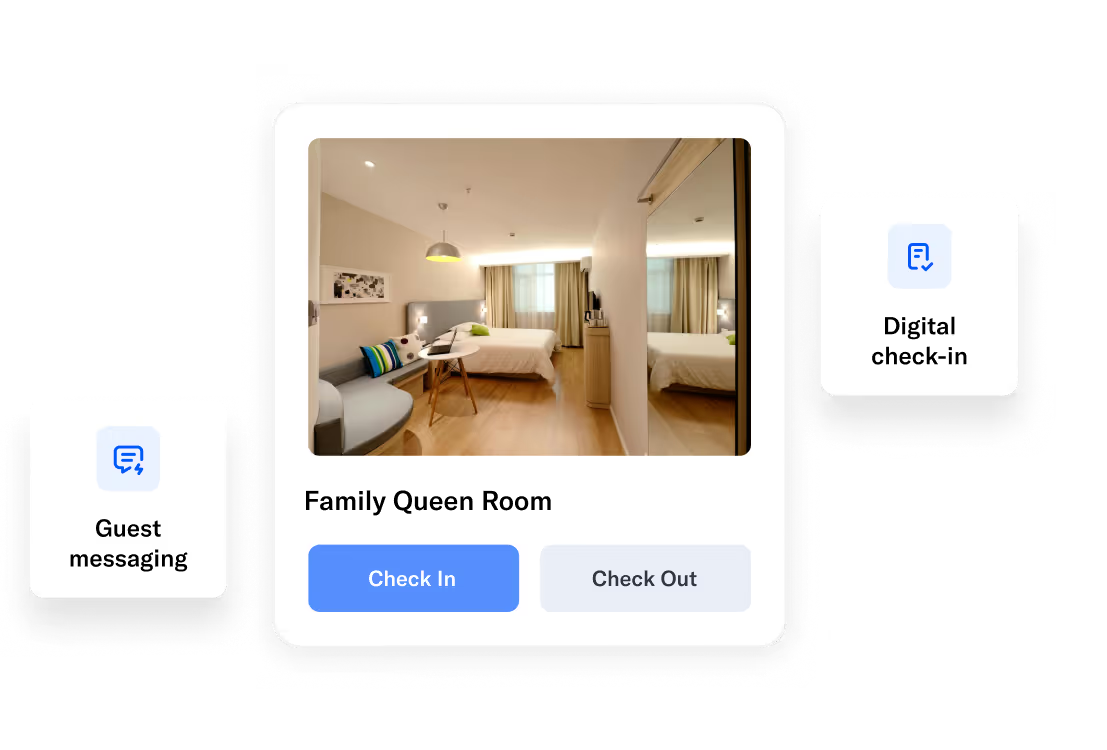
| Contactless and mobile | Online check-in, digital keys, mobile checkout | Meets guest expectations, shortens queues |
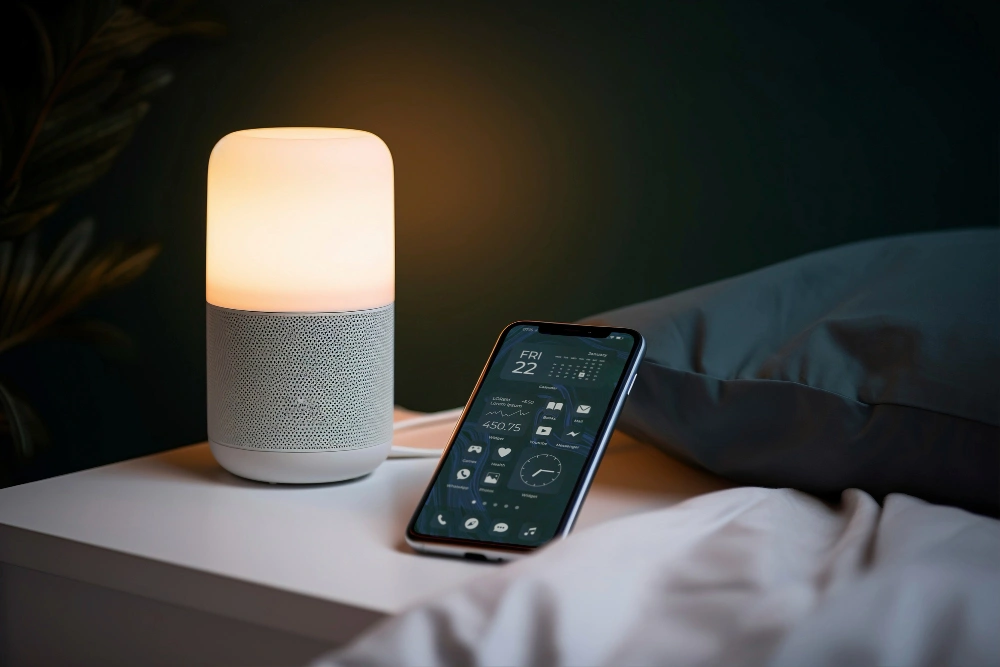
| In-room and IoT | Smart climate, lighting, and energy controls | Cuts utility costs and personalizes the room |
| Back of house and security | Staff collaboration, cybersecurity, maintenance | Keeps operations and guest data safe and in sync |
The Core Hospitality Technology Stack
If the categories above are the menu, the stack is the meal. A workable stack starts with the property management system (PMS) and builds outward, adding tools that connect cleanly rather than the ones with the longest feature list.
The guiding principle is a single source of truth. A reservation should enter once and flow everywhere: the front desk sees the arrival, housekeeping sees the turn, the folio opens, and the channel closes that room across every OTA. When a property reaches that state, staff stop re-keying data and start spending time on guests. That is the whole point of a connected stack, and it is the standard every buying decision should be measured against.
How AI And Automation Are Changing Hospitality
Artificial intelligence has moved past the hype cycle into daily operations, though adoption is uneven. One 2026 industry survey found that 85 percent of surveyed hoteliers planned to put at least 5 percent of their IT budget toward AI tools, yet a BCG and NYU analysis concluded that fewer than 10 percent of hospitality companies are generating substantial value from AI so far. Interest is high; disciplined use is still rare.
Four applications deliver most of the practical value heading into 2027.
Automated revenue management: AI pricing reads demand signals, booking pace, and market rates, then recommends or applies changes automatically. For a small team, that replaces hours of spreadsheet work and captures demand swings a human would miss.
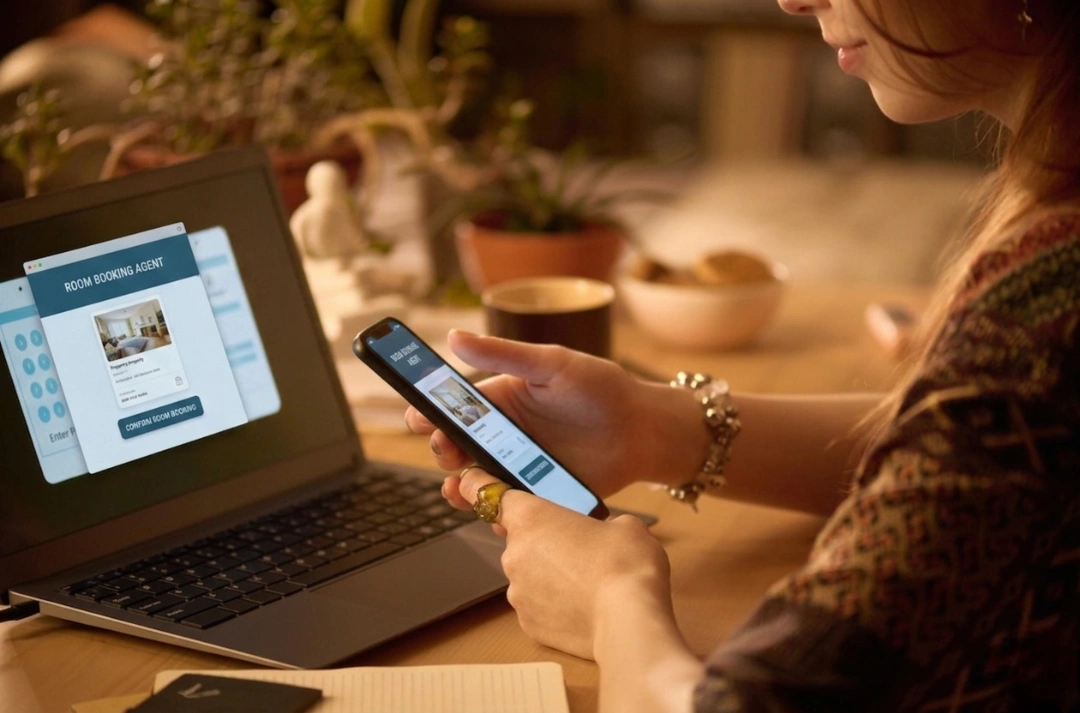
Conversational booking and search: Guests increasingly search and book in natural language, asking for a stay the way they would ask a person. AI-driven booking and search tools answer those queries directly and surface direct-booking options, which keeps more demand on the property's own channel.
Guest messaging and AI concierges: AI messaging handles the repetitive questions that fill a front desk's day, such as check-in times, parking, and Wi-Fi, and hands off to a human when judgment is needed. Chatbots are already the most common AI deployment among hotel chains.
Predictive maintenance: By monitoring equipment and room status, systems can flag a failing air conditioner or a maintenance issue before a guest ever notices, turning a bad review into a work order nobody saw.
A note of caution matches the data: in one 2026 compilation, only about 40 percent of hotel owners said they were comfortable letting AI act without human oversight. The sensible path is to automate the repetitive work and keep a person in the loop for anything that touches the rate strategy or the guest relationship.
Guest-Facing And Contactless Technology
Guest-facing technology has shifted from a perk to an expectation, and the clearest demand is for contactless service. In a Skift survey of more than 5,000 consumers, 53.6 percent said contactless check-in and checkout was the feature they most wanted hotels to keep. A 2025 guest technology study found that nearly half of guests now prefer to check out using their smartphones.
The tools that matter most are the ones guests actually use.
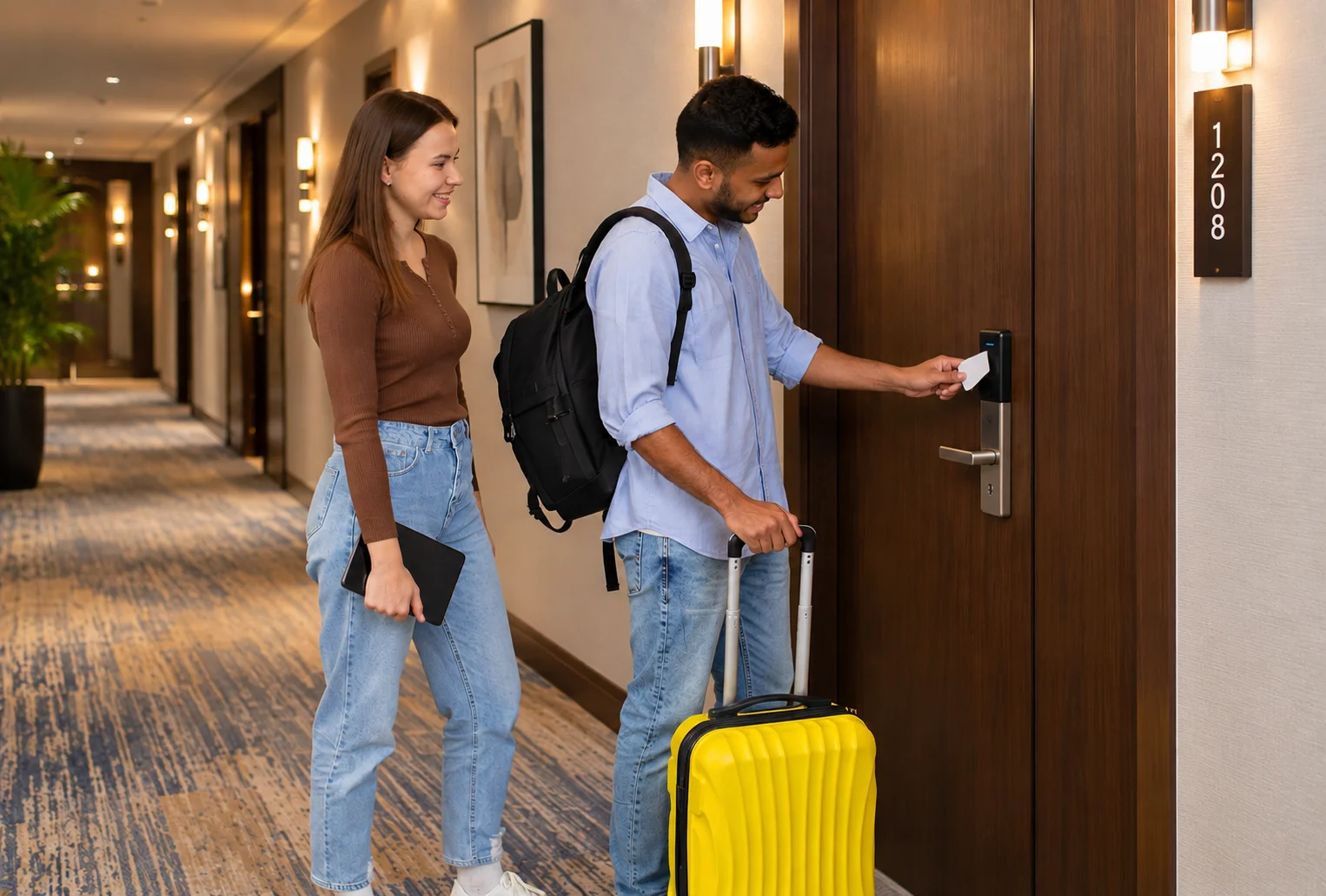
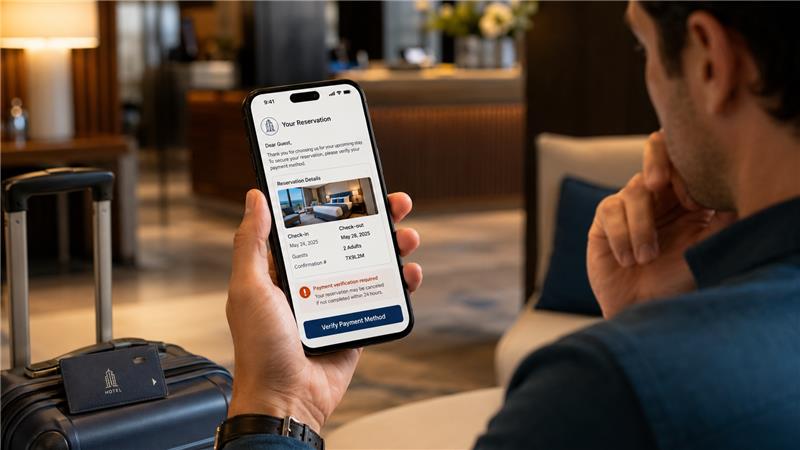
Contactless check-in and digital keys: Online check-in and mobile keys let guests arrive on their own terms and skip the desk, while staff focus on the guests who want a personal welcome. Document scanning can bring check-in down to a couple of minutes.
Personalization from guest data: When the PMS and guest profile hold one record, the property can recognize repeat visitors, remember preferences, and pre-configure the room and offers without asking the same questions twice.
Omnichannel messaging: Guests expect to reach a property the way they reach everyone else, by text and chat, before and during the stay. A single messaging layer keeps those conversations in one place instead of scattered across channels.
The aim is not to remove people from hospitality. It is to automate the routine so staff have more time for the moments that need a human.
Distribution And Revenue Technology
Online travel agencies bring reach, but they take a meaningful cut, and for independent properties they take a large share of bookings. Industry estimates put OTA commissions in the range of 15 to 30 percent per booking once promotional programs are added. By contrast, several 2025 and 2026 analyses estimate the all-in cost to serve a direct booking at roughly 5 to 12 percent, covering the booking engine, website, marketing, and payments.
| Channel | Typical cost to the property | What the technology does |
|---|
| Direct (your website) | Roughly 5 to 12 percent all-in | Booking engine captures the reservation commission-free |
| OTA | Roughly 15 to 30 percent commission | Channel manager syncs rates and availability |
| Metasearch | Cost per click or commission | Puts your direct rate beside OTA listings |
The point is not to abandon OTAs, which remain valuable for filling rooms and reaching new guests. It is to use a booking engine and channel manager together so you can shift a share of demand to your direct channel, where you keep more of each booking and where reservations tend to cancel less often.
Back Of House, Security, And Sustainability
The technology guests never see often carries the heaviest load.
Staff collaboration: Digital tools that sync housekeeping, maintenance, and the front desk replace radios and paper logs, so a room turn or a repair request reaches the right person instantly.
Cybersecurity: As more guest and payment data moves online, properties are adopting zero-trust access and continuous monitoring to protect networks. A single breach is both a financial and a reputational cost, which makes security a core part of the stack rather than an afterthought.
Sustainability and energy: IoT sensors adjust lighting and climate by occupancy, trimming utility costs in vacant rooms while supporting the environmental commitments guests increasingly ask about. These systems often pay for themselves through the savings alone.
Emerging Hospitality Technology Trends For 2027
A few technologies are maturing from experiments into tools worth planning for.
Agentic AI: Beyond answering questions, AI is beginning to complete multi-step tasks on its own, such as handling a rebooking or coordinating a service request end to end, with a human approving the exceptions.
Conversational and AI-assisted booking: As travelers search in natural language and through AI assistants, properties that structure their content and rates for those tools will capture demand that bypasses the traditional search box.
Digital twins and predictive maintenance: A live digital model of the property lets operators watch room and equipment status in real time and auto-generate a work order the moment something starts to fail, so issues are fixed before a guest ever notices.
Hyper-personalization and smart rooms: Connected rooms pre-configure lighting, climate, and entertainment to a guest's known preferences before arrival, turning data into a tangible in-room experience.
Next-generation in-room entertainment: Casting and streaming are replacing traditional cable, letting guests bring their own content to the room screen without friction.
Treat these as a roadmap, not a shopping list. Get the core stack connected and reliable first, then layer in the emerging tools where they solve a real problem for your property.
How To Choose The Right Hospitality Technology
Good hospitality technology is less about buying the most features and more about getting the pieces to work together. A few principles keep an implementation on track.
Start with the PMS and build outward: Choose the hub first, then add tools that integrate with it cleanly. Fighting a poor integration costs more than the feature is worth.
Favor open APIs over all-in-one promises: A platform that connects to the specialist tools you want beats a closed system that forces you into only its own, often weaker, modules.
Judge every tool by workload: Staffing remains one of the industry's hardest problems, with roughly two-thirds of hotels still reporting shortages in 2025. The best tool is the one that removes repetitive work, not the one that adds another screen.
Plan for people, then measure the return: Train staff through the change, give them a clear point of contact, and track the metrics that matter, such as direct-booking share, RevPAR, time saved at the front desk, and guest satisfaction, so you can tell which tools earn their place.
One Connected Platform, Built For Independent Properties
Hospitality technology is the connected set of software and hardware that hotels, resorts, and other guest businesses use to run operations and serve guests. It is built around a cloud property management system (PMS) that links the front desk, bookings, housekeeping, payments, and distribution, with tools like booking engines, channel managers, revenue management, and guest messaging connecting to it. In 2027 the priorities are agentic AI, conversational booking, contactless service, predictive maintenance, and tight integration so data moves automatically instead of being re-keyed.
Most of the friction in hospitality technology comes from disconnected tools that force staff to re-key data and reconcile errors. roommaster brings the front desk, reservations, booking engine, channel management, payments, and reporting together on one cloud platform, so a change in one place updates everywhere and your team spends less time on admin and more time with guests. For independent and small-group properties that want the capability of an enterprise stack without the complexity, that single connected system is the point.
{{cta-strip}}
Frequently Asked Questions
1. What is hospitality technology?
Hospitality technology is the connected set of software and hardware that hotels, resorts, and other guest businesses use to run operations and serve guests. It is built around a property management system (PMS) that links the front desk, bookings, housekeeping, payments, and distribution, with tools like booking engines, channel managers, and guest messaging connecting to it.
2. What types of technology are used in hospitality?
The main categories are the property management system, booking engine, channel manager, central reservation system, revenue management, point of sale, CRM and guest data platforms, payments, guest messaging and AI concierges, contactless and mobile tools, in-room IoT, and back-of-house and security systems. The PMS is the hub the others connect to.
3. How do I choose the right hospitality technology?
Start with the property management system, since every other tool connects to it, then add systems that integrate cleanly through open APIs rather than closed all-in-one suites. Judge each tool by whether it removes repetitive work for your team, and track the return on metrics like direct-booking share, RevPAR, and guest satisfaction.
4. What is a property management system (PMS)?
A PMS is the central software that runs a property's day-to-day operations, including reservations, check-in and checkout, room assignments, housekeeping status, billing, and reporting. It is the hub that every other hospitality technology tool connects to, which is why it is the first system to get right.
5. How is AI used in hospitality in 2027?
The most practical uses are automated pricing, conversational booking and guest messaging, AI concierges that handle routine requests, and predictive maintenance that flags issues before guests notice. Most value comes from automating repetitive work while keeping a person in the loop for decisions that affect rates or the guest relationship.
6. Why does hospitality technology matter?
For operators, it cuts repetitive manual work, eases labor pressure, and reduces energy and other waste. For guests, it delivers faster service, mobile-first convenience, and tailored experiences. The biggest gains come when the systems are connected, so data moves automatically instead of being re-entered by staff.