Hospitality Employee Engagement: How Reducing Front Desk Workload Makes the Difference
"roommaster is really a combination between the operational ease of use, training, the functionality of the program itself, coupled with the service makes it a winning combination." - Alex Moore, President & CEO, Seaboard Hotels
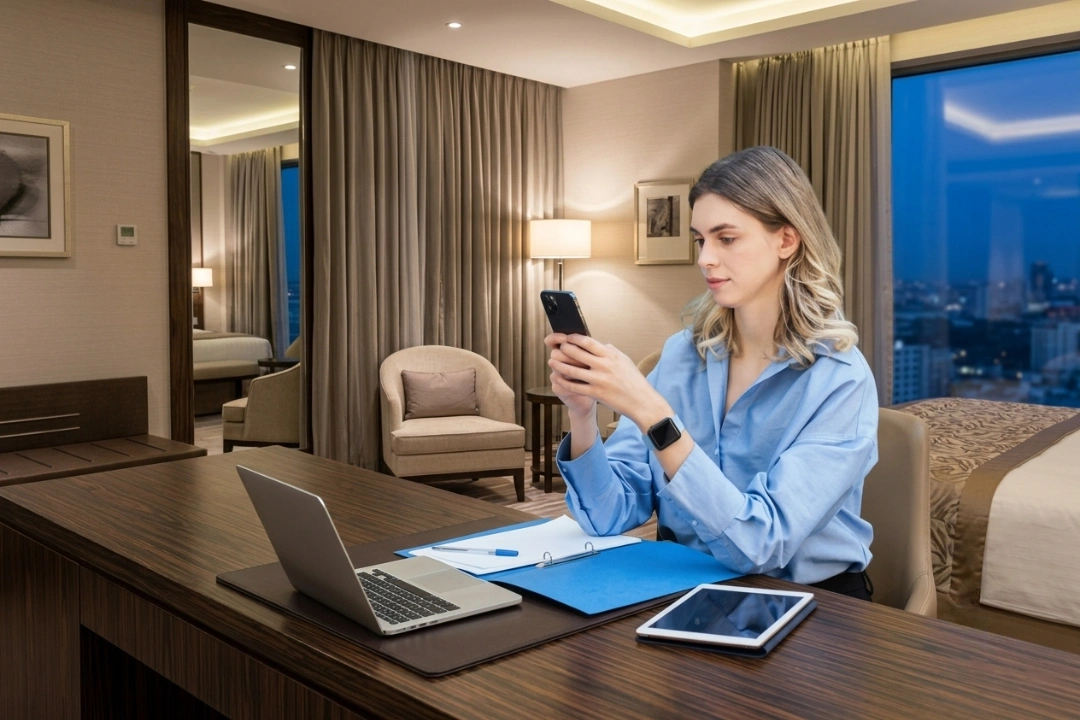
Hospitality employee engagement reflects how connected your staff feels to their work, performance, and guest experience.
Manual tasks, including rate updates, payment reconciliation, and reservation re-entry, consume the majority of a front desk shift, away from actual guest interaction.
Hotel employee burnout builds quietly. Rising error rates, slower check-in times, and more sick days are the signals most GMs miss until it's too late.
Integrated front desk software that consolidates reservations, payments, and communication onto one screen directly reduces the workload that drives disengagement.
When you reduce workload challenges, you improve hospitality employee engagement, hotel staff retention, and guest satisfaction.
Hospitality employee engagement reflects how connected your front desk team feels to its work, guests, and daily responsibilities. When staff spend a large portion of their shift updating reservations, reconciling payments, and transferring information between systems, engagement often suffers. Administrative tasks take time away from guest interactions, increase stress, and make it harder for employees to focus on the work they value most.
This article explores how front desk workload affects hospitality employee engagement, the operational costs of burnout, and how hospitality management software can help your team work more efficiently.
What is Hospitality Employee Engagement? (and Why the Front Desk Is the Highest-Risk Area)
Hospitality employee engagement refers to the level of commitment, motivation, and emotional connection employees have toward their work and organization. In a hotel environment, engaged employees take greater ownership of guest experiences, contribute more consistently to operational performance, and remain more invested in the property's success.
The front desk faces greater engagement challenges than most hotel departments because it connects nearly every operational function. Reservations, payments, housekeeping coordination, room assignments, and guest communication all flow through the front desk. When systems fail to work together, or processes require excessive manual effort, front desk employees absorb the additional workload.
The hotel industry reports one of the highest turnover rates of any sector, with an annual rate of 70% to 80%. At the same time, 47% of hospitality leaders cite employee burnout as a growing concern, and 64% have seen employees quit specifically because of burnout. Front desk teams often experience the greatest pressure because they balance administrative responsibilities with constant guest interaction. As workload increases, stress rises, engagement declines, and turnover becomes more likely.
These challenges point to an operational issue rather than a people issue. The systems, processes, and tools employees use every day often have a greater impact on engagement than motivation alone.
{{guest-app}}
Why Front Desk Staff Disengage Faster Than Any Other Hotel Department
Front desk staff join hospitality to work with people, but most of their shift gets consumed by repetitive operational tasks.
The biggest workload drivers at the front desk include:
Manual rate and inventory updates across OTAs: When the channel manager does not connect directly to the PMS, staff update rates manually. This repetitive work increases errors and pulls attention away from guests at the counter.
Payment reconciliation across disconnected tools: When systems do not sync, end-of-shift balancing becomes time-consuming. Staff who end their shift stressed and frustrated experience lower engagement over time.
Reservation re-entry from disconnected booking channels: When bookings do not flow automatically into the PMS, staff manually re-enter reservation data. Many also switch between systems during their shift to copy or correct information, which increases workload and slows service.
Repetitive guest inquiries during peak hours: Calls about directions, check-in times, parking, and amenities interrupt in-person service and reduce time spent with guests at the desk.
The mismatch between expected guest-facing work and daily operational demands drives disengagement more than any single factor. Over time, this workload gap makes front desk roles harder to fill and retain.
The 4 Core Drivers of Hospitality Employee Engagement at the Front Desk
These four factors have an outsized impact on front desk engagement, retention, and performance.
1. Role clarity
Staff perform better and stay longer when they understand what their shift requires and have clear processes to follow. Unclear responsibilities, inconsistent procedures, and confusing workflows create frustration and reduce confidence over time.
2. Workload manageability
Even highly motivated employees disengage when the workload becomes unsustainable. Repetitive administrative tasks, manual data entry, and constant system switching consume time that could be spent helping guests. When staff feel in control of their shift, engagement rises. When they spend the day trying to keep up, burnout follows.
3. Confidence in their tools
Front desk employees rely on technology to manage reservations, payments, room status, and guest communication. When systems are slow, unreliable, or difficult to learn, staff spend more time troubleshooting than serving guests.
In fact, more than half of managers (52.2%) said it takes four months to three years for staff to feel confident using their PMS. Four months of uncertainty are four months of disengagement risk.
4. Meaningful guest interaction
Hospitality workers are motivated by people, not processes. The more administrative work a role demands, the less time employees have for the guest interactions that make the job rewarding. A front desk agent who spends three hours of a six-hour shift on manual tasks is doing a data-entry job with a hospitality title.
Key Metrics to Measure Front Desk Employee Engagement
You cannot improve hotel staff retention without first understanding what is driving disengagement.
These six metrics provide a practical view of front desk engagement, and many of them can be tracked through your PMS, reporting tools, or operational records.
Metric
What It Measures
Why It Matters
Staff turnover rate
% of front desk staff who leave in a 12-month period
Baseline for tracking retention progress; hospitality average is 70-80%
Time-to-productivity
Days until a new hire works independently
Reflects training effectiveness, system usability, and onboarding efficiency
Average check-in time
Time from guest arrival to key handover
Faster check-ins often indicate confident staff and simplified workflows
Error rate per shift
Billing, booking, and reconciliation errors per shift
Rising error rates can signal workload pressure, process issues, or system complexity
Guest satisfaction score
Review scores tied to front desk interactions
Helps measure how staff engagement translates into the guest experience
Sick day frequency
Unplanned absences per team member per month
A leading indicator of hotel employee burnout, stress or declining engagement before resignation
Track these weekly, not monthly. Decreased engagement scores predict departure with 89% accuracy, followed by reduced participation with 76% accuracy and increased absences with 68% accuracy. The earlier you identify those patterns, the easier it becomes to address them before they affect retention, service quality, or guest satisfaction.
5 Ways to Reduce Front Desk Workload and Improve Hospitality Employee Engagement This Week
Small operational improvements can have a significant impact on hotel front desk workload. Each of the strategies below reduces administrative burden, improves shift manageability, and gives staff more time to focus on guests.
1. Consolidate onto one hospitality management software platform
Running multiple disconnected systems forces staff to switch between screens, re-enter information, and search for data that should already be available. An all-in-one hospitality management software reduces these pain points and streamlines workflows throughout the shift.
2. Automate rate and inventory updates
Your front desk team did not join the hospitality industry to update OTA rates by hand. Connecting your property management system (PMS) and channel manager allows rates and inventory to update automatically, reducing repetitive work and helping staff focus on guest-facing responsibilities.
3. Simplify check-in to a single screen
Check-in sets the tone for the guest experience. If staff need to jump between multiple windows to access reservation details, room status, and payment information, service slows down. The right front desk software helps employees complete tasks faster and with greater confidence.
4. Use AI to handle routine phone inquiries
During peak periods, a stream of calls about parking, directions, amenities, and check-in times can pull staff away from guests standing at the desk. A hotel AI agent, such as roommaster Concierge, can handle routine inbound calls immediately, including questions about parking, check-in times, and amenities, so front desk staff aren't interrupted during busy periods.
5. Reduce training and onboarding friction
Some employees learn hotel systems in days. Others need weeks. The difference often comes down to software complexity. Intuitive hotel front desk software shortens training time, reduces frustration, and helps new hires become productive more quickly.
How to Spot Front Desk Disengagement Before It Becomes a Resignation
Disengagement rarely appears overnight. In most cases, the warning signs appear in operational metrics before they show up in a resignation letter.
Watch for these four indicators:
Rising error rates: An increase in billing mistakes, booking errors, or reconciliation issues often signals workload pressure and employee fatigue.
Slower check-in times: Longer check-in times can indicate inefficient processes, system complexity, or declining confidence in daily workflows.
Increased absenteeism: A noticeable rise in unplanned absences may point to burnout, stress, or declining job satisfaction.
Shorter guest interactions: When staff become more transactional and less engaged with guests, the role may feel increasingly administrative rather than hospitality-focused.
For busy property managers, hotel reporting software automatically detects these patterns, making it easier to catch problems early and take corrective action before disengagement affects retention or guest satisfaction.
How Hotel Management Software Reduces Workload and Drives Hospitality Employee Engagement
Hospitality employee engagement improves when staff spend less time managing systems and more time serving guests. The right hotel management software helps eliminate many of the manual tasks that consume a front-desk shift.
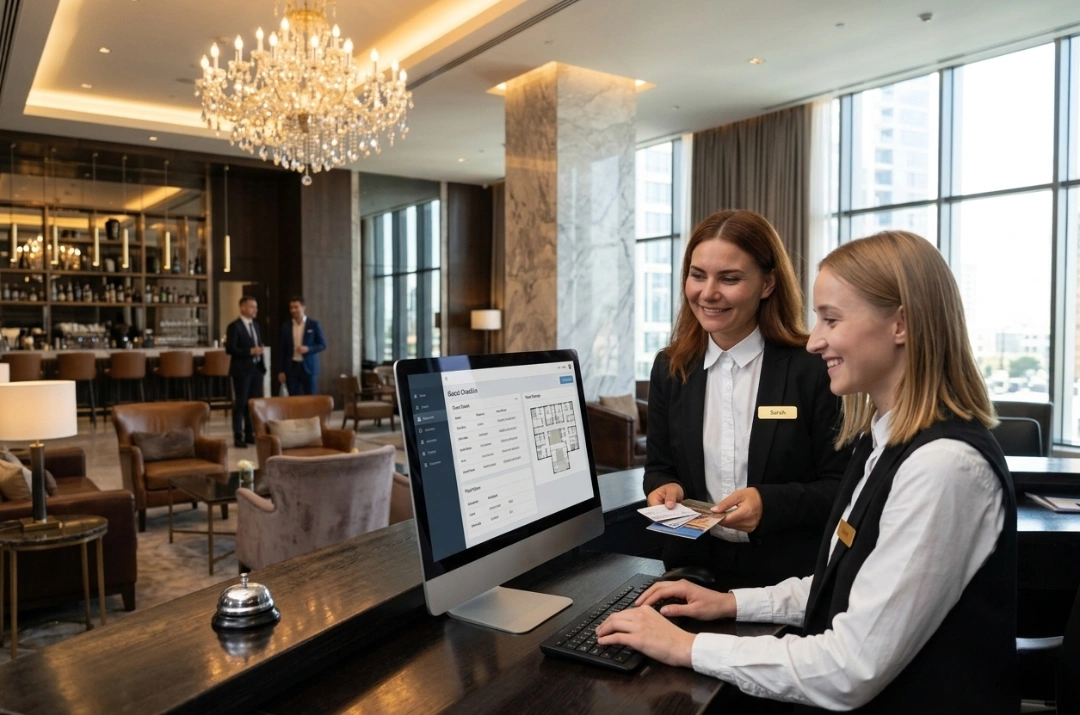
Single-screen workflows: Staff access reservations, payments, room status, and guest information from a single screen, eliminating the need to switch between multiple systems or re-enter data.
Automated rate and inventory updates: The channel manager updates OTA inventory and rates automatically, removing one of the most repetitive tasks from the front desk.
Integrated payment processing: The system posts payments directly to guest folios and automatically reconciles transactions, reducing end-of-shift administrative work.
AI-powered guest assistance: An AI concierge answers inbound phone calls and routine questions about parking, amenities, directions, and check-in policies, allowing staff to focus on in-person guests.
Faster onboarding: A hotel PMS helps new employees learn key workflows quickly and become productive sooner.
Hotels using engagement-focused tools achieved 12% higher guest satisfaction and 18% higher revenue per available room compared to properties that did not use them. The connection between better tools, lower workload, and higher engagement is not theoretical. The data makes it direct.
{{pms-one}}
What to Look for in Front Desk Software That Actually Supports Your Staff
Not all front desk software solves the same problems. Before you evaluate any platform, assess it against these five criteria:
1. One unified platform
If reservations, payments, housekeeping, and channel manager each operate in separate systems, your staff will spend valuable time switching between tools and reconciling information. Look for a platform that brings core hotel operations together in one place.
2. Real-time channel sync
OTA inventory and rate updates should happen automatically whenever availability changes. Delayed synchronization creates extra work for staff and increases the risk of errors.
3. Fast onboarding
If it takes months for staff to feel confident in a system, that system is a retention liability. Look for platforms with structured onboarding, intuitive interfaces, and a track record of fast adoption.
4. Built-in reporting
Hotel managers should be able to track operational metrics such as check-in times, error rates, and productivity without manually compiling data from multiple systems. Strong reporting helps identify workload and performance issues early.
5. Proven hospitality expertise
Look for vendors with extensive hospitality experience and a track record of supporting properties similar to yours. Companies that understand hotel operations are often better positioned to design practical workflows, provide relevant support, and develop features that solve real operational challenges.
Choosing front desk software is not just a technology decision. It is an operational decision that directly affects workload, staff confidence, and the guest experience.
How roommaster Reduces Front Desk Workload and Improves Hospitality Employee Engagement
The good news is that most front desk workload problems are solvable.
As an all-in-one hotel PMS, roommaster helps hotels reduce front desk workload by consolidating core operations into a single platform. Reservations, payments, distribution, and guest communication work together in a single system, eliminating many manual tasks that slow down daily operations.
The platform combines your PMS, booking engine, channel manager, payments, and roommaster concierge in a unified workflow. Automated rate syncing keeps OTA inventory up to date, while the roommaster concierge handles routine guest inquiries, allowing staff to focus on in-person interactions.
The operational impact is measurable. Hotels using roommaster report 50% faster check-ins, 40% fewer administrative tasks per shift, 50% shorter training times, and 99.95% uptime. Harrison Hall Hotel's general manager, Stacy Dadson, describes it directly: "With being on the cloud, I would say it has cut our workload maybe in half."
Built by hospitality professionals and trusted by hotels for more than three decades, roommaster helps properties simplify operations, support their teams, and create more time for the guest experiences that drive satisfaction and loyalty.
Ready to reduce front desk workload? Book a free demo today to discover more!
{{cta-strip}}
FAQs
What is hospitality employee engagement?
Hospitality employee engagement refers to the level of commitment, motivation, and emotional connection employees have toward their work and organization.
Why do front desk staff disengage faster than other hotel departments?
Front desk staff disengage faster than other hotel departments because they handle a higher volume of operational tasks alongside constant guest interaction. When systems are disconnected or workflows rely on manual work, staff spend more time managing processes than serving guests. Over time, this increases stress, fatigue, and disengagement.
How does front desk software improve employee engagement?
Front desk software improves employee engagement by reducing manual work and unifying reservations, payments, room status, and guest information into a single workflow. This helps staff spend less time switching systems and more time assisting guests.
What metrics should independent hotels track to measure front desk engagement?
Independent hotels should track metrics such as staff turnover rate, time-to-productivity for new hires, average check-in time, error rate per shift, guest satisfaction scores, and sick day frequency. Together, these metrics help identify workload challenges, training gaps, and early signs of disengagement.
Can hospitality management software reduce staff turnover?
Hospitality management software can help reduce staff turnover by simplifying daily operations and reducing unnecessary administrative work. It supports faster onboarding, smoother workflows, and more consistent tools, which help you manage shifts more efficiently and stay longer in your roles.
What is the fastest way to reduce front desk workload without hiring more staff?
The fastest way to reduce front desk workload is to consolidate reservations, payments, distribution, and guest communication into a single platform. This reduces manual data entry, removes duplicate tasks, and helps you manage daily operations more efficiently without increasing headcount.
guest-app
Put Your Front Desk in Guests’ Pockets with roommaster App
Mayela Lozano is a content strategist with a passion for hospitality and technology. She collaborates with roommaster on content creation, highlighting how technology can streamline hotel operations and enhance guest satisfaction. When she’s not creating content, Mayela loves to travel and spend time with her two little ones, discovering new adventures and making memories along the way.
Join Thousands of Hotels Thriving with roommaster
The transition to roommaster is straightforward and efficient. Our implementation team handles data migration including reservations, guest profiles, and historical information.
The transition to roommaster is straightforward and efficient. Our implementation team handles data migration including reservations, guest profiles, and historical information.
Hotel Guest WiFi: The Complete Guide for Hoteliers 2026
September 19, 2026
Hotel Management
How to Access a Hotel Lounge for Free: Guest Guide 2026
September 13, 2026
Hotel Management
Online Bookings
Hotel SEO Agency vs. Consultant vs. In-House
September 13, 2026
Hotel Management
Online Bookings
Hotel SEO: Boost Your Visibility in AI Search Results
September 13, 2026
Hotel Management
Types of Hotel Lounges: A Complete Guest Guide 2026
September 11, 2026
Hotel Management
Hotel Lounge Access Explained: A Guest's Guide 2026
September 11, 2026
Hotel Management
Hotel Lounge: Hoteliers Guide 2026
September 11, 2026
Hospitality Trends
Best Hotels in New Orleans: A Complete Guide 2026
September 10, 2026
Hospitality Trends
Best Hotels in Philadelphia: A Complete Guide 2026
September 10, 2026
Hospitality Trends
Best Hotels in San Francisco: A Complete Guide 2026
September 10, 2026
Join Thousands of Hotels Thriving with roommaster
See how roommaster's unified platform can work for your property. Our team will walk you through features tailored to your specific needs and operations.

.png)
.png)
.png)