Cybersecurity in the hospitality industry, in brief
Cybersecurity in the hospitality industry is the practice of protecting guest data, payment systems, and hotel operations from cyberattacks such as phishing, ransomware, and data breaches. Hotels hold names, passport details, and card numbers across many connected systems, which makes them a frequent target and raises the stakes when a breach happens.
The average cost of a data breach reached $4.88 million in 2024, so the case for basic controls is a business case, not just an IT one.
{{pms-six}}
Why is cybersecurity important in the hospitality industry?
Cybersecurity matters because a hotel runs on trust and on data. Guests hand over passport scans, home addresses, and card details, and they expect that information kept safe. A single breach can expose thousands of those records at once.
The financial exposure is real. Most of a breach's cost comes from lost business and recovery, not the attack itself. For an independent property, even a fraction of that figure can threaten the business.
Reputation damage often outlasts the cleanup. Guests who read about a breach may book elsewhere, and OTA reviews carry the story for months. Strong protection is part of the guest experience, the same as a clean room or a working keycard.
Why are hotels a target for cyberattacks?
Hotels are targeted because they combine valuable data with a wide, hard-to-guard attack surface. Attackers follow the data, and a busy property stores plenty of it.
Several factors stack up:
- Concentrated guest data: names, dates of birth, passport numbers, and card details sit inside the property management system and payment records.
- Many connected systems: the PMS, point-of-sale terminals, door locks, wifi, and smart-room devices all touch the network, and each is a possible entry point.
- High staff turnover: front-desk and seasonal roles change often, so security training can lag and access is not always revoked on time.
- Public networks: guest wifi is open by design, which attackers use to intercept traffic if it is not separated from operations.
- Third-party vendors: booking tools, channel managers, and payment processors connect into hotel systems, so a weak vendor becomes the hotel's weak point.
{{pms-seven}}
What are the biggest cyber threats facing hotels?
The biggest threats are phishing, ransomware, payment-system breaches, unsecured wifi, and vendor compromise. Most incidents start with one of these, and most target either money or guest data.
The table below maps each common threat to how it reaches a hotel and the defense that blocks it.
| Threat |
How it hits a hotel |
Primary defense |
| Phishing and social engineering |
A staff member clicks a fake OTA or supplier email and enters credentials |
Staff training, MFA, sender verification |
| Ransomware |
Malware locks the PMS or reservation database and demands payment |
Offline backups, patching, endpoint protection |
| POS and payment breach |
Card data is skimmed from terminals or unencrypted systems |
Tokenization, encryption, PCI DSS compliance |
| Unsecured guest wifi |
Attackers intercept traffic on an open, flat network |
Segment guest wifi from operations |
| Vendor and supply-chain risk |
A compromised integration opens a path into hotel systems |
Vendor review, least-privilege access |
| IoT and smart-room devices |
Weakly secured locks or thermostats are used as an entry point |
Change default passwords, isolate device network |
Phishing sits at the top because it is cheap for attackers and it works on people, not just software. Phishing, stolen credentials, and social engineering rank among the higher-cost attack vectors in industry breach research.
How can hotels protect guest payment data?
Hotels protect payment data by making sure raw card numbers are never stored in plain form. The goal is to keep card data out of hotel systems as much as possible, so a breach has little of value to steal.
Three mechanisms do most of the work:
- Tokenization: the card number is replaced with a token that is useless if stolen, so the hotel stores the token, not the card.
- Encryption: card data is scrambled in transit and at rest, so intercepted data cannot be read.
- Processor handling: when a payment processor captures and vaults the card, the hotel's exposure and PCI scope both shrink.
Look for a system that supports PCI-compliant payment handling and keeps card data with the processor rather than in local files. If you are reviewing how card capture works today, a guide to hotel payment processing and one on how modern tools prevent credit card fraud are useful starting points.
{{revenue-management-two}}
What is PCI DSS and why does it matter for hotels?
PCI DSS, the Payment Card Industry Data Security Standard, is a set of security requirements that any business handling card payments must follow. It covers how card data is stored, transmitted, and protected, and it applies to hotels of every size.
The current version, PCI DSS 4.0, tightened rules on authentication, encryption, and monitoring, with its future-dated requirements becoming mandatory as of March 2025. Practical steps include using MFA, keeping software patched, and limiting who can touch card data.
Compliance matters for two reasons. It reduces the chance of a payment breach, and it limits fines and liability if one occurs. Handling card capture through a compliant processor is the most direct way for a small property to reduce its own PCI scope.
See how roommaster centralizes hotel operations and payments in one system. Book a demo.
How can hotel staff prevent phishing and social engineering?
Staff prevent phishing by treating unexpected requests with suspicion and verifying them through a known channel before acting. Since most attacks target people first, trained staff are the strongest layer of defense.
Consider a worked example. A 22-room boutique hotel's front-desk inbox receives an email that looks like it comes from a major booking site, warning that a reservation will be canceled unless the staff member "confirms account details" through a link. The link leads to a fake login page built to steal the property's OTA password.
Here is how a trained team stops it:
- Pause on urgency: pressure and deadlines are a phishing signal, so the request gets a second look rather than a quick click.
- Check the sender: the real domain is compared against the display name, and the mismatch gives the fake away.
- Never enter credentials from a link: staff open the booking site directly from a saved bookmark instead.
- Verify and report: the front-desk lead confirms with the provider and flags the email so the team is warned.
Short, regular training beats a once-a-year session. Pair it with multi-factor authentication so that even a stolen password does not grant access on its own.
What are cybersecurity best practices for hotels?
The best practices for hotels combine technology, process, and people. No single control is enough, so protection comes from layering several. The checklist below is a practical starting point for an independent property.
| Area |
Best practice |
Why it matters |
| Access |
Require MFA on the PMS, email, and admin accounts |
Stops stolen passwords from being enough |
| Network |
Separate guest wifi from operations |
Keeps a public network away from core systems |
| Payments |
Tokenize and encrypt card data; stay PCI compliant |
Removes the value a breach could capture |
| Devices |
Patch software and update default passwords |
Closes the gaps attackers scan for |
| People |
Run short, regular security training |
Builds habits that catch phishing |
| Backups |
Keep tested, offline backups |
Enables recovery without paying ransom |
| Vendors |
Review third-party access and permissions |
Limits supply-chain exposure |
| Response |
Maintain a written incident-response plan |
Cuts confusion and cost during an incident |
Revisit the list when you change systems or add an integration, since a new connection can widen the attack surface. Tools such as a channel manager or a direct booking engine touch guest and payment data, so they belong in the same security review as the PMS.
What should a hotel do after a data breach?
After a breach, a hotel should contain the incident, assess what was exposed, notify the right parties, and recover from clean backups. Acting to a plan, not improvising, keeps both cost and confusion down.
The core steps are:
- Contain: isolate affected systems and revoke compromised credentials to stop the spread.
- Assess: determine what data was accessed and how the attacker got in.
- Notify: inform guests, your payment processor, and regulators as privacy laws such as GDPR or CCPA require.
- Recover: restore from tested backups and confirm the entry point is closed before going back online.
- Review: run a post-incident review and fix the weakness so it cannot recur.
Prepare the plan before you need it. A short, written procedure with named owners means the front desk knows exactly who to call at 2 a.m.
How does a cloud PMS affect a hotel's security posture?
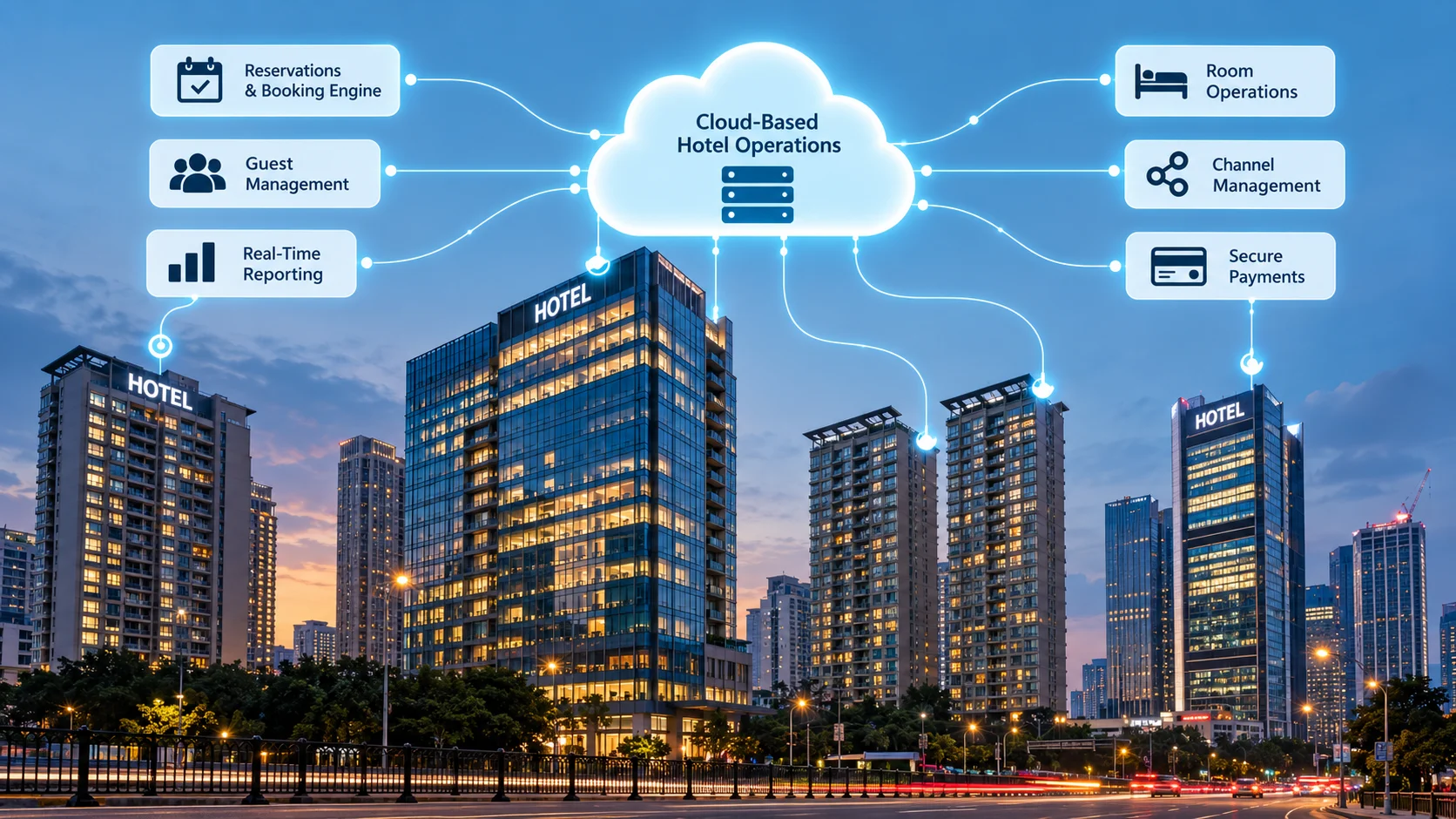
A cloud PMS centralizes guest data and shifts part of the security burden to the provider, which can strengthen a small hotel's posture if the provider maintains strong controls. Rather than card data and guest records sitting on an aging on-site server, they live in a managed, monitored environment.
The benefits are practical. Updates and patches are applied centrally, backups run automatically, and access can be controlled per user. When payments run through a compliant processor, card data stays out of local files and the property's PCI scope narrows. A wider look at running on a cloud-based PMS covers the operational side.
Cloud is not automatic safety, though. The hotel still owns strong passwords, MFA, staff training, and careful access management. The right split is a provider that hardens the platform and a property that handles its own accounts well. A modern property management system built for independent hotel software needs both halves to hold.
Protect guest data with a cloud PMS that keeps operations and payments in one place.
{{cta-strip}}
Frequently asked questions
1. What is cybersecurity in the hospitality industry?
It is the practice of protecting guest data, payment systems, and hotel operations from cyberattacks such as phishing, ransomware, and data breaches, across every connected system a property runs.
2. What are the most common cyber threats to hotels?
Phishing and social engineering, ransomware, point-of-sale and payment breaches, unsecured guest wifi, and third-party vendor compromise are the most common. Most incidents start with one of these.
3. Why are hotels frequent targets for cyberattacks?
Hotels store valuable guest and payment data across many connected systems, run public wifi, and see high staff turnover. That mix creates a wide attack surface that draws attackers.
4. How can a small hotel protect guest payment data?
Use a payment processor that tokenizes and encrypts card data so raw numbers are never stored on-site, keep systems PCI compliant, and require MFA on any account that can reach payment or guest records.
5. Does a cloud PMS make a hotel more secure?
It can. A cloud PMS centralizes data, applies patches and backups automatically, and narrows PCI scope when payments run through a compliant processor. The hotel still owns passwords, MFA, and staff training.
6. What should staff do about a suspicious email?
Pause on any urgent request, check the real sender domain, never enter credentials through an emailed link, and verify through a known channel before acting. Then report it so the team is warned.
7. How much can a data breach cost a hotel?
The average data breach cost $4.88 million in 2024 per IBM, driven mostly by lost business and recovery. Even a small share of that figure can threaten an independent property, before reputation damage is counted.


.png)
.png)
.png)