This guide breaks down every fee and requirement first, then shows exactly what the independent alternative looks like.
What Is a Hotel Franchise?
A hotel franchise is a business agreement. An independent owner pays a major brand to use its name, reservation system, and operating model.
In return, the owner gets instant brand recognition. They also get a built-in booking pipeline. The brand gets a share of every reservation, for the life of the contract.
You still own the property. You still manage staff and daily operations. But you operate inside someone else's rulebook.
According to AHLA, 57% of U.S. hotels are franchised today. That leaves a large share of the market running independently, a path we cover in our how to buy a hotel guide.
How Hotel Franchise Works
The franchise process follows a set sequence, start to finish.
- Apply and review terms. You submit an application and review the Franchise Disclosure Document (FDD). It spells out fees, territory rights, and obligations.
- Sign the agreement. You commit to a fixed term, usually 15 to 20 years, plus renewal conditions.
- Build or convert to brand standard. New construction or an existing property gets built out to match the brand's design and amenity requirements.
- Operate under the brand. You run daily operations. But bookings flow through the franchisor's reservation system and loyalty program.
- Pay ongoing fees. Royalty and marketing fees get billed monthly, tied to your gross room revenue.
- Renew or exit. At the end of the term, you renew under new conditions or de-brand. De-branding can carry its own costs and timelines.
Each step locks in more of your revenue and operational independence, for the length of the agreement.
Financial Structure and Costs
Franchise costs come in three layers. Each one applies for as long as the contract runs.
Initial application and franchise fee. This is a one-time cost paid at signing. It ranges from $30,000 to over $100,000. The exact amount depends on the brand's scale and market position. Economy brands sit at the low end. Upper-midscale and luxury brands charge more.
Royalty fees. This is the ongoing cost of using the brand name. Most franchisors charge 4% to 6% of gross room revenue. It's billed monthly. This fee doesn't stop. It applies whether a room sells at full rate or at a deep discount.
Marketing and technology fees. On top of royalties, expect another 1% to 3% of revenue. This funds the brand's central reservation system, loyalty program, and national advertising.
Combined, most franchise owners pay 8% to 12% of gross room revenue back to the franchisor, according to HVS's U.S. Franchise Fee Guide. That's on top of the initial fee, every year, for the life of the contract.
| Cost type | Typical range | When it's paid |
|---|
| Initial franchise fee | $30,000-$100,000+ | One time, at signing |
| Royalty fee | 4%-6% of gross room revenue | Monthly |
| Marketing/technology fee | 1%-3% of gross room revenue | Monthly |
| Combined ongoing cost | 8%-12% of gross room revenue | Monthly, for the contract term |
Operational Requirements
Fees are only part of the deal. Franchisors also control how the property looks and runs.
- Brand standards. Owners must build or renovate to match exact corporate specs. This covers design, cleanliness, and amenities, down to the fixtures.
- Property Improvement Plans (PIPs). Franchisors require periodic upgrades during the contract term. Owners fund these to keep the property matching current brand standards.
- Staff training. Management and front-line staff must complete corporate-approved training. It runs on the brand's schedule, not the owner's.
None of these are optional. Missing a PIP deadline can put the franchise agreement at risk. So can falling short on brand standards.
Major Franchise Conglomerates
A small number of parent companies control most hotel franchise brands in the US.
- Choice Hotels operates Comfort Inn, Quality Inn, and (in the Americas) Radisson.
- Wyndham Hotels & Resorts runs 25+ brands, including Super 8, La Quinta, and Days Inn.
- Hilton and Marriott dominate the upper-midscale, luxury, and conversion segments globally.
Each parent company sets its own fee schedule and brand standards. Fees also vary by brand within the same conglomerate. See our hotel brands comparison: Marriott vs Hilton vs IHG vs Hyatt for how these brands stack up against each other.
Midscale vs. Luxury Franchise Requirements
Franchise terms shift by tier.
Midscale and economy brands like Comfort Inn, Days Inn, and La Quinta charge lower initial fees. Their PIP cycles are lighter too. Brand standards focus on cleanliness and consistency more than design.
Upper-midscale and luxury brands charge higher initial fees. Royalty rates sit at the top of the range. PIPs happen more often and cost more, since design and amenity standards are stricter. Staff training goes deeper too, often including brand-specific service certifications.
The tradeoff: luxury and upper-midscale brands bring stronger loyalty program demand. They also command higher average daily rates. Whether that offsets the higher ongoing cost depends on your market and property.
Total Startup Cost: A Worked Example
Here's the fee structure for a hypothetical 60-room midscale conversion. Assume $2.4M in annual gross room revenue.
| Cost item | Calculation | Estimated cost |
|---|
| Initial franchise fee | Flat fee | $45,000 |
| PIP / renovation to brand standard | One-time, at conversion | $600,000-$1,200,000 |
| Royalty fees (Year 1) | 5% of $2.4M | $120,000 |
| Marketing/technology fees (Year 1) | 2% of $2.4M | $48,000 |
| Total Year 1 franchise cost | | $813,000-$1,413,000 |
This doesn't include the property purchase, working capital, or your PMS and operational software. It's the cost of the brand affiliation alone.
The Independent Alternative
A franchise fee buys three things: a recognizable name, a reservation system, and loyalty program demand.
Independent hotels can build all three without a royalty contract. It takes the right technology stack instead of a brand license, and it's how many owners put their independent hotel ahead of the big chain competition.
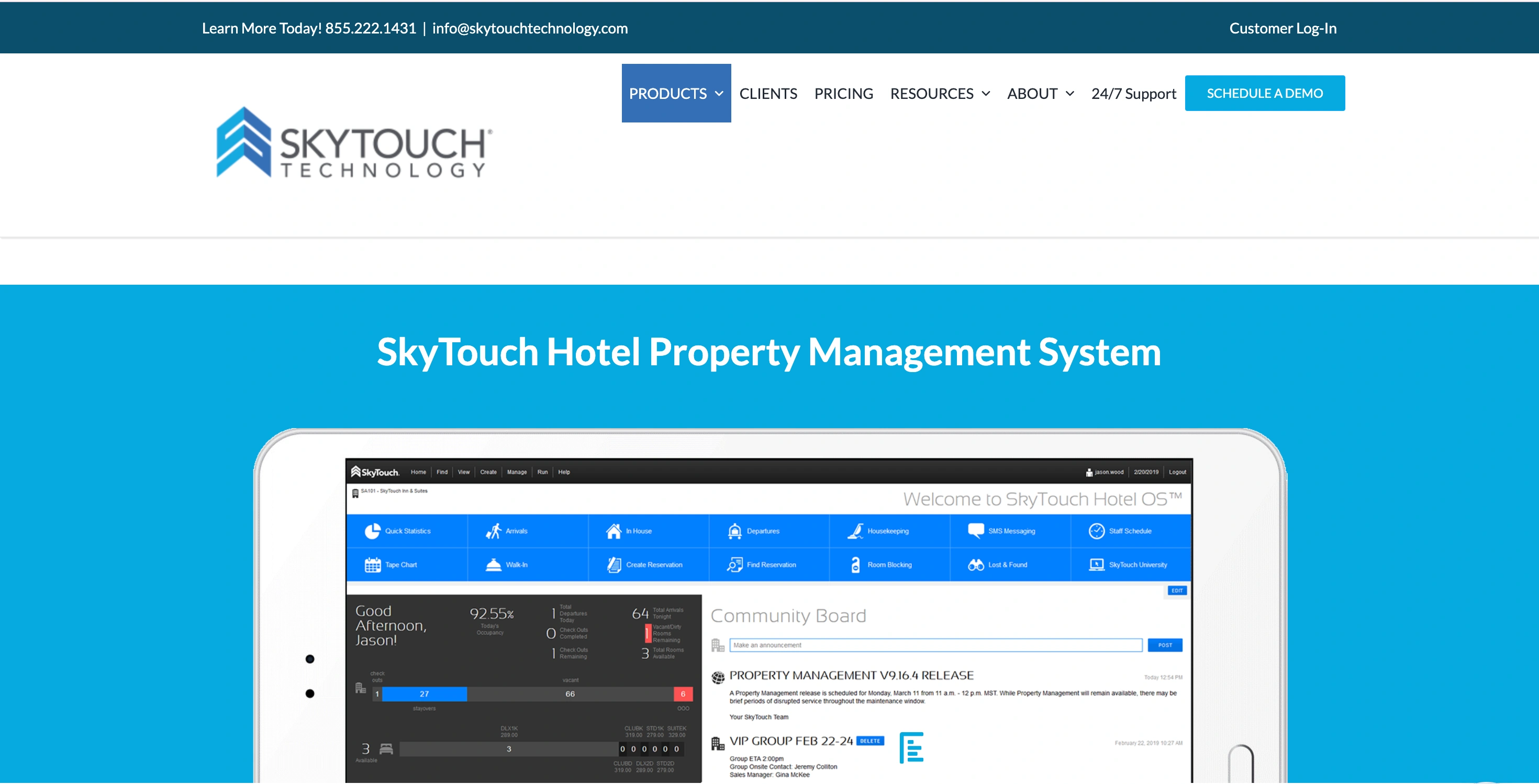
All of it runs through one hotel PMS software platform, not a patchwork of franchise-mandated systems.
Instead of a franchise reservation system: a commission-free hotel booking engine on your own website drives direct bookings. roommaster customers see up to 40% more direct bookings this way, with no per-booking royalty attached.
Instead of a franchise's OTA and loyalty network: a hotel channel manager connected to hundreds of OTAs keeps your property visible. Add hotel metasearch listings on Google and TripAdvisor, and you reach the same guest demand a loyalty program targets. Independent hotels can build independent hotel loyalty programs of their own, without paying a franchisor for it.
Instead of a franchise's central pricing team: hotel revenue management software, powered by roommaster's ampliphi integration, adjusts rates in real time. It responds to demand and competitor pricing the same way a franchise's central office does, minus the royalty. One independent property using this approach saw a 35% RevPAR increase in a single season.
Instead of a franchise's payment infrastructure: a built-in hotel payment gateway handles guest payments and chargebacks in house, with no extra processor layered on top.
Instead of a franchise-branded website template: a hotel website builder gives you a fully branded, conversion-optimized site, not a template shared across thousands of franchise properties.
Instead of relying on front desk staff to catch every call: roommaster Concierge, our hotel AI voice agent, answers guest calls 24/7, in any language. It turns missed calls into booked rooms instead of lost revenue.
Instead of a franchise-issued check-in flow: the hotel guest app gives guests mobile check-in and digital keys, under your own brand.
None of this needs a 15 to 20 year contract. None of it takes a percentage of every reservation. It runs on one platform, built specifically for independent hotel management software needs.
Franchise vs. Independent: Side-by-Side
| Factor | Hotel Franchise | Independent + roommaster |
|---|
| Initial cost | $30,000-$100,000+ franchise fee | Platform setup, no franchise fee |
| Ongoing cost | 8%-12% of gross revenue, indefinitely | Flat platform cost |
| Contract length | 15-20 years typical | No lock-in |
| Brand control | Owner follows brand standards and PIPs | Full control over design and operations |
| Booking technology | Franchise-provided reservation system | Commission-free booking engine and channel manager |
| Guest demand | Loyalty program access | Direct booking, metasearch, AI-driven pricing |
| Missed calls | Front desk dependent | 24/7 AI voice concierge |
| Flexibility to rebrand or sell | Restricted by franchise agreement | Full flexibility |
Bottom Line
A hotel franchise trades a large share of your revenue for a name, a reservation network, and instant guest trust. That trade costs 8% to 12% of gross revenue every year. It runs for 15 to 20 years, on top of a six or seven-figure upfront and PIP commitment.
Independent ownership keeps that revenue in-house. The tradeoff shifts from a royalty check to a technology decision. Can your booking engine, channel manager, revenue management, and guest communication tools replace what a franchise brand provides?
For a growing number of independent hotels, the answer is yes, without the long-term contract.
{{cta-strip}}
Frequently Asked Questions
1. Is owning a hotel franchise profitable?
It can be. Profitability depends on location, brand tier, and how much revenue goes to fees. Combined franchise fees typically run 8% to 12% of gross room revenue every year. That comes directly off your margin.
2. What's the cheapest hotel franchise to buy?
Economy and midscale brands generally have the lowest initial fees, starting around $30,000. Ongoing royalty and marketing fees still apply regardless of tier.
3. Can a small, independent hotel become a franchise?
Yes, though most franchisors set minimum room count and market requirements. Many independent owners choose to stay independent anyway, to avoid the PIP and brand standard obligations that come with a franchise agreement.
4. What's the real difference between a franchise and an independent hotel?
A franchise trades a share of your revenue for brand recognition and a shared reservation system. It also means a long-term contract. An independent hotel keeps full control and full revenue, but has to build its own booking, distribution, and revenue management capability.
5. Do independent hotels lose bookings without a loyalty program?
Not necessarily. A direct booking engine, channel manager, and metasearch visibility reach the same guest demand a loyalty program targets. There's no ongoing percentage of revenue attached to it.
6. How long is a typical hotel franchise contract?
Most hotel franchise agreements run 15 to 20 years. Terms vary by brand and property type.
.png)
.png)
.png)