Hospitality financial management means combining budgeting, revenue tracking, and cost control into one operating discipline. It is not a once-a-year accounting exercise. For a hotel owner, it means spotting a bad month three weeks early. It beats reacting after the fact.
What Is Hospitality Financial Management?
Hospitality financial management refers to the practice of tracking revenue, cost, and cash flow data. The goal is guiding property decisions, not just recording numbers. It sits above day-to-day bookkeeping, which just records transactions. It also sits above software selection, which is a one-time buying decision.
Bookkeeping answers “what happened.” Financial management answers “what should we do about it.” An owner who wants bookkeeping mechanics needs a different resource. The same goes for the choice between accrual and cash accounting. This article stays on the decision side. It covers the questions an owner and GM work through every week. It covers every season too.
What Are the Core Processes of Hospitality Financial Management?
Three processes repeat on a loop throughout the year. Each one feeds the other two. Skip any one, and it shows up as a surprise in the other two. That surprise usually lands within a quarter.
Budgeting and Forecasting
Budgeting sets a target for revenue and cost by month. Forecasting adjusts that target as the season, local events, and booking pace unfold. A fixed annual budget written in December is already stale by March.
The forecast should update at least monthly. During peak season, update it weekly instead. Compare booking pace to the same period last year, day for day. A flat annual average hides too much of what’s actually happening.
A property near a convention center needs a different forecast rhythm than a beachfront motel. Local events, weather, and group bookings all shift demand. A static annual number can’t capture any of that shift. The owner who checks pace weekly catches a soft week early. That same owner stops a soft week from becoming a soft month.
Cost Control
Cost control means tracking labor hours, supply costs, and utilities against revenue. It is not a fixed dollar ceiling set once a year. The right comparison is the property’s own past percentage. An industry average from a different market tells an owner far less.
A slow month with high labor spend is not automatically a staffing problem. It might be a scheduling mismatch instead. Shifts built for a busier forecast that never arrived will do that. Reviewing labor hours against actual occupancy catches this. Comparing against the original schedule alone will not.
Weekly review works better than monthly review here. A monthly view smooths over that one week. That’s exactly the week that drifted. That single week is exactly the detail an owner needs to fix.
Revenue Management
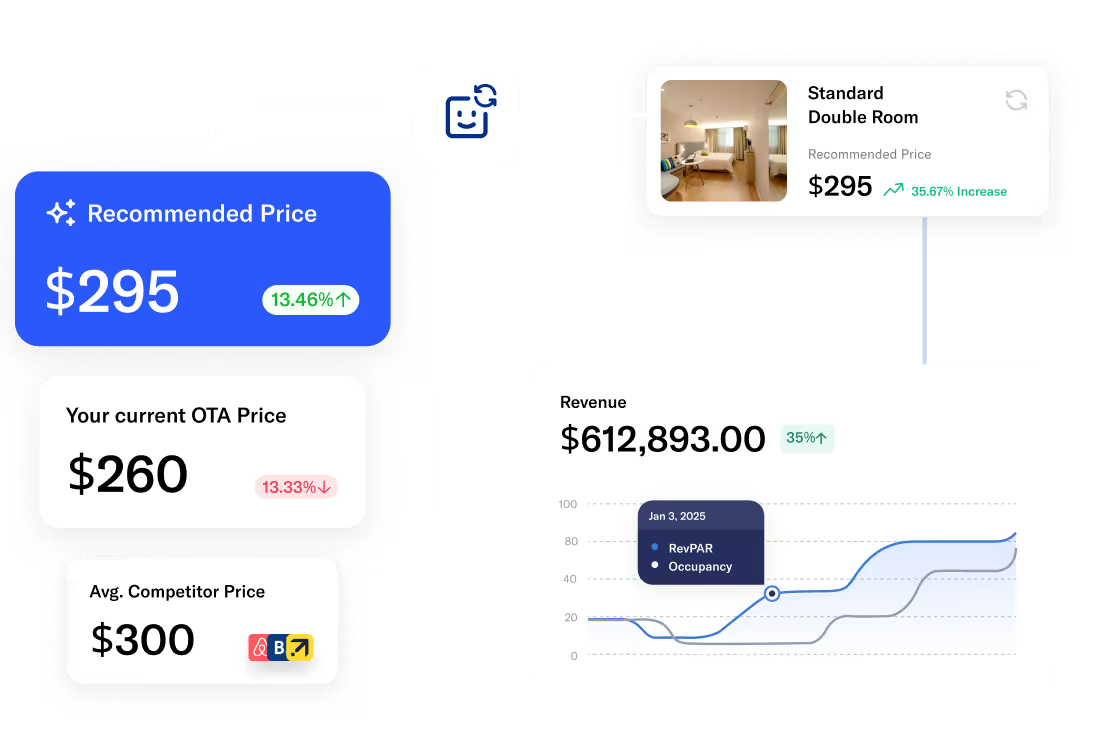
Revenue management is the pricing side of financial management. It means adjusting rates by demand, channel, and length of stay. The goal is capturing the highest rate a booking will actually pay. roommaster’s revenue management tools automate this in real time. That beats a manual rate check every morning.
Dynamic pricing extends this further. It reacts to competitor rates and local demand events automatically. That matters most for an owner without a dedicated revenue manager on staff.
Properties using roommaster’s AI-powered revenue management have seen RevPAR increase by up to 35%. That gain typically comes from smaller, frequent rate adjustments. It rarely comes from one large seasonal price change. A rate held steady for a month misses every small demand shift in between. A festival, a competitor’s sellout, or a slow midweek stretch each need a different price. Automated pricing catches these the same day, not weeks later at the next manual review.
{{revenue-management-one}}
Which KPIs Should a Hotel Owner Track Every Month?
The baseline KPI set for any property is RevPAR, ADR, and occupancy percentage. A growing property adds GOPPAR or TRevPAR once revenue extends beyond room sales.
| KPI |
What It Measures |
Why an Owner Tracks It |
| RevPAR (Revenue per Available Room) |
Room revenue divided by total available rooms |
Combines rate and occupancy into one number, so a full but underpriced month doesn't look better than it performed |
| ADR (Average Daily Rate) |
Average price paid per sold room |
Shows whether rate strategy is working, separate from how full the property is |
| Occupancy Percentage |
Rooms sold divided by rooms available |
Shows demand strength on its own, useful for staffing and housekeeping planning |
roommaster publishes a free RevPAR calculator, ADR calculator, and occupancy rate calculator. Owners can check these numbers against their own reports first. That beats trusting a report at face value.
Going Beyond the Big Three
RevPAR, ADR, and occupancy cover room revenue only. A property with a restaurant, bar, spa, or event space needs a wider view. Two additional metrics close that gap.
| KPI |
What It Adds |
| GOPPAR (Gross Operating Profit per Available Room) |
Factors in operating costs, not just revenue, so two properties with identical RevPAR can show very different GOPPAR |
| TRevPAR (Total Revenue per Available Room) |
Adds food, beverage, spa, and event revenue into the per-room figure, useful once ancillary revenue passes roughly a fifth of the total |
An owner who only tracks RevPAR can miss something important. A property can fill rooms well while losing money in the restaurant. roommaster’s calculator library covers GOPPAR, TRevPAR, and TRevPAB too. Owners can run these numbers themselves, against their own property.
How Should a Hotel Owner Turn Financial Data Into Decisions?
Tracking a KPI only matters once it changes a decision. Three recurring decision points show where that connection actually happens.
Pricing Decisions From RevPAR and ADR Trends
When RevPAR climbs but ADR stays flat, occupancy is doing all the work. Rate is underpriced for the demand it’s attracting. That’s the signal to raise rates before adding inventory. Waiting until the season closes means the opportunity has already passed.
The reverse pattern is rising ADR with falling occupancy. That usually means a rate increase outran what the local market will bear. It needs a smaller correction, not a full reversal.
A weekly rate review against the comp set catches both patterns early. Use actual pace, not gut feel, to run it. Waiting for the monthly P&L means the best week to act has already passed. This works best as a standing habit, not a reaction to a bad month. An owner who checks RevPAR and ADR weekly builds a feel for normal. That makes the real signal easier to spot.
Cost Decisions From Labor and F&B Tracking
A labor cost percentage that creeps up over three straight months signals trouble. Revenue can hold steady the whole time. It usually isn’t a wage problem at all. It’s a scheduling problem instead. The fix is shift alignment against actual occupancy, not a blanket hiring freeze.
Food and beverage cost percentage moving against a stable menu is worth investigating too. It often signals a supplier issue. Sometimes it’s a portion-control problem instead. Catching it before the next budget cycle costs less than catching it after.
Both patterns share the same fix. Compare cost against revenue weekly, not against last year’s number. A weekly view catches a three-week drift before it becomes permanent. A quarterly or annual view only confirms the damage once it has already compounded.
Channel Mix Decisions From Booking Source Data
A rising share of OTA bookings against a flat direct number hides a real cost. Commission eats into what looks like healthy occupancy. The decision isn’t to abandon OTAs. It’s to rebalance marketing spend toward the direct channel until the mix improves.
Properties using roommaster’s Booking Engine have seen up to 40% more direct bookings. That shift lowers blended commission cost. It works even when total occupancy stays flat.
This decision only gets made if booking source data sits next to revenue data. Two separate systems make the pattern much harder to spot in time. An owner checking OTA bookings in one dashboard rarely compares them to direct bookings live. By the time a manual report combines the two, the mix has already shifted further. One shared report turns a quarterly surprise into a weekly adjustment instead.
What Role Does a PMS Play in Hospitality Financial Management?
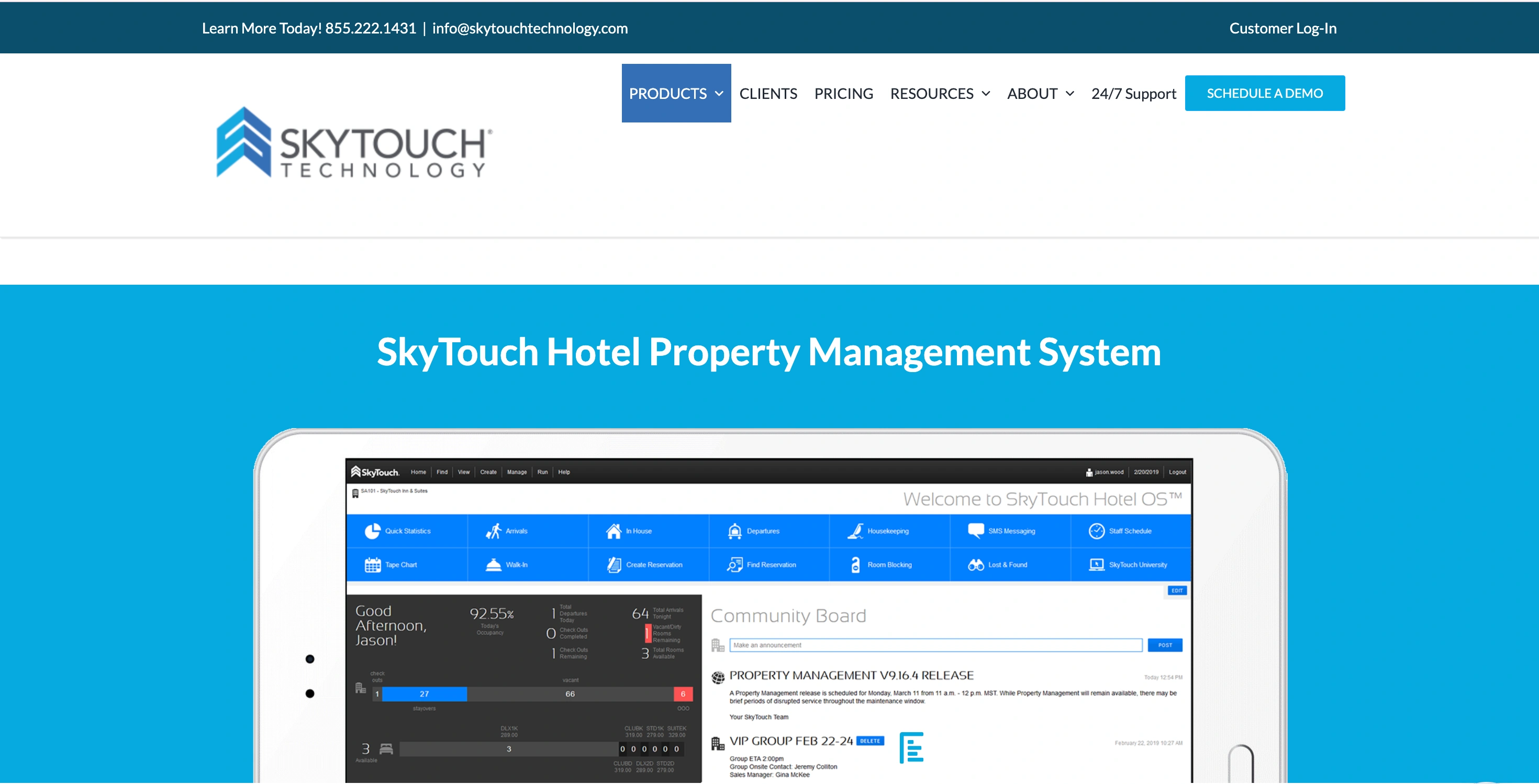
A property management system is not accounting software. roommaster does not position itself as one. What it does is capture the operational data both sides depend on. That means room revenue, occupancy, rate, and departmental charges.
roommaster’s reporting tools pull that data into one place. That replaces three separate logs kept by front office, housekeeping, and finance.
“roommaster showed us which rates actually drive profit. We adjusted pricing confidently, eliminated guesswork, and now rely on real-time reports instead of messy spreadsheets.”
- Shawn Zhou, roommaster customer
Seaboard Hotels is a four-property, family-owned group. It has used roommaster’s yield management tools since well before the pandemic. The result was at least 7% revenue growth every year over that stretch. That came from tracking the same numbers consistently, not from reacting month to month.
The accounting mechanics side of this, including bookkeeping and financial statements, lives elsewhere. roommaster’s guide to hotel accounting covers that ground directly. roommaster’s own role stays upstream of it. It feeds clean, real-time data into whichever accounting platform a property already runs.
What Mistakes Do Hotel Owners Make With Financial Management?
A few mistakes show up repeatedly across independent properties. Each one is a process gap, not a math error.
Relying on Gut Instinct Over Data
An owner who has run a property for years develops instinct for a good month. But instinct alone misses slow shifts a report catches immediately. A three-point drop in occupancy over two weeks can feel like normal variation. In the moment, it rarely feels like the start of a trend.
The fix isn’t replacing instinct with data. It’s checking instinct against the same five numbers every week. The two should reinforce each other, not work apart. An owner who does this catches a slow shift while it’s still small.
Instinct is still valuable. It tells an owner where to look first, before a report confirms it. The owners who make the fewest costly mistakes use both together. Neither one replaces the other.
Treating Cost Control as a Once-a-Year Exercise
Reviewing labor and supply costs only during annual budgeting lets a three-month drift go unnoticed. By the time it surfaces, the damage is already done. It shows up as a full quarter of margin loss on the year-end report.
Monthly review catches the same drift while it’s still a small correction. It also gives an owner time to ask why costs moved. Waiting for the annual review turns a fixable question into a fixed conclusion.
A property reviewing costs monthly can trace a spike to one week or one vendor. A property reviewing once a year just sees a total. There’s no way to tell which month caused it. That total arrives too late to fix the season it came from.
Letting Departments Track Numbers in Separate Spreadsheets
Front office booking data, housekeeping labor hours, and F&B costs often live apart. Three separate spreadsheets means no one sees the full picture. Someone has to manually combine them, usually after the month has already closed.
The same handoff problem that breaks operational requests between departments breaks financial visibility too. It just carries a longer delay before anyone notices. A missed number doesn’t page anyone. A missed guest request usually does.
A broken air conditioner gets reported the same day. A slow drift in labor cost across three departments can go unnoticed for months. Both are handoff failures. Only one announces itself right away. A shared report makes the quiet one visible too, before it becomes a real loss.
Bring Your Financial Data Together with roommaster
See how roommaster’s Property Management System brings financial data into one place. Book a demo to see it on your own property.
{{cta-strip}}
Frequently Asked Questions
1. What is hospitality financial management?
Hospitality financial management is the ongoing use of revenue and cost data to guide decisions.
2. What are the core processes of hospitality financial management?
Budgeting, cost control, and revenue management form the three core processes. Each feeds the other two.
3. Which KPIs matter most in hospitality finance management?
RevPAR, ADR, and occupancy percentage form the baseline set. GOPPAR and TRevPAR get added as revenue diversifies.
4. How does a PMS support hospitality finance management?
A PMS captures room revenue, occupancy, and rate data. It feeds that data into a property’s accounting platform.
5. What mistakes do hotel owners make in financial management?
Owners commonly trust gut instinct alone, review costs yearly, and skip cross-department tracking.
6. Do independent hotels need dedicated accounting software?
Most independent hotels still need dedicated accounting software. A PMS supplies the operational data that software depends on.

.png)
.png)
.png)