Best Campground, RV, Holiday & Caravan Park Management Software 2026
Campground management software automates reservations, site maps, pricing and payments for RV parks and campgrounds. The best campground reservation and booking software also runs holiday park and caravan park operations from one system
The 10 best campground management software for 2026, including the top campground reservation software and booking software, ranked by property size and type. The right choice depends on three things: your guest mix (nightly versus long-term or seasonal), your accommodation types (RV spots, static caravans, cabins), and whether you need POS, gate integrations or owner accounting.
Our list of popular campground, RV park, holiday park and caravan park management software choices, ranked: 1. roommaster, 2. Campspot, 3. RoverPass, 4. CampLife, 5. ResNexus, 6. Newbook, 7. RMS Cloud, 8. Firefly Reservations, 9. WebRezPro, and 10. ParcVu.
Small And Independent Campgrounds And RV Parks: You need online booking, site maps and low-cost setup. Look at roommaster, RoverPass, and Firefly Reservations.
Long-Term And Seasonal RV Parks: Focus shifts to utility and meter billing, recurring invoices and mixed nightly and monthly stays. Look at CampLife, ResNexus, RoverPass, and roommaster.
Holiday Parks, Caravan Parks And Multi-Amenity Resorts: Prioritize multi-amenity management, owner accounts, self-service check-in and dynamic pricing. Look at Newbook, RMS Cloud, and ParcVu.
What Is Campground Reservation Software?
Campground reservation software helps outdoor hospitality properties streamline daily operations, grow revenue, and create a smoother experience by managing bookings, interactive site maps, dynamic pricing, advanced accounting, and payments in one system.
How We Chose the Right Software for Every Property Type and Size
We ranked platforms by the property size and team they fit best, weighing how well each one handles managing bookings, interactive site maps, dynamic pricing, advanced accounting, and payments. Use the tables below to match the software to the people who will actually run it.
Small, Independent, and Mid-Sized Campgrounds and RV Parks
Role
Goals and KPIs
Features that deliver those goals
Owner / Operator
Grow revenue and occupancy without adding staff; improve RevPAR and site utilization; keep costs predictable
Adds demand and enforces booking rules for growing parks
Growing parks and resorts
G2 4.6 / Capterra 4.5 / Software Advice 4.5
ResNexus
All-in-one property management, online booking, marketing, support
Reliable operations for parks that value hands-on support
Growing parks and inns
G2 4.5 / Capterra 4.8 / Software Advice 4.8
RMS Cloud
Online booking, site maps, dynamic pricing, POS, reporting, multi-property
Cloud-based management for parks scaling up sites and amenities
Growing campgrounds, RV parks, and holiday-park resorts
G2 4.4 / Capterra 4.4 / Software Advice 4.4
Firefly Reservations
Online booking, per-booking pricing, multi-site management, no start-up fees
Simple, low-cost entry for owner-run parks
Small and independent parks
G2 5.0 / Capterra 4.6 / Software Advice 4.6
Bonfire
Modern interface, site maps, guest messaging, flexible plans
A clean guest booking experience for independents
Small and independent parks
Capterra 4.3
{{booking-engine-three}}
Top Campground Management Software Providers
Every platform below gets the same depth, grouped by the segment it serves best and how well it handles managing bookings, interactive site maps, dynamic pricing, advanced accounting, and payments.
Small, Independent, and Mid-Sized Campgrounds and RV Parks
1. roommaster: Best for small, independent, and mid-sized campgrounds and RV parks that want room to grow
roommaster Reservations is an all-in-one campground reservation software built for campgrounds and RV parks to handle the essentials in one place: managing bookings, interactive site maps, dynamic pricing, advanced accounting, and payments. Built by hoteliers with 30+ years in hospitality technology, it pairs a modern online booking experience for campers with the operational depth an owner needs behind the scenes. It suits owner-run and mid-sized parks that are tired of stitching together separate booking, payment, and channel tools, and it scales up as you add sites, amenities, or locations. What separates roommaster is that reservations, payments, channel sync, and reporting live in one system, so your team works from fewer screens.
Key features: Interactive site maps, real-time online booking, dynamic pricing, roommaster Channel Manager, roommaster Payments, recurring and seasonal billing, point of sale, two-way SMS and email guest messaging.
What it solves: Empty midweek sites and manual admin drain revenue for owners and front desk teams. roommaster fills more sites with online booking and dynamic pricing, then cuts the busywork with automation, so parks improve occupancy and site utilization while saving staff hours each week.
Best for: Small, independent, and mid-sized campgrounds and RV parks, with the room to scale to larger and multi-park operations.
Pricing: Custom quote based on site count and the products you need. Book a demo for a tailored price.
Reviews: G2 4.5, Capterra 4.3, Software Advice 4.3, backed by proof points like 99.95% uptime and a 97% client retention rate.
{{booking-engine-four}}
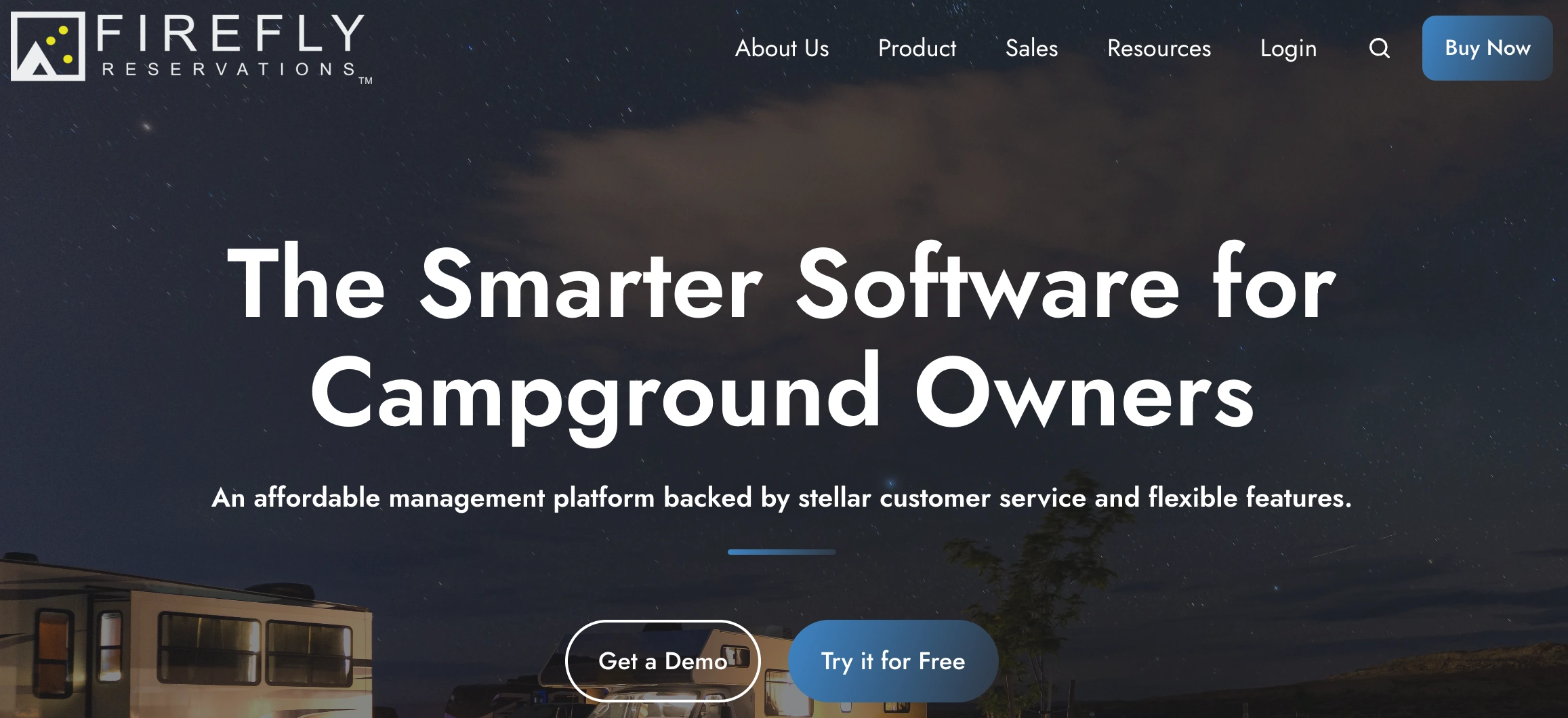
2. Firefly Reservations: Best for small parks that want transparent, low-cost pricing
Firefly Reservations is an all-in-one system built by campground owners, and that origin shows in its focus on ease of use and clear pricing. It covers the essentials small parks need most: managing bookings, interactive site maps, dynamic pricing, advanced accounting, and payments. It suits owner-run parks that want to get online quickly without start-up fees or long onboarding, and its multi-site management fits parks with a mix of RV, tent, and cabin sites. The transparent per-booking model appeals to operators who want costs that track with actual bookings.
What it solves: Small operators can't always justify high fixed software costs. Firefly's low-cost, per-booking model lets them accept online reservations and cut phone bookings, lifting occupancy without a large upfront commitment.
Best for: Small and independent campgrounds and RV parks.
Pricing: 14-day free trial, no start-up fees, per-booking model (around $2 per booking). Confirm current pricing with the vendor.
Reviews: Capterra 4.6, Software Advice 4.6, and G2 5.0 (from a small review base), with strong marks for ease of use and transparent pricing.
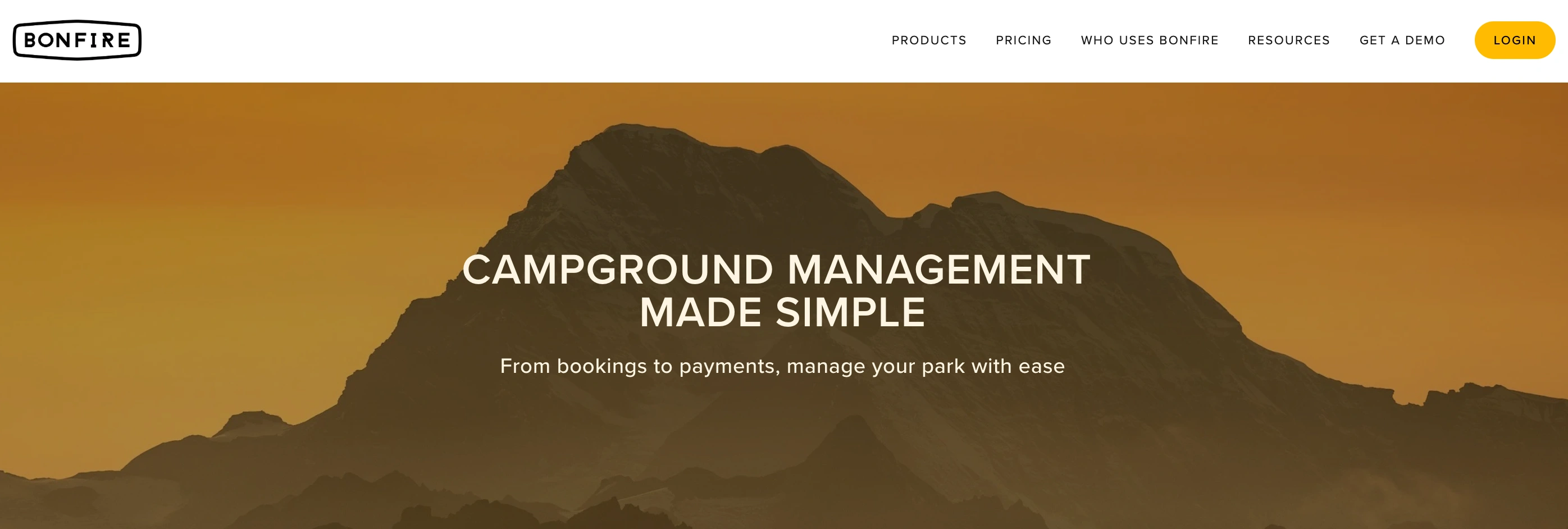
3. Bonfire: Best for independent parks that want a modern guest booking flow
Bonfire provides a modern interface with site maps and guest messaging, aimed at parks that want their online booking to feel current and simple for campers. It handles the day-to-day essentials, managing bookings, interactive site maps, dynamic pricing, and payments, in a clean, mobile-friendly package. It offers flexible per-booking or monthly plans, so operators can pick the model that matches their volume. It suits independents that prioritize the guest-facing experience without giving up control behind the scenes.
Key features: Modern booking interface, interactive site maps, guest messaging, flexible plans, online payments.
What it solves: A clunky booking page costs direct reservations. Bonfire gives independents a clean flow that improves online booking share and guest satisfaction while keeping setup simple.
Best for: Small and independent campgrounds and RV parks.
Pricing: Flexible per-booking or monthly plans. Confirm current pricing with the vendor.
Reviews: Capterra 4.3, with positive marks for its modern booking experience.
Growing Parks and Multi-Amenity Resorts
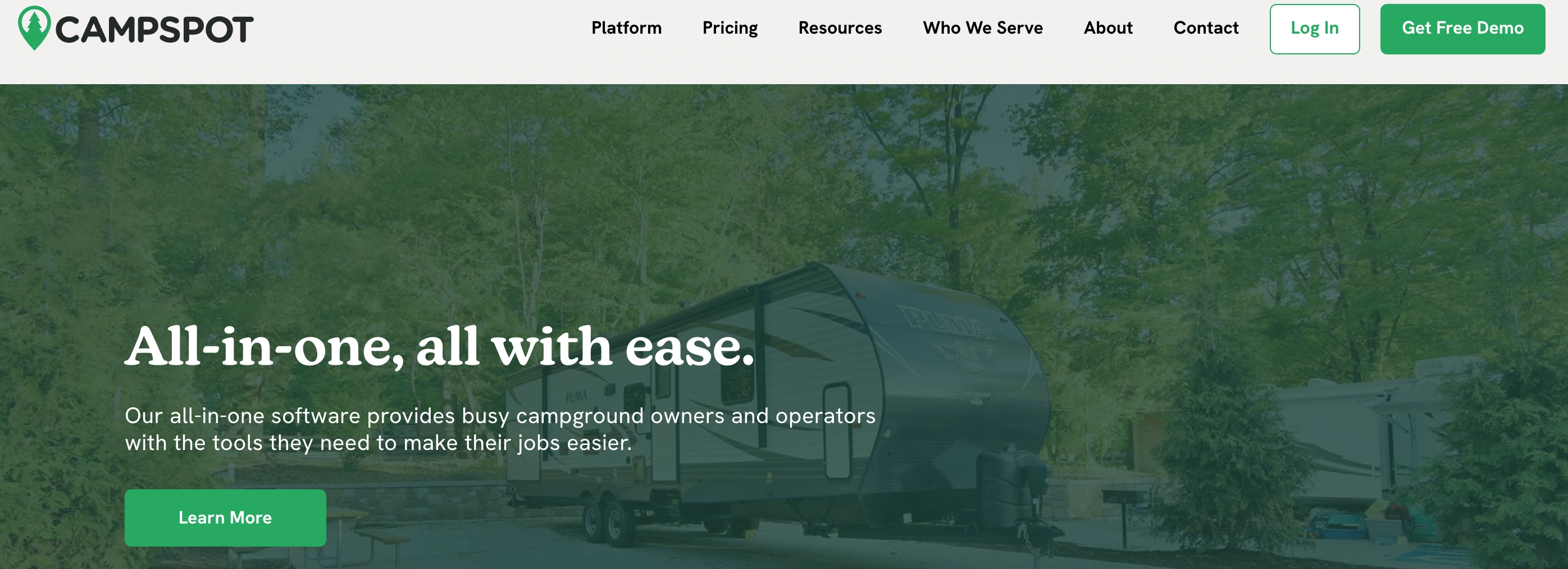
1. Campspot: Best for growing parks that want a consumer marketplace and strong booking rules
Campspot features a consumer-facing marketplace, an intelligent rules engine, and dynamic pricing, which together help growing parks capture more demand and enforce complex booking policies. The marketplace exposes sites to a wide camper audience, while the rules engine handles minimum stays, site locks, and seasonal restrictions. It is a fit for parks and resorts with varied inventory and busy peak seasons. Dynamic pricing helps protect revenue on high-demand weekends.
What it solves: Growing parks struggle to enforce booking rules and capture peak demand manually. Campspot automates both, lifting occupancy and ADR while reducing booking errors.
Best for: Growing parks and multi-amenity resorts.
Pricing: Per-booking fee model (around $2 per booking). Confirm current pricing with the vendor.
Reviews: G2 4.6, Capterra 4.5, Software Advice 4.5, reflecting a large review base and steady marks for its marketplace and rules engine.
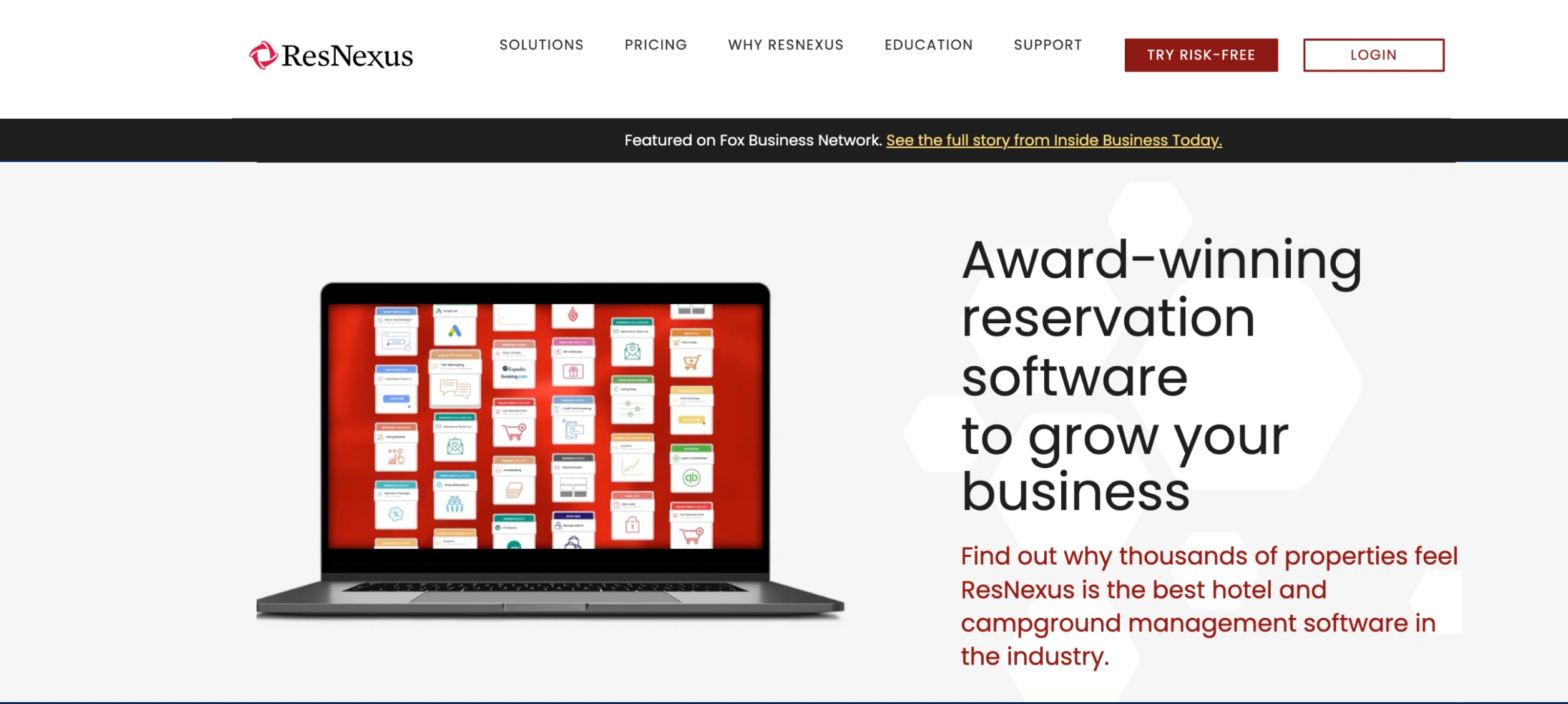
2. ResNexus: Best for growing parks that prioritize support and all-in-one management
ResNexus is highly rated for customer support and offers comprehensive all-in-one property management, which makes it a dependable pick for parks that want a hands-on partner. It covers online booking, payments, marketing, and operations in one place, so operators can reduce the number of vendors they manage. It suits growing parks and inns that value reliable help when issues arise. The marketing tools help operators grow direct bookings and repeat visits.
What it solves: Operators piecing together tools lose time and consistency. ResNexus consolidates operations and backs it with strong support, improving staff efficiency and guest satisfaction.
Best for: Growing parks, RV parks, and inns.
Pricing: Tiered plans. Confirm current pricing with the vendor.
Reviews: G2 4.5, Capterra 4.8, Software Advice 4.8, plus 4.8 on HotelTechReport, with one of the largest review bases in the category and strong marks for support.
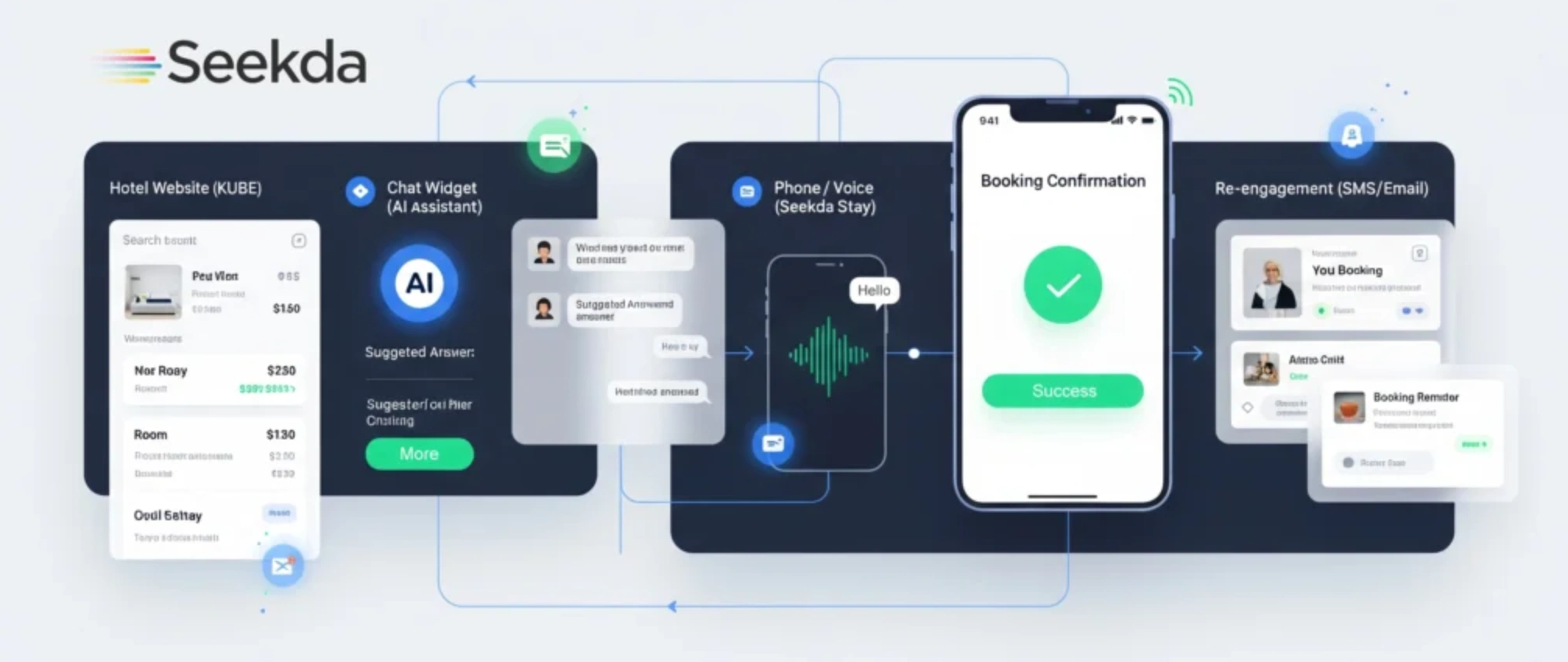
3. Seekda: Best for parks that want online booking and wider channel distribution
Seekda is a booking and distribution platform known in the broader hospitality market for online booking and channel management. For parks, its strength is distribution reach: getting availability in front of more travelers and keeping channels in sync. It suits growing parks and resorts that already have operations handled and mainly want to widen their booking funnel. Confirm current campground-specific features directly with the vendor before shortlisting.
What it solves: Parks that rely on a single channel leave demand on the table. Seekda broadens distribution and syncs availability, helping improve online booking share while reducing double bookings.
Best for: Growing parks and resorts focused on distribution reach.
Pricing: Custom quote. Confirm current pricing and campground fit with the vendor.
Reviews: Listed on Capterra, GetApp, and HotelTechReport with positive feedback on support and its booking engine, though on a smaller public review base, so verify current ratings and request references.
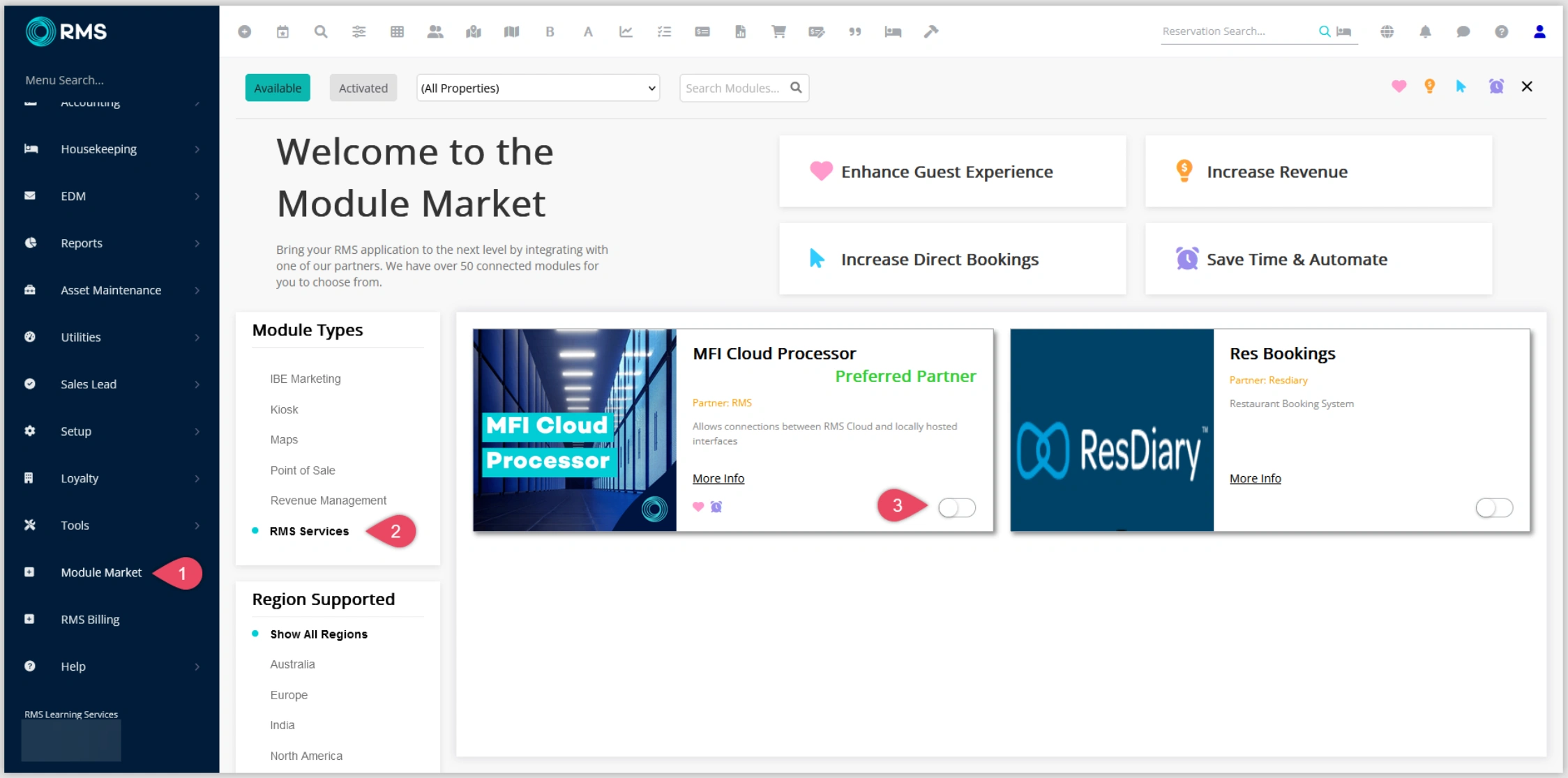
4. RMS Cloud: Best for growing parks and resorts that want cloud-based management at scale
RMS Cloud is a cloud-based reservation and property management platform used by RV parks, holiday parks, and campgrounds that are scaling up. It handles the essentials in one place: managing bookings, interactive site maps, dynamic pricing, advanced accounting, and payments, with automation that suits parks adding sites and amenities. It fits growing operators who want enterprise-style tools without running their own IT. Its reporting and rate controls help parks tune performance as demand shifts across the season.
What it solves: Growing parks outgrow basic booking tools and manual rate changes. RMS Cloud centralizes reservations, pricing, and payments, helping lift occupancy and ADR while cutting admin time as the property expands.
Best for: Growing campgrounds, RV parks, and holiday-park resorts.
Pricing: Custom quote based on site count and modules. Confirm current pricing with the vendor.
Reviews: G2 4.4, Capterra 4.4, Software Advice 4.4, plus 4.3 on HotelTechReport, with one of the largest review bases in the category.
Large and Multi-Park or Enterprise Operations
1. CampLife: Best for large parks with heavy back-office needs
CampLife includes online booking, e-signatures, dynamic pricing, and point-of-sale features, plus strong back-office tools like gate integrations, meter reading, and custom retail packages. That depth makes it a fit for large parks that manage utilities, controlled access, and on-site retail alongside reservations. It suits operators who need operational control as much as a booking engine. The back-office breadth helps large teams standardize daily processes.
What it solves: Large parks juggle gates, meters, and retail alongside reservations. CampLife centralizes them, cutting manual work and improving staff hours saved and operational accuracy.
Best for: Large campgrounds and RV resorts with complex operations.
Pricing: Starts around $99 per month plus a per-booking fee. Confirm current pricing with the vendor.
Reviews: Capterra 4.9, Software Advice 4.9, with high marks for back-office depth.
2. Newbook: Best for large and multi-amenity holiday parks and resorts
Newbook offers reservations, POS, automation, and multi-amenity management aimed at complex holiday parks and resorts. It handles varied inventory, on-site services, and automated guest journeys at scale. It fits large operations that need one system across accommodation, activities, and retail. Automation helps big teams reduce repetitive tasks across departments.
What it solves: Large resorts run many services at once. Newbook unifies them and automates routine work, improving portfolio occupancy and reducing admin load.
Best for: Large and multi-amenity holiday parks and resorts.
Pricing: Custom quote. Confirm current pricing with the vendor.
Reviews: G2 4.3, Capterra 4.5, Software Advice 4.5, plus 4.8 on HotelTechReport, with solid marks across multi-amenity operations.
3. RezExpert: Best for large and multi-facility parks that need high-volume reservation management
RezExpert, by Digital Rez, is a reservation and property management platform built for larger campgrounds, RV parks, resorts, and multi-facility operations. It handles the essentials in one place: managing bookings, interactive site maps, dynamic pricing, advanced accounting, and payments, with the depth to run high reservation volumes across sites and amenities. It suits operators and management companies that need centralized control and reporting over a busy or multi-location portfolio. Its long track record in complex reservation environments makes it a fit for parks that have outgrown lighter tools.
What it solves: Large and multi-facility parks lose control when bookings and finances span several sites. RezExpert centralizes reservations, pricing, and accounting, improving portfolio occupancy and staff hours saved while reducing errors.
Best for: Large, multi-facility, and multi-park campgrounds, RV parks, and resorts.
Pricing: Custom quote based on facility count and modules. Confirm current pricing with the vendor.
Reviews: Capterra 4.8, Software Advice 4.8, with strong marks for reservation depth and support.
Core Features to Look For in Campground Reservation Software
Interactive site maps: Let campers pick the exact RV or tent spot they want, and let staff see availability at a glance.
Online booking: Real-time reservations from your website, so guests can book a specific site without a phone call.
Dynamic pricing: Automatically adjusts rates by local demand, season, and events to protect revenue on peak weekends.
Channel manager: Syncs your open dates with outside travel and camping sites to stop double bookings.
Advanced accounting: Deposits, recurring and seasonal billing, folio management, and detailed financial reporting.
Point of sale (POS): Handles camp store purchases, firewood, and equipment rentals on site.
Operations tools: Front desk workflows, mobile check-in, housekeeping and site-turn lists, and work orders.
Guest messaging: Automated email and two-way SMS for confirmations, arrival details, and review requests.
{{cta-strip}}
Frequently Asked Questions
1. What is campground reservation software?
campground reservation software helps campgrounds and RV parks manage bookings, interactive site maps, and payments in one system, while giving campers a modern online booking experience.
2. What is a campground management system?
Campground management system is a broader platform that runs the whole property: reservations, front desk operations, point of sale for the camp store, dynamic pricing, advanced accounting, and guest messaging. Reservation software is the booking core of that system.
3. What is campground booking software?
Campground booking software is the guest-facing part of the system that lets campers pick a site on an interactive map and reserve it online in real time. Most all-in-one platforms, including roommaster Reservations, combine booking with operations and payments.
4. What is the difference between campground reservation software and campground management software?
Reservation software focuses on taking and organizing bookings. Management software adds operations, revenue tools, POS, accounting, and reporting on top. Most modern platforms combine both.
5. What software do most campgrounds use?
Popular options include roommaster Reservations, Campspot, Firefly Reservations, CampLife, Bonfire, and ResNexus. The right pick depends on park size, amenities, and how many locations you run.
6. What software do small and independent campgrounds and RV parks use?
Small and independent parks often choose all-in-one, easy-to-run systems with clear pricing. roommaster Reservations is a strong choice, alongside Firefly Reservations, Bonfire, and RoverPass.
7. What are the core features to look for?
Interactive site maps, real-time online booking, dynamic pricing, a channel manager to prevent double bookings, advanced accounting, point of sale, and automated guest messaging by email and SMS.
8. Which KPIs does campground software help improve?
Occupancy, ADR, RevPAR and revenue per available site, site utilization, online booking share, no-show and overbooking rates, and staff hours saved.
9. Does campground reservation software integrate with outside travel and OTA sites?
Yes. A channel manager syncs your open dates with external booking and camping sites in real time, which helps stop double bookings and fill more sites.
10. What is cloud-based campground software?
Cloud-based software runs online rather than on a computer at the front desk, so you can manage the park from anywhere, get automatic updates, and avoid on-site IT overhead.
11. What are the common types of campground software?
Reservation-only booking tools, all-in-one campground management systems, and enterprise multi-park platforms. Larger parks with gates, meters, and retail usually need the management or enterprise tiers.
booking-engine-one
Capture more direct bookings with a fast, reliable booking engine.
Mayela Lozano is a content strategist with a passion for hospitality and technology. She collaborates with roommaster on content creation, highlighting how technology can streamline hotel operations and enhance guest satisfaction. When she’s not creating content, Mayela loves to travel and spend time with her two little ones, discovering new adventures and making memories along the way.
Join Thousands of Hotels Thriving with roommaster
The transition to roommaster is straightforward and efficient. Our implementation team handles data migration including reservations, guest profiles, and historical information.
The transition to roommaster is straightforward and efficient. Our implementation team handles data migration including reservations, guest profiles, and historical information.
Hotel Check-In Kiosk: Enhance the Guest Experience
October 5, 2026
Hospitality Technology
Hotel Management
Hospitality Trends
Hotel Self Check-In: How It Works, Types, Benefits And Setup
October 1, 2026
Hotel Management
Hospitality Trends
Hotel Check-In & Check-Out Times Explained
October 1, 2026
Hospitality Trends
Hotel Management
Cloud-Based Property Management System: Hotel PMS
October 1, 2026
Hotel Management
Cloud PMS
Hotel Management System (HMS): A Complete Guide
September 23, 2026
Hospitality Trends
Hospitality Technology
Hotel PMS
Hotel Management
Cloud PMS
How Hotel PMS Software Transforms Hospitality Management
September 23, 2026
Marketing
Online Bookings
Hotel Metasearch Strategy: 8 Tactics That Drive Direct Bookings
September 22, 2026
Hotel Management
Marketing
Pet-Friendly Hotel Amenities & Package Ideas That Drive Revenue
September 22, 2026
Hotel Management
Hotel PMS
Hotel Food And Beverage (F&B): The Complete Guide
September 22, 2026
Hotel Management
Marketing
Hotel Pet Fees: How Much Should You Charge?
September 22, 2026
Join Thousands of Hotels Thriving with roommaster
See how roommaster's unified platform can work for your property. Our team will walk you through features tailored to your specific needs and operations.


.png)
.png)
.png)