HMS manages reservations, billing, housekeeping, and guest services efficiently.
Automated bookings, dynamic pricing, and integrated channel management boost occupancy and revenue.
Personalized services, loyalty programs, and smooth communication enhance guest experiences and repeat bookings.
Automation lowers labor costs and operational errors.
Cloud-based or on-premise solutions ensure scalability, seamless integration, and long-term competitiveness in hospitality.
Technology has come to play a crucial role in maximizing efficiency and revenue in the hospitality industry. A hotel management system (HMS), for one, is a powerful tool that automates daily operations, optimizes pricing strategies, and enhances guest experiences, all of which contribute to higher profitability.
From streamlining bookings to leveraging data-driven insights for revenue growth, the right HMS can transform how hotels run their business. This article explores how hotel management system software unlocks revenue potential, helping hotels stay competitive and profitable in an evolving market.
What Is a Hotel Management System?
A hotel management system software, often referred to as a property management system (hotel PMS system), serves as a centralized platform that manages everything for hotels – from reservations and check-ins to billing and guest services – allowing hoteliers to run their businesses more smoothly. It integrates various functions into a single system to ensure seamless coordination across departments. These key operational areas include:
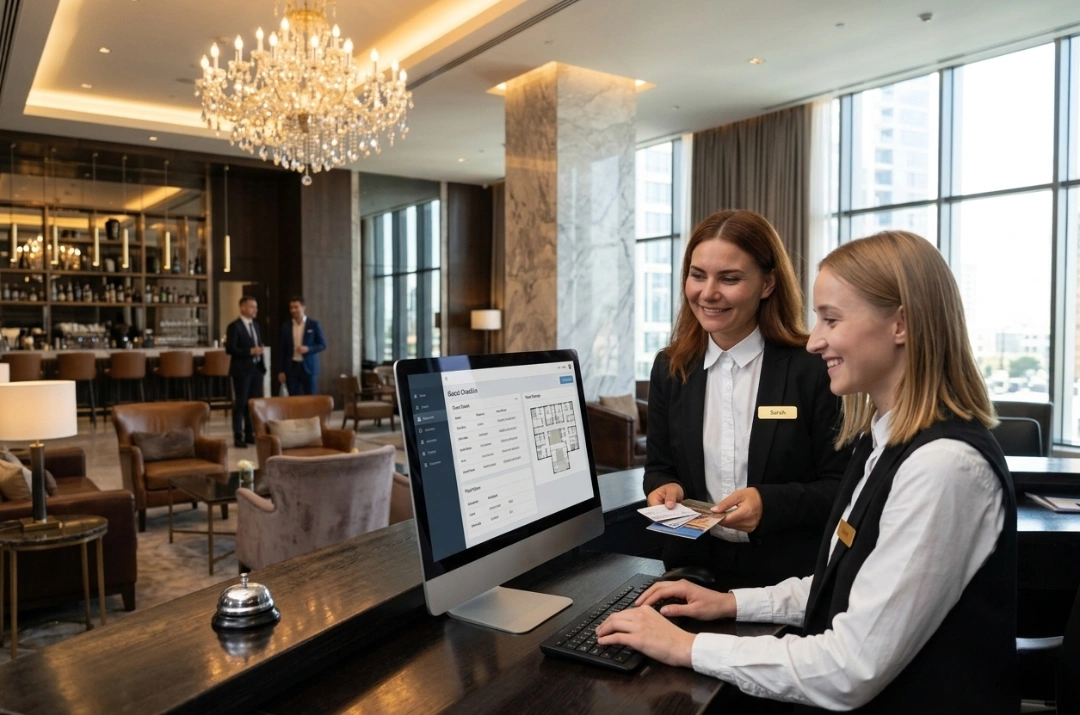
Reservations & Front Desk Management: Automates booking processes, prevents overbooking, and tracks real-time room availability.
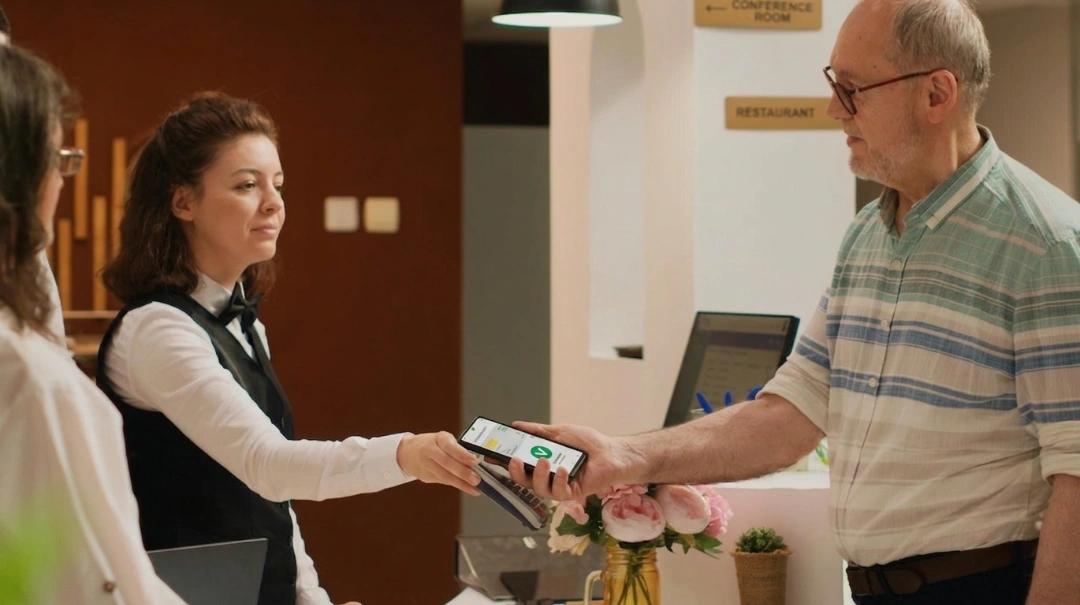
Billing & Payment Processing: Handles invoices, multiple payment options, and secure transactions for guests.
Housekeeping & Maintenance Tracking: Assigns tasks, updates room status, and ensures smooth coordination between departments.
Channel Management: Syncs room availability across online travel agencies (OTAs) like Booking.com and Expedia.
By integrating these functions, an hotel management system (HMS) eliminates manual tasks, reduces errors, and enhances guest satisfaction.
Key Features That Drive Revenue Growth
An HMS is more than just a tool for managing daily hotel operations; it plays a vital role in increasing revenue. By automating tasks, optimizing pricing, and enhancing guest experiences, an HMS helps hotels maximize their profitability. Here are the key features that drive revenue growth:
1. Automated Booking & Reservation Management
An HMS reduces overbooking and optimizes room allocation by automating the reservation process. Real-time updates ensure accurate availability across all booking platforms, maximizing occupancy rates and preventing revenue loss due to booking errors.
2. Dynamic Pricing & Revenue Management Tools
Advanced HMS solutions use AI-driven analytics to adjust room prices based on demand, seasonality, and as well as competitor rates. This ensures that hotels charge the optimal rate at any given time, increasing revenue without losing competitive advantage.
3. Integrated Channel Management
Expanding a hotel’s reach through OTAs like Expedia, Booking.com, and Airbnb is crucial for driving bookings. A hotel channel manager integrated within your HMS synchronizes availability and pricing across all distribution channels in real-time, reducing manual work and ensuring consistent rates while preventing overbookings.
4. Enhanced Guest Experience & Personalization
A satisfied guest is more likely to return and recommend the hotel. A hotel management system software enables loyalty programs, personalized marketing, and tailored services based on guest preferences, leading to higher retention rates and increased revenue from repeat customers
5. Efficient Payment Processing & Upselling Tools
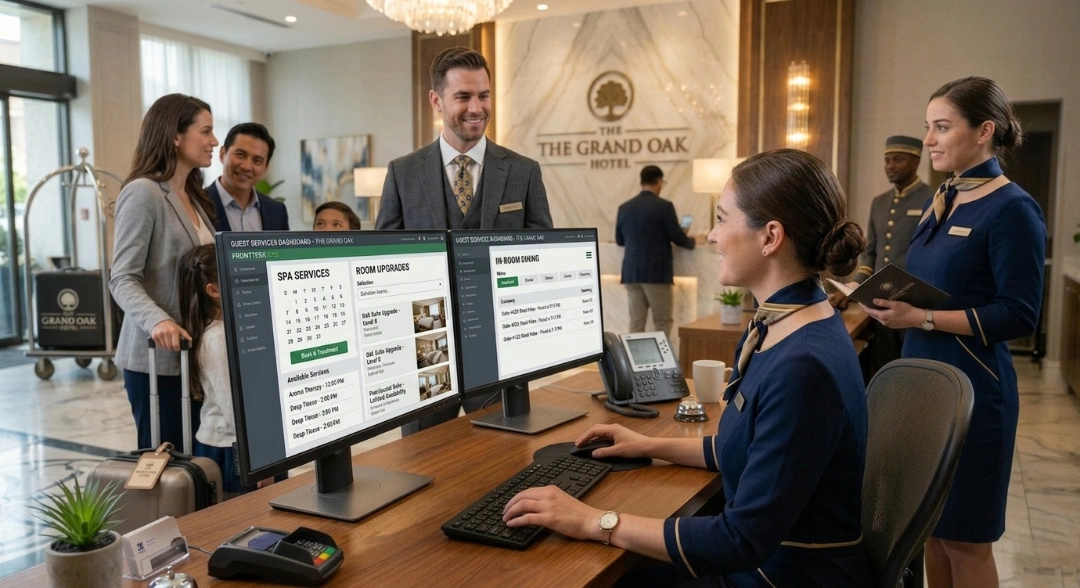
Streamlined billing and payment processing ensures quick, hassle-free transactions for guests. Additionally, HMS platforms can suggest upsells and add-ons, such as room upgrades, spa services, or dining packages, maximizing per-guest revenue.
6. Optimized Direct Booking Platform
Integrating a powerful hotel booking engine into your HMS enables guests to book directly through your website with real-time availability and secure payment processing. This reduces dependency on OTAs, eliminates commission fees, and increases profit margins while giving you complete control over the guest relationship from the first interaction.
Enhancing Guest Satisfaction with a Hotel Management System
An HMS plays a crucial role in delivering an exceptional guest experience, which directly impacts customer loyalty and profitability. Here are ways an HMS enhances guest satisfaction:
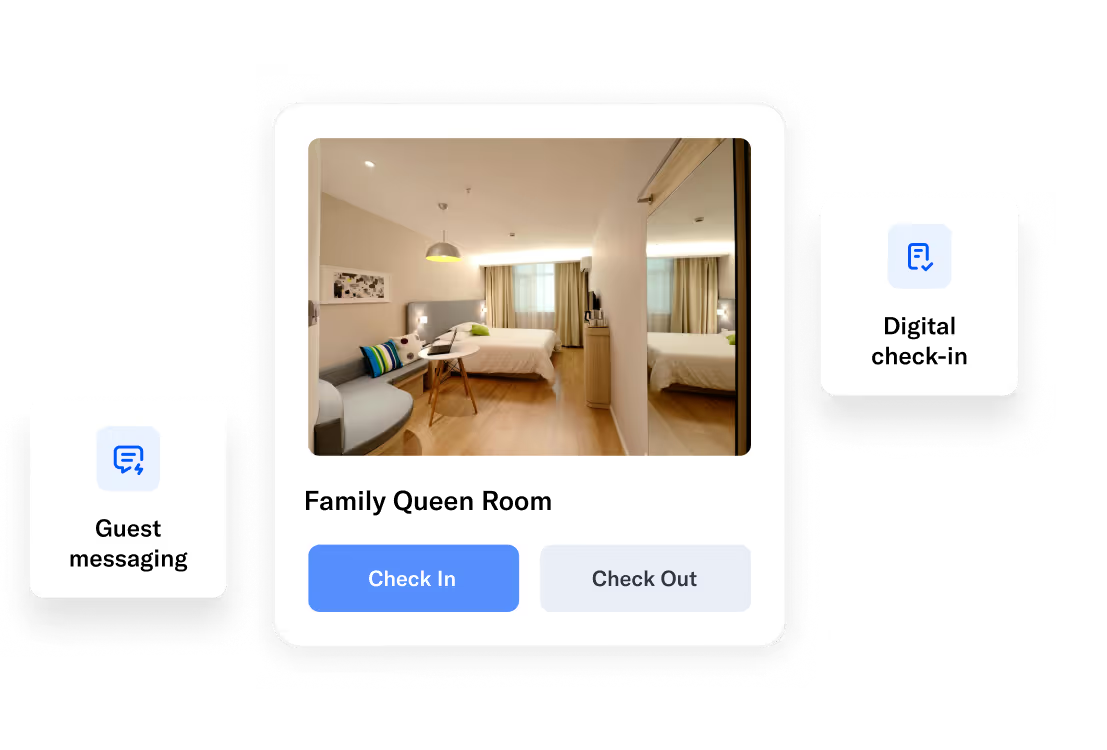
Faster Check-Ins and Check-Outs: Mobile and self-service check-in options reduce wait times and improve the first impression.
Personalized Services: CRM integration allows hotels to track guest preferences, such as room choices, dining preferences, and special requests, ensuring a tailored experience.
Automated Communication: Instant email or SMS updates on reservations, special offers, and post-stay feedback surveys improve guest engagement.
Seamless Billing & Payment Processing: Secure, hassle-free transactions with multiple payment options enhance convenience for guests.
24/7 Customer Support & Assistance: AI chatbots and integrated customer service tools allow guests to request assistance at any time, improving overall satisfaction.
{{guest-app}}
By implementing an hotel management system (HMS) with guest-centric features, hotels can improve reviews, boost repeat bookings, and strengthen their brand reputation in the hospitality industry.
The Financial Benefits of Implementing an HMS
Investing in an HMS is not just about improving daily operations—it also leads to significant financial gains and reduction of costs. These financial benefits include:
With dynamic pricing tools and real-time availability tracking, an HMS helps maximize occupancy rates. AI-driven analytics adjust room rates based on demand, competitor pricing, and seasonal trends, ensuring that hotels charge the optimal price to boost revenue
2. Reduced Operational Costs Through Automation
Automating front desk operations, housekeeping schedules, and billing processes eliminates manual errors and reduces labor costs. An HMS also streamlines communication between departments, improving efficiency and minimizing resource waste.
3. Higher Guest Retention & Direct Bookings
Personalized experiences, loyalty programs, and seamless CRM features enhance guest satisfaction, leading to repeat stays. Additionally, an HMS helps hotels drive more direct bookings through their website, as well as reducing reliance on third-party platforms like Expedia or Booking.com and cutting commission costs.
By implementing an HMS, hotels can increase profitability while maintaining high service quality, making it a valuable investment for long-term success.
Choosing the Right Hotel Management System for Your Business
Selecting the right hotel management software is crucial for maximizing your hotel’s efficiency and revenue. With numerous options available, you must choose a system that aligns with your business needs. Here are the key factors to consider:
Scalability: The HMS should grow with your business, whether you manage a small boutique hotel or a large chain. Look for a system that can handle increasing bookings, properties, and services.
Integration Capabilities: A good HMS should seamlessly integrate with booking engines, payment gateways, CRM tools, and online travel agents to streamline operations.
Ease of Use: An intuitive interface ensures that staff can quickly adapt to the system, reducing training time and operational disruptions.
Customer Support: Reliable 24/7 customer support is essential for troubleshooting technical issues and ensuring smooth hotel operations.
Cloud-Based vs. On-Premise Solutions
Cloud-Based HMS: Accessible from anywhere, a cloud-based HMS requires no on-site servers, offers automatic updates, and is often subscription-based with lower upfront costs. Ideal for flexibility and scalability.
On-Premise HMS: An on-premise HMS requires physical servers and as well as a higher initial investment but offers more control over data security and customization. Suitable for large hotels with dedicated IT teams.
{{pms-three}}
Successful Implementation Examples
Boutique Hotel Success: A small independent hotel adopted a cloud-based Hotel Software, allowing them to automate reservations, sync with OTAs, and increase direct hotel bookings, resulting in a 20% revenue boost.
Large Chain Efficiency: A major hotel chain integrated an AI-powered HMS for dynamic pricing and automated check-ins, reducing operational costs by 15% while enhancing guest satisfaction.
The Bottom Line
A hotel management system software is more than just a tool for managing daily operations, it is a strategic investment that enhances efficiency, optimizes pricing, and improves guest satisfaction, all of which contribute to increased revenue. By automating key functions such as reservations, billing, housekeeping, and customer relationship management, an HMS helps hotels reduce costs, boost occupancy rates, and drive direct bookings. Features like dynamic pricing, integrated channel management, and as well as personalized guest experiences further elevate a hotel's profit in an increasingly competitive industry.
Choosing the right hotel management system (HMS) is essential for long-term success. Hotels that invest in a scalable, easy-to-use, and well-integrated system position themselves for sustained growth and operational excellence. Whether it’s a cloud-based or on-premise solution, the right HMS should align with a hotel's unique needs while offering the flexibility to adapt to future challenges.
As technology continues to evolve, the future of hotel management is becoming more data driven and automated. Artificial intelligence, predictive analytics, and smart automation will further refine how hotels manage revenue and enhance guest experiences. By adopting an advanced Hotel Software today, hotels can stay ahead of industry trends and as well as unlock their full revenue potential for years to come.
{{cta-strip}}
guest-app
Put Your Front Desk in Guests’ Pockets with roommaster App
Mayela Lozano is a content strategist with a passion for hospitality and technology. She collaborates with roommaster on content creation, highlighting how technology can streamline hotel operations and enhance guest satisfaction. When she’s not creating content, Mayela loves to travel and spend time with her two little ones, discovering new adventures and making memories along the way.
Join Thousands of Hotels Thriving with roommaster
The transition to roommaster is straightforward and efficient. Our implementation team handles data migration including reservations, guest profiles, and historical information.
The transition to roommaster is straightforward and efficient. Our implementation team handles data migration including reservations, guest profiles, and historical information.
Hotel Check-In Kiosk: Enhance the Guest Experience
October 5, 2026
Hospitality Technology
Hotel Management
Hospitality Trends
Hotel Self Check-In: How It Works, Types, Benefits And Setup
October 1, 2026
Hotel Management
Hospitality Trends
Hotel Check-In & Check-Out Times Explained
October 1, 2026
Hospitality Trends
Hotel Management
Cloud-Based Property Management System: Hotel PMS
October 1, 2026
Hotel Management
Cloud PMS
Hotel Management System (HMS): A Complete Guide
September 23, 2026
Hospitality Trends
Hospitality Technology
Hotel PMS
Hotel Management
Cloud PMS
How Hotel PMS Software Transforms Hospitality Management
September 23, 2026
Hotel Management
Marketing
Pet-Friendly Hotel Amenities & Package Ideas That Drive Revenue
September 22, 2026
Hotel Management
Hotel PMS
Hotel Food And Beverage (F&B): The Complete Guide
September 22, 2026
Hotel Management
Marketing
Hotel Pet Fees: How Much Should You Charge?
September 22, 2026
Hotel Management
Hotel PMS
Best Hotel Food and Beverage (F&B) Management Software In 2026
September 22, 2026
Join Thousands of Hotels Thriving with roommaster
See how roommaster's unified platform can work for your property. Our team will walk you through features tailored to your specific needs and operations.




.png)
.png)
.png)