What Does Innovation in the Hotel Industry Mean for 2027?
Innovation in the hotel industry refers to any new technology, workflow, or guest-facing idea adopted to improve operations, revenue, or guest experience. It ranges from a cloud PMS replacing a legacy system to an AI tool forecasting demand months ahead.
The term is broader than most owners assume. It is not only about flashy new gadgets in guest rooms. Some of the highest-value innovation happens in places guests never see, like a scheduling tool that saves a manager three hours a week.
For 2027, the term spans three distinct layers of a hotel's operation:
- Guest-facing tools: digital check-in, voice concierge, chat messaging, and smart room controls.
- Back-of-house tools: predictive maintenance, staff scheduling, and guest feedback analysis.
- Structural shifts: unified guest transaction systems replacing separate booking, payment, and messaging tools.
Not every innovation fits every hotel. A 40-room independent property and a 400-room resort face different costs, staff capacity, and guest expectations. A tool that pays for itself quickly at a large resort might take years to break even at a small property with fewer transactions to spread the cost across.
The rest of this guide separates what's proven, what's emerging, and what to hold off on for now, so an owner can plan a realistic 2027 technology budget instead of reacting to whatever trend appears first.
Why Does Innovation in the Hotel Industry Matter for Independent Hotel Owners?
Independent hotels compete against branded chains with larger technology budgets. They also compete against short-term rentals offering flexible, app-based booking. Falling behind on basic digital expectations costs bookings before a guest ever calls.
Innovation matters for three practical reasons:
- It protects margin. Occupancy sensors reduce energy waste. AI-assisted pricing captures demand spikes a manual rate sheet misses. Both add up over a full year of operation, even when the daily savings look small.
- It frees staff time. Digital check-in and automated messaging remove paperwork from the front desk, leaving staff available for guest requests instead. At a small property, this can mean the difference between one person covering the desk comfortably and needing a second hire during busy periods.
- It meets rising guest expectations. Guests now compare a hotel's digital experience against apps and platforms they use every day, not just against other hotels. A booking process that feels slower than ordering food delivery creates friction that has nothing to do with the room itself.
There is also a reputational angle. Guests increasingly mention digital experience, or the lack of it, in online reviews. A clunky check-in process or an unanswered late-night call becomes public feedback that shapes future bookings.
The risk runs the other way too. Chasing every new tool wastes money on features with unclear payback. The goal is not to adopt the most technology available. It is to adopt the technology that pays for itself within a reasonable window, and to say no to the rest without guilt.
Which Hotel Innovations Are Already Proven for Independent Hotels?
These innovations have track records at independent properties. Training requirements and payback periods fit a typical operating budget, and none of them require specialized technical staff to run.
| Innovation | What It Does | Typical Payback |
|---|
| Cloud PMS | Centralizes reservations, front desk, and reporting in one system, accessible from anywhere | Fast, often within weeks |
| Contactless check-in / digital keys | Lets guests skip the front desk line and access rooms via mobile device | A few months |
| AI-assisted dynamic pricing | Adjusts rates based on demand signals instead of manual rate sheets | A few months |
| AI voice concierge | Answers calls around the clock, recovering revenue from missed calls | A few months |
| Digital guest messaging | Sends confirmations, pre-arrival details, and updates without manual follow-up | Fast, often within weeks |
| Smart energy sensors | Adjusts heating, cooling, and lighting based on room occupancy | Longer, tied to energy savings over a season |
Each of these shares a common trait: they replace a manual process that was already costing time or money, rather than adding a new capability guests didn't previously expect. That is usually the clearest sign an innovation belongs in the "proven" category instead of the "emerging" one.
Pro Tip: Start with whichever proven innovation addresses your biggest current cost or complaint, not the one that sounds most impressive. A property losing bookings to missed calls gets more value from a voice concierge than from a smart thermostat.
{{concierge-one}}
What Hotel Innovations Are Emerging for 2027?
These are gaining traction but haven't reached the same track record as the innovations above. They are worth watching and piloting selectively, not adopting wholesale across every room or department at once.
Agentic AI Is Moving Past Simple Chatbots
Early hotel chatbots answered scripted questions and stopped there. Agentic AI tools go further, completing multi-step tasks without a staff member stepping in. A typical sequence looks like this:
- Guest asks about room availability for specific dates.
- The tool checks live inventory and quotes a rate.
- It applies an eligible promo code automatically.
- It confirms the booking and sends a confirmation.
For independent hotels, the practical version of this in 2027 is narrower than the hype suggests. It looks like a tool that can complete a booking end to end, not a general-purpose AI running the property. Owners evaluating this should ask a vendor for a live demo of the full sequence above, not just a description of what it can theoretically do.
AI Chat Messaging Handles Simple Guest Questions
Separate from voice calls, a growing number of properties now use AI chat tools for routine questions guests type instead of call in. Common examples include:
- Wi-Fi passwords and login steps
- Checkout times and late checkout requests
- Local recommendations for food and transportation
- Basic amenity questions, like pool hours or parking
This differs from a voice concierge, which answers phone calls. Chat messaging handles the written, self-serve side of the same problem: guests who want a quick answer without waiting on hold or interrupting a front desk conversation already in progress.
Smart Room Controls Let Guests Adjust Their Own Space
Guests increasingly expect to control their room through a phone app or voice command. Three areas make up most of this trend:
- Lighting: dimming or scene presets guests set themselves.
- Window shades: automated or app-controlled instead of manual cords.
- Temperature: guest-adjustable within a range set by the property.
For most independent hotels, this remains a selective investment. The upfront hardware cost is real, so it fits best in renovated rooms or new builds rather than a retrofit across an entire property. A property planning a renovation in the next year or two is in a much better position to add this cheaply than one considering a standalone retrofit project.
AI Travel Search Visibility Is a New Kind of SEO
Guests increasingly ask AI tools directly for hotel recommendations instead of scrolling search results. Getting recommended depends on how clearly a hotel's own content answers common guest questions, not on traditional keyword tactics alone.
This means a hotel's website and blog content now serve two audiences: guests reading directly, and AI tools summarizing that content into a recommendation. Clear, direct answers on official pages matter more than they did two years ago. A page that buries its answer under marketing language is harder for both a guest and an AI tool to use.
Unified Guest Transactions Are Replacing Separate Systems
Instead of running booking, payment, and messaging through separate logins, more properties are moving toward one system that tracks a guest's full stay in one place:
- Reservation details
- In-stay charges and add-ons
- Communication history from booking through checkout
This also supports a more mobile staff model. A front desk agent with a tablet can check a guest in, take a payment, and answer a question from anywhere on the property instead of staying tied to a fixed desk. For smaller properties without a large lobby footprint, this can mean spending less on front desk infrastructure altogether.
AI Also Handles Work Guests Never See
Guests notice a voice agent or a faster check-in. They rarely notice the AI running behind the front desk. A growing share of hotel AI investment for 2027 goes into that invisible layer:
- Predictive maintenance. Sensors and monitoring software flag worn equipment before it fails, so a broken HVAC unit gets fixed on a slow Tuesday instead of during a sold-out weekend.
- AI-assisted staff scheduling. Algorithms match booking patterns against staff availability so managers stop building schedules from memory and spreadsheets.
- Guest feedback analysis. Instead of a manager reading through hundreds of reviews by hand, AI tools summarize sentiment and flag recurring complaints into a short list an owner can act on the same week.
- Real-time translation. Front desk staff at independent hotels increasingly serve international guests without a shared language. Translation tools let staff communicate in the moment instead of relying on guests' limited English or a slow phone-based interpreter service.
None of these run through roommaster today. They matter here because they show where hotel AI spending is headed next: staff-facing tools that remove manual work, not just guest-facing flash. An owner watching this space should expect these tools to mature over the next few years as they become cheaper and easier to install.
Which 2027 Hotel Innovations Aren't Worth Adopting Yet?
Fully Robotic Operations Still Cost More Than They Save
A handful of flagship pilot locations globally run robots for cleaning, deliveries, or luggage handling. Three costs typically outweigh the benefit for a smaller property:
- Equipment purchase and installation cost
- Ongoing maintenance contracts
- Staff retraining to work alongside the equipment
Revisit this once costs drop and service networks mature enough to support smaller properties outside major metro areas.
Sleep-Optimization Rooms Fit a Narrow Guest Segment
Circadian lighting, smart mattresses, and sleep-tracking room features appeal to a small segment of wellness-focused travelers. The equipment cost per room runs high relative to how many guests will pay a premium for it. This fits specialty wellness properties better than a general independent hotel, where guests are usually booking for convenience or price rather than a curated sleep experience.
Menu Overhauls Tied to Health Trends Move Faster Than Kitchens Can
Shifts in guest diet preferences are pushing some properties to redesign menus and add small grab-and-go retail options. For most independent hotels, gradual menu updates handle this shift better than a full kitchen overhaul, which carries real cost and disruption for a trend that is still settling.
Streaming Logins and Cosmetic Extras Carry Weak Payback
In-room streaming logins, virtual reality property tours, and repurposed lobby spaces, such as turning a front desk into a bar, show up often in innovation roundups. For most independent hotels, these are cosmetic additions with unclear payback, better suited to flagship properties than a typical independent hotel weighing where to spend next year's tech budget.
How Do You Score a Hotel Innovation Before Adopting It?
Before adopting any new tool, run it through this five-step check. Doing this consistently keeps technology spending tied to a real return instead of following whatever trend is loudest that quarter.
- Estimate the cost to implement. Include software, hardware, and setup fees, not just the sticker price. Ask vendors directly what a full rollout costs, not just a per-room license fee.
- Estimate staff training time. A tool that takes weeks to learn cuts into the productivity it's supposed to add. Factor in lost front desk efficiency during the training period itself.
- Estimate revenue or cost impact. Will it increase bookings, reduce a specific cost, or protect against a specific loss? Be specific rather than assuming a general improvement.
- Calculate the payback period. Compare the total cost against expected monthly savings or revenue gain to get a realistic timeline before committing budget.
- Weight the decision by property size. A 200-room property can absorb costs a 30-room property cannot. Scale the innovation to the property, not the other way around.
How Does a Connected Platform Bring These Innovations Together?
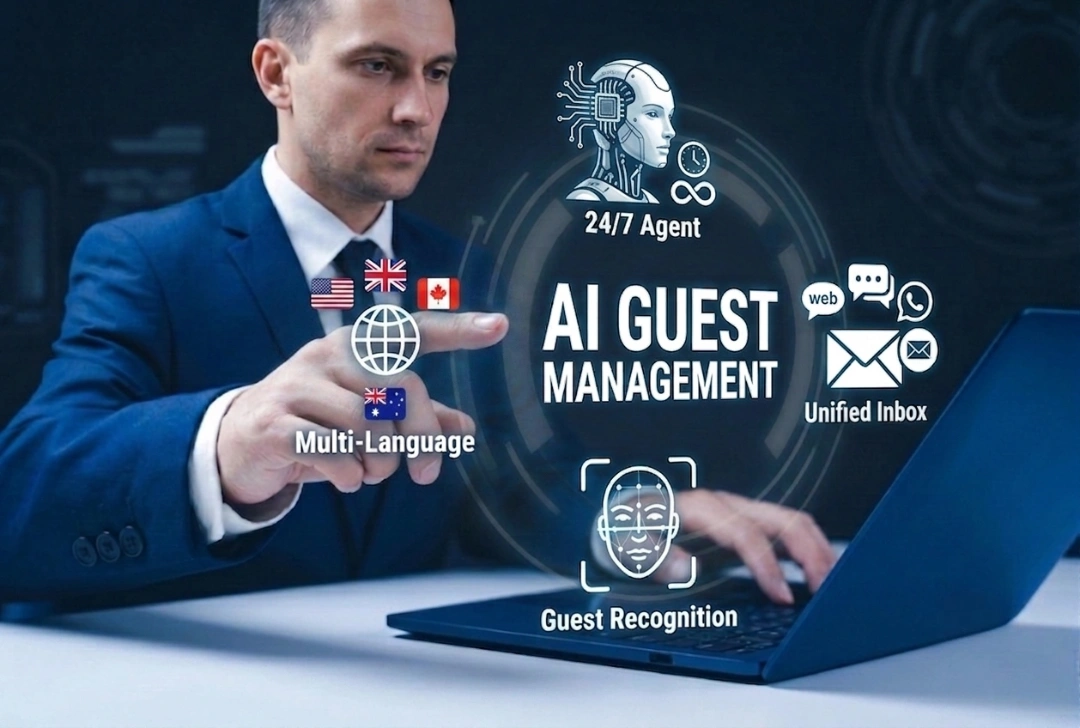
Innovation works best when the pieces talk to each other instead of running as separate logins and separate data sets. Three roommaster tools cover the core of this today:
- roommaster PMS centralizes reservations, digital check-in, and front desk operations in one system.
- roommaster AI Revenue Management adjusts pricing based on real demand data rather than manual spreadsheets.
- roommaster Concierge answers calls around the clock as a voice agent, recovering revenue from missed calls, without adding chat or messaging complexity.
Together, these tie into the unified guest transaction model described above: one system tracking a guest's booking, stay, and payment history instead of three disconnected tools. This guide does not cover robotics, sleep-tech room features, or F&B menu redesigns, since those sit outside what a PMS platform manages.
Innovation in the hotel industry for 2027 splits into three groups: proven tools worth adopting now, emerging tools worth piloting selectively, and ideas better left alone for most independent properties. Score every option on cost, training time, revenue impact, and payback period before committing budget to it.
See These Innovations in Action
Reading about proven and emerging hotel technology is one step. Seeing it running on a real property is the next one. Explore how roommaster's PMS platform brings reservations, pricing, and guest communication into one system, then book a live demo to see the proven innovations from this guide working together on your own property.
{{cta-strip}}
Frequently Asked Questions
1. What does innovation in the hotel industry mean?
It means adopting new technology, workflows, or guest-facing ideas that improve hotel operations, revenue, or guest experience.
2. Which hotel innovations have the best ROI right now?
Cloud PMS, contactless check-in, and AI-assisted dynamic pricing show the fastest payback for independent hotels today.
3. Is AI-driven pricing worth it for an independent hotel?
Yes. It captures demand shifts a manual rate sheet misses, often paying back within a few months.
4. What is agentic AI in a hotel context?
It is AI that completes multi-step tasks, like booking a room end to end, rather than only answering questions.
5. Should independent hotels invest in robotics for 2027?
Not yet. Equipment and maintenance costs still outweigh savings for most independent properties.
6. How do I know if a new hotel technology is worth adopting?
Score it on implementation cost, staff training time, revenue impact, and payback period before committing.
7. Does roommaster handle robotics or smart room hardware?
No. roommaster focuses on reservations, pricing, check-in, and guest communication, not physical room hardware.
.avif)
.png)
.png)
.png)